Onions and Rainbows – Onion Soup for a Rainy Day

That´ll Warm You Up!

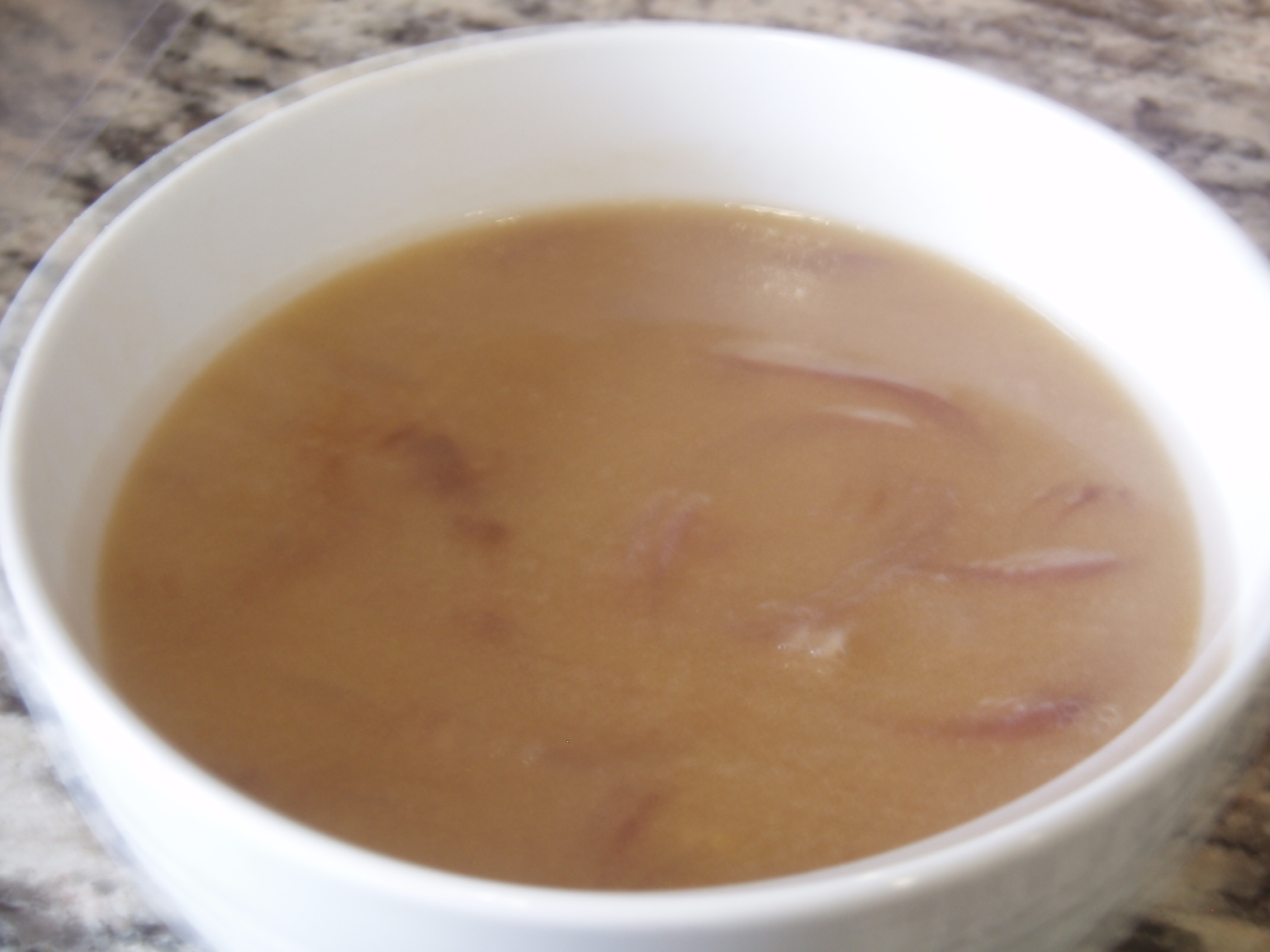
We´ve had some amazing mild, sunny February weather, but yesterday things changed and the rains came down.  The temperature dropped and made me yearn for warming soups. I had bought a couple of kilos of red onions from a lady in the market a few days previously.  They were probably home grown as she had a wheelbarrow full of them and nothing more.  The onions were eye wateringly strong, as I had found out when I used some in a salad, so I thought that perhaps they would have a gentler flavour if cooked slowly in a chutney or soup.

Memories of a romantic week in Paris with Big Man reminded me of French Onion Soup. I went to the top of the Eiffel Tower for him, despite a severe dislike for heights.  After returning to ground level, pale, shaking and cold, we found a little bistro where we warmed ourselves up with Onion Soup and a bottle of red wine shared on one of those tiny Parisian Bistro tables which lend themselves to knees and hands touching over a romantic meal.

If you fancy a bowl of cockle warming Onion Soup, with or without the Gallic Romance, open yourself a bottle of white wine, pour yourself a glass and get ready to chop and cry.  For two, you´ll need:

  • Half a kilo (or more if you don´t mind chopping them) of onions, finely sliced.  French if you have them, but otherwise any nationality of onion – it doesn´t even need a French accent
  • Two tablespoons of olive oil
  • A thick slice of butter
  • A level teaspoon of sugar
  • Two heaped teaspoons of plain flour
  • 750mlof beef stock or chicken stock with  a teaspoon of marmite or Bovril (or you can use stock made with a beef stock cube)
  • A glass of dry white wine
  • Salt and pepper
  • A slug of brandy (optional)

It´s not a difficult dish to make.  It´s cheap too, but needs a bit of patience.  No rushing this one I´m afraid!

Cry Me A River...

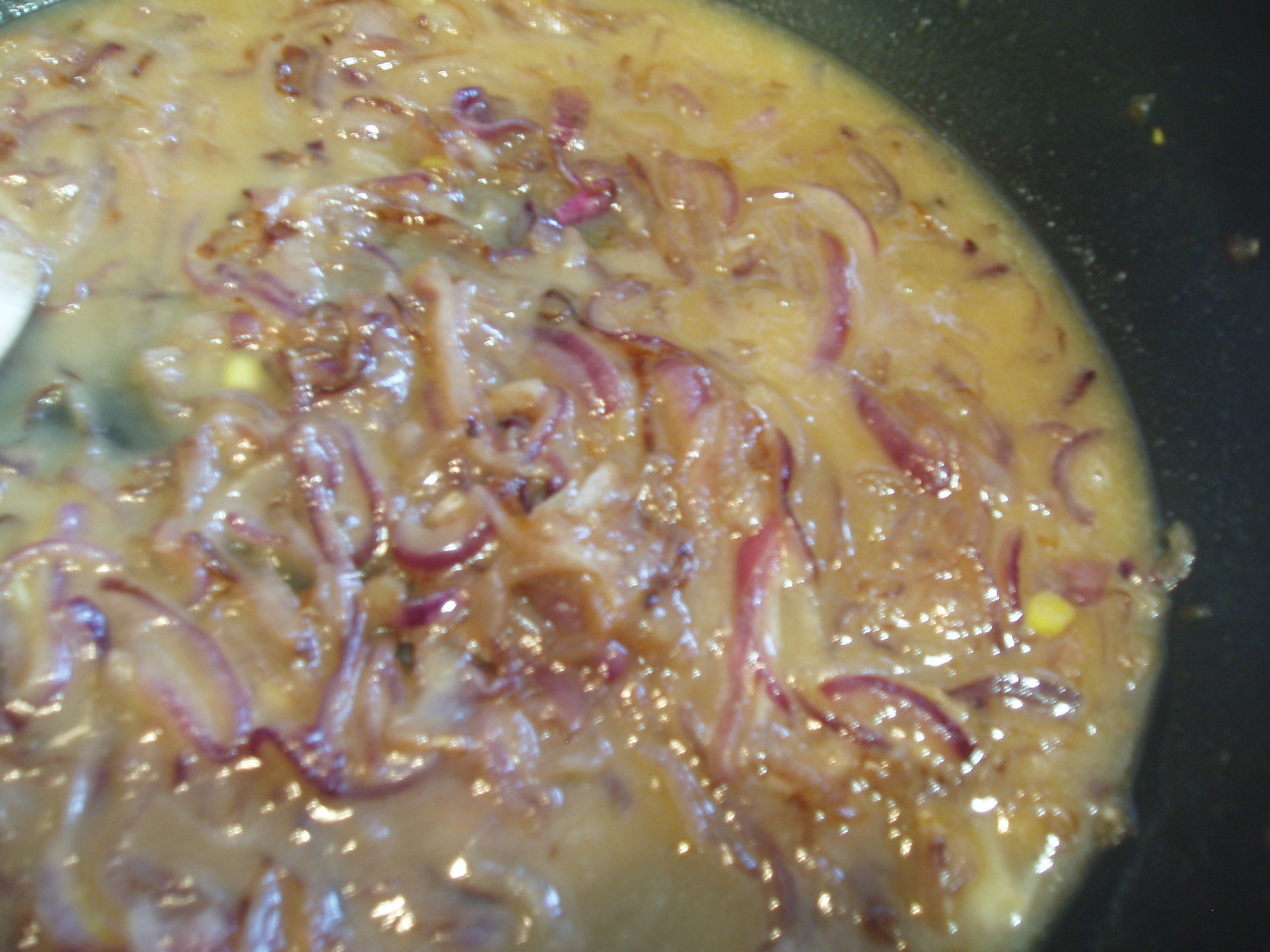
First you´ll thinly slice those onions, then you´ll blow your nose, wipe your eyes and melt the butter with the oil in a large frying pan.  Add the onions, mix them around to coat them and turn the heat down to low.  These will now cook very gently until they start to caramelize but still remain soft. 

This can take at least half an hour, sometimes double that.  It just depends on the time of year and how much water the onions have.  Stir them with a wooden spoon from time to time and when they start to turn brown, sprinkle the sugar on top and keep cooking until they are dark brown.  This can take another 10-20 minutes. 

Starting to caramelise
Add flour and wine

Now sprinkle over the flour and cook gently while stirring for a minute. 

At this point you can add your wine and then your beef stock (if you have it, but it´s very hard to buy good beef, let alone find beef bones to make stock in Southern Spain).  I use chicken stock (if I have some made) otherwise water and a stock cube and I add a good teaspoon of marmite to give it a beefy taste.  I know it´s salty, but you haven´t seasoned yet, and depending on how much salt you like to use, you can leave this part of the seasoning out at the end.

Add stock and simmer

Today I used homemade chicken stock, and because our chickens are corn fed, my stock is very golden in colour.  This means that unless I add loads of marmite to darken it, it won´t be as dark as it usually turns out.  Too much marmite makes it super salty, so I live with golden coloured soup sometimes!

Simmer gently for about 15 minutes and you´re almost ready to serve.  Taste to check and add salt and pepper if you like.  If it´s a touch sweet from the caramelized onions, I find a sprinkle of salt and a slug extra of white wine usually balances the taste out.

If you like you can serve with little rounds of melted cheese on toast at the bottom of the soup bowl, or floated on the top, but what really gives it that extra warming hit is a small hit of brandy poured in just as you serve. Bon Appétit!

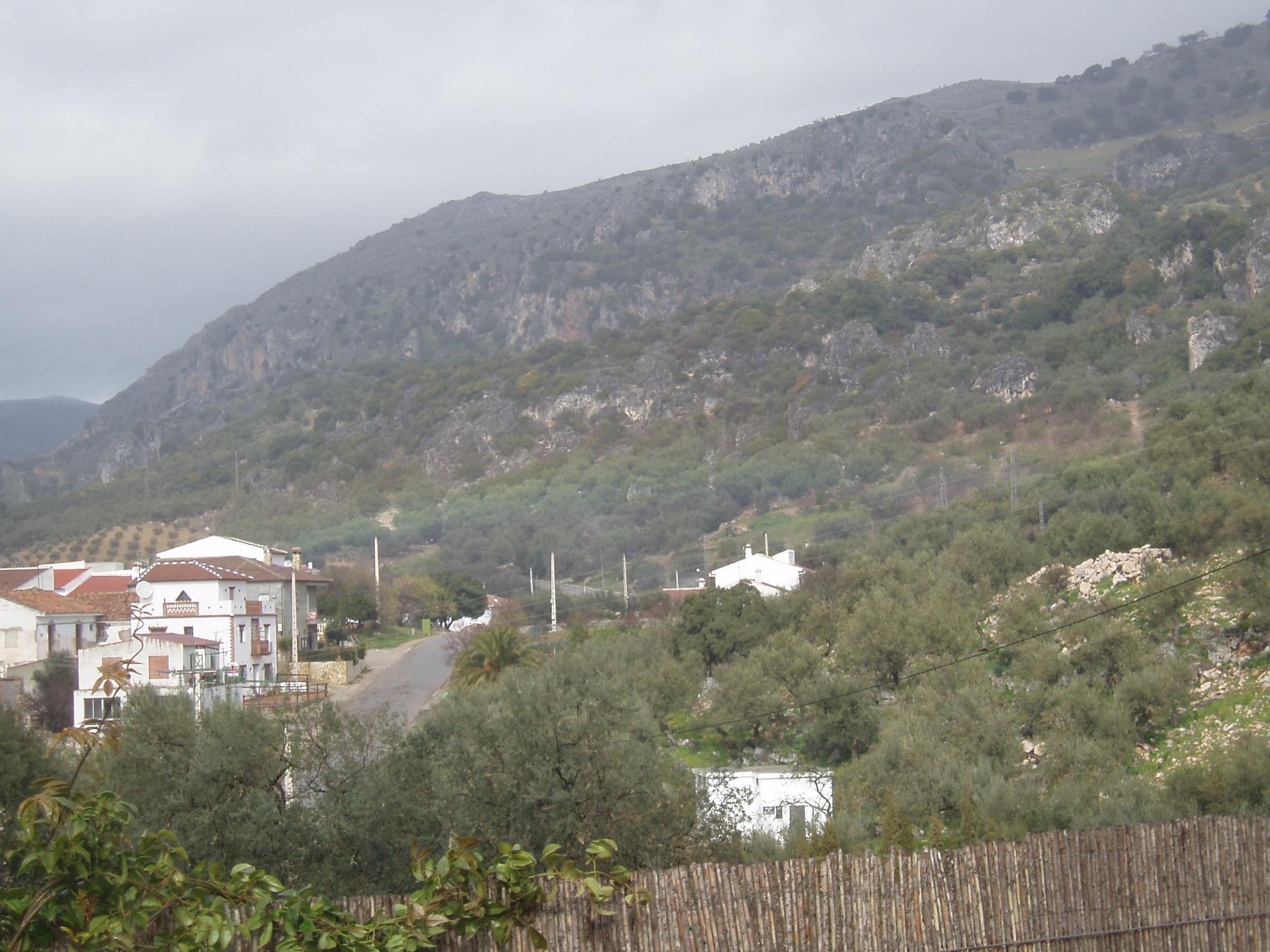
Just as I finished making my soup, the sun broke through the clouds and rain, and I had a beautiful rainbow to look at and brighten my day.  Lucky me, Onion Soup and a Rainbow – life can be full of the most unexpectedly lovely moments.

A Pot Of Golden Soup At The End Of My Rainbow

A Brush With The Law

There I was, back in Spain again.  I had settled dangerously quickly back into my life as a Cortijera (or country woman).  Visitors were coming and going once more.  That awful necessity called work was now a distant memory and no thought was currently being given as to what would happen next.

Well, apart from getting the provisions in, topping up the tan and the water level in the pool, and working on the ever so slightly less rusty Spanish.

Periana, my local village, was gearing up for something big.  I had gone into the village for water and provisions and was having a bit of a mooch around.  Actually, there’s not too much to do in Periana usually so I was doing all this very slowly. It was very hot too, and sudden rapid movements in the height of summer in Andalucía are generally not advisable.

After a few attempts at getting through the narrow streets in the car, requiring me to reverse a fairly long way not once, not twice, but three times to let people down the road, I eventually managed to get through the village and to park.  It still freaked me out, but I was starting to get used to the scary Spanish driving style I needed to adopt to fit in with the locals. 

Everything looked different. The narrow streets in the centre had been draped with awning – presumably to protect the fair people of Periana from the heat and not the rain.  The whole place was buzzing as trucks and stalls were manoeuvring around the main street and vying for prime positions in order to sell their goods and entice people to shoot a moving plastic duck for the chance of winning a fluffy toy.  Clearly great things were about to happen a few evenings later.  They were.  La Feria de Agosto de Periana.

Dolores felt that it was time for me to join in with the local celebrations.  After all, I was now a “frequent visitor”, and Ria was staying therefore it was necessary to provide entertainment to all honoured guests.  Arrangements were made to meet at the “best” restaurant in town – El Verdugo – on the big night.  Dolores and Paco were providing the transport and we were meeting our English Chums Jenny and Malcolm (or Hennifer y Marco as they are known here) at 9.30 for dinner to be followed by much merriment and dancing.

It’s a bit of a hairy drive from the Cortijo to Periana as it’s a single track, very twisty and unsurfaced road all the way.  If you meet another car you both have to squeeze past each other and hope that one of the cars does not end up sliding down into the olive groved valley below.  A night out with the gang in a convoy of cars earlier that summer led to an interesting on road encounter.  It was about 11:30pm and it was very dark.  We needed to drive up the hill to Periana and out the other side.  Paco was driving exceptionally slowly – I’m not sure if this was for my benefit, being a “foreign woman driver” and following him – with a couple of pauses to let people by or to squeeze by ourselves.  There are unwritten Spanish Rules of the Road , it was pitch dark, the road is one lane wide (and I use the word “road” very loosely here), and there is a sheer drop down the valley on the other side.  I’m sure you get the picture. 

At one point just outside Periana, Paco stopped again and then just didn’t seem to move.  We could see the other car which has been coming towards us and that didn’t seem to be moving either.  Dolores started to rant a bit and blamed Paco for blocking the road and started bipping the horn.  My horn, mind you, she was in my car with me to provide entertainment and in-journey commentary.  Paco then got out of his car and Dolores started screaming about the possibility of Paco being assaulted by bandits.  There then followed a bit of a heated debate, a lot of hand waving – Paco’s – and eventually the other car backed up.  We slowly manoeuvred around it and as we started to pull past the other car, Dolores started making “very relieved” noises.  She told me that she now understood why there had been a delay and that there was no need to worry.  The reason the other car had had problems was because the driver was blind. 

“Blind?” I asked. 

“Yes” she told me, “the old guy in the car has terrible cataracts and the operation to fix them didn’t work so he only goes out in his car at night now as he can see the headlights of the other cars”. 

Well, that was alright then. 

Anyway, there we were on our way to the Fiesta.  Everyone was scrubbed up and wearing their glad rags and Paco insisted on parking practically on the main stage, so that we would be close to where the action was going to take place.  The restaurant was crowded but Dolores soon started shifting tables and chairs and we ordered some wine while we awaited the arrival of Henny and Marco.  Ria and I caused a little consternation by asking for wine and  a bottle of water – not tinto de verano which is red wine and lemonade.  Drinking red wine alone is considered kind of “fast” around here, but apparently also having a glass of water with the wine was a sure fire way of causing terrible stomach ache.  We decided to run the risk despite Dolores’ warnings.

Concern started to grow for our fellow Brits when 9:30 then 10:00 came and went.  Are the British not well known for their punctuality?  Clearly something terrible had happened and we all ought to be seriously worried.  Eventually a call came from Hennifer which only served to concern the group more – an emergency had arisen but they would be with us shortly.  Eventually we decided to order food and around 11:00pm they arrived.  What could it possibly have been that had delayed them – death, illness, car trouble?  No, it was sewage. Vast quantities apparently, coming the wrong way out of a toilet.  Fortunately Fermin the only plumber in Periana was lurking around the restaurant and his services were secured for the next day.  Particularly amazing as it would be the morning after the Fiesta, and a Sunday too. 

Conversation turned to the single status of Maria and Ria and Paco wanted to know what sort of man they should be looking out for me. 

“Well, “I told them “a few days previously when I ventured into Periana I passed a most good looking man in the street.  He was tall, good looking, grey haired and a policeman.”  Not sure what it is about me, but clearly I have a secret penchant for men in uniform – I have decided not to fight it.  Dolores was pleased to have something to work with and dinner resumed.

Meanwhile, another subplot was unravelling at the bar.  Dolores started to do her “secret” sign.  This involved winking very indiscreetly, pointing at her eye and jerking her head in the direction in which you are supposed to look.  All very melodramatic and something which I took to doing when talking to her in imitation.  Fortunately Dolores thought that I had just picked up an Andalucían gesture and did not realise that I was gently taking the mickey.  Which only caused us both to do this even more.  While we were both jabbing ourselves in the eye and winking like demented perverts I gathered that we were supposed to be looking at two of the many men at the bar.  One of them was believed to be a “friend” of Hennifer and Malcolm (although I later found out that he was no friend of theirs) and a highly suspect individual in Dolores’ eyes.  Dolores had taken against him because he had a reputation for entertaining a succession of women in his house and made frequent trips to Morocco.  Clearly a Drugs Baron.  She seemed to think that he and his friend (an artist, we were told) had been told by Henny that Ria and I would be there and were lurking in the hope of an introduction.  She was right.

Dolores was quite correct in her character assessment – I didn’t have any proof about the drug running but the man was clearly an idiot.  Drinking his Sol y Sombra (brandy and Anis) he was trying to look like a local and to impress Ria and I with the fact that he and his friends were both artists.  The word Piss sprang to mind.  When we eventually established that he was a failed Fleet Street photographer who hadn’t worked since 1987 (and who knows what “art” he dodgy mate specialised in) we made it clear to them that we were very under whelmed and they ambled off in search of younger, firmer flesh. Dolores quickly resumed they eye jabbing, winking manoeuvre which was her sign that something interesting was up.  I assumed this was to indicate relief in the departure of the suspected Drugs Baron and realised far too late that this was because the police had walked into the restaurant.

Two Policia Local (blue uniform) and two Guardia Civil (green uniform).  Of course, one of them (blue) was tall, good looking and grey haired.  I quickly began to regret my earlier revelations, and with good cause. 

Very concerned that the object of the attention of the whole of our table was unknown to anyone (including Dolores who knows all but about 3 people in Periana and they, quite frankly, are probably not worth knowing), Dolores summoned him over.  Although he was on his way for his dinner, Dolores is not someone who can be ignored and she soon established that his name was Cristobal Colon, which I believe translates into something like Christopher Columbus, so make of that what you will, he lived outside of Periana (aha, that’s why he was an “unknown”) but marital status was, frustratingly, unknown.

The wine flowed, the water less quickly, and a good time was being had by all.  Dolores was “working” the room and soon Ria and I were dragged forcibly from our chairs, which was quite a relief in all honesty as they were wooden affairs which looked as though they were used for witch ducking and were incredibly uncomfortable.  Unwittingly, like lambs to the slaughter, we followed her to the back of the restaurant where the four policemen were trying to eat their meal.  I have to say, there are no curly sandwiches and cups of cold tea for the Spanish police. Plates of deep fried fish, casseroled loin of pork, salad and a huge jug of tinto de verano were all laid out on the table. 

“Ladies,” she said, “I want to introduce you to my very good friends.”  And, despite the fact that she had only met one of them about 10 minutes previously, she proceeded to do exactly that.  She added, in with our names, the fact that we were both “soltera”.  Sad, single, middle- aged women in other words.  Ria was trying to make a break for the toilets but Dolores had a firm grip on her wrist and there was no way to escape short of dragging Dolores with her.  They had been told that I spoke Spanish so I tried to make a joke about drinking on the job, which clearly went right over their heads.  Cringe, cringe, cringe.  Gorgeous Cris (as we will call him from now on) was still giving nothing away about the wife and family he probably has tucked away, far from the prying eyes of the Perianans.

I thought the embarrassment factor had reached its optimum level as we walked away, but no – there was still more to come.  As I went up to the bar to pay my share of the bill, I was grabbed by the formidable Dolores once more, only to be faced with Cris writing out the phone number of the police station for me in his little notebook.  He told me, rather unwillingly it seemed, that Dolores had thought it would be a good idea for me to have it in case of “trouble”.  Bear in mind that people in Periana generally don’t lock their doors, let alone their cars, this was a highly unfeasible possibility.  I thanked him politely and said that I thought trouble was probably unlikely to happen in my neck of the woods.  He agreed, but promised Dolores, reluctantly, to keep an eye on things.  And that was it.  Well, apart from the police standing behind us during the dancing and merriment part of the evening (drinking tinto de verano of course) and Dolores going into overdrive with the winking and jabbing.

Unbelievably, or perhaps fortunately, I never saw the man himself again.  His colleagues, of course, I bumped into several times.  They all said hello to me but it was not clear if this was out of pity, politeness or fear.  I did consider calling the police but was not sure if the loss of my voice, memory or car keys would constitute a genuine emergency around these parts.  God bless the boys in blue!
Just call me Lady Marmalade

Felix´s Oranges and Their Wonderful Marmalade

Sunshine in Winter

February normally brings cold and rain here.  What it also brings is trees heavy with beautiful, juicy oranges.  Now, those lovely bitter Seville Oranges do exist.  You see them lining the streets of that stunning city and pretty much every other city in Andalucía.  What happens next is that they get picked and sent off to England where excited cooks turn them into delicious marmalade.  We can´t buy them here!

Fortunately, our lovely friend Felix the Baker, grows oranges, lemons and avocadoes behind the old flour mill.  He grows so many that he´s always giving them away.  Luckily for me, I´m one of the lucky recipients and February oranges mean Orange Marmalade.  I don´t think my recipe is any different from standard ones.  How it turns out depends on how juicy the oranges are, how much pith (and therefore pectin, which is what makes the marmalade set) they have, how much “shred” you want to have or if you prefer a “jelly”.

What you´ll need if you want to give it a go

  • For every kilo (or just over) of oranges, two kilos of sugar and 2.25 litres of water
  • The biggest, heavy based, saucepan you have
  • A wooden spoon
  • A large square of muslin (or a clean, large, cotton handkerchief)
  • String (not coloured, or you´ll end up with rainbow coloured marmalade!)
  • About 6 regular sized jams jars and lids per kilo of oranges

Making marmalade is a labour of love if you are going to do it by hand.  Even if you take a short cut and mince the peel in the food processor, you´ll only cut the time down by a little.  I made marmalade with 2 kilos of oranges, and on and off it took me the whole day.  The rewards?  My house smelt wonderful, and still does the next day, and 11 jars of delicious homemade, organic orange marmalade.

You´ll start by washing and drying the oranges, cutting them in half and juicing them.  If you have a gadget to help you do this, so much the better. The juice goes into your super size pot. Any pips or pith that start to clog up the juicer will go onto your square of muslin, or piece of cloth.  It´s a good idea to line a sieve with the cloth and rest it over a bowl to catch any precious juice that may still drip out.

It will be worth the effort!

The half shells are now cut into four slices, for ease of handling, and with a sharp knife (I use a small serrated one) you need to cut away more of the pith that remains.  This is done rather like cutting melon flesh from the skin.  The pith also goes onto the cloth.  Don´t worry too much if you can´t pare it right back as any pith that still remains on the skin will boil away, whilst doing it´s magic, with the skin.  The oranges I used had lots of pith, so I saved half and will use it to make an orange jelly later in the week.

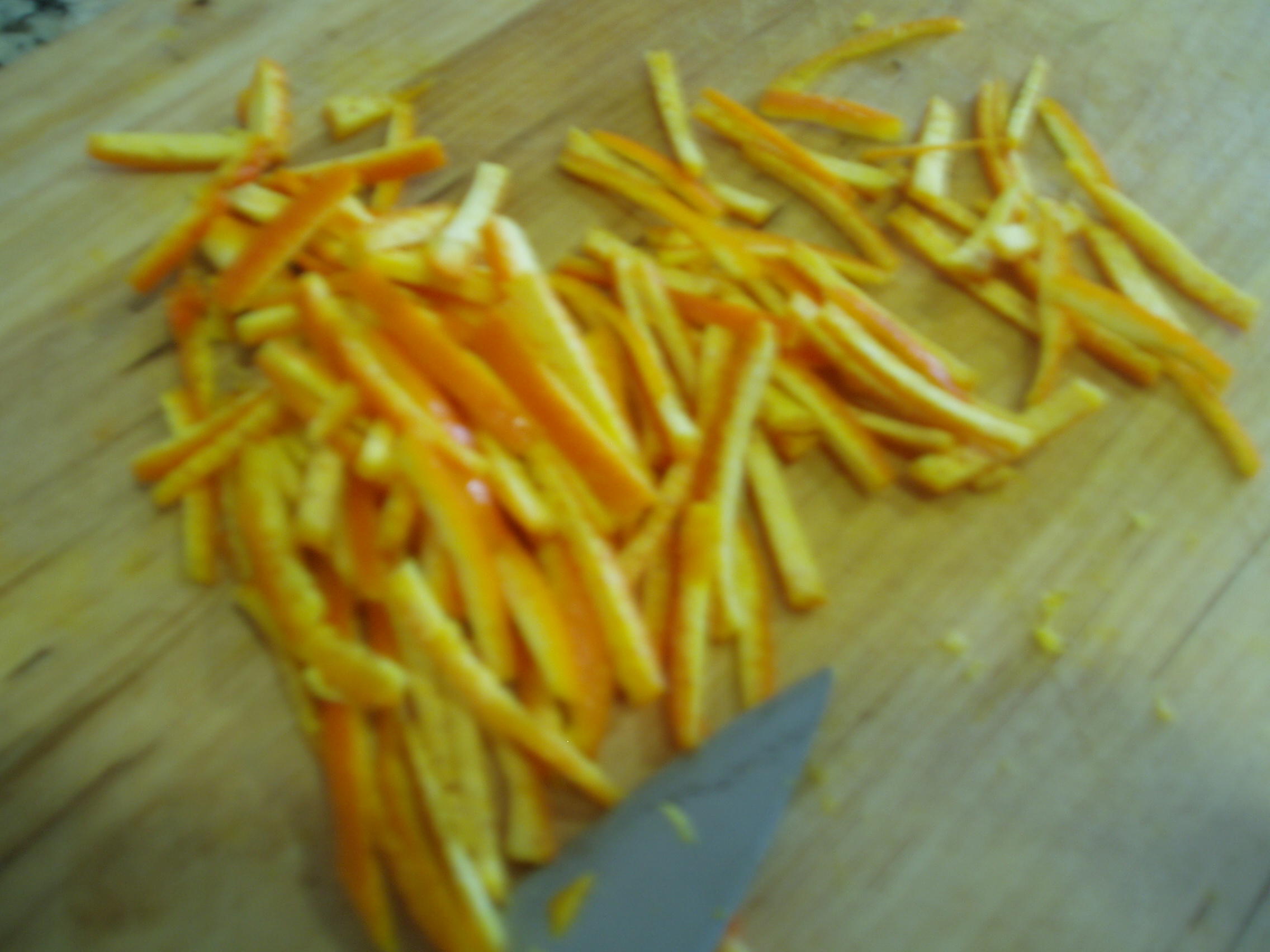
The orange skins now need to be cut into shreds.  How thick or thin is down to you. One year I did this in the food processor, which leaves you with small chunks rather than shreds, but the taste was still wonderful. This year I patiently sliced, and sliced…and then sliced some more to end up with beautifully thin shreds of orange.  You can relax a little now as the hardest part is over.  You may find that getting to this stage takes you a few hours.  Ignore cookery books that tell you it takes 45 minutes.  All lies!

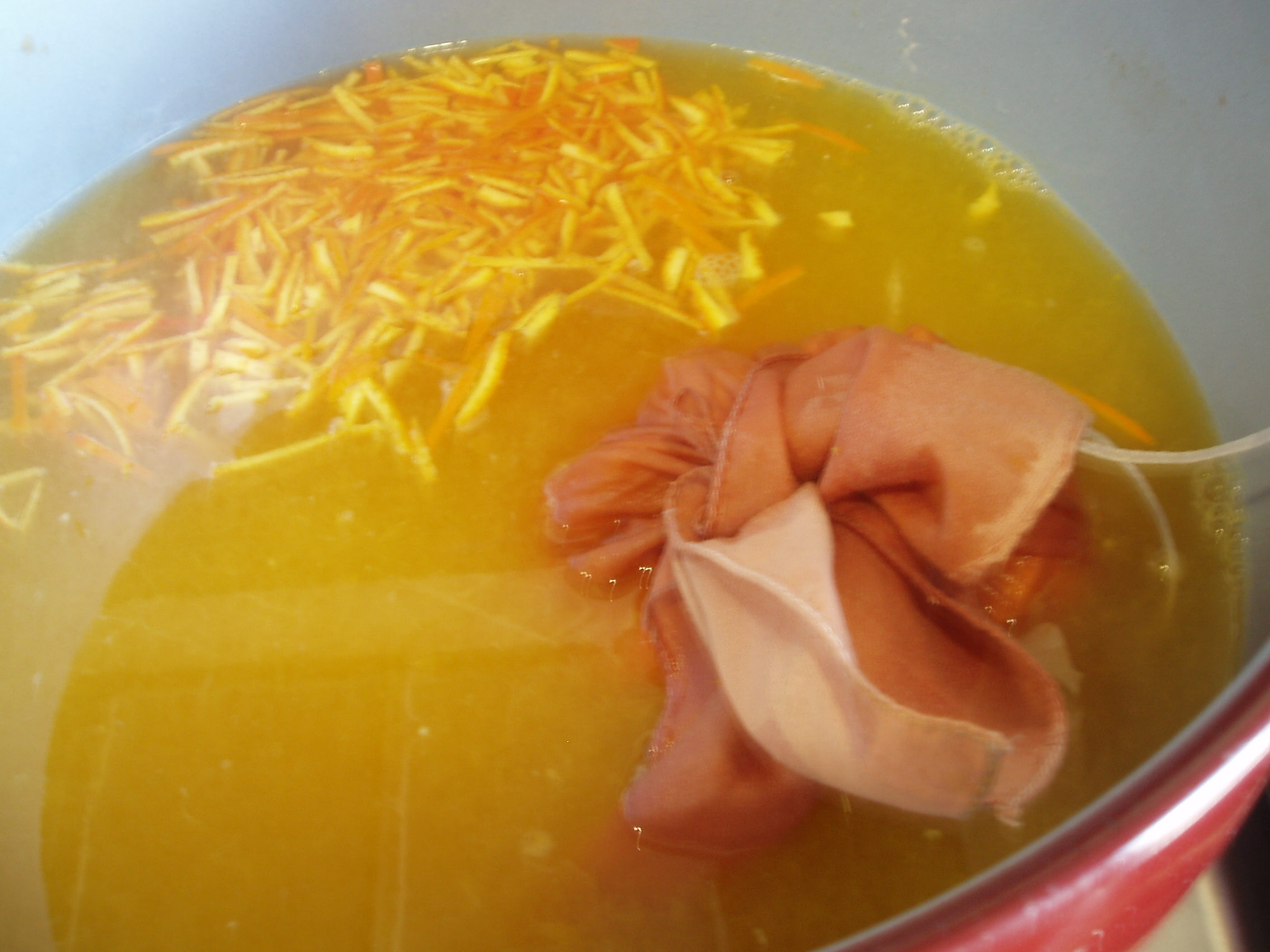
Now, take the cloth square and tie it up.  I usually leave the string quite long, put the bag into the pot and then tie the other end of the string to the pot handle.  This helps you to press on it gently now and then to remove the pectin which will be forming, and then to remove the bag easily at the end.

The Magic Begins…

Put the shreds of orange and your water in to the pot and bring to a simmer.  You will leave this simmering for about 2 hours, pressing the cloth bag occasionally with a wooden spoon whilst enjoying the wonderful smell that fills your house.

Once the two hours are up and you´ve recovered from all that juicing and shredding, it´s time to start boiling.  Remove the bag from the pot, put it into a bowl to cool down a little and when you can handle it comfortably (I recommend rubber gloves for this) squeeze it as dry as possible, putting all the juice that comes out into your pot.

At this point, put a couple of saucers in the freezer…all will be explained.

Add your sugar to the pot and gently dissolve it. You need to think now about sterilizing your jam jars.  At this point I normally put them into my dishwasher with the lids.  Otherwise you need to wash them in hot soapy water, rinse them and put them, upside down, into a very low oven.

Back to the marmalade. Once no sugar crystals remain, turn the heat up and get that jam boiling.  This is why you now understand the rationale behind such a huge pot.  When jam boils fast, it rises, so you do need to keep an eye on it.  I let mine boil over yesterday which meant taking it off the heat, cleaning the caramelized jam off the stove, and losing about a jar of marmalade.  Damn!  Real life cooking.  If you have a sugar thermometer, check that the jam has reached the correct temperature (which I´ve just checked and it´s 105°C or 220°F).  Fear not if you don´t have a thermometer.  I didn´t until earlier this year, and it´s never been a great problem.  Boil the jam until it starts to rise (the froth will look white) and keep it at a boil for a few minutes, lower the heat and put a teaspoon full (be careful, boiling jam really does hurt) onto one of those saucers you put into the freezer.  Leave it to cool for a minute then push the jam gently with your finger and the surface should wrinkle – that´s setting point.

If it´s not ready, then boil for another five minutes and repeat. Getting to this point can take about 45 minutes, it depends on the quantity you´re making.  I´d recommend doing the saucer test even if you have a jam thermometer.  I, being an impatient sort of person, didn´t do this when I made my most recent batch of marmalade, and had to unpot and reboil it the next morning as the marmalade had not set and the shreds of orange had all floated to the top of the jars leaving me with pots half full of jelly and half full of marmalade.  Lesson learnt.

Once the marmalade has reached setting point, remove from the heat and leave to stand for about 20 minutes.  If there is any scum remaining, skim it off.  Take your jam jars out of the dishwasher or oven, they should still be warm, and get ready to fill them.  I find it easiest to ladle the marmalade into a large jug and then pour into the jars.  If you have a waxed disk to put onto the surface of the marmalade before screwing the lid on tightly, then fine.  If not, don´t worry!  Make sure those lids are tight and as the marmalade cools down, a seal will be formed and you can keep that marmalade (if you can resist) until you make next year´s batch.

If you want to label the jars, and why wouldn´t you, wait until the next day when they have cooled down.  Right, I´m off to see Felix and give him a jar of marmalade.

Chicken with Mushrooms and Artichokes

Once you´ve planted a couple of artichoke plants, they seem to last for a couple of years.  As long as you keep cutting the “fruit”, more keep on growing.  A couple of weeks ago we cut more than we needed, so stop them from getting too big and tough and a peeled off the outer leaves to reveal the hearts, blanched them in water with lemon juice to stop them turning black and then froze what we didn´t use.

As we now have more artichokes blooming, I thought I should use up the batch from the freezer (although a tin of artichoke hearts would do just as well).  I also had some chicken breasts which would go well with the artichokes in a lovely dish with a thick sauce.  Neither Big Man nor I are huge fans of the chicken breast, but when you rear your own chickens for eating, you´re always going to have them!

Ingredients for this dish for two are

  • One large or two small chicken breasts, cut into small cubes
  • A tin of artichoke hearts or about 8 fresh ones (prepared as above), sliced into quarters
  • Half a dozen medium sized mushrooms, thickly sliced
  • Two fat cloves of garlic, thickly sliced
  • Two cloves, ground (or about a quarter of a teaspoon of ground cloves) with about 5 peppercorns (or use half a dozen twists of freshly ground black pepper)
  • Half a teaspoon of paprika
  • A pinch of saffron soaked in a tablespoon of water (if you have a packet of paella spices, you can use half a packet in place of the cloves, pepper, paprika and saffron)
  • Two thick slices of day old bread, crumbled roughly
  • A bay leaf
  • A sprig of thyme (optional)
  • Salt
  • Olive oil
  • Water
  • A glass of white wine (optional) plus one for drinking while cooking (not optional in my kitchen)

Start by lightly browning the chicken in a little olive oil in a deep frying pan or a wide saucepan.  Then add the garlic, artichokes and mushrooms and fry gently until the mushrooms and artichokes start to brown.

Browning Nicely

Add the spices and herbs and season with a little salt.  Pour over the wine and enough water to comfortably cover everything and simmer, without a lid, for about 15 minutes. 

When the liquid has reduced by about half, but is still watery, remove the herbs and then add the bread crumbs, stirring as you do this.  You will simmer this for another 5 minutes stirring a couple of times.  The sauce will come together and will look smoother, with some texture from the bread after a couple of minutes.  You want to end up with a sauce roughly the texture of a thick gravy.  If it looks too runny near the end of cooking, add another half a slice of bread.  If it´s too liquid, just simmer until it gets to the consistency you want – it´s down to you! Check and adjust the seasoning, and you´re ready.

This can be prepared ahead and reheated, and takes about 40 minutes to prepare from scratch.

Looking Rustic

Delicious served either as a “spoon dish” (as they call dishes the consistency of stew which are served in bowls and eaten, as expected, with a spoon) if you prefer the sauce more liquid with bread and a side salad or with some green beans,  mashed potato or rice.

My Favourite Spanish Breakfast

Pan Con Tomate y Aceite

A beautiful sunny, Sunday morning.  All the more surprising because it´s the penultimate day of January.  But just warm enough to brew a pot of coffee while I feed the dogs and get myself a little breakfast sorted out before Big Man and I head off for a walk.  It´s been dry for two days with rain before that.  Perfect weather for heading up the mountain and looking for wild asparagus.  I have to confess I´m not the biggest fan of these beautiful fronds.  Although I love strong flavours, they´re just too bitter for me.  But Big Man loves a little tortilla made from these for a light supper and I enjoy a simple poached egg on toast – so everyone is happy and minimal cooking for those evenings when you just don´t fancy spending time at the stove.

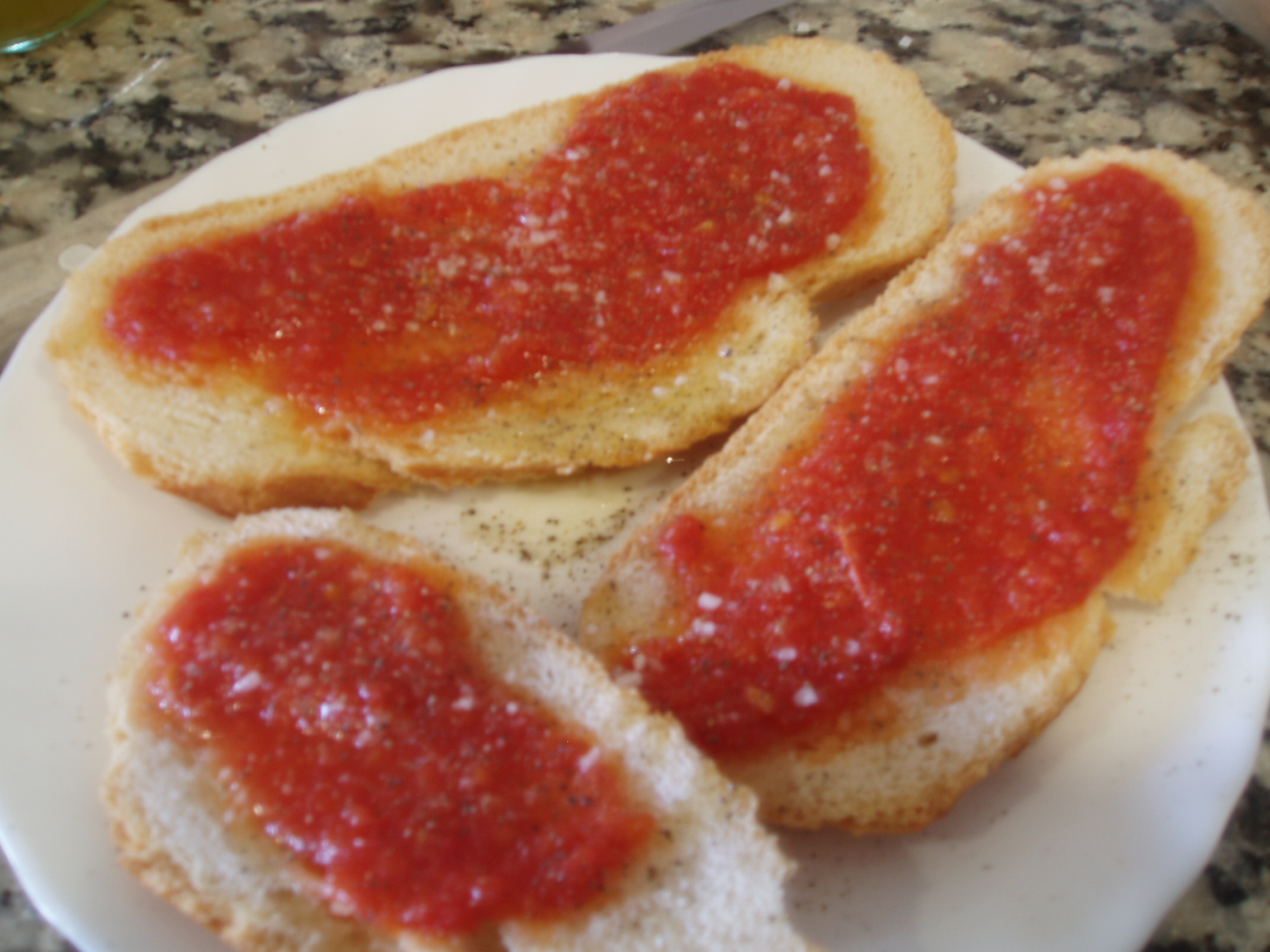
I do enjoy my breakfast.  I don´t go all faint and feeble if I miss out on it, but my favourite quick and easy breakfast here in Spain is fresh bread, drizzled with olive oil (from our olives if I´m lucky) with crushed fresh tomato and seasoned with sea salt and a good grind of pepper.  All you need to do with the tomato is blitz a ripe tomato with the hand blender – remove the skin or not, your choice and that´s it.  It´s usually tastier in summer when the tomatoes have more flavour, but if I come across a gorgeous specimen outside of the warmer months, it´s earmarked for my breakfast.  If the bread is a little stale, it´s toasted  lightly on my griddle pan.  If I fancy some spice, it´s sprinkled with little fresh or dried chili at the end (not so Spanish), and if I´m extra hungry a few slices of jamon are added.  But the truth is, the simpler the better.

That´s not to say I don´t enjoy a Full English, or a Bacon Buttie when the mood strikes.  Come to think of it, a bowl of porridge in winter always goes down well too.

January Seafood Stew

Warms Your Cockles

It´s a grey old Saturday in January here, with no particular plans for the day.  I hear a loud “toot, toot” outside and my heart lifts. Fish Man is here.  Although we live in an isolated part of the mountains, we´re not entirely cut off.  In fact, food-wise we could probably survive without ever going shopping.  We have our chickens and the vegetable garden of course.  We have goatherds who sell us a goat for the freezer, or a lamb too come to think of it.  Bread Man stops daily and leaves me a lovely crusty loaf, the grocery man comes at the weekend with all sorts of exciting things, even the man with gas cylinders stops at my door.  But two or three times a week we have the excitement of Fish Man.

The downside is that we´re pretty much the last stop on his route, so he often doesn´t get to us until about 1pm.  Sometimes he´s sold out of most things, but if I ask him for something specific, he saves it for me.  Usually that´s Pulpo (Octopus) or Raya (Skate) which we love.  The upside is that he´s usually keen to get back to Malaga, where he lives, for his own lunch, so prices come down so that he can shift the last few things, or he throws in a few goodies for free.  He gets up early and heads off to Malaga fish market then sets off up the mountains to the villages around where we live.

Weekends in Spain are not about the weekend roast but about Paella, which we all know and love.  In Andalucia, they just call it an Arroz, a “rice” which is just like Paella but often served with more stock.  A soupy Paella, if you like.  Otherwise it´s a Fideua, which is exactly the same but made with short, thick noodles, called Fideos.  This morning I bought half a kilo of small prawns and eight medium sized squid.  I grabbed a small packet of mussels (removed from the shell and frozen) from my freezer and a couple of small fillets of hake which were also in the freezer.  Because it´s a bit of a trek to the supermarket, and of course there are things that can´t be bought our of the back of a passing van, I tend to keep my freezer pretty well stocked with things I can grab in the morning and defrost quickly.

I asked Big Man what he fancied – Paella, Fideua, Seafood Soup, Stew?  A stew, it was decided, so I started to get things ready.  What you need for four people with “normal” appetites, or three “greedy guts”, or two “greedy guts” with enough leftover to turn into a soup that evening with a drop more stock, is:

  • About 2 cups of peeled prawns (keep those shells, we´re going to make stock)
  • About 500 grams of cleaned squid cut into chunks
  • A cup of mussel meat
  • A medium fillet of white fish, cut into chunks
  • Half a red pepper, finely diced
  • A stick of celery, finely diced
  • Half and medium onion, finely diced
  • A third of a courgette, finely diced (optional)
  • Three fat cloves of garlic, crushed
  • Half a tin of chopped tomatoes
  • About a litre of fish stock.  Either cover the prawn shells with water, add a few bat leaves, a chunk of onion and boil for about 8 minutes or use a cube

You can use any fish or shellfish you like really, and if you don´t have a lot of fish, you can thicken the stew up with a few noodles, or serve it as a soup with plenty of stock. Otherwise you could use rice and turn it into a paella – it´s up to you!

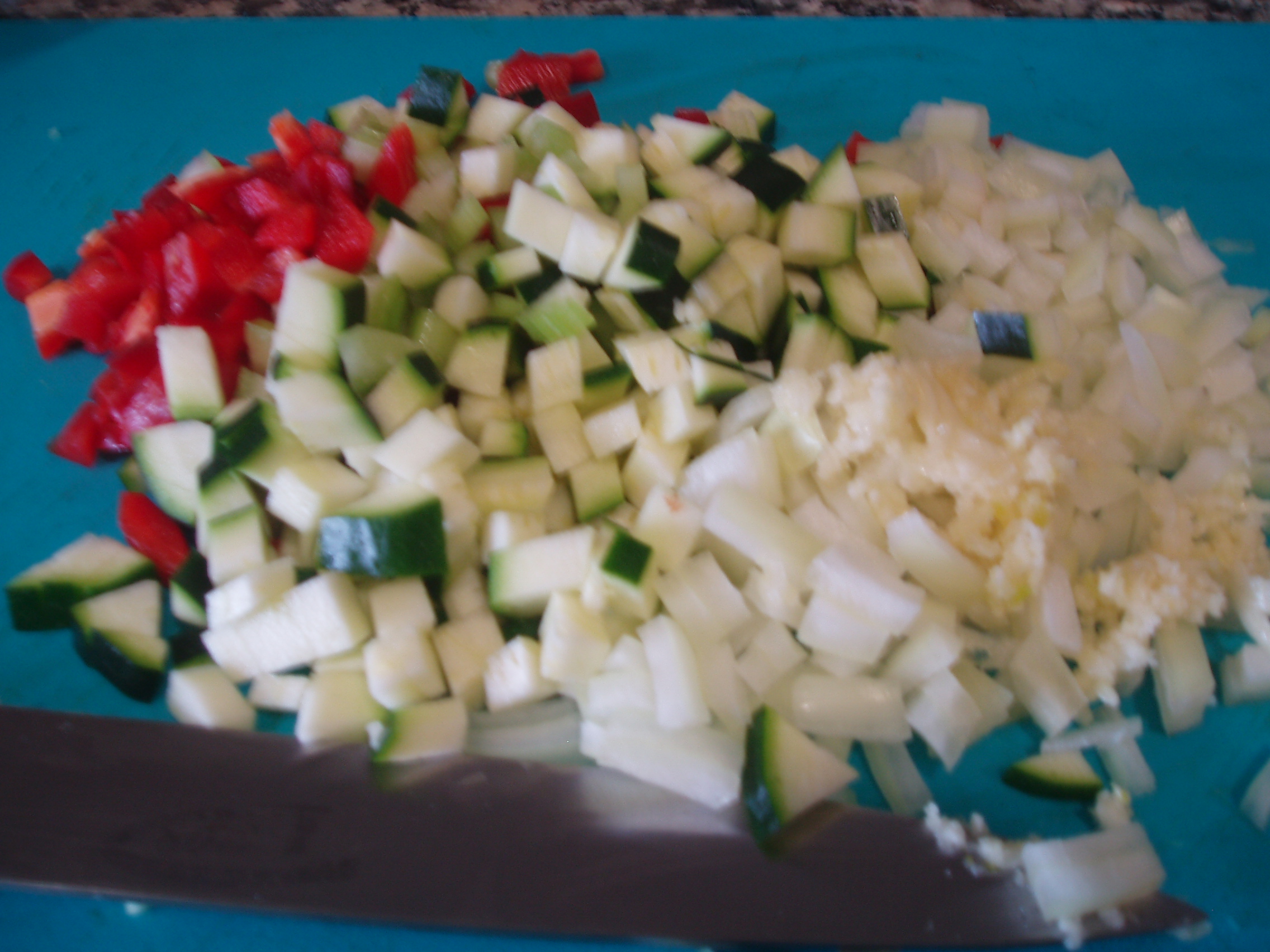
So, you start by sweating the peppers, onion, celery, garlic and courgette. Again, if you have other vegetables you want to use, feel free.  Peas or broad beans are good, but best thrown in at the end with the fish as they don´t need much cooking.

Beautifully Chopped!

Add your tomatoes and continue cooking gently for a few minutes.  I usually cook this in my favourite pan – a large, deep, non stick frying pan.

Now add your stock.  It will look rather dull and unappetizing at this point, rather like watery tomato soup.  Fear not.  Now you´re going to boil it, but not too fiercely, for about ten minutes and reduce it by about a third.  Pour yourself a glass of wine if you don´t already have one in your hand.  If not, why not?  If you want to serve this for guests, prepare it to this point, even the day before (but keep it in the fridge) and forget about it.

...with tomatoes
...with stock

When you´re ready to eat, heat the stock to a simmer and put all your fish in.  Start with the squid as it will take about 30 seconds longer than the rest.  Simmer gently for about 3-4 minutes and then serve.

If you think it´s not going to be enough to go round, or you fancy something a little more “robust” add your noodles before the fish and when it is almost cooked through, add the fish.  About a mug full would be good for this quantity leaving you with some soup and some thickness to the finished dish. The temperature has dropped here, and we´ve lit the fire, so we´re going with some Fideos today for a more filling meal.

If you want to make a paella (although the courgette is not very traditional, but hey, it´s your dish, you can do what you like with it), add the rice before the fish and cook for about 20 minutes.  A mug and half would be good – you want it drier than the soup, but keep an eye on it and add a little boiling water if it looks like it might dry out before the rice is cooked.  Add the seafood, stir, lower the heat and cover with a lid and leave to simmer for 3-4 minutes.  Turn the heat off and then leave to “rest” for about 5 minutes.

Action Photo!

Serve in large, deep bowls with plenty of fresh lemon to squeeze over and a sprinkle of chopped parsley.  Crusty bread and a salad are all that you need to go with this.  Delicious.  The Mediterranean in a bowl.

Swimming Pools and Prickly Pears

The morning dawned bright and sunny.  Nothing new there then.  Paco’s head popped up over the fence with a cheery Hola and a Buenos Dias to me.  Dressed in his customary straw hat, adorned with the Festival of San Isidro ribbon he told me that he had been out since quite early that morning collecting things.  However, he was a little concerned as I had been up very late last night but very quiet.  Was everything all right?  Yes, of course it was, I had just been watching a TV programme I had become addicted to.  Oh, of course, he said, the Spanish dancing.  Erm, no, it was an American series, which had been dubbed very badly into Spanish.

          Prickly Little Critters

“But don’t worry,” I told him, it had been the final episode of the series the night before (although I was still none the wiser with regard to the plot) therefore I was unlikely to have any more late nights which did not involve me either being outside on my patio, and therefore where he could be sure I was alright, or out dancing at a Fiesta.  Good, all ok then with regard to my health and well being.

“So, what have you been collecting then?”

  The answer involved much gesticulating and waving of a long prodded instrument, rather like a pair of giant tweezers, and a sturdy pair of gloves. 

Churros,” I said “are you sure?” 

“No, not churros, but chumbos.” 

Please note the first is a deep fried doughnut, which does not grow in abundance around here on trees, the second is a prickly pear.  Aha!  I was enlightened.  Now of course I had to go next door with a tub – not a plate or a bowl, but something sturdy please, made of plastic – for the peeling and collecting of the chumbos.  I decided that a bikini and a sarong was probably not appropriate attire for the task and put some clothes on.

Two rickety chairs had been set out, to make the whole experience more comfortable I was told, and we sat under a fig tree.  “Crikey, how long is this going to take?” I wondered as I looked into the giant chumbo bucket.  There was a procedure to be followed, and no messing around as chumbos can be deadly things if anyone inexperienced tries to tackle them.  They had apparently been picked very early that morning.  Well, 7.30 which is very early around here.  It would seem, I was soon told, that the spines which cover them are less “aggressive” at this time.  This task can also, I was additionally informed, be carried out when the heat of the day has died down.  I was on no account to attempt the dangerous picking of the chumbos on my own as no good would come to me.  Ok, I had been warned.

Next, the tasting of the first chumbo, which was pronounced by Paco to be perfect and off we went.  Paco was in charge of peeling and I was responsible for lifting them off the skin into the plastic tubs.  Delicate, ladies work. In between we talked about country things like animals and crops.  As you can imagine, I had little of interest to add to the conversation but Paco seemed most pleased with our chat.  I learned that figs are called Brevas before the feast of San Juan (which is I think around 23rd June) and Higos after this date (didn’t I know anything?!).  I was advised too that the pomegranates would be ripe after the feast of Santa Teresa (October some time?).  Note to self, check my mother’s calendar of the Saints.

After this gentle activity Paco decided that it was time for pool cleaning.  The word for clean here is Limpio, the verb is Limpiar.  There is an awful lot of limpiar-ing going on generally much of the time. Mostly it involves waving a hose around and “refreshing” things such as the patio or your own feet.  Anyway, pool limpiar-ing is a much more serious business so I decided to switch back to the bikini and sarong.  Paco seemed to think this was a good idea too.

The first stage in the procedure is to scoop off any dead flies, wasps, olive leaves etc which have landed in the pool overnight.  Easy.  Paco got the big boy’s net and I got the little one which looked as though I was about to go winkling round Morecambe Bay.

Paco then got onto his stomach and started trapping the poor suckers who had succumbed to a watery end in the deep end of the pool.  As my net had broken in half the week before – I pleaded Not Guilty – I could not even reach the bottom of the shallow end so jumped in and wandered around for 15 minutes or so fishing out spiders. I have to confess that I dragged this out for a bit as it was extremely hot and I was keeping cool.

Next came the fixing of the hose to the attachment, the letting in of air to the pipes and the starting of the motor.  Easy, yes, seen this done before.  No, there was to be no sitting around for me whilst Paco “hoovered” the pool.  I was sent to collect the special plastic broom (don’t even ask) and as I was the only one out of the two of us who could swim, I was sent down to the deep end to sweep.  Yes, you heard it right.  The next half hour was spent with me trying not to fall out of my top – as you can imagine, the Lycra has to work pretty hard for its living – and stay at the bottom of the pool whilst manoeuvring a plastic broom.  Being a particularly buoyant girl this was no easy task but Paco seemed to find it all very entertaining.

Finally, the pool cleaning session was over. Paco took to his sofa for the next five hours or so. I collapsed onto a sun lounger wondering if I could make a new career as a Cabana girl.

Easy Chicken Curry

Yum Yum!
Easy Chicken Curry

As Big Man was out and about today, and not home for lunch as he usually is, I thought I´d make the most of the opportunity to cook a curry – he´s not a big fan of them.  So, not having a ton of spices to hand but finding a jar of curry paste in the “despensa”, that´s a Spanish Larder, I concocted something quick-ish and delicious from what I found in the fridge.  Please bear in mind that I am not great at giving measurements.  This recipe could well have been made with no meat and lots more different vegetables.  I also like my curries with a lot of “sauce” so how much water you add to your curry is entirely up to you.  Start with a mug full and when is has reduced stop, if you like it “drier”, or add another mug and reduce just a little more.  It´s all down to personal taste.

  • Two small chicken breasts (from our own hens) diced
  • One medium tomato, peeled and diced (or about a third of a tin of tomatoes)
  • A mug full of split lentils, rinsed then cooked in twice their volume of water for about 10 minutes and drained
  • 1 small onion finely chopped
  • About an inch of fresh garlic, peeled and finely chopped
  • 2 fat garlic cloves, finely chopped
  • A small red pepper (the last from our vegetable garden from last summer, can you believe it in January?!) finely chopped
  • 8 leaves of chard (again from the veggie garden) with the white stalk removed (and given to the chickens) finely shredded
  • Three large tablespoons of Madras Paste (or whatever you fancy)
  • About a third of a block of cream of coconut dissolved in 150ml of hot water then beaten – but feel free to leave this out if you want a lower cal version of the curry
  • Water
  • Vegetable Oil

 So, in a medium (but deep) frying pan I softened the onion, garlic and ginger in about a tablespoon of oil for several minutes until it was transparent then added the tomato and red pepper for a further 5 minutes or so.  The heat was low to medium, so everything was “sweating” rather than frying.

Then I added the curry paste which I cooked off for about 2 minutes then threw in the chicken pieces, stirred it around for a few moments and added a mug full of water and the lentils.  I let this reduce, then added the shredded chard (but you could use spinach or just leave it out) and another mug full of water.

When this had reduced by about half I added the creamed coconut, cooked for about 3 minutes gently and that was it! If I´d had some fresh coriander to chop finely and sprinkle over, I´d have added this too.  Unfortunately I didn´t, so I just had to imagine it…

I served it with basmati rice, poppadums and a small bowl of yogurt to dollop and dunk.

It serves four if, especially if you make a side dish to go with it, two hungry people if not…

Stir it all in!

or just me today and leftovers tomorrow.  Enjoy!

How to Build an Infinity Pool

I soon settled into my new, relaxed, Spanish lifestyle.  This typically involved lazy days, with lots of sunbathing, splashing around in the pool and plenty of good food and wine.  My landlords came and went randomly, and various tractor driving locals passed by my gate at different times of the day.  I would wander through Paco’s allotment and pick vegetables for my salads, lemons for my drinks and peaches for my pud. I would feed the dogs and cats and, when feeling particularly energetic, I would strike up halting conversations with the bread man.

Although the days were laid back and stress free, life at Dolores’ Cortijo was never dull, let me tell you. As well as looking after the various animals, watering vegetables and waving to tractor drivers, I was a woman in charge of a swimming pool. 

Actually, during my first few weeks I was never actually expected to clean it which was a relief as it’s pretty hard work cleaning a pool.  I was allowed to dip a little plastic bottle in the deep end to collect water and when I got really good at this I was also allowed to add the chemicals to the “specimen pot” to test the chlorine levels.  By the end of my stay I moved on to taking huge tablets of chlorine out of a tub and adding them to the floating chlorine tablet holder and skimming dead flies off the top of the pool with a fishing net.  Responsible stuff.

As you can imagine, I was pretty popular with my pals back in England, and soon lots of visitors were queuing up to come out to stay with me.  Ria, she of best friend fame, was soon on a plane to check out the tractor driving farmers and swiftly signed herself up to join the future frequent visitors club.  Best friends are always good company as you never run out of things to say to each other, but you also don’t feel the need to fill the silences.  They get you through the bad times and share the good ones.  They tell you honestly what your new trousers look like and bring you painkillers after a big night out.  On extended Spanish holidays they help out around the house when they come to stay.  This is particularly good when they are damn fine cooks. And they are always up for a game of cards or a walk round the local lanes and tracks with the adopted dogs.  As Best Friends go, Ria is a star performer and will soon be getting a gold carriage clock in compensation for her long and dedicated service to the job.

Ria likes to sit in the sun like me, and although not quite such a water baby (ok, I really am more of a whale than a dolphin – but we can all dream), she soon got involved in pool maintenance.  A typical late afternoon would involve a couple of hours of advanced-level sunbathing – I do find that after many years if practice, I am now a particular expert at this –  followed by a five minute fly skimming session and 30 minutes of the Lilo Olympics before happy hour. 

The Lilo Olympics, for anyone not yet in the know, involves two, or more, adults straddling cheap inflatable mattresses and racing up and down a small pool while trying to knock the other person off their own lilo.  This is repeated until exhaustion, bought on by excessive laughing, forces you to stop and have a large glass of wine.  Sometimes the Olympics come to an early end due to the cheapo lilo deflating – mainly because of a puncture or an overly large adult sitting on something designed to take the weight of a seven year old child. 

Honestly, you’d think a 2 Euro mattress would last longer than half an hour.  Shoddy plastic aside, I really do think a session of Lilo Olympics should be prescribed by all doctors to patients suffering with depression.  I challenge anyone to not laugh while trying to get on (and stay on) a Lilo.

Paco and Dolores quite often drove up from Malaga and stayed in their Cortijo for the weekend.  They had arrived for a day or two and decided to give the pool a bit of a clean. After hovering, skimming and topping up the chlorine, Paco felt that the water level was a bit low.  Undoubtedly this was the result of an earlier extended session of the Lilo Olympics.  He decided to top it up before heading back to the bright lights of Malaga.

Ria and I arrived back from a shopping jaunt looking forward to a refreshing dip in the pool.  When we had peeled off our hot, sweaty clothes and slithered (Ria) and squeezed (me) into our cozzies, we headed over to the pool.  When we got there, the pool was overflowing, water was flooding through the ceiling of the pump house and the olive trees had been watered by a pool-full of chlorine….Paco had left the hose from the well running and in the pool. 

Yikes! Ria yanked the hose out of the pool and I scampered off into the wilderness of the various orange, lemon and olive trees to try to find the well the hose was attached to and switch the water off.  Alas it was all plumbed in properly, for a change, and connected to an electric motor, and I couldn’t work out how to stop it.  Despite feeling quite pleased that we now had an infinity pool, drastic measures were called for so I ran (ok, I walked – I most definitely don’t do running) to get my dictionary and mobile phone, babbling on to Ria about what a good opportunity it would be for me to practice some new Spanish words. 

After a quick practice of “when we got back from our shopping trip the hose pipe was running and in the pool” I rang Dolores.  I thought I did pretty well given the circumstances and my lack of experience with this particularly specialist vocabulary, but Ria seemed to think that I had somewhat over-dramatised the situation making it sound like the nearby lake had overflowed and flooded the valley to biblical proportions, and that the house was about to be swept away by a tsunami of chlorine scented water.

Anyway, Dolores said – at least, this is what I understood that she had said – that they would come back to sort it out.  For an hour or so, I have to admit that I wasn’t too sure if they were really coming back as the word for “to come back”, volver, sounds remarkably like the word for scrambled eggs, revueltos, and I was a bit concerned that there was a Spanish equivalent of “don’t worry about it, let’s have a nice cup of tea” which equated to “don’t worry about it, sit down and have yourself a nice plate of scrambled eggs”.   

Fortunately a couple of hours later they turned up (we could hear Dolores screeching at Paco from about a kilometre way) and not a single scrambled egg was consumed in the process.

Paco rummaged around in the pump house and switched the water off via a mission impossible style control panel and I watched and learned.  The pool started to drain and we all sat down to celebrate the aversion of a major crisis by having a few drinks. A couple of hours and several drinks later I asked Paco if he thought maybe he should check on the pool. Off he trotted with his straw hat on his head, for added Spanish country man style, to check things out.  A few minutes later he stumbled back a little shame faced. 

“So, was it all ok?” Dolores asked. 

“Fine, fine” lied Paco. 

As they pulled out of the house in the car shortly afterwards, Paco whispered to me to turn the hose off again in a few hours as he had found a paddling pool full of water and had turned the water back on as the pool needed to be topped up again to reach a swimmable level.  Oh dear, a pool girl’s job is never done.

Follow The Yellow Brick Road

On the road to my new found freedom and happiness I knew I was nearly at my destination because John had given me good directions. Once I was through the village of Ventas de Zafarraya, he had told me, I would pass a petrol station and then go through the Boquete, or mouth  –  which is a rather large crack in the mountain. The road would then move down from the plains I had been driving through, to the valley and round to the Lake (in actual fact another valley which had been flooded to make a reservoir) which is where he was based.

It was rather like the part in the Wizard of Oz film when it changes from black and white to colour. I drove through a village that would win no prizes in a beauty contest, past the petrol station, on through the gap in the mountain and suddenly the world changed colour. Spring was turning gradually into summer and the campo still looked fresh and green. The last of the poppies were still in flower and I was tempted to behave like Dorothy when she just lets go of her quest to find Oz for a few moments and runs through the field of poppies and falls asleep and dreams of home. But no, I couldn’t. I was on a mission, a journey, and I hadn’t got to Oz yet, I needed to keep going.

So I did. On I drove, down the mountain road, twisting and turning with my sweaty palms (again) clutching the steering wheel until the beautiful, crystal blue lake was in view and I finally pulled up outside the Yellow Bar. Not its name of course, but the colour it had been painted. And boy was it yellow. A bright sunshine coloured beacon in a world of white-washed villages. And what tasted like the best gin and tonic in the world at that moment in time. John had poured a gin down my throat to revive me – not that I had put up too much resistance – and I was soon smiling again through a few final sniffles.

The it was back into the car for the final few hundred metres of my journey and we pulled up at the top of a narrow track. I was a little puzzled as I wasn’t too sure where the house was. Up the slope. Of course. A bit like Rome being built on all those hills, it seemed to me that all houses in Andalucía were built on a slope. Well, I guess it kept the drivers of those big digger things in business levelling all those pieces of land for people to build their houses on.

To get to the house, we had to walk uphill across a neighbour’s field. And most obliging he was too. It seems that there was another route in, but this involved, unsurprisingly, a very steep road down through the village.  With very little room to turn the car back round, John sensibly realised that I probably wasn’t up to reversing back uphill on a narrow unmade road to get out again. Or perhaps, having known me for many years, he remembered my history of car incidents and made a prudent decision to avoid the possibility of me driving my hire car into the lake.

The problem of how to get my serious amount of luggage, shopping and wine bottles into the house was soon solved with the aid of a wheelbarrow and the Kiwi boys. We looked like a small army of ants carrying a heavy load back to the nest, but the beers I had bought which were still, remarkably, cold soon revived us.

Life began to take on a new rhythm for the next few days. Spending time with all my new pals, the builder boys, my Spanish came on a treat as apart from John, who spoke some Spanish, no one else spoke anything apart from English.  By default I became official interpreter for our little group. I guess they must have been pretty desperate to have to rely on me as, at this point, I was mainly speaking Italian and throwing in a French word or two when I wasn’t sure what else to say. My dearest friends were a Spanish/English Dictionary and a book of Spanish grammar which went everywhere with me.  Fortunately I had a very large handbag.  All conversations outside of the house took a very long time to conduct as I inevitably had to look most things up.

Before going anywhere, mainly to visit Estate Agents, I had to prepare a little speech in preparation for what I was going to say. I became quite proficient at saying “I am looking for a house or apartment to rent from now until the end of June either by the sea or in the campo, preferably with a swimming pool”. I even got to the point where I could understand the answers. Mainly because these were generally of the “You must be joking Señora, you can have something for either a fortnight,” although they say fifteen days here, which seems a little odd “or a year”. Hmmm.

I did also learn lots of other new and useful words as I needed to repay my kind hosts and help out where I could. These were predominantly of the technical kind such as “trailer”, “cement” and “a hundred weight of rubble”. As John and the boys were doing a bit of property refurbishment, my role as translator mainly involved accompanying John on visits to builder’s merchants and at one point an immense ironmonger-like warehouse to find a bolt for the wheel of his broken trailer. I believe I was, at one point, in negotiation for a medium sized tractor and an aluminium trailer with a man called Antonio who had a tendency to blush every time anyone addressed him. Being a typical “entrepreneur” he also ran an estate agency business and had a house he wanted me to rent. Somehow it all seemed to be tied in with the tractor/trailer deal so I thought it best to put that one on hold.

Of course, those few days were not without another car drama and I lost the hub cap from my hire car down a rather scary road. I returned to the scene of the incident the next day and found it next to the rock I’d had the altercation with and retrieved it. Remarkably the car was completely unscathed (apart from now having three pristine hub caps and one very dented one) but I was convinced that I had lost control because I had been on another serious food and wine shopping trip and was rather weighed down with bottles.

I think I must have spoken to every Estate Agent within a 50km radius, and believe me, there were plenty of them, before I finally found myself somewhere new to set up base. Home for the next six weeks or so was to be an old, very traditional-style house in the campo i.e. in the middle of nowhere. I would have neighbours though, the couple who owned the house – Dolores and Paco – and their dog Nacho and the cat Miso. I found out, several years later, that I had misunderstood and that the cat was not actually called Miso.  It turns out that this is the sound that Spaniards make when calling a cat.  Rather like the English saying miaow or “here kitty, kitty”. 

When the Estate Agent took me to view the house we set off down another twisty turny track. I remembered thinking that even if the house was perfect I couldn’t take it on as I would never be able to drive down this road alone.  I had been forced to pull over to hug the left hand side of the road because, on the right there was a huge crater and we would have fallen down a large gulley into the valley below if we had hit it. There were pot holes galore.  Luckily I had taken out the extra insurance offered to me at the airport which covered damage to the under carriage of the car and I knew that it had been a wise investment.  There were bits of the road which had simply fallen away, there were narrow parts (in the style of Montefrio) which squeezed between houses through a tiny hamlet en route and random goats, sheep, cats and dogs either sitting in the road or wandering across it all the way there.

Dolores met us at the house to show us around. The Estate Agent had warned me that she was very chatty and a little bit loca – crazy in an endearing way. No sooner was I out of the car than I was being hugged and kissed by Dolores as though I was a long lost family member. The dog was jumping up at me and covering me in Spanish dog slobber kisses and the house was just waiting to cast its magic spell on me. Old, it most certainly was – but in a crumbly, charming way, rather than the damp and decrepit style of my previous accommodation. It had a terrace with a grape vine over it, big double doors into a huge farmhouse kitchen with a fireplace, mismatched sofas and chairs, five bedrooms with beds for fifteen people and the smallest bathroom in the world.

It was love at first sight. I had another “Dorothy” moment. Honestly, I felt as though I had clicked the heels of my ruby slippers together and was back home in Kansas. Well, it was called Los Marines to be exact, but it just felt so right.

My new neighbours were due to be around for a few days getting the swimming pool ready for me (get me eh?!) as they lived mainly in Malaga City Centre and came out to the campo at the weekends and for the hot summer months of July and August. Getting the swimming pool ready meant that Paco had to spend two very hot days up a ladder, inside possibly the deepest swimming pool in the province of Malaga painting it swimming pool blue, before filling it up – another two day job – when the paint was dry. Why waste good money tiling a pool when you can spend a week of your time every year sorting it out again? In my care they were leaving behind Nacho to be my own personal guard dog and companion.

I moved into the Cortijo, as we locals call our country houses, only to find – horror of horrors – that there was no corkscrew. At that point I very nearly threw in the towel and got on the next plane back to London but luckily Dolores came up trumps by digging out a very old fashioned corkscrew from the depths of her own house. Dammit – I wasn’t going to be defeated at this point by a bendy corkscrew.  I beat it into submission and soon it was popping corks out of bottles for me left, right and centre.

On my first evening of splendid solitude and calm, my kindly landlady also bought me over a basket of still warm peaches from the many peach trees on their finca.  That’s an Estate to folks like you and me.  She proudly presented me with a bag of lemons from, of course, their lemon trees for my gin tonicas. What luxury, fruit that tasted of what it was supposed to taste of. That was it.  My Spanish life had finally kicked off properly and I immediately got into the swing of taking it slowly.  Mañana, mañana. The house was lovely (no mould, no gypsy riots) with loads of room, plenty of privacy and lots of sunshine. Perfect – all I had to look forward to was weeks on end of peace, quiet, an almost all over tan and gallons of cheap wine. And hopefully, not much else. More fool me.