I know from previous comments that many of you have a sewing machine tucked away gathering dust. Perhaps you´ve mastered a straight seam on your machine, but not really progressed beyond that. Well, fear not, your machine will now be able to pay you back and save you the expensive costs of having to take too long jeans or chinos to the tailors for adjusting.
I know that whenever I´ve taken the “lazy” route I´ve thought “How much? Crikey, that´s almost what I paid for the trousers!” Also, when I buy something new, I want to wear it RIGHT NOW and not a week on Wednesday.
So…grab yourself a pair of long jeans, your dusty old machine and half an hour of your time and you´ll be set to go stepping out in your lovely new trousers.
Start by unpicking the old seam. Don´t skip this step, you don´t want a huge bulky hem swinging round your ankles now do you?

Measure the length of the original hem (where the hem hit the floor to the cut edge of the fabric) and take note of this measurement. Let´s call it A.
 Now measure your inside leg. A handy friend or loved one who you can trust intimately with this is useful! Otherewise measure a pair of trousers that fit well along the inside seam from the centre join to the floor. This is measurement B. Now put a pin in your new trousers at measurement B from the inside leg top seam and then another pin the distance of A from the first pin.
If your trousers are only an inch too long, you´re in luck. Your cutting line will probably be the old base line of the original trousers. If it´s different, add a few pins or mark with tailors chalk or even biro (you won´t see this when you´re finished) all the way round and cut the bottom off. Don´t try and be clever and cut through both sides at once. Apart from hurting your hands when you cut, you´ll probably end up with a wonky edge. Cut upwards to the line then round.
 Don´t throw these little strips away, they will be useful in a moment.
Now do a double fold up to the B pin mark and either pin or pin and tack (baste) your trousers.
 Try them on again! You´re about to sew them, so you want to be sure you´ve got it right. Now iron the bottoms from the inside. Don´t skip this step either, it will make sewing so much easier!
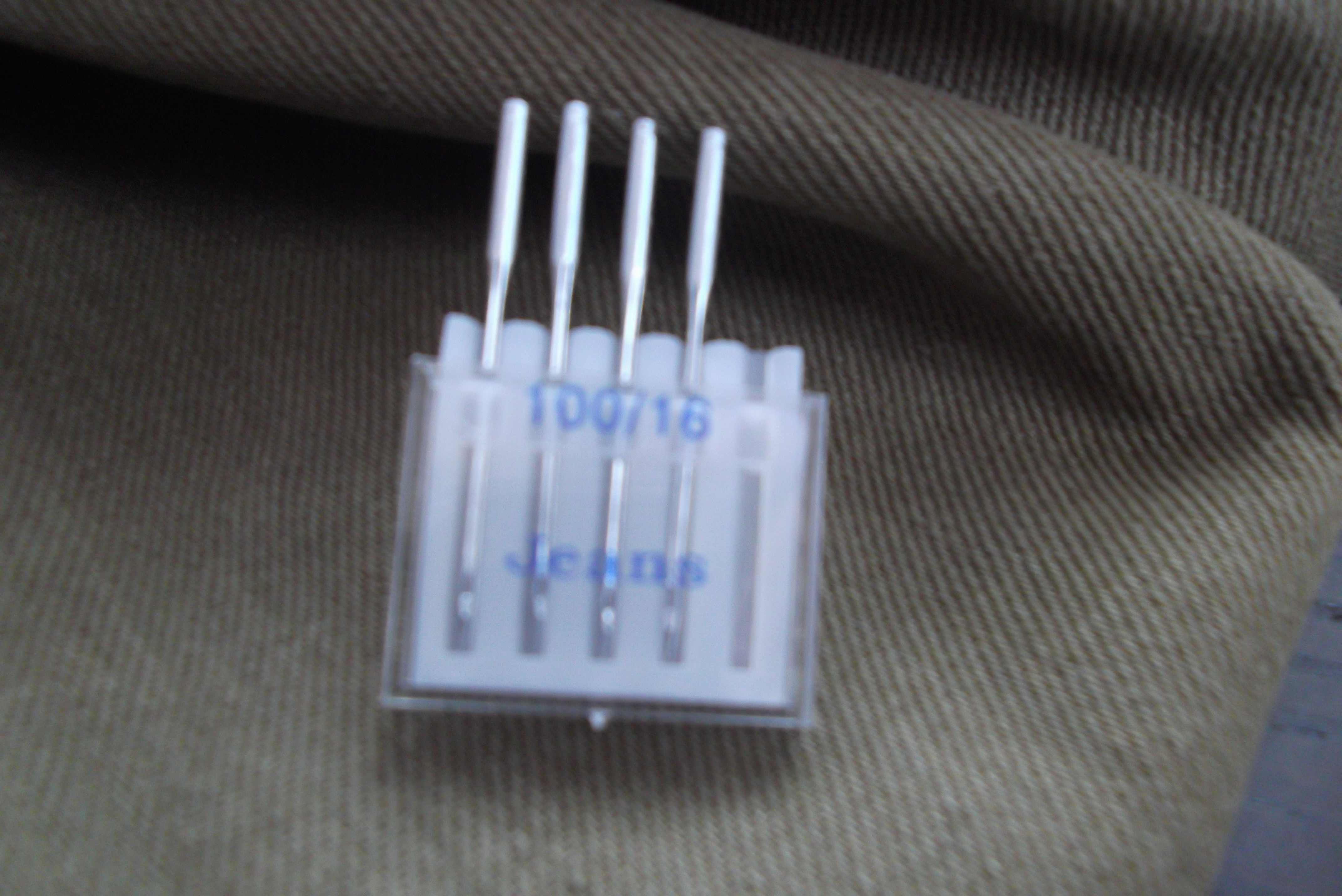
 I recommend using a heavy duty needle – a pack of 5 only costs about a euro here, hopefully they´re not expensive where you are and you´ll get a much better result.
 Either match the thread to the existing stitching or find something close to the colour of your fabric.
Now you´re going to just have a little play with those strips of material you saved. Stitch along on one of these strips, checking the colour and stitch length.
 Take the wide extension piece off the machine if you have one (Sorry, I don´t know what it´s called and I never use mine) so that you can slip the trouser bottom straight onto the machine ready to stitch.
Start stitching – I recommend you start just before the inside leg seam so that you are sewing the back first. In this way, if anything does go wrong (but it shouldn´t!) it´s less noticeable.
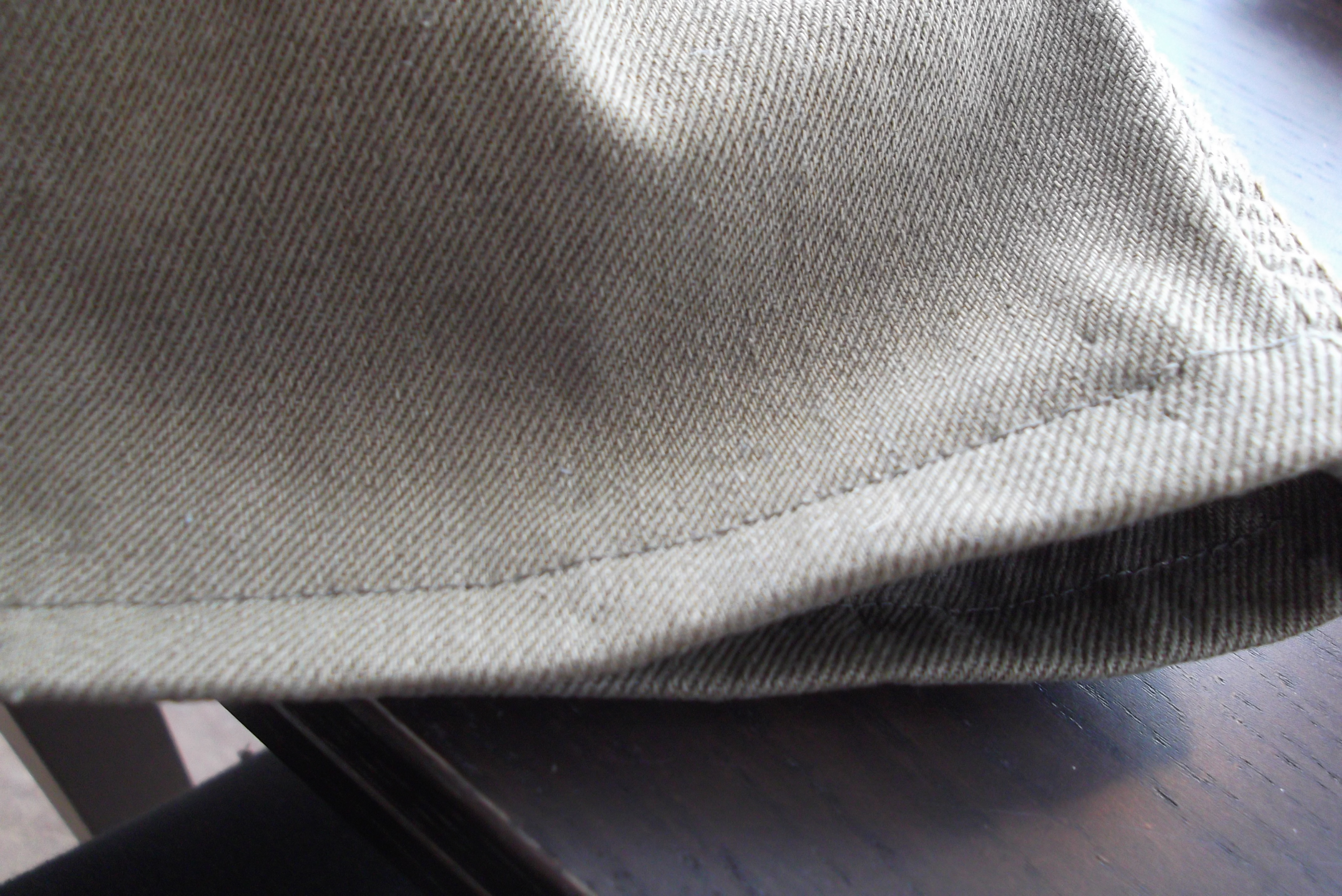
 Sew right round, cut your threads and admire your lovely new hem.
 Don´t forget to remove the heavy duty needle and replace with the usual one.
PS. Shortly after making these adjustments (to Big Man´s trousers) He Broke My Very Special Left Handed Dressmaking Scissors!!! He said he wondered why they didn´t cut the plastic cabling he was trying to chop….I am trying to be understanding but He Broke My Very Special Left Handed Dressmaking Scissors!!! I´ll be over it soon. Maybe.


 Chica Andaluza