Hot Cross Buns for Good Friday

Hot cross buns,
Hot cross buns,
one ha’ penny,
two ha’ penny,
hot cross buns.

If you have no daughters,
give them to your sons,
one ha’ penny,
two ha’ penny,
Hot Cross Buns

So, Easter is upon us and Lenten fasting and abstinence for those who participate is soon at an end. One of the delights of this time of year when I lived in the UK was to eat Hot Cross Buns. They are sweet, spiced buns marked with a cross to commemorate the Crucifixion.

Finally...lovely buns!

Mad Dog did an excellent post last week about the same subject, and I wish I had gone to his recipe suggestions when I first decided to make some.  I have made them here in Spain a few times and I have several recipes…but do you think I could remember which one I had used?

First of all I tried Delia Smith´s recipe – aside from deciding to make the dough in my bread maker then forgetting it was in there on a bake programme…well, the result was a hugely over risen loaf that was raw in the middle.

Oh no Delia...you let me down!

Next up a Rachel Allen Recipe….they would have been good to use as missiles in a Mediaevel battle recreation.

Finally I turned to the BBC Good Food Website. Here is the original recipe, but my version is below as I found the dough a little too wet and I wanted more spices.

For the Dough

  • 300ml of full fat milk
  • 50g butter
  • 550g strong bread flour
  • 1 tsp salt
  • 100g caster sugar
  • 1 x 7g sachet of easy blend yeast
  • 1 small egg, beaten
  • 75g sultanas
  • Up to 100g of chopped mix peel
  • Grated zest of half a lemon and one orange
  • 2 tsp mixed spice
  • ½ teaspoon of ground ginger

For the Cross

  • 4 tablespoons of flour gradually mixed with drops of water until a thick paste is made

For the Glaze

  • 4 tablespoons of sieved, warmed apricot jam

Bring the milk almost to the boil, drop the butter in and stir until the butter has melted and then put aside to cool to hand temperature.

In a bowl mix the flour, salt, yeast, spices and sugar and add the milk mixture and egg.  Mix with a wooden spoon, then with your hands then remove from the bowl and begin to knead. I still found it overly sticky but my egg was very large so I added small amounts of flour gradually until the dough was workable. Knead for about 5mins and then put into a lightly oiled bowl, cover with a clean tea towel and leave to rise for about an hour or until doubled in size.

When risen, knock it back and add the fruits and peel, knead again and leave to rise a second time. This is not for people in a hurry!

After the second rise, knock the dough back again and dived into equal sized balls for the buns. The original recipe suggests 15, I got 24 good sized buns from my mix.

Place the buns, slightly spaced apart on lined baking trays, cover with tea towels and leave for another hour.

Heat the oven to 200 degrees C (the recipe says 220 but I did the first batch at this temp and the bottoms burnt slightly). Now you need to pipe the flour paste over the buns into crosses. I used a sandwich bag with a point cut off the end to do this.

Bake for about 15 minutes until golden and gorgeous. Warm the jam and brush over the still warm buns to glaze.

Enjoy as they are or split (toasted or not) with butter. Happy Easter to you All!

Parpuchas – Salt Cod Fritters

Salt cod is a typical Lenten Food in Spain. Whilst the country is not considered as strictly Roman Catholic as it once was, some traditions still remain.

This week is Holy Week, most towns and villages as well as the major cities join in the commemoration with what some might consider quite excessive displays of idolatory. I admit it´s not for me, and I find the penitents who carry the statues around dressed in outfits many of us associate with the Klu Klux Klan  quite disturbing, but I respect the traditions and am happy to join in the with eating and drinking.

Holy Week Procession in Ubeda April 2011
Barefoot Penitent

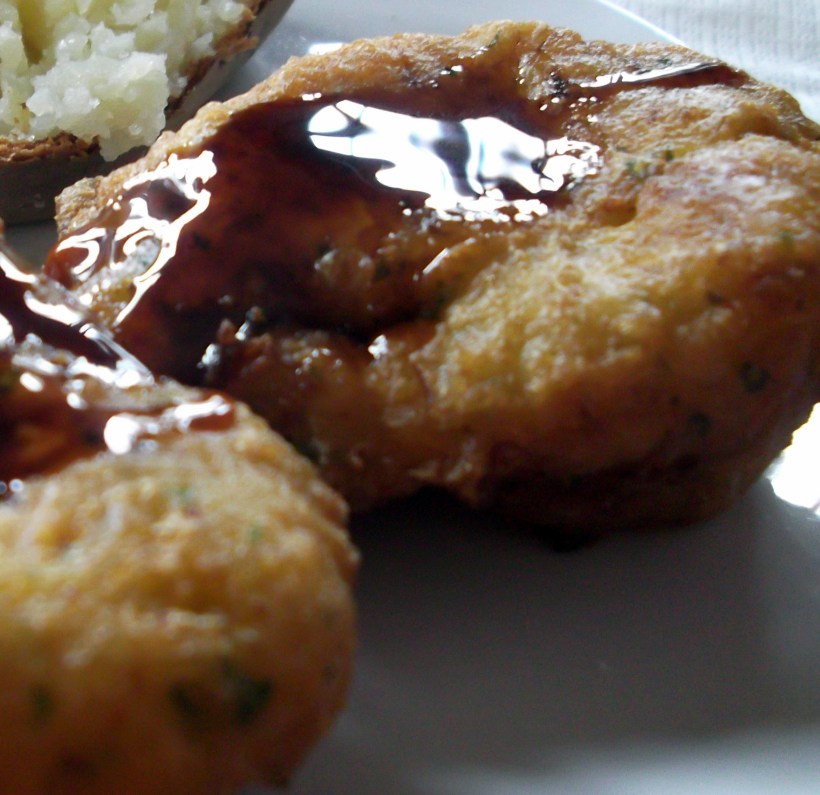
Parpuchas are known more widely as Tortitas de Bacalao, but they are a very typical dish of Andalucía.  This name may well just be specific to this area.

They are easy to make and if you don´t have de-salted salt cod, fresh cod or any other firm fish would still give you some tasty fritters.  Here they are typically served with Miel de Caña, or Molasses, in the same way as Berenjenas Fritas (Fried Aubergines),but if you prefer lemon…well, I won´t tell anyone!

To make about 15 large fritters or 20 smaller ones

  • 200g salt cod, shredded into small flakes
  • 2 eggs, beaten
  • 1 cup of milk
  • 1 teaspoon of bicarbonate of soda
  • 1 cup of flour (approx)
  • 2 large tablespoons of finely chopped parsley
  • 1 finely chopped or crushed clove of garlic
  • Salt to taste if you are not using salt cod
  • Oil for deep frying

Add the milk, bicarbonate, parsley, garlic and fish to the beaten eggs and then gradually add the flour until you have a thick batter.  It needs to be about the texture of thick lumpy custard (not that any of you, I am sure, have ever made lumpy custard!).

Heat the oil until a cube of stale bread turns brown quickly when dropped in and then drop spoonfuls of batter into the oil. I used a tablespoon and it gave me rather large parpuchas – I´d recommend using about half a tablespoon full as they will puff up slightly. When they are brown on the bottom (and they will float to the top), flip them over and cook on the other side. They will not be in the oil for long.

Remove with a slotted spoon, drain and sit them on kitchen paper for a few moments and serve hot, drizzled with Miel de Caña (to be typical) but also good with  lemon or tartare sauce. If you make too many, they are still very tasty cold as they retain their texture.

Salpicón De Mariscos – Seafood Salad

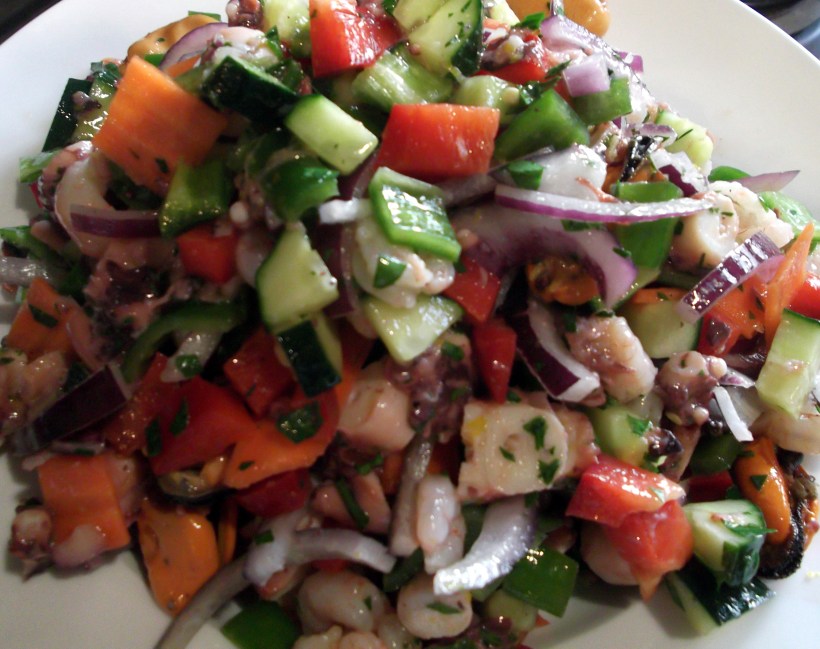
So many colours!

A typical tapas here which offers the best from the sea and the best from the salad garden is a Salpicón de Mariscos. We also enjoy it as a light lunch or supper dish or a starter.  Of course, there are many ways of making it, depending on what you have available.  Avocado? Yes, put some in. Don´t like cucumber? Leave it out.

Here´s my version which I also made a lemon vinaigrette for.  Typically though it would just be dressed with salt, white wine vinegar and olive oil.

Serves four as a starter or two as a main course.

Vegetables (all to be chopped into roughly 1cm squares)

  • Two long thin green peppers or one green bell pepper
  • Half a large red bell pepper
  • One medium red onion (or a sweet white onion). Tip…if you thinly slice and then leave in iced water for about 30 minutes and then drain before adding to your salad, it will remove any harshness of flavour
  • One small cucumber, partly peeled
  • Two carrots peeled and cut into thin strips with a peeler (this is not typical, but I enjoy the crunch and colour) and then cut into smaller pieces
  • One large salad tomato (add this just before serving)
  • Two heaped tablespoons of chopped flat leaf parsley

Seafood

  • A mixture of cooked prawns, octopus, mussels – I had about 2 cups in total

Dressing

  • One clove of crushed garlic, half the juice of a lemon, olive oil (you want 3 measures of oil to one of lemon), salt, pepper, half a teaspoon of sugar, a quarter teaspoon of English mustard powder (or use half a teaspoon of made up mustard)

Also – the grated zest of one lemon

Method

Mix together the salad and seafood.  If you are using tomato (and/or avocado) add just before serving.

Shake the dressing ingredients in a jar, taste and adjust seasoning to your preference.  Pour over the salad and mix gently.

This benefits from sitting somewhere cool  (but not cold) for at least an hour before eating. Otherwise you can make ahead, store in the fridge and then remove it an hour before serving.  Add the tomatoes and/or avocado if using, grate over the lemon zest and give it one final stir.

Have plenty of crusty bread to hand to mop up all those lovely lemony juices.

Sewing Sunday – Vogue V8789 Dress

So, look away now if you don´t want to read about sewing!

Still with me? Good! On my last trip to London I treated myself to two very nice dress patterns and some fabric with the idea of making myself dresses to wear to weddings. There are an awful lot of large weddings to attend each summer as it´s typical to invite the whole village. Factor in the fact that Big Man is one of 10 children and you can imagine how many nieces and nephews there are to be married off over the years!

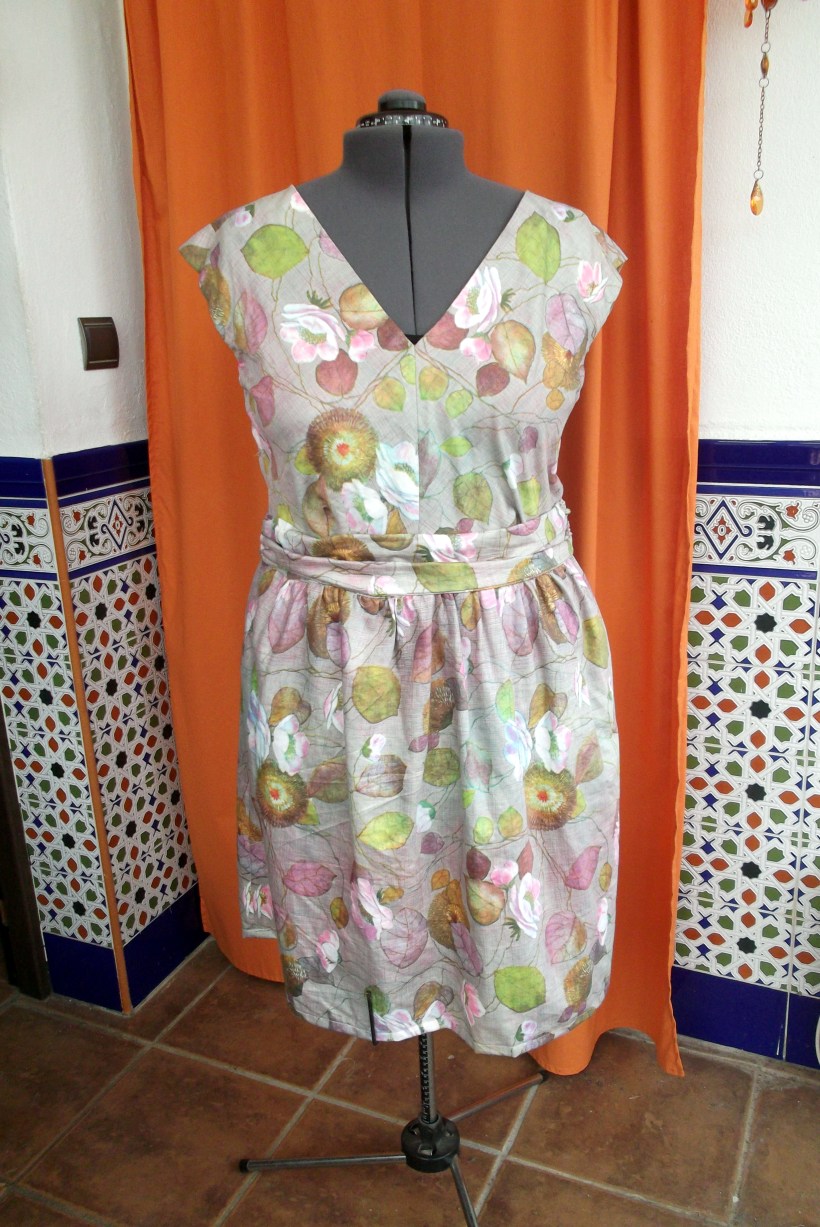
Wish I had a waist like that!

Last year I was in the UK and stumbled across a find of vintage fabrics which the shop owner told me had been found packed neatly away in a suitcase. The lady who had bought the fabrics had died and her son had been going through her things, a sad thing to have to do, but I am glad that her fabrics have seen the light of day again.

New and Vintage Fabrics

The son believed they dated from the mid 1950s, a time when rationing in the UK was being eased off and the rules which applied to dressmaking during the war we done away with. This is true, because of the chronic shortages of pretty much everything, there were even rules about how wide skirts and trousers could be, restrictions on pleats and darts..because it all used up so much fabric. Think about the tailored looks during the 1940s and then (especially for women) the full skirts of the 1950s. I can imagine a young woman going out and choosing some lengths of brightly coloured fabrics anticipating what she would make with them. I wonder why they were never made up?

There was not enough fabric for me to make up the Vogue pattern I chose with a full skirt, so I adapted. The photo doesn´t really do the fabric of the dress justice. It´s a grey Sunday here in Spain so the photos look a little dull.

Should have ironed it before snapping it!

The dress is a trial run for the Going to the Wedding Dress. The second one will be made out of a gorgeous orange and brown fabric and will be fully lined, and I will be using some techniques which are new to me. French seams, a grosgrain waistband and a horsehair braid hem.

I should finish it this week, so as soon as it´s done, I´ll post more photos.