Couscous – Two Ways

Now that the heat seems to have arrived (and looks to stay), we make the shift to summer food. Fast cooking, not so much time spent in the kitchen, and a lot of cooking on the barbecue…as long as we can find a shady spot for it.

Couscous ticks a lot of the boxes as it´s so quick and easy to prepare, and provides a blank canvas to work with. I´m sure many of you have your favourite ways of preparing it, and I´d love to hear what they are. Here are a couple of ways I´ve served it recently. Both versions serve 4 as a side dish and were made with 1 cup of cous cous prepared according to the packet instructions and served chilled.

Couscous with Mushrooms and Courgettes

  • 1 medium onion, 1 cup mushrooms and 1 medium  courgette all finely chopped and sautéed until soft.
  • Mix with the cous cous, season and dress with olive oil, lemon juice and some finely chopped parsley.

Couscous with “Gazpacho”

  • Inspired by our summer favourite, I mixed the cous cous with finely chopped red onion, tomato, cucumber, green pepper and mint and dressed it (after seasoning) with olive oil, white wine vinegar and some finely chopped mint.

Two simple dishes to inspire and feed you.

Sewing Sunday – Safari Skirt

As some of you may know, I enjoy a trip to the local (well, 50km away) Charity Shops, I think they´re known as Thrift Stores in the US. There are several reasons for this. I´m not a sylph-like babe but I´m not a pensioner yet. Many clothes made here in Spain for the more…shall we say…curvaceous woman, are designed with a 90 year old widow in mind, so I don´t tend to even find many new clothes which I´d actually want to wear.

Secondly, I love to sew and enjoy the challenge of refashioning a well made garment into something for myself and knowing that rather than ending up in a landfill somewhere, it´s enjoying a second life.

Finally, the charity shops are there to provide much needed help to those in need. The two shops in the little town I go to support different causes. One (CUDECA) is a Cancer Hospice for the terminally ill which makes no charges at all to anyone living in Andalucía who needs to spend their last days in such a facility.  The second, (APARIV) rehomes stray dogs, of which there are a huge amount. The second charity also ensures the dogs are fit, well and (very importantly) sterilised or neutered, before they go off to their new homes around Europe.

So…here´s a typical refashion for me. I find a lovely dress which is way too tight across the chest, but fits me from the waist or hips down. I couldn´t get it onto my mannequin Marilyn, as she is set up to be roughly my shape (poor thing), but you get the idea. Do make sure to wash the garment first (apart from the fact that it will need a good wash, you want to make sure it doesn´t shrink after you have altered it). I loved this fabric as, apart from being in my favourite orange, the print made me think of safaris (a dream of mine)!

I started by measuring where I wanted the hem of the skirt to be on me.  I then pinned the outer fabric and inner lining all the way round just above my natural waistline and then cut the dress just above the pins.

After tacking the fabric and lining together (you could also machine this) I turned the fabric in to create a new waistband leaving enough space to thread ribbon or elastic through. I´ll show you another day how I do a similar refashion but with a zip. I sewed by hand (because I enjoy it) but this could easily be done with a machine.

Finally I threaded some ribbon through (I have since bought some matching ribbon, but it ties and hangs on the inside anyway).

The finished skirt, which will be enjoying the summer with me up the mountain!
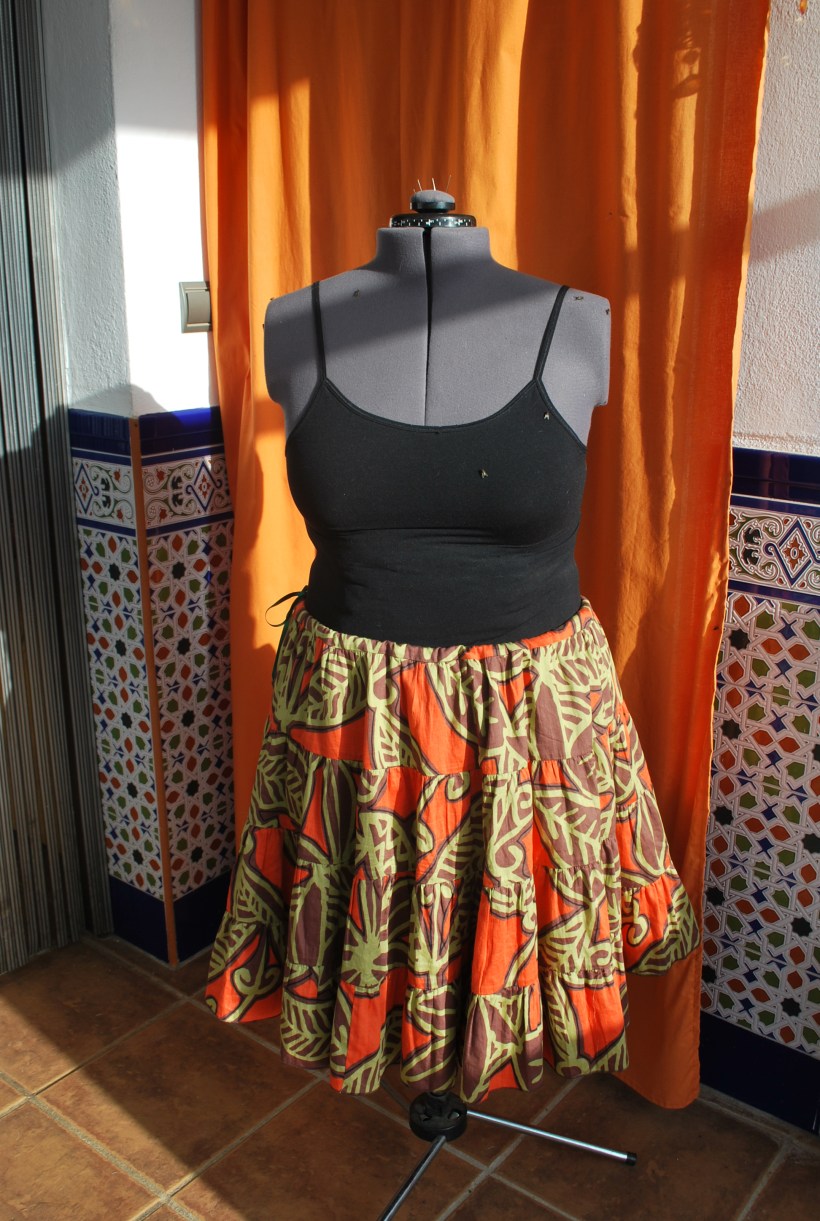
This is a great technique to use on any skirts you have hanging, forgotten, in your wardrobe because they are a bit tight at the waist. As long as you don´t mind losing a little length, you can cut them down from the waist and – voilá – you have a wider waistband which you can then refashion as above and either insert elastic (or ribbon) or move the zip down.

And don´t worry, the top half will be refashioned into a new top for one of my more petite friends.

Tarka Dhal

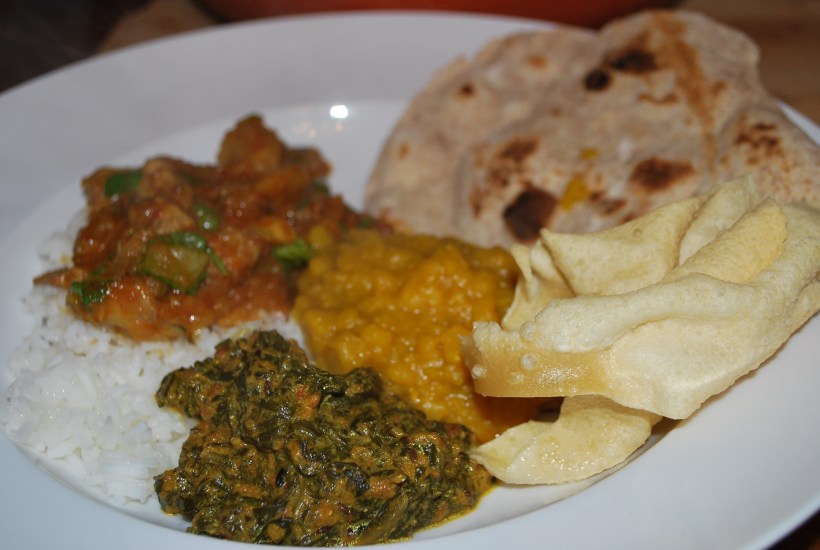
Keeping with the recent Indian theme, a final recipe (for the moment at least) from the very reliable Anjum Anand. A delicious side dish or vegetarian main dish as part of a curry meal. I have eaten versions of this dish which have been thin like a soup, thick like a paté and others which are between the two (like this one). All are equally tasty and delicious with roti or any other Indian flatbread.

Ingredients

  •  250g/9oz chana dal (yellow dried split peas), rinsed until the water runs clear
  • 1 litre/1¾ pints water
  • 3 tbsp vegetable oil
  • 1 tbsp cumin seeds
  • 1 small onion, chopped
  • 1-2 whole green chillies, pricked with a knife
  • 2cm/¾in piece fresh ginger, peeled and cut into thin strips
  • 3 crushed garlic cloves
  • 3 small crushed tomatoes
  • ¾ tsp ground turmeric
  • ¾ tsp garam masala
  • 1½ tsp ground coriander
  • salt and freshly ground black pepper
  • handful chopped fresh coriander leaves (optional)


Place the lentils and 900ml/1¾ pints of the water into a pan, stir well and bring to the boil. Skim off any froth that forms on the surface of the water with a spoon. Cover the pan with a lid and reduce the heat to a simmer. Simmer, stirring regularly, for 35-40 minutes, or until the lentils are just tender, adding more water as necessary.

When the lentils have cooked through, remove the pan from the heat and use a stick blenbder or potato masher to break down the lentils slightly (optional). Set the mixture aside to thicken and cool.

Meanwhile, heat the oil in a pan over a medium heat. Add the cumin seeds and fry for 20-30 seconds, or until fragrant.

Add the onion, chillies and ginger and fry for 4-5 minutes, or until golden-brown. Add the garlic and tomatoes to the pan and stir well to combine.

Add the ground spices and 100ml/3½fl oz of water to the pan and stir well to combine. Season, to taste, with salt and simmer over a medium heat for 15-20 minutes, or until the oil from the sauce has risen to the surface of the sauce.

Add the cooked lentils to the sauce and stir well, adding more water as necessary to loosen the mixture. Bring the mixture to the boil and season, to taste, with salt and freshly ground black pepper. Stir in the chopped coriander (if using) just before serving.

This recipe can also be found on the BBC website here.