Although we live in a fairly isolated hamlet, Bread Man stops by every day except Sunday and we also have another one that comes three times a week. No problems getting hold of that staple carbohydrate for us. However, I enjoy making bread, and don´t always fancy the same type every day, so we restrict our deliveries to three times a week and then I make whatever takes our fancy.
This recipe is one that I generally mix up in the bread maker, but cook in the oven. I do this because I prefer the more rustic shaped loaves I get when I finish them off myself, and because I can cook them with a pan of boiling water at the bottom of the oven to give them a great crust.
Ingredients go into the bread maker in this order
350 ml of water
1 tablespoon of olive oil
4 cups of strong bread flour
Half a cup of whole meal flour
1 ½ teaspoons of salt
1 sachet of easy blend yeast
This dough can also be made without a bread maker as I used to use this recipe before I bought one. I made the bread using the all in one method i.e. put all the ingredients into a bowl and mix by hand until they come together, then knead for at least 15 minutes until the dough starts to become silky, leave to rise in a lightly oiled bowl and covered with a floured tea towel. Leave to double in size, knock back, knead again, leave to rise and then a final knock back and shape into your loaf then leave to rise a final time.
Whichever method you use, put your loaf onto a floured surface which you will be able to use to slide the bread into the oven and onto a heated baking sheet. I have some flexible chopping boards which work fantastically for this.
When you have shaped your loaf, cut a few slashes in the top and sprinkle the surface with flour. Heat the oven to 180 degrees Celsius and put your baking tray inside. Heat a kettle or saucepan of water and when you are ready to cook, place a deep tin at the bottom of the oven and fill with hot water. Slide your loaf onto the baking tray and cook for about 45 minutes. Exact timings will depend on your oven, but it should sound hollow when tapped on the bottom.
Remove from the oven and allow to cool – try to resist cutting into it while it´s still hot, or you´ll end up with lots of crumbs and slices of bread with holes in them!
En joy with your favourite toppings – butter, cheese, jam or with a drizzle of olive oil and a sprinkle of salt “al estilo Español”. Or try this http://wp.me/p1hSAl-12 which is My Favourite Spanish Breakfast! (Sorry. am having huge problems inserting links, so it probably doesn´t look pretty, but it links to another recipe)
A day when I feel like an exhausted mother who has been given an hour´s respite while her partner takes the children to the park for an hour. Big Man has taken the dogs out for a walk and I´ve just made myself a cup of Lady Grey tea and plonked myself down on the sofa. I´m sure real mums have it a lot worse, as it´s constant, but I have spent a lot of time with little people today and it´s worn me out! Probably because I´m not used to it, at least that´s my excuse.
Having said that, it´s been a fun day. Tomorrow in Spain it´s the feast of San José, Saint Joseph, which means it´s Father´s Day here. One of Big Man´s sisters is a teacher at the local primary school and I went along to help her out with classes today to get gifts and cards sorted out for the Dads.
The day was focused on healthy eating, balanced diets, and talk about vitamins, minerals, calcium, protein etc. All pretty advanced for 7 year olds I thought, but they loved it. We made Fruit Salad, which is called Macedonia here, and the children ate this in their morning break. We also squeezed some oranges that one of the dads grows and made a Moroccan dessert of sliced oranges sprinkled with a little sugar and cinnamon. All were made with much laughter and consumed without a single cry of “I don´t like fruit”.
Cards with hearts and sunshine were also made and finally we moved on to some Moroccan pastries (a recipe from one of the mums who comes from there) made with ground almonds, eggs, butter, grated lemon and coated in icing sugar. Good, sticky, messy fun.
This afternoon was spent with Big Man´s niece who is studying English at the University of Malaga and we had a conversation class. To get the ball rolling, I asked her to help me prepare some jam, which she happily did, and we covered a whole new cooking vocabulary which is not usually studied in a typical language class!
A few weeks ago I bought a bag of frozen mixed berries. I think they´re called Fruits of the Forest sometimes. We only used a little which I had whizzed up with yogurt, but I think the fruit had been picked very much out of season and was eye wateringly sour. There was nothing for it but to convert the remaining 600g from a 1kg bag into a delicious, and beautiful, mixed fruit jam. Here´s how we went about it:
600g berries
600g sugar (any amount if fruit and sugar will do, but they need to be equal quantities)
2 apples, peeled, cored and finely chopped
The juice of 1 large lemon
2 tablespoons of water
A large, deep saucepan
Wooden spoon
A saucer
2 or 3 clean jars and lids
Start by putting the apple and water into the saucepan and bring to a simmer. As it simmers, mash with a fork or potato masher. This will only take a few minutes.
If you´re going to sterilize your jars in the dishwasher, put them in now as this jam doesn´t take long to make. Put your saucer in the freezer for testing the setting point of the jam later.
Warm gently until the sugar has dissolved
Add the lemon juice, fruit and sugar to the pan and warm gently until the sugar has dissolved. Once the sugar has dissolved, turn the heat up and bring the jam to a boil. This only needs to boil for 5-10 minutes to reach setting point which you can test with either a jam thermometer or by putting a teaspoonful onto your icy cold saucer. If the jam wrinkles when it has gone cold and is pushed slightly with your finger, it´s ready. If not, boil for a couple more minutes then retest. Be really careful with the boiling jam as it burns incredibly if it splashes onto you.
When it´s at the right point, leave to cool down a little while the dishwasher finishes its cycle and then pot your jam, screw the lids on while still hot but label the next day when the jam has cooled down completely.
Now all you need to do it bake some delicious scones to go with your beautiful jam!
February normally brings cold and rain here. What it also brings is trees heavy with beautiful, juicy oranges. Now, those lovely bitter Seville Oranges do exist. You see them lining the streets of that stunning city and pretty much every other city in Andalucía. What happens next is that they get picked and sent off to England where excited cooks turn them into delicious marmalade. We can´t buy them here!
Fortunately, our lovely friend Felix the Baker, grows oranges, lemons and avocadoes behind the old flour mill. He grows so many that he´s always giving them away. Luckily for me, I´m one of the lucky recipients and February oranges mean Orange Marmalade. I don´t think my recipe is any different from standard ones. How it turns out depends on how juicy the oranges are, how much pith (and therefore pectin, which is what makes the marmalade set) they have, how much “shred” you want to have or if you prefer a “jelly”.
What you´ll need if you want to give it a go
For every kilo (or just over) of oranges, two kilos of sugar and 2.25 litres of water
The biggest, heavy based, saucepan you have
A wooden spoon
A large square of muslin (or a clean, large, cotton handkerchief)
String (not coloured, or you´ll end up with rainbow coloured marmalade!)
About 6 regular sized jams jars and lids per kilo of oranges
Making marmalade is a labour of love if you are going to do it by hand. Even if you take a short cut and mince the peel in the food processor, you´ll only cut the time down by a little. I made marmalade with 2 kilos of oranges, and on and off it took me the whole day. The rewards? My house smelt wonderful, and still does the next day, and 11 jars of delicious homemade, organic orange marmalade.
You´ll start by washing and drying the oranges, cutting them in half and juicing them. If you have a gadget to help you do this, so much the better. The juice goes into your super size pot. Any pips or pith that start to clog up the juicer will go onto your square of muslin, or piece of cloth. It´s a good idea to line a sieve with the cloth and rest it over a bowl to catch any precious juice that may still drip out.
It will be worth the effort!
The half shells are now cut into four slices, for ease of handling, and with a sharp knife (I use a small serrated one) you need to cut away more of the pith that remains. This is done rather like cutting melon flesh from the skin. The pith also goes onto the cloth. Don´t worry too much if you can´t pare it right back as any pith that still remains on the skin will boil away, whilst doing it´s magic, with the skin. The oranges I used had lots of pith, so I saved half and will use it to make an orange jelly later in the week.
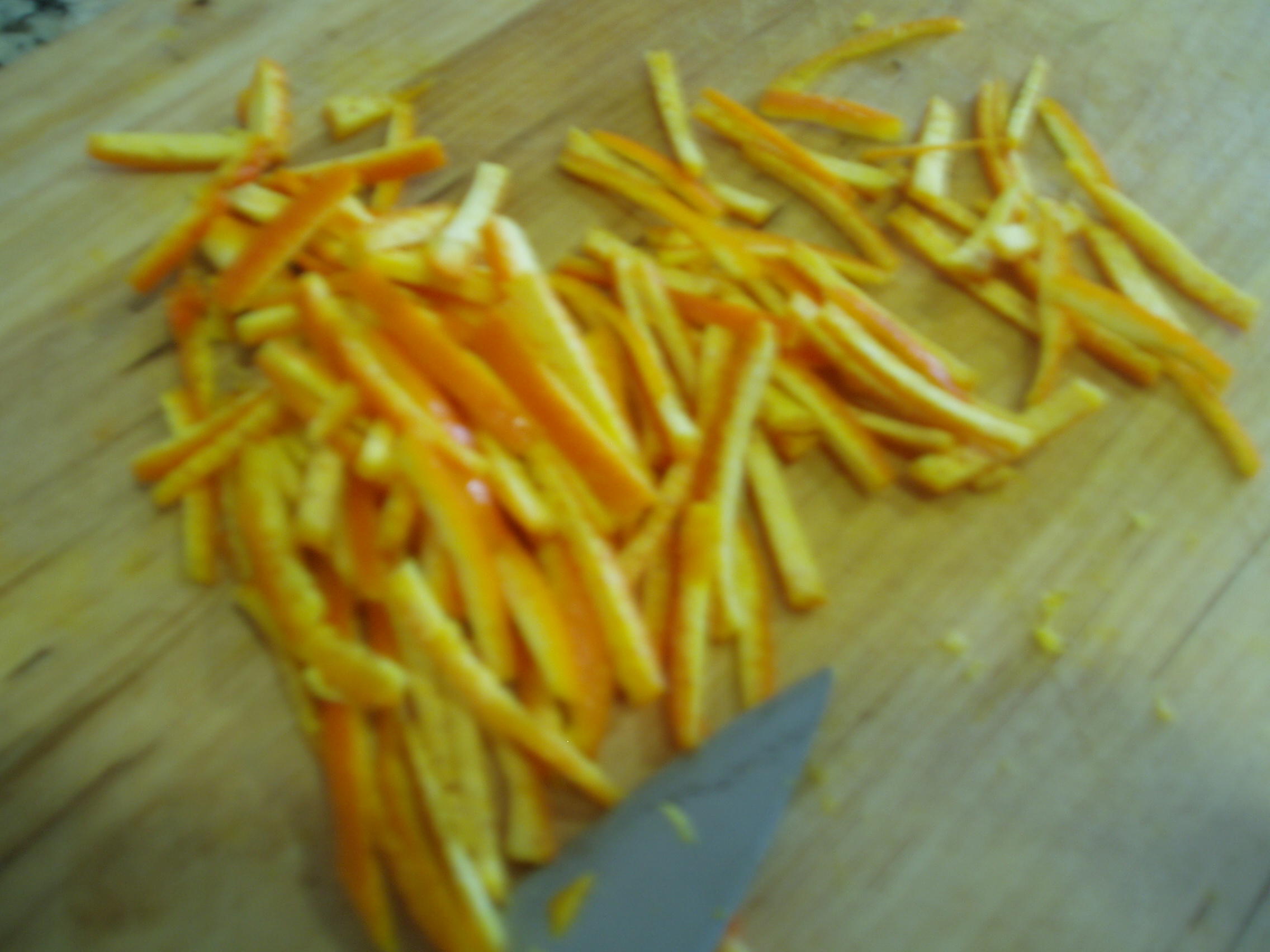
The orange skins now need to be cut into shreds. How thick or thin is down to you. One year I did this in the food processor, which leaves you with small chunks rather than shreds, but the taste was still wonderful. This year I patiently sliced, and sliced…and then sliced some more to end up with beautifully thin shreds of orange. You can relax a little now as the hardest part is over. You may find that getting to this stage takes you a few hours. Ignore cookery books that tell you it takes 45 minutes. All lies!
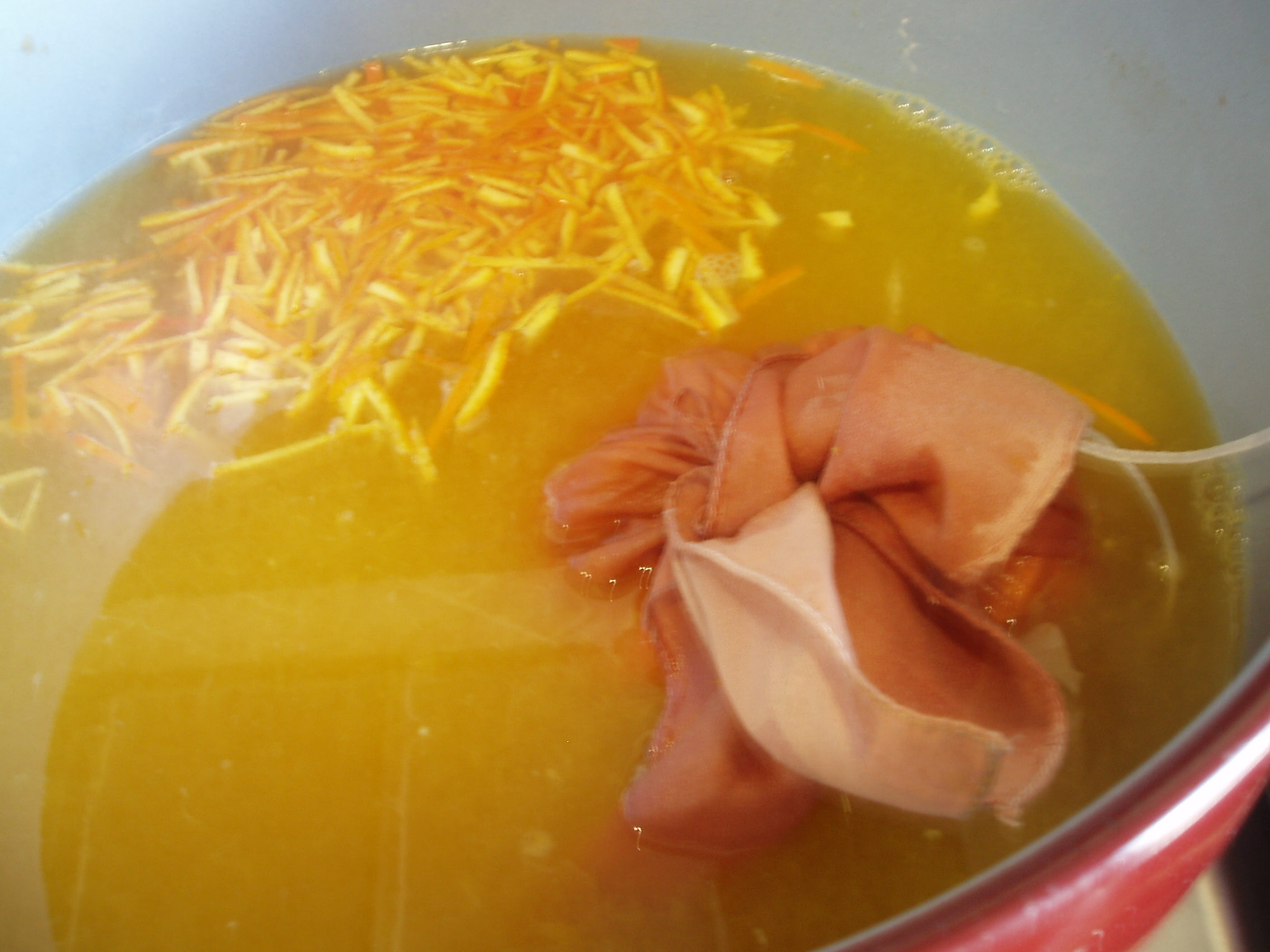
Now, take the cloth square and tie it up. I usually leave the string quite long, put the bag into the pot and then tie the other end of the string to the pot handle. This helps you to press on it gently now and then to remove the pectin which will be forming, and then to remove the bag easily at the end.
The Magic Begins…
Put the shreds of orange and your water in to the pot and bring to a simmer. You will leave this simmering for about 2 hours, pressing the cloth bag occasionally with a wooden spoon whilst enjoying the wonderful smell that fills your house.
Once the two hours are up and you´ve recovered from all that juicing and shredding, it´s time to start boiling. Remove the bag from the pot, put it into a bowl to cool down a little and when you can handle it comfortably (I recommend rubber gloves for this) squeeze it as dry as possible, putting all the juice that comes out into your pot.
At this point, put a couple of saucers in the freezer…all will be explained.
Add your sugar to the pot and gently dissolve it. You need to think now about sterilizing your jam jars. At this point I normally put them into my dishwasher with the lids. Otherwise you need to wash them in hot soapy water, rinse them and put them, upside down, into a very low oven.
Back to the marmalade. Once no sugar crystals remain, turn the heat up and get that jam boiling. This is why you now understand the rationale behind such a huge pot. When jam boils fast, it rises, so you do need to keep an eye on it. I let mine boil over yesterday which meant taking it off the heat, cleaning the caramelized jam off the stove, and losing about a jar of marmalade. Damn! Real life cooking. If you have a sugar thermometer, check that the jam has reached the correct temperature (which I´ve just checked and it´s 105°C or 220°F). Fear not if you don´t have a thermometer. I didn´t until earlier this year, and it´s never been a great problem. Boil the jam until it starts to rise (the froth will look white) and keep it at a boil for a few minutes, lower the heat and put a teaspoon full (be careful, boiling jam really does hurt) onto one of those saucers you put into the freezer. Leave it to cool for a minute then push the jam gently with your finger and the surface should wrinkle – that´s setting point.
If it´s not ready, then boil for another five minutes and repeat. Getting to this point can take about 45 minutes, it depends on the quantity you´re making. I´d recommend doing the saucer test even if you have a jam thermometer. I, being an impatient sort of person, didn´t do this when I made my most recent batch of marmalade, and had to unpot and reboil it the next morning as the marmalade had not set and the shreds of orange had all floated to the top of the jars leaving me with pots half full of jelly and half full of marmalade. Lesson learnt.
Once the marmalade has reached setting point, remove from the heat and leave to stand for about 20 minutes. If there is any scum remaining, skim it off. Take your jam jars out of the dishwasher or oven, they should still be warm, and get ready to fill them. I find it easiest to ladle the marmalade into a large jug and then pour into the jars. If you have a waxed disk to put onto the surface of the marmalade before screwing the lid on tightly, then fine. If not, don´t worry! Make sure those lids are tight and as the marmalade cools down, a seal will be formed and you can keep that marmalade (if you can resist) until you make next year´s batch.
If you want to label the jars, and why wouldn´t you, wait until the next day when they have cooled down. Right, I´m off to see Felix and give him a jar of marmalade.
A beautiful sunny, Sunday morning. All the more surprising because it´s the penultimate day of January. But just warm enough to brew a pot of coffee while I feed the dogs and get myself a little breakfast sorted out before Big Man and I head off for a walk. It´s been dry for two days with rain before that. Perfect weather for heading up the mountain and looking for wild asparagus. I have to confess I´m not the biggest fan of these beautiful fronds. Although I love strong flavours, they´re just too bitter for me. But Big Man loves a little tortilla made from these for a light supper and I enjoy a simple poached egg on toast – so everyone is happy and minimal cooking for those evenings when you just don´t fancy spending time at the stove.
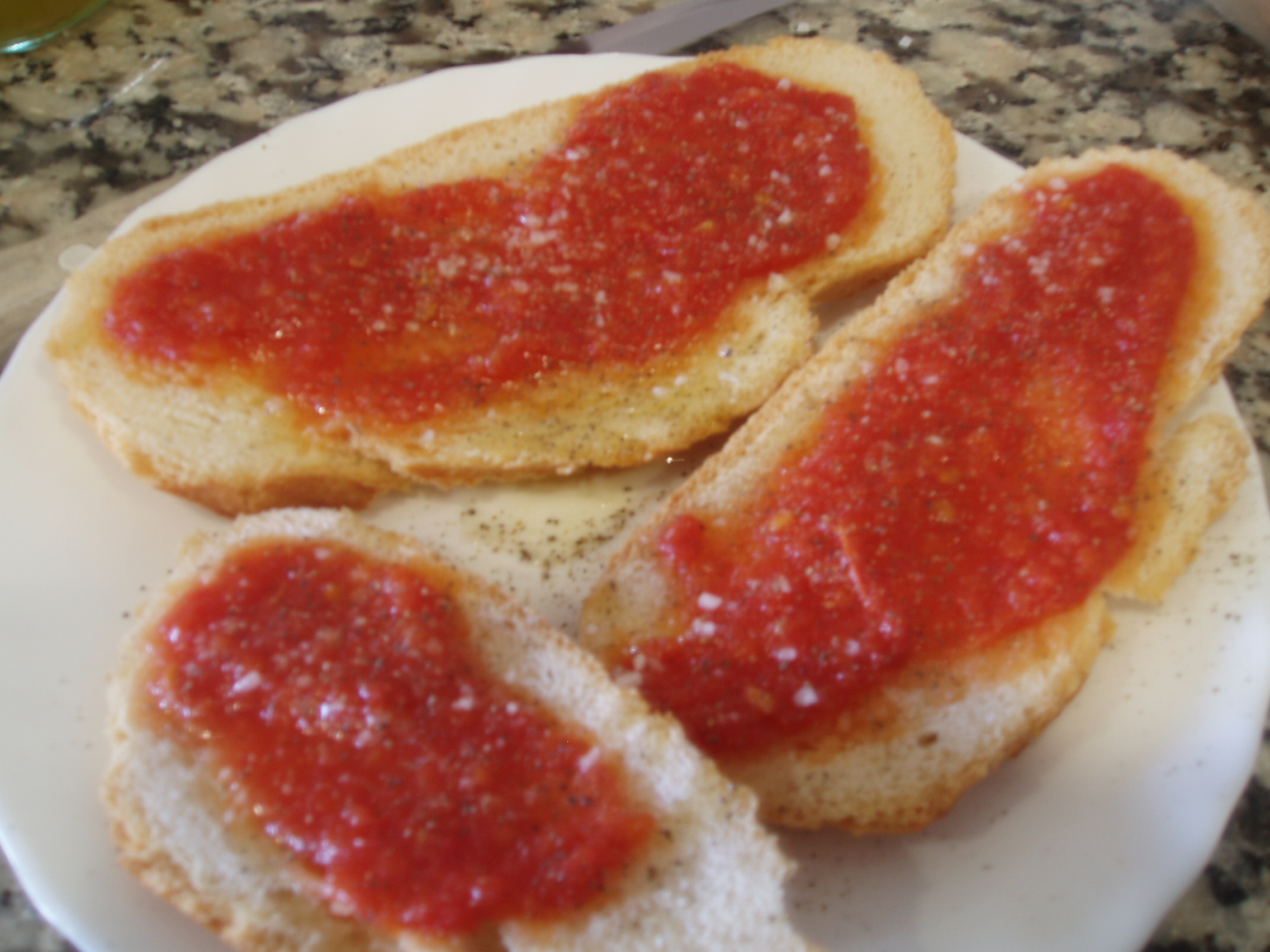
I do enjoy my breakfast. I don´t go all faint and feeble if I miss out on it, but my favourite quick and easy breakfast here in Spain is fresh bread, drizzled with olive oil (from our olives if I´m lucky) with crushed fresh tomato and seasoned with sea salt and a good grind of pepper. All you need to do with the tomato is blitz a ripe tomato with the hand blender – remove the skin or not, your choice and that´s it. It´s usually tastier in summer when the tomatoes have more flavour, but if I come across a gorgeous specimen outside of the warmer months, it´s earmarked for my breakfast. If the bread is a little stale, it´s toasted lightly on my griddle pan. If I fancy some spice, it´s sprinkled with little fresh or dried chili at the end (not so Spanish), and if I´m extra hungry a few slices of jamon are added. But the truth is, the simpler the better.
That´s not to say I don´t enjoy a Full English, or a Bacon Buttie when the mood strikes. Come to think of it, a bowl of porridge in winter always goes down well too.
So in 2016 I turned 50. I was in Italy for my 21st, 30th and 40th. To keep this birthday tradition going I always knew I'd be in Italy for my 50! This blog starts with my 5 week adventure in Puglia but my love affair with Italy continues.....


 Chica Andaluza