Pickled Olives

Ok, so I know that for most people, pickling their own olives is fairly unrealistic.  Having said that, my parents have been on holiday around this time of year and bought olives in local markets abroad and then successfully pickled the olives back in London.

We´re getting to that time of year here were the olives are fattening up nicely after the rain finally started and the boughs are beginning to bend under their weight.  Custom here says that they should be picked when the moon is waning, that is, in the week following a full moon.  I expect we´ll be picking early December for crushing and making olive oil, but this month I picked a few buckets full for us to eat over the coming months.

We have a few varieties growing in our little olive grove.  Large fat olives, the kind they often put in a dry martini.  They´re called Manzanilla and have a pleasant nutty taste. These are the olives in the bowl on the left.

The most common variety round here is called Verdial (right bucket) and makes excellent olive oil for eating “raw” i.e. in salads or on bread. They are medium sized and have a sweet fruity flavour.

We also have some tiny olives (centre bucket) which are a variety called Picual with a slightly more bitter and peppery taste.

I picked a mixture of these and put them into my most glamorous buckets, and covered them with water.  Luckily we can get spring water here as chlorinated or tap water does tend to give them a slightly different taste.

The water is changed daily until they lose their bitterness. Smaller ones take less time, and if you split them first they take even less time.  The process can take anything from a few days to a month…patience, patience.

Finally, when they´ve reached the right stage (and you´ll be tasting them to check them), they get a final rinse and are packed into containers, flavoured with herbs (I used dried chili, garlic, lemon peel and rosemary) and covered in a salty brine.

Just a few days more of patience and they´re ready to enjoy.  They´ll keep for months, up to a year if you´ve made enough to get you through to next November.  As time goes on they may get a little softer and a harmless scum, which can just be removed, will appear on top of the brine.

Now, how do you like your martini – shaken or stirred?

PS. For some other great ways of making your own olives to eat, check out these great posts here and here from Olives and Artichokes

Autumn Quince and Apple Crumble

You have probably noticed that there are not so many dessert recipes on my blog. There are several reasons for this.  First of all, I don´t really have a sweet tooth, and as I´m the cook in this house, if you want sweet, there´s always chocolate in the larder!  Secondly, and perhaps most importantly, Big Man and I do need to be a bit sensible about the calories – so dessert is a special treat for us rather than an everyday occurrence.  Finally, Spain doesn´t really have a culture of home made desserts.  Yes, we have our Flan (Crême Caramel), Arroz con Leche (Rice Pudding) and Natillas (Cold Custard) but mostly it´s a piece of fruit to finish the meal. As we are able to get hold of such delicious seasonal fruit, that´s mainly what we eat and enjoy.

Having said that, quince are now in season, and we´ve made our annual supply of Quince Jelly or Carne de Membrillo. Our kindly neighbour is still providing us with a couple of quince (or is that quinces?) as the last few ripen and a nearby village has some delicious sweet, crunchy apples…which make a lovely change from the usual inspid, spongey monsters that are typically available to us.

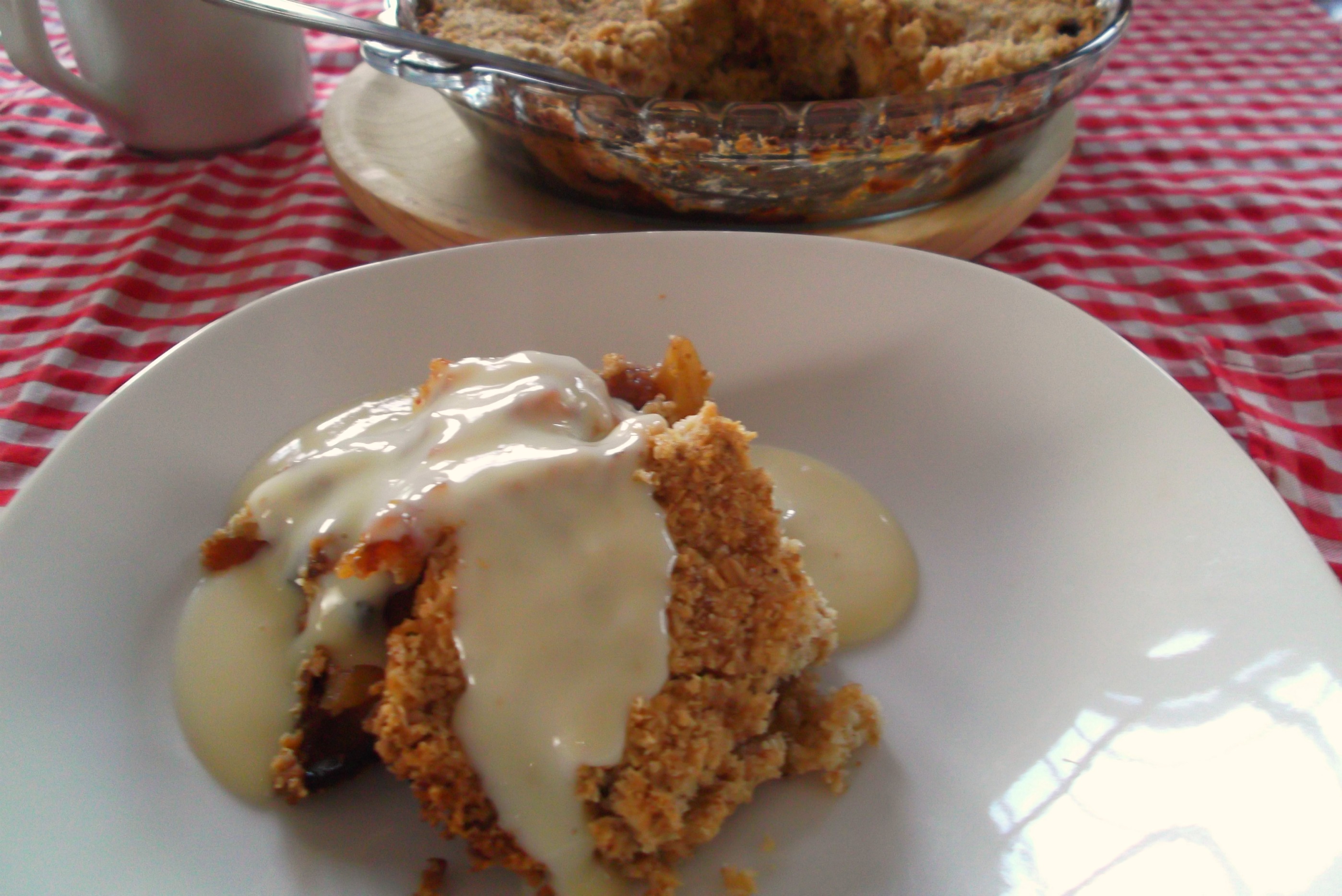
Sunday lunch recently, after a hard morning´s work on the house and garden, most definitely warranted a delicious dessert and I must have been feeling nostalgic for England.  I decided to make a delicious autumnal crumble with quince and apple and to serve it with hot creamy custard.

Ingredients

  • 1 large quince peeled and chopped (or one large sour cooking apple)
  • ½ teaspoon of ground cinnamon
  • 2 tablespoons of honey and 1 tablespoon of water

Put the above ingredients into a saucepan with a lid and simmer until soft and all the liquid has evaporated

Peel and slice two large apples and stir into the cooked quince and sprinkle over 1 teaspoon of mixed spice.  If you like your desserts sweet, add brown sugar to taste.

For the crumble

  • One cup of plain flour, half a cup of oats, 100g grams of grated chilled butter and half a cup of brown sugar.

Put all the above ingredients into a food processor and blitz for a few seconds until the mixture resembles fine breadcrumbs. You can also do this by hand.

Put the fruit mixture into a pie dish, cover with the crumble topping and bake on high for about 30-40 minutes until slightly browned on top.  Some of the fruit mixture is likely to bubble out and caramelize, so I recommend putting your pie dish onto a baking tray lined with foil.

Serve with custard and fight your nearest and dearest for the crispy caramelized bits.  Serves four.  ¡Buen provecho!

Creamed Cauliflower Soup

Who needs bouquets when your loved one brings you cauliflower?!

Recently Big Man came home with one of his horticultural “surprises” for me.  Five cauliflowers!  We both love cauliflower, but after giving some away and eating cauliflower with vinaigrette, buttered cauliflower and cauliflower cheese, we were still looking at a cooked cauliflower in the fridge wondering what to do with it.

Inspired by a potato and garlic soup recipe over at Rufus´ Food and Spirits Guide, this cauliflower´s destiny was decided.  Of course, I was in a rush and didn´t have exactly the ingredients to hand, so I made do.

I loved the idea of the roasted garlic, but as I had nothing else to cook in the oven, it felt extravagant to turn the oven on just to roast one head of garlic.   I decided to experiment and try to cook it in the microwave to see how it turned out.  I usually use my microwave to store my bread in (a kind of electrical bread bin if you like!) so for me to actually cook something in my microwave is rather unusual…

I put a whole head of garlic in on medium for about 3 minutes and I was amazed when it was done.  Of course, there were no lovely toasty edges, but the garlic smelt great and each clove was perfectly soft and ready to pop out of its skin to use.

I put the cloves of garlic in a saucepan with a little olive oil and warmed them through whilst mashing them with the back of a spoon.  I added the cooked cauliflower broken into florets, a teaspoon of ground cumin seeds and covered with vegetable stock (although water would also be fine).  After bringing it to the boil I reduced the heat and let it simmer for about 10 minutes.

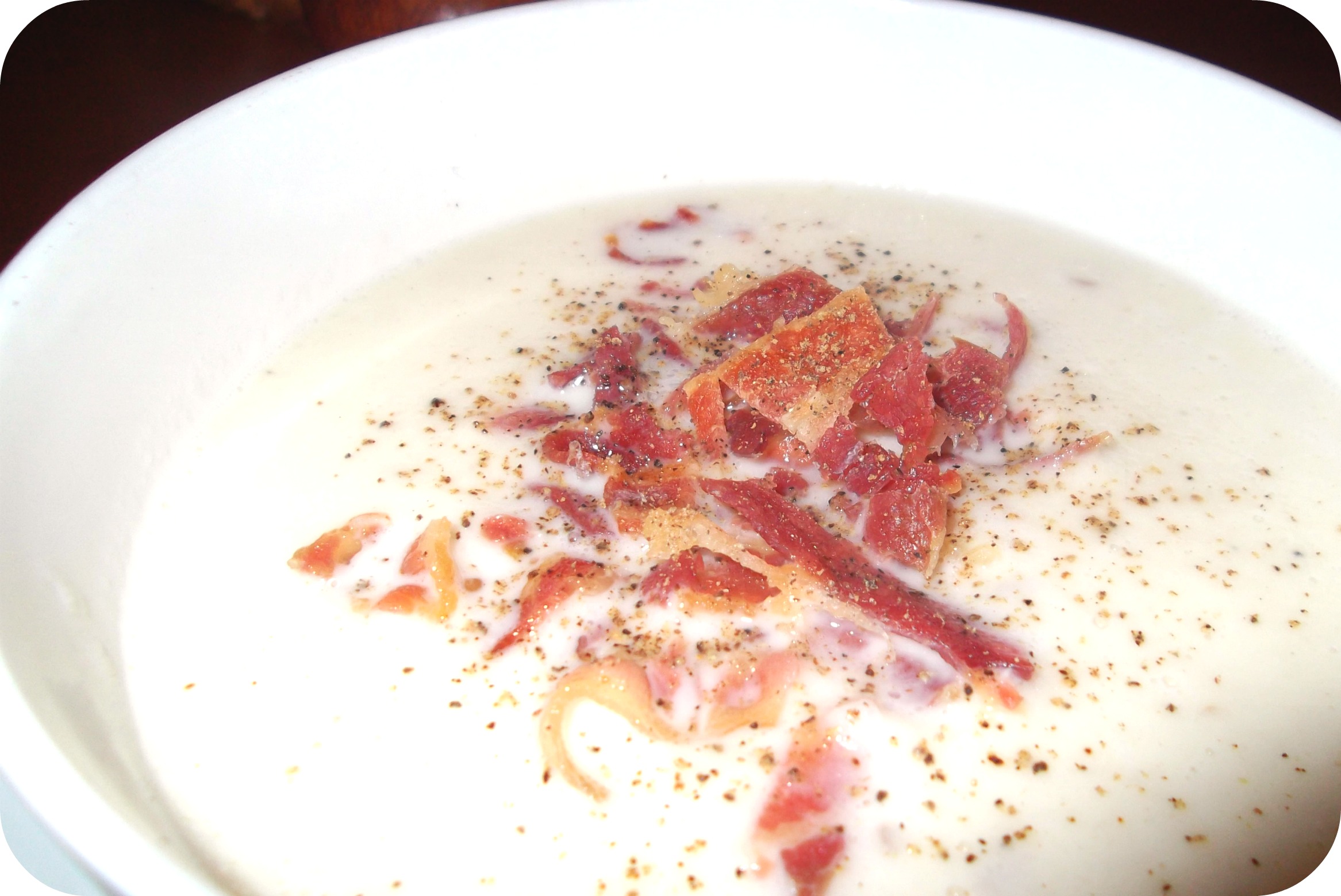
In the absence of cream I then added half a cup of milk and a tablespoon of mascarpone cheese and then blended with a stick blender.

A few left over rashers of bacon which I also cooked in the microwave – I was feeling adventurous – were cut into small pieces and sprinkled over to finish the dish off.  I put a kitchen towel on a plate, put the bacon on top and covered with another sheet of kitchen towel and cooked on high for 5 minutes.  This gave me beautifully dry, crisp bacon, and no greasy pan to wash.

Perfect!  And I now officially love my microwave.

Dulce de Membrillo – Quince Jelly

The Owl and the Pussycat went to sea
In a beautiful pea-green boat,
They took some honey, and plenty of money,
Wrapped up in a five pound note.

The Owl looked up to the stars above,
And sang to a small guitar,
“O lovely Pussy! O Pussy, my love,
What a beautiful Pussy you are, you are, you are,
What a beautiful Pussy you are.”
Pussy said to the Owl “You elegant fowl,
How charmingly sweet you sing.
O let us be married, too long we have tarried;
But what shall we do for a ring?”

They sailed away, for a year and a day,
To the land where the Bong-tree grows,
And there in a wood a Piggy-wig stood
With a ring at the end of his nose, his nose, his nose,
With a ring at the end of his nose.
“Dear Pig, are you willing to sell for one shilling your ring?”
Said the Piggy, “I will”
So they took it away, and were married next day
By the Turkey who lives on the hill.

They dined on mince, and slices of quince,
Which they ate with a runcible spoon.
And hand in hand, on the edge of the sand.
They danced by the light of the moon, the moon, the moon,
They danced by the light of the moon

I couldn´t resist quoting the above “nonsense” poem by Edward Lear – after all, how much poetry mentions the beautiful quince?  Aah…such silly romantic nonsense.

Actually, making quince jelly in our house is one of the few cooking adventures we undertake together, so there is a small element of romance to it!  Chopping up a quince is quite tough – fine if you´re only doing one or two, but every year we usually make a huge batch of Carne or Dulce de Membrillo in one go and it takes 3 or four hours. Much easier if there are two of you working together.  I know that autumn is really here, and in fact today was dull, grey and wet, so it was perfect for steaming up the kitchen with beautiful smells.

Making quince jelly is not difficult.  You just need a little patience, a big pot and a sharp knife.  You´ll be rewarded with beautiful jewel coloured jelly which will last for months if kept in the fridge or a cold place and it can be eaten with cheese and hams or on its own as a delicious sugary treat.

Even if you only have one or two quinces, do give this a go as they are very tart unless lots of sugar is added (but also very nice baked with honey, sugar and raisins as a dessert).

For every kilo of prepared fruit, you will need 750g of sugar.  And that´s it, ingredient list over.

Wash the fruit and get prepared with scales, knives, chopping boards and your pot.

Cut into halves, quarters and even eighths if you have small hands to make it easier.

Core and chop into chunks.  I recommend weighing as you go along.

Put the quince into your biggest pot and add the sugar.

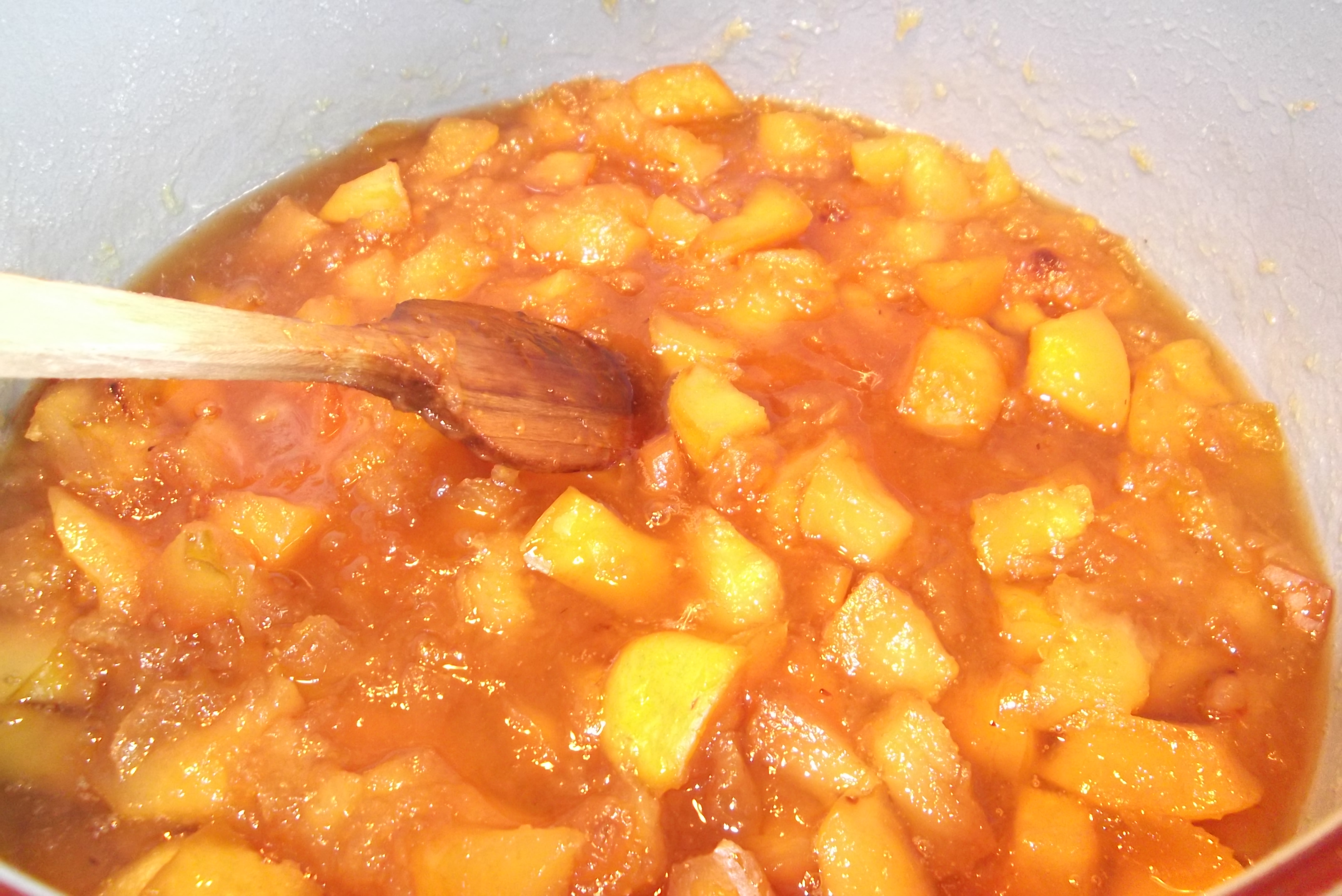
This is where the slightly hard work and patience comes in.  Start on the lowest heat and keep turning the quince and sugar with a wooden spoon.  You don´t want them to catch on the bottom of the pot while the sugar is dissolving as this will give your jelly a burnt taste.

Dissolve the sugar slowly (and if anything does burn, just remove the offending chunk).

Once the sugar has dissolved, turn up the heat and bubble gently until the quince has turned mushy and amber coloured. We had two pots of 5 and 3 kg of fruit plus sugar and they took about 30 minutes each from starting to bubble.

Just a bit longer now.

Now remove from the heat and leave to cool for about 10 minutes then blend with a stick blender or mash then pass through a mouli.

Pour into shallow plastic tubs, cover with a cloth until cool and solid then put the lids on.

Store in the fridge until you are ready to enjoy with cheese, nuts, and whatever takes your fancy.  Port, dessert wines and also a good red wine work well I find!

Throw another log on the fire please Big Man…

When I lived in London and the weather turned chilly (usually around the second week of August if I remember correctly), I cranked up the central heating and thought nothing more about turning it off again until about the second week of July.

Living in the Campo, we have no mains gas connection.  A few brave souls have installed gas fired central heating, but because our main living/dining/kitchen area is all one room, we decided that a fire would be enough for us.

Well, it should have been had the first fire we bought worked well.  It was a super duper one with a glass door that was meant to waft lovely warm air over us and fill the house with a cosy glow.  Mmm.  What we actually got was a smoky old fart of a fireplace that ate up wood like a starving person newly released from the fat farm and left us shivering and having to repaint the house which turned a yucky nicotine brown colour.

We saved up our pennies and bought a new fire which looked almost identical but to our great joy, actually worked! Now our fire eats wood like a super model on a diet, wafts warm air over us without suffocating us with smoke and warms the bathroom and hall which sit behind it until the next morning.

Getting wood to the house is a whole other matter.  No quick trip to the petrol station for a bag of logs, we buy several thousand kilos a year to keep us going, and have a very special way of getting it up the slope to our house. Just in case you should find yourself in the same situation, here´s our recipe for keeping toasty warm all winter when living in the almost middle of nowhere.

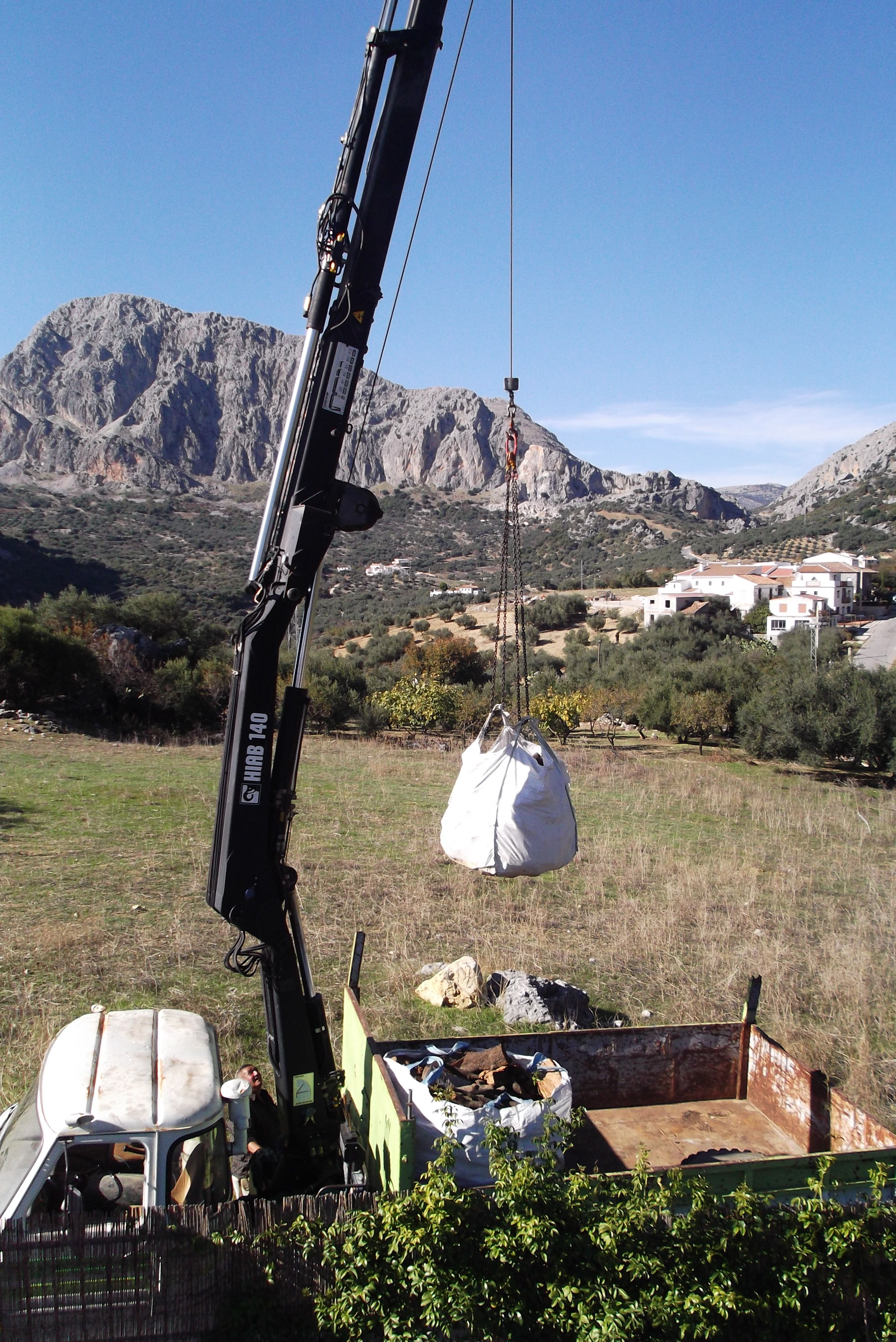
First, load 4 thousand kilos of oak onto your rusty but trust old lorry.  Feel free to substitute olive, almond or cherry wood as available that year.

Leave some of it in your little olive grove.

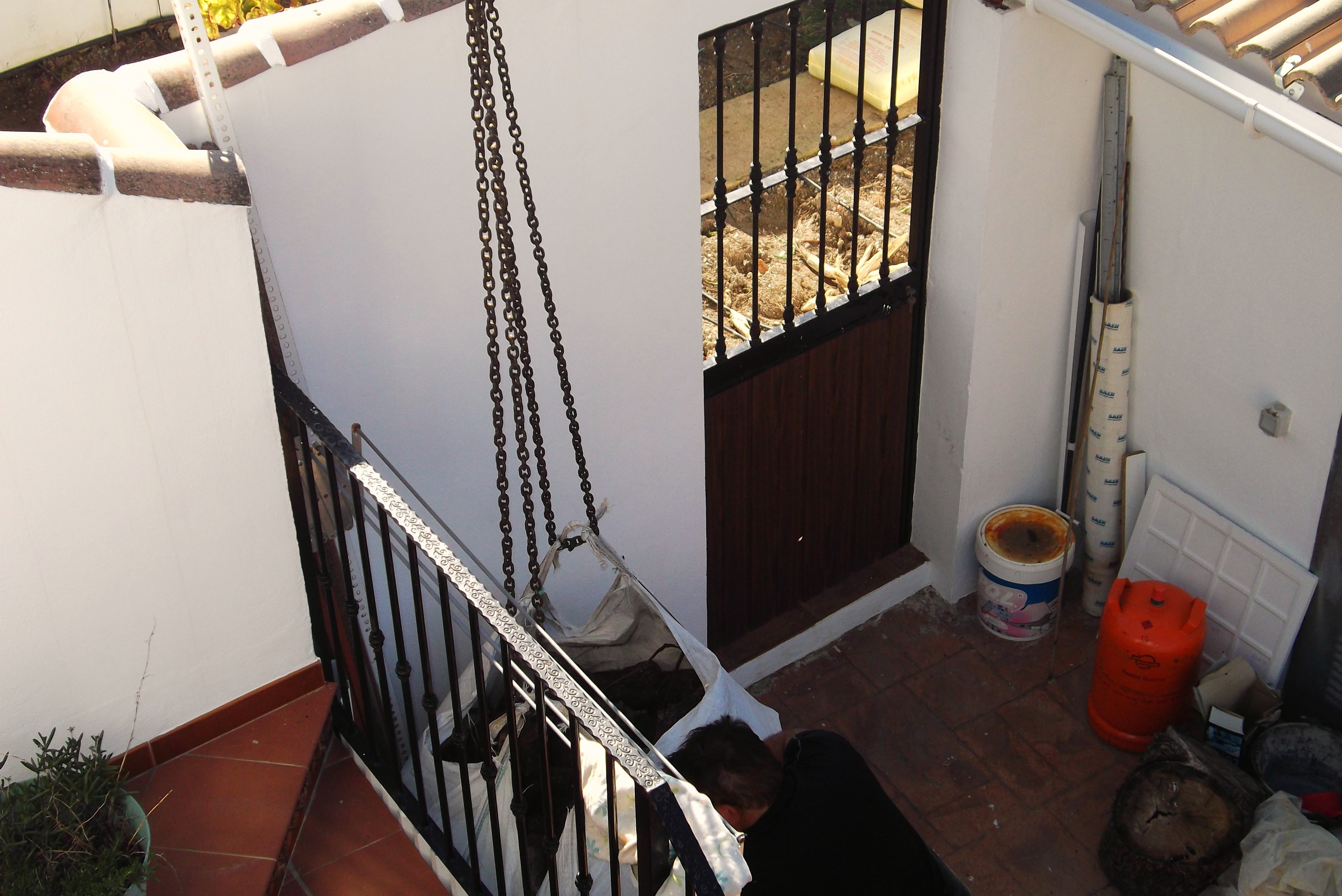
Drive your rusty but trusty lorry over kindly neighbour´s field and park by side of your house. Crank up the winch and start to manoeuvre a couple of bags into place outside your back door.

If you have a small dog called Alfi (or similar), take him up to the roof with you to help direct the winch. Small dogs have a particular talent for this I find.

Otherwise, get a friendly neighbour to help.

Let your eye wander over the sad looking vegetable garden enjoying a well deserved rest for the winter.

Place the wood where you want it.

Accept a kiss from your lovely but hot and grubby Big Man who has done all the work.

Light that fire, open a bottle of wine and relax.

Gardens and Puff Pastry with a Side Order of Steak and Chips

Bushy Garden Oct 2011

It´s that time of year here when you need to “put the garden to bed”.  Before you tuck it in for the winter, you can hack back the summer growth and give it a little room to breathe.

The interent and phone were down most of Sunday and all day Monday.  Frustrating but being “incomunicado” forces you to get up off your nether region and do something!  Gardening was the answer.

After a morning of hard work in the garden, we needed something to reward ourselves with – what better than steak and chips?  Steak is a rare treat for us, so we tend not to mess around with it too much.  A little massage with olive oil and seasoning, and onto the grill pan.  Chunky potatoes cooked in olive oil, and a little English mustard mixed with mayonnaise do it for me.

I had some leftovers from making my Chicken, Mushroom and Bacon Pie (recipe to follow another day) , so decided to make an easy dish to go with the steak and chips.

I cut what remained of the puff pastry into two rectangles and lightly cut (but not all the way through) another rectangle about one cm inside the outer edges of the pastry.  I brushed the pastry with milk and baked at 200ºC for about 15 minutes until puffed up and golden. When the pastry had cooled down I pushed in the middle section of the rectangle to leave a hollow space.

Save on the washing up and have a starter and main on the same plate

With very little oil I fried 4 thinly sliced mushrooms with 2 crushed cloves of garlic until soft then added 2 heaped tablespoons of chopped bacon.  I then added 1 heaped tablespoon of plan flour and stirred until it was cooked through.  I gradually added splashes of milk (about 5 or 6 in total), stirring all the time until I had a thick sauce and then filled the pastry cases with this.  I put them back into the oven on a low heat until I was ready to dish up the rest of the meal.

Bald Garden Nov 2011

A lovely glass of El Coto Rioja went down well with this and we sat outside for 15 minutes in the last of the afternoon´s sunshine admiring out work and drinking a good strong coffee.  It was a good day.

Chestnuts Roasting on an Open Fire

Last night was 5th November, Bonfire Night. It´s a night much celebrated in the UK with bonfires, fireworks and all sorts of lovely outdoor parties and food.

Of course, here in Andalucía it´s a day like any other.  But for us, it was marked in a small way by lighting our fire for the first time this autumn.  We´ve been lucky, the evenings are turning chilly but are still mild enough for a warm sweater and an extra glass of wine to be enough to keep you warm through the evening.

Yesterday, though, Big Man decided it was time to have a fire, so he got it going with dry wood we had left from last year.  We still have to bring up a big stock of wood from the olives to get us through the winter.  Because the wood was so dry the fire was soon blazing away and I popped out to see a neighbour for an hour or two.

I got back a while later to find another neighbour happily settled in with Big Man, the fire crackling away and very jolly atmosphere filled the room along with the scent of olive wood.

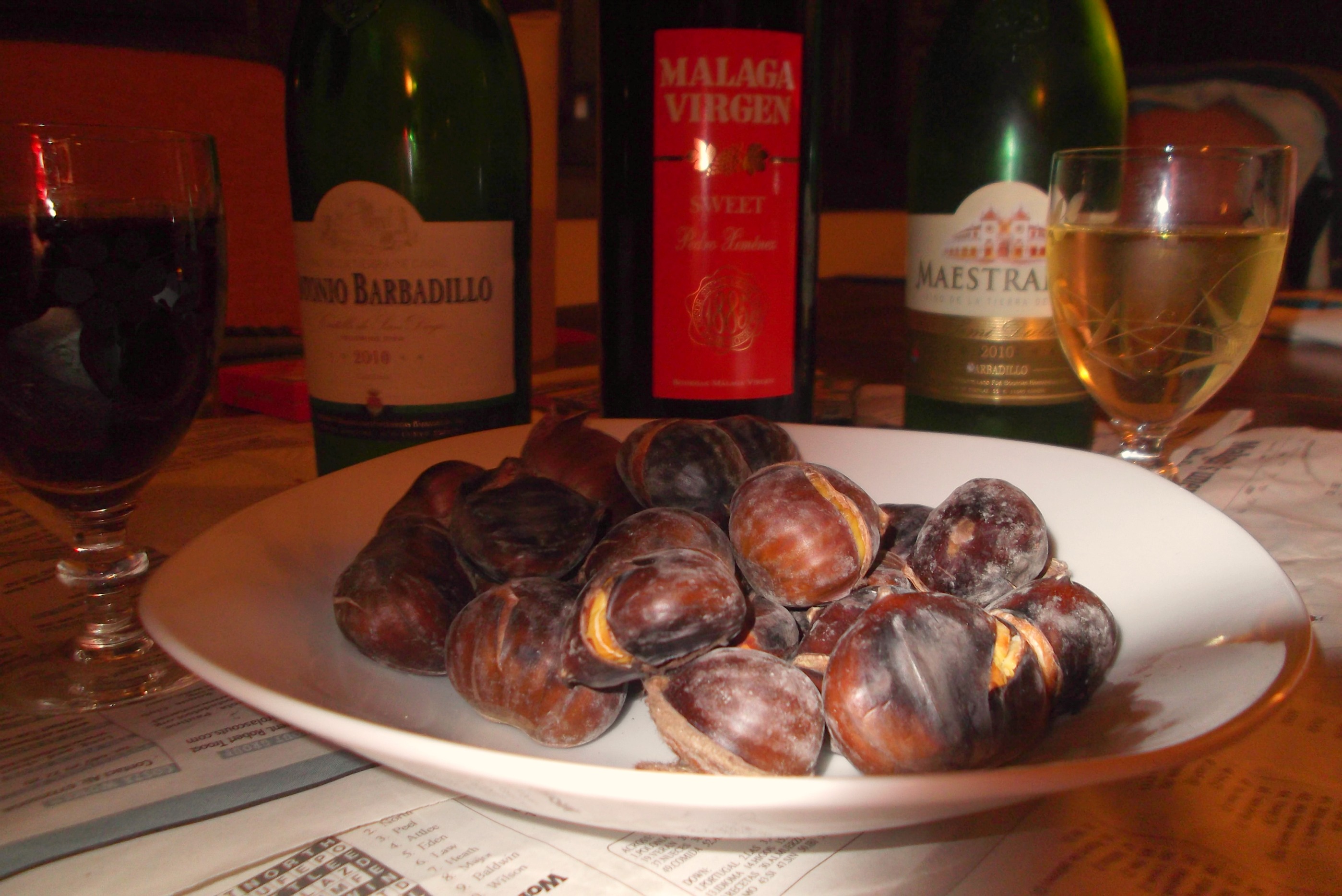
They were in the process of carrying out some serious scientific research – which wine goes best with roasted chestnuts?  In order to ensure they were being completely thorough there was a bottle each of dry, semi sweet and dessert wine.  Because they are tidy boys, they had even put a cover on the table to protect it…as you can see, it was a very glamorous newspaper.  Honestly, we really are such classy folk up our mountain!

Anyway, we ate chestnuts, drank the wine, and to be honest I can´t actually remember which wine one was nicest…I´ll leave it to you to carry out your own research.

Sewing Saturday…Get Shorty – or “How to take up jeans or chinos”

I know from previous comments that many of you have a sewing machine tucked away gathering dust. Perhaps you´ve mastered a straight seam on your machine, but not really progressed beyond that. Well, fear not, your machine will now be able to pay you back and save you the expensive costs of having to take too long jeans or chinos to the tailors for adjusting.

I know that whenever I´ve taken the “lazy” route I´ve thought “How much? Crikey, that´s almost what I paid for the trousers!”  Also, when I buy something new, I want to wear it RIGHT NOW and not a week on Wednesday.

So…grab yourself a pair of long jeans, your dusty old machine and half an hour of your time and you´ll be set to go stepping out in your lovely new trousers.

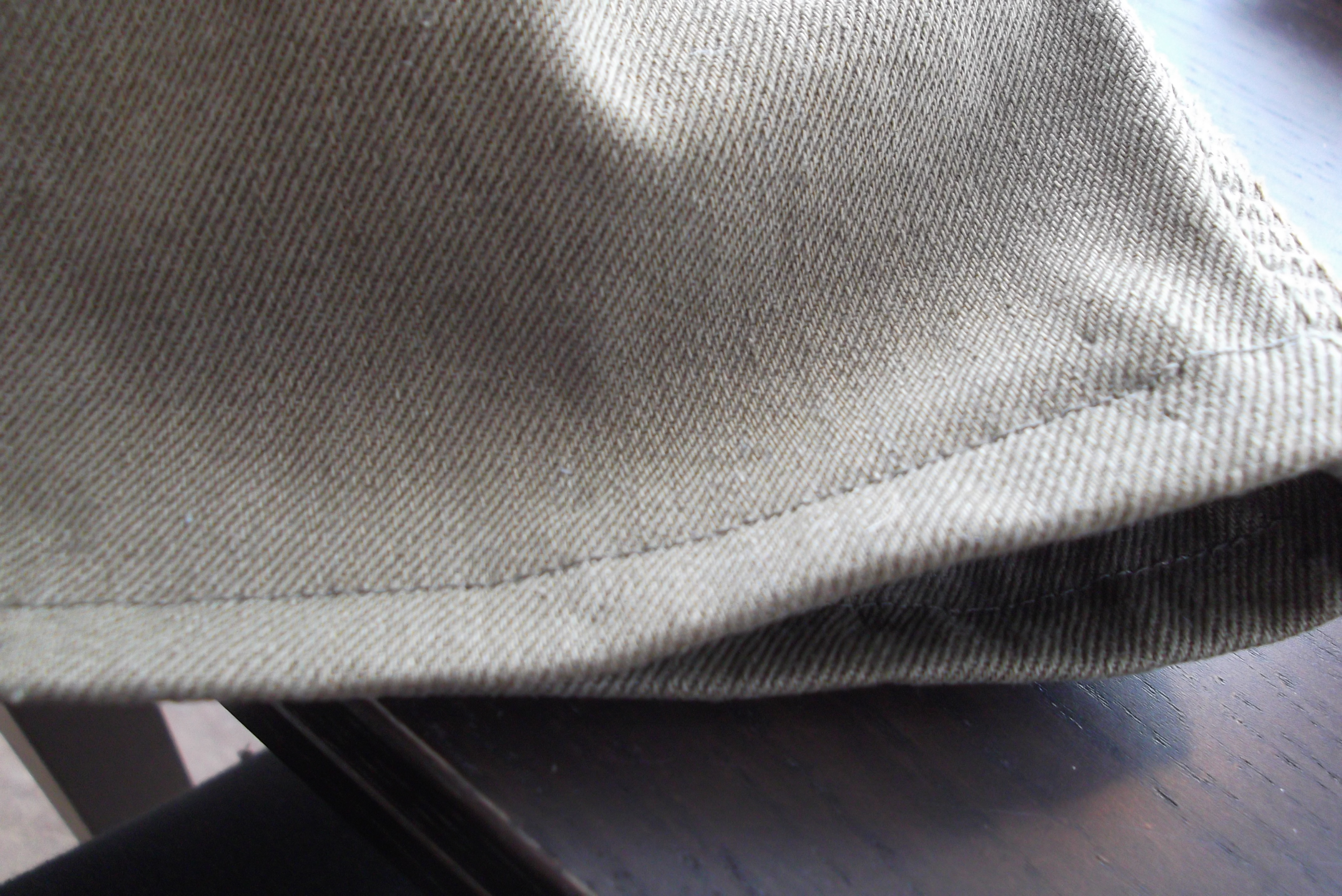
Start by unpicking the old seam. Don´t skip this step, you don´t want a huge bulky hem swinging round your ankles now do you?


Measure the length of the original hem (where the hem hit the floor to the cut edge of the fabric) and take note of this measurement.  Let´s call it A.

Now measure your inside leg.  A handy friend or loved one who you can trust intimately with this is useful!  Otherewise measure a pair of trousers that fit well along the inside seam from the centre join to the floor.  This is measurement B.  Now put a pin in your new trousers at measurement B from the inside leg top seam and then another pin the distance of A from the first pin.

If your trousers are only an inch too long, you´re in luck. Your cutting line will probably be the old base line of the original trousers. If it´s different, add a few pins or mark with tailors chalk or even biro (you won´t see this when you´re finished) all the way round and cut the bottom off.  Don´t try and be clever and cut through both sides at once.  Apart from hurting your hands when you cut, you´ll probably end up with a wonky edge.  Cut upwards to the line then round.

Don´t throw these little strips away, they will be useful in a moment.

Now do a double fold up to the B pin mark and either pin or pin and tack (baste) your trousers.

Try them on again!  You´re about to sew them, so you want to be sure you´ve got it right. Now iron the bottoms from the inside.  Don´t skip this step either, it will make sewing so much easier!

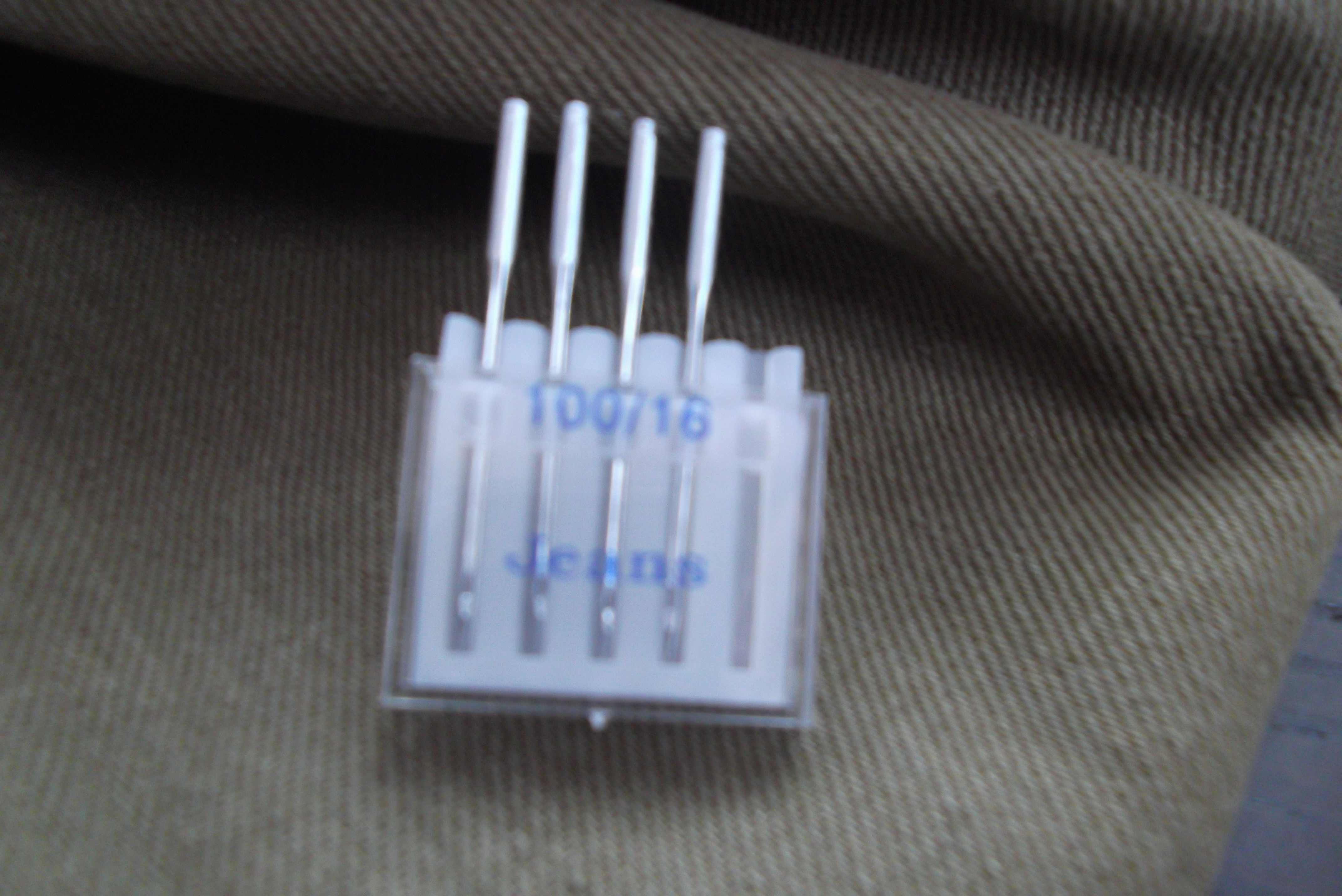
I recommend using a heavy duty needle – a pack of 5 only costs about a euro here, hopefully they´re not expensive where you are and you´ll get a much better result.

Either match the thread to the existing stitching or find something close to the colour of your fabric.

Now you´re going to just have a little play with those strips of material you saved.  Stitch along on one of these strips, checking the colour and stitch length.

Take the wide extension piece off the machine if you have one (Sorry, I don´t know what it´s called and I never use mine) so that you can slip the trouser bottom straight onto the machine ready to stitch.

Start stitching – I recommend you start just before the inside leg seam so that you are sewing the back first.  In this way, if anything does go wrong (but it shouldn´t!) it´s less noticeable.

Sew right round, cut your threads and admire your lovely new hem.

Don´t forget to remove the heavy duty needle and replace with the usual one.

PS. Shortly after making these adjustments (to Big Man´s trousers) He Broke My Very Special Left Handed Dressmaking Scissors!!!  He said he wondered why they didn´t cut the plastic cabling he was trying to chop….I am trying to be understanding but He Broke My Very Special Left Handed Dressmaking Scissors!!!  I´ll be over it soon. Maybe.

Gambas al Pil Pil – Sizzling Spicy Prawns

This is a hugely popular and typically Andalucían tapas dish or starter.  I have tried to find out the origin of the words Pil Pil and some say that it comes from an Arabic word felfel (I don´t speak Arabic so assume it has something to do with spice or chili).  Others say it comes from the sound the prawns make sizzling in the hot oil. I don´t know if either are true – I like both stories, almost as much as I enjoy making and eating Gambas al Pil Pil.

If you can get hold of good prawns (or shrimp) then this is a very easy yet impressive dish to serve to your guests. If you have a terracotta dish to cook them in, well that´s even better as it does add something special to the taste and the prawns stay hot and sizzling for a few minutes as you bring the dish to the table.

Per person for a good tapas serving you will need

  • 100g peeled prawns (defrosted if frozen)
  • 1 dried hot chili and/or half a teaspoon of hot pimentón – this is down to personal taste – crumbled
  • A fat clove of garlic, peeled and sliced
  • A good pinch of salt

About 2 tablespoons of olive oil (if you are doing a large serving, just use enough oil to half cover the prawns)

Start by putting everything apart from the prawns into a frying pan or terracotta pot. Turn up the heat and cook until the garlic begins to turn brown at the edges.

When you want to serve your dish add the prawns and cook at a lower heat until the prawns are cooked through then turn up the heat until they begin to sizzle.

Serve with plenty of bread to mop up the delicious chili oil. If served in a large pot or pan, it is traditionally served as a sharing dish. Everyone has their own fork and “prongs” their bread into the juices.

Serve with an ice cold beer, a chilled manzanilla or a crisp cool white wine.  ¡Buen provecho!

PS. No fear of me running out of chillis this coming year…the harvest is now safely stored and drying in the shed!

Fabada – Asturian Sausage and Beans

When we travelled to the distant north of Spain, we bought back some foodie memories with us. Well, a little more than memories, we bought back beans and smoked meats to make the famous Fabada.

It´s one of those dishes which needs the authentic smoked blood sausage (morcilla), chorizo and pork to achieve the “real” taste, but it also lends itself to “making do” depending on the ingredients you have to hand.

The ingredients given below can be interpreted fairly loosely to make a lovely bean, ham and sausage stew if you can´t get hold of the Asturian versions.  I also like to be lighter with the meat than some people, so feel free to add more. This recipe will serve six as a main course, but it does keep well for about 5 days in the fridge.

You´ll need

  • 1kg of Fabes (or any large dried white beans)
  • 1 small blood sausage
  • 1 or 2 chorizo (depending on the size)
  • About 100g piece of smoked or unsmoked or salted pancetta or pork belly (or use chunky lardons)
  • ½ teaspoon of saffron or add a teaspoon of sweet smoked paprika or pimentón instead
  • 2 bay leaves

This dish really improves by making it the day before you want to eat it, although it´s not essential, and if you have an earthenware bowl to cook it in, even better!  The day before making the dish put your beans into soak in plenty of water.  In a separate bowl of water soak any smoked or salted meats.

Using the water you soaked the beans in, put them in your cooking pot with about a depth of  3cm of water above them.  Bring to the boil then skim off the froth which will appear. Dissolve the saffron in a little water and add to the beans (or add your pimentón or paprika directly to the water).  Now add the pork belly or pancetta, bring to the boil and skim and then repeat with the chorizo and morcilla.

Add the bay leaves, make sure all the meat is pushed to the bottom and then cook very slowly for about 2 or 3 hours.  Try not to stir as this will break the beans, shake the pot if necessary and top up with boiling water if needed.

You should be left with thick creamy beans which still hold their shape.  I like to thinly slice the meats and sausages so they can easily be eaten with a spoon.  This is a “plato de cuchara” or a “spoon dish” as they call it here.

Serve with a good robust red wine, plenty of bread and I like a tomato and garlic salad on the side. ¡Buen Provecho!