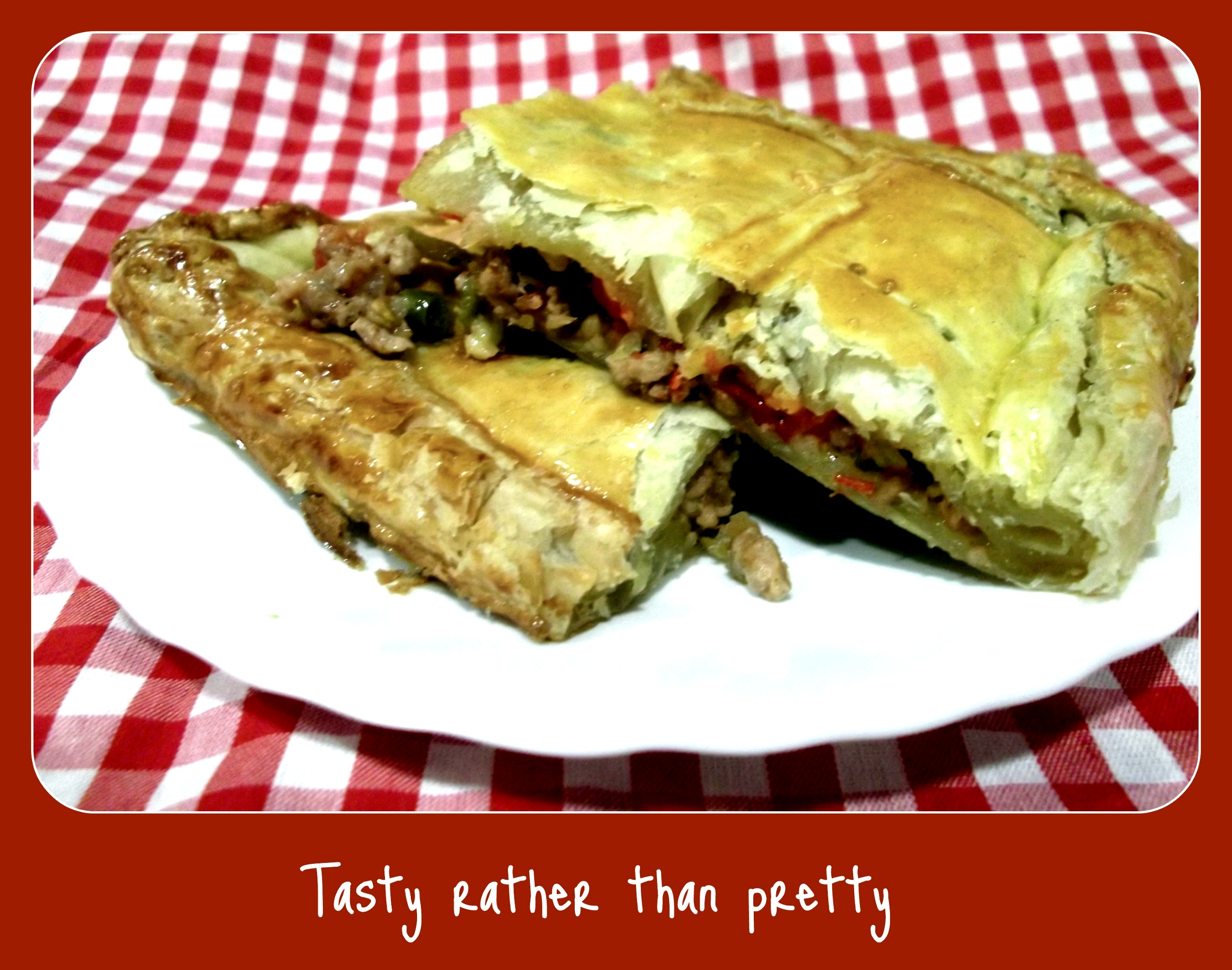
DVD Night Empanada

Back from our surprise mini break, the fridge was pretty bare and we needed a quiet night in to recover from living life in the fast lane with the oldies! It was a tough job to keep up with them…we needed a night on the sofa to recharge the batteries.

If you´ve ever spent time in Spain, you´ll probably realise that tv here is generally not all that much to be reckoned with. There is one programme called Cuéntame Cómo Pasó which I love.  It´s a well observed period drama which has won loads of awards and has been going on for years.  It documents the social changes in Spain particularly during the Franco regime and the collapse of it.

There are also some good UK and US series which are shown, although often quite badly dubbed.  They tend to use females with silly voices to play the parts of children, which is most bizarre.  And of course we have plenty of football, tennis and sports coverage as well as pretty good news coverage.

That said, summer tv scheduling is, as in most countries, pretty dire.  Well, who wants to be stuck inside watching tv when they could be out dancing at a fiesta?  Sometimes though you just want to slump in from of the “tele” and disengage the brain for a couple of hours.  Time for a DVD.

Inspired by some of the delicious Empanadas we ate on our recent trip, I decided I´d make a large one to see us through the DVD.  Kitchen skills for this dish were fairly minimal relying on two sheets of defrosted puff pastry and a quarter of a kilo of minced pork. A traditional Empanada from Galicia is more typically made though with a light bread dough, so apologies for the shortcut.

I sautéed the pork with a chopped onion and two cloves of crushed garlic. Then I added half a cup of tomato sauce and one chopped grilled red pepper, some sliced mushrooms and a few chopped capers (which I´m having a bit of a love affair with at the moment).  You can use whatever you have to hand and you fancy. Don´t let it dry out, you want it a little “saucy”.

To assemble the dish lay one sheet of puff pastry on a baking tray and turn the edges up slightly all the way round to form a lip.  Fill with the cooked meat mixture and spread it around evenly.  Put the other sheet of pastry on top and pinch the edges together.  Prick it all over with a fork and brush with beaten egg.  Bake in a medium oven for about 25 minutes until the pastry is golden.
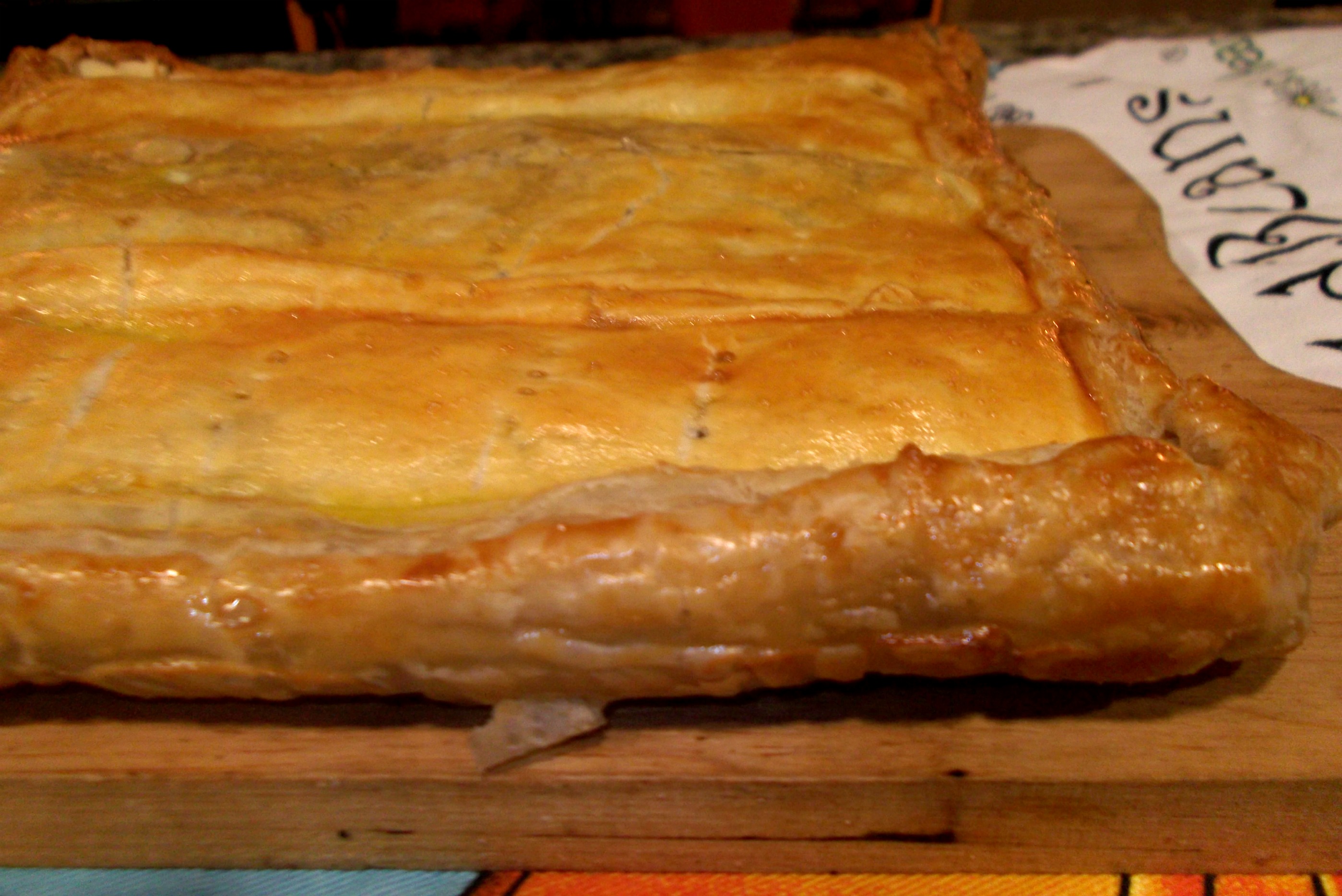
We ate it with a tomato, onion and basil salad and long cold glasses of tinto de verano.  That´s red wine mixed with casera which is a sort of not very sweet lemonade.  I know, it sounds odd but believe me when it´s a warm evening and you need to drink lots it´s a great refresher with not too much alcohol and lots of ice cubes.

And what did we watch? Well, a very foody film which I thought was going to be in Spanish but we only realised about 20 minutes into the film that we were actually watching (and both fully understanding!) in Italian.  It´s one of my favourites, Big Night, with Stanley Tucci.  Watch this short clip if you have time.  I bet we´ll all be making Timpano soon – I know I´ve already spoken to my mum to find out our family recipe.  We call it Timballo though, but it´s the same thing.

For a fantastic version of this amazing dish, hop over to Ambrosiana´s recipe here.
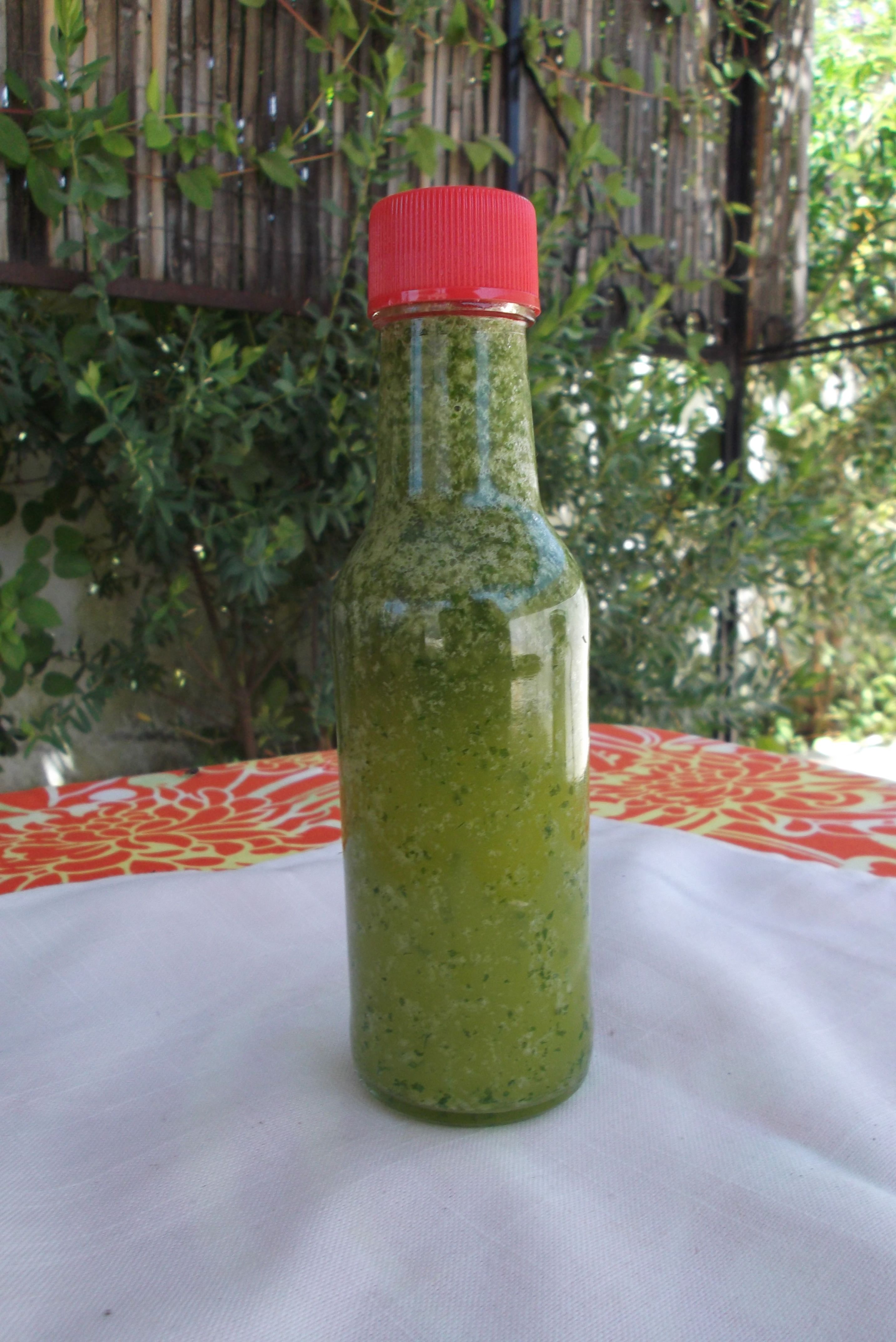
Salsa Verde Spanish Style

Shake before serving...

Well, it´s not exactly Italian salsa verde in that there are no capers or anchovies…but, it´s a green sauce so that most definitely makes it a salsa verde!

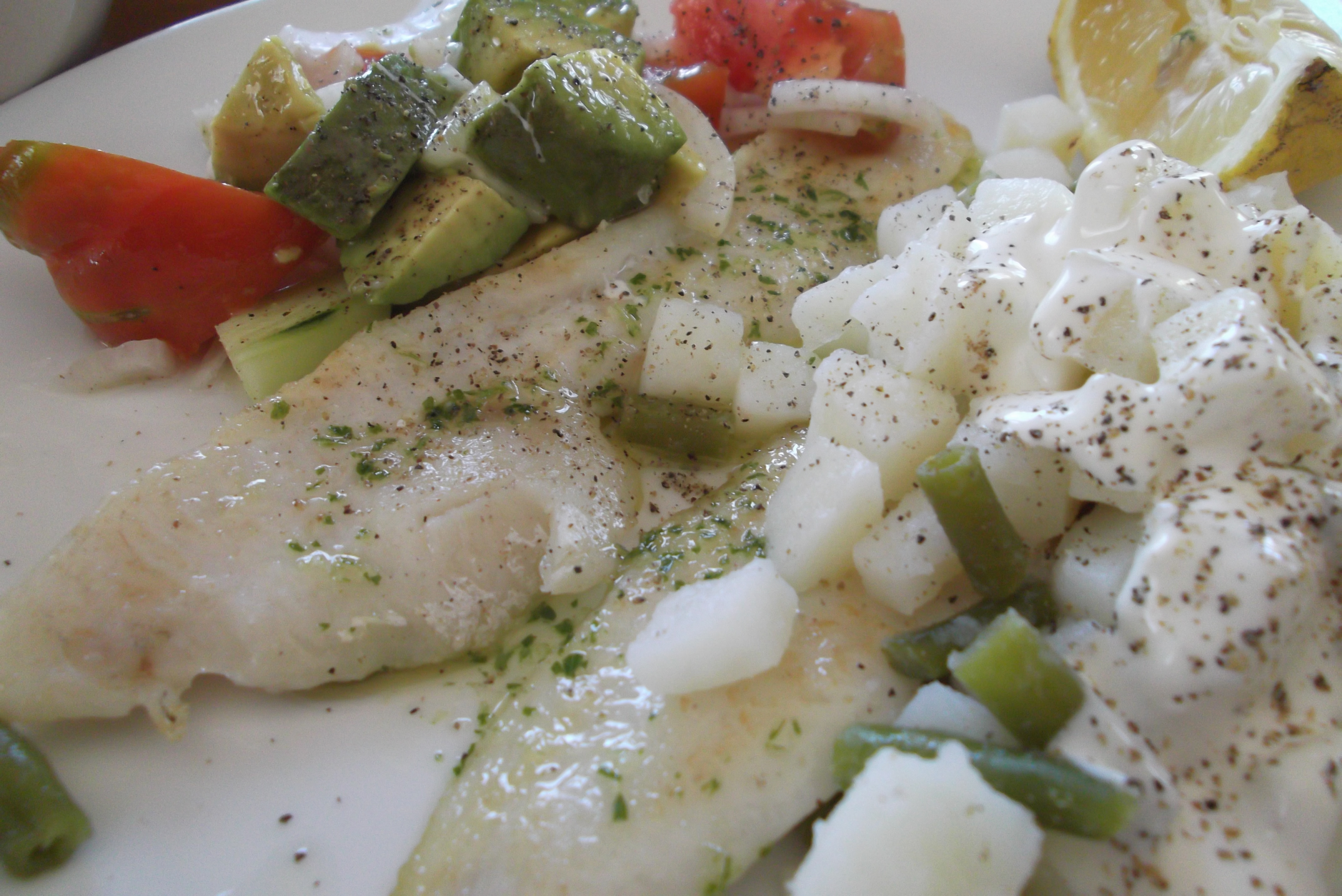
Restaurants round where I live have good, simple food.  It can sometimes get a little repetitive, and often there´s no menu as they all serve pretty much the same selection of grilled meats (usually pork cuts) and some grilled or fried fish.  What you get though is fresh, well cooked and tasty food.  Often the meat or fish will come drizzled with a delicious garlic and parsley mixture blended with olive oil.

One of our regular local restaurants moves everything outside onto the “summer terrace” during the hot months.  This includes the cooking, so you can sit at your table and almost within an arm´s reach you have Luis at the bar, his partner Sonia in the kitchen area and the mountain views.  I noticed that Sonia makes her sauce up and keeps it in a squeezy bottle which she then uses to dispense the delicious mixture over the cooked food as it leaves the kitchen and is delivered to us by Luis.

All she does is finely chop parsley and garlic and blend with a season of salt and local extra virgin olive oil.  I make mine up in the food processor or in a small jug using the hand stick blender.  I have now taken to keeping a bottle of this in my fridge.  Sometimes I add the zest of a lemon, and squirt it over simple grilled dishes (including vegetables) to liven them up.

Sadly, no waiter service at home, so we dished up ourselves!

Do give it a go, it´s handy to have around and apart from looking pretty, tastes wonderful. Probably best not to eat it if you´re going out on a hot first date though!

Pork ´n´ Beans – Slow Cooked Pork Shank with Borlotti Beans

Just what you need when it´s 32 degrees hot outside!

Ok, so I know it´s summer here and hot, hot, hot…but I just fancied it!  Our local “Big” Supermarket (ie. a 50km drive away) has started selling pork shanks.  It´s a cheap cut of meat but oh so tasty.  I bought two to cook, but in the end we still have one portion of this dish in the freezer as there was so much meat on each shank.

It´s a slow cook dish, you can be a bit cavalier with the ingredients depending on how saucy you like your finished dish.  It was so tender by the time it was done, the meat fell off the bones as I served it.  This makes for a less artistic food photo, but two very happy pups!

To make the dish I used:

  • About a cup and a half of borlotti beans which I soaked overnight (but you could use tinned)
  • Two cups of tomato sauce (crushed tomatoes cooked slowly with garlic, red wine, seasoning and rosemary until thickened)
  • Two pork shanks
  • Two large sprigs of rosemary
  • A large dried chili
  • Approx two cups of water (enough to cover the pork and beans)
  • Four slices of smoked bacon, diced
  • Salt and pepper
  • Three large cloves of garlic, peeled but left whole

To finish the dish

  • Half a cup of finely chopped bobby beans
  • Four small potatoes, diced

Put all the first list of ingredients into a large pot with a lid and cook very slowly for about four hours (or longer) in a low oven.  If you have time, it´s best left overnight before eating to allow the flavours to really develop. When I was ready to serve I heated the dish up and simmered for about 20 minutes to allow it to thicken a little then I added the beans and potato and cooked them until tender.

This slideshow requires JavaScript.

Definitely a dish to eat with a lovely glass of red wine, lots of crusty bread and a big spoon.  Have a sofa handy for reclining afterwards, a siesta is now in order!

Barbecued Shoulder of Goat with Za´atar

 
So tasty!

When my pals came over from the UK recently they came bearing gifts, just like the wise men.  One package was from my lovely mother and she had made up Za´atar and Dukkah for me.  What a lovely mum I have!  We can´t get them or all the ingredients to make them up here.  At least, I can´t seem to track them down, and it´s always lovely to have a gift like this as every time you use it, you think of the person who gave it to you.

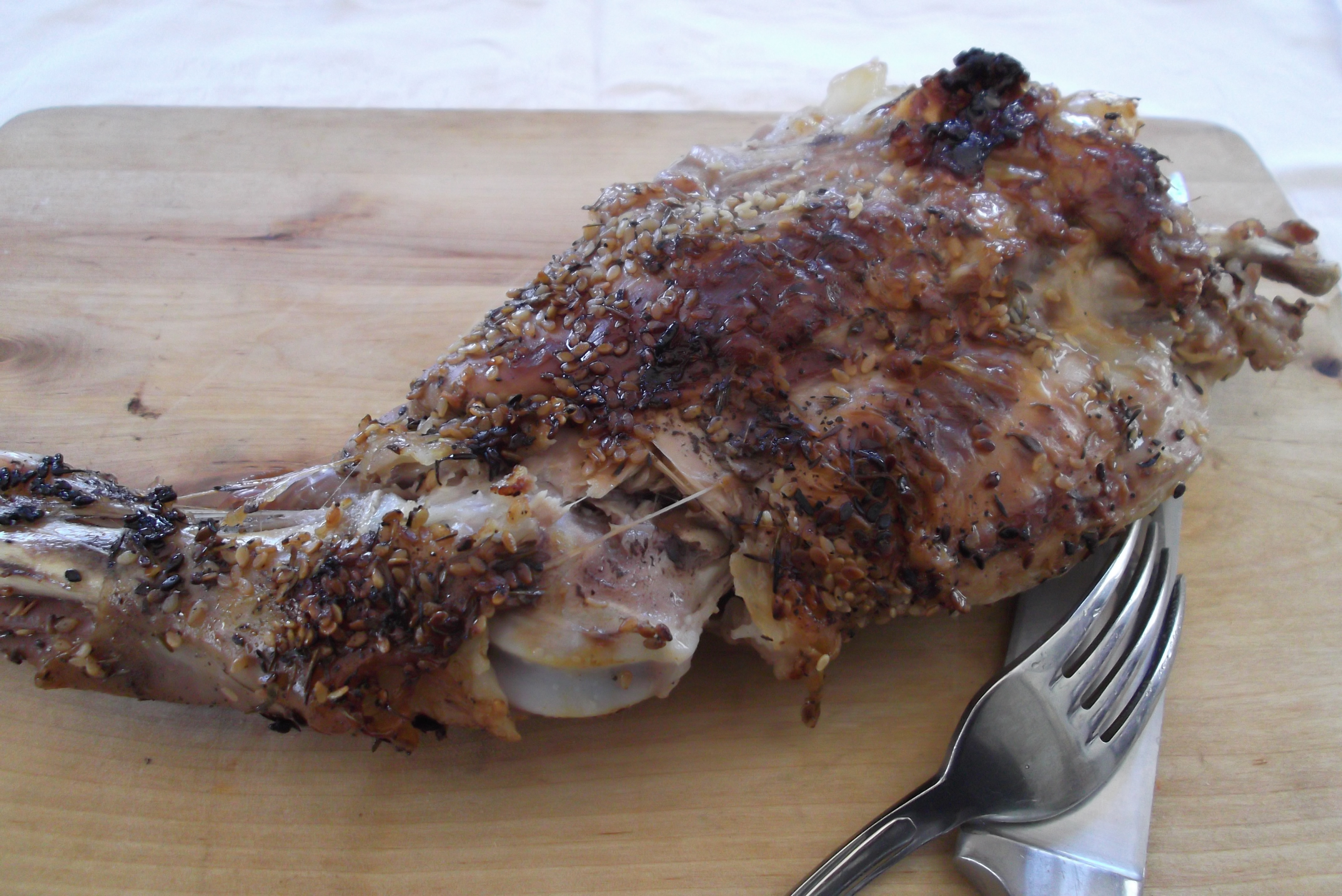
We had a very small shoulder of goat in the freezer (enough for two hungry people or two regular appetites with enough left over for sandwiches) and I thought I´d do it on the barbecue.

It was very easy to pull together and quick to cook.  I made a package with a double layer of foil to put the meat in the seasoned the meat with salt before sprinkling over and rubbing in the Za´atar.

Give it a little massage...

I wrapped it up and put it onto the barbecue at a low heat for about 40 minutes and that was it.

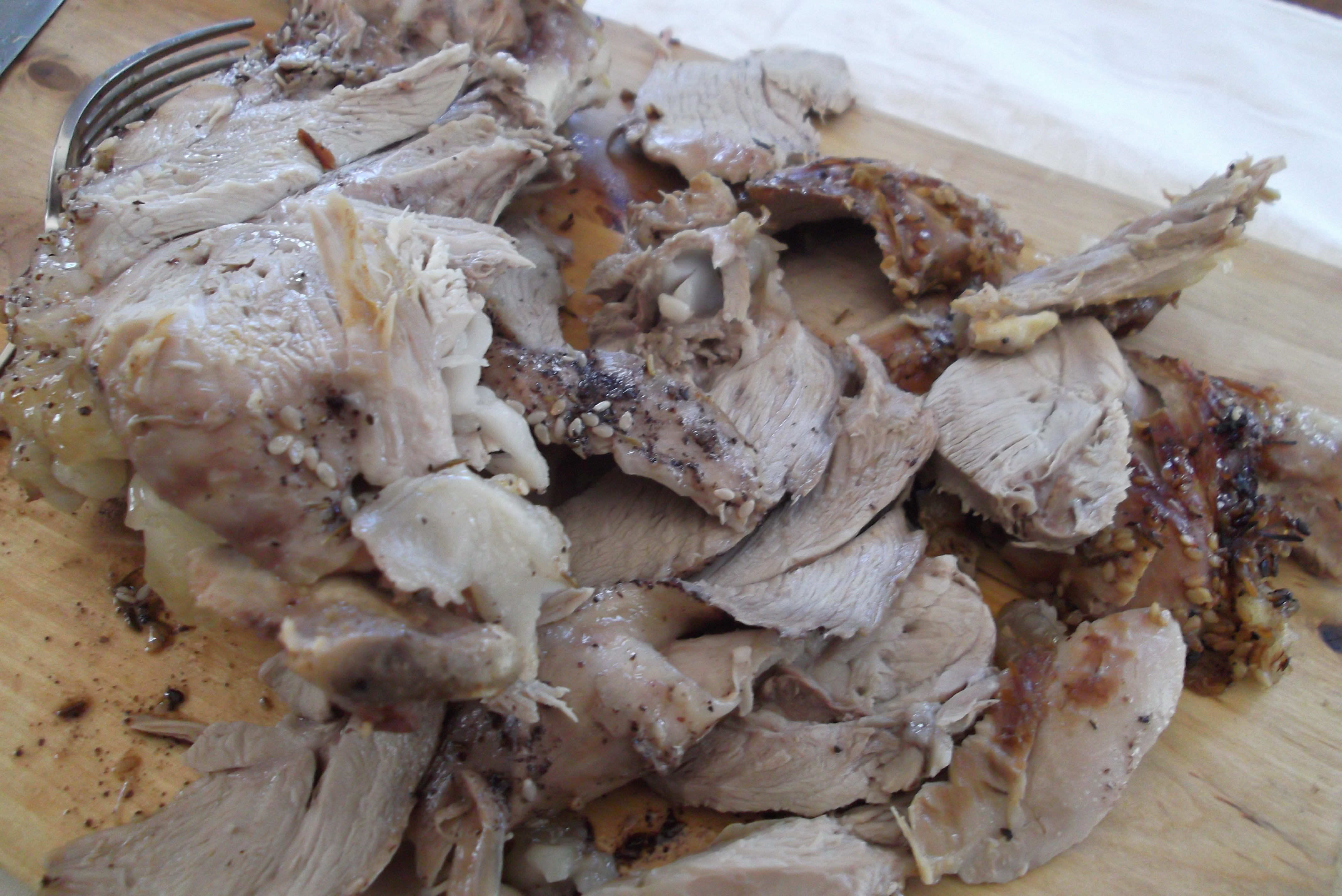
Oh go on then....just one more slice!

We ate it with lemon juice squeezed over, a big salad and some cold runner beans from the garden dressed with lemon juice and olive oil.  Oh, and a glass of wine of course!

Pork Ribs in Barbecue Sauce

Wait for them to cool down...!

Once of the nicest things about doing a blog is that you get to “meet” new people from all over the world and share a special little piece of their lives.  In this case it´s a lot of delicious recipes and talk about gardens and food and drink – all my favourite things!

We barbecue a lot here up our mountain, and finally invested in a gas barbecue last year.  I know, to the purists, it´s not exactly the same as using wood or carbon (although we do sometimes use this method too) but it´s so quick and easy and works well for us.  Mostly we keep things simple – a sprinkle of salt, some herbs, a dash of olive oil if the food needs it and we´re off!

I personally adore barbecue sauce, but rarely make it.  Big Man always insists he´s not a big fan of sauces, but whenever I make them he seems to enjoy them greatly.  I saw Greg´s delicious barbecue sauce over on his blog Rufus´ Food and Spirits Guide and thought I´d adapt it a little to make my own.  I only adapted it as we can´t get hold of all the ingredients here!  I only made a small batch and regretted it.  Big Man said on tasting the ribs and sauce “Ay, ¡que buena es esta salsa Americana!” which roughly translates to “Wow, this American sauce is so good!”.  Approval all round….

This was my version

  • A cup of chopped, peeled tomatoes
  • Half a cup of ketchup
  • 2 teaspoons of tomato purée
  • 2 cloves of garlic, crushed
  • 2 tablespoons of brown sugar
  • 3 tablespoons of white wine vinegar
  • 2 teaspoons of hot chili powder plus one dried chili
  • 1 teaspoon of English mustard powder
  • 4 tablespoons of molasses (miel de caña)
  • A few shakes of Worcestershire sauce
  • Salt and pepper
  • Quarter cup of water

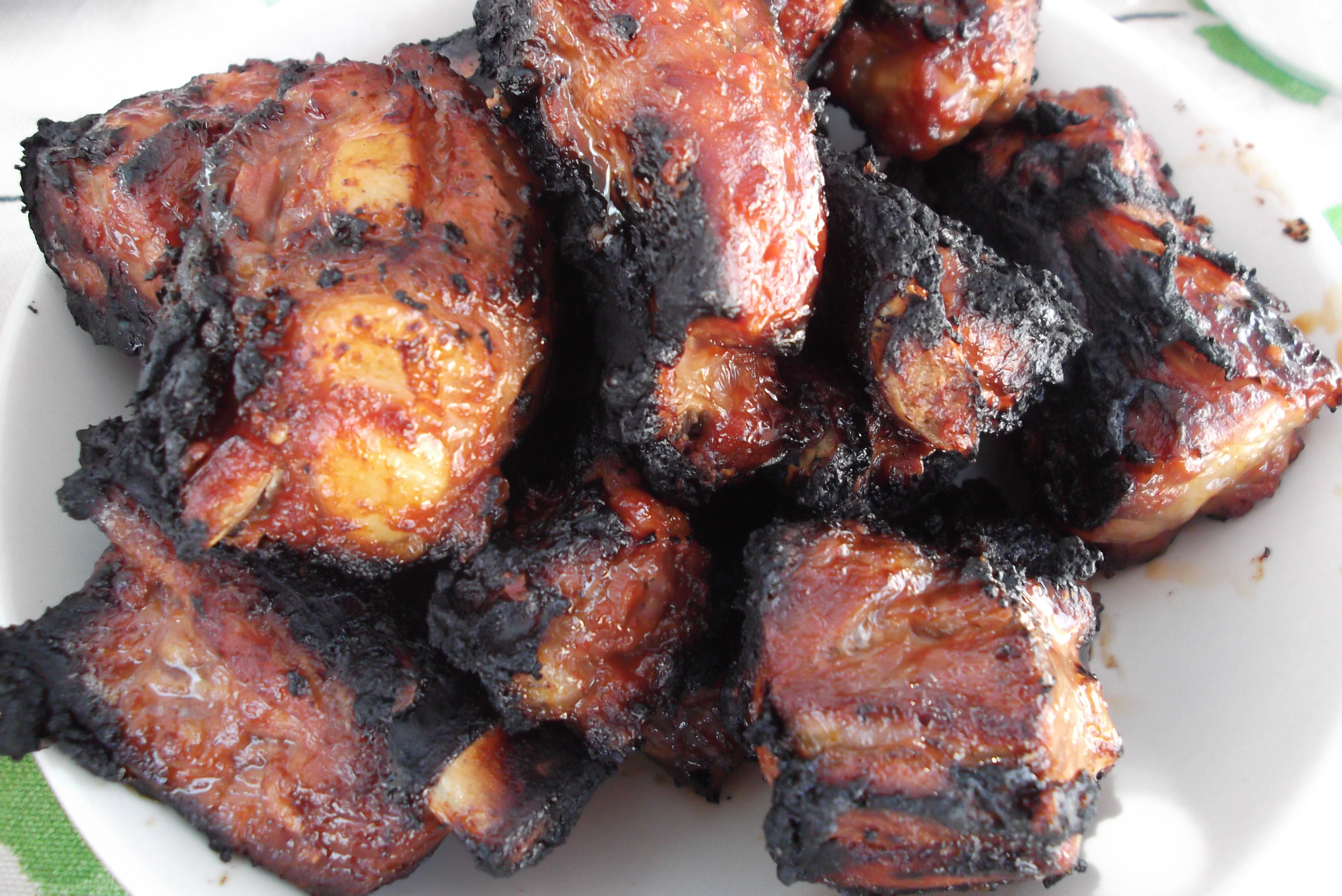
All I did was put all the ingredients together in a pot and simmer for about 10 minutes.  I kept some back and with about two thirds of the sauce I marinated my ribs.  It was meant to be overnight but we ended up eating them 2 days later.  I don´t think they suffered from the experience. 

There´s nothing like a good long soak in the bath!

When we barbecued the ribs, I heated the remaining sauce and we dipped our ribs into it, licked our fingers and had very messy but happy faces.

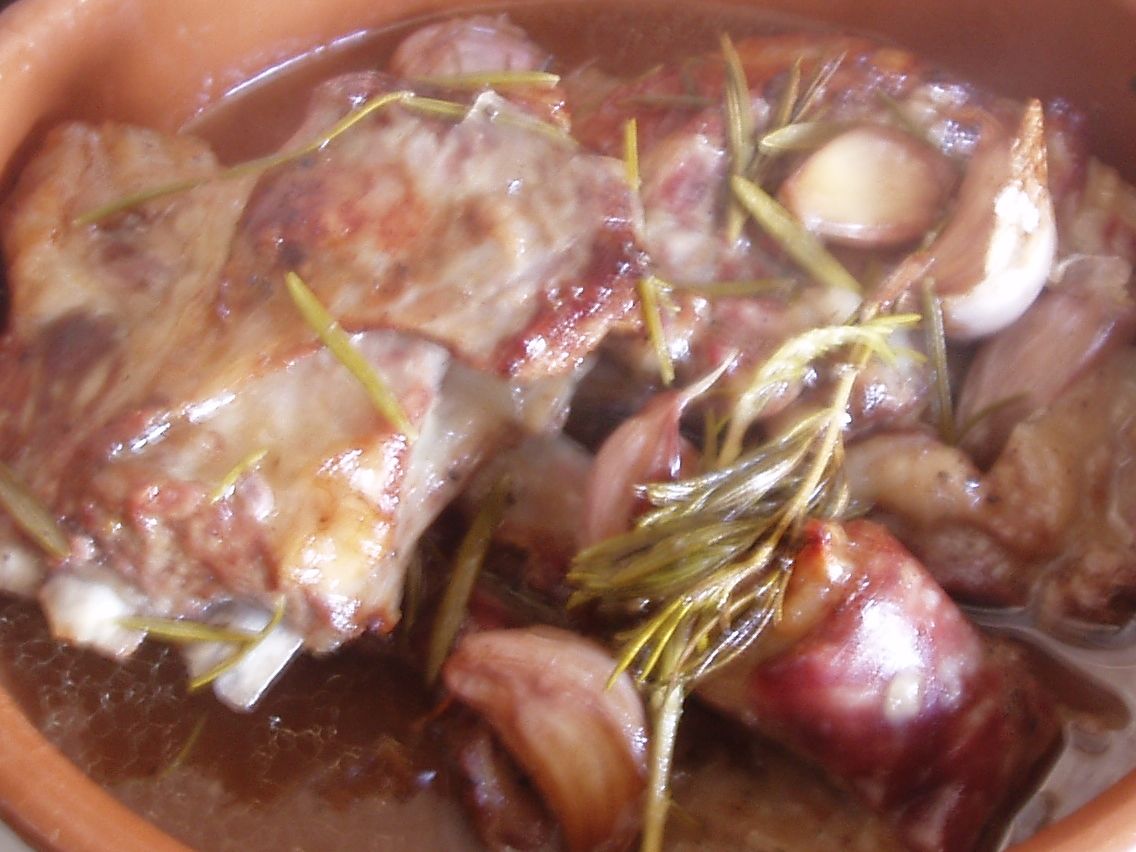
Kid (or lamb) with rosemary and garlic

Simple and tasty

We´re very lucky here to be able to get hold of the freshest, free range goat and lamb. I know that most lamb is free range anyway as it needs to graze, but I guess we can never be too sure if there have been chemical sprayed on what they eat or if they are getting food supplements. When I first arrived in Spain my only experience of eating goat was in a plate of curried goat at an ethnic restaurant in London.  It was alright, I suppose, but apart from a delicious sauce, the meat was rather tough and greasy.

I read somewhere that more goat is consumed per person in the world than lamb, and I guess it makes sense.  They are hardy creatures, can survive in very rough terrain and can climb to what we would consider inaccessible heights to reach their food.   Once I had tasted good kid (or young goat) out here, I realised that taste wise, it´s very, very similar to young milk fed lamb.

When you see the flocks of goats going past your house daily, you know they´re well fed and looked after.  We buy direct from the goatherd who slaughters for you and then you have to prepare it for the freezer.  I´m sorry if this all sounds a bit gruesome to anyone who either doesn´t eat meat or is a bit squeamish, but it´s what has to happen if you choose to eat meat.  And I do, and luckily I am able to eat the freshest most organic, free range meat possible.  Whew! Hope that didn´t sound like I was on my little soap box.

Anyway, one of the cuts of meat you get is neck of kid -and I know that in the UK at least, you can buy neck of lamb. It used to be one of those cheap cuts, but has now become trendy. It´s cooked in the oven simply and then depending on the weather I serve with salad or vegetables and plenty of crusty bread to mop up the juices.  It´s best picked up and eaten with your fingers!

It´s an incredibly quick and simple dish to prepare if the meat is young and tender and lamb can be substituted for goat.  If it´s a little older, just add more liquid and cook for about 30 minutes longer. You´ll need the following:

  • Neck of lamb for 2 people (I think mine was about 800g)
  • 6 cloves of garlic
  • A large spring of rosemary
  • Coarse salt
  • Freshly ground pepper
  • A glass of white wine
  • A glass of water
  • Half a lemon

Rub the lamb with seasoning and roughly chop the rosemary and mix it in with the lamb.  Peel and half the garlic cloves and add them in.  Pour over the wine and if you have time to leave it for a couple of hours, so much the better.

Leave for a while if you can

Put into an oven dish where it will fit quite snugly and put into a high oven for 10 minutes.  Lower the heat to medium, cover with foil and cook for a further 45 minutes approximately.  After about 20 minutes check the liquid – you don´t want to casserole it but you want some at the bottom of the bowl to cause a slight steam effect under the tent of foil.  If necessary add more water.

When it´s done (you can check by prodding with a skewer to see if the juice run clear), remove and leave it to sit for 10 minutes still under the foil.  Squeeze over a little lemon juice, then serve and enjoy!

PS. Sorry for blurry photos, they were taken with my old camera which was on its last legs!


Not for the fainthearted! Slow Cooked Pig´s Trotters

Slow Cooked Pig´s Trotters

So, are you ready for this?! You may know that in Spain, especially the south, the pig is a highly prized beastie.  We start at the top with the aristocratic pig that is the “Pata Negra” (which translates as the Black Hoof) who is fed on acorns and snuffles round in a life of luxury until he is turned into the most expensive Jamon in the world. At the other end of the scale, after the regular jamones and normal cuts of meat have been consumed and enjoyed, we´re left with all the other bits that most people think would be best consigned to the bin.

Well, not so here, and in many other countries and cultures too.  If they could turn the “oink” of a pig into a soup in Spain, I´m sure there would be a recipe for it.  Pig´s trotters are pretty common place in butchers and supermarkets here.  No need to place a special order as they are often put into stocks and soups, or boiled up with chick peas for their dish “Puchero”.  Sometimes though, they have a starring role all to themselves and this recipe is one which comes from Big Man´s mum, to one of his sisters and on to me.

I was told that this, like many other Andalucían dishes, was the poor folks´ food.  When the Matanza (pig killing) was carried out in the autumn, the “extras” such as the tripe, trotters, tail and ears were given to those who had helped out in payment for their services.  Because there was so little (or no) meat on them, the cooks had to get creative to add flavour and use long, slow cooking to tenderise the food.

I have to confess, I´m not a big fan, but I love the sauce from this dish.  Pig´s trotters, when cooked, are rather gelatinous and involve a lot of chewing and then spitting out of all the little bones.  It doesn´t bother me, but Big Man loves them so much that I make a pot for him every so often to enjoy all to himself whilst I tuck into something like aubergines or curry – which do nothing at all for him.

It´s a slightly long winded, but not complicated process to make this dish as you need to plan several days ahead. Give it 5 to be on the safe side.  Here´s how to do it if you´re feeling adventurous.

For two people as a main course

  • 8 pigs trotters split into halves or quarters (they usually come like this or ask your friendly butcher to help you out)
  • Salt about 6 tablespoons
  • 2 bay leaves
  • About 12 peppercorns
  • 6 cloves of garlic
  • 2-4 small dried chilies

For the sauce

  • 3 cloves of garlic peeled and cut in half lengthways
  • 1 large slice of stale bread
  • A few strands of saffron soaked in water (or use a heaped teaspoon of paella spice mix)
  • Half a teaspoon of hot chili powder (pimentón)
  • Olive oil
  • About 12 peeled almonds
  • Salt to season

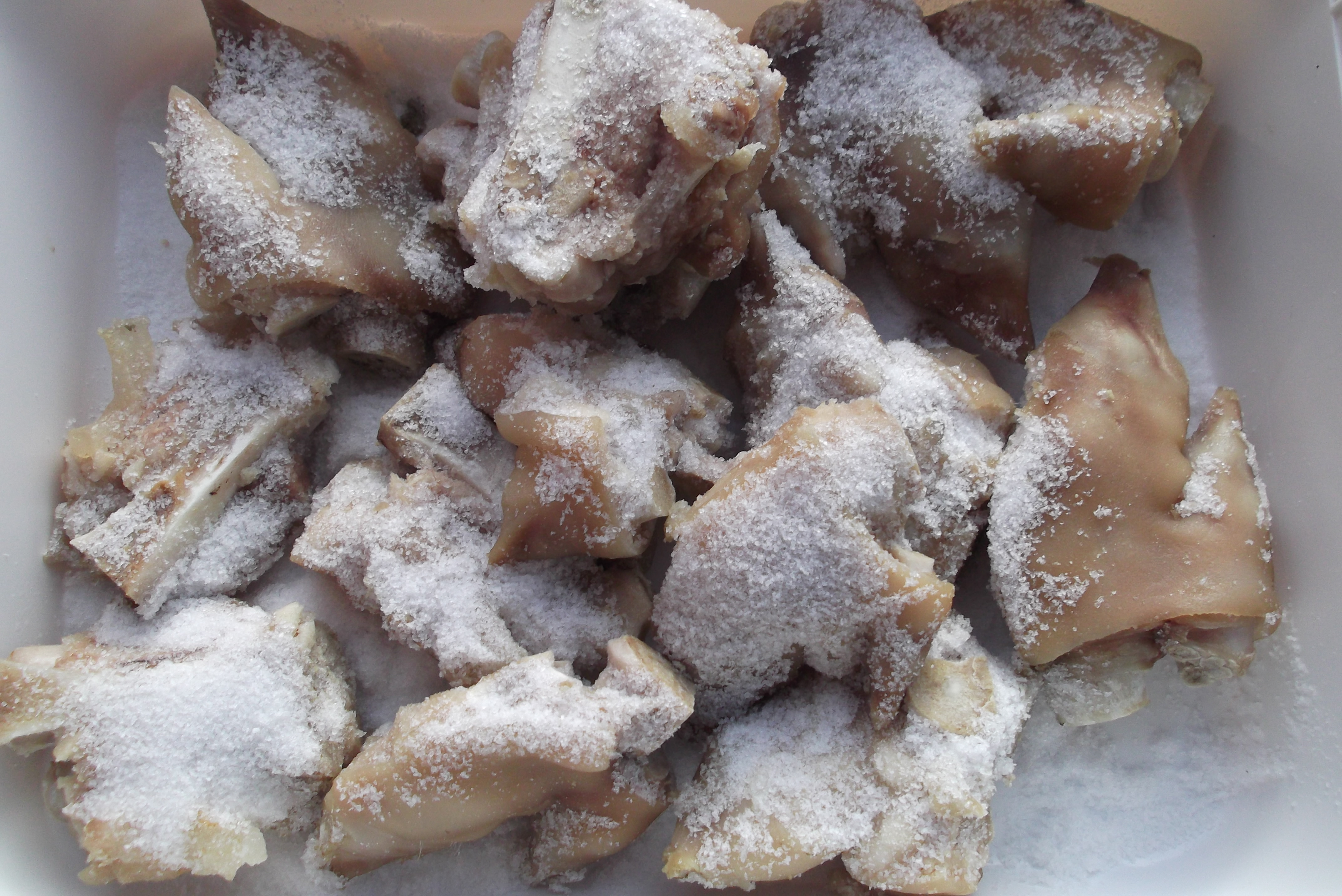
On the first day salt the trotters, put into the fridge for 24 hours

Salting the trotters

On the next day and for 48 hours, de salt them by submerging in a pot of fresh water which will need to be changed about 3 times per day

The day before you want to eat them you need to put them into a large pan with a lid, cover with water and add the garlic, bay leaves, chilies and peppercorns.  Bring to a boil and then simmer for about 2 hours or until really tender.  The trotters will start to fall apart and you need to end up with half the liquid you started with.  You may need to top up the water during cooking.

For the sauce you need to fry the garlic, almonds and bread in a small amount of olive oil until browned and then put into a jug with the saffron and it´s water plus about 2 ladles full of the water from the trotters.  You add the pimentón and then blend with a stick blender until you have a thick purée.

Pour this into the pot with the trotters and simmer again for about half an hour.  Add salt to taste and then cool and refrigerate for at least 24 hours.

In the fridge the gelatine will cause the whole thing to solidify.  When you warm it up to eat it, it will all return to a liquid state and you´ll have sauce again.  This isn´t typically served with anything as you have to eat it with your fingers which get incredibly sticky!  I love the sauce though and serve it with plain boiled rice.

This is not a dish that will be to everyone´s liking, but for those of you willing to try it, it has a wonderful flavour. Do let me know if you´re brave enough to give it a go!

Slow Cooked Ox Tail – Rabo De Toro

So, the damp weather was looking like it was going to continue, and my yearning for comfort food followed the same pattern.  I love casseroles and braised dishes with lots of sauce to be slurped up with a spoon or soaked up with bread or creamy mashed potato.  It was time to make something warm and comforting.  A hug in a casserole dish.

Hearty Winter Food

Oxtail used to be, I understand, a cheap and cheerful cut of meat to buy.  It needs long and slow cooking, so this probably influenced the price.  It now seems, from my recent visits to the UK, to be a bit of a “gastro pub” highlight and the price has correspondingly increased.  Even in Spain, where it´s sold as “Bull´s Tail” it´s no longer that cheap a cut of meat to buy.  But hey, sometimes you´re worth that little bit extra and it´s that delicious, it´s worth all the love and long cooking it needs.

I made a large pot of this delicious casserole which gave me 2-3 main portions plus enough meaty sauce left over to give me a further 2 hearty bowls of oxtail flavoured soup.

Here´s what you need:

  • 1 ox tail, cut into slices. Your butcher should do this, or it will come ready prepared.  Mine weighed about 1.2kg
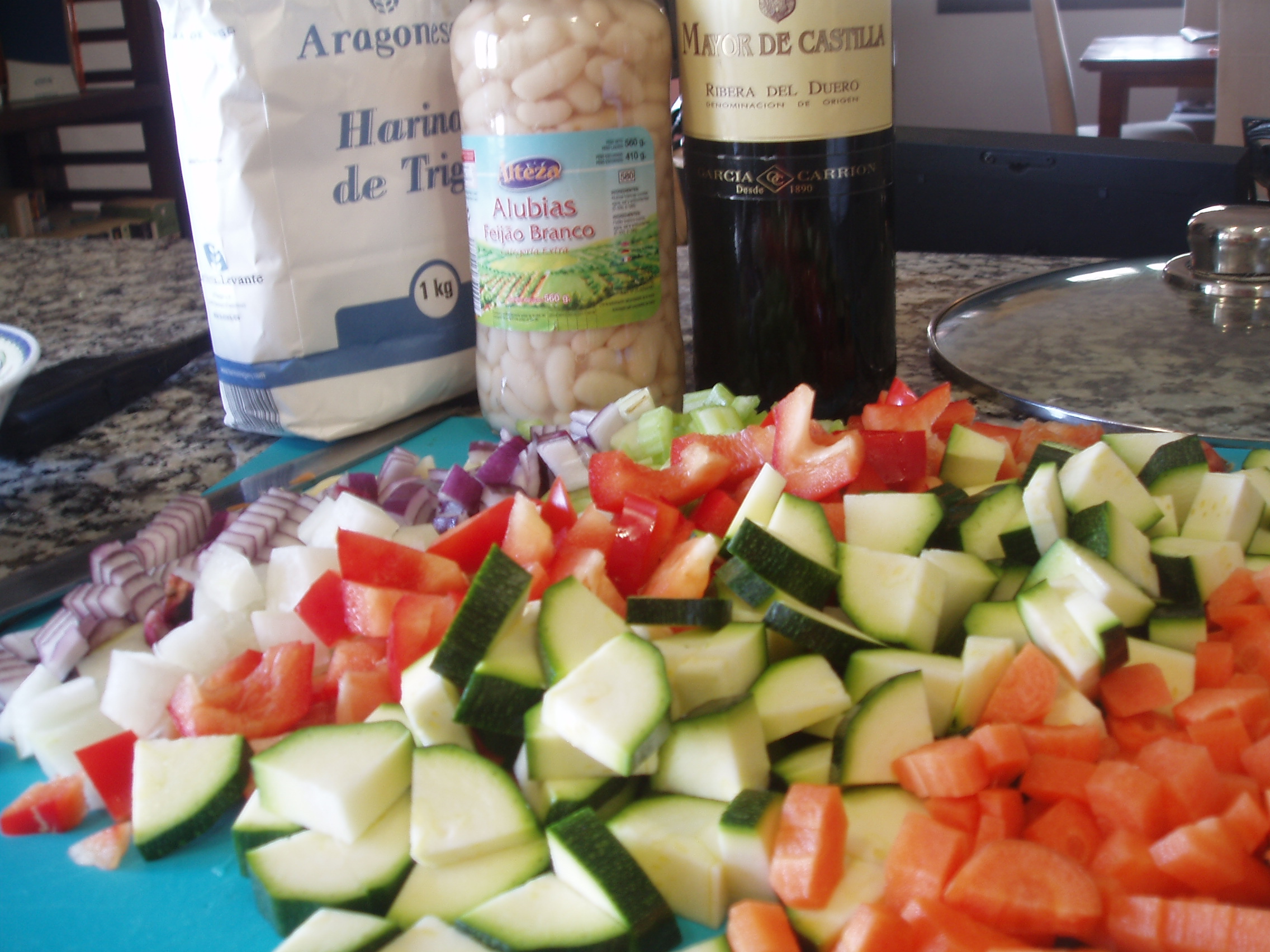
  • 3 medium carrots, diced
  • 1 medium onion, diced
  • 2 medium courgettes, diced
  • 2 sticks of celery, diced
  • 3 fat cloves of garlic, finely chopped
  • 1 jar or tin of cannellini beans
  • 1 tin of tomatoes, crushed or chopped
  • 2 heaped teaspoons of tomato puree
  • 1 bottle of red wine, less a glass for the cook
  • 1 mug of water or stock (beef, chicken or vegetable)
  • Salt and pepper
  • Approx 2 tablespoons of plain flour
  • 2-3 tablespoons of olive oil
  • A large, deep, ovenproof dish with a lid


Take One Ox Tail...


Chop. Chop

First prepare all your vegetables and put them to one side.  No need to keep them separate as they´ll be cooked together.

Now coat your pieces of ox tail in flour and after heating the olive oil in the ovenproof dish, brown them on all sides.  Don´t rush this part as, if you over crowd the pan, the meat will steam and not brown.  Put the ox tail to one side.

Start to brown...

In the same pan, and with the oil that remains, add the diced vegetables and make sure they all get coated in oil.  Put the lid on and let them sweat for about 5 minutes.

Turn your oven on low (about gas mark 2).

Put the meat back into the pot, add the beans, tomatoes and tomato puree, stir and bring it up to a simmer. 

Bring to a simmer

Now add the wine and water, season lightly (you can adjust this when the dish has finished cooking) and bring it to a simmer once more.

Put a lid on the pot, and the whole thing now goes into the oven where it will cook slowly for at least 4 hours. I like the sauce to thicken a little so it usually ends up cooking for 5-6 hours.  It won´t dry out, you have plenty of liquid in there.  Every couple of hours check on it and give it a stir.  If it does look like it´s getting too dry for your taste, add a mug of boiling water.

When the cooking time is up (and it´s a very forgiving dish), take it out and check for seasoning.  If it´s too liquid, simmer on the hob to reduce a little. You can eat it immediately if you wish, but it´s a dish which really does improve if left until the next day.  Leave to cool completely.  If you find your have a layer of fat on the top the next day, you can remove this before heating up and serving.

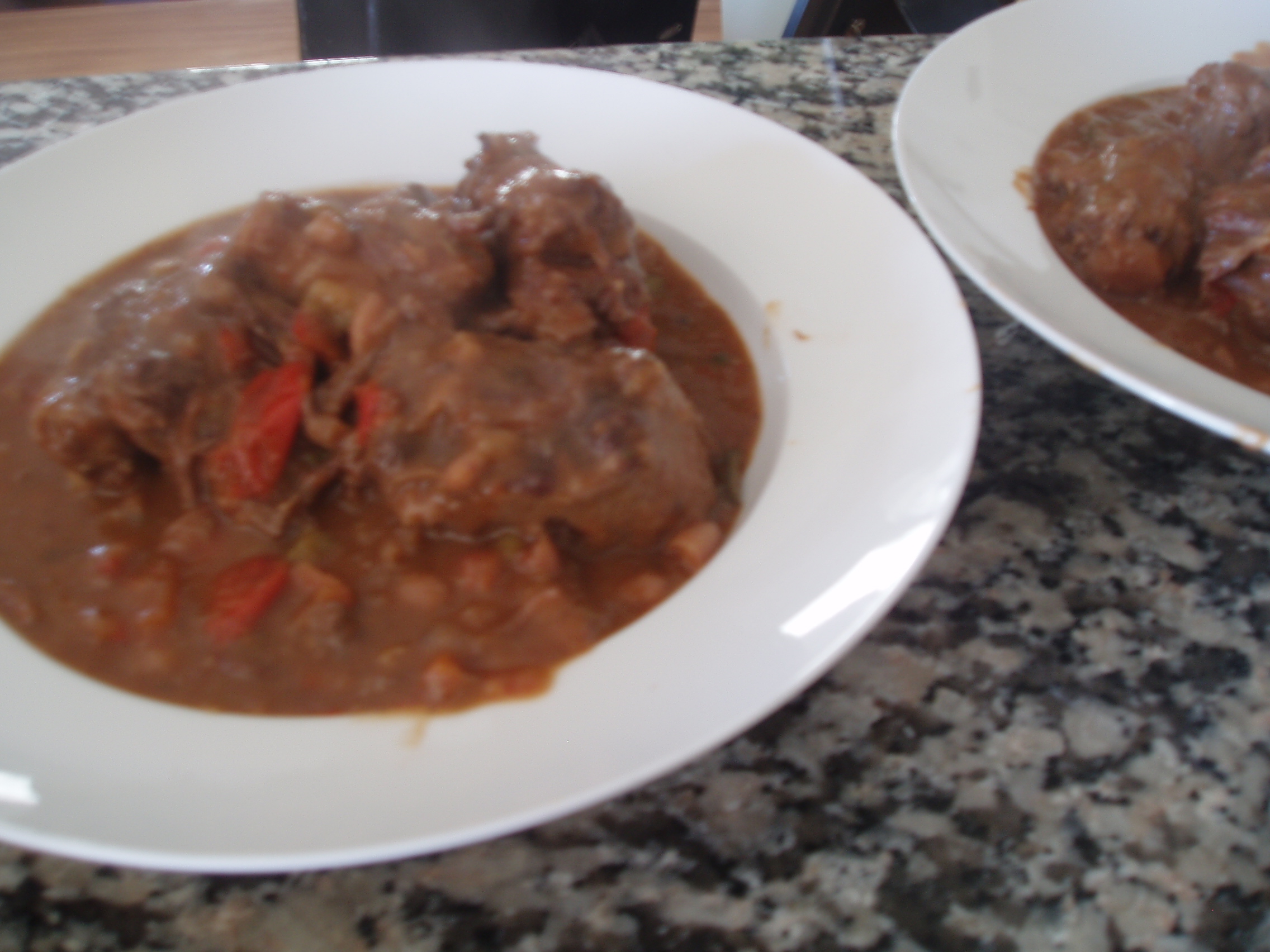
It looks like a lot of meat, but it´s nearly all bone.  How many it serves depends on how hungry you are and how much sauce, vegetables and potatoes you serve it with. Any leftover sauce and can be diluted slightly with stock or water and served as a filling soup another day.