Chinese Style Braised Beef

I wish I had a “taste-o-blog” or a “screen-sniff” option, because the photo of this dish really doesn´t do it justice.
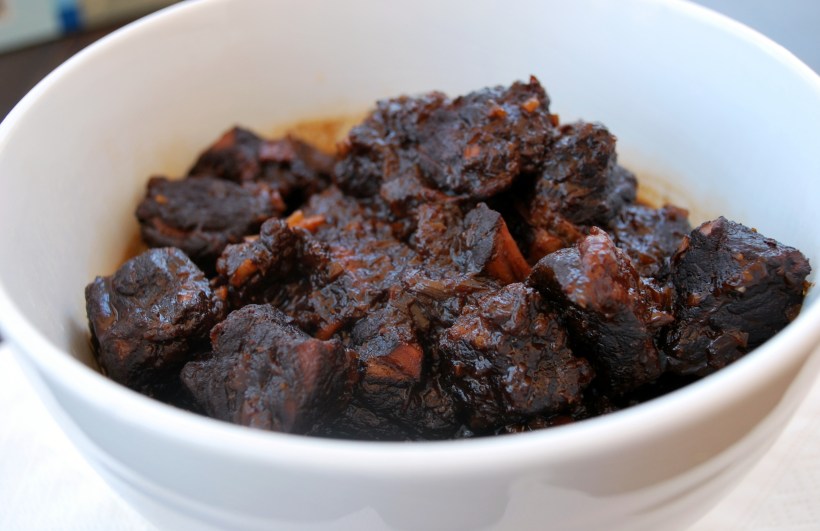
During Operation Clear Out The Freezer, I came across a piece of stewing beef. It´s not really casserole weather here right now, but I knew I´d need to give it a long slow cook.  Inspired by the success of the flavours in my Pork Belly dish, I decided to head to the Orient for my ingredients.  Adapted from a BBC Good Food Recipe, this is a beautiful, prepare ahead dish which is even better the next day and would work really well too with pork. I served it simply with basmati rice and steamed runner beans.

Ingredients (to serve 4)

  • 3 tbsp vegetable oil for frying
  • Beef for slow cooking (my piece weighed about 1 kilo) cut into bite sized chunks
  • 1 large onion
  • 50g peeled fresh ginger
  • 6 cloves of fresh garlic
  • 2 heaped tsp Chinese five spice powder
  • 4 whole star anise
  • ½ tsp freshly ground black pepper
  • 80g brown sugar
  • 50ml soy sauce
  • 50ml of dry sherry (or use rice wine or water)
  • 2 tbsp tomato purée
  • About half a cup of chicken stock (or beef if you have it, otherwise water)

Heat the oil in an ovenproof dish and seal the meat on all sides (in batches if necessary). Remove the meat and reserve in a separate bowl.

Blitz the onion, garlic and ginger to a paste with a little water in a food processor then fry gently in the same pan you used for the meat until it has softened. Add the five spice, star anise and ground pepper then after a minute add the sugar, soy sauce, wine and tomato purée. Add the beef to the pan with any juices then add just enough stock to cover the meat.

Bring to the boil then reduce to a simmer then cook either very slowly on the stove top for a couple of hours or on the lowest oven setting for about 3 hours.

When the time is up, remove the meat from the sauce then turn up the heat and reduce the sauce to your preferred consistency.

When you are ready to serve (and even better if you can make this a day ahead) pour the sauce over the meat and enjoy.

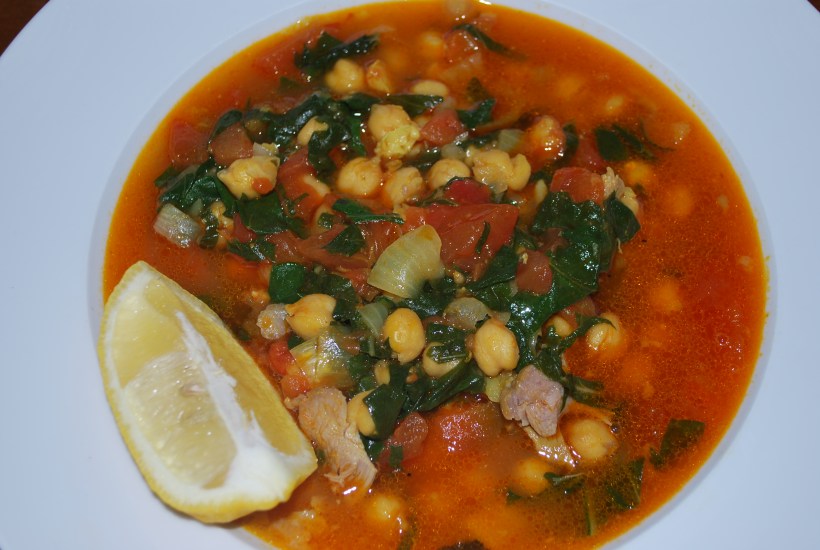
Harira Style Soup

You know when you buy a new cookbook and it´s full of lovely recipes, but the reality is you probably won´t cook that many of them and feel a bit let down? Mmm, yes, we´ve probably all been there. Well, not so with my new Ottolenghi book. In fact, I had intended to leave it in the UK to use when we return in a few weeks to start work on the house renovation. But it kept whispering to me, “take me with you, take me with you”, so back to Spain it came and I have been cooking from it already with plans for many more dishes.

First up was Harira, a Moroccan soup made with chickpeas and lamb. Yes, I´m trying to clear out my freezer a little before we leave, so out came a piece of lamb.  And you know how we love our chickpeas in Andalucía…it was meant to be. Of course, I made a few changes but I am sure Mr O won´t mind.

It´s not quite like other Harira soups I´ve made, but I was very pleased with the results. I think it would also be a very good vegetarian soup if you leave out the meat and use vegetable stock or water. I have also made this soup with rice and lentils also included.  This is a lovely recipe too from Robert Carrier.

Ingredients to serve 4-6

  • 200g dried chickpeas soaked overnight in water with a pinch of bicarbonate of soda (I don´t know the quantities for using ready cooked, canned but I would imagine it would be at least double the weight)
  • 3 tbsp olive oil
  • 1 large onion roughly chopped
  • 200g lamb fillet cut into 1cm dice (I used a piece of neck fillet on the bone which I cooked whole then pulled the cooked meat off and stirred into the soup
  • 2 tbsp tomato purée
  • 1 tbsp sugar (I used 1 tsp)
  • 1kg tinned chopped tomatoes (I used about half this amount of my own tomatoes)
  • 1.2 litres of chicken stock or water
  • Juice of 1 lemon
  • 1 tsp ground cumin
  • 1 tsp ground ginger
  • A pinch of Saffron strands (I used a teaspoon of turmeric)
  • I also added 1 tsp each of cinnamon and hot chili powder
  • 100g baby spinach (I used chopped chard from the veggie garden)
  • 4 tbsp chopped coriander (didn´t have any, so omitted)
  • 4-6 lemon wedges
  • Salt and Pepper

Method

Cook the chickpeas in plenty of water until completely tender (about an hour or an hour and a half), drain and reserve.

In a large saucepan over a medium heat, gently fry the onion until translucent. Increase the heat and add the lamb and fry until sealed.

At this point I added the spices (Mr O does this later in his version). Now add the tomato purée, and sugar, cook for a couple of minutes then add the chopped tomato, drained chickpeas, liquid and a little seasoning.

Bring to the boil then reduce to a simmer and cook for about 35-45 minutes until the meat is tender. Squeeze in a little lemon juice (I didn´t add it all at this stage as per the recipe) and this is where Mr O adds his spices.

Taste and adjust the seasoning. Just before serving, bring the soup back to the boil and add the finely chopped spinach (chard in my case) then remove from the heat. Serve with lemon wedges.

Very delicious, I may even spice it up a little more next time. And yes, the book will be coming with me again to the UK….it likes to travel.

So…you want to make a Paella?

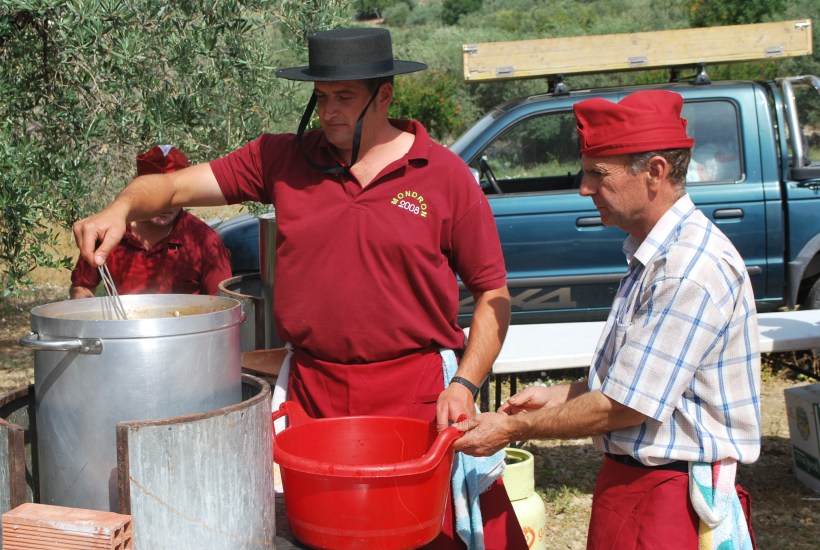
Finally, I thought it was about time I put pen to paper (or fingers to keyboard) for this classic recipe. I went to a local expert, he´s called “Chef Colorin” and he makes the paellas for all the local fiestas. Be warned, there are LOADS of photos in this post, but I hope you enjoy seeing the process.

Of course, he wasn´t going to just  sit down with me over a glass of wine and give me the recipe. Much better than that, I was going to join in with the cooking. Fantastic, I thought, how many are we cooking for then Chef? Oh, not too many he told me, only 420 on Sunday. Get there about 11am he said, and we´ll show you the ropes.

Not one to balk at such a challenge, and I even wore the exceedingly unflattering hat (yes, I´ll show you the photos). It was one of the hottest and windiest days we´ve had for a while, so we couldn´t even put a shelter up for shade. Hey ho, the show must go on, and of course, it did.

We used 3 Paella pans which make 140 portions each. Feel free to adapt for smaller groups! The ingredients below are per 140 person pan.

Start with your base stock which is made in large 50 litre pots, sheltered from the wind today with a clever little device which goes round the base of the gas ring.

Into each pot goes 800g of stock cubes to 50 litres of water (at home, you´d probably use home made chicken or fish stock), 5 bay leaves, 2 tablespoons of sweet pimentón, 200cl of dry white wine, 500g each of chopped peppers and garlic, 1kg of monkfish, assorted fish bones, 400g of chopped tomato and 4 kilos of prawns with their shells on. Bring to the boil then simmer for about 20 minutes or so. Chef added 14 sachets of paella food colouring to the mix but at home we´d use saffron or turmeric.

Strain out the prawns, fish etc.

Then, wearing your glamorous outfit, count out 280 prawns (that´s so that everyone gets at least 2 each) and pull any meaty bits of fish off the bones. First come, first served on any extra prawns!

Lookin´good Chica, and rockin´that mesh hat look!

Is your fire ready to cook? I hope so, we´re going to begin.

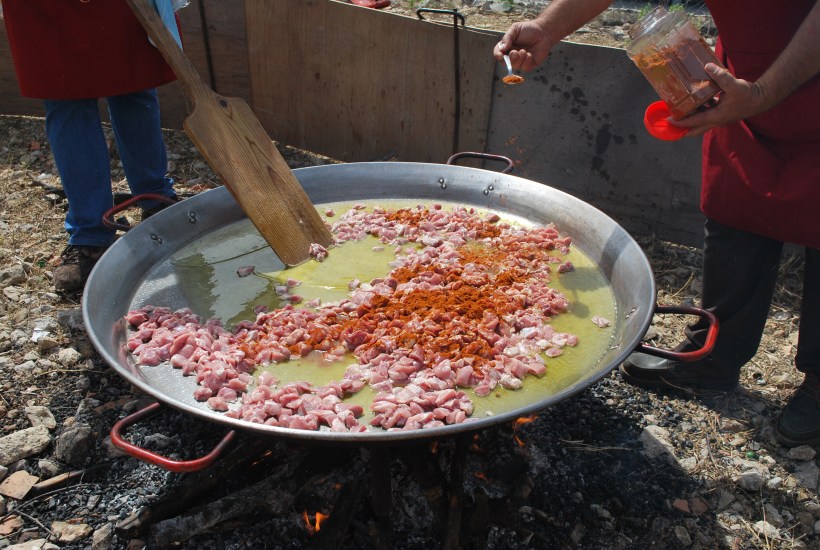
Heat 3 litres of olive oil in your pan and add 8 kilos of chopped pork and season with salt to taste. Fry gently for a few minutes.

Now add a couple of heaped tablespoons of sweet pimentón.

Next comes a kilo each of red and green peppers and 250g of chopped garlic. Don´t forget the seafood – 2 kilos of chopped squid.

Stir gently while making silly faces.

Big Man has a go wearing the “Sherry Server” hat from Jerez!

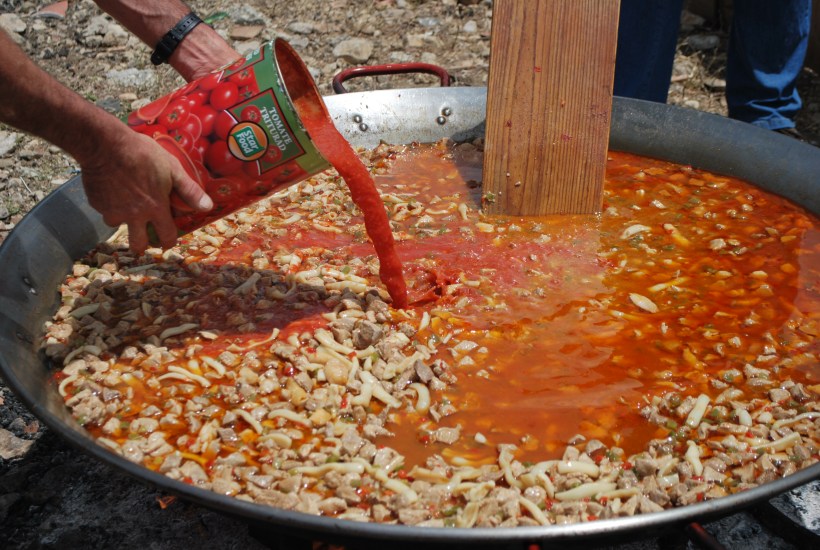
Time to add 4 kilos of chopped tomatoes and a kilo of sliced roasted peppers.

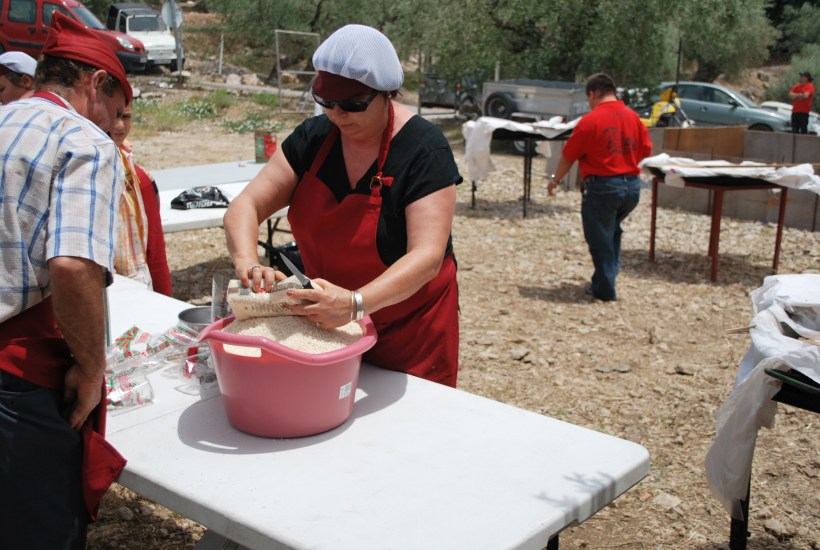
Open the bags of rice carefully – 14kg for 140 people, which translates to 100g per person at home.

Such concentration – I take my work very seriously!

Add to the pan.

Stir gently into the sofrito with your giant paddle.

Now add30 litres of stock (which is 2 litres of stock per kilo of rice, plus a little extra – at home you would add 200cl plus a dash per 100g of rice…see, not so complicated!).

Keep that rice moving without burning your legs on the fire underneath the pan.

The professionals in action…

It´s much harder than it looks! (And don´t forget to taste).

Rookie cooking….

Remove from the heat and sprinkle over those prawns and the fish you set aside.

Was he trying to sneak one of my carefully counted prawns?!

Phew, job done. Time to show off an enormous loaf of bread baked by a local baker.

While we´re eating, you can enjoy a vaguely arty shot of a clean paella pan (don´t forget to oil it after washing up).

PS. Am off to London tomorrow for a week so will try to keep up with all your lovely blogs and comments, but apologies if some have to wait until after 20th June. Hope you enjoyed the paella making as much as I did, sorry it was so long but I really enjoyed putting it together. I do have to admit though, I was quite glad to take my “uniform” off and sit down in the shade of an olive tree with a large glass of tinto de verano.

Cortijo Curry – North Indian Goat (or Lamb) Curry and a Simple Raita

Without further ado, here´s the recipe for the beautiful curry we made recently when Best Buddy came to stay recently.

We adapted the recipe (just a little) from one in Anjum Anand´s book Indian Food Made Easy. She uses lamb, we used goat. We served it with roti, plain boiled basmati rice, tarka dhal, and poppadums. In the excitement I forgot to make a cooling raita to accompany it. As it turned out, the dish was not hot at all (I would add more chili next time, but that is just personal taste). However, this did allow all the beautiful and individual spice flavours to shine through.

Leftovers were to be for me, me, me. Unfortunately Big Man got in on the act and decided that it was really rather a fabulous tasting dish, so they ended up being for us, us us. This time without poppadums or roti, but with raita. Recipes for the tarka dhal, spinach and roti to follow soon.

Ingredients (the recipe says it serves 6-8 but we thought it was for 4, even with all the accompanying dishes we made)

  • 25g fresh ginger, peeled
  • 10 large cloves of garlic, peeled (to weigh about 30g)
  • 3 tbsp vegetable oil
  • 2 each black and green cardamom pods (we used all green)
  • 1 bay leaf
  • 1 large onion, peeled and finely chopped
  • 800g lamb cubes with bone in (I used goat with boneless meat from the leg and ribs, chopped into small pieces)
  • 1-2 whole green chilies (the recipe says optional – we used 1 but I would use 2 or 3 next time)
  • ½ tsp turmeric powder
  • 1 tsp garam masala (we used a garam masala spice mix made for me which we then ground)
  • Salt, to taste (we found it needed quite a lot)
  • 4 medium tomatoes, puréed (we used conserva)
  • 500ml water
  • Chopped coriander to stir in when dish is cooked

Make a paste of the ginger and garlic, adding a little water to help blend.

Heat the oil in a large non stick pan or pot. Add the whole cardamom pods and bay and stir into the warm oil before adding the onion. Fry until the onion starts to brown, then add the lamb and stir until the meat is sealed. Now add the ginger and garlic paste, the spices and a little salt (you can adjust the salt at the end of cooking). Cook for a few minutes until the pan is dry.

Add the tomatoes and bring to a boil then simmer for about 10-15 minutes. Add the water, bring back to a boil then simmer (covered) for about 45 minutes. Stir occasionally.  We removed the lid for the last 5 minutes as there was a lot of liquid. When cooked, taste and adjust seasoning and stir in the coriander.

To make a simple raita mix together about 2 tablespoons of finely chopped mint, a finely chopped (small) red or white onion, a finely chopped piece of peeled cucumber (about 10cm long), 2 tbs lemon juice, a good pinch of salt and half a cup of creamy natural yogurt.

Puchero or Olla Andalúz – Andalucían Chick Pea Stew

Well, what a weekend of e-mails many of us have had. Thanks a bunch WordPress (not!) for inundating us all. It´s been quiet on the blog front as many of us have held off from posting or commenting for fear of drowning in a sea of unwanted e-mails. Hopefully we are all daring to put our toes back in the water…but please don´t forget to remove that tick from the box below the comments one so that you don´t receive all those messages if you´re brave enough to leave messages again!

It´s been a strange weekend here too weather wise up the mountain. Saturday was like the depths of winter, Sunday got better and this week it looks as though summer is on its way with temperatures predicted in the high twenties. Feeling grey and damp on Saturday, we indulged in a big bowl of comforting Olla (pronounced Oya) or Puchero.

The word Olla in Spanish is a big cooking pot.  Often this dish is named after the pot it is cooked in. It´s a hearty, filling winter warmer that if eaten for lunch (it´s never eaten for dinner here, probably because of the “natural effects” of chick peas) will keep you going all day . This version lists the ingredients typically used locally, but also gives options for making it outside of Spain where not all of the ingredients will be so easily available. The salted bones and fat add flavour and give the broth a cloudy or white appearance, which is the sign of a good stock in Andalucía.  Clear stock, I think I´ve mentioned it previously when talking about Chicken Soup, is considered to be lacking in flavour!

If you use the salted bones, you won´t need to add much in the way of seasoning at the end. If not, add salt after the chick peas have cooked, otherwise they will never soften.

Ingredients for 4 people

  • 2 cups of dried chick peas soaked overnight in water with a pinch of bicarbonate of soda and drained
  • 2 large chicken legs and thighs (you will see that the meat in the photo is very dark as this was one of our “old boiler” cockerels…very tasty)
  • 1 piece of pork (typically here it comes from the leg or shoulder) weighing about 250g
  • Salted pork bones (replace with 2 or three pork ribs)
  • A small piece of salted pork fat (omit if you cannot find)
  • A piece of fresh or salted pork belly (with plenty of fat)
  • Optional – a few peeled carrots and sticks of celery
  • 3 or 4 cloves
  • 2 bay leaves
  • 2 small dried chillis (optional)
  • Water

Put all the ingredients into a large stock pot, pushing the meat and bones down to the bottom.  Add water to cover everything well and bring to the boil. Skim off any froth that rises to the surface during the first 10 minutes of hard boiling then reduce the heat to a very low simmer, cover and either simmer gently for about an hour and a half until the chick peas are completely tender or cook in a very low oven for 3 to 4 hours.

Remove the bay leaves, chilli, pork skin and bones, shred the meat and chop the carrots and celery if you prefer, season if necessary and serve in deep bowls with plenty of the delicious stock poured over.

Variation. Some people also add pig´s trotters to this dish, so if you enjoy them, do feel free to add. This weekend I omitted the pork fat and added celery and carrots to make it a lighter but still filling dish. My stock is probably not up to Spanish Housewife standards this time as it´s on the verge of being clear!

This is a dish which will improve and develop flavour if prepared a day ahead.

Slow Roasted Pork Belly with a Chinese Style Sauce

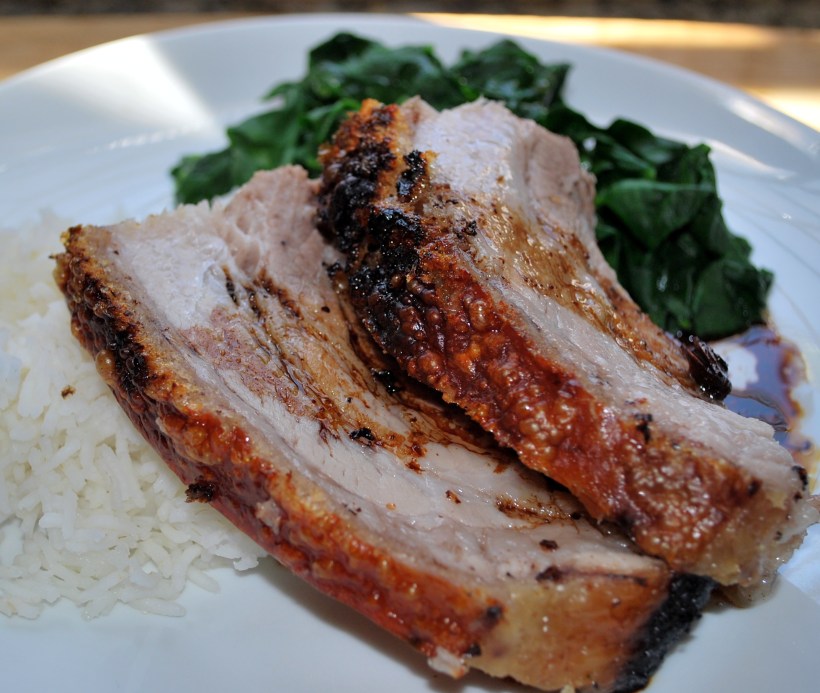
We love pork belly, but here it is more traditionally used as “pancetta”, boiled in stocks and soups to add flavour or cut into tiny chunks and done on the plancha (griddle) or deep fried as a little tapas. Often it will have the skin removed.

Big Man knows that I don´t like the flowers sold in the very few florists we ever come across here (funeral meets petrol station bouquet) so I am romanced with food surprises. Cheese covered in rosemary, tangy little apples to remind me of England, bunches of wild asparagus, a freshly caught rabbit, mushrooms which have been foraged for, and yesterday a belly of pork with the skin on. Now that´s what I call love.

Today the sun is shining, time to get to work in the garden and vegetable patch, so I needed a dish that I could forget about for a while. This recipe from my old favourite, the BBC Good Food Website, seemed to fit the bill. I did change it slightly as several people commented on the sauce being very sticky and leaving them with some scary washing up. Not for me, I thought, and worked around it.

Ingredients

For the sauce

  • 2 tbsp dark soy sauce
  • 60ml vinegar (I used white wine)
  • 2 tbsp honey
  • 2 star anise, broken up slightly
  • 1 tsp Chinese five-spice powder
  • 100ml rice wine or sherry (I used a dry fino)
  • 1kg boneless pork belly

 Turn the oven on to its lowest setting.

Mix all the ingredients for the sauce together and warm gently until the honey has melted.

Line a small, deep baking tin or dish (one that will fit the meat quite snugly) with greaseproof paper making sure it comes up the sides. I used a large sheet and just placed it in the tin, scrunching it round the meat once it was placed in the tin.

Pour the sauce into the tin then place the meat on top, skin side up. Gather the paper up a little and then make a lid of aluminium foil so that the meat is sealed in the tin.

Cook slowly for about 3 hours, test the meat at the end of this time to ensure the meat is no longer pink. If it is, leave in for a little longer.

Now turn the oven up to the highest setting. Drain the sauce off the meat into a small pan and replace the meat in the baking tray, still skin side up. Continue cooking the meat until the top has turned crispy. Mine took about 45 minutes but you could always put it under a hot grill instead (not too close though or it will just burn).

Meanwhile remove any fat from the top of the sauce (I did this with a small ladle) and then fast boil the sauce until it has thickened slightly.

When the meat is done, cut into slices and serve with some of the sauce poured over. We ate ours with plain boiled basmati rice and spinach, picked only an hour before from the garden, which was simply steamed.

Now…has anyone noticed a slight improvement in my photos today? I do hope so! When I was in the UK last week I picked up my new (well, new to me) camera. It´s a Nikon D60 and I am a total photography virgin when it comes to the camera I now have. It has a couple of lenses. One of them, I am sure, will be able to pick out the hand of cards Big Man is holding when playing with the old boys in the summer if he is sat on the terrace of the bar down the road. I haven´t even read the instruction book yet, so am going to enjoy playing with it over the next few months.  Wish me luck…but don´t worry Roger, you have nothing to fear from me…

Secreto Ibérico – Let me tell you a little secret…

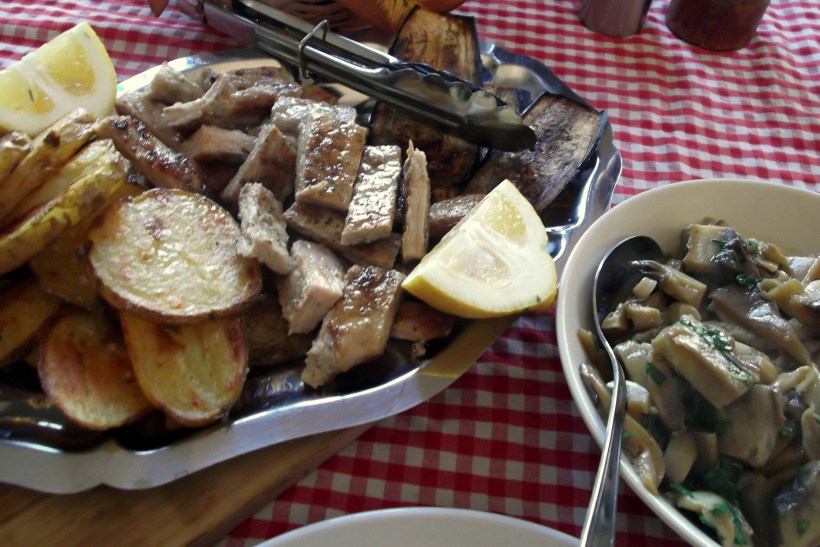
Served with grilled potatoes and aubergines and garlicky mushrooms...

Secreto Ibérico (which translates as Iberian Secret) is a cut of meat, which comes from between the shoulder blade and the loin of the prized Iberian pigs.  Even if you can only find it from regular pigs, I recommend you give this cut of meat a go for the amazing flavour you get from it.

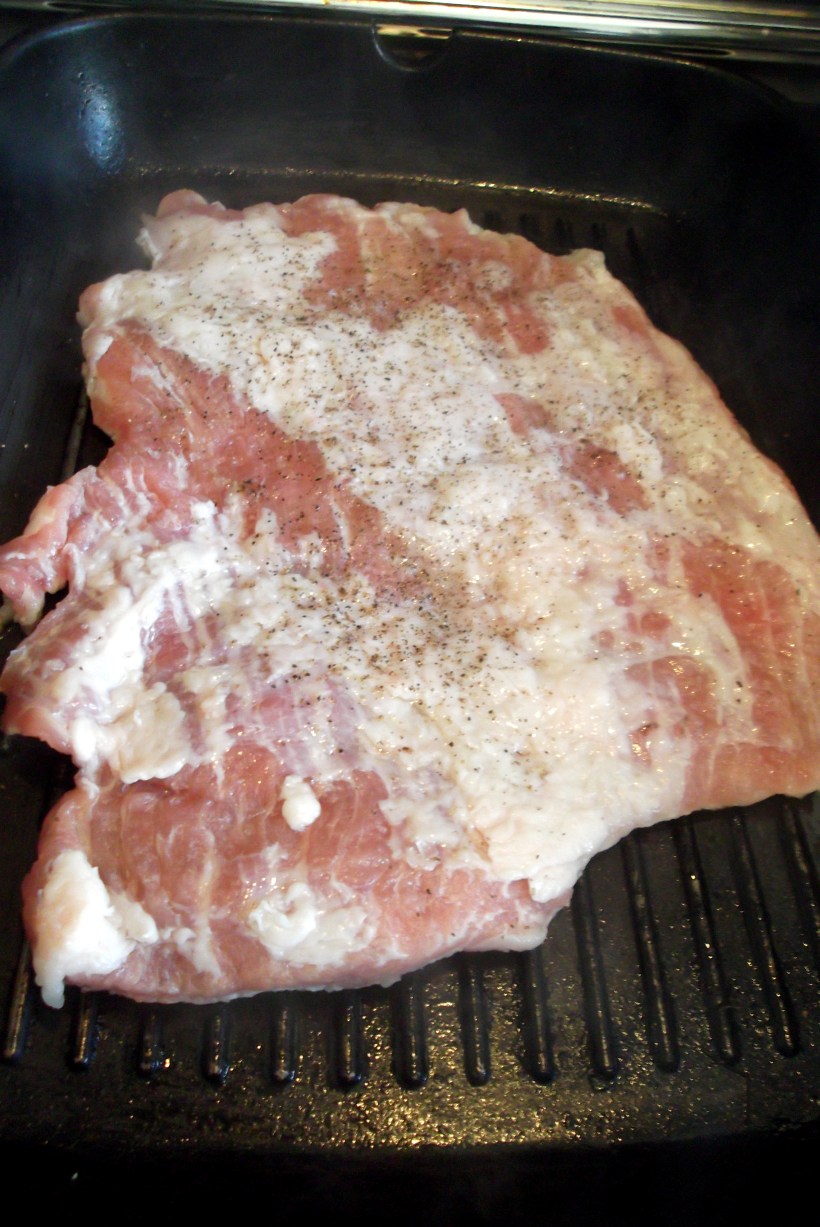
So, this is not a recipe, more a “letting you in on a little secret”.  The reason this meat tastes so good is that the surface is marbled with fat.  It is typically cooked over a high flame or hot griddle so the outside fat melts and gives you a fantastically crispy crust, while the meat inside stays juicy and tender.

Simply sprinkle some coarse (kosher) salt on both sides, pepper too if you like, and put it onto a very hot grill pan or barbecue.

Don´t fear the fat, it will work its magic...

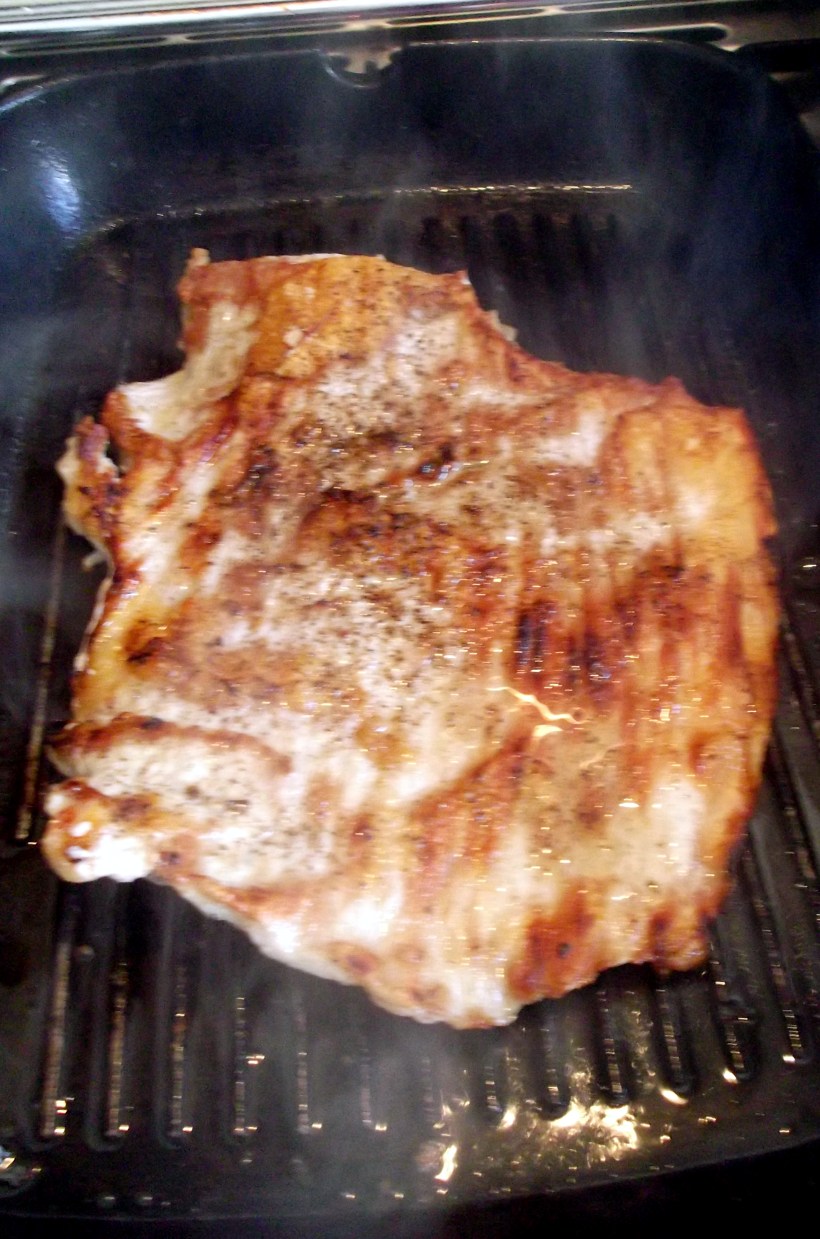
Cook until it is golden and crispy and then leave to rest for 2 or 3 minutes. Round where we live it is traditionally cut into little strips after cooking and served with fresh lemon to squeeze over.

Gorgeous, Golden and Grunchy..sorry, Crunchy

If you ever do come across this beautiful cut of meat….”shhhh, don´t tell anyone – it´s a secret”!

Curried Meatballs

A recent tidy up of my cookery books turned up two Indian books by Anjum Anand which I had hardly read.  Time to put that right I thought, and next thing I was in the butcher´s shop ordering pork mince.

Of course, pork would not typically be a meat used in most Indian curries for religious reasons, but this would be great with any other meat. For a fantastic recipe using minced beef, check out Frugal´s gorgeous Beef Kofta Curry recipe.

As ever, I had to make a few small changes, but not too many. I had no fresh coriander so substituted dried, ground coriander and the same went for fresh ginger. We can get it here, I just didn´t have any to hand and when the craving for curry strikes, you have to go with it!

This recipe is adapted from Indian Food Made Easy.

For the meatballs

  • 300g lamb mince (I used pork)
  • 2 tbsp finely chopped fresh coriander leaves and stalks (I used 1 teaspoon of dried coriander)
  • ¾ tsp garam masala
  • 1 tsp finely chopped ginger (I used ¼ teaspoon of dried)
  • 3 cloves of crushed garlic
  • 1 large egg
  • Salt to taste

For the Curry Sauce

  • 1 medium onion finely chopped
  • Vegetable oil for frying
  • 2 bay leaves
  • 1 small shard of cinnamon
  • 2 ½ medium tomatoes (puréed) – I used 1 ½ cups of my conserva from last summer
  • 800ml water (I used about 300ml)
  • ½ tsp ground turmeric
  • ¼ – ¾ teaspoon of chili powder (to taste)
  • 2 tsp coriander powder
  • 1 tsp garam masala
  • Salt to taste
  • Chopped coriander

Mix all the ingredients for the meatballs together plus 3 tbs of the onion you have chopped for the sauce.

Heat the oil in a deep pan, add the bay leaves, cinnamon and remaining onion and fry until the onion is golden brown.

Add the tomatoes, ginger and garlic and cook gently for about 8 mins then add 200ml of water and cook until thickened.  Add the spices and salt and any remaining water (I didn´t add much as I continued cooking with a lid on my pan) and simmer. Meanwhile roll the meat into walnut sized balls and drop them into the sauce.

Cover and simmer, turning the meatballs gently half way through, for about 20 minutes. Add the coriander and serve with rice, naan bread, popadums…however you like.

We ate ours with my Sort of Saag Aloo made with the first of our spinach which is now ready to eat.

…and a cool and creamy raita (I´ll give you that easy recipe another time)…

This was a warm but not too hot curry with the lovely flavours of cinnamon and ginger, definitely one to make again.

Up the Mountain in the Development Kitchen – Home Cured Pork

Ok, so I don´t really have a development kitchen and most of the actual experimentation went on in a small blue plastic bucket in my storage shed, but I have successfully cured (in brine) a piece of pork for the first time.

Even tastier than the first time I made it

You may recall a while back I showed you a recipe for Boiled Gammon. At the time I talked about the fact that it is impossible to buy it here in Andalucía but that I wanted to figure out how to make it at home.

Well, I turned to my old pal Hugh Fearnley-Whittingstall and he had some great information in his River Cottage Cookbook.

I started with a small piece of loin of pork that weighed 800g as I didn´t wanted to waste a large piece of meat if it all went horribly wrong.  I decided to play around a little with the flavours, amounts are flexible.

Ingredients

  • Pork (your choice of weight and cut)

For the brine

  • Water
  • Dark beer – 2 bottles
  • 1 kg Salt
  • Treacle or molasses – I used half a cup of Miel de Caña (or you could dissolve brown sugar in with the salt and beer)
  • Crushed black peppercorns and cloves (I used about a tablespoon full of each)

I boiled the salt with the beer and spices until it was dissolved then stirred in the molasses and added enough water to ensure the liquid would cover the meat.

The pork was put into a new (and then sterilised) bucket and covered with the brine once it had cooled completely. I had to put a plate with a weight on it to keep it from floating out of the water.  This was then left in a cool dark place for 3 days.  The recipe suggests this as a minimum period per kilo with a four day maximum period per kilo. You should note that your meat will not be a pretty pink colour like the brined hams bought in shops unless you use something like saltpeter or a chemical additive to keep the colour.  I didn´t do this, as I prefer not to.  For me, it´s all about keeping it natural and tasting great.

Pork after brining

When the required number of days have passed, drain the meat (discard the brine, it should not be reused).  Bring it to the boil in a pot of fresh water, drain it again and then cook.  I cooked it in the same way as previously, this time adding a couple of dried chillis to the stock and some celery.

When I posted the previous recipe my best friend called me to ask what the heck I had been doing serving the gammon with parsley sauce when it should have been onion sauce.  I stand corrected.

This time I made a delicious onion sauce by gently frying a medium onion in a little olive oil until it was soft and transparent. Then I added 2 tablespoons of flour and cooked it slightly then stirred in a cup of the meat cooking stock and half a cup of milk.  Add salt if it needs it (mine didn´t) and pepper and serve alongside the meat and vegetables.

Any leftovers can be made into a soup, but more of that another day…I´m off back to the Development Kitchen. We keep the wine in the shed.

Codillo de Cerdo con Fabas – Pork Shank with Giant Beans

Last year I posted a recipe for a similar dish, this is a variation.  Two pork shanks here serve four people in a very warming winter casserole.

We need more wine, the bottle is almost empty!

Ingredients

  • 500g of large white beans (large cannellini or butter beans would be good) soaked overnight in water with a pinch of bicarbonate of soda
  • Two large tomatoes, quartered
  • 1 large leek, roughly chopped
  • 4 sticks of celery and some of the celery leaves if you have them
  • 2 large carrots
  • 1 large onion peeled and quartered
  • 4 large cloves of garlic, peeled and left whole
  • A dried chili (optional)
  • Approx two cups of water (enough to cover the pork and beans)
  • Four slices of smoked bacon, diced
  • Salt and pepper (don´t season until the beans are cooked)
  • 4 whole cloves or a ½ a level teaspoon of ground cloves

Put all the  ingredients into a large pot with a lid and cook very slowly for about 2 or 3 hours (or longer) in a low oven or on top of the stove.  If you have time, it´s best left overnight before eating to allow the flavours to really develop.

When the beans are soft, strain the liquid off (reserving it) and take as many of the vegetables out from the meat and beans as you can and put into a blender jug.  Blend the vegetables with a little of the cooking liquid then stir into the remaining liquid.  Add the beans and meat (which will have fallen off the bones) into the thick soup, check for seasoning, reheat and serve with a drizzle of olive oil over the top.