This is a hugely popular and typically Andalucían tapas dish or starter. I have tried to find out the origin of the words Pil Pil and some say that it comes from an Arabic word felfel (I don´t speak Arabic so assume it has something to do with spice or chili). Others say it comes from the sound the prawns make sizzling in the hot oil. I don´t know if either are true – I like both stories, almost as much as I enjoy making and eating Gambas al Pil Pil.
If you can get hold of good prawns (or shrimp) then this is a very easy yet impressive dish to serve to your guests. If you have a terracotta dish to cook them in, well that´s even better as it does add something special to the taste and the prawns stay hot and sizzling for a few minutes as you bring the dish to the table.
Per person for a good tapas serving you will need
100g peeled prawns (defrosted if frozen)
1 dried hot chili and/or half a teaspoon of hot pimentón – this is down to personal taste – crumbled
A fat clove of garlic, peeled and sliced
A good pinch of salt
About 2 tablespoons of olive oil (if you are doing a large serving, just use enough oil to half cover the prawns)
Start by putting everything apart from the prawns into a frying pan or terracotta pot. Turn up the heat and cook until the garlic begins to turn brown at the edges.
When you want to serve your dish add the prawns and cook at a lower heat until the prawns are cooked through then turn up the heat until they begin to sizzle.
Serve with plenty of bread to mop up the delicious chili oil. If served in a large pot or pan, it is traditionally served as a sharing dish. Everyone has their own fork and “prongs” their bread into the juices.
Serve with an ice cold beer, a chilled manzanilla or a crisp cool white wine. ¡Buen provecho!
PS. No fear of me running out of chillis this coming year…the harvest is now safely stored and drying in the shed!
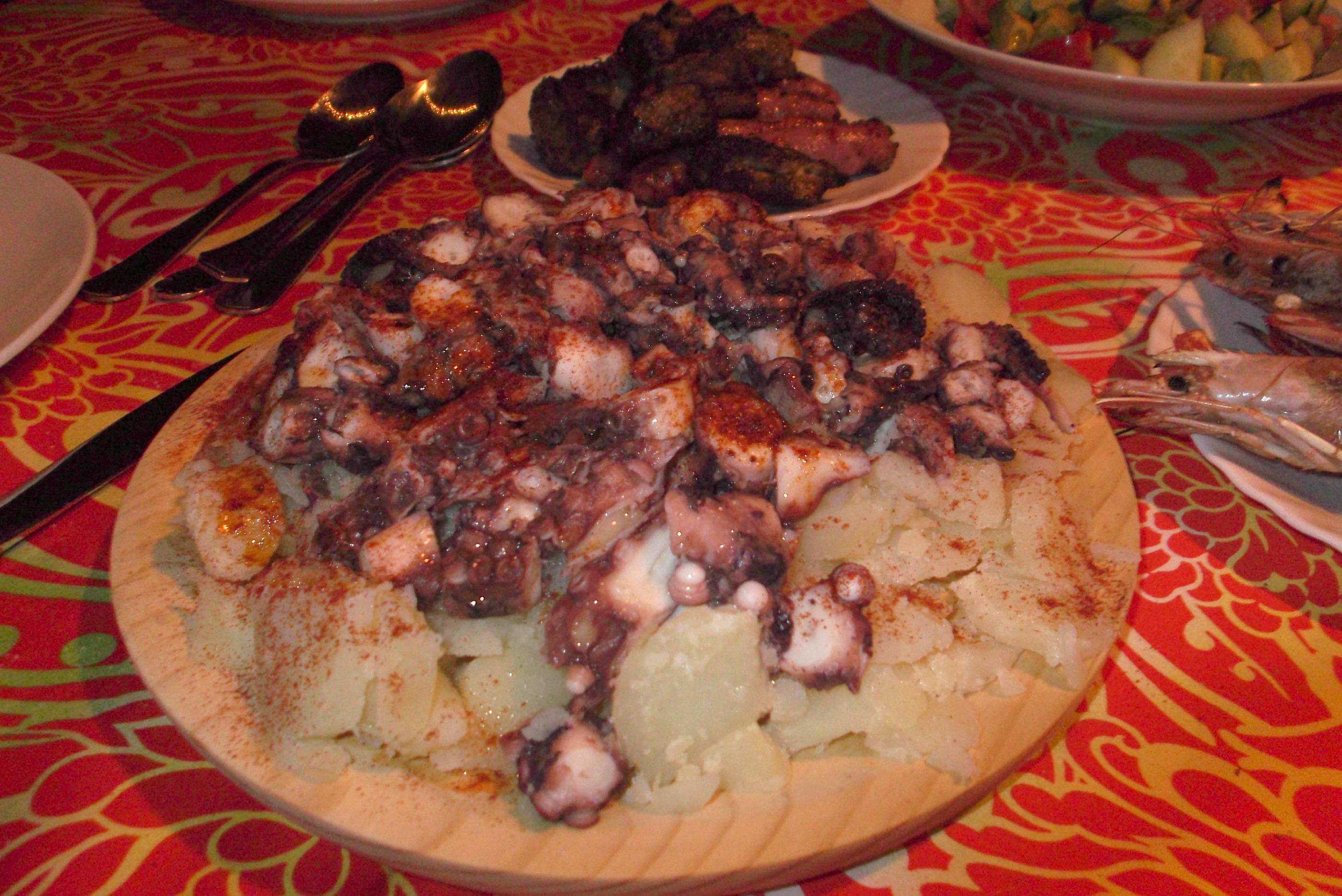
Now, don´t go getting all squeamish on me, because today I´m going to explain how to cook an octopus! This is a dish which traditional comes from the north west of Spain in the autonomous community of Galicia. It sits on the border with northern Portugal and has both an Atlantic and a Bay of Biscay coastline.
This coming weekend we´re taking a little holiday and heading north to Galicia and Asturias, so I´ll be able to show you some photos of the “real deal” soon. In the meantime, I´ll just set about cooking one of Galicia´s most famous dishes, Pulpo a la Gallega.
First take your octopus….ok, so I appreciate some of you may not be able to get hold of a fresh, whole one, but if ever you do, you´ll know what to do with it. They´re white when raw and turn a beautiful purple colour when cooked. All the nasties (i.e. the muck and eyes) are contained in the head. If you´re game, just chop the head off, cut off the section with the eyes and scoop out the nasties from the inside. Give the whole thing a good rinse, including the tentacles and you´re done. Alternatively you can clean it after it´s cooked, but it leaves you with mucky stock. And no one likes mucky stock, do they?! Ok, that´s the messy bit over, the fainthearted can join us again now.
For info, you don´t need to beat your raw octopus against a rock until it´s tender like you may have seen in quaint fishing movies. Just freeze it first for a day or two and when it´s defrosted you´ll have a lovely tender octopus.
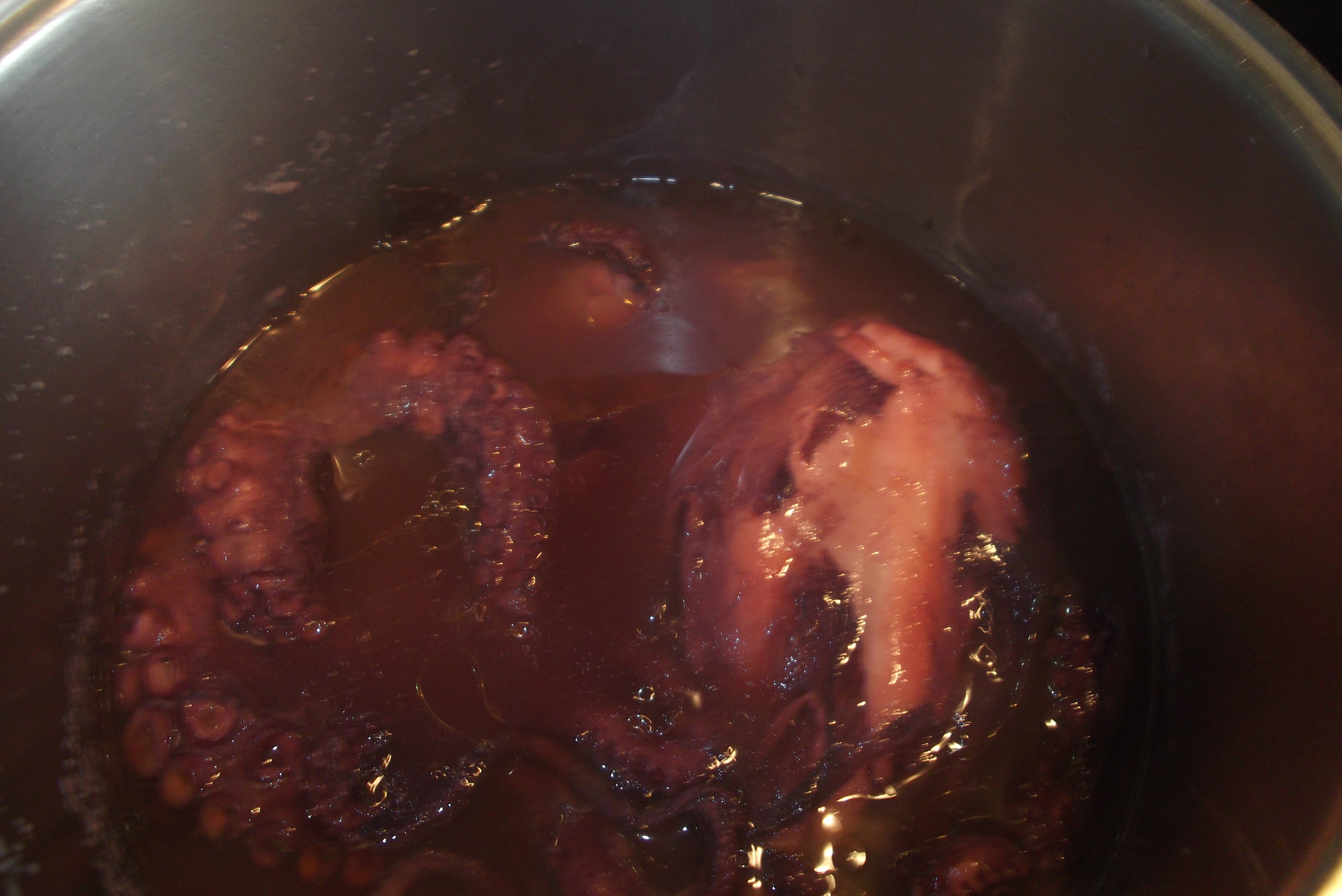
Put the octopus into a heavy saucepan and just cover with water. No need to add salt, this is done when it is cooked. I think this is where the Galicians leave it, but I like to add a little extra flavour which then gives me an amazing stock at the end to use in other dishes like Seafood Stew. I add a few tablespoons of olive oil, a bay leaf, a dried chilli and a couple of cloves – but this is entirely optional.
Cleaned but still raw
This will now need to be cooked slowly for up to a couple of hours (depending on how much your octopus weighs). You can´t really over cook it if you take it slowly, and you can either do this on the stove top or in a slow oven. Test it with a skewer in the thickest part of a tentacle – if it slides in as though through butter, you´re done! Some people do like to go for the quick and fast cook – I think it would be great in a pressure cooker, but I´ve never done it like that so I have no idea of timings.
Cooked!
Meanwhile you are going to boil about 2 medium potatoes per person in their skins. When you are ready to serve, peel the potatoes and roughly chop into smallish chunks. It´s traditionally served on round wooden platters, but I know some people won´t have one or prefer not to use them for hygiene reasons. We throw caution to the wind and are both, so far, still standing….but I promise not to tell anyone if you use a large flat plate.
Pretty Coloured Stock
Lift the pulpo out of the delicious stock and either chop with scissors into little pieces or chop with a knife. Make a base out of the cooked potatoes, pile the pulpo on top and now a good seasoning of sea salt, plenty of pimentón (hot or sweet according to your preference) and a good dousing in olive oil which will soak into those chunks of potato and pulpo.
It´s not a tricky dish to make, it can be pulled together for serving at the last minute and looks pretty impressive. Most importantly though it tastes amazing….go on, get brave with an octopus!
So, having had a moment of madness slow cooking pork and beans not so long ago, I have reverted to summer style cooking. Phew!
My lovely Fish man, who is soon going to have his own fan club out here in blogland, came up trumps this week with a delicious skate (or ray) for us. He knows that Big Man and I both love it, so if he can get hold of skate, he always saves me one.
They´re odd looking fish, a bit scary looking too to deal with, but actually quite straightforward when you know how.
The Skate, the whole Skate, and nothing but the Skate
A skate has two very distinct wings and if you get your knife in between the nodule and the “back bone” it just cuts straight off.
Slip the knife in so...
Voilá, two perfect portions.
Ready to be coated in flour and fried
And the other bits still have a lot of meat on them so pop them into a pot with some water, bay leaves, peppercorns and any vegetables you have to hand and you´ll very soon have a delicious fish stock and lots of bits of delicious skate trimmings to put into a paella or a seafood stew.
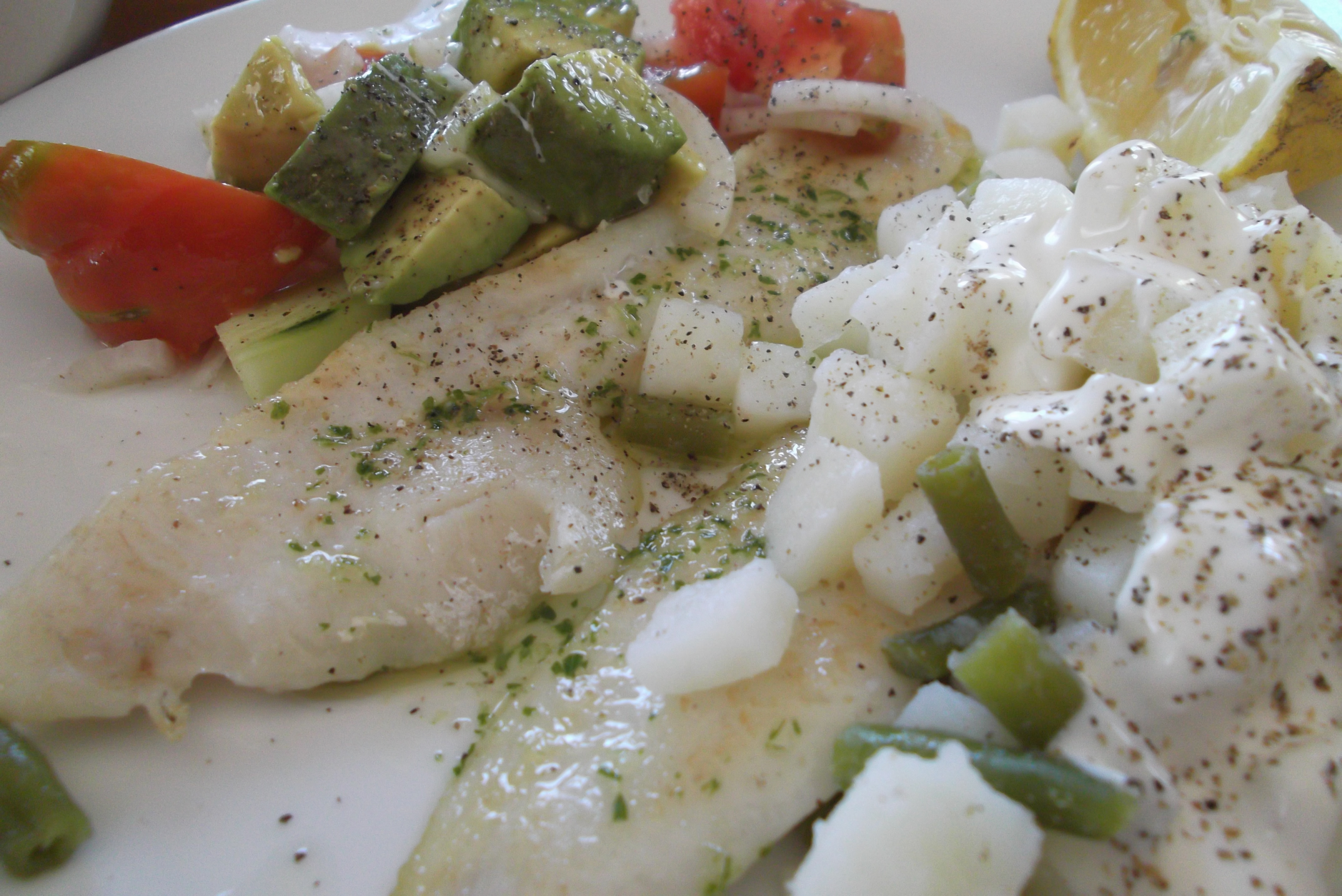
I dusted the wings in flour, seasoned them and then fried gently in a huge frying pan in a very little olive oil (although it would be very good with butter). When the skate was lightly browned on both sides I put them to one side and kept warm, turned up the heat and fried some capers until brown then added a good squeeze of lemon juice, a dash of white wine and reduced until just a few tablespoons of juices were left. I poured these over the skate, poured two good glasses of white wine and we sat back to enjoy.
When I was very young my parents both worked in the catering trade, but Sunday lunch we sometimes managed to spend time together. My father´s idea of a relaxing Sunday lunch was to go on a busman´s holiday and check out his pals´ restaurants. This meant I got to visit some really quite nice restaurants in central London from a very early age. No concession was made (quite rightly I still feel) to children by preparing “kids meals”, we all got whatever the chef or manager thought was his best dish of the day. I loved it when we got served skate as the meat slides easily off the bone and there are no tricky bits to get lodge in a small person´s throat. Memories of this dish take me back to Soho, London circa 1975 – hence my retro photo!
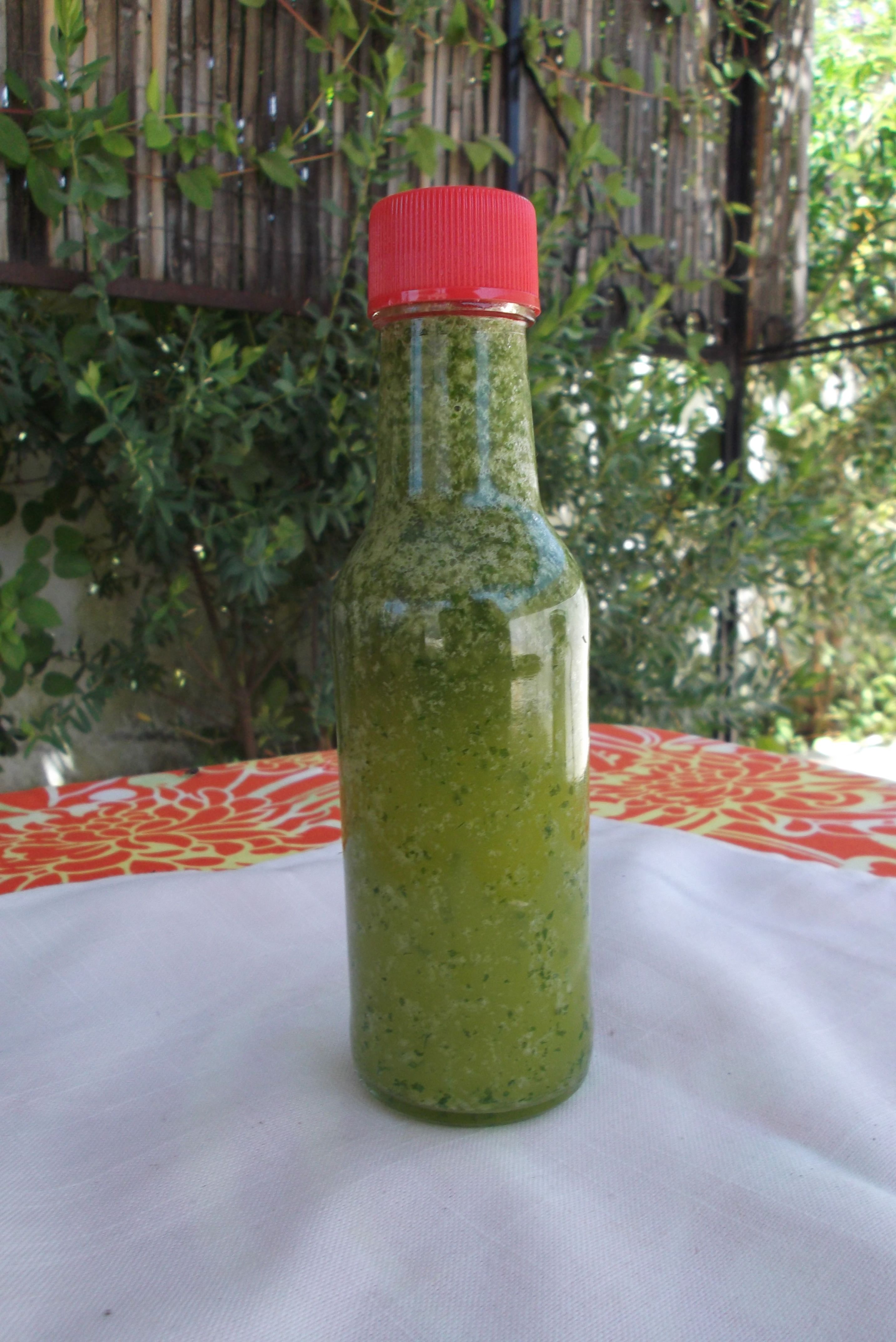
Well, it´s not exactly Italian salsa verde in that there are no capers or anchovies…but, it´s a green sauce so that most definitely makes it a salsa verde!
Restaurants round where I live have good, simple food. It can sometimes get a little repetitive, and often there´s no menu as they all serve pretty much the same selection of grilled meats (usually pork cuts) and some grilled or fried fish. What you get though is fresh, well cooked and tasty food. Often the meat or fish will come drizzled with a delicious garlic and parsley mixture blended with olive oil.
One of our regular local restaurants moves everything outside onto the “summer terrace” during the hot months. This includes the cooking, so you can sit at your table and almost within an arm´s reach you have Luis at the bar, his partner Sonia in the kitchen area and the mountain views. I noticed that Sonia makes her sauce up and keeps it in a squeezy bottle which she then uses to dispense the delicious mixture over the cooked food as it leaves the kitchen and is delivered to us by Luis.
All she does is finely chop parsley and garlic and blend with a season of salt and local extra virgin olive oil. I make mine up in the food processor or in a small jug using the hand stick blender. I have now taken to keeping a bottle of this in my fridge. Sometimes I add the zest of a lemon, and squirt it over simple grilled dishes (including vegetables) to liven them up.
Sadly, no waiter service at home, so we dished up ourselves!
Do give it a go, it´s handy to have around and apart from looking pretty, tastes wonderful. Probably best not to eat it if you´re going out on a hot first date though!
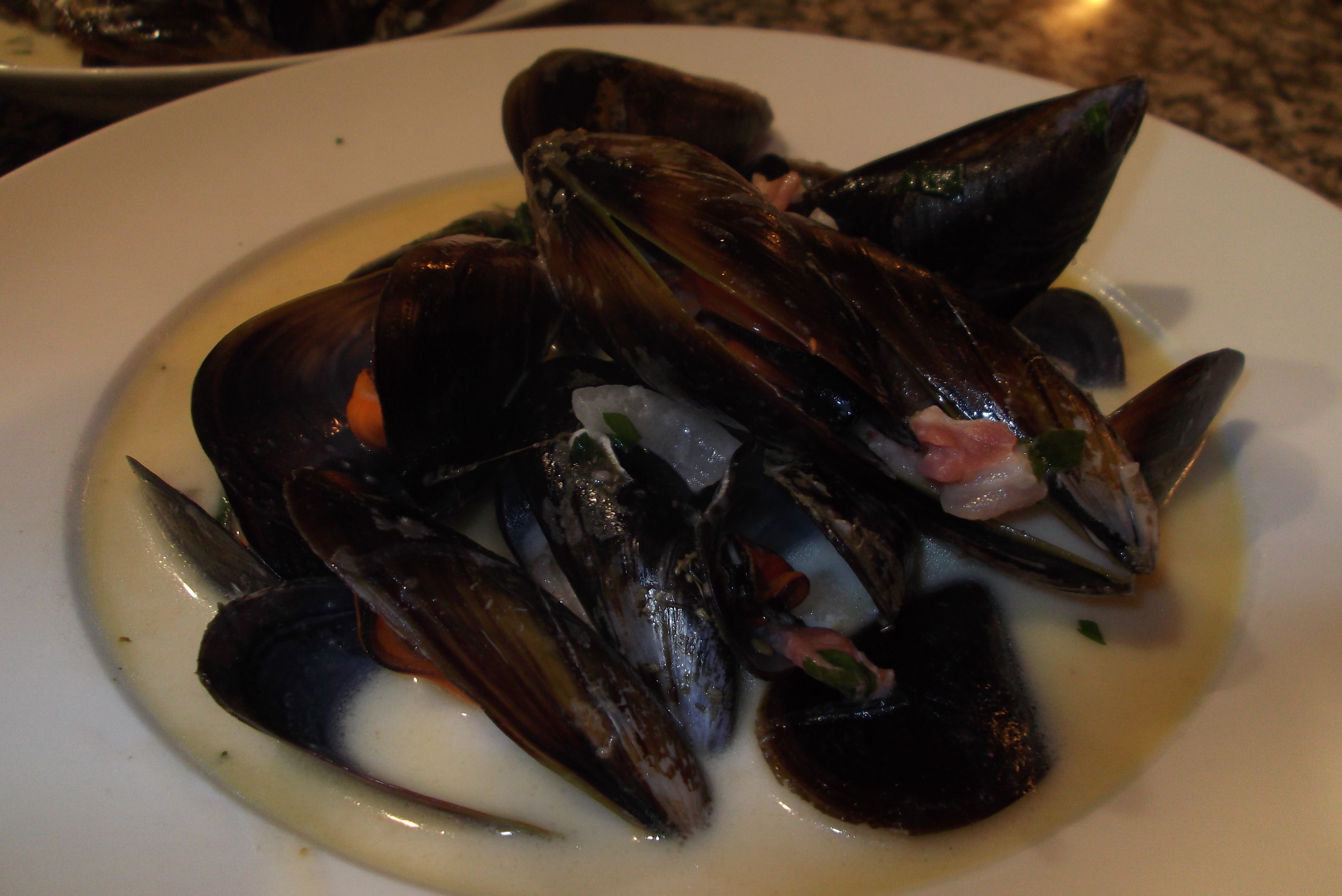
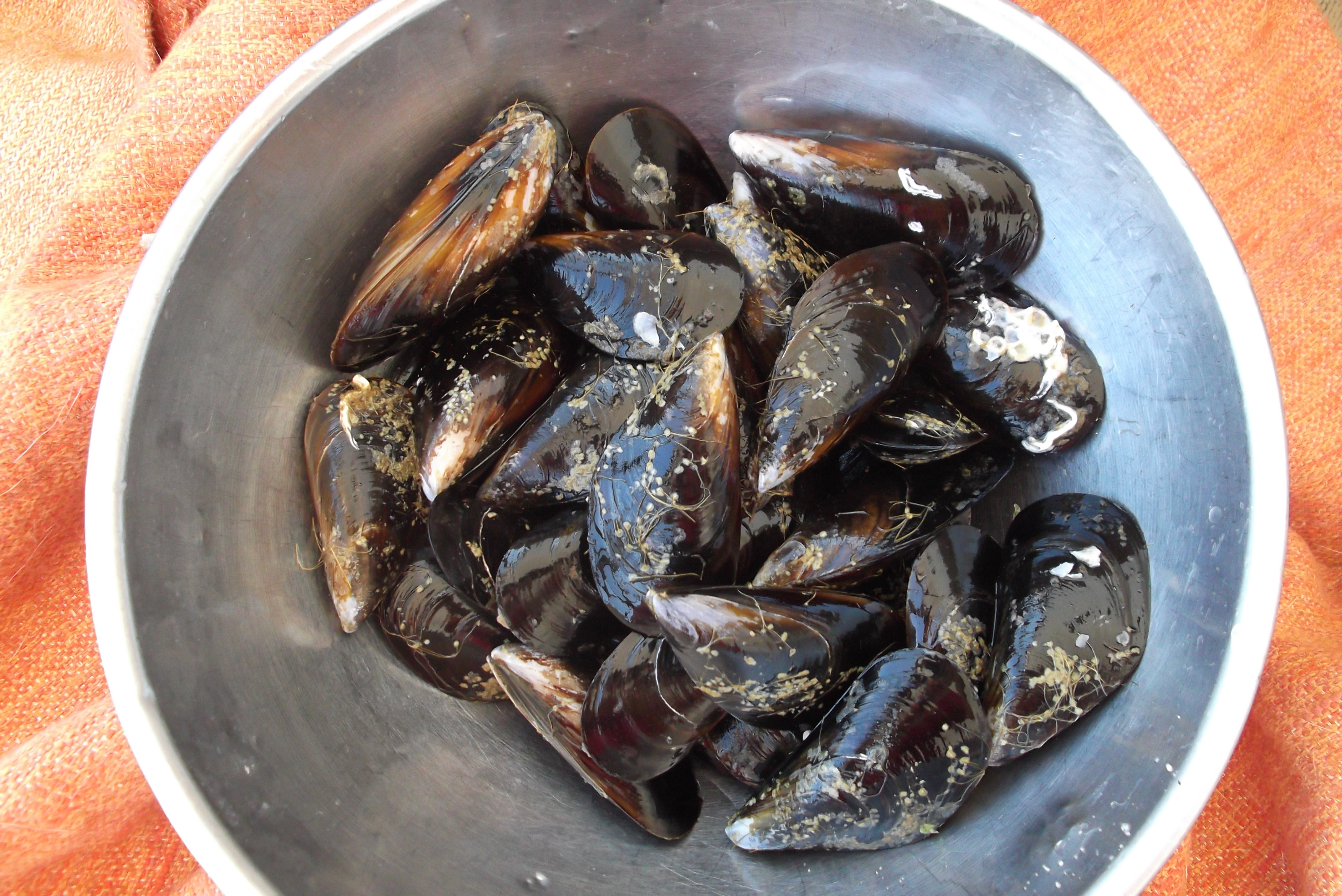
It was another day for Fish Man to visit and I bought a kilo of mussels. Such a bargain food, so easy to prepare, and such a wonderful taste.
I have been inspired by some of the recipes posted by Olives and Artichokes here and here and often make a tomato based soup version, as you can see here.
Today, I decided to use up some of my bacon from the UK, although I could have used lardons or jamon instead.
Time for a wash and brush up...
After cleaning my mussels, I lightly fried in olive oil two cloves of crushed garlic, one onion fairly finely chopped and 4 rashers of chopped bacon.
When these had all softened I added a glass of white wine and simmered for about 5 minutes before adding the mussels and a couple of tablespoons of chopped parsley and putting the lid on.
A few minutes later the mussels had all opened, so I took the pot off the heat, stirred in 100ml of single or pouring cream and that was it.
I served it in big bowls with spoons and crusty bread to soak up all the garlicky, creamy juices. ¡Muy rico!
Yes, the planting is starting to deliver! Great excitement this week with my two best friends visiting, with lots of talking, laughing eating and drinking going on.
The vegetable patch gave us its first little crop of runner beans this week, and a second picking a few days later. Big Man, despite being the largest of the family group this week, was given the honour of squeezing in between the bean canes and picking those precious runners, making sure not to knock any of the delicate flowers (or future beans) off.
When I was last in the UK I bought a little gadget for cutting runner beans. You snip the ends off with a little blade then run them through a hole with several blades. Result? Long thin strings of spaghetti like bean strips. This means you can cook them quickly and still retain colour and flavour.
I won´t say it´s quicker than doing it the old fashioned way with a sharp knife, but you can see how pretty they look with this simple bowl of boiled beans lurking behind some barbecued hake with alioli. We served them just warm with olive oil and lemon juice.
Pretty Beans
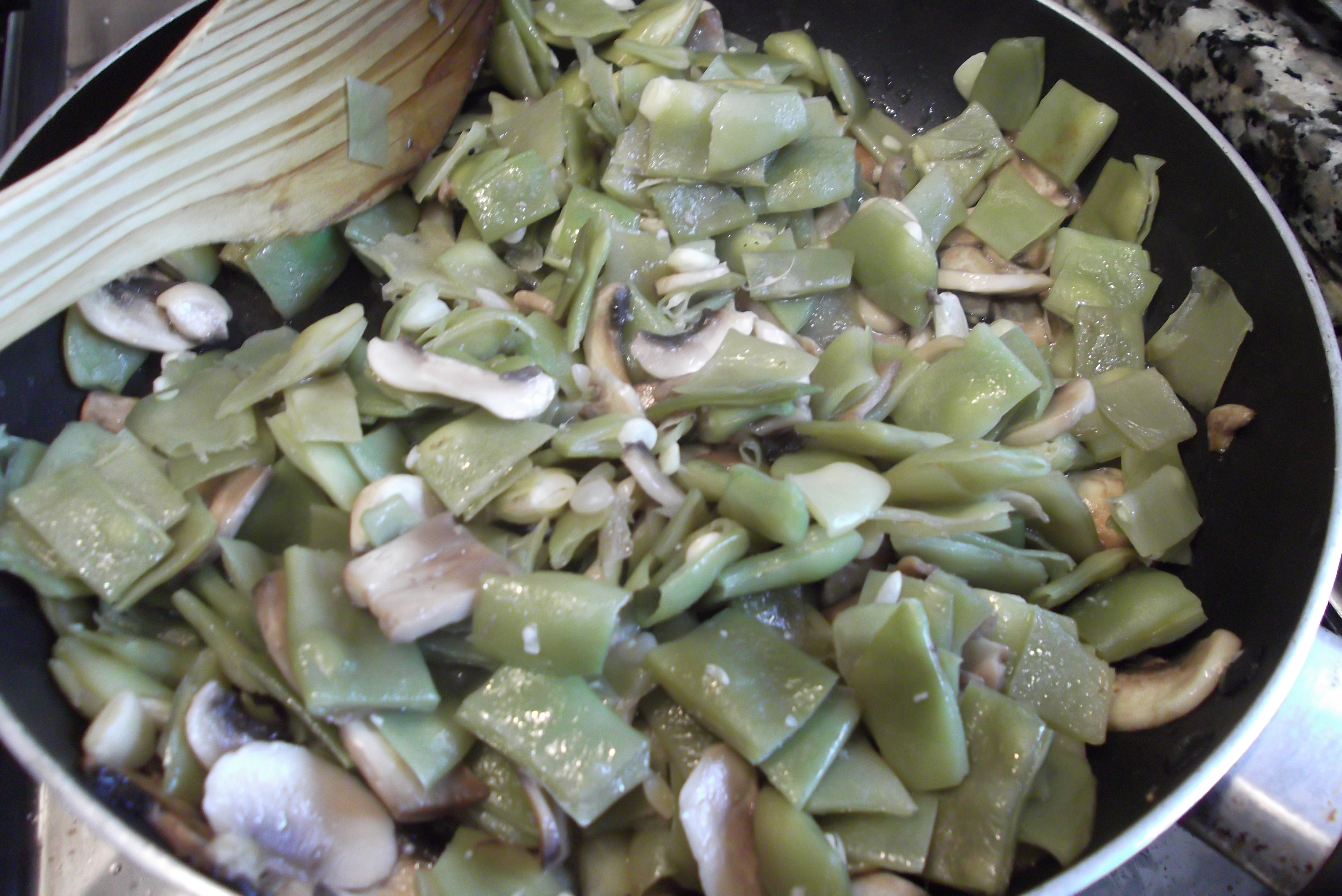
Inspired by a delicious recipe over at Fati´s Recipes, I also cooked some up later in the week with mushrooms and a simple tomato sauce.
I lightly fried some sliced mushrooms.
Stir fry in a little olive oil
Then I added some blanched beans (which I had chopped into little squares this time).
Add blanched beans
Finally I poured over some home made tomato sauce, a little water, seasoning and simmered until ready.
Fish Man came up trumps the other day with a whole hake in the back of his little van. It was rather large, too much for just Big Man and me, so as it was fresh it went into the freezer.
A few days later friends were coming over for lunch, and the sun promised to shine, so I decided to barbecue it. A quick visit to the garden to gather mint and lemons, and out into the olive grove for the tops of the wild fennel which is everywhere, and I was set.
I had to gut and clean the fish, but if you´re buying from a fishmonger, I´m sure it will be cleaned for you. It´s not that tricky (wear kitchen gloves though, or you´ll smell like a hake for the rest of the day!) but not for the squeamish.
Pat the fish dry with kitchen paper and salt the inside slightly. Stuff it with bunches of herbs and thin slices of lemons, then sprinkle the outside with coarse sea salt. No oil needed, but the salt will protect the fish and you´ll end up with lovely charred skin which I personally love to eat, but I know some people don´t.
Then it´s on to the barbecue for your hake. We cooked it on a low heat and the lid on for about 15 minutes in total. If you do use hake, but you could do this with pretty much any fish, it´s firm, so easy to turn when it´s half done. Check it´s cooked by peeking inside – the flesh will be white when it´s ready.
Ready to eat!
I served this with a delicious salad which was so beautifully coloured, it didn´t matter that the sun went in and a big cloud hovered over us all through lunch! I used chopped new boiled potatoes, cooked beetroot, oranges, thin slices of raw carrot and chopped chives. I made a simple dressing of olive oil, lemon juice, mustard powder, a clove of garlic, salt and pepper.
With so much colour, it can´t not be good for you...
Many years ago, in most Mediterranean countries, salt cod (or Bacalao as it´s called here) was poor man´s food. Whole cod was salted, then dried in the sun to be stored and used when fresh fish was scarce. Nowadays, it´s become rather a luxury item, in the same way that offal and bizarre cuts of meat have become trendy around the world.
Fortunately for us, Portugal is only about 4 hours´ drive away, so we get to have a few breaks there every so often throughout the year. Also fortunate for us is the fact that the Portuguese consume huge amounts of Bacalao and sell it at greatly reduced prices. The supermarkets there will sell you anything from small flakes of cod to flavour soups and stews, to entire cod which they can chop up into portions with special electric saws. Before it´s rehydrated, the salt cod is tough but bendy, and it would be virtually impossible to cut it up at home.
On our last visit we stocked up, as it can be frozen, and have enjoyed many meals with our “Souvenir of Portugal”. Sadly we´re coming to the end of the supply, but on the plus side, this means we´ll have to plan another little break over there.
When you´re anticipating eating salt cod, you have to plan ahead. De salting it can take anything from 2 to 5 days, depending on the thickness of the fillets you have. Of course, you can also use fresh cod, in which case you can just go straight ahead and cook.
Put your fillets in a container which will allow them to be completely covered in water. If it´s hot, put the container in the fridge, but it´s not necessary if the weather is cooler. Try to change the water at least 3 times a day and test the cod by holding it up to your lips. Then lick your lips! You´ll know when it´s ready when it has lost that strong salty taste, although it will always retain a small trace of it. Just be warned, dried salt cod doesn´t smell too great. Overcome any revulsion you may feel, the finished dish won´t taste anything like it smells right now!
There are many, many ways of preparing salt cod – deep friend in batter, roasted, grilled, poached in sauce. This is a simple recipe which, once the cod has been desalted, is relatively quick and easy to prepare.
For 2 people you´ll need
2 large salt cod fillets, desalted
2 large potatoes roughly chopped and boiled for 5 minutes
A cup of broad beans (use the pods too if they´re tender) chopped and blanched for a minute or two
An onion finely sliced
2 cloves of garlic finely sliced
About 3 tablespoons of olive oil
Black pepper
A lemon
If you´re lucky enough to have a terracotta cooking pot, do use this as it seems to add something to the flavour. If not, don´t worry, a deep frying pan will work just as well.
Put the oil, garlic, onions, potatoes and beans into the frying pan on a very low heat. You will now slowly braise these in the olive oil until all the vegetables are tender. You don´t want to brown them, so keep the heat low and half cover with a lid or some foil. Stir occasionally to get them all covered in your lovely olive oil. Incidentally, this style of cooking potatoes is known in Spain as “a lo pobre” or poor man´s style. Usually they´re done with strips of green peppers though, and not broad beans.
Once the vegetables are ready, lay your cod fillets on top, skin side up. Cook them gently for about 3 or 4 minutes (without moving or prodding them) or until the underside is no longer opaque.
Flip the fillets over, they´ll now only need a minute or two to finish cooking.
Remove from the heat and serve with plenty of lemon to squeeze over. I also like an extra drizzle of “raw” olive oil, but if you´re watching the waistline (as I really should be doing) then leave this out. You probably won´t need to add any salt, but taste it first and decide for yourself. ¡Buen Provecho!
Well, it´s been a while since I posted anything at all, let alone a recipe. It´s been a hectic 5 or 6 weeks with 3 lots of visitors, which was wonderful. Also, a fall down the patio steps (am still feeling rather delicate in the nether regions) and a broken camera which meant that I couldn´t take any pictures. All very frustrating but the derrière is now on the mend and we´ve bought a new camera. Hurrah!
Fish Man came by this morning, and I decided to see what he had tucked in the back of his little van. I´d been fancying a warming soup as we´ve had the worst (and wettest) Easter here in Andalucía for 80 years, and the rain and storms are set to last for a few days more. Combine this with the most dreadful hay fever and I feel like I have a bad dose of flu with a serious hangover on top. I don´t actually have a hangover, although it might have been fun putting in the work to achieve it, just the pain! Fortunately Fish Man had some beautiful mussels, not of the bicep kind you understand, so I bought a kilo.
I was torn between doing them in a creamy, oniony, white wine base or a garlicky, tomatoey one. The tomato won – I felt that my nose needed a good assault of powerful smells! This is a very easy and quick to cook dish that looks as though you spent hours in the kitchen creating something “gourmet”.
The serving I made would feed two as a main course or four as a starter.
Ingredients used were:
A kilo of mussels
3 fat cloves of garlic, crushed
Half a medium onion finely chopped
About a cup or half a tin of chopped peeled tomatoes
Olive oil for frying
Small glass of white wine
About 2 tablespoons of finely chopped parsley
Salt and pepper
Water (optional)
Rinse the Mussels Several Times
Start by cleaning the mussels. Not as tricky as it may seem. I usually rinse them three or four times in cold running water. Throw away any that are cracked or open. You then need to remove the “beard” which is the small strand of seaweed looking stuff which usually just pokes out of the straighter side of the mussel. Hold the mussel in one hand with the point facing down and the curved part into the palm of your hand. Grab the seaweedy strand with your thumb and forefinger of the other hand and pull it upwards – it will slide out and you´re done!
Cleaned and De-Barnacled!
If your mussels have any barnacles attached, you can pop these off with the blade of a flat (butter) knife. Finally a quick scrub (I use a metallic pan scrubber for this) and a final rinse and they´re done.
Put the mussels to one side and start on the base. In a deep saucepan which has a lid, heat some olive oil (enough to sweat the onion and garlic). On a low heat, sweat them off for a few minutes until soft and transparent. I used a red onion today as it was what I had, but it´s just as good, if not better, with a stronger tasting white onion.
Gently sweat the onion and garlic
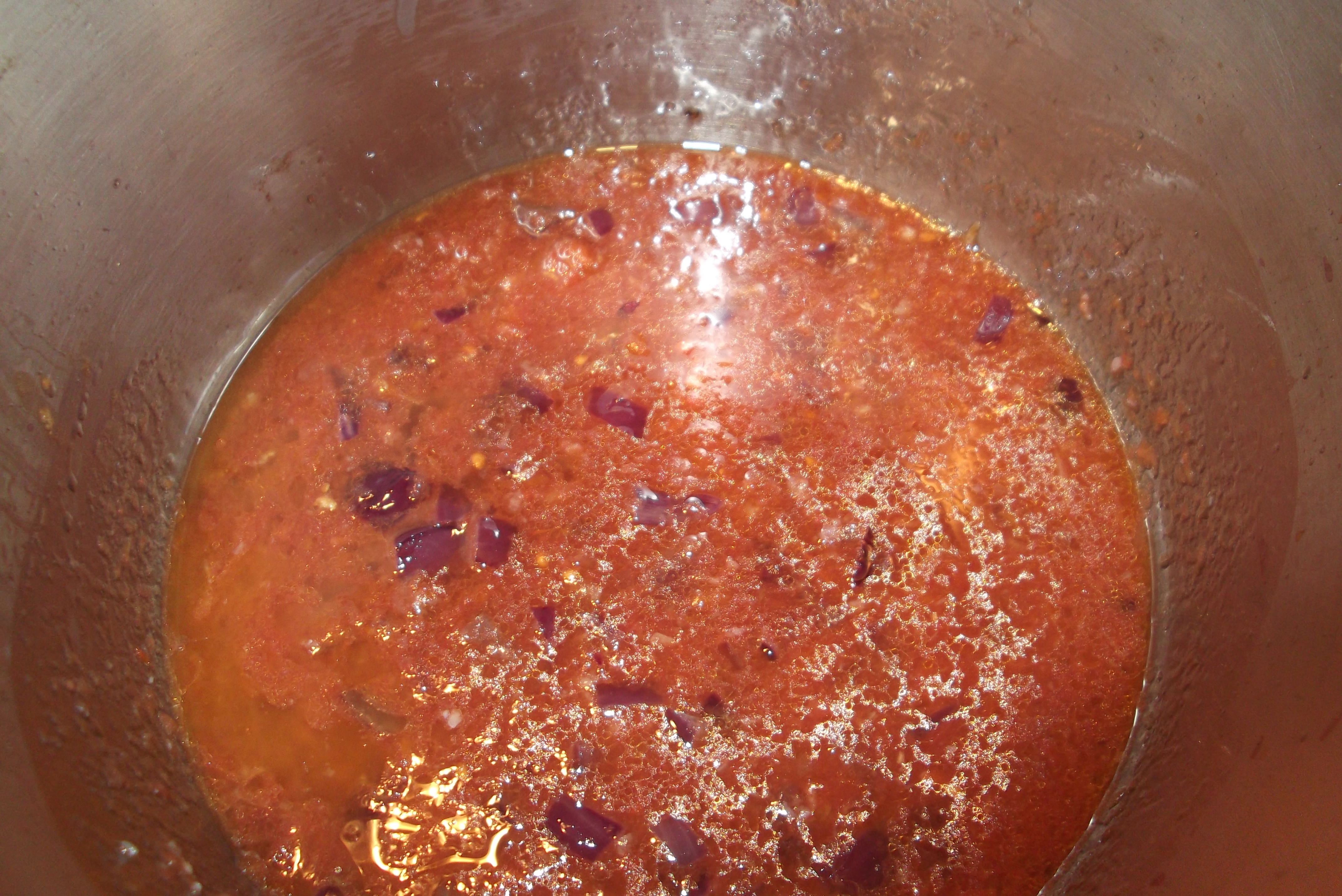
Now add your tomato (you can also add a teaspoon of tomato puree if your tomatoes are a bit pale or lacking in flavour). Keep on a low heat and put the lid on and leave to simmer for about 5 minutes. Remove the lid, add your wine and seasoning and bring to a bubble then reduce to a simmer and leave to cook gently for 5 minutes.
Make the tomato base for the soup
The base is now ready and you can stop here until you´re ready to eat – the final stages will only take you about another 5 minutes, so this is a good “prepare ahead when you´ve got guests” dish.
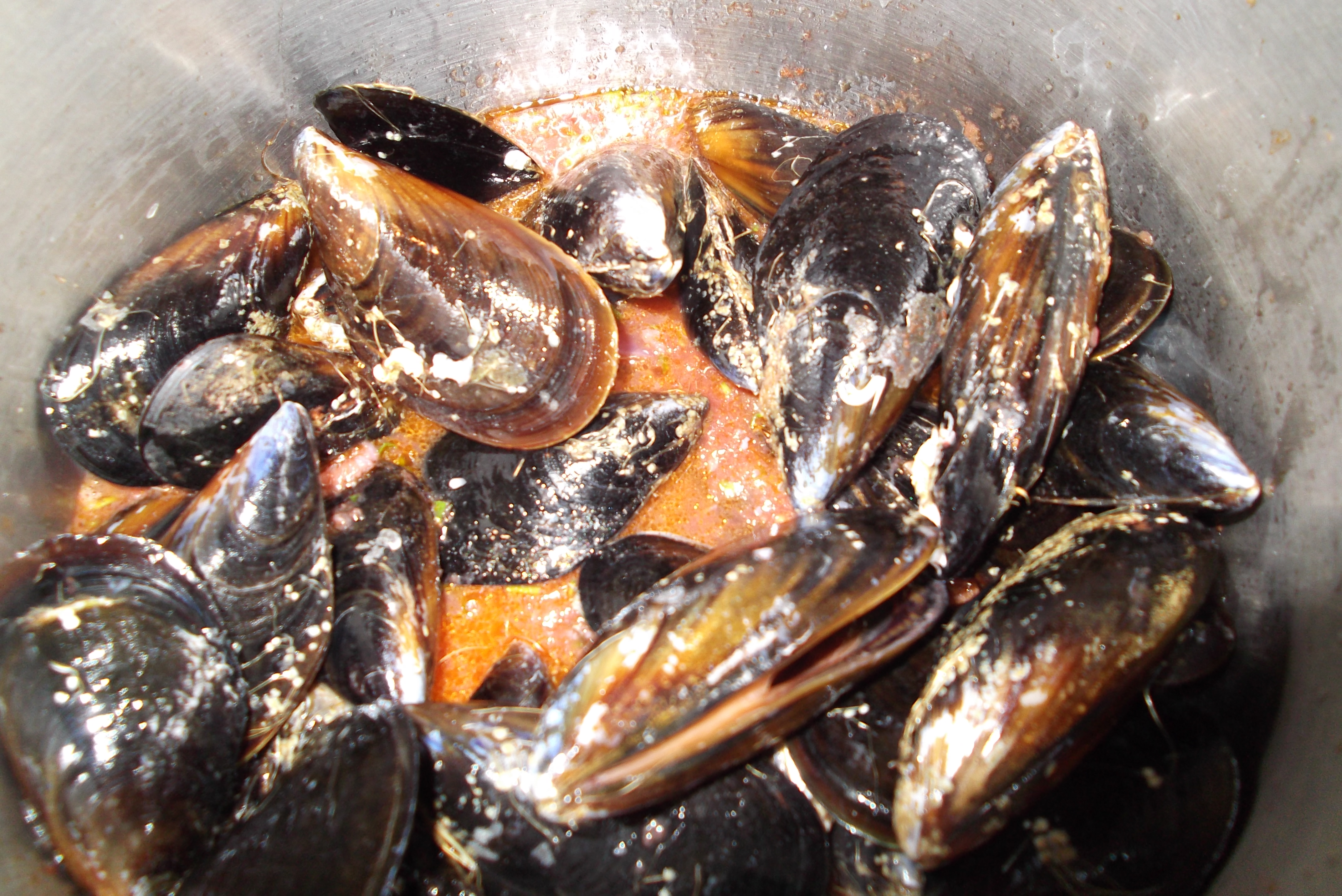
Finally...add the mussels and parsley
When you´re ready to eat, warm the tomato sauce, add the mussels and the chopped parsley and put the lid on. I usually do this on a medium heat and after about 2 minutes check and see how the mussels are doing. You may need to put the lid on and give the pan a shake to move the mussels around a little.
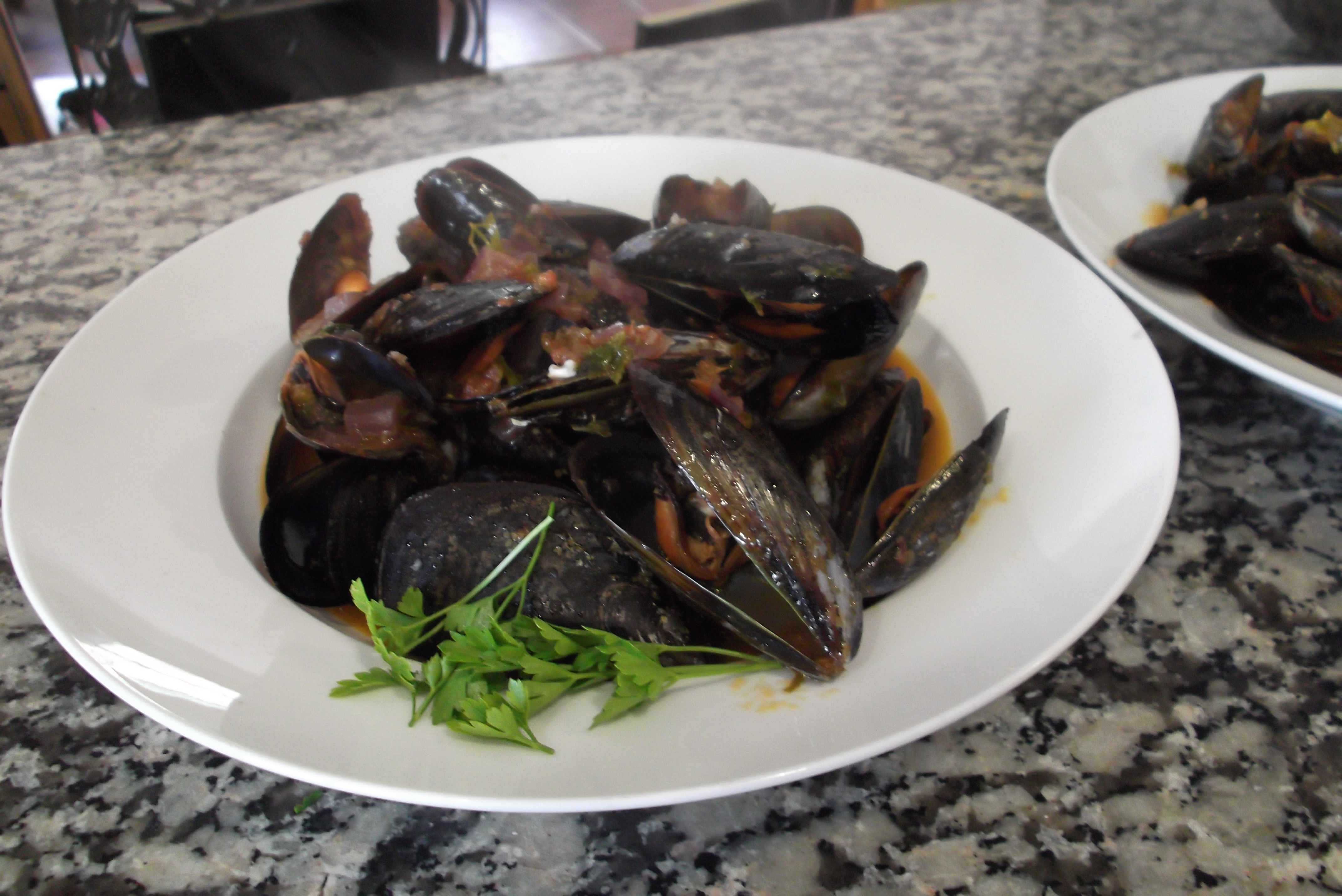
Once they´re all open they´re ready to eat. The mussels will release their juices so see how much you have in the pot. If you feel you´d like a little more liquid, add a glass of water (or fish stock or wine), if not, they´re fine as they are. I don´t usually add more liquid, these measurements give two large bowls of mussels and enough stock for two good bowls of soup.
Enjoy - but don´t forget the wine!
You can serve with a salad and plenty of crusty bread to mop up the juices. I recommend serving with a spoon and fork. The fork is for getting those mussels out of their shells for those guests who don´t want to use an empty shell to do this, and the spoon is for the soup part. They´re also nice, particularly if you serve them with less liquid, with crispy chips and garlicky mayonnaise. Don´t forget to put an empty bowl on the table to chuck the shells into and a bottle of chilled white, rosé or red wine. Yes, I do mean chilled red, believe me, it works! It´s one of those dishes that works with any wine. A bit like me really…
It´s a grey old Saturday in January here, with no particular plans for the day. I hear a loud “toot, toot” outside and my heart lifts. Fish Man is here. Although we live in an isolated part of the mountains, we´re not entirely cut off. In fact, food-wise we could probably survive without ever going shopping. We have our chickens and the vegetable garden of course. We have goatherds who sell us a goat for the freezer, or a lamb too come to think of it. Bread Man stops daily and leaves me a lovely crusty loaf, the grocery man comes at the weekend with all sorts of exciting things, even the man with gas cylinders stops at my door. But two or three times a week we have the excitement of Fish Man.
The downside is that we´re pretty much the last stop on his route, so he often doesn´t get to us until about 1pm. Sometimes he´s sold out of most things, but if I ask him for something specific, he saves it for me. Usually that´s Pulpo (Octopus) or Raya (Skate) which we love. The upside is that he´s usually keen to get back to Malaga, where he lives, for his own lunch, so prices come down so that he can shift the last few things, or he throws in a few goodies for free. He gets up early and heads off to Malaga fish market then sets off up the mountains to the villages around where we live.
Weekends in Spain are not about the weekend roast but about Paella, which we all know and love. In Andalucia, they just call it an Arroz, a “rice” which is just like Paella but often served with more stock. A soupy Paella, if you like. Otherwise it´s a Fideua, which is exactly the same but made with short, thick noodles, called Fideos. This morning I bought half a kilo of small prawns and eight medium sized squid. I grabbed a small packet of mussels (removed from the shell and frozen) from my freezer and a couple of small fillets of hake which were also in the freezer. Because it´s a bit of a trek to the supermarket, and of course there are things that can´t be bought our of the back of a passing van, I tend to keep my freezer pretty well stocked with things I can grab in the morning and defrost quickly.
I asked Big Man what he fancied – Paella, Fideua, Seafood Soup, Stew? A stew, it was decided, so I started to get things ready. What you need for four people with “normal” appetites, or three “greedy guts”, or two “greedy guts” with enough leftover to turn into a soup that evening with a drop more stock, is:
About 2 cups of peeled prawns (keep those shells, we´re going to make stock)
About 500 grams of cleaned squid cut into chunks
A cup of mussel meat
A medium fillet of white fish, cut into chunks
Half a red pepper, finely diced
A stick of celery, finely diced
Half and medium onion, finely diced
A third of a courgette, finely diced (optional)
Three fat cloves of garlic, crushed
Half a tin of chopped tomatoes
About a litre of fish stock. Either cover the prawn shells with water, add a few bat leaves, a chunk of onion and boil for about 8 minutes or use a cube
You can use any fish or shellfish you like really, and if you don´t have a lot of fish, you can thicken the stew up with a few noodles, or serve it as a soup with plenty of stock. Otherwise you could use rice and turn it into a paella – it´s up to you!
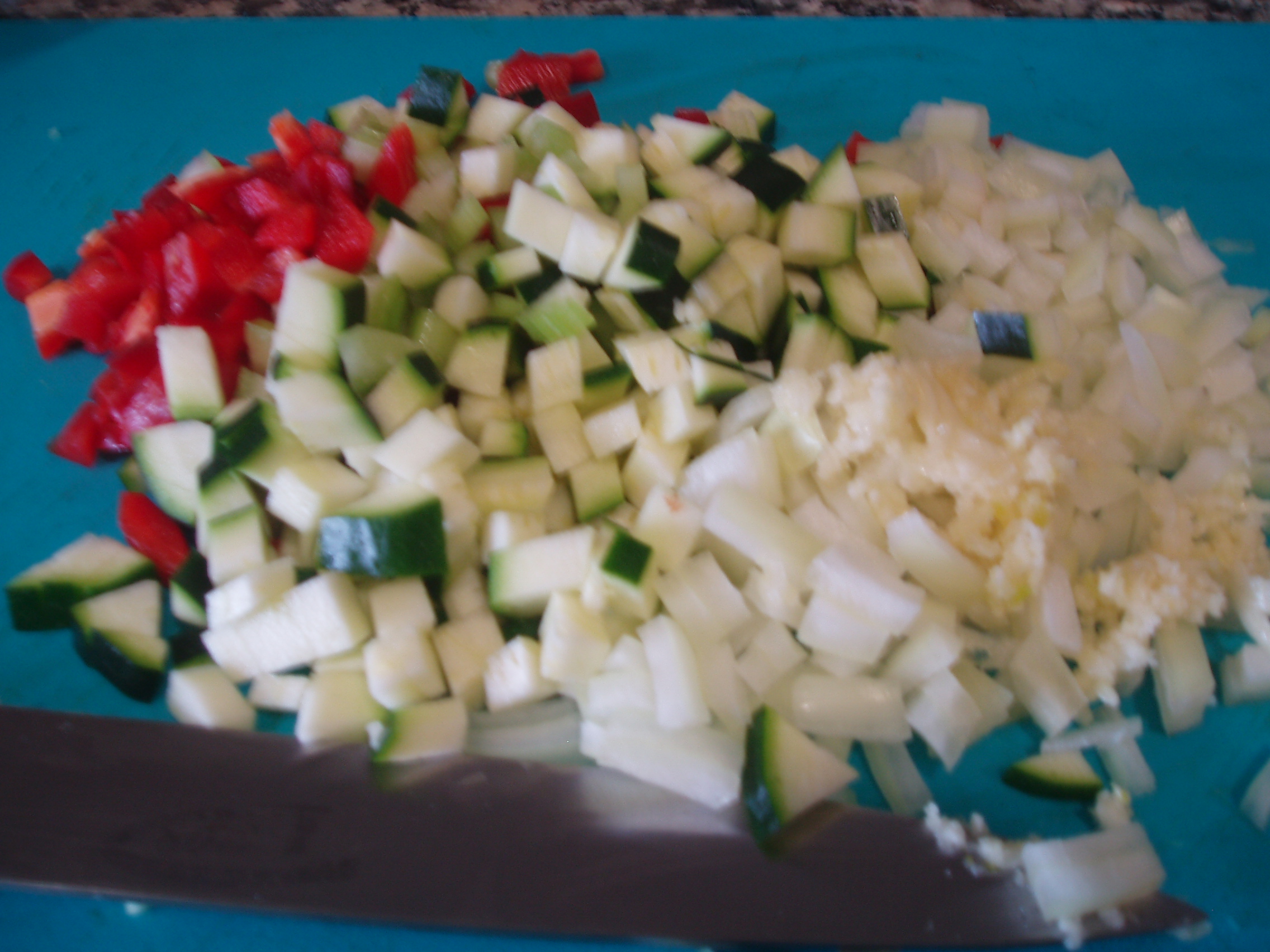
So, you start by sweating the peppers, onion, celery, garlic and courgette. Again, if you have other vegetables you want to use, feel free. Peas or broad beans are good, but best thrown in at the end with the fish as they don´t need much cooking.
Beautifully Chopped!
Add your tomatoes and continue cooking gently for a few minutes. I usually cook this in my favourite pan – a large, deep, non stick frying pan.
Now add your stock. It will look rather dull and unappetizing at this point, rather like watery tomato soup. Fear not. Now you´re going to boil it, but not too fiercely, for about ten minutes and reduce it by about a third. Pour yourself a glass of wine if you don´t already have one in your hand. If not, why not? If you want to serve this for guests, prepare it to this point, even the day before (but keep it in the fridge) and forget about it.
...with tomatoes...with stock
When you´re ready to eat, heat the stock to a simmer and put all your fish in. Start with the squid as it will take about 30 seconds longer than the rest. Simmer gently for about 3-4 minutes and then serve.
If you think it´s not going to be enough to go round, or you fancy something a little more “robust” add your noodles before the fish and when it is almost cooked through, add the fish. About a mug full would be good for this quantity leaving you with some soup and some thickness to the finished dish. The temperature has dropped here, and we´ve lit the fire, so we´re going with some Fideos today for a more filling meal.
If you want to make a paella (although the courgette is not very traditional, but hey, it´s your dish, you can do what you like with it), add the rice before the fish and cook for about 20 minutes. A mug and half would be good – you want it drier than the soup, but keep an eye on it and add a little boiling water if it looks like it might dry out before the rice is cooked. Add the seafood, stir, lower the heat and cover with a lid and leave to simmer for 3-4 minutes. Turn the heat off and then leave to “rest” for about 5 minutes.
Action Photo!
Serve in large, deep bowls with plenty of fresh lemon to squeeze over and a sprinkle of chopped parsley. Crusty bread and a salad are all that you need to go with this. Delicious. The Mediterranean in a bowl.
So in 2016 I turned 50. I was in Italy for my 21st, 30th and 40th. To keep this birthday tradition going I always knew I'd be in Italy for my 50! This blog starts with my 5 week adventure in Puglia but my love affair with Italy continues.....
 This is a hugely popular and typically Andalucían tapas dish or starter. I have tried to find out the origin of the words Pil Pil and some say that it comes from an Arabic word felfel (I don´t speak Arabic so assume it has something to do with spice or chili). Others say it comes from the sound the prawns make sizzling in the hot oil. I don´t know if either are true – I like both stories, almost as much as I enjoy making and eating Gambas al Pil Pil.














 Chica Andaluza