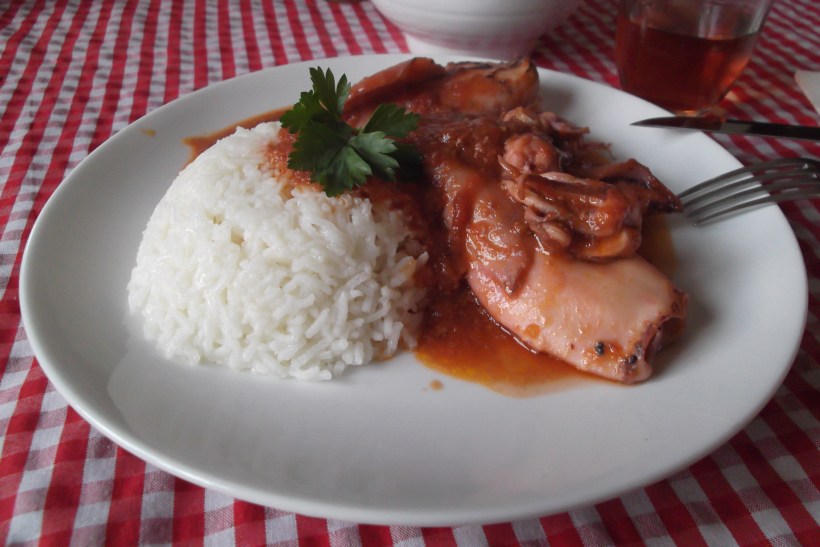
This is a lovely, light dish which looks impressive but is quick and easy to prepare. More so if you have already made some tomato sauce and buy ready cleaned squid.
If you need some help cleaning your squid, click here.
Ingredients Per Person
3-4 medium squid, cleaned
1 cup of garlicky tomato sauce (To make mine I soften 3 crushed cloves of garlic in olive oil, then add 1 kilo of crushed peeled tomatoes, 2 tablespoon of tomato purée, half a teaspoon of salt, half a teaspoon of sugar, plenty of fresh garlic, a glass of red wine and a few stalks of basil leaves. Simmer for about an hour, remove the basil and you´re done. This will give you 6-8 cups of sauce).
Seasoning
Simply warm the sauce through then drop in the squid (this can be served whole or cut into smaller chunks. Simmer gently for about 5 minutes or until the squid has turned white. Taste, season, then serve – see, I told you it was easy!
So, regular readers of this blog (and I thank you!) will know that here in Andalucía we tend not to waste much when it comes to food. All the unsual bits get used from the meat we eat, and even our broad beans shells, when they´re young and tender, get used in tortillas, scrambled eggs and cooked with jamon.
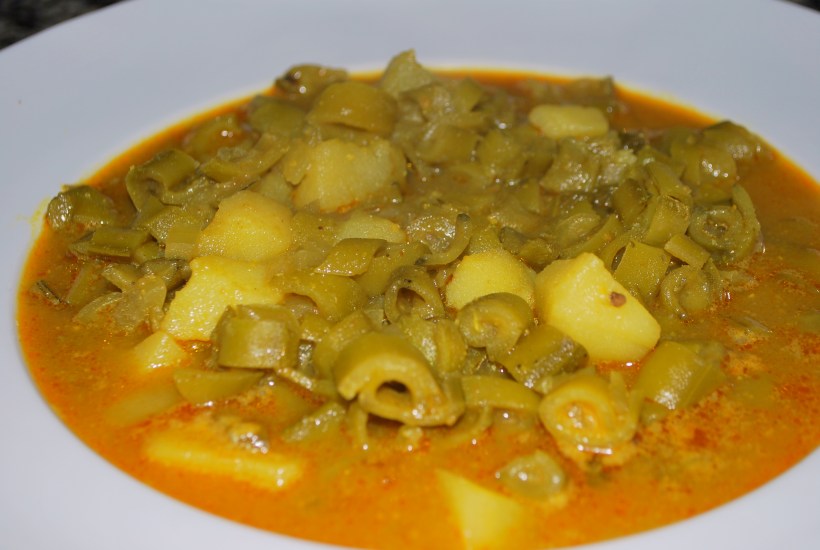
Another Andalucían dish using broad beans is called Cazulea de Habas which translates as a broad bean stew. As ever, I asked around for recipes and this time I tended to get pretty much the same replies from everyone. An exceedingly simple and humble dish. Well, a little dull if I´m being truly honest, but that is just my opinion. I asked Big Man if he was sure he wanted me to make it, as it had been his idea in the first place. Well, he said, maybe you can give it a little Chica Andaluza touch to make it more exciting. So I did.
It´s still a simple and humble dish, but with some nice flavours going on and more filling than its ancestor. I also have some suggestions for making it your own, so here goes.
Ingredients to serve 4
500g of thinly sliced tender broad bean shells (save the beautiful beans for something more glamorous)
One medium potato per person, peeled and cut into rough 2cm chunks (this is not included in the original recipe)
One medium onion finely chopped
A large spring of fresh mint and a bay leaf
Water
Pinch of saffron or half a teaspoon of turmeric (here they use colouring…eek!)
½ teaspoon of sweet pimentón
½ teaspoon of hot pimentón (optional, not in the original recipe, but I used it)
3 fat cloves of garlic peeled and halved lengthways
About 10 peeled, raw almonds
A large slice of day old bread (something like sourdough or ciabatta)
Olive oil for shallow frying
Seasoning
Put the bean shells, onion, mint and bay leaf in a pot and cover well with water. Boil until the shells are really tender (this can take about 30 minutes, so be patient). About 20 minutes into the cooking add the potato. Meanwhile fry the garlic and almonds until browned, put into a blender jug. Now fry the slice of bread on both sides until browned and also add to the blender jug. Add the saffron and pimentón and a large ladleful of the cooking water from the beans. Blend (I use a stick blender) until you have a smooth sauce. Add to the beans and season. I found it needed quite a lot of salt.
Now, you´re done! However, you could serve it with a softly poached egg on top or some pieces of grilled chorizo or morcilla (blood pudding), although it will obviously no longer be a vegetarian dish.
It´s a simple dish, but a lovely starter using seasonal vegetables or with a few additions could be a hearty main dish for two.
Big Man approved the changes, and we agreed that the Chica Andaluza version was much more tasty than the original!
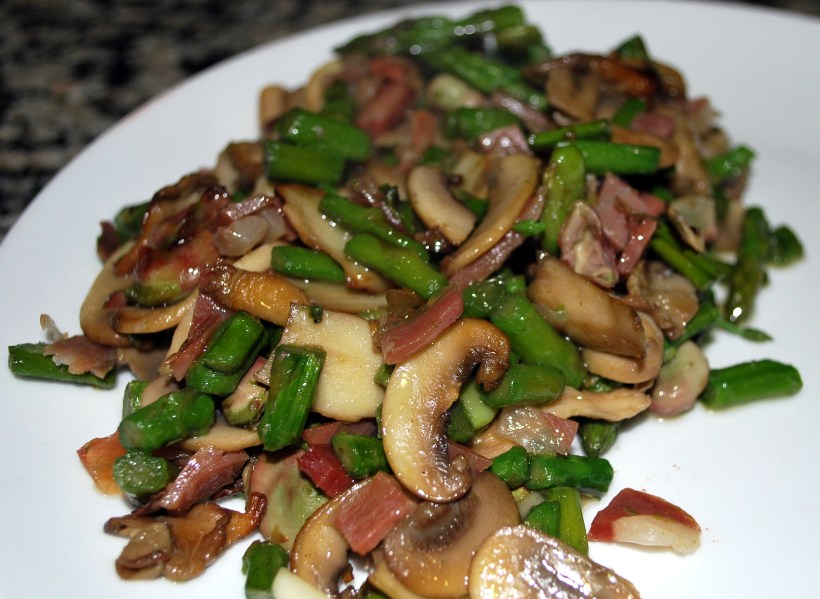
This recipe of sautéed (or stir fried as very little oil is used) vegetables is fantastic as it can be used as a vegetable dish, a starter, or served with fried or poached eggs as a light lunch or supper. Add jamon or bacon for non vegetarians (as I did) and it becomes more filling or stir it into scrambled eggs. See? Lots of options!
Ingredients
About 24 thin spears of asparagus, finely chopped (reserve spears)
½ cup of broad beans (no need to skin)
2 or 3 large oyster mushrooms cut into thin strips
About 6-8 mushrooms and stalks finely sliced
2 cloves of crushed garlic
4 slices of jamon or bacon finely chopped (optional)
Olive oil
Start by simmering the asparagus (not the tips) and broad beans for 3-4 minutes in boiling water. Lift them out with a slotted spoon and then cook the tips of the spears for a minute or two until tender, reserving them separately. The stock is good for using as a soup base or for cooking rice.
In a frying pan warm a little oil and gently cook the garlic until it is soft but not brown. Add the mushrooms and stir to coat in oil then cover and cook gently until the mushrooms are soft and giving off a little liquid.
Add the asparagus tips and broad beans, stir and cover and cook for a further 5 minutes. If you like your vegetables very tender, add half a cup of water and cook until it has evaporated. If using bacon or jamon, add, turn the heat up and fry until slightly crispy. Stir in the asparagus tips, season and serve.
Fried for Big Man…I prefer poached…
This would also be lovely used in a risotto or stirred into pasta….or add cream and mix with gnocchi.
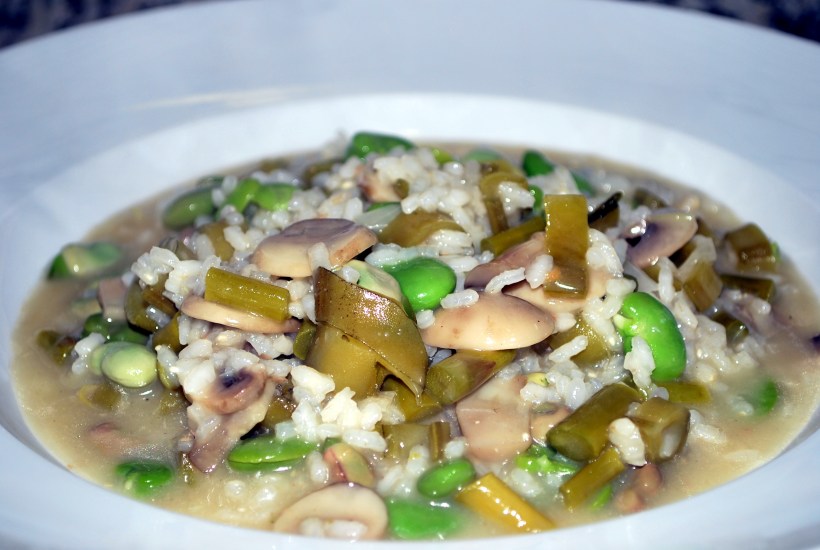
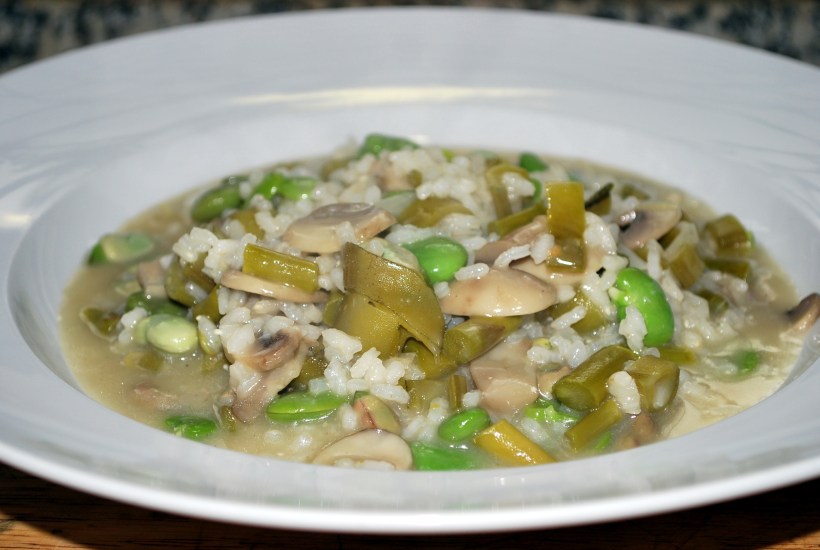
Spanish rice is a little different from Italian risotto rice. Like risotto rice it is generally cooked in a large amount of flavoured stock (for example in a paella) but the grains stay separate rather than turning creamy. However, use whatever you have, it will still be a wonderfully delicious dish.
To keep it vegetarian, use water or the stock from cooking the vegetables, otherwise chicken stock will add extra flavour.
And before the recipe, a little word about how we eat our broad beans around here. In the photo you will see about 1 ½ kilos of beans from our veggie patch. Many people here simply top and tail them and then chop them into chunks. Almost nothing is wasted, the pods are eaten too unless they are especially tough. The pods which give the biggest beans are more mature, and are less digestible.
It seems sad to me to throw so much away (although our chickens would be glad of such a sweet and tasty treat). I pod my beans and then finely chop the outer shells which I braise until tender and then add the beans to the dish at a later stage. Sometimes I simmer the beans for a few minutes and then pop them out of their skins, but this is a rare extravagance, although it does add amazing colour.
So, the choice is yours…single pod, double pod or use the shells and beans together…it´s up to you!
Ingredients – For two hungry people as a main course or four as a starter
1 cup of Spanish Paella Rice (or rice of your choice)
About 5-6 cups of water, vegetable stock or chicken stock
The braised pods from about 750 grams of broad beans (weight before preparing)
The blanched beans from the pods (save the cooking water if you want to keep this vegetarian)
About 150g asparagus cut into 1cm pieces. Reserve the tips, blanch them, drain and set aside
About 6 mushrooms thinly sliced (optional)
2 fat cloves of garlic, crushed
1 bay leaf
Seasoning
Olive oil for frying
Put a few tablespoons of oil in a deep pan or pot and add the garlic, bay leaf, bean pods (if using) and asparagus stalks and fry gently until the garlic is soft. Add the rice and coat it in oil for a minute or two then add 3 cups of the stock.
Bring to the boil and cook on a medium heat until the rice starts to absorb the liquid. Add the rest of the liquid and when the rice is almost cooked add the broad beans and mushrooms. Simmer until the mushrooms are tender, season, discard the bay leaf, cover and remove from the heat. The rice needs to rest for 3-5 minutes. If during the cooking period the rice gets too dry, just add a little more liquid. Typically Arroz Caldoso (which translates as rice with broth) is served more liquid than a paella or risotto and eaten with a spoon – but you decide how you like it.
Finally, stir in the asparagus tips and serve with some fresh lemon to squeeze over.
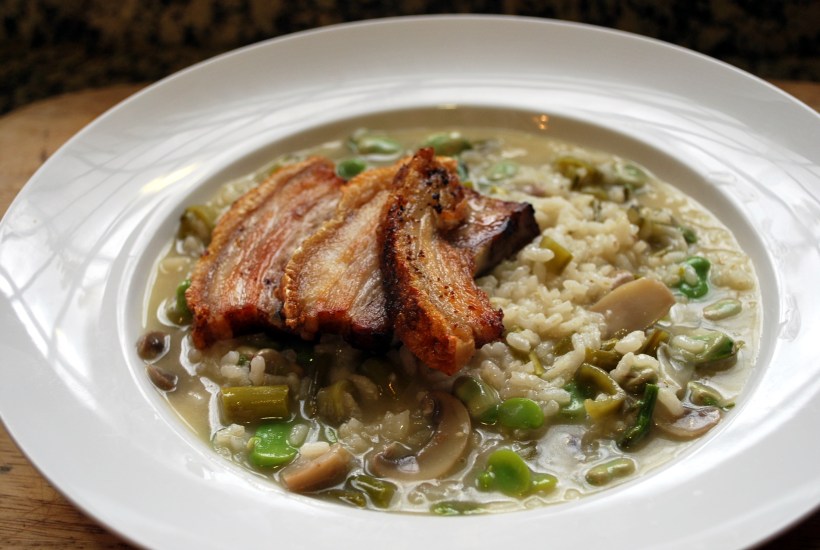
We ate ours with the leftover pork belly which I cut into slices and dry fried to remove the fat, to heat it through and to allow it to crisp up.
Now, if there was a prize for the least photogenic dish in the world, this one would be up there with the final contenders. It´s a very simple and tasty dish, especially made with the young tender broad beans which are in season right now. Our vegetable patch is delivering nicely and I make these regularly.
And then I take a photo. But to no avail. Broad beans braised slowly for about 30 minutes just don´t look pretty. You have the photos to prove it here. Sigh. If only they were as photogenic as Roger´s beautiful beetroot. But what they lack in looks, they make up for in taste, you´ll just have to believe me on this.
It´s quite a versatile dish – it is served here as a tapas, a side dish or with fried or poached eggs as a light supper dish. It can also be mixed into beaten eggs and made into a tortilla or huevos revueltos (scrambled eggs).
Ingredients
500g of young broad beans (podded, but keep the skins and slice them into 1cm pieces)
1 medium onion finely chopped
About 6 cloves of garlic peeled and sliced lengthways in half
100g of finely chopped jamon (or use lardons or pancetta)
Olive oil
Seasoning
Sweet pimentón (optional)
The Spanish way of making this dish is to braise the onion, garlic and beans (pods and skins) in olive oil until tender. It does taste wonderful but this is how I do it.
Bring a large pot of salted water to the boil and add the bean pods and skins and cook for about 4-5 minutes until just starting to become tender. Drain. Put about 2-3 tablespoons of olive oil into a deep frying pan that has a lid (or that you can cover with foil) and gently poach the onions and garlic (with the lid on) until they are soft.
Another dish..another day...and no, still not pretty!
Now add the beans and continue to cook gently, stirring to mix the beans into the oil every so often, with the pan covered. They will simmer and braise until very tender. Near the end of the cooking time add the jamon which will also cook through. I also like to add a sprinkle of pimentón when I add the jamon, but this is not typical. Taste and season if necessary and serve hot or cold.
For a similar dish using runner beans, take a look at this recipe.
Big Man and I are heading to the UK tomorrow. We have packed our umbrella as I think we have a few rainy days awaiting us. I won´t have access to e-mail but I look forward to catching up with you all next week – hope it´s a good one for everyone!
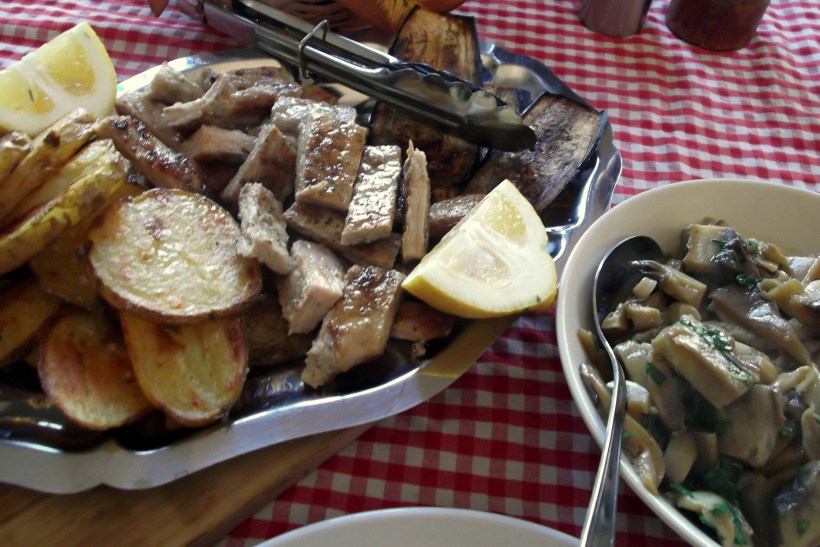
Served with grilled potatoes and aubergines and garlicky mushrooms...
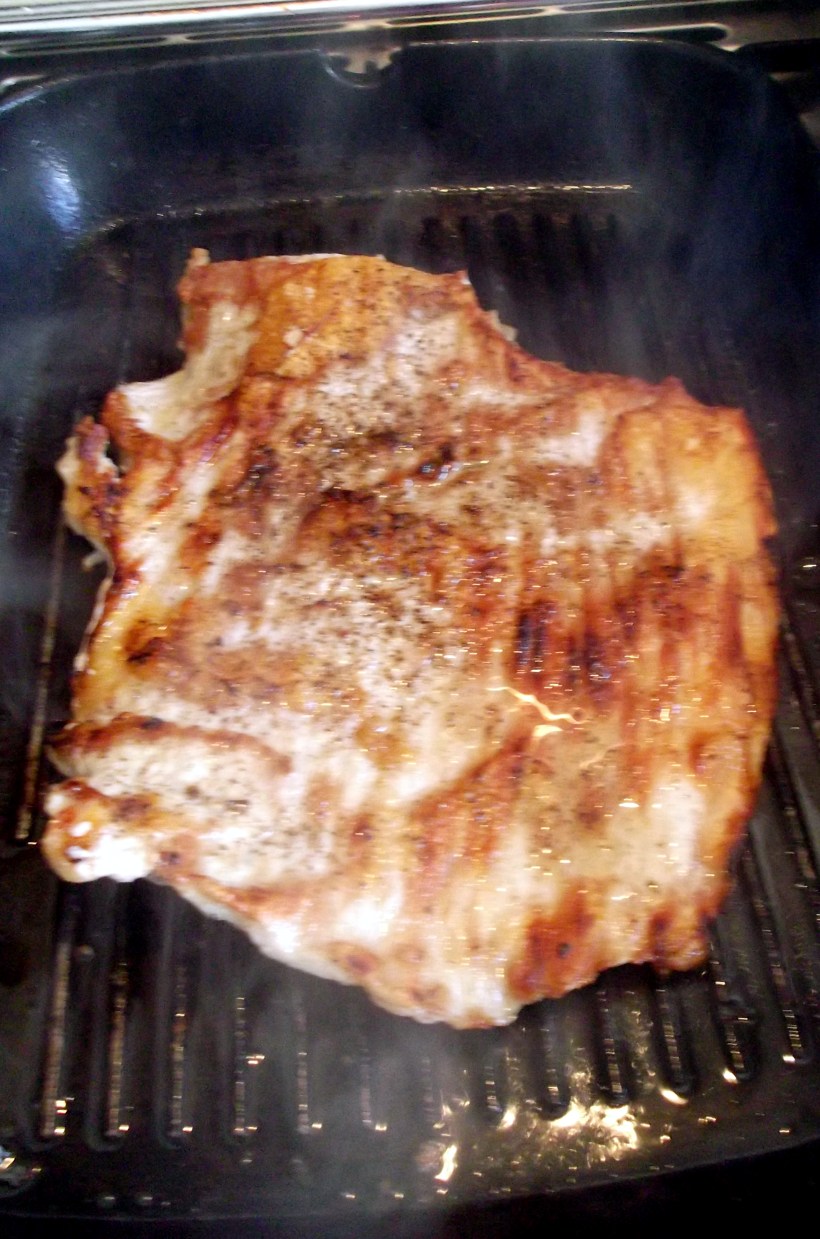
Secreto Ibérico (which translates as Iberian Secret) is a cut of meat, which comes from between the shoulder blade and the loin of the prized Iberian pigs. Even if you can only find it from regular pigs, I recommend you give this cut of meat a go for the amazing flavour you get from it.
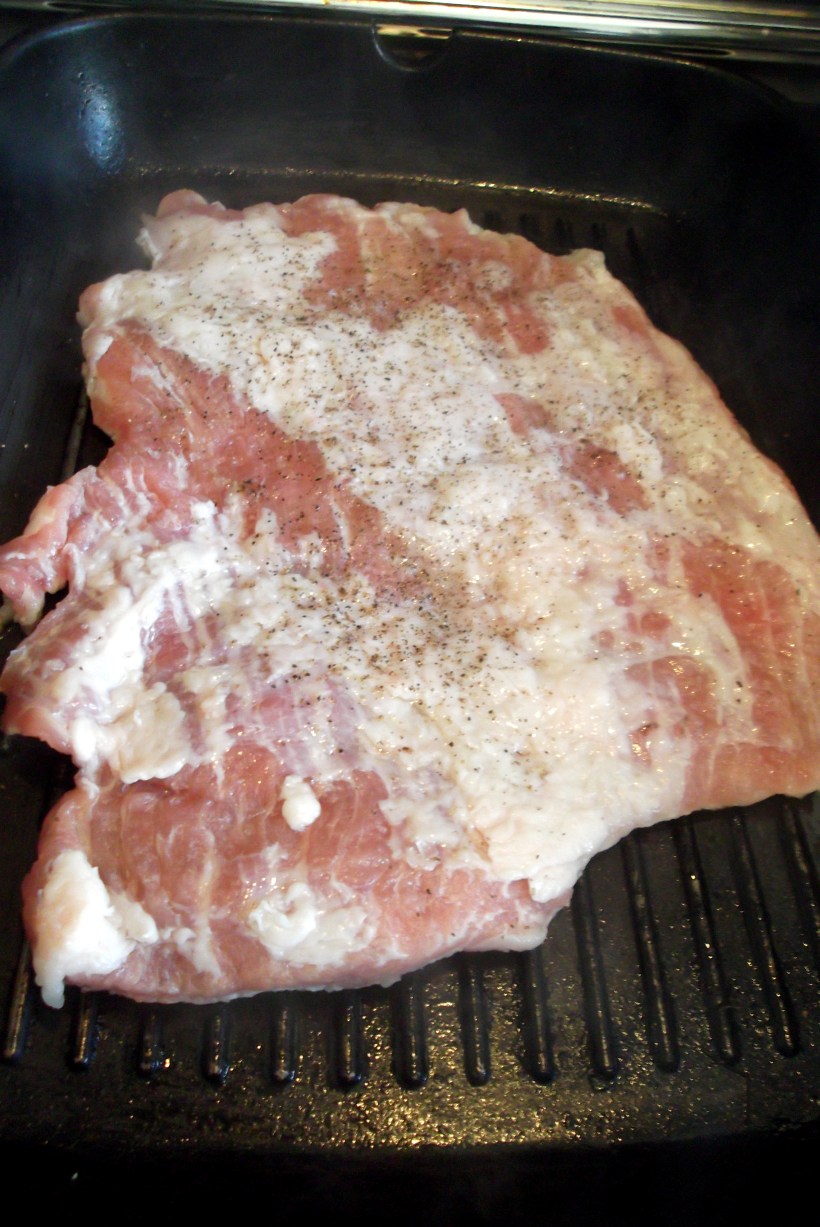
So, this is not a recipe, more a “letting you in on a little secret”. The reason this meat tastes so good is that the surface is marbled with fat. It is typically cooked over a high flame or hot griddle so the outside fat melts and gives you a fantastically crispy crust, while the meat inside stays juicy and tender.
Simply sprinkle some coarse (kosher) salt on both sides, pepper too if you like, and put it onto a very hot grill pan or barbecue.
Don´t fear the fat, it will work its magic...
Cook until it is golden and crispy and then leave to rest for 2 or 3 minutes. Round where we live it is traditionally cut into little strips after cooking and served with fresh lemon to squeeze over.
Gorgeous, Golden and Grunchy..sorry, Crunchy
If you ever do come across this beautiful cut of meat….”shhhh, don´t tell anyone – it´s a secret”!
Salt cod is a typical Lenten Food in Spain. Whilst the country is not considered as strictly Roman Catholic as it once was, some traditions still remain.
This week is Holy Week, most towns and villages as well as the major cities join in the commemoration with what some might consider quite excessive displays of idolatory. I admit it´s not for me, and I find the penitents who carry the statues around dressed in outfits many of us associate with the Klu Klux Klan quite disturbing, but I respect the traditions and am happy to join in the with eating and drinking.
Holy Week Procession in Ubeda April 2011Barefoot Penitent
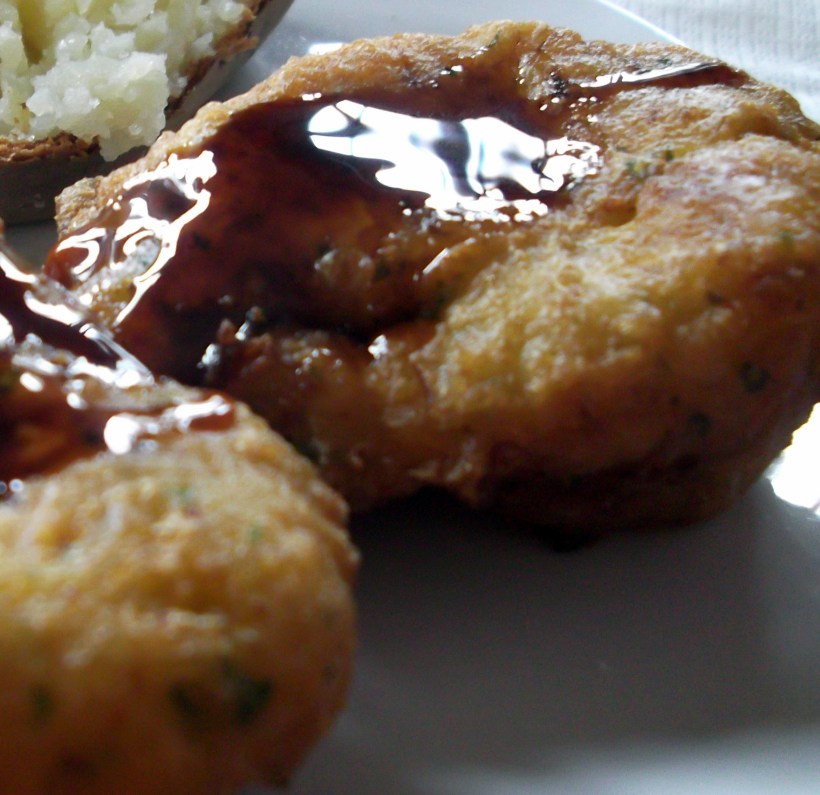
Parpuchas are known more widely as Tortitas de Bacalao, but they are a very typical dish of Andalucía. This name may well just be specific to this area.
They are easy to make and if you don´t have de-salted salt cod, fresh cod or any other firm fish would still give you some tasty fritters. Here they are typically served with Miel de Caña, or Molasses, in the same way as Berenjenas Fritas (Fried Aubergines),but if you prefer lemon…well, I won´t tell anyone!
To make about 15 large fritters or 20 smaller ones
200g salt cod, shredded into small flakes
2 eggs, beaten
1 cup of milk
1 teaspoon of bicarbonate of soda
1 cup of flour (approx)
2 large tablespoons of finely chopped parsley
1 finely chopped or crushed clove of garlic
Salt to taste if you are not using salt cod
Oil for deep frying
Add the milk, bicarbonate, parsley, garlic and fish to the beaten eggs and then gradually add the flour until you have a thick batter. It needs to be about the texture of thick lumpy custard (not that any of you, I am sure, have ever made lumpy custard!).
Heat the oil until a cube of stale bread turns brown quickly when dropped in and then drop spoonfuls of batter into the oil. I used a tablespoon and it gave me rather large parpuchas – I´d recommend using about half a tablespoon full as they will puff up slightly. When they are brown on the bottom (and they will float to the top), flip them over and cook on the other side. They will not be in the oil for long.
Remove with a slotted spoon, drain and sit them on kitchen paper for a few moments and serve hot, drizzled with Miel de Caña (to be typical) but also good with lemon or tartare sauce. If you make too many, they are still very tasty cold as they retain their texture.
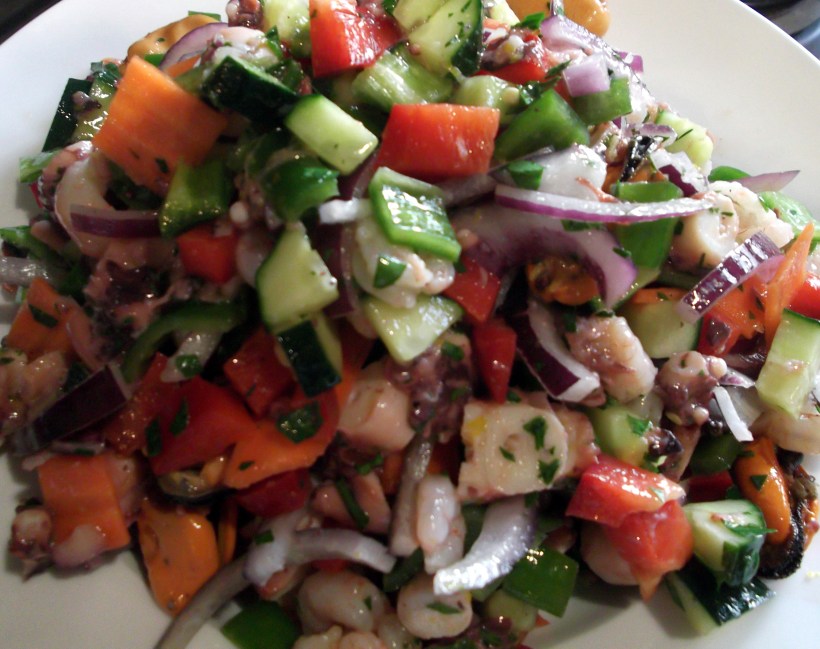
A typical tapas here which offers the best from the sea and the best from the salad garden is a Salpicón de Mariscos. We also enjoy it as a light lunch or supper dish or a starter. Of course, there are many ways of making it, depending on what you have available. Avocado? Yes, put some in. Don´t like cucumber? Leave it out.
Here´s my version which I also made a lemon vinaigrette for. Typically though it would just be dressed with salt, white wine vinegar and olive oil.
Serves four as a starter or two as a main course.
Vegetables (all to be chopped into roughly 1cm squares)
Two long thin green peppers or one green bell pepper
Half a large red bell pepper
One medium red onion (or a sweet white onion). Tip…if you thinly slice and then leave in iced water for about 30 minutes and then drain before adding to your salad, it will remove any harshness of flavour
One small cucumber, partly peeled
Two carrots peeled and cut into thin strips with a peeler (this is not typical, but I enjoy the crunch and colour) and then cut into smaller pieces
One large salad tomato (add this just before serving)
Two heaped tablespoons of chopped flat leaf parsley
Seafood
A mixture of cooked prawns, octopus, mussels – I had about 2 cups in total
Dressing
One clove of crushed garlic, half the juice of a lemon, olive oil (you want 3 measures of oil to one of lemon), salt, pepper, half a teaspoon of sugar, a quarter teaspoon of English mustard powder (or use half a teaspoon of made up mustard)
Also – the grated zest of one lemon
Method
Mix together the salad and seafood. If you are using tomato (and/or avocado) add just before serving.
Shake the dressing ingredients in a jar, taste and adjust seasoning to your preference. Pour over the salad and mix gently.
This benefits from sitting somewhere cool (but not cold) for at least an hour before eating. Otherwise you can make ahead, store in the fridge and then remove it an hour before serving. Add the tomatoes and/or avocado if using, grate over the lemon zest and give it one final stir.
Have plenty of crusty bread to hand to mop up all those lovely lemony juices.
The first time I ate a bowl of chicken soup in Spain, I was a little surprised by the way it looked. I was staying in my rented Cortijo in the middle of nowhere, with my lovely, crazy landlords living in the adjacent house and popping in on me at weekends to make sure I was fine. In true Spanish Mama style, my landlady often bought me things to eat, just to make sure I was going to stay nice and well rounded.
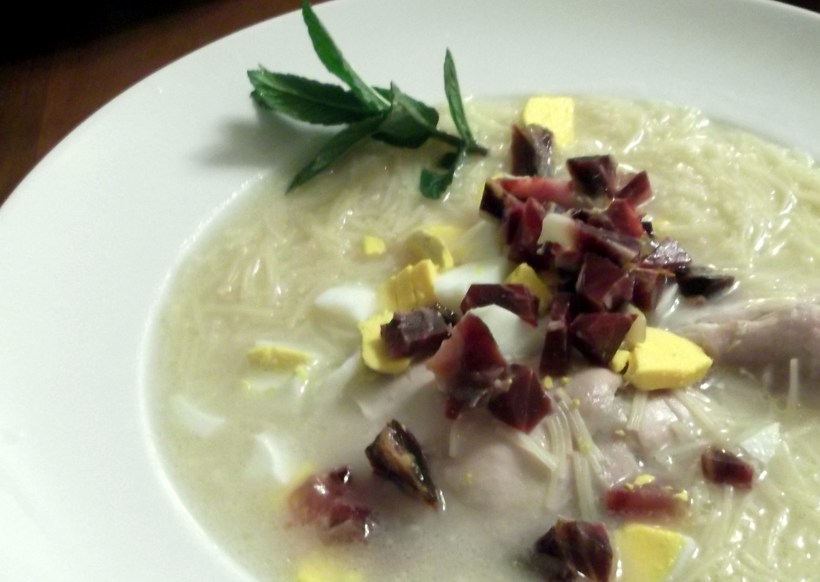
One lunchtime she came over with a bowl of chicken soup. I was surprised because in the UK a good chicken stock is clear, transparent…and highly valued for these attributes. What I had been presented with was cloudy, almost a yellowy white in colour. It smelt amazing and the bowl was packed full of other goodies too. Pieces of chicken, fine noodles, chopped hard boiled egg and jamon and some pieces of fresh mint. I was also instructed to squeeze lemon juice into my soup. Then off she trotted, happy to have kept her (not so) starving tenant alive to see another sunny Andalucían day.
Of course, once I had tasted it, I was in love. Such deep chicken flavours, quite a salty (but not disagreeably so) taste and the tang of lemon and mint. The name of the soup, Picadillo, comes from the verb Picar. This means to chop finely or into small pieces. Hence the final additions of hard boiled egg and jamon.
This is not a recipe, more a method. Spanish chicken stock is made with whole joints of chicken (I use thighs and legs usually), salted pork bones and salted pork belly with plenty of fat on it. If you can´t get the last two ingredients use a couple of pork ribs and a piece of normal pork belly or a thick slice of pancetta. Add a couple of bay leaves, about 4 cloves, 1 or 2 dried chilies (optional) and cover with water. I also add in a few carrots and sticks of celery, but this is not typical. If you have not used salted bones, add salt to taste and check again at the end of cooking.
Now boil it fast for about 10 minutes, this is when the water will turn cloudy, then turn down the heat and simmer for at least an hour. Strain the stock and leave it to cool, you will then be able to remove the layer of natural fat from the meat which will set on the surface.
Remove the bones, bay leaves, cloves, chilies and discard. To serve a typical Sopa de Picadillo, boil up the stock, add some fine angel hair noodles and the chicken (pork belly too if you used unsalted) and cook until the chicken is warmed through and the noodles are cooked. Sprinkle over hard boiled egg and jamon (or use lardons or pancetta) and if you have some fresh mint to infuse in the soup it really adds a special touch. Don´t forget the squeeze of lemon too!
Like most chicken soups, it is claimed to be the cure for all ills, but you don´t need to be feeling under the weather to enjoy it.
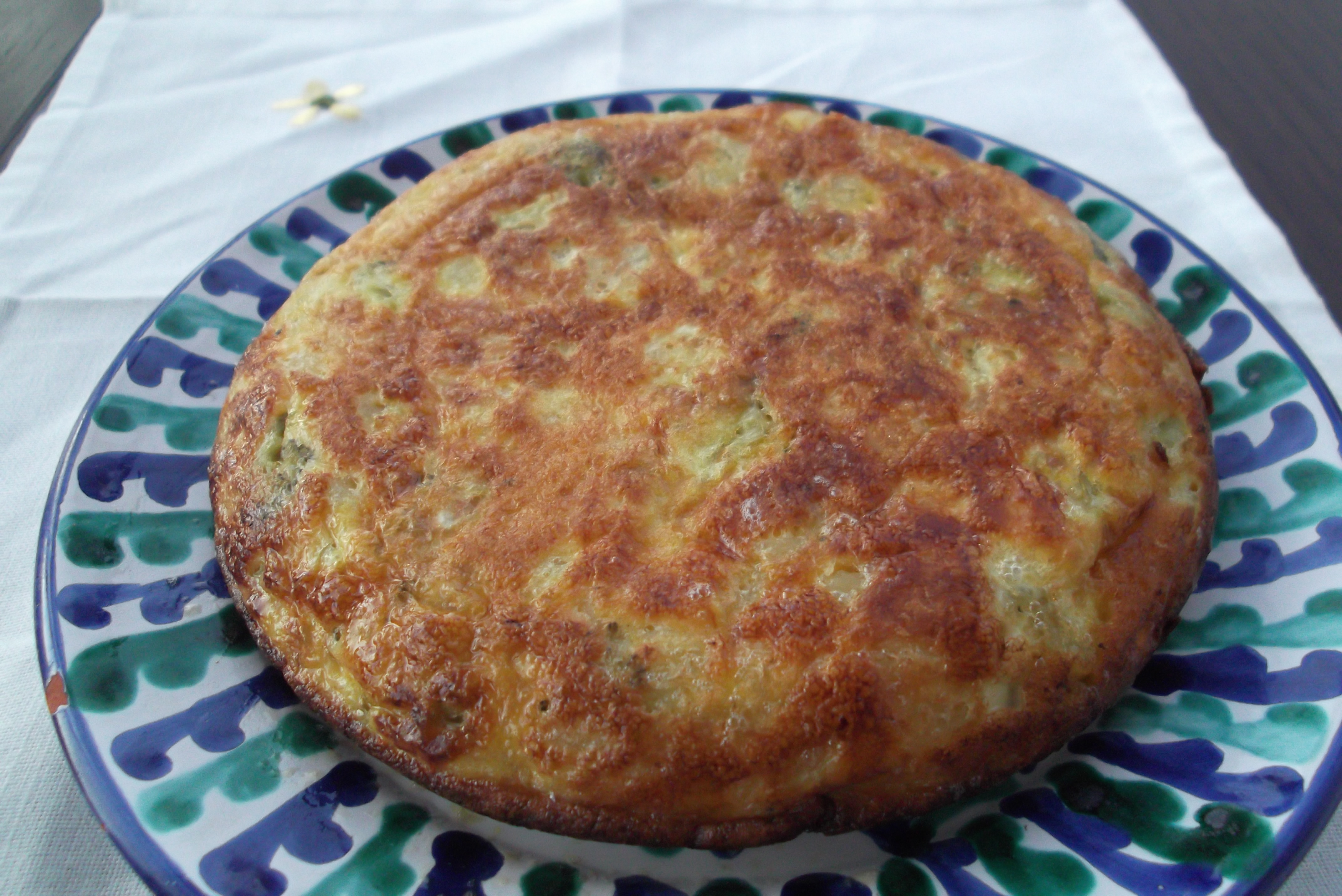
Now, I´m not laying claim to this being the most authentic of Spanish tortillas. For a start, the most famous is the potato one, sometimes with onions added. Secondly, the potato is cooked from raw in a fairly significant amount of olive oil, very slowly until tender. It´s wonderful, but when I´m at home I try to cut out a few calories and this is how I make my tortilla. To be honest, no one seems to have noticed the lack of oil!
For a Spanish tortilla to be successful, i.e. to be able to turn it over half way through cooking without ending up with an eggy mess all over the kitchen floor there are a couple of things which I have found help in the process:
A large quantity of filling in relation to egg – the egg just binds the ingredients together
A deep high sided pan (you´ll see from the photos that mine is very old and battered but it´s perfect for making a one person/two egg tortilla and I won´t throw it away!)
A very, very low heat
A lid to put over the tortilla in the first stage of cooking
Slow cooking, it takes patience, this is not a speedy French omelette
So, for one person, this is what I use, just multiply the ingredients for more people and of course, use a bigger pan! This makes a tortilla large enough for a decent supper or light lunch, served with salad, bread and of course a glass of wine.
Two eggs
Cold cooked, peeled potatoes
Any other vegetable, cooked, that you want to use in your tortilla
Salt and Pepper
About a tablespoon of olive oil
A tablespoon of milk
Start by putting the oil into the frying pan and then chopping your potato into small chunks. Also add the vegetables if using. You want the potatoes and vegetables to fill the pan almost to the top.
Warm them through turning them over gently so that they are all covered in the oil for a few minutes.
This slideshow requires JavaScript.
In a bowl beat the eggs, seasoning and milk with a fork then add the potato mix to the eggs and mix it all in gently with a spoon.
You should have a little oil left in the pan, but if not a tiny splash extra will be sufficient.
Pour the egg and potato mixture into the pan, turn the heat down to the lowest setting, put the lid on the pan and then leave the bottom half to cook slowly. Depending on how large your tortilla is, this could take a while. The two egg tortilla takes about 10 minutes.
Every so often, press gently on the sides with a wooden spoon or spatula to see if it is browning underneath. When it is a lovely golden brown and the top is set, it´s time to flip it over!
You can use a plate, or two plates (tip out onto one plate, invert onto another and then back into the pan). I have a plastic tortilla “flipper” which has a small handle underneath. You turn the tortilla onto it then slide it back into the pan. A flat saucepan lid would work just as well.
Now turn the heat up a little, leave the lid off and cook for about another 4-5 minutes until the bottom has turned the same lovely golden brown. Leave it to stand for a minute or two once it is cooked, then turn it out onto your plate and enjoy.
Thanks go out to JamieAnne at A Dash of Domestic for her wonderful tutorial on how to insert a slide show!
So in 2016 I turned 50. I was in Italy for my 21st, 30th and 40th. To keep this birthday tradition going I always knew I'd be in Italy for my 50! This blog starts with my 5 week adventure in Puglia but my love affair with Italy continues.....









 Chica Andaluza