Callos a la Andaluza – Andalucían Tripe Stew – or Everything But The Oink

Watch out for those mountain winds

Ok, I know this is going to sound quite off putting for many people.  Tripe is a scary old thing.  But fear not, although the word “Callos” translates as tripe, I don´t actually put any into this dish (although you could).  Confused eh?

Well, let me explain.  The first time I ever ate this dish was at a Feria in a nearby hamlet.  It´s tiny, probably only a dozen houses, but it belongs to our “Municipio” and puts on an amazing fiesta every year.  One of the first of the summer in fact. They always seem to attract a good flamenco singer, they do a fantastic paella at lunchtime, and they always have plenty of good food apart from the usual pinchitos (kebabs) and montaditos (fillets of pork on bread).  Hundreds of people attend, it´s a great event apart from the winds which whip down the mountain and make hairstyles, skirts, old people and small children blow all over the place.

So, Big Man ordered me a portion of Callos which was essentially a chick pea stew with tiny chunks of meat, chorizo and morcilla in it.  I loved it and looked up the word when I got home and though “oh lord, I´ve been eating tripe”! During the almost six years I´ve lived here, I´ve only eaten it a couple of times a year as not many people make it anymore – it´s not complicated to make, but it takes time.

Of course, I recently decided that I wasn´t prepared to wait until next summer for my fix, I´d make my own.  This is where the fun started.  I asked the butcher to prepare me whatever I needed for this dish (meat wise) and that´s when I found out that her version would not include tripe.

Strange, I thought, but let´s crack on. She (yes, we have two butchers locally, and one is a woman who looks exactly like a lady butcher should look – big and jolly with fingers like sausages) got things ready.  The goodie bag included (per four person serving):

  • Two pigs trotters split down the middle
  • Some finely chopped pork tongue
  • A finely chopped pigs ear
  • Some chopped pancetta or pork belly
  • Some finely chopped cooked pigs blood

See – not so scary after all (well, maybe apart from the blood)!  I also had to buy some chorizo and morcilla and chick peas.  I´m not giving measurements here as it´s a kind of “make it up as you go along” dish.  I then asked about 20 different people how they made Callos.  Half had never made it so were of no help at al.  The others gave me 10 different ways of making it, each with their own little “twist”.

This is what I eventually came up with, and I have to say it tasted as good as the Fiesta version, and Big Man thought it was better…modesty prevented me from saying that myself of course!

Soak the chick peas overnight and the next day cook slowly for a couple of hours with a few bay leaves, 4 cloves, and a dried chilli until completely tender.  Don´t rush this, you´ll have plenty to be getting on with while they cook.

In a separate pot blanch the all the pork products, drain and put into fresh water.  Now cook slowly for a couple of hours until really tender and drain again.  Get those kitchen gloves on and pull all the tender meat off the trotters and discard the bones (or give them to your dog who will love you forever).  Now add the chunks of meat to the cooked chick peas (still in their water).  Add about 5 or 6 whole cloves of raw or roasted garlic, some saffron dissolved in water, ½ a teaspoon of sweet or hot pimentón, the whole chorizo and morcilla (which you will slice before serving) and cook for about 30 minutes.  Leave to stand for at least 15 minutes before serving (but it´s even better prepared the day before) and remove the cloves, bay leaves and dried chilli.

Make sure you have a table full of very hungry people, don´t tell them what´s in it if they´re a bit squeamish, and enjoy.  Now go for a lie down…you´ll need it!
Pimientos del Piquillo Rellenos – Stuffed “Piquillo” Peppers

As I was mostly quite a good girl last year, Secret Santa gave me a beautiful cookery book packed full of delicous Tapas recipes. Thanks Giovanna at BlueJellyBeans!

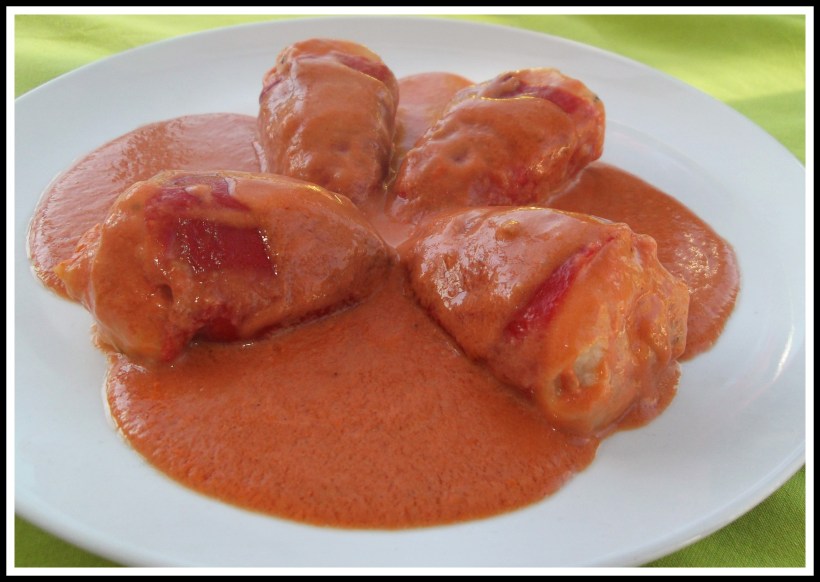
After having a good old read of it, I decided that the first recipe I wanted to make from it was one that I often order in bars or restaurants but had never made at home.  The stuffed piquillo peppers (sweet, red and shaped like a little beak which gives them their name) are sold here in tins or jars. If you can´t get hold of them, I won´t tell anyone if you adapt with full sized peppers or perhaps the tips of some long sweet peppers.  You´ll need to roast and peel them first though.

I adapted the recipe a little to use up some salt cod (bacalao) that I had left, but the filling is up to you.  It could be cream cheese, mashed potato, tuna, vegetables, béchamel sauce….let your imagination go wild!

Ingredients to serve 2 as a starter

  • 4 pimientos del piquillo
  • Half a cup of mashed potato plus half a cup of cooked, flaked bacalao (or a cup of your preferred filling)
  • A tablespoon of chopped parsley
  • Black pepper (no salt with bacalao as it is already very salty)

For the sauce – half a cup of tomato conserva, 2 tablespoons of single cream, 1 tablespoon of tomato purée blended together with an immersion blender and seasoned to taste

Mix the potato, fish and herbs together and season with pepper.  Carefully fill the peppers using a small teaspoon.  Put them into a small frying pan and cover with a lid.  Warm through on a very low heat, turning them over after about 2 minutes.  I didn´t use oil but if your pan is not non stick, then use a very small amount. Now pour the sauce over and warm through very gently.

Place the peppers on your serving plate and cover with the creamy, tomatoey sauce.  Gorgeous, tasty and really rather cheffy looking!

Secret Santa and Stinky Baked Camembert

You know that Christmas really is upon you when you decide to Get Organised.  I put that in capital letters to help motivate me.  And then when you decide to Get Organised, Things Go Horribly Wrong. I think you get the idea.

With my parents arriving shortly I sorted out our spare room for them this morning with my best linen, plenty of coat hangers and a few little tasteful decorations.  The bedspread is a gorgeous mulberry colour and I have some lovely purple Christmas lights that I wanted to drape around. Do you think I could find them? Like heck I could.

Then I decided to remove all my nice table linen from the chest in the spare bedroom so that I don´t have to go disturbing my parents.  What did I find? Well, the linen was where it was meant to be but I also found the remains of an enormous red wine stain on my lovely tablecloth.  It´s not even in the middle where it could have been hidden by plates or candles…damn, that´s now doing its third round in the washing machine.

Finally, the dishwasher made a very rude noise and appeared to have given up on me mid cycle.  I foolishly opened the door to give it a good talking to, and out flooded a sea of dirty and very hot water.  One of those days, you see.

But all was not bad.  In the midst of all this mayhem, sorry…Festive Fun… Big Man came in bearing a beautiful poinsettia for me and a parcel from Secret Santa. I also saw that Nia awarded me the Versatile Blogger Award, so a huge thank you to the lovely Nia.  For my responses to this in a previous post, check this out.

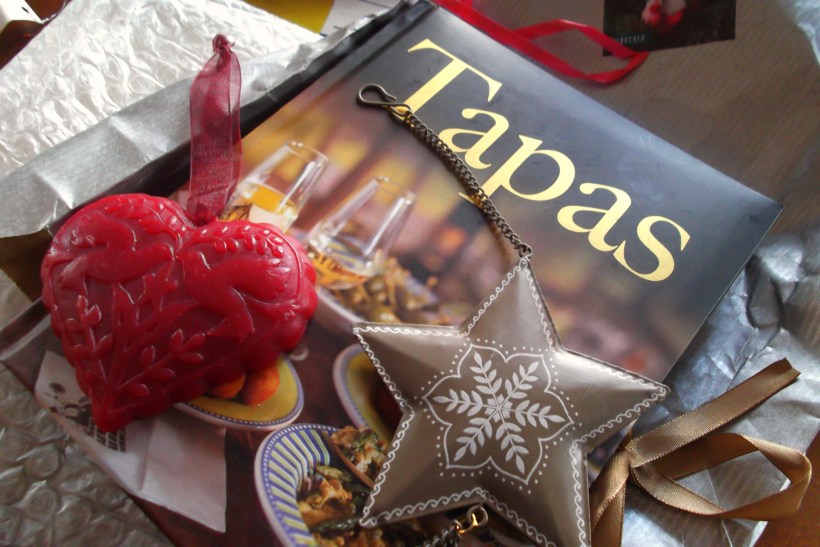
Tandy over at Lavender and Lime kindly organised this fun exchange of gifts, so thanks so much Tandy! My Secret Santa (you can´t hide your details from the Spanish Postal system!) is a lovely Blue Jellybean from Madrid – thanks Jellybean, I´m so pleased with my gifts!  Look at my gorgeous book of Tapas recipes – there are some old favourites in there plus a load of new and inspiring ideas for me to try out next year.  I´ve only managed to get a quick flick through it as I had to wrestle it off Big Man who was deciding what “we” (for “we”, read “me”) should try first.  I also received some gorgeous decorations…which are very special as I ask Christmas visitors to buy me a new decoration for us to keep and remember them by.  So perfect…my first gifts and I am a very, very lucky Chica indeed.

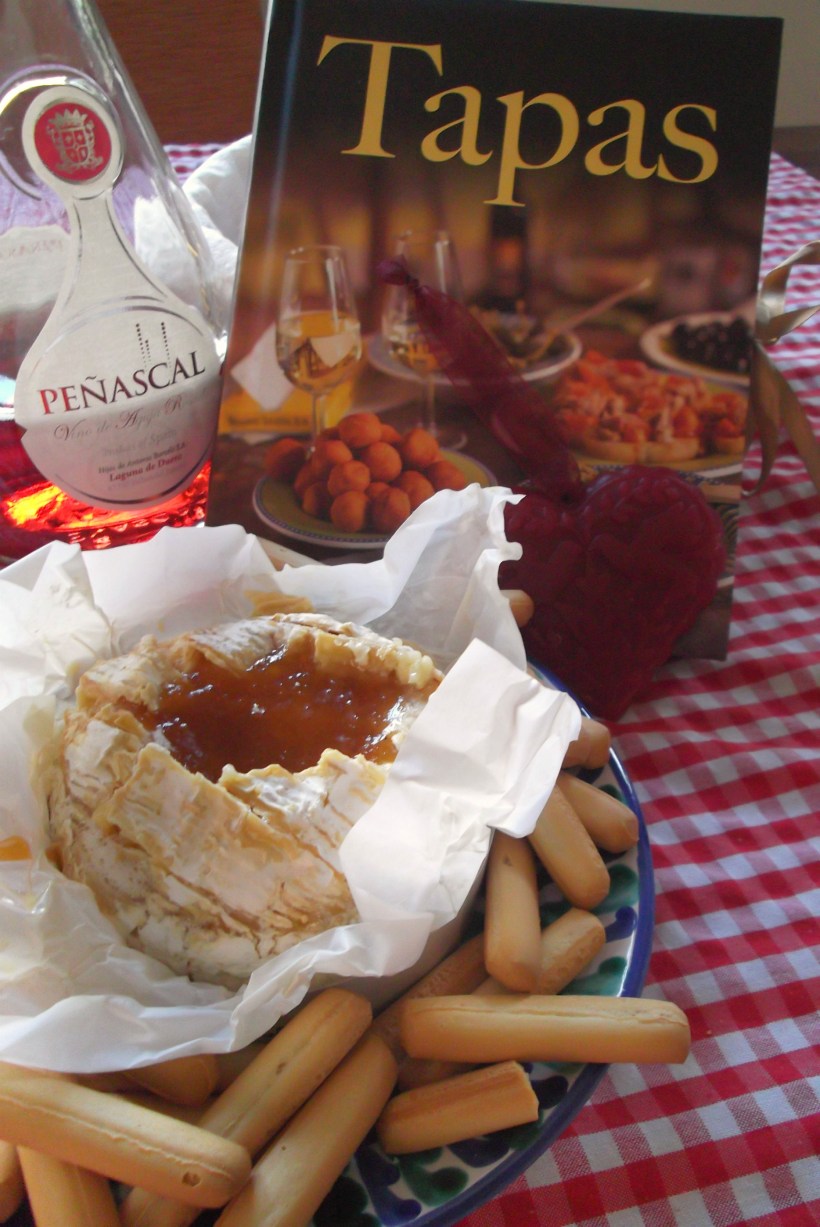
Of course, while things were exploding and flooding all around me, I did have time to make a little bite to eat.  Inspired by some Baked Brie recipes From the Bartolini Kitchens and Rufus´Food and Spirits Guide, I decided to do a simplified version with a Camembert which was so ripe it was about to take a walk all on its own!  I unwrapped the very stinky camembert from its box and separated the plastic paper from the waxed paper which I wrapped around the cheese again.  I put it back into the base of the box and baked for about 20mins in a hot oven.

We ate it with bread sticks, and I put a few spoons of my plum compote in the top of the cheese.  The strong taste of the cheese worked well with the cinnamon and vanilla notes in the plum and we quietly sipped a glass of vino Rosado whilst the dishwasher groaned and breathed its last breath.  Guess what Santa might be buying tomorrow?!

Quick Braised Wild and Oyster Mushrooms

Remember our beautiful walk recently?  We had such a wonderful morning and came home with about half a kilo of wild mushrooms.

Because they were so fresh, I knew they would keep for a day or two, so in the first dish I made, I used half of them and kept things very simple.

We grow oyster mushrooms in our garage. No, don´t worry – there´s no nasty fungus creeping up the walls or anything.  You can buy bales of straw which are impregnated with mushroom spores and then wrapped in black plastic.  You cut slits into the plastic and keep the “alpaca” as these bales are known in the dark and ensure that they are kept damp.  About a week after acquiring your little treasure your first mushrooms will appear.  Just cut and eat.  Then when you´ve harvested as many as you can, you flip the alpaca over and cut a few more slits.  If you keep it going you can be eating your own grown oyster mushrooms for several months.

I took about the same quantity of oyster mushrooms as wild, cut the wild mushrooms into thick slices and tore the oyster mushrooms into strips.

In a deep terracotta dish (or you could use a frying pan) I added three crushed cloves to garlic to the mushrroms together with about 3 good tablespoons of olive oil, some Maldon (or kosher) salt, several good grinds of black pepper and two red chillis (these are optional).  I turned the heat up to high and as soon as the mushrooms began to sizzle I reduced it and covered them to let them sweat and get tender for about 10 minutes.  I then removed the lid and added a small glass of dry white wine and let everything bubble away until the liquid had reduced by half.

We ate this as a starter with plenty of rosé wine and some crusty bread to mop up the delicious juices.


PS. On a totally different subject – since I changed the look of my blog (i.e I changed the theme) my photos don´t seem to appear properly.  They are cut off on the right hand side!  Has anyone come across this and do they know how to resolve it? Thanks for any advice anyone might be able to offer me.

Potaje de Lentejas – Lentil Stew

Another “Plato de Cuchara” or spoon dish – we like our pulses here in Spain.  Many of these dishes were traditional as you could feed large families with few ingredients which were not costly.  Meats are typically added at the end (usually pork products) so the beauty is that they can be vegetarian dishes too, if you prefer.

Lentils are great, as apart from being cheap, they cook fairly quickly and only need rinsing but not presoaking.

For four people as a main dish or six as a starter you´ll need

  • About 500g of lentils – we have the flat green ones here
  • Water to cover
  • 3 tablespoons of olive oil
  • 1 medium onion, quartered
  • Half each of a red and green pepper, chopped into bite sized chunks
  • Two tomatoes cut into bite sized chunks
  • 1 bay leaf
  • A couple of carrots peeled and finely diced
  • A stick of celery plus the leaves (if it has leaves).  Finely dice the celery but not the leaves.
  • 4 or 5 whole fat cloves of garlic
  • 2 medium potatoes peeled and cut into small cubes (keep these in a bowl of water separately)
  • Sprig of fresh thyme or rosemary if you have it
  • ¼ teaspoon each of pimentón and paprika
  • Salt to taste (at end of cooking)
  • Optional – a couple of chorizo and/or morcilla or your favourite sausages

Rinse the lentils then add all the vegetables and spices apart from the salt to a large cooking pot.  Cover well with water, add the oil and bring to the boil.  Reduce the heat slightly but don´t let them come off the boil while cooking as this will make the lentils hard. They will probably take about 45 minutes or so.

When the lentils are soft, add the potato and meats (if using) and continue cooking until the potatoes are cooked. Remove the bay leaf and celery leaves and add salt (and pepper too if you like) to taste and you´re ready to serve. Slice the sausages into smaller pieces before serving. A drizzle of extra virgin olive oil and a squeeze of lemon over the top really lifts the flavour, but that´s just the way I like it!

Tastes even better the next day.

Gardens and Puff Pastry with a Side Order of Steak and Chips

Bushy Garden Oct 2011

It´s that time of year here when you need to “put the garden to bed”.  Before you tuck it in for the winter, you can hack back the summer growth and give it a little room to breathe.

The interent and phone were down most of Sunday and all day Monday.  Frustrating but being “incomunicado” forces you to get up off your nether region and do something!  Gardening was the answer.

After a morning of hard work in the garden, we needed something to reward ourselves with – what better than steak and chips?  Steak is a rare treat for us, so we tend not to mess around with it too much.  A little massage with olive oil and seasoning, and onto the grill pan.  Chunky potatoes cooked in olive oil, and a little English mustard mixed with mayonnaise do it for me.

I had some leftovers from making my Chicken, Mushroom and Bacon Pie (recipe to follow another day) , so decided to make an easy dish to go with the steak and chips.

I cut what remained of the puff pastry into two rectangles and lightly cut (but not all the way through) another rectangle about one cm inside the outer edges of the pastry.  I brushed the pastry with milk and baked at 200ºC for about 15 minutes until puffed up and golden. When the pastry had cooled down I pushed in the middle section of the rectangle to leave a hollow space.

Save on the washing up and have a starter and main on the same plate

With very little oil I fried 4 thinly sliced mushrooms with 2 crushed cloves of garlic until soft then added 2 heaped tablespoons of chopped bacon.  I then added 1 heaped tablespoon of plan flour and stirred until it was cooked through.  I gradually added splashes of milk (about 5 or 6 in total), stirring all the time until I had a thick sauce and then filled the pastry cases with this.  I put them back into the oven on a low heat until I was ready to dish up the rest of the meal.

Bald Garden Nov 2011

A lovely glass of El Coto Rioja went down well with this and we sat outside for 15 minutes in the last of the afternoon´s sunshine admiring out work and drinking a good strong coffee.  It was a good day.

Gambas al Pil Pil – Sizzling Spicy Prawns

This is a hugely popular and typically Andalucían tapas dish or starter.  I have tried to find out the origin of the words Pil Pil and some say that it comes from an Arabic word felfel (I don´t speak Arabic so assume it has something to do with spice or chili).  Others say it comes from the sound the prawns make sizzling in the hot oil. I don´t know if either are true – I like both stories, almost as much as I enjoy making and eating Gambas al Pil Pil.

If you can get hold of good prawns (or shrimp) then this is a very easy yet impressive dish to serve to your guests. If you have a terracotta dish to cook them in, well that´s even better as it does add something special to the taste and the prawns stay hot and sizzling for a few minutes as you bring the dish to the table.

Per person for a good tapas serving you will need

  • 100g peeled prawns (defrosted if frozen)
  • 1 dried hot chili and/or half a teaspoon of hot pimentón – this is down to personal taste – crumbled
  • A fat clove of garlic, peeled and sliced
  • A good pinch of salt

About 2 tablespoons of olive oil (if you are doing a large serving, just use enough oil to half cover the prawns)

Start by putting everything apart from the prawns into a frying pan or terracotta pot. Turn up the heat and cook until the garlic begins to turn brown at the edges.

When you want to serve your dish add the prawns and cook at a lower heat until the prawns are cooked through then turn up the heat until they begin to sizzle.

Serve with plenty of bread to mop up the delicious chili oil. If served in a large pot or pan, it is traditionally served as a sharing dish. Everyone has their own fork and “prongs” their bread into the juices.

Serve with an ice cold beer, a chilled manzanilla or a crisp cool white wine.  ¡Buen provecho!

PS. No fear of me running out of chillis this coming year…the harvest is now safely stored and drying in the shed!

Caponata – Calabrese Style

When I was young we used to spend summers in Calabria, Southern Italy, where my father is from.  He was the youngest of 9 children, 6 of whom were girls.  His older sisters all used to fight over who we would stay with during our holiday, as most of them had had a hand in bringing him up and treated him almost as a son.  We used to try and divide our time up with the various families, but my happiest memories were of staying with my Zia Santa.

Grazie Zia - ti voglio bene

When I mentioned this once to someone in the UK they asked me if it was strange having an aunt named after Santa Claus.  How bizarre, I thought, it had never once crossed my mind that her name might sound unusual to anyone else.  In Italian Santa is a female saint, or a “blessed one”.  My Zia Santa was indeed a saint, she had a hard life and lived in very basic simplicity for the whole of her married and then widowed life.  But we loved being with her.  She had one bedroom where my parents slept in her huge dark wood framed bed with my younger brother on a fold out bed.  Her bathroom only had a toilet and a sink where she also washed all her clothes.  The only other room was a large living, dining, kitchen area which looked onto the main street of the little village, called Longobardi.  I slept here with my aunt, her on a bed and me on a mattress – and every night we would giggle together like two little schoolgirls rather than an aunt and niece who were separated in age by over 40 years.

There was a small balcony which served as the telephone. If people wanted to give you a message they stood in the street and whoever was nearest the window stood there and took the message.  Likewise, if you wanted to let a neighbour know some news, all you had to do was stand on the balcony and tell a passer-by.  You were in no doubt that the message would reach its recipient almost as instantly as an e-mail or text nowadays.

Zia Santa was an incredible cook.  August was always taken up with drying tomatoes on her flat roof, or bottling tomatoes to go into the huge storage area on the ground floor.  It never struck me as odd that there was this enormous space downstairs that could have been converted into a bathroom, bedroom, laundry room…whatever.  It was more important back then to have a good space to store the cheese, salami, prosciutto, olive oil and tomatoes for winter.

I´m trying to write down all the recipes that Zia Santa taught me, my mother and, some years, my English grandmother to cook.  Today it´s Caponata.  I had to call my mum to ask her what the special ingredient was.  Our family caponata was never the same as any other I´ve tasted.  I´m sure there are thousands of family recipes, each one different from the other.  This is ours.

  • About 1kg of aubergines (eggplant, melanzane) finely chopped and salted, then left to drain for about 30 minutes then rinsed and patted dry
  • Olive oil – plenty for frying
  • 1 onion finely chopped
  • 3 sticks of celery finely chopped
  • 4 tablespoons of red wine vinegar (although I used white as that´s what we have here and it was delicious)
  • About 500g of ripe tomatoes peeled and finely chopped
  • Up to 2 tablespoons of sugar
  • About a quarter of a cup each of chopped capers and chopped stoned olives (black or green)
  • Seasoning
  • The grated zest of half an orange – the secret ingredient!

Fry the aubergine chunks (which in all other recipes I´ve seen is left much chunkier).  Zia Santa used to deep fry, I shallow fry.  The choice is yours.  Set them aside when they are browned and soft.

Now add the onion and celery to the pan with more oil if necessary and fry with the lid on until soft and translucent.  Turn up the heat and add the vinegar and allow it to reduce almost completely. Turn the heat back down and add the tomatoes, seasoning and about half the sugar and simmer for about 15 minutes or so or until the celery is tender but still retains a little crunch.  Stir in the aubergines, olives, capers and orange zest and taste.  It should be “agrodolce” sweet and sour – add the rest of the sugar if necessary and allow it to dissolve.

This dish is best served the next day and will sit quite happily in your fridge for several days.  We used to eat it at room temperature as part of the antipasto but it´s also good as a side dish.

And don´t forget, do shout out of the window to let me know if you enjoyed it!

Pimientos de Padrón – A Spicy Little Snack

Eat them with your fingers!


Pimientos de Padrón are a popular tapas, especially when they´re in season during the summer.  They are little green peppers that come from a town in Galicia (northern Spain) called Padrón.  So, their name translated means “peppers from Padrón”.  A little saying about them is that “algunos pican, otros no” which means “some are hot, some are not”. To be honest, as a dedicated chili eater, they´re mostly not that spicy…apart from some we grew last year which seemed to want to be like all the other chilis in the vegetable garden and nearly blew my head off!

Ready for frying

If you do manage to find them, all you do is deep fry them in very hot oil.  When the skin starts to blister and turn black (this will take long moments rather than long minutes), drain them and sprinkle heavily with coarse salt.

Frying tonight!

Eat with a cold beer to wash down the spicy, salty tastes or a delicious clara (that´s a shandy to you and me).

Just what you need...

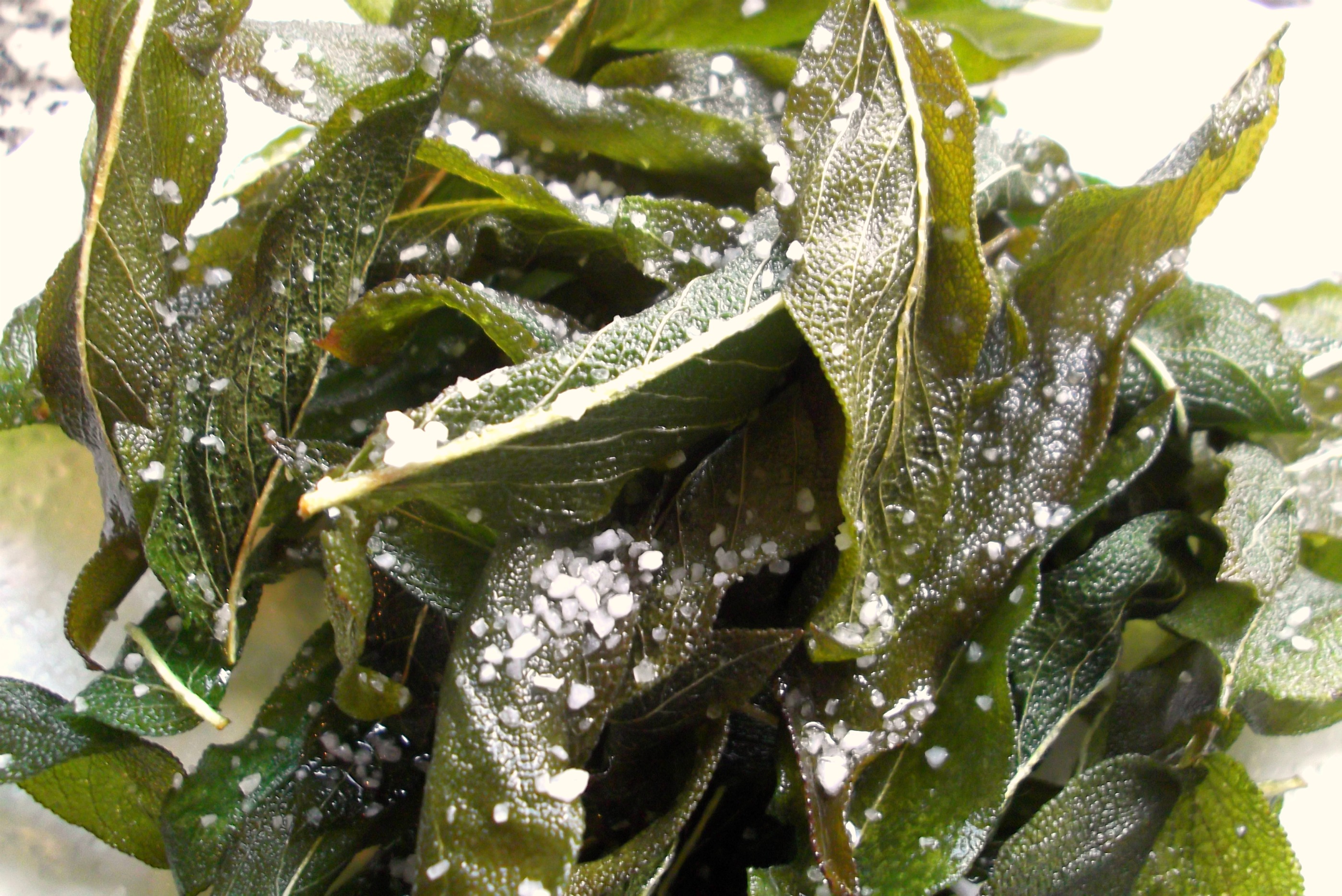
And whilst you´ve got that oil hot, how about quickly deep frying some sage leaves and sprinkling them with salt too.

Scarily Addictive Sage

They can become really addictive, and as it´s a herb they´ve got to be better for you than crisps…haven´t they?!

Tasty Tabbouleh

Fresh and delicious

When you are lucky enough, as we are, to have a vegetable garden full of tasty summer tomatoes, cucumbers and peppers, you are always looking for new ways to serve them. Arriving home from our holiday, we found the veggie garden over run with peppers plus we had a few cucumbers and the first of our new batch of tomatoes turning red.  A neighbour had also left four huge and sweet onions in a bag hanging on our door.  What a great homecoming!

I love tabbouleh, but had forgotten about making it until another kind neighbour bought me round a bag of bulghur wheat.  I have very kind neighbours! It reminded me of how much I enjoy it and what a great use of my summer vegetables it would be.

It´s very easy and quick to prepare and can be made a little in advance of eating so that all the seasoning is absorbed and flavours your salad.

As I was finely chopping a mixture of tomato, cucumber, onion and garlic I realised how similar the base ingredients are to an Andalucían gazpacho, both the blended and the chunky versions.  I also added chopped green and red peppers. I´m not sure how traditional they are but we still have so many, it seemed silly not to.

The wheat had been cooked according to the instructions on the pack, all very simple and straightforward, and when it had cooled a little I added my chopped vegetables, chopped mint and parsley, salt, olive oil and plenty of lemon juice.

And that was it. I left it to chill a little then bought it back to room temperature before eating.  How simple and delicious was that?!