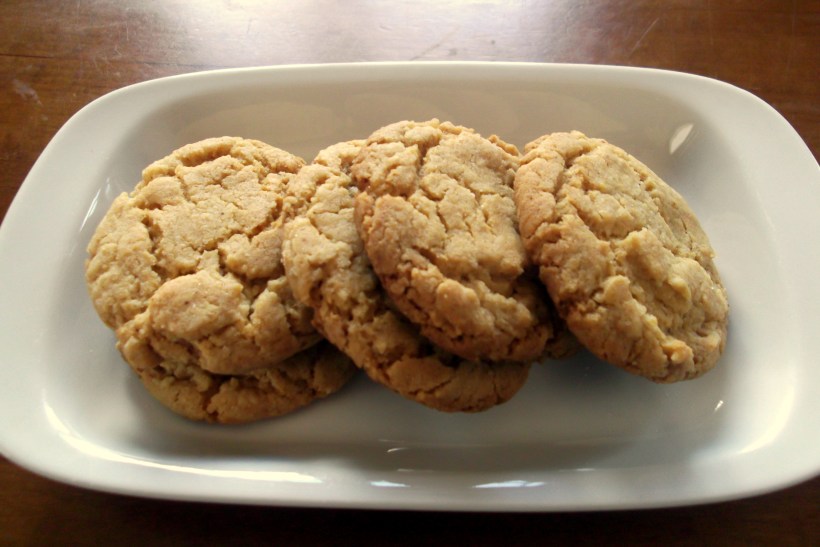
Tea Loaf for the Visiting Hordes

First of all, a big thank you to you all for your tremendous support through my “technical glitch”. I know I am not the most techy person in the world, but I don´t think I´m quite a dinosaur yet, so it was a huge pain. Anyway, I think I am almost caught up on my “re-subscribing” but please do remind me if you don´t see me on your blog if you normally do.

So, back to the food!  When you are staying with a pal, especially one who needs to take a lot of naps, you get plenty of time to have a good look through the cookery books that they have and you don´t. You also get to rummage through their cupboards working out if they have the ingredients to hand to make something which has inspired you.

This was one such recipe which came from the book, The Great British Bake Off. The final (optional) step comes from the recovering pal herself who very kindly e-mailed me the recipe as I forgot to write it down before I left for home! I think I was particularly attracted to this recipe as you melt the butter and sugar together rather than cream it, so I think I could adapt this to using olive oil in Spain as butter is harder to buy and keep fresh Up the Mountain.

Ingredients (makes 1 large loaf cake)

  •  175g unsalted butter
  • 150g caster sugar
  • 400g plain flour
  • Good pinch of salt
  • 4 teaspoons baking powder
  • 300g luxury dried fruit mix (I used half sultanas which I had soaked in a small cup of Earl Grey tea and half dried apricots which I finely chopped)
  • 125ml full-fat or semi-skimmed milk at room temp
  • 2 large eggs at room temp

1 x 900g loaf tin, about 26 x 12.5 x 7.5cm, greased and lined with greaseproof paper.

  1. Preheat oven to 180C/350F/gas 4.  Put the butter and sugar into a medium sized pan and heat gently, stirring occasionally until the butter has melted.
  2. Sift the flour, salt and baking powder into a mixing bowl and stir in the dried fruit.  Beat together the milk and eggs until thoroughly combined, then pour into the flour mixture.  Add the melted butter and mix well with a wooden spoon.
  3. Transfer the mixture to the prepared tin and spread evenly.  Bake for about 1 hour or until the top is a good golden brown and a skewer inserted into the centre comes out clean.  Remove the tin from the oven and set on a wire rack.  Leave to cool for 20 minutes, then gently turn out the loaf onto the rack and leave to cool completely.
  4.  Wrap in foil or greaseproof paper and keep for 24 hours before cutting. (We ignored this and tucked right in). It´s lovely sliced and spread with butter.
  5.  Serve to people visiting slightly bemused woman fresh out of hospital wondering what on earth is going on.

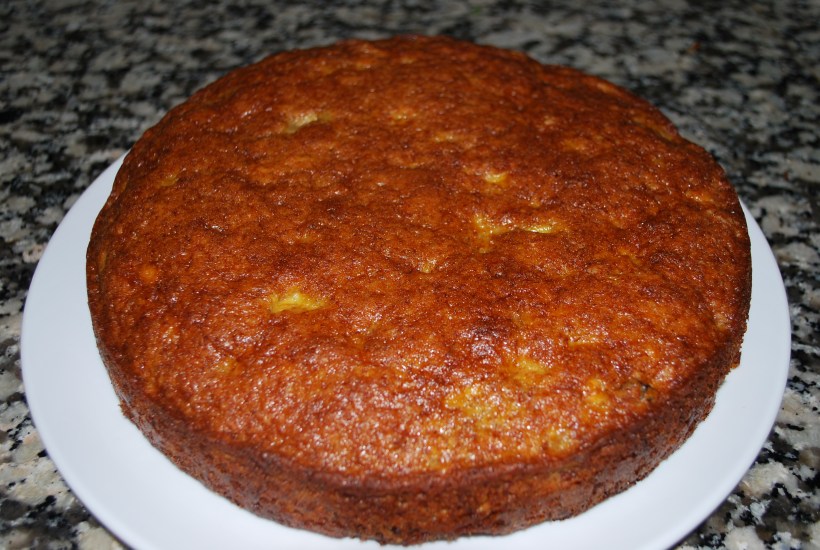
Cherry and Banana Cake

One of our local villages is famed for its cherries, and even has a fiesta dedicated to this beautiful fruit next weekend. What lucky folk we are! I am back from my trip toLondon where I was spending time with Best Friend Ria who was not long out of hospital. She is on the mend and we spent a week doing things very slowly…always best when you are feeling sore and tired.

On a trip into the village (before leaving for the UK) to buy som of the famed cherries, I was also given half a dozen over-ripe bananas as the fruit lady knew that I used them to make cakes. “Let me know what you do with them” she called, so I made an extra large batch of batter and sent her over some little cup cakes I made with the extra mixture.

To make one large cake though, follow this simple recipe. You won´t regret it!

Ingredients

  • 1 cup of chopped cherries soaked in dark rum (or strong black tea) I usually heat this and let it cool while I make the cake
  • 1 cup + 2 tablespoons of self raising flour
  • ½ teaspoon salt
  • ½ cup oil (I use olive oil)
  • ½ cup sugar
  • 2 large eggs
  • 4 small ripe bananas mashed
  • 1 teaspoon vanilla essence

Heat the oven to 180ºC and line either a large round or loaf tin or two small ones with greaseproof paper.  Beat the oil and sugar together then beat in the eggs. Add the banana, cherries and vanilla and stir then gradually stir in the flour. Pour into a prepared tin and bake for 1 hour (large tin) or about 45 mins (2 smaller tins).

This recipe is adapted from my banana bread recipe. And if you´re feeling like you need a little drink to go with your cake, why not try a glass of Cherry Brandy or a Cherry and Watermelon Granizada. Don´t you just love summer fruits?!

Coffee, Pear and Almond Cake

Some friends were coming over for “Merienda” which is afternoon tea in Spain, so it was a good opportunity to bake a cake. My Spanish pals do make me smile as when we get together for coffee and cakes, they always mention what a lovely English custom it is. I smile and agree, secretly thinking that I could probably count on the fingers of one hand the number of occasions I stopped for a proper afternoon tea when I lived in England. Oh well, I am certainly making up for it now.

This is a quick cake to pull together.  Sometimes it takes longer for the oven to warm up than it does for you to prepare the cake batter.

Ingredients (serves 10-12 slices)

  • One large pear, peeled, halved, quartered and then each quarter cut into three or four pieces
  • 1 ½ cups of self raising flour, ½ cup of ground almonds, a pinch of salt, a cup and a half of sugar all mixed together in a bowl
  • 3 large eggs, ½ a cup of vegetable oil, 1 teaspoon of almond essence, 2 shots of very strong cold espresso, half a cup of natural yogurt beaten together until well blended

Add the dry ingredients to the wet and mix gently with a wooden spoon. Using a large cake tin (mine was silicone, so no need to line but I sprayed with a little oil) line the base with the pear slices to form a circular pattern.

Pour over the cake better and smooth out the mixture.

Bake at 180ºC for about 50 minutes or until a skewer inserted into the middle comes out clean.

Leave to cool slightly before removing from the tin. Eat warm or cold. Keeps well for a few days – which is good as it is quite a large cake!

Salmon Spanakopita… Sort Of

The gorgeous dish of Spanakopita hails from beautiful Greece. A delicious spinach pie, filled with feta cheese and egg and then wrapped in filo pastry – it´s a wonderful combination of flavours.

The weather here has turned overnight into summer with temperatures in the early 30s. Although we have used our gas barbecue on and off throughout the winter, we haven´t eaten outside. The weather now is perfect and we are going to make the most of it to eat in the garden, before the tremendous heat of summer drives us back inside to eat in the cool of the house.

I had bought a large salmon fillet (half of a whole salmon) which weighed about 1.5kg to cook for friends. The best laid plans and all that…well, the lunch didn´t happen and I had a massive piece of salmon to cook for two people.

The first lunch we simply cooked the whole thing on the barbecue, sprinkled with salt and served it with lemon juice and home made mayonnaise. We ate about a third of it so I divided the remaining piece into two and froze one piece. In this dish I used about 250g of cooked salmon so still have plenty left over to make a rice dish with prawns and salmon tomorrow.

I fancied making something different from fish cakes and remembered this lovely dish from Greece and set about recreating it, albeit with a few Up the Mountain twists. Or Making Do with what I had available. I realise that the traditional dish doesn´t contain meat or fish, but this is an interpretation rather than a faithful reproduction!

Ingredients (to serve 4 as a main course or 6 as a starter)

Please note, the ingredients are approximate, so feel free to add a little more or take a little away it it suits

  • One pack of puff pastry (275g) rolled out thinly (or use filo if you have it)
  • 180g of feta (I used fresh goat´s cheese made by a neighbour). Do check out Chgo John´s amazing method to make feta here.
  • About 250g cooked salmon, flaked
  • 225g Greek yogurt
  • 3 spring onions finely chopped (I used 1 small onion finely chopped)
  • 125g fresh spinach finely chopped and wilted (I put mine in a large metal colander and pour boiling water over it) with all the water squeezed out
  • 2 large eggs
  • ½ cup each of finely chopped dill (I used wild fennel tops which grow round here) and parsley
  • Seasoning

Heat the oven to 180ºC. Place the pastry on a flat baking tray which has been lined with greaseproof paper (or use a small one about half the size of your pastry which is a little deeper).

Mix all the ingredients together and season (you may not need much salt if you use feta).  Put the filling into the middle of the pastry and bring the pastry up and over to cover it, neatening the corners to seal the filling in. Use some water on the edges if necessary to help seal them.

Tastes great even if you didn´t seal the top up properly….

Brush with milk or beaten egg and bake for about 45 minutes until golden brown. Leave to cool slightly before eating. Perfect with a salad and a cool glass of wine.

Any ideas for that last piece of cooked salmon in my freezer? Go on, inspire me!

Beautiful Bakewell Cake

The 23rd April, the day before we left for our whirlwind trip to the UK, was St George´s Day. Yes, he who slayed the dragon and is the Patron Saint of England despite not having a very clear connection to my place of birth. Although this is not typically celebrated as special day in England, I decided to make something to remind me of it in honour of the day.

A traditional Bakewell Tart consists of a pastry base with a jam and sponge filling with almonds and may well have originated in the town of Bakewell in England. I´d be happy to be enlightened. The version of this delicious dessert is a cake and was inspired by a BBC Good Food recipe. As ever, I had to adapt!

Ingredients

  • 140g finely ground almonds
  • 140g softened butter
  • 140g caster sugar (the recipe calls for golden caster sugar)
  • 140g self raising flour
  • 2 eggs
  • 1 teaspoon vanilla essence
  • About 5 tablespoons of strawberry jam (this was my main change as the recipe calls for 250g fresh raspberries)
  • 2 tbsp flaked almonds
  • Icing sugar to decorate

Heat oven to 180C/160C fan/gas 4 and base-line and grease a deep 20cm loose-bottomed cake tin. Blitz the ground almonds, butter, sugar, flour, eggs and vanilla extract in a food processor until well combined.

Spread half the mix over the cake tin and smooth over the top. Scatter the raspberries over (I spooned over the jam) , then dollop the remaining cake mixture on top and roughly spread – you might find this easier to do with your fingers. Scatter with flaked almonds and bake for 50 mins until golden. Cool in the tin then remove and dust with icing sugar to serve.

Stem Gingernuts

A recent post on cheesecake made with a biscuit base, started a dialogue about biscuits. The lovely Tia mentioned that she enjoyed Ginger Nuts, a biscuit enjoyed widely in the UK with a cup of tea or coffee.  I said I would try to find a recipe (and I did find a Delia Smith one which was a huge disaster), then the equally lovely Evie from Pendle Stitches sent me over the recipe she uses to bake for her family.

Of course, I had to give them a go.  Result? Fabulous, better than shop made and even without the Stem Ginger (which I couldn´t get hold of) they were amazing.  Thanks Evie, these will become a family favourite here too!

Here´s Evie´s recipe, and like her I added extra ground ginger (another half a tablespoon).

Stem Gingernuts (From The Great British Book of Baking)

  • 350g self-raising flour
  • 1 tablespoon ground ginger (I usually add a bit more because I love my gingernuts to have bite)
  • 1 teaspoon bicarbonate of soda
  • 200g caster sugar
  • 115g unsalted butter
  • 85g golden syrup
  • 1 egg, beaten
  • 3 pieces stem ginger, drained and finely chopped (this is ginger in a sweet syrup which you can buy or make your own)

Preheat oven to 170oC/350oF/gas 3.  Grease or line baking trays.  I just use parchment.

Sift the flour, ground ginger, bicarb of soda and sugar into a mixing bowl.  Gently melt the butter with the syrup in a pan over a low heat and set aside until barely warm.

Pour this mixture into the dry ingredients, add the beaten egg and the stem ginger and mix with a wooden spoon. When thoroughly combined, roll the mixture into 24 walnut-sized balls, using your hands.

Arrange on prepared baking trays, spacing well apart to allow for spreading.

Bake in preheated oven for 15 to 20 minutes until a good golden brown.  Keep an eye on them and, if necessary, turn the trays around halfway through the cooking period so that the biscuits brown evenly.

Leave the biscuits to cool on the trays for a couple of minutes, and then transfer to a wire rack and leave to cool completely.

Store in an airtight container, or make a large pot of coffee and scoff the lot!

A Cake To Take Visiting – Orange, Almond and Raisin Cake

Wrapped Up and Ready to Travel!

Customs vary immensely the world over, but some are the same regardless of where you are. When visiting friends for a meal, a little gift is customary. If it´s home made, so much the better, especially if it´s edible.

My mum passed a recipe on to me when I was last in London. She thought it would appeal because the finished cake is not too sweet (she knows I don´t have a hugely sweet tooth), uses oil instead of butter (so much easier here where butter is rarely used) and contains ingredients which are local to Andalucía – oranges, almonds and raisins. Perfect, all I needed was a chance to make it.

Easter weekend was a mix of quiet and hectic for us. Saturday found us heading across the “frontier” from Málaga province to Granada, to a remote area to join some friends in their Cortijo for lunch and a walk.  More of the walk another day as I got rather carried away taking photos.

The cake was made the night before and was a huge hit. It´s very moist and is a cross between a cake and a dessert and would also be perfect served with whipped cream, crème fraîche or ice cream.

Ingredients

  • 150g raisins soaked in 50ml of amaretto (warm the amaretto and leave the raisins in soak for at least an hour) If you don´t want to use alchohol, a delicate tea would also be perfect for soaking.
  • 2 oranges (as bitter as you can find)
  • 4 eggs
  • 180g caster sugar
  • 150g ground almonds (I left mine quite coarse, it´s up to you how fine you grind them, this cake the cake a nutty texture and a rougher look on the top)
  • 150g self raising flour (or plain flour with 2 tsp baking powder)
  • 50ml olive oil
  • 2 tsp icing sugar

Preheat oven to 180ºC/350ºF/Gas 4 and line a 24cm springform tin.

Place the whole oranges in a saucepan of water and ensure they are covered. Bring to the boil and simmer for about 15 minutes or until tender. Blitz 1½ oranges until finely chopped, reserve.  Squeeze the juice from the remaining half orange then set the juice aside.

Whisk the eggs until light and fluffy then whisk in the sugar.  Fold in the almonds and olive oil then sieve in the flour then fold in.  Gently stir in the pulped oranges and half the raisins and pour the mixture into the tin, spooning the remaining raisins over the top of the cake.

Bake for about 60 minutes until a skewer inserted in the middle of the cake comes out clean.

Remove the cake from the oven but keep in the tin. Place the juice of half the orange and the icing sugar in a pan and dissolve the sugar.  Pierce the cake all over with a skewer and pour the orange syrup over.  Leave in the tin to cool then remove and enjoy.

PS. I think this would also be great made with polenta!

Hot Cross Buns for Good Friday

Hot cross buns,
Hot cross buns,
one ha’ penny,
two ha’ penny,
hot cross buns.

If you have no daughters,
give them to your sons,
one ha’ penny,
two ha’ penny,
Hot Cross Buns

So, Easter is upon us and Lenten fasting and abstinence for those who participate is soon at an end. One of the delights of this time of year when I lived in the UK was to eat Hot Cross Buns. They are sweet, spiced buns marked with a cross to commemorate the Crucifixion.

Finally...lovely buns!

Mad Dog did an excellent post last week about the same subject, and I wish I had gone to his recipe suggestions when I first decided to make some.  I have made them here in Spain a few times and I have several recipes…but do you think I could remember which one I had used?

First of all I tried Delia Smith´s recipe – aside from deciding to make the dough in my bread maker then forgetting it was in there on a bake programme…well, the result was a hugely over risen loaf that was raw in the middle.

Oh no Delia...you let me down!

Next up a Rachel Allen Recipe….they would have been good to use as missiles in a Mediaevel battle recreation.

Finally I turned to the BBC Good Food Website. Here is the original recipe, but my version is below as I found the dough a little too wet and I wanted more spices.

For the Dough

  • 300ml of full fat milk
  • 50g butter
  • 550g strong bread flour
  • 1 tsp salt
  • 100g caster sugar
  • 1 x 7g sachet of easy blend yeast
  • 1 small egg, beaten
  • 75g sultanas
  • Up to 100g of chopped mix peel
  • Grated zest of half a lemon and one orange
  • 2 tsp mixed spice
  • ½ teaspoon of ground ginger

For the Cross

  • 4 tablespoons of flour gradually mixed with drops of water until a thick paste is made

For the Glaze

  • 4 tablespoons of sieved, warmed apricot jam

Bring the milk almost to the boil, drop the butter in and stir until the butter has melted and then put aside to cool to hand temperature.

In a bowl mix the flour, salt, yeast, spices and sugar and add the milk mixture and egg.  Mix with a wooden spoon, then with your hands then remove from the bowl and begin to knead. I still found it overly sticky but my egg was very large so I added small amounts of flour gradually until the dough was workable. Knead for about 5mins and then put into a lightly oiled bowl, cover with a clean tea towel and leave to rise for about an hour or until doubled in size.

When risen, knock it back and add the fruits and peel, knead again and leave to rise a second time. This is not for people in a hurry!

After the second rise, knock the dough back again and dived into equal sized balls for the buns. The original recipe suggests 15, I got 24 good sized buns from my mix.

Place the buns, slightly spaced apart on lined baking trays, cover with tea towels and leave for another hour.

Heat the oven to 200 degrees C (the recipe says 220 but I did the first batch at this temp and the bottoms burnt slightly). Now you need to pipe the flour paste over the buns into crosses. I used a sandwich bag with a point cut off the end to do this.

Bake for about 15 minutes until golden and gorgeous. Warm the jam and brush over the still warm buns to glaze.

Enjoy as they are or split (toasted or not) with butter. Happy Easter to you All!

Baked Cherry Cheesecake

A slightly sad looking final slice of cheesecake....

I am sure we all have “go to” recipes for times when we are in a hurry, or just want to return to an old favourite.  I adore baked cheesecake and have been using an adapted version of a BBC Good Food one for several years now.
When I found out that I had been asked to make a dessert for lunch with friends, I got out my cream cheese and eggs and quickly got to work. Apologies for the photo, I forgot to snap it in all its glory before we attacked it!

Ingredients

  • 12 crushed digestive biscuits (graham crackers)
  • 50g melted butter
  • 600g cream cheese
  • 2 level tablespoons of flour
  • 175g sugar
  • 3 eggs
  • 150ml whipping cream (or heavy cream)
  • 1 teaspoon vanilla essence
  • 1 jar of cherry jam plus I used some of my cherries in brandy (drained)
  • 1 sachet of flavourless gelatine or vegetarian substitute

Heat the oven to 180º C or gas mark 4.  Mix the crushed biscuits with the butter and press into a springform tin. Bake for 10 minutes and leave to cool.

Beat the cream cheese, flour, sugar and eggs together then add the cream and vanilla essence and then any fruit filling (not the jam).  Blend gently, pour into the tin and bake for 45 minutes.  It will still be slightly wobbly in the centre but leave to cool out of the oven.  It will continue to cook slightly.  I have to confess mine always cracks, I don´t know if there is a way around this – I´d be happy to learn!

For the topping you can either just cover with fruit or make a jelly fruit topping.  I did this by adding a sachet of powdered gelatine to about 4 tablespoons of cold water.  In a small pan warm the jam until it starts to bubble then pour it over the gelatine and mix well until all the granules have dissolved.  Leave it to cool down until almost cold and starting to set then pour over the cheesecake (still in the tin).  Refrigerate for at least 2 hours and remove from the fridge an hour before serving to reach room temperature.

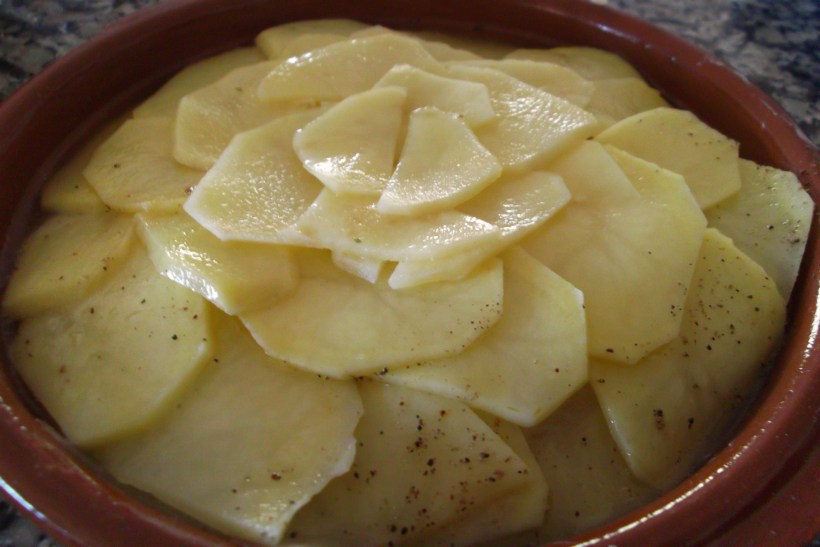
Boulangère Potatoes

I have a rather too close relationship with potatoes. Damn Christopher Columbus or whoever it was who bought them back from the Americas.  I particularly like them smothered in butter if they are baked in their jackets, or cooked in olive oil when roasted.  Or how about butter, cream and cheese if they are mashed? Oh dear, I can´t always have naughty potatoes and sometimes plain boiled with a drizzle of olive oil just doesn´t do it for me.

Boulangère Potatoes are a good option if you are trying to be a little sensible with the calories, or if you just want to go mad with the dessert. They´re also wonderful when you are entertaining, as apart from tasting fantastic, they can sit quite happily in a warm oven for quite a while and come to no significant harm. Boulangère is the French word for Baker.  Many families in the past did not have ovens in their own homes.  They would take a dish of these down to the village baker who would kindly pop them in to cook in his still warm oven when the bread baking was done. What nice people bakers are.

To serve four people you´ll need about 1kg of potatoes peeled and thinly sliced (I used a mandolin slicer but you can also do this by hand or in a food processor), 2 medium onions thinly sliced, olive oil, seasoning and about half a litre of vegetable or chicken stock.  If you have it, some fresh thyme is also good but right now I´m in a bit of a huff with Big Man as he dug all mine up a while back thinking it was a weed! Rosemary also works well with this dish.

Lightly oil the base of an oven proof dish and start making layers of potato, onion, herbs and seasoning. Finish with a layer of potatoes, season and then pour over stock to completely cover.

Cover the dish with foil and bake in a at 200ºC/Gas 6 for about 45 minutes, then take off the foil.  The potatoes and onion will be soft now and most of the liquid will have disappeared.  Continue to cook for another 15 minutes or until the liquid has all gone and the potatoes have browned.  If you find it has cooked through but the potatoes are still a little pale, put under the grill for a few minutes.

Either serve immediately or leave at the bottom of a low oven until you are ready to eat.