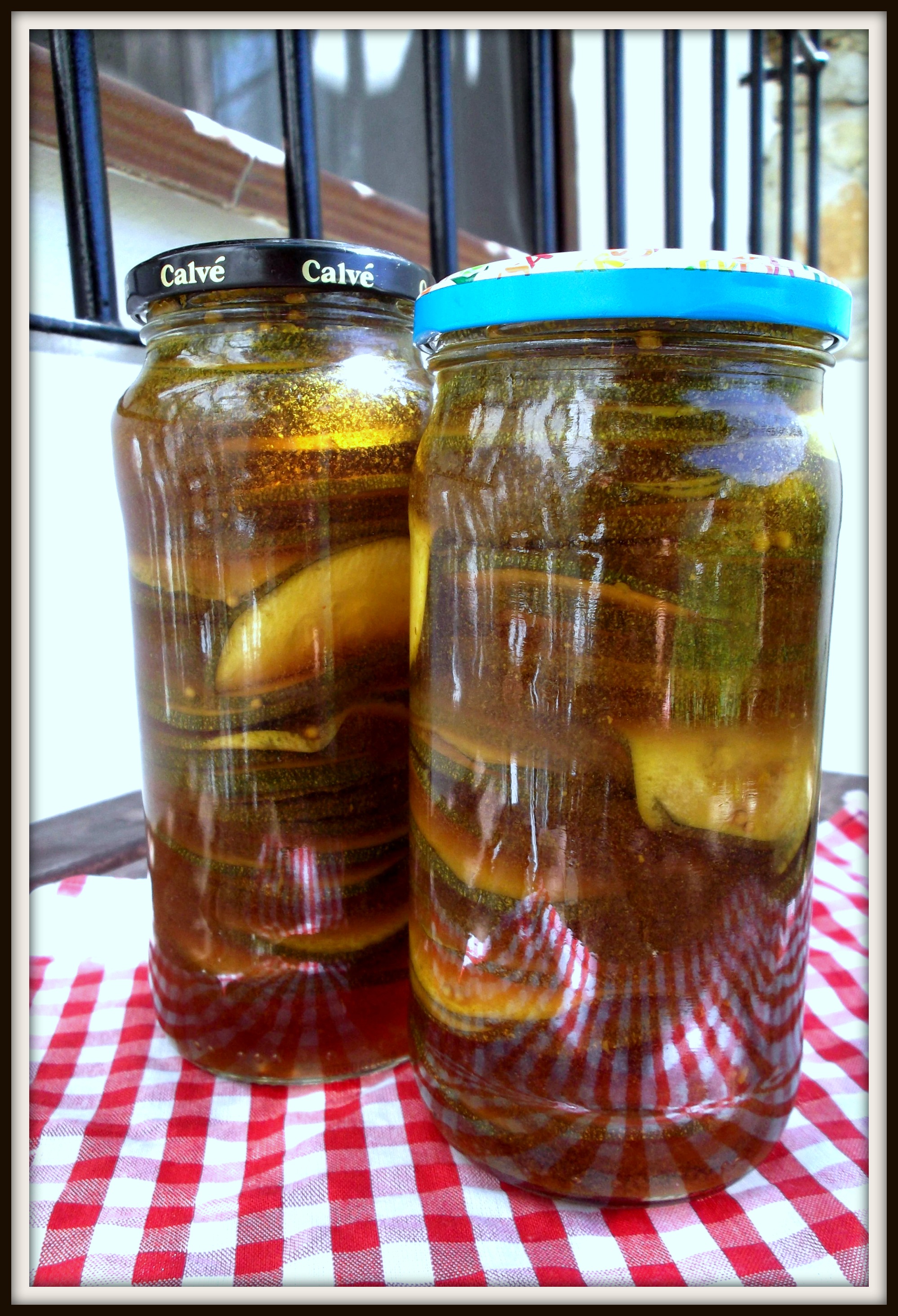
Pickled Courgettes

What do you do when your Big Man comes home with about 15 mammoth courgettes and you´re the only one in the house who really enjoys them?  Well, you have to give a few away to a courgette loving neighbour, and then get creative.

The courgette loving neighbour gave me a recipe for her courgette bread which looks delicious and rather like my Banana Bread recipe.  As soon as I´ve made it I´ll let you know how it goes. Then I made some little courgette pancakes, but more of those another time.  And then I thought it was time to tackle some pickled courgettes.

These remind me of special Italian family meals when I was younger – lots of salamis and pickled vegetables as a big Antipasto.  It´s been years since I made them, and I used mustard powder and turmeric which is not so Italian, I have to confess.

I used a recipe I found on the BBC Good Food Website with a few small tweaks.

500g courgettes, very finely sliced (I used a mandolin slicer)

500ml white wine vinegar

140g brown sugar

1 tsp mustard powder (I used Colemans English Mustard)

1 tsp mustard seeds

4 dried cayenne chilies, crumbled (use less if you like)

1 tsp ground turmeric

Sprinkle the courgette slices with salt and then cover with ice cold water and leave for an hour. Drain and pat dry. Meanwhile put the rest of the ingredients into a saucepan and heat to dissolve the sugar and leave to bubble for a couple of minutes.

While the pickling liquid is cooling down a little, pack the courgettes into two sterilised jars, pour the liquid over and seal tightly.

The recipe says to keep them in the fridge and that they will keep chilled for a couple of months.  I have them in the larder which is cool.  They will taste great in a few days, but I had a few slices that wouldn´t fit into the jars which I covered with a drop of the pickling liquid and ate that evening…and they were delicious!
Up The Mountain Spicy Tomato Ketchup

Getting Saucy In The Garden

When you have lots of tomatoes growing, or you can buy them cheaply, it´s fun to play around with recipes and see what you can come up with.  An excellent book for anyone interested in growing their own (or who just dreams about doing it) and cooking with the “bounty” is The River Cottage Cookbook by Hugh Fearnley-Whittingstall.

One of his recipes that I´ve played around with over the years is the one he gives for tomato ketchup.  The beauty of it is that you can adjust spices and flavourings to suit what you and your loved ones enjoy.  I like my ketchup spicy, so I go heavy on the chili.  Some of the things he mentions in his recipe I don´t always have to hand (like mace or celery seeds) so I have changed things round just a little.

This is the Up the Mountain version, and I can highly recommend it.

3kg ripe tomatoes roughly chopped

3 sliced onions

1 large red pepper, chopped

¼ cup of celery leaves

100g brown sugar

200ml white wine vinegar (he uses cider vinegar)

¼ teaspoon of mustard powder

A stick of cinnamon

1 ½ teaspoons of allspice

1 ½ teaspoons whole cloves

2 teaspoons black peppercorns

Some freshly grated nutmeg

4 small hot chilis, roughly chopped

1 bay leaf

1 large garlic clove, peeled and crushed

1 teaspoon of hot smoked pimentón (or paprika)

Sea salt to taste

You´ll need a very sturdy heavy based saucepan for this as you´ll be reducing and reducing the sauce until it gets to the right consistency.

Put tomatoes, onions, peppers, chillis and celery leaves into the pot and simmer until very soft.  Put through a mouli or fine sieve and then back into the pot with the sugar, mustard powder and vinegar.  Put the remaining spices apart from the salt, nutmeg and pimentón into a cloth and tie securely then drop this into the mixture.  Grate a little nutmeg over and if you want more later you can add it nearer the end. 

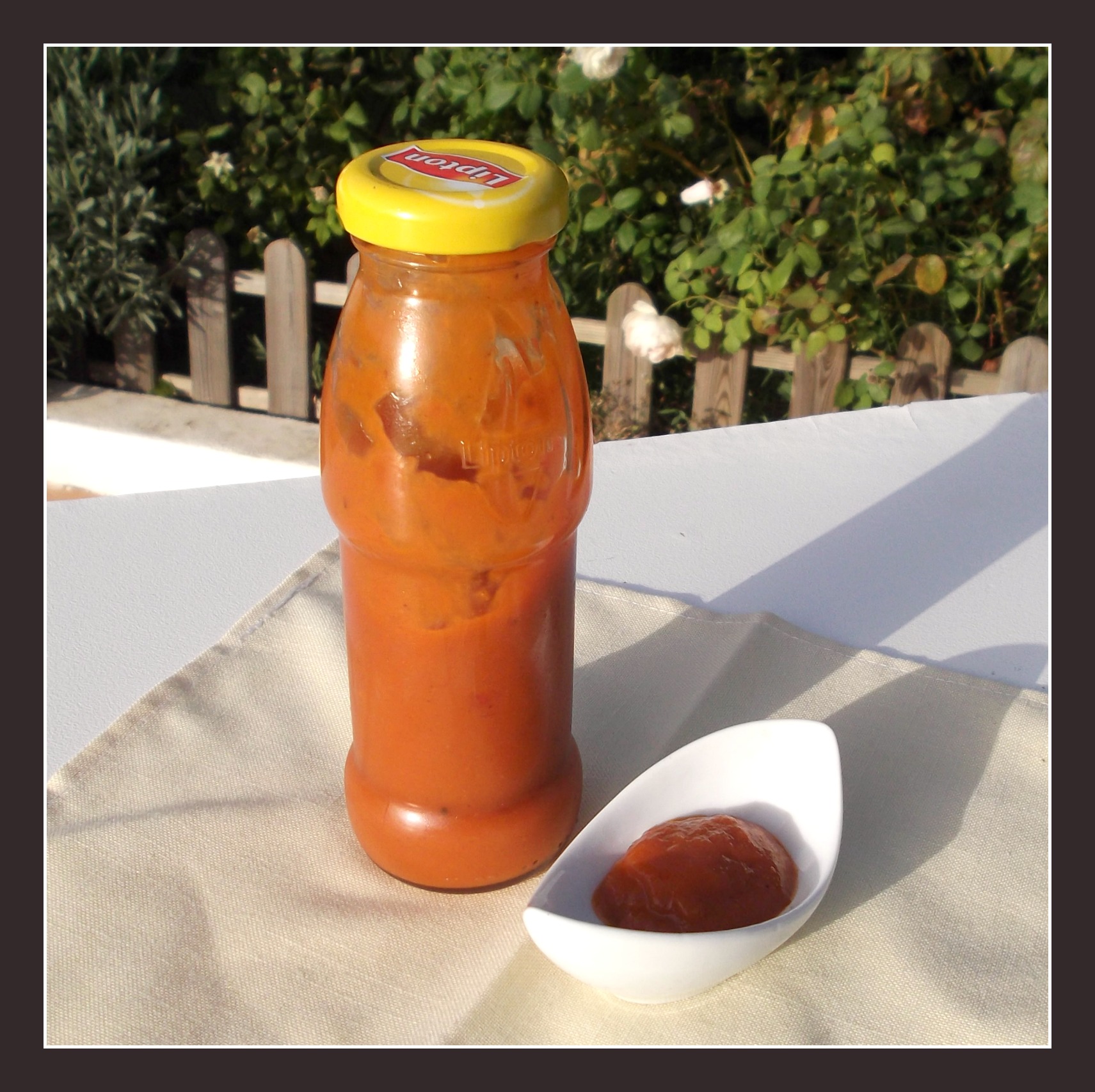
Cook the sauce slowly until it has reduced to the thickness you require.  If you like you can give it a whizz with the hand blender (don´t forget to remove the spice bag first though!), then season with the salt and pimentón.  You can either put it into sterilised bottles or jars (I use the small juice bottles we get here in Spain) or it will keep well in the fridge for a month or you can freeze it.

Delicious with chips (or French fries for my US pals), burgers, fish, veggies…well, pretty much anything in fact!  And mixed with mayonnaise it makes a wonderful Marie Rose style sauce with a bit of a kick.

Vegetable Fried Rice

Crispy and Vegetable-y

With the hot weather we´ve been having, the desire to cook has been low.  But…a girl and her Big Man have to eat, so the other night we decided on some grilled langoustines with some vegetable fried rice to accompany it.  Fried rice is an alien concept to most Spaniards, so Big Man had visions of me deep frying individual grains of rice or making some sort of croquette.

To his relief, and mine (due to the heat), it was a simple dish with only the smallest amount of oil and frying involved.

I boiled some rice (I used brown, but the choice is yours).  While this was cooking I fried a finely chopped onion and two crushed cloves of garlic in a very small amount of oil in a non stick pan until it started to look brown at the edges.  Then I added finely chopped courgette and a long thin green pepper and continued to stir fry them.

In a separate pan I made the thinnest omelette known to man!  Whisk one egg and pour into a lightly oiled pan- almost as if you were making a crêpe – and make a very thin omelette.  Flip it over to get both sides lightly browned and slide onto a plate to cool a little.

When the rice is cooked, drain well and add to the vegetables.  There´s no need to add more oil if you have a good pan as you will now almost dry fry it.  Season with salt and pepper and every few minutes give it a stir until the rice starts to brown.

Are those prawns ready yet?!

Roll up the world´s thinnest omelette and cut it into fine shreds.  Sprinkle these eggy shreds over the top of your rice, mix gently and serve.

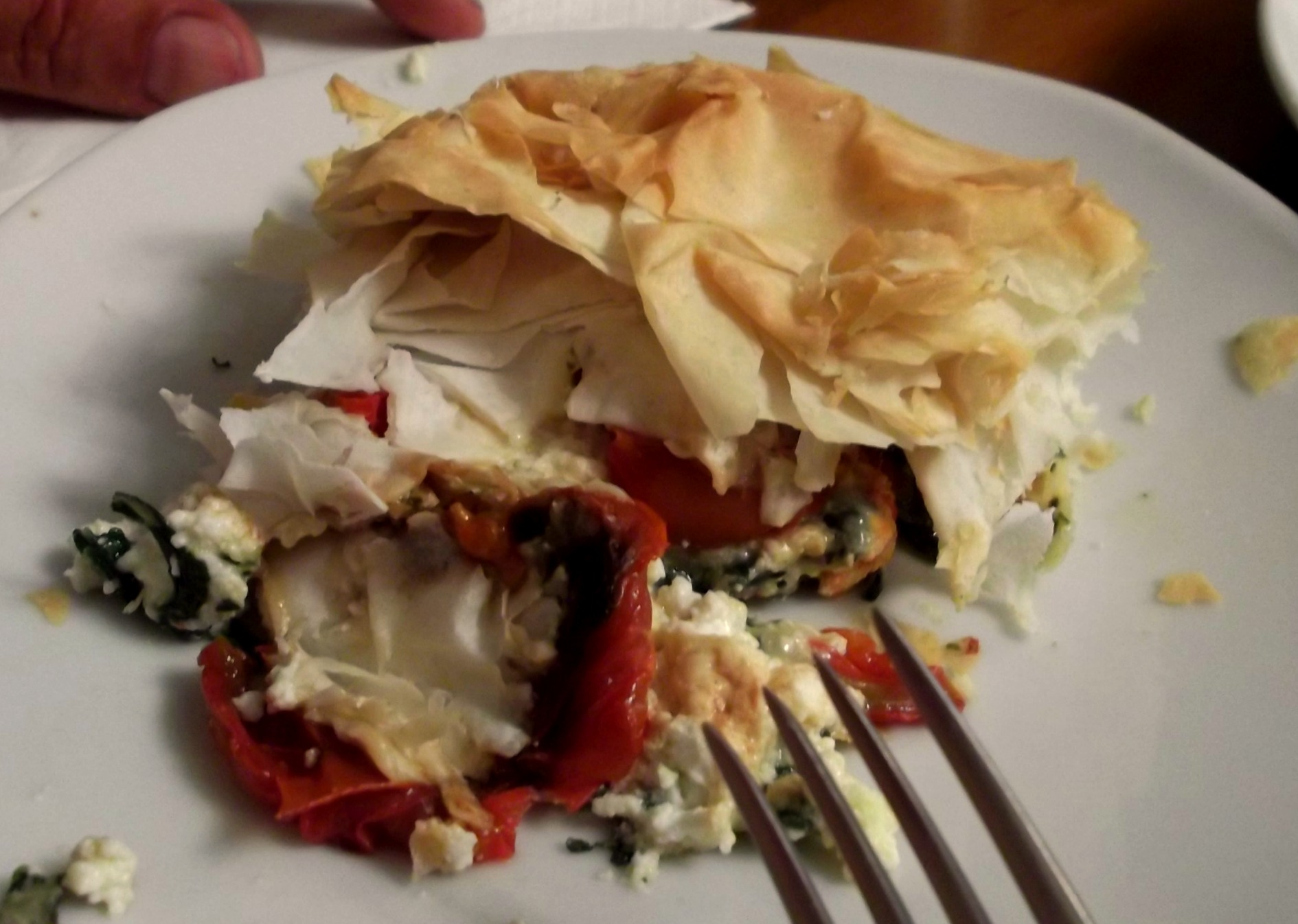
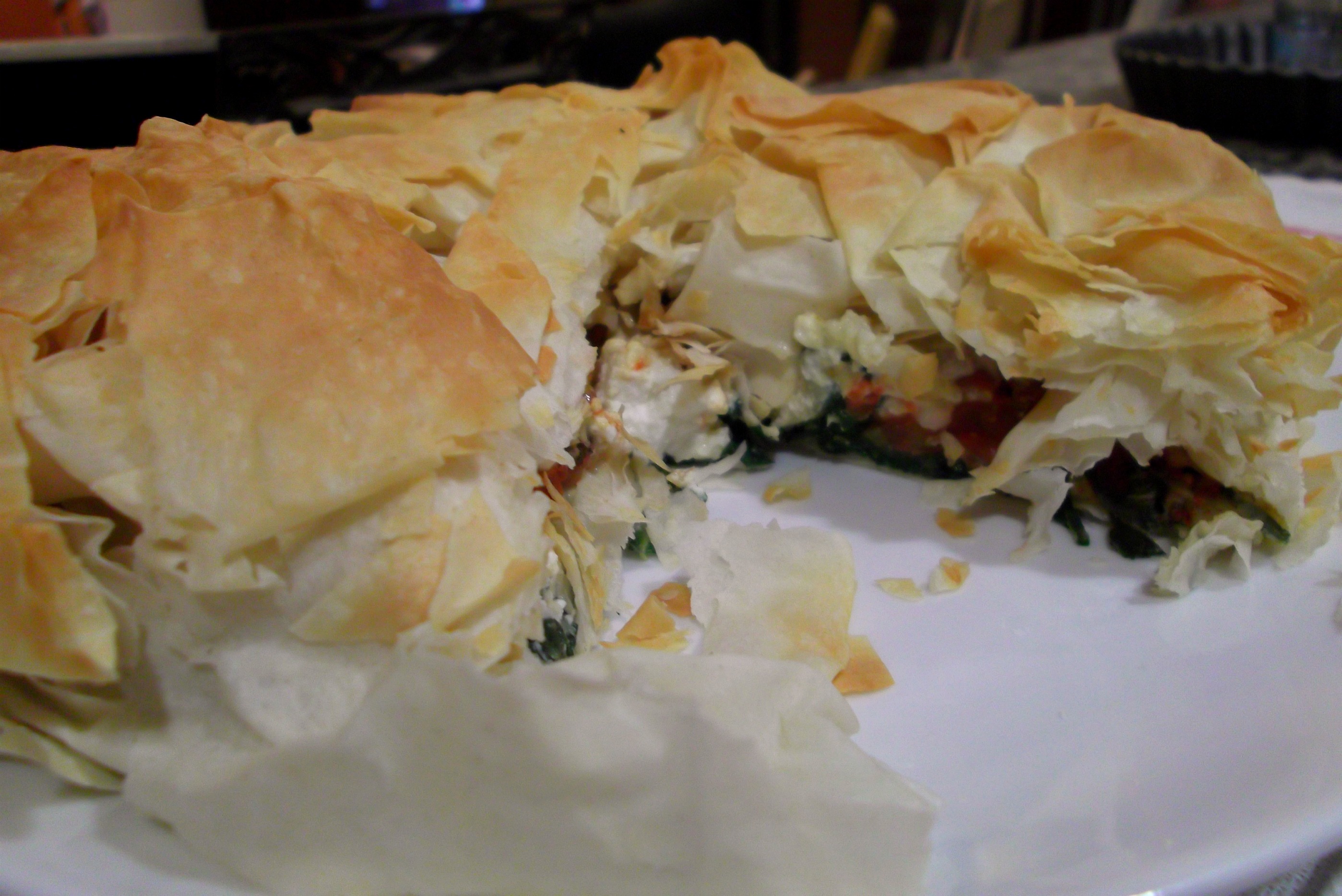
Roasted Tomato Tart with Chard and Home Made Curd Cheese

Beware the Giant Fork!

The great thing about writing a blog and reading other blogs is that inspiration comes from all around you.  Not so long ago I got into a dialogue with ChgoJohn over at From The Bartolini Kitchens about cheese.  He makes all sorts of cheeses and has posted a fantastic recipe for ricotta.  It reminded me that I hadn´t done this for quite some time, although my version doesn´t use cream.  Unfortunately we just can´t get anything other than UHT whipping cream or a chemical mix which masquerades as single or cooking cream here.  A shame, but that´s how it is.

A freezer clear out to make room for all my lovely beans that are growing, rewarded me with a packet of filo pastry.  Time to get making something tasty.

Here´s how I made my curd cheese.

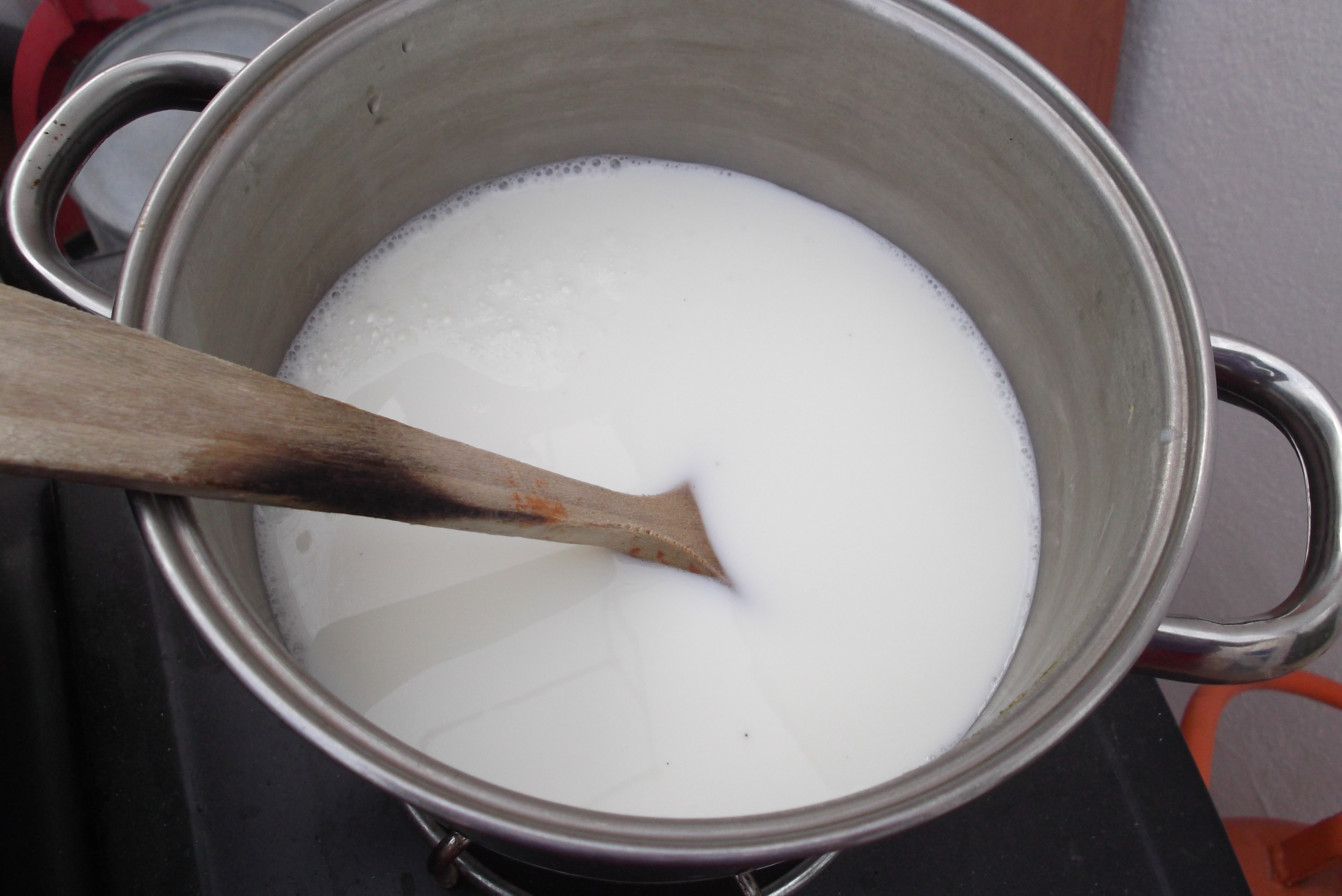
Bring one litre of milk (I used semi skimmed) almost to the boil (when little bubbles start to appear round the edges).

Bubbly milk

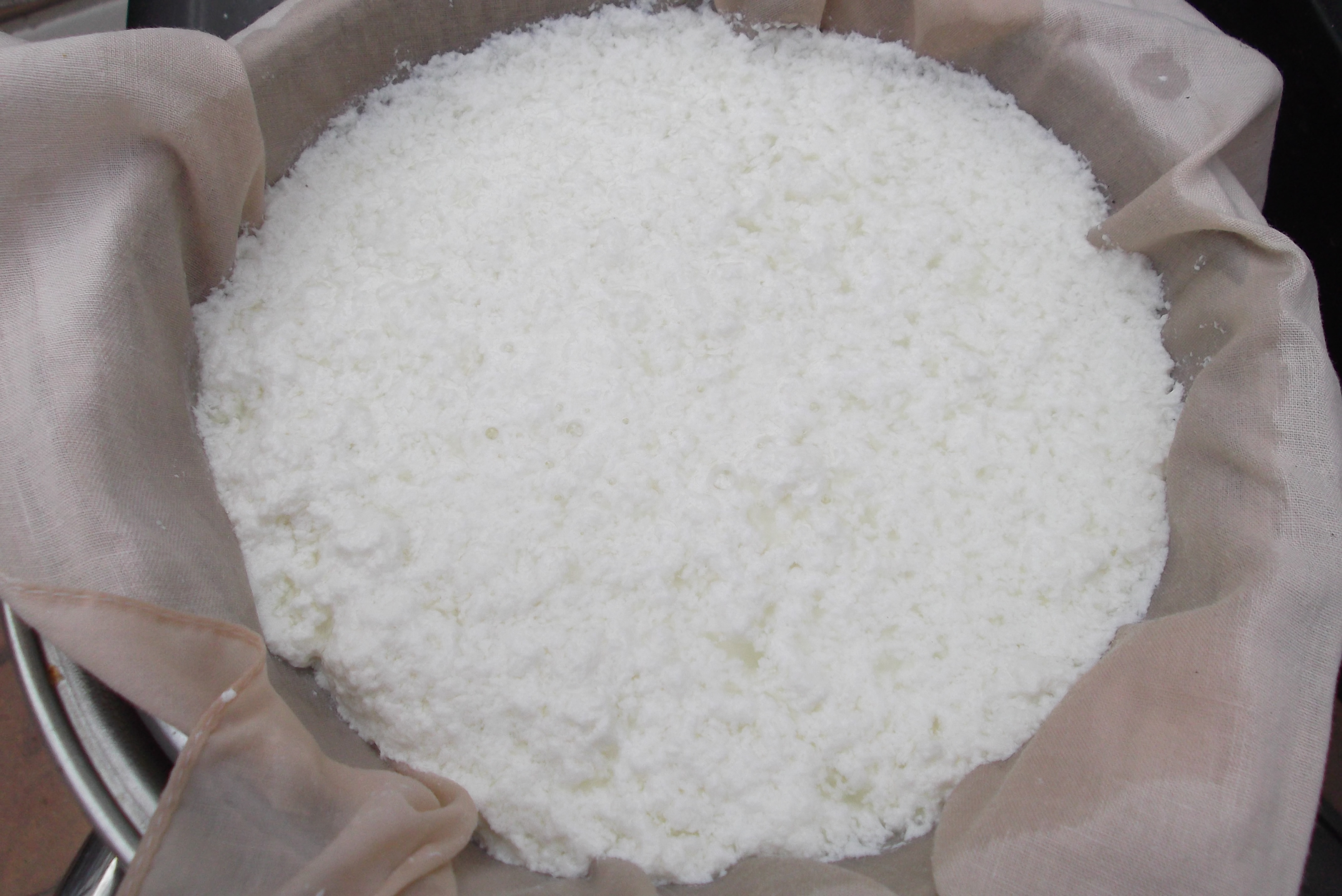
Turn off the heat then add citric acid, lemon juice or white wine vinegar (about 2 – 3 tablespoons but add it gradually) whilst stirring with a wooden spoon.  Once curds start to form, put a lid on the pot and leave to stand for about 10 minutes.

Beautiful Curds

Drain and leave for a few hours or overnight. 

The Waiting Game

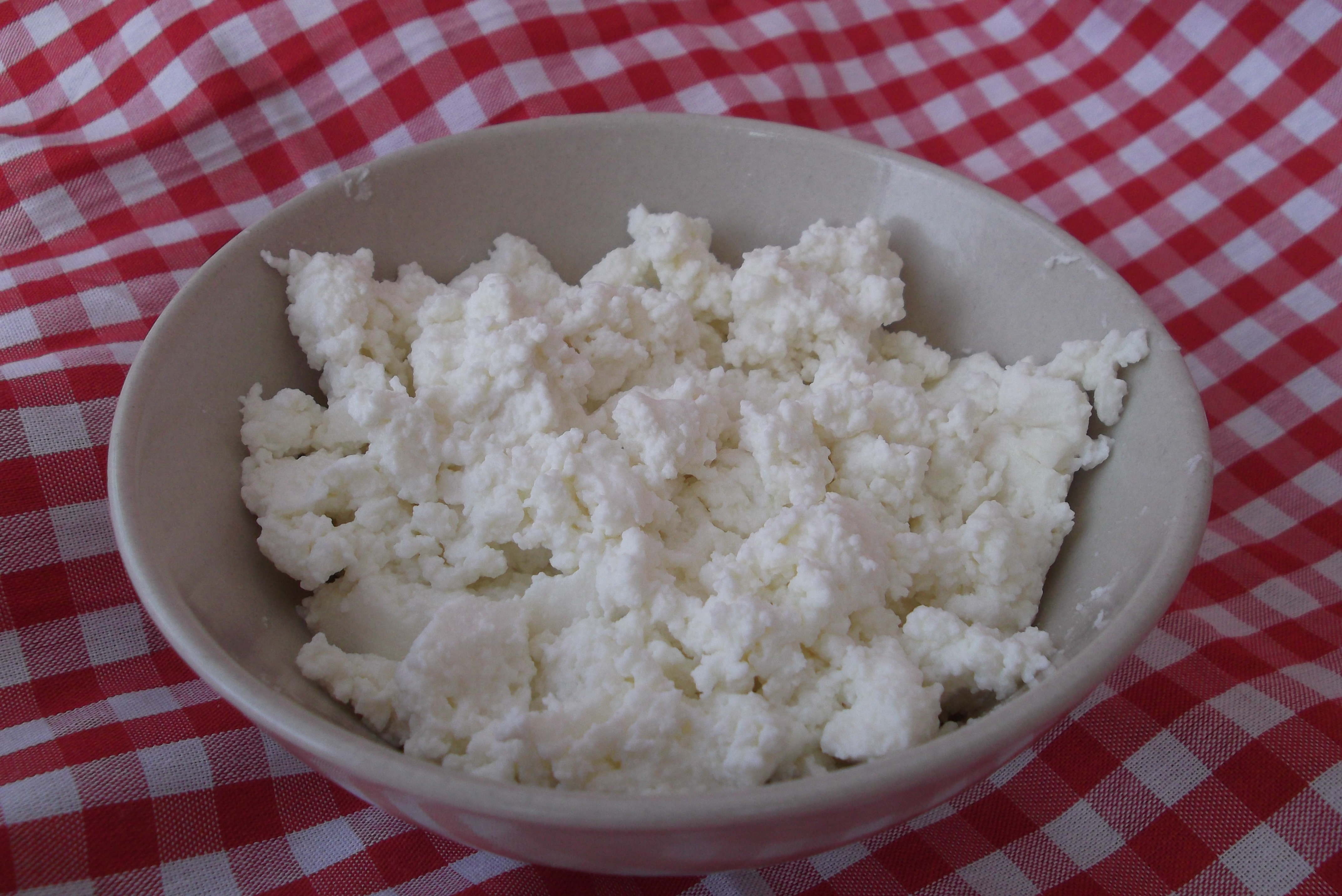
Stir in salt to taste and you´re done! Don´t forget to save that whey for making soda bread.

Lovely Curd Cheese

To make the tart I lined a loose bottomed tart tin with four sheets of filo which I brushed with olive oil (but you could also use butter).

I put in a layer of chopped, wilted chard (with all the water squeezed out) which I had mixed with two beaten eggs, 3 tablespoons of grated parmesan and seasoning. You could substitute the chard with spinach or beets.

 Then I added a layer of curd cheese and then a layer of halved roasted tomatoes.  You could also use thinly sliced raw tomatoes.  Finally I folded over the filo sheets and added two more to the top, brushed the whole thing with a little more oil and baked for 30 minutes at 180ºC.

Lots of flaky, crispy crumbs!

It was delicious warm, but just as tasty (although not quite so crunchy) cold the next day.

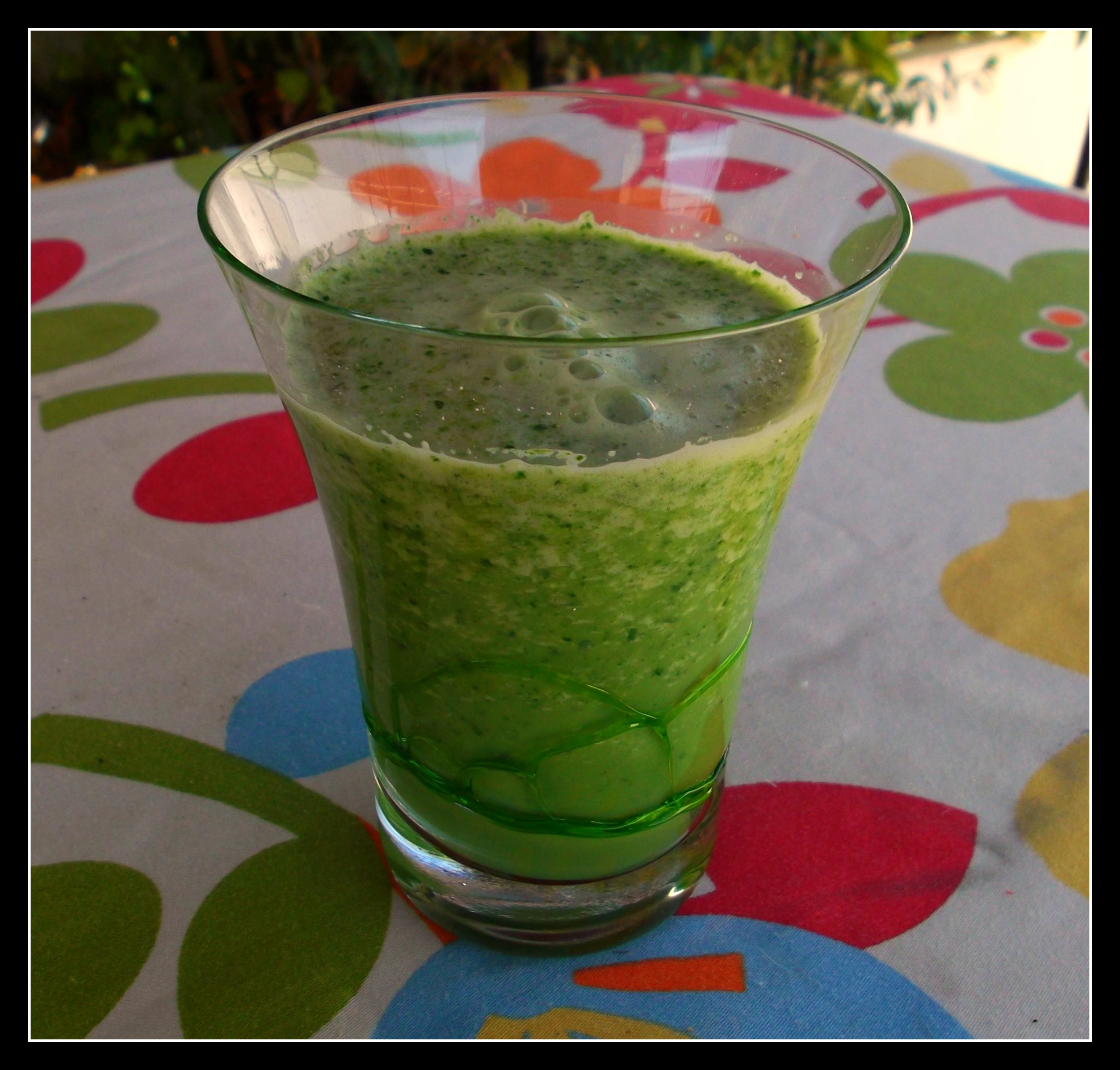
Gorgeous Green Gazpacho

Green. Gorgeous. Good.

Who says Gazpacho has to be red?  Well, if you promise not to tell the Andalucían gazpacho Police…I say it doesn´t!

In the vegetable garden at the moment, our cup overfloweth. Some things just can´t be canned or frozen – like cucumbers.  And those little green thin skinned Spanish peppers are best eaten fresh in salad, stuffed or fried.

I wanted to find a new way of using up some of my “greenery” and came up with this version of gazpacho.  It´s a stunning colour, tastes rather like juiced vegetables and I´m sure must be amazingly good for you and packed with vitamins.  Probably an excellent pick me up for the morning after the night before too.  We just drank it chilled as a pre lunch appetizer.

Here´s what I used, but if you do decide to give it a go I´m thinking celery, avocado and lime juice might also be great additions.

Two thin green peppers, one small cucumber (peeled), a small clove of garlic, a small bunch of parsley, 4 large leaves of raw chard (or spinach).

In a blender mix the vegetables with about 3 tablespoons of olive oil, white wine vinegar and salt (to taste) and a litre of ice cold water.

Blend until smooth, add a few ice cubes and chill until needed.  Looking as gorgeous as it does, it just has to be good for you!

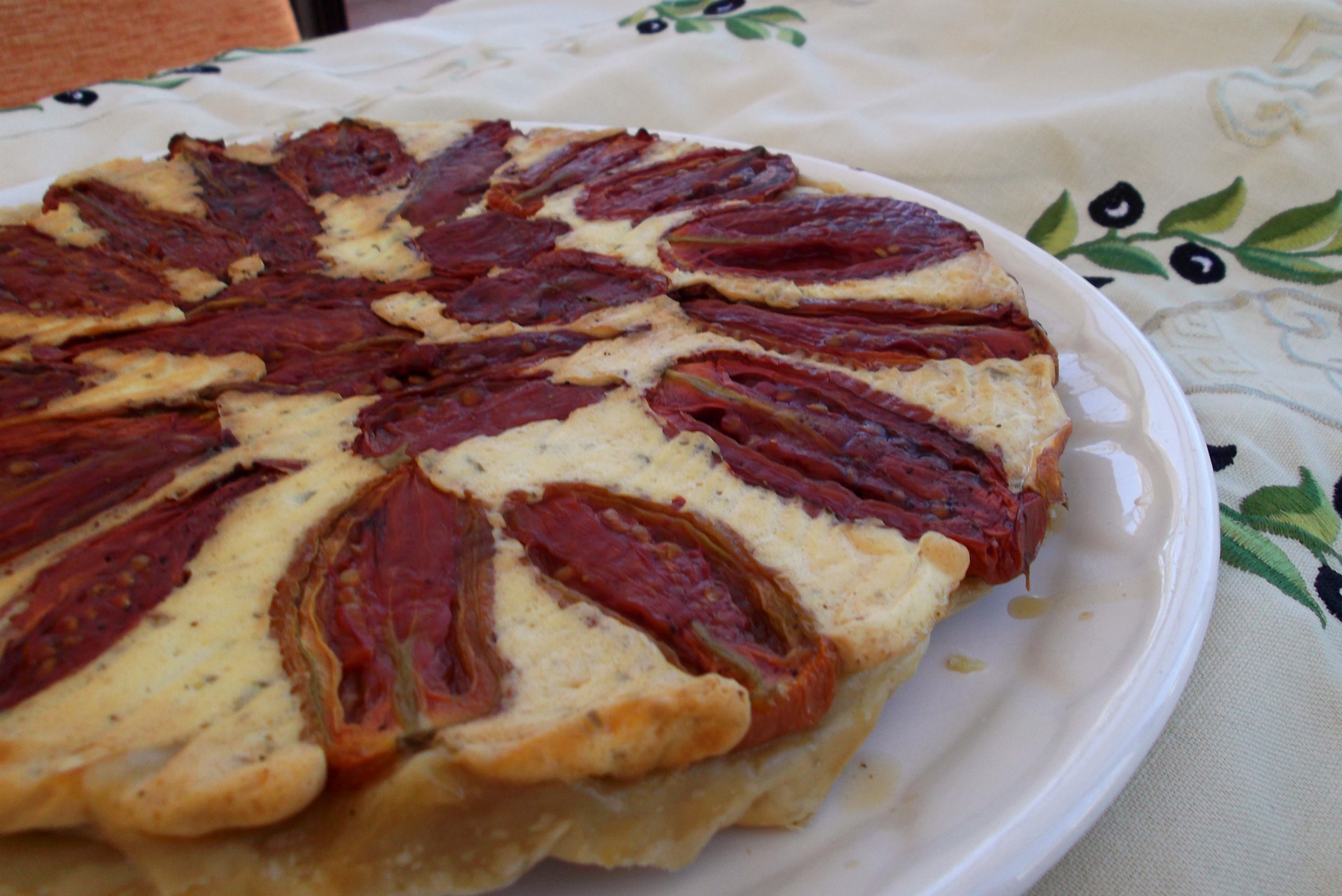
Almost Tomato Tarte Tatin

Make it a big slice for me please!

Yes, tomatoes are now officially ripening at a rapid speed in our Huerto, and apart from drying and preserving, we are eating them too!

If you head over to Cook, Eat, Live Vegetarian you´ll find a wonderful tomato and quinoa recipe which shows you how to slow roast the delicious summer tomatoes we have in Andalucía at the moment.  The other night we were heading out for dinner, so on the way out I popped a couple of trays of tomatoes into the oven set at the lowest temperature, and when we got back about four and a half hours later I had perfect roasted tomatoes.  The house smelt wonderful too!

The next morning I braved the heat of the oven and decided to make a tomato tart.  You can also find another wonderful version over here at Sweet Pea´s Kitchen made with Heirloom Tomatoes.

I put greaseproof paper at the base of a loose bottomed tart tin (that always makes me giggle, it sounds a bit saucy!) and put the tomatoes in, cut side down.

Then I mixed 200 grams of my garlic and herb cream cheese with one egg and spread this over the tomatoes.  Finally I covered the whole thing with a sheet of puff pastry and tucked all the edges in.

I cooked it at 180ºC for about 50 minutes, left it to cool slightly in the tin for 10 minutes then turned it out on a plate.  You get a few lovely juices dripping out and it´s best served at room temperature.

Preserved Tomatoes – Conserva de Tomates

 
Ready for a winter debut

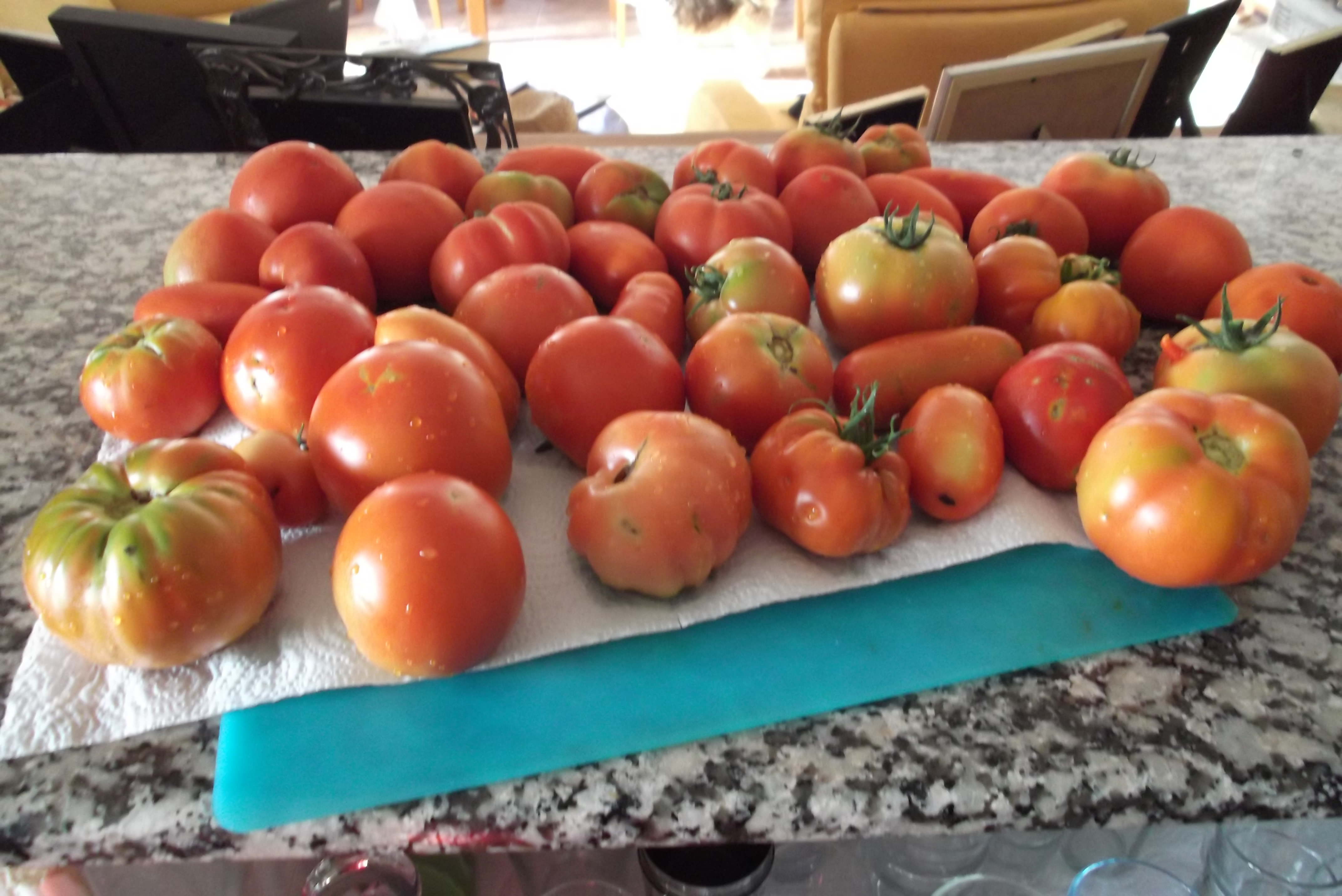
Well, summer is here and I finally have my first glut of tomatoes.

Forgot to weigh them...

We also picked runner beans last night, although they are coming to an end now.

Run, Fat Bean, Run!

And the first of our bobby or French beans.  I planted two varieties, one green and one yellow, but so far I´m only seeing green ones!

´Allo, I am Claude and zis eez mon ami Bobby...

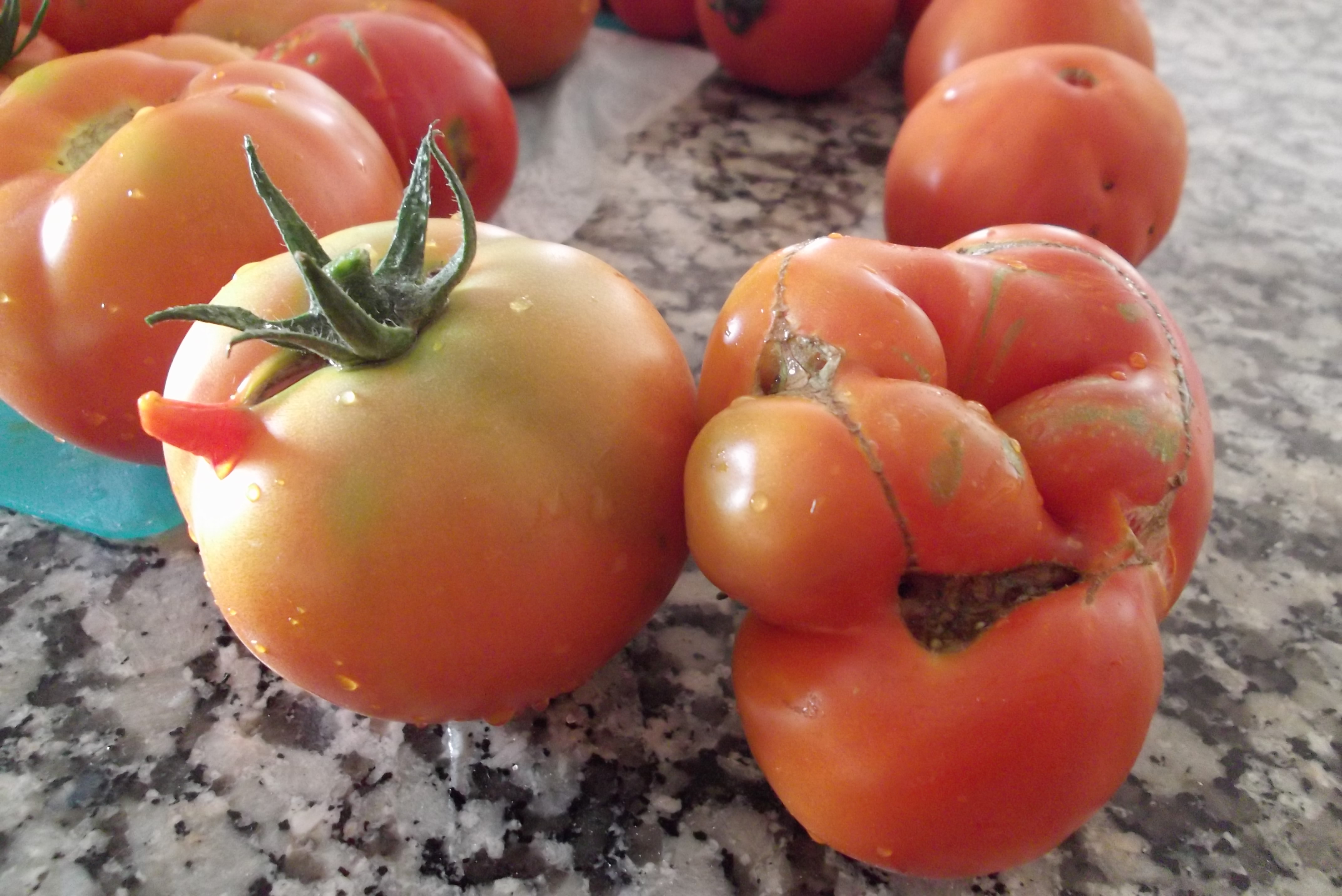
Because we  don´t use insecticides or nasty sprays, some of our tomatoes look a little quirky, but we don´t mind that.  It makes us love them all the more…

Faces made for the radio

Time to start laying some by in jars for the winter months. Last year I made what seemed like enough for the whole village, but by the end of April we ran out.  I am on a mission this year to make enough to last us until next summer.  It is a little bit of effort, but we have so many tomato plants and have also just done a second planting, that it makes sense to do it and enjoy all our hard work in the colder months.

For a great idea on how to use your tomato sauce, and also the way I make mine, head over to Tales of Ambrosia for a delicious aubergine and tomato sauce dish.

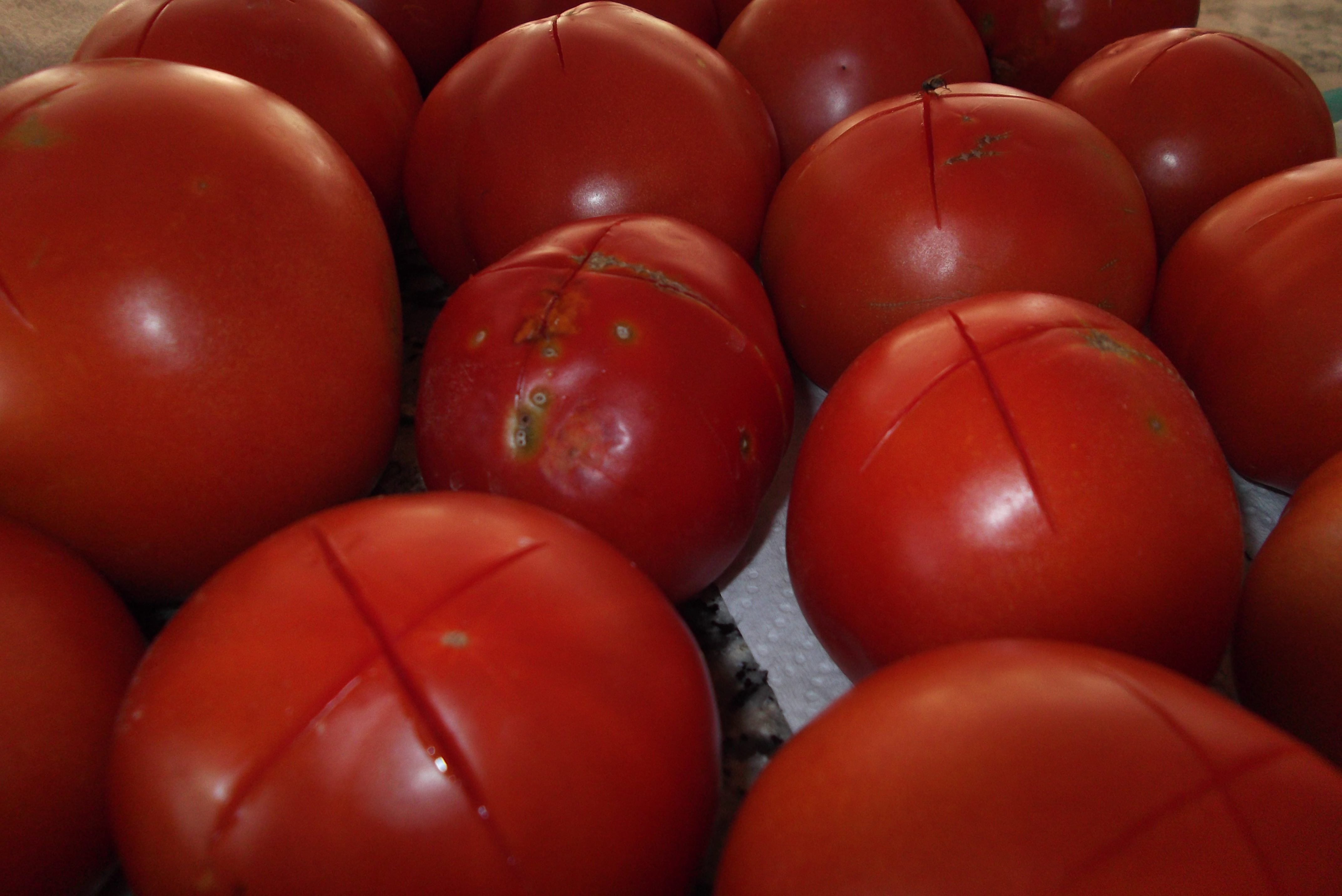
I started by cutting small crosses in my washed tomatoes.

Criss Cross

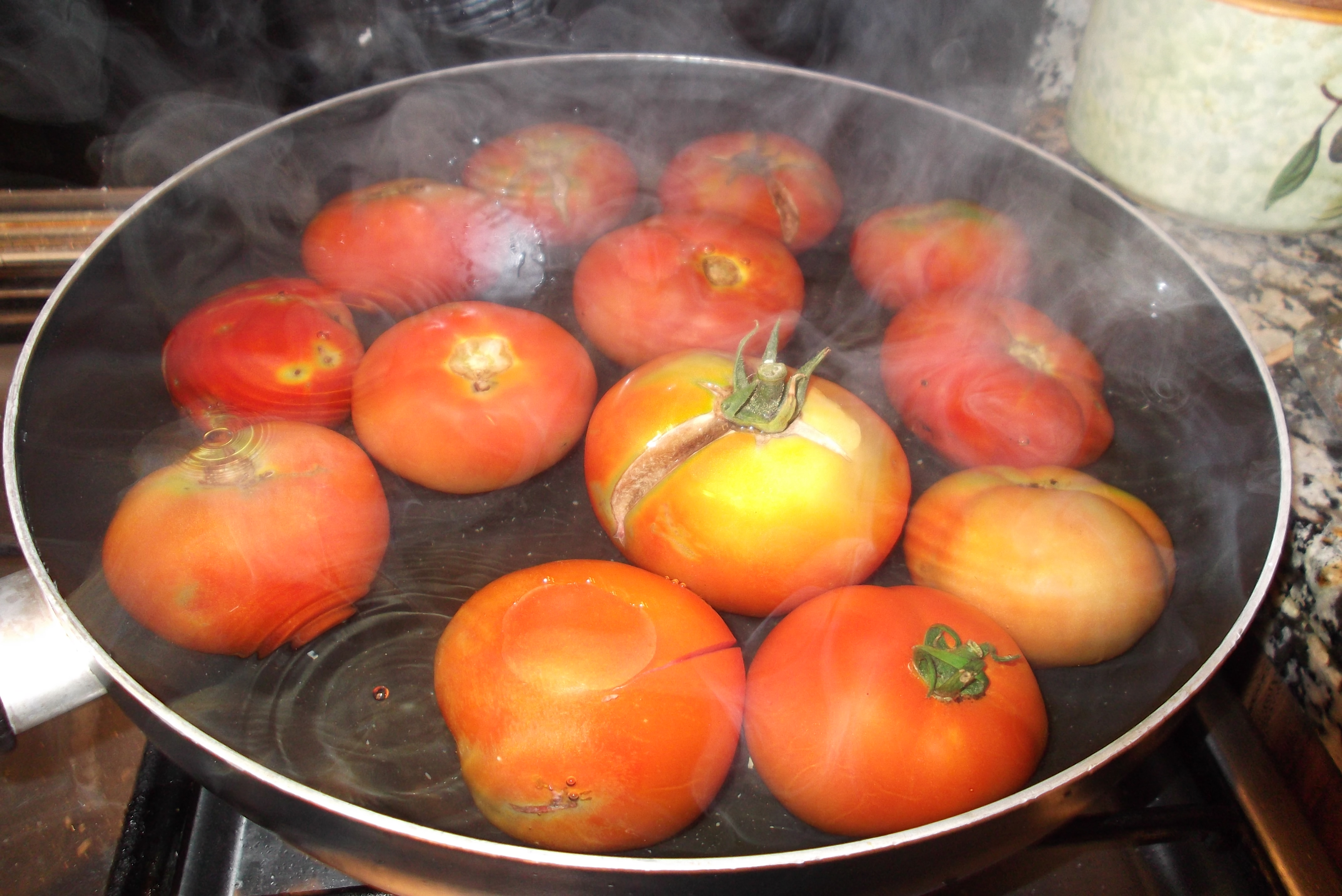
Then I blanched them for a minute or two in boiling water.

Into the hot tub...

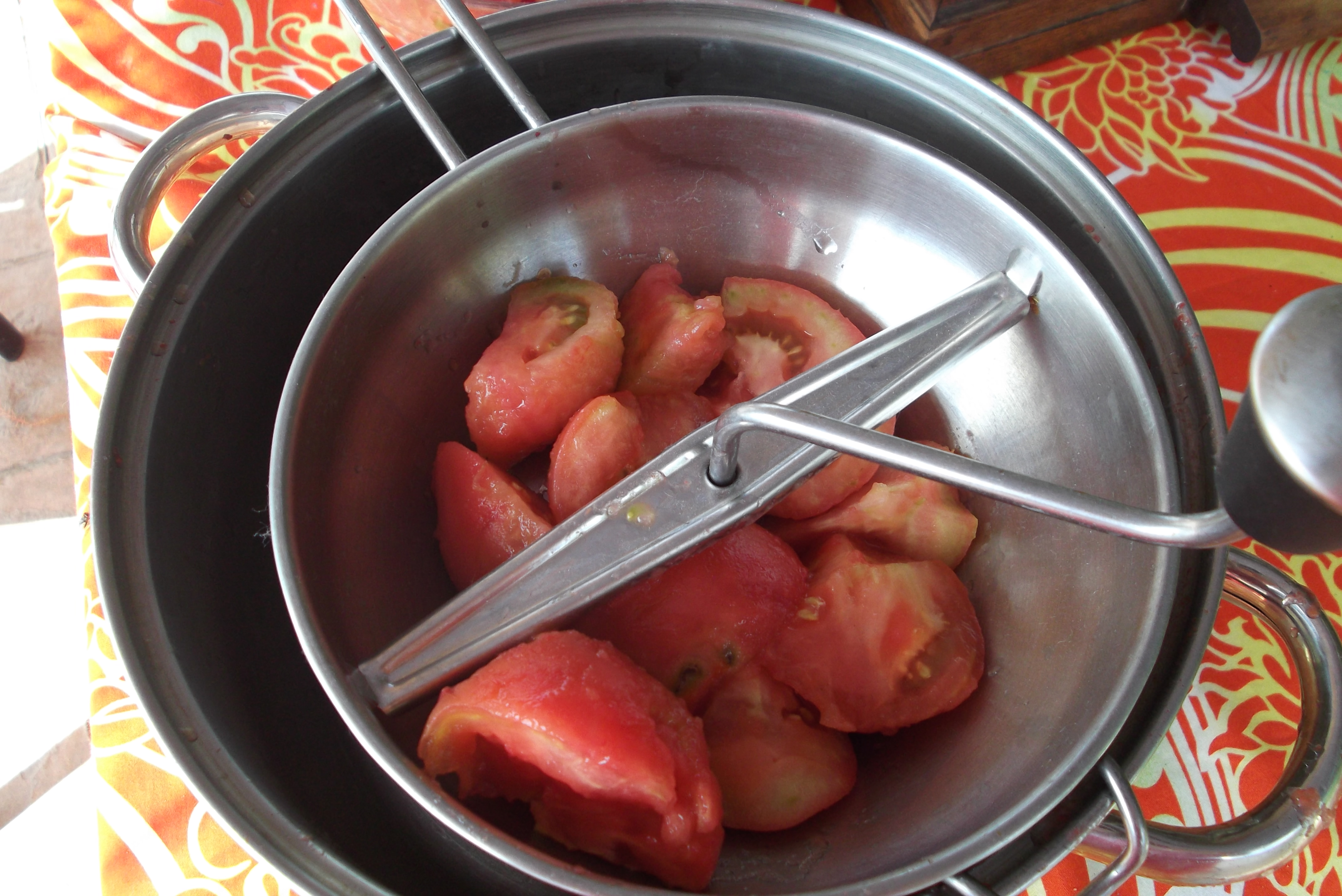
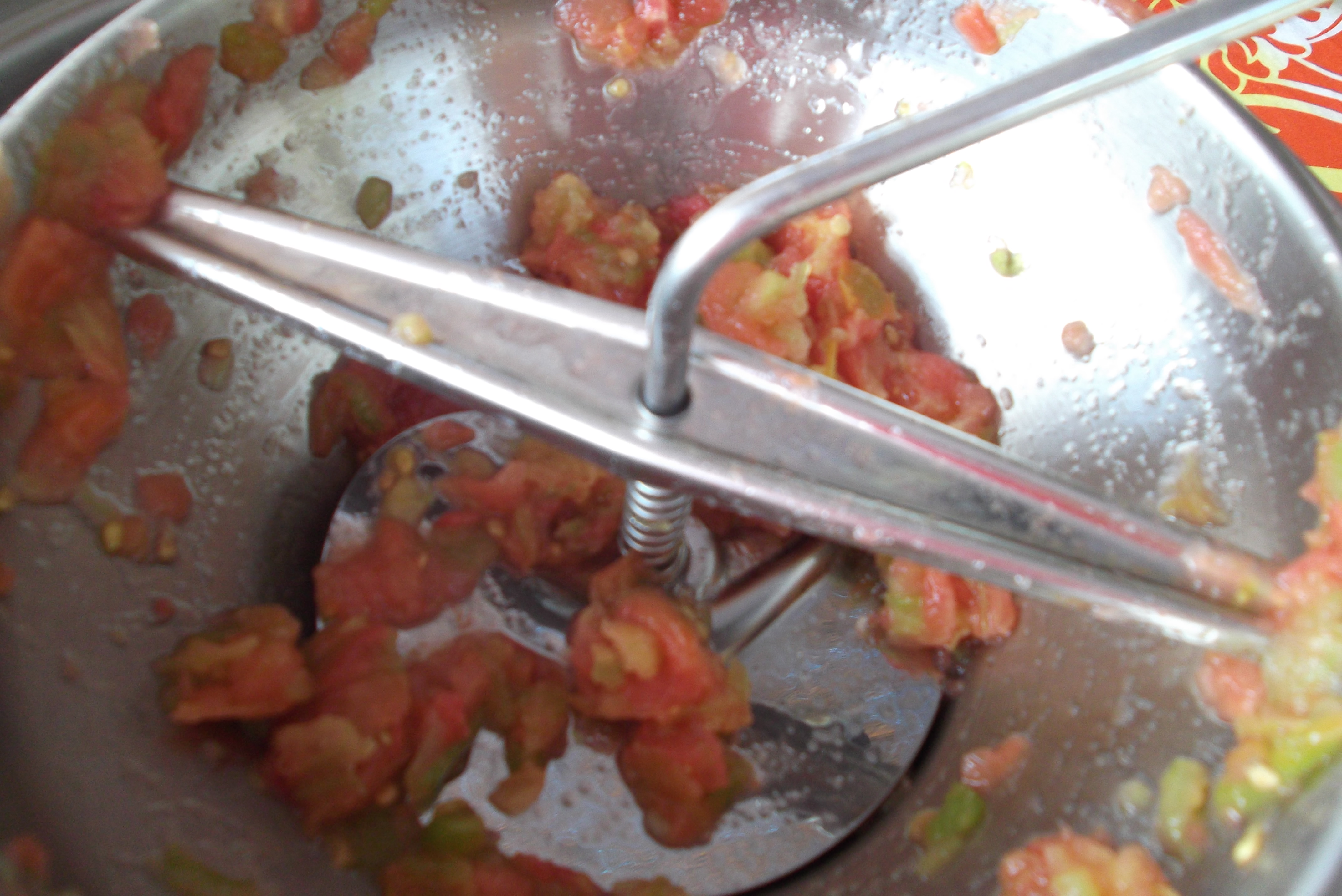
After peeling and coring them I put them into my food mouli (although sometimes when I´m pressed for time I just blitz them with the hand blender). 

Scantily clad tomatoes

The mouli, if that´s the correct word in English, is a hand held vegetable mill and gets rid of any tough bits and seeds.

...and grind...

Every so often you´ll need to empty out the bits you´re left with.  You can either use these in soups or sauces or if you have chickens, like us, they love them as a special treat.

Your chickies will thank you!

You´ll be left with a purée of tomatoes which you can now freeze, use or bottle (can).

Gorgeous tomato pulp

When I am going to bottle or can them, I add half a teaspoon of salt per litre of  tomato and heat gently until just bubbling.

This then goes into sterilized jars which are tightly sealed then left to simmer in a bain marie for about 10 minutes and then left to cool down.

Today, as I had been cutting back my basil which is getting a bit overgrown, I added a spring of basil into each jar too.

Now put the jars away in a cool dark place and on a dull grey day, a few months ahead, you´ll be so glad you invested a little time on a hot summer´s day doing this!

Runner Beans with Bacon and Garlic

It´s good to have a bean slicing gadget!

A few days ago Big Man came back from a trip to Granada raving about a different kind of tapas he had eaten that day in a bar.  First of all I need to explain all about Granada and tapas.  Granada (the entire province, not just the city) is famed for and rightly proud of its tapas culture.  In most other regions you are asked if you´d like a tapas to accompany your drink and offered a choice.  This can simply be cheese, jamon or olives or quite sophisticated grilled or fried fish, fillets of meat, or potato or seafood salad.

In Granada you don´t get offered, you just get given.  Most bars will have their own specialities and generally their first tapas will be x, the second y and so on.  Of course, if they serve you something you don´t want or like, you can ask for something different.  They even have a word for going out and moving from bar to bar sampling the best they have to offer.  It´s called “tapear”…isn´t that wonderful?  Sounds so much nicer than going on a pub or bar crawl! It also helps with not ending up with a sore head if you drink alcohol as you are eating as you go along.

So, back to the tapas he ate.  Apparently it was runner beans with bacon.  It sounds simple, and it was, but he said it was delicious and fresh and made a lovely change from the usual fare.  After cross questioning him under a spotlight (ok, I made that last bit up) he told me that he thought the beans had been cooked a little first in water, then stir fried with little cubes of bacon.  Then he thought there might have been garlic and couldn´t make his mind up if there had been tomato, but probably not.  What a great way to use up some of my runner bean glut and to get my super marvelous bean shredder out again!

So that was pretty much it.  I sliced my beans finely (I used about 2 cups) and boiled them for a few minutes then drained them.  I diced a couple of slices of smoked streaky bacon which I fried until slightly brown at the edges, threw in two cloves of crushed garlic and the beans and stir fried them for a few minutes more.

Big Man pronounced them even better than the ones in the bar, mainly because I had used some of my precious stock of lovely English bacon supplied by my pals.  And I´m happy as we have a new quick and tasty dish to use up some of our runner beans which we´re currently picking at a rate of about a kilo a day.

Breakfast On The Beach

Better than a Breakast Bap!

Big Man and I decided that we would have a little day away from mountain and head down to the beach.  We would go for lunch in a local restaurant we know near the spot we like, but decided to have breakfast on the beach.

For once, we were organised, and made this plan the night before, so I decided to prepare something ready for the morning.

I defrosted a sheet of puff pastry and folded the edges over to create a little rim.  I baked this in a hot oven for about 10 minutes until it was just starting to turn brown.

For a filling I beat two of our free range eggs with two tablespoon of milk, seasoning and a cup full of chopped wilted chard (just the green part) with the excess water squeezed out.

I poured this into the pastry “case” and baked for another 10 minutes or so until it was set.  It looked lovely when it came out of the oven, but I didn´t take the snap until the next morning when it looked a little less crusty and flaky.  Nonetheless, it was delicious cold and we didn´t even get any sand in it!

PS. Bet you´re glad I spared you a photo of us eating it on the beach…

Sun Dried Tomatoes

Bottled Sunshine

Well, summer is finally here and with it comes gorgeous red and juicy tomatoes.  Soon we´ll have so many it will be time to set some by for the months when tomatoes are sadder and greener.

One of the ways I like to store tomatoes is by sun drying them.  Of course, if you live in a country that has less sun, or it´s winter right now, you can use your oven instead.  I have never dried tomatoes this way but understand that as long as you wedge the oven door open slightly with a skewer or similar, then they´ll dry out nicely rather than steam.

This is the way that I do it, it does take a little time but I like to think that the final taste includes a little warmth of the Andalucían sun.

Wash and dry your ripe but not squashy tomatoes – this time I had plum tomatoes (also known as Roma or Pear tomatoes in Spain).

Big Man chose well...

Cut into halves and then sixths or eights (or smaller depending on the size of your tomatoes). Don´t remove the centre core or seeds.

and cut!

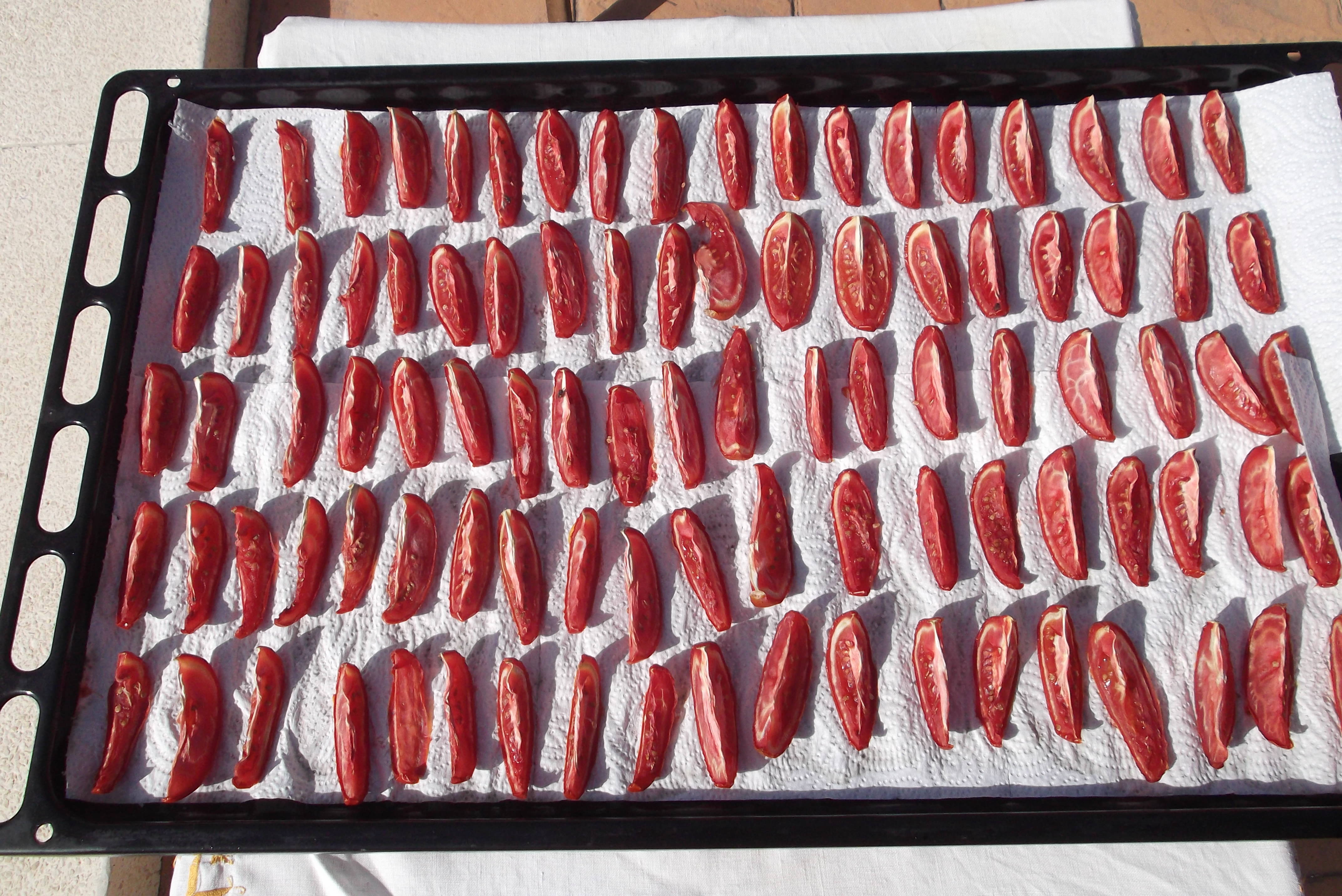
Lay them out on a large tray lined with kitchen paper and sprinkle them fairly heavily with salt.  The salt will help to draw the liquid out of the tomatoes and they won´t taste super salty, I promise.  Use coarse salt (or kosher salt) if you can.

Now leave them in a sunny but sheltered spot.  If there is risk of wind or flies, cover them with a muslin cloth or net and take them in at night if you have humidity.

This batch took just over 48 hours.

After one hour of sunshine

After one hour

Sunbathing without protection...naughty!

After four hours

Day two...

Next day

A Blustery Day Three

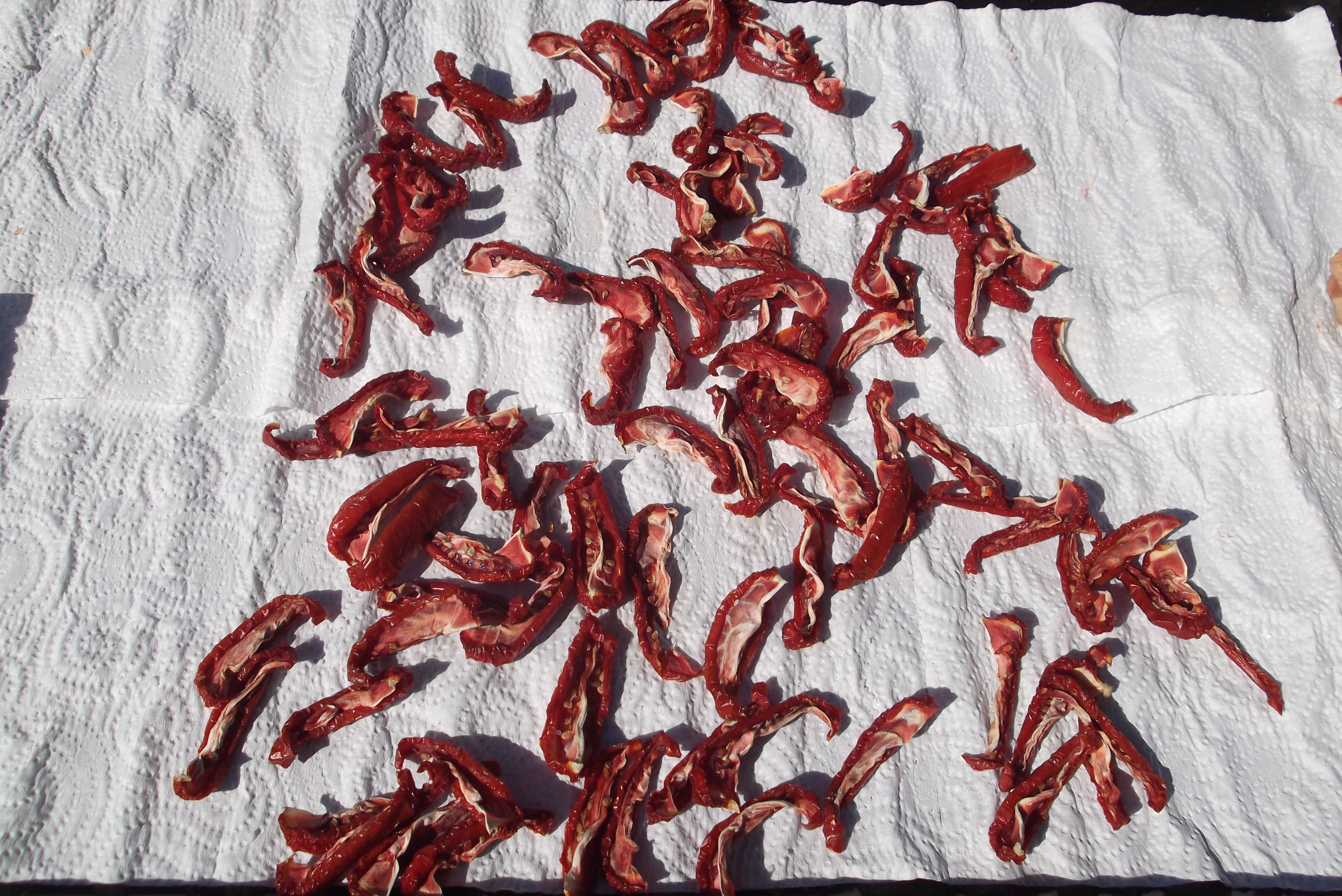
Final day (after a windy morning!)

When they´re as dry as you want them (you may decide to leave them a little “juicy” for sun blush tomatoes) you are ready to put them in a sterilised jar (or canning them).

Sterilise your jar in the dishwasher or give them a good wash in very hot water then dry them out in a low oven for about 10-15 minutes.

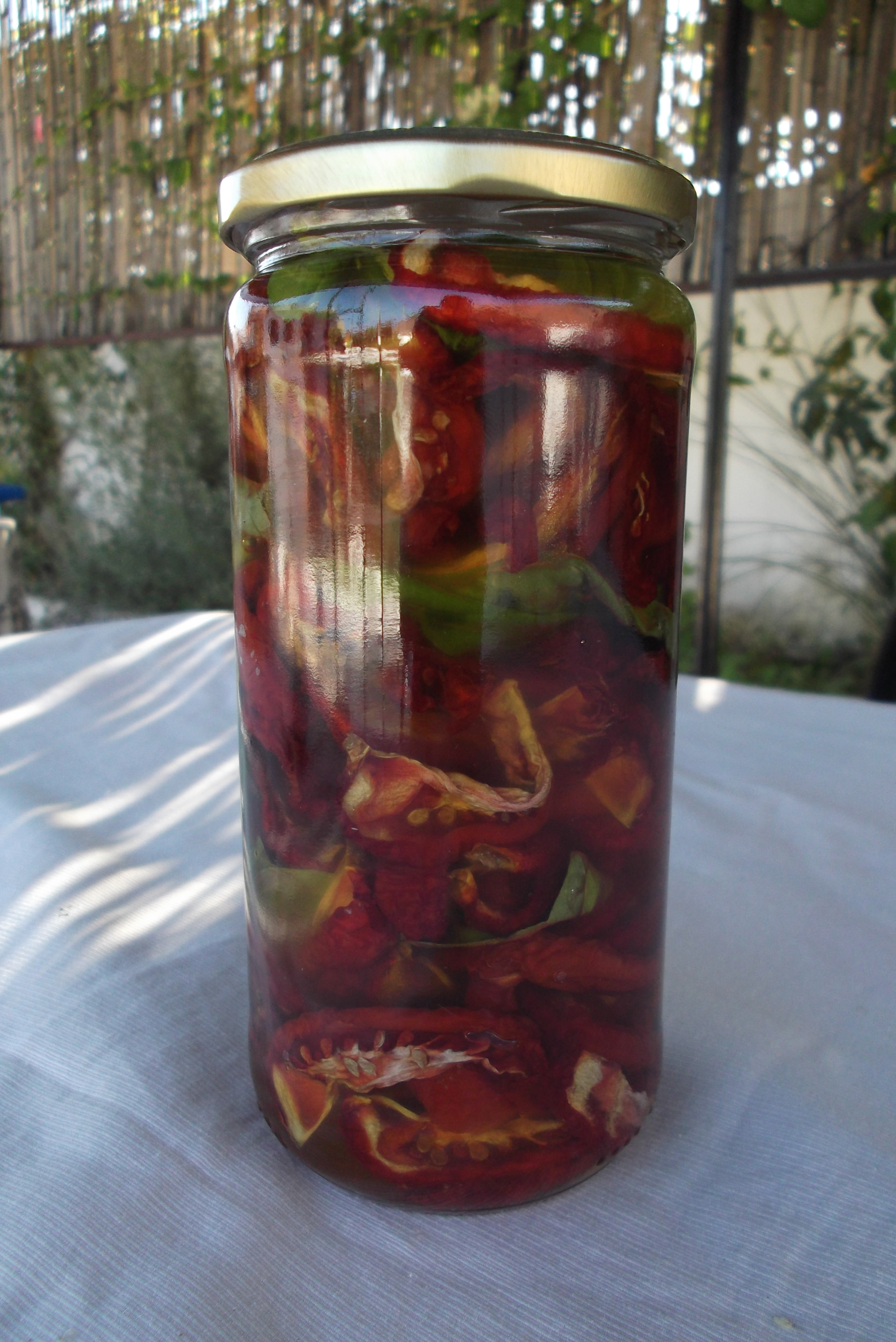
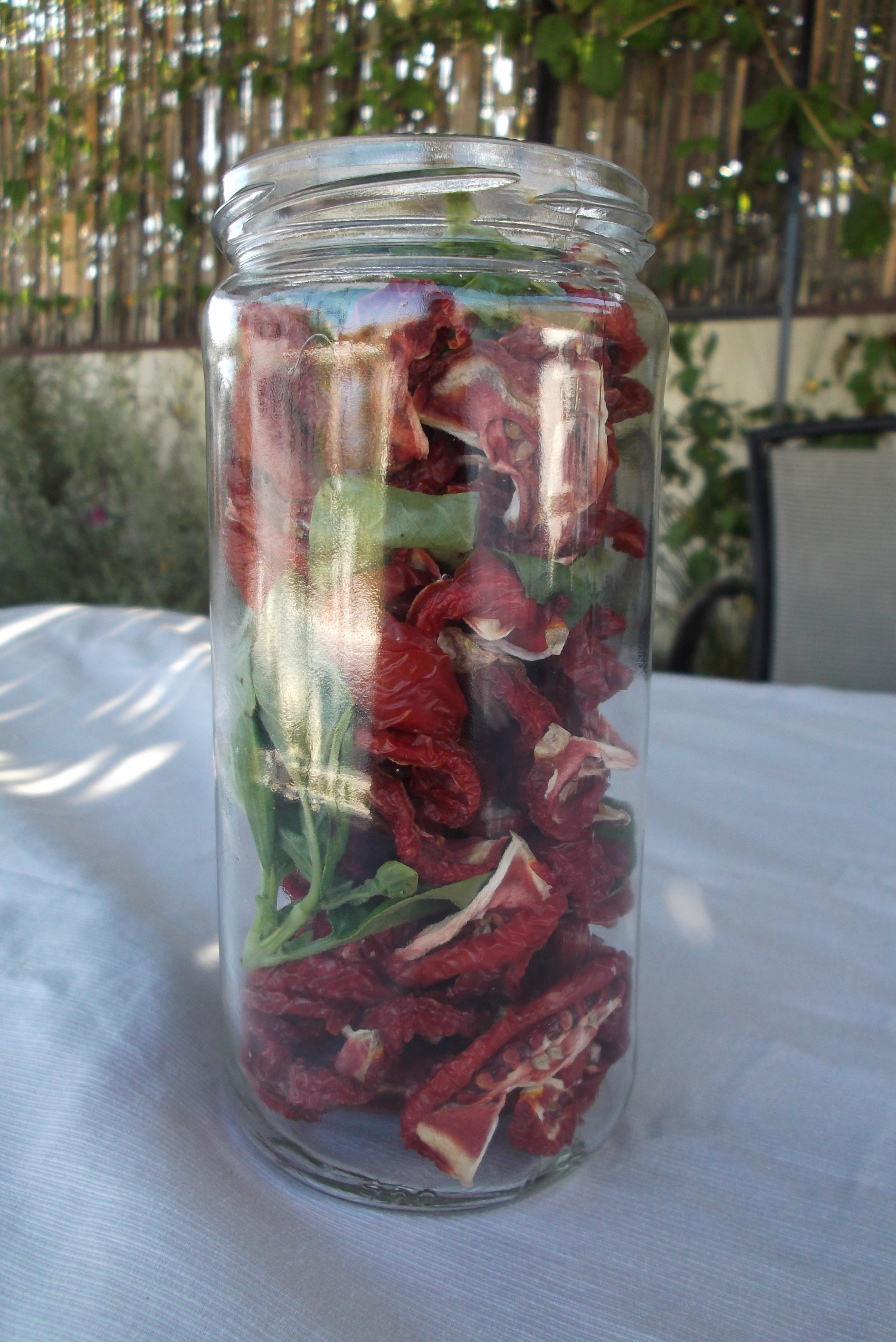
Now pack your tomatoes into a warm jar.  Can you believe nearly 3kg of tomatoes fit into this jar?

Pack ´em in!

You can layer with basil, thyme or oregano if you want.

The you will fill the jar with olive oil.  I know it seems like an awful lot of oil, but in a few months time when you´ve eaten the last of the tomatoes in that jar you can use the oil for salads, drizzling over pizza, making pasta sauce….

As a final security measure, I put my jar into a deep pot of simmering water so that it´s almost covered and leave it in there for about 10 minutes.  This will ensure a good seal and that your tomatoes run no risk of fermenting.

Now, what will you do with your sun dried tomatoes?  Maybe some canapés, or crostini, or chop them up in a salad or sauce, or maybe serve them with a little flaked fresh parmesan and olives….the choice is yours!