Easy Green Tomato Chutney

Something to relish....sorry, couldn´t resist it!

I hope I´m not too late with this recipe as I know there are plenty of tomato growers out there who will, no doubt, be left with some green tomatoes at the end of the picking season.  I, like many others, had some green tomatoes left from our first crop and decided to give this chutney a go, for the first time ever.

Some of the recipes I found had daunting lists of ingredients.  Finally I came across what looked like a straightforward one in Floyd on Britain and Ireland by the late Keith Floyd. I know the poor man fought with the drink demons at times, but I did love his programmes and his cooking style – always adding in a big dash of wine and a slurp for the cook.

I made very few changes to his recipe, and was pleased with the results.  Here´s what I did.

  • A thumb sized piece of garlic, peeled and grated (his recipe calls for it to be bruised and placed in a muslin bag with the chilies and then removed at the end but I left mine in)
  • 4 chilies (he calls for 8-10 and I think next time I´ll use more than I did as there was only a little heat with just 4) I chopped my chilies finely and left them in
  • 2kg green tomatoes, chopped
  • 500g apples (peeled cored and chopped)
  • 250g raisins (chopped but I left mine whole)
  • 625g shallots (I used onions) chopped
  • 2 teaspoons salt
  • 500g  brown sugar
  • 600ml vinegar (he says malt, I used white wine)

Place all the ingredients into a large pan, bring to the boil stirring until the sugar has dissolved and then simmer until it has reached the desired consistency.  Pour into warm sterilised jars and seal.

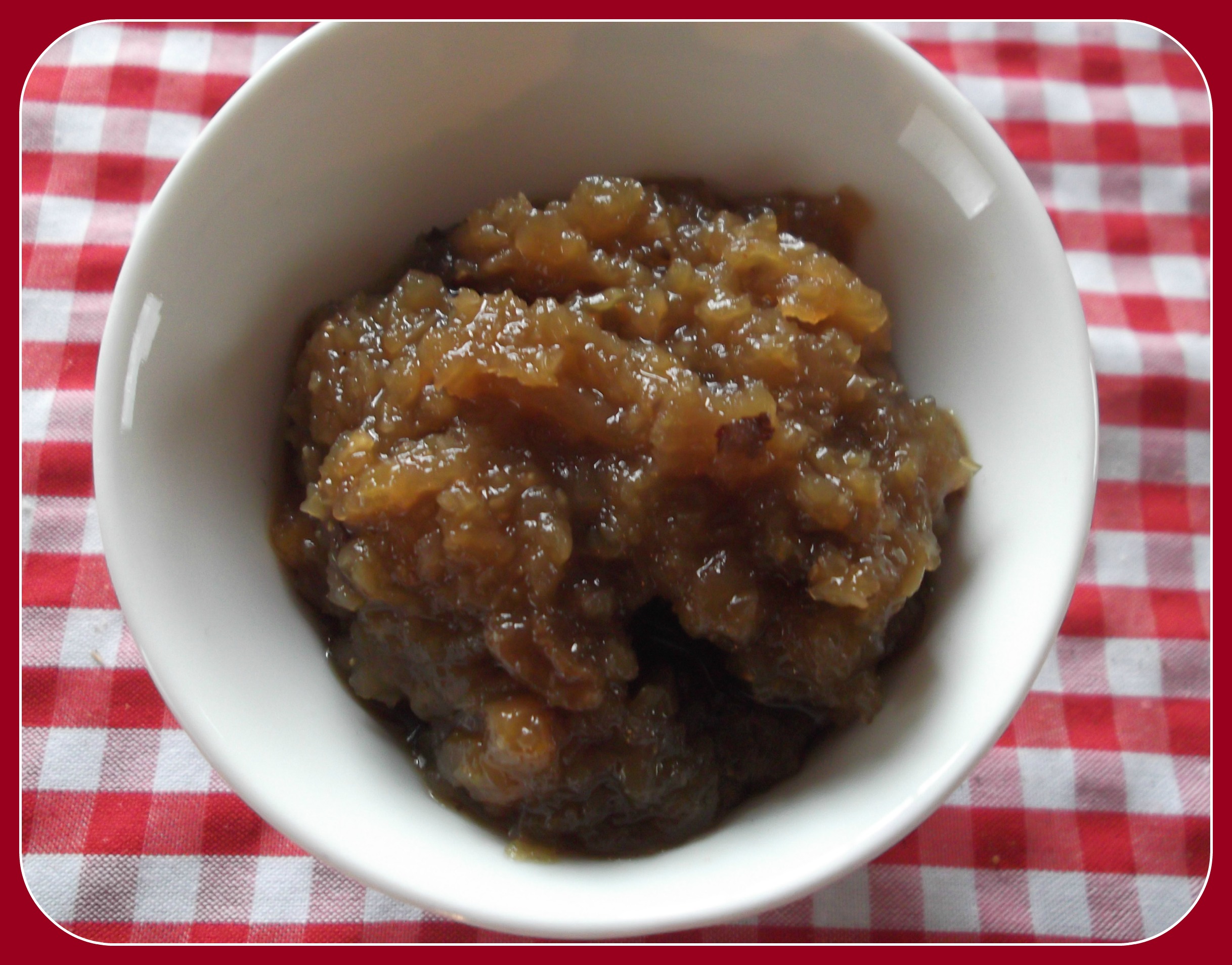
Result – sweet and sour chutney with a hint of heat.  Perfect with cheese, cold meats, burgers….
Going Nuts Over My Awards…

Well, what a week it´s been!  Getting back from our holiday and trying to re-establish a routine with gardening, chickens, dogs, cooking, work…but all of it fun.

And now, four nominations at once.  How lucky and honoured am I?  First of all I have been nominated by TikkTok and RaeDi at Hummingbird Hollow for the Versatile Blogger Award.  I was lucky enough to have been nominated for this a while back (but I am not a believer that you can have too much of a good thing), so check out my 7 bits of info in this post. Better not reveal any more or I may lose some of my mysterious allure.  What…I don´t have any?  Oh well…

Then, much to my surprise, I was nominated for the Liebster Blog Award by the lovely Cecilia over at The Kitchens Garden and Mandy at The Complete Cookbook.  You don´t have to make any lists or link to any blogs with this one, just nominate 5 blogs you admire who have less than 200 subscribers, and who you feel should have more!

So, I´d like to thank all the lovely bloggers who nominated me (oh you shouldn´t have…) and nominate the following for the Liebster Blog Award (and apologies if you already have more than 200 subscribers – WordPress was showing this info and now I can´t seem to see it!)

London Eats

Mad Dog TV Dinners

Blue Jelly Beans

Olives and Artichokes

I heart Mondegreens

Please feel free to accept, ignore, pass on, enjoy…but for those of you reading this, do check them out, I think you´ll like what you see!

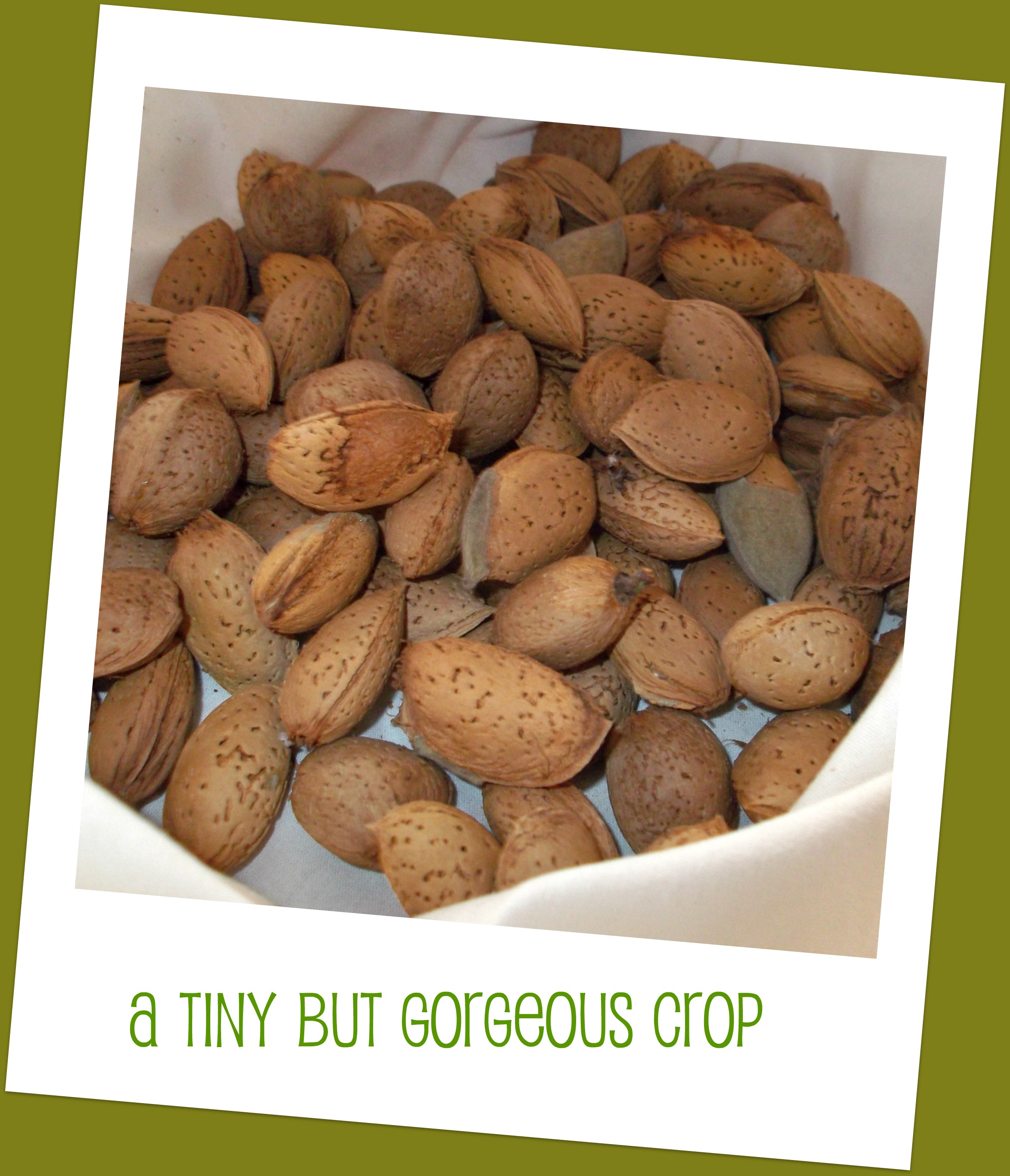
Now…a quick look at our almonds.  We had so much rain here in the spring that one of our two almond trees lost all its blossom and the second one only managed to hang on to a few flowers.  Such a shame.

When we got back it was time to pick our “bumper “ crop.  As you can see, there really wasn´t very much picking to be done. We didn´t need to bring extra workers in!

Quick, bring the wheelbarrow...I can´t take the weight!

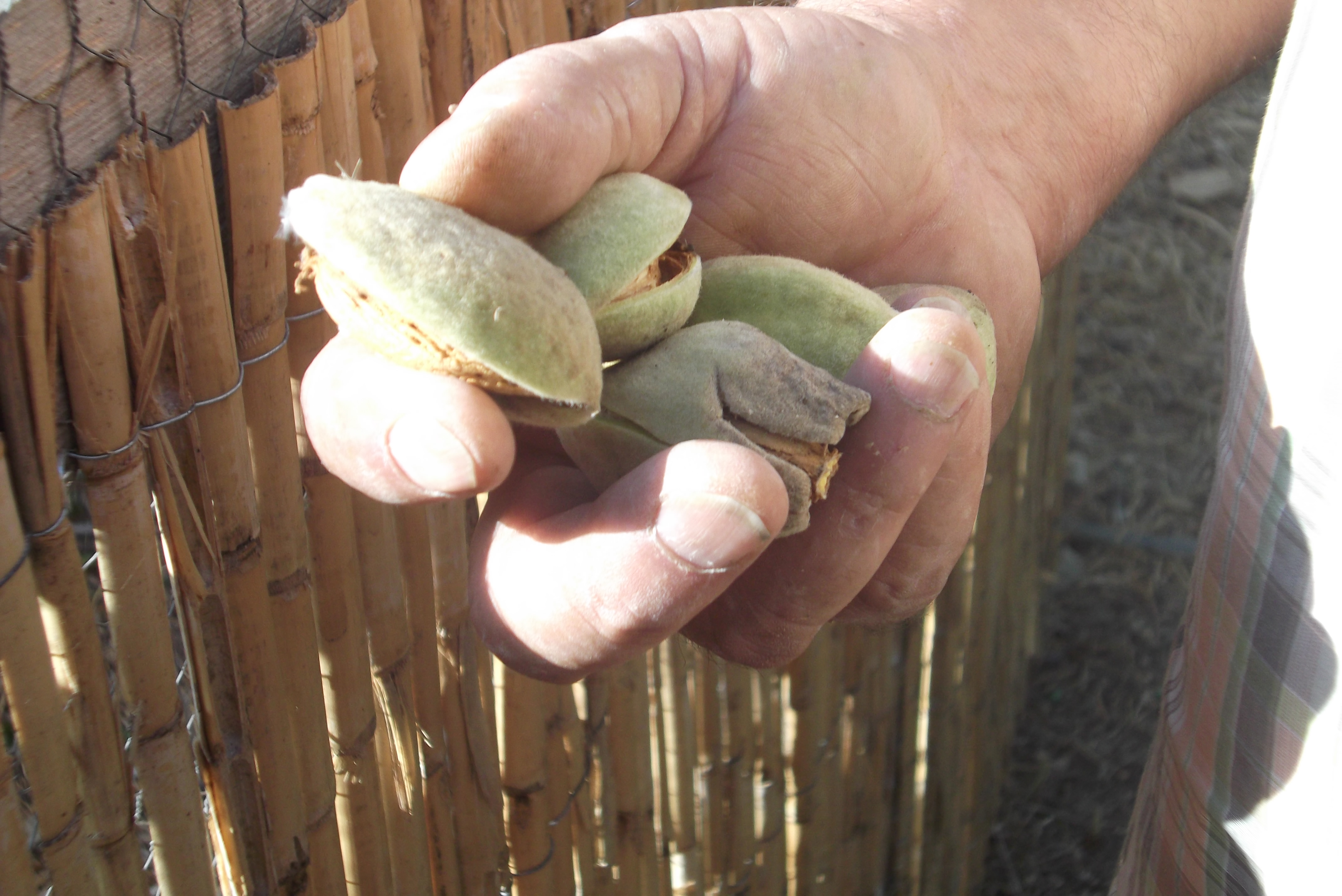
The almonds are covered in a green velvety casing.

Mother Nature´s Couture Green Velvet Coats

We peeled this off of most of them as we stood by the chicken shed.

Striptease in the olive grove

We left them in the sun for a few hours which helped us get those stubborn little “coats” off.

Naked sunbathing

And that was it – one evening soon we´ll open a nice bottle of wine, get our stinky cheese out and have an almond cracking session.  Fingers crossed for a better harvest next year.

Tasty Tabbouleh

Fresh and delicious

When you are lucky enough, as we are, to have a vegetable garden full of tasty summer tomatoes, cucumbers and peppers, you are always looking for new ways to serve them. Arriving home from our holiday, we found the veggie garden over run with peppers plus we had a few cucumbers and the first of our new batch of tomatoes turning red.  A neighbour had also left four huge and sweet onions in a bag hanging on our door.  What a great homecoming!

I love tabbouleh, but had forgotten about making it until another kind neighbour bought me round a bag of bulghur wheat.  I have very kind neighbours! It reminded me of how much I enjoy it and what a great use of my summer vegetables it would be.

It´s very easy and quick to prepare and can be made a little in advance of eating so that all the seasoning is absorbed and flavours your salad.

As I was finely chopping a mixture of tomato, cucumber, onion and garlic I realised how similar the base ingredients are to an Andalucían gazpacho, both the blended and the chunky versions.  I also added chopped green and red peppers. I´m not sure how traditional they are but we still have so many, it seemed silly not to.

The wheat had been cooked according to the instructions on the pack, all very simple and straightforward, and when it had cooled a little I added my chopped vegetables, chopped mint and parsley, salt, olive oil and plenty of lemon juice.

And that was it. I left it to chill a little then bought it back to room temperature before eating.  How simple and delicious was that?!

Pickled Chilies, Fridge Chilies, Dried Chilies, Chilly Chilies

Can you guess what this post is about? There´s a small hint in the title…

Yes, I am a complete chili addict.  I love things hot and spicy, but I know that not everyone else does.  Big Man has gradually increased his “heat tolerance” over the last few years, but he´s still got a way to go before he catches up with me.  A way around this is to grow your own chilies and then use them as you like.  They´re hard to buy here, Spain is not typically a nation of spicy food lovers.

Most of the chilies ripen at around the same time.  We planted late this year, so ours are all starting to turn red or orange (some are picked green) in early September. When you have this glut of chilies, you have to do something with them to keep them for the year ahead.

Chili Heaven

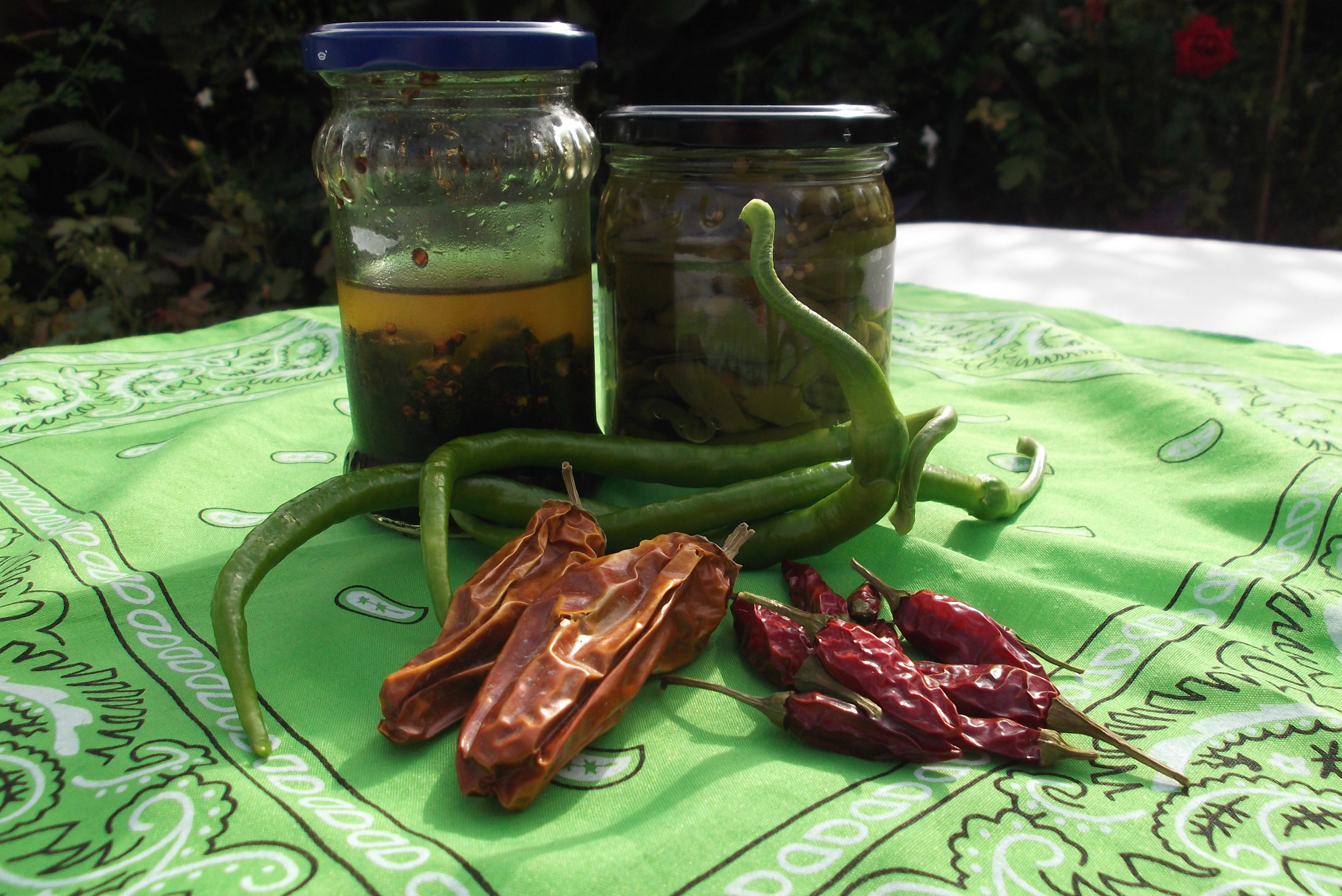
The simplest methods are (apart from eating them fresh), to freeze them or dry them.  Last year I planted long thin green chilies, some stubby orange ones, and the fiery cayennes.  You can see them in the photo.  If anyone wants seeds, please let me know and I´d be happy to mail them to you…honestly, if you have the weather for growing them they should do well.

This year I also planted some that a neighbour gave me (I don´t have a photo as they are not ripe yet) of some super fiery pinky red chilies that look like little balls or rose hips when they are mature.  If anyone knows what they might be, I´d love to know.

Some of my chilies I pickle and I followed the guidelines in Olives and Artichokes post here.  I used mustard seeds and peppercorns in this particular jar, but am going to enjoy playing around with spices and pickles over the next few weeks.

And a final way, which may be new to you, is my mum´s refrigerator chili preserve (for want of a better name) which keeps for a month or two and is for dedicated chili lovers who enjoy spooning spicy fresh chilies over anything and everything.  Cut your chilies finely, scissors help with this as they help avoid nasty incidents with chili fingers in eyes.  Put them into a sterilised jar (recently out of the dishwasher is good). Cover the chilies with oil (I use olive oil but any oil will do) and soya sauce (about 8 oil to 1 soya).  Keep in the fridge, shake before serving, and enjoy the buzz!

We are off on holiday tomorrow (yay!) for a week – looking forward to catching up on all your posts and comments when we´re back.  ¡Hasta luego!

Pickled Courgettes

What do you do when your Big Man comes home with about 15 mammoth courgettes and you´re the only one in the house who really enjoys them?  Well, you have to give a few away to a courgette loving neighbour, and then get creative.

The courgette loving neighbour gave me a recipe for her courgette bread which looks delicious and rather like my Banana Bread recipe.  As soon as I´ve made it I´ll let you know how it goes. Then I made some little courgette pancakes, but more of those another time.  And then I thought it was time to tackle some pickled courgettes.

These remind me of special Italian family meals when I was younger – lots of salamis and pickled vegetables as a big Antipasto.  It´s been years since I made them, and I used mustard powder and turmeric which is not so Italian, I have to confess.

I used a recipe I found on the BBC Good Food Website with a few small tweaks.

500g courgettes, very finely sliced (I used a mandolin slicer)

500ml white wine vinegar

140g brown sugar

1 tsp mustard powder (I used Colemans English Mustard)

1 tsp mustard seeds

4 dried cayenne chilies, crumbled (use less if you like)

1 tsp ground turmeric

Sprinkle the courgette slices with salt and then cover with ice cold water and leave for an hour. Drain and pat dry. Meanwhile put the rest of the ingredients into a saucepan and heat to dissolve the sugar and leave to bubble for a couple of minutes.

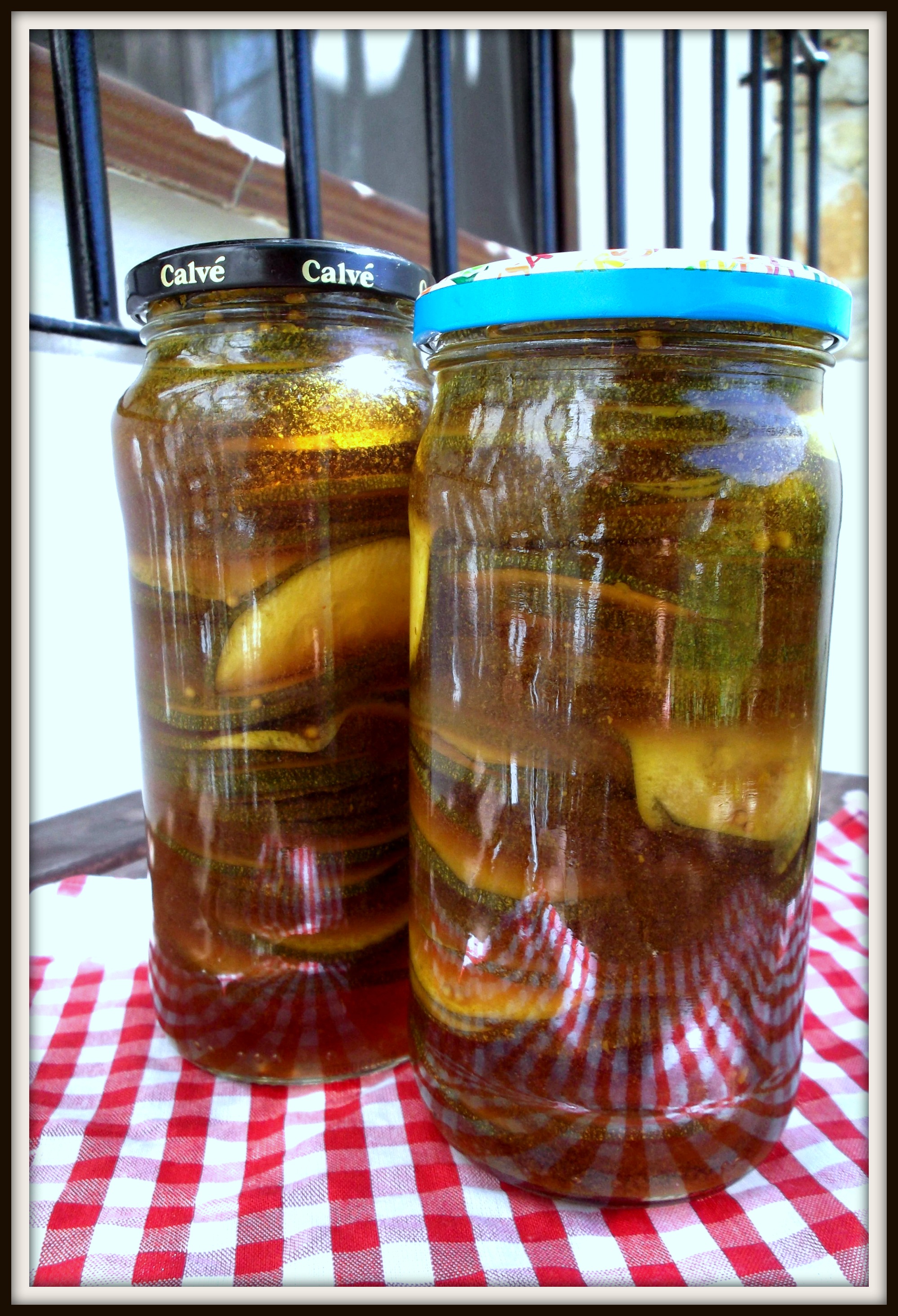
While the pickling liquid is cooling down a little, pack the courgettes into two sterilised jars, pour the liquid over and seal tightly.

The recipe says to keep them in the fridge and that they will keep chilled for a couple of months.  I have them in the larder which is cool.  They will taste great in a few days, but I had a few slices that wouldn´t fit into the jars which I covered with a drop of the pickling liquid and ate that evening…and they were delicious!

Up The Mountain Spicy Tomato Ketchup

Getting Saucy In The Garden

When you have lots of tomatoes growing, or you can buy them cheaply, it´s fun to play around with recipes and see what you can come up with.  An excellent book for anyone interested in growing their own (or who just dreams about doing it) and cooking with the “bounty” is The River Cottage Cookbook by Hugh Fearnley-Whittingstall.

One of his recipes that I´ve played around with over the years is the one he gives for tomato ketchup.  The beauty of it is that you can adjust spices and flavourings to suit what you and your loved ones enjoy.  I like my ketchup spicy, so I go heavy on the chili.  Some of the things he mentions in his recipe I don´t always have to hand (like mace or celery seeds) so I have changed things round just a little.

This is the Up the Mountain version, and I can highly recommend it.

3kg ripe tomatoes roughly chopped

3 sliced onions

1 large red pepper, chopped

¼ cup of celery leaves

100g brown sugar

200ml white wine vinegar (he uses cider vinegar)

¼ teaspoon of mustard powder

A stick of cinnamon

1 ½ teaspoons of allspice

1 ½ teaspoons whole cloves

2 teaspoons black peppercorns

Some freshly grated nutmeg

4 small hot chilis, roughly chopped

1 bay leaf

1 large garlic clove, peeled and crushed

1 teaspoon of hot smoked pimentón (or paprika)

Sea salt to taste

You´ll need a very sturdy heavy based saucepan for this as you´ll be reducing and reducing the sauce until it gets to the right consistency.

Put tomatoes, onions, peppers, chillis and celery leaves into the pot and simmer until very soft.  Put through a mouli or fine sieve and then back into the pot with the sugar, mustard powder and vinegar.  Put the remaining spices apart from the salt, nutmeg and pimentón into a cloth and tie securely then drop this into the mixture.  Grate a little nutmeg over and if you want more later you can add it nearer the end. 

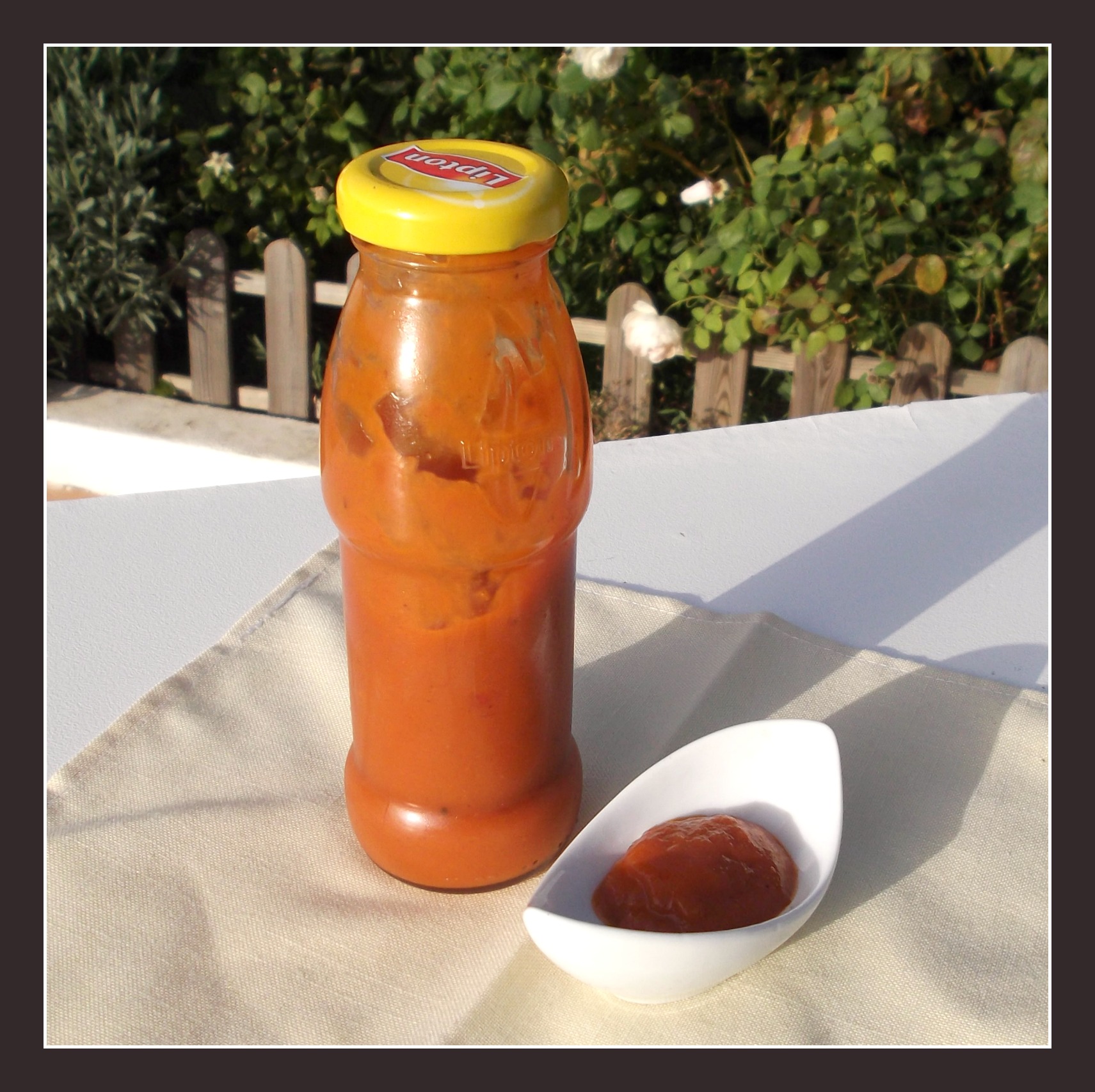
Cook the sauce slowly until it has reduced to the thickness you require.  If you like you can give it a whizz with the hand blender (don´t forget to remove the spice bag first though!), then season with the salt and pimentón.  You can either put it into sterilised bottles or jars (I use the small juice bottles we get here in Spain) or it will keep well in the fridge for a month or you can freeze it.

Delicious with chips (or French fries for my US pals), burgers, fish, veggies…well, pretty much anything in fact!  And mixed with mayonnaise it makes a wonderful Marie Rose style sauce with a bit of a kick.

Pesto – with an Andalucían twist

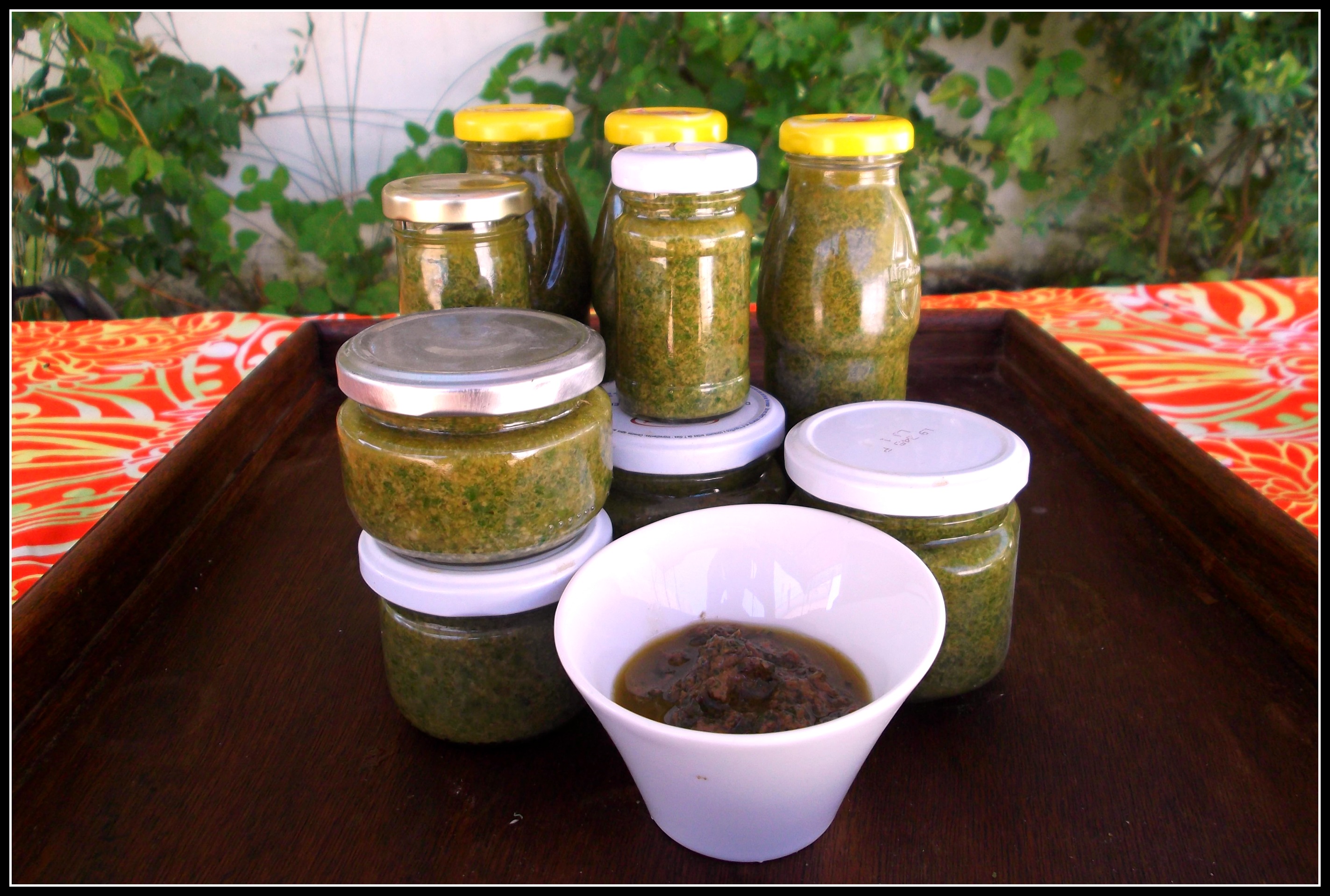
All lined up for a Family Portrait

Basil grows like crazy here.  Well, it does if the slugs don´t get the first batch that you put into the ground in Spring.  After replanting, I finally got my usual lovely crop of basil which I was using for salads, soups, seasoning and many other things beginning with the letter “s”.

There comes a point when you have to cut it back, as it starts to want to flower and the stalks begin to get a little tough and woody.  This is one bit of greenery my chickens are not going to enjoy as a treat…it´s going to become my annual batch of pesto.  I always make plenty (and I´ll probably make at least one more batch) as something mysterious always seems to happen to my little jars of pesto.

It works like this….visitors come from the UK.  They discover my despensa (that´s a walk in larder) and start to disappear for longer and longer.  When they leave to go home, their suitcases are strangely heavy.  I go into the despensa and find greatly reduced stocks of marmalade, jams and pesto!  It´s a funny thing…. I still haven´t worked out what is happening in there.

Anyway, as to exact measurements, it´s hard to say as much will depend on the strength of your garlic, the pungency of your cheese, the fruitiness of your olive oil.  The little twist to my pesto is nothing that exotic or mysterious…but it´s hard (and expensive) to buy pine nuts here, and as we have a couple of almond trees in our little olive grove, I just substitute almonds for pine nuts.

My food processor seems to have worn down its blade slightly, so this year´s pesto was a little chunkier than usual as I couldn´t grind the almonds down to a fine powder.  That said, it tastes amazing, and a day after taking the photos the sauce is a beautiful vivid green colour.

You´ll need basil leaves, salt, a hard cheese such as parmesan (I also used some hard sheep´s milk cheese as the parmesan I had was nothing too special) which you need to grate, olive oil, and garlic.

For about 8 cups of basil I used 3 large cloves of garlic, about 3 cups of grated cheese, 2 cups of ground almonds, 3 teaspoons of sea salt and 1 litre of olive oil.  This gave me just over one and a half litres of pesto.

This slideshow requires JavaScript.

You can make it in a food processor, although I had to switch to doing smaller batches with my hand blender because of my ineffective blade.  Taste and add….more salt, go for it….now more cheese….too thick, add more oil.  You get the picture.

Put into sterilised jars when you are done, it will keep for a year.  But only if you put a lock on the larder door.

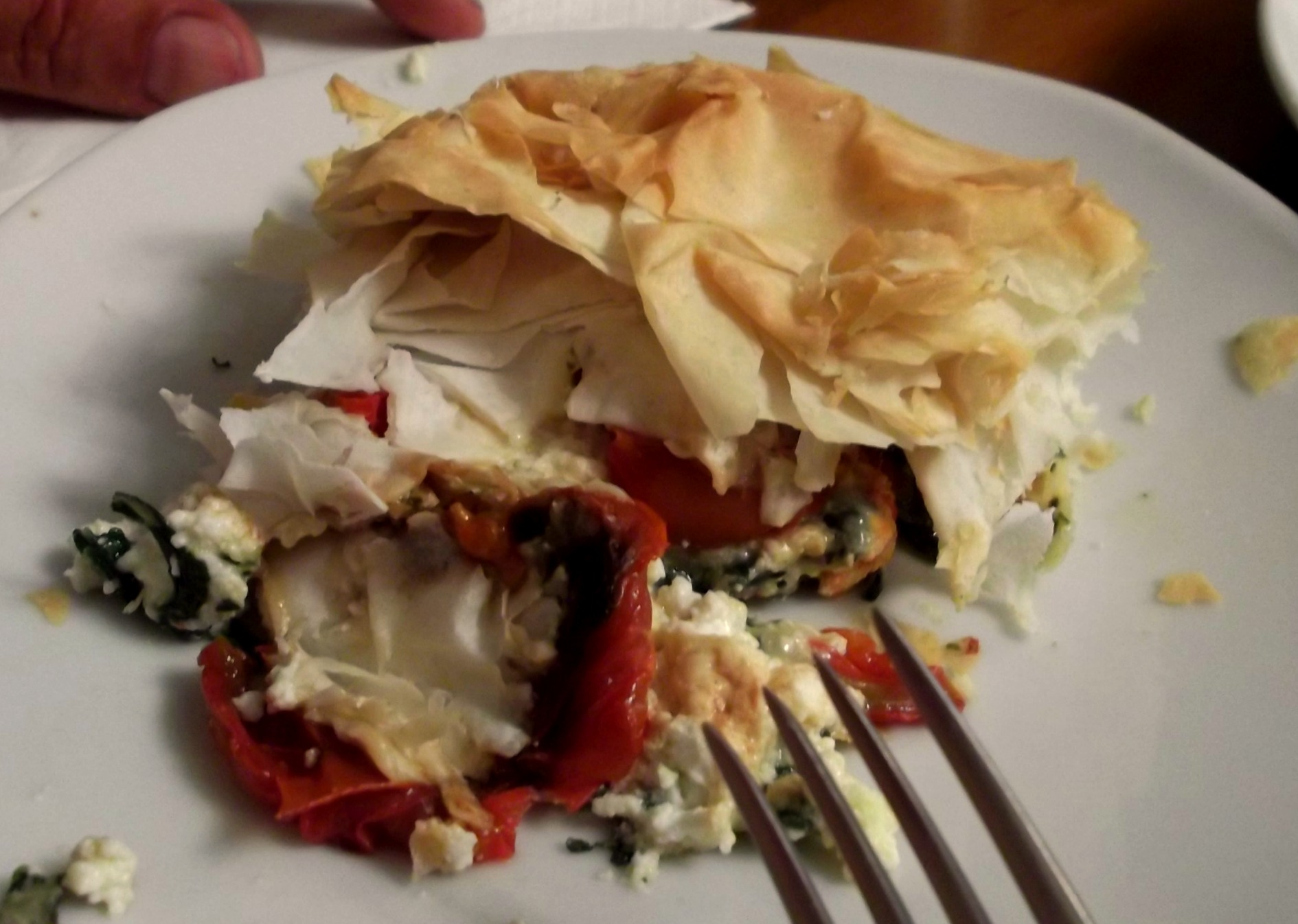
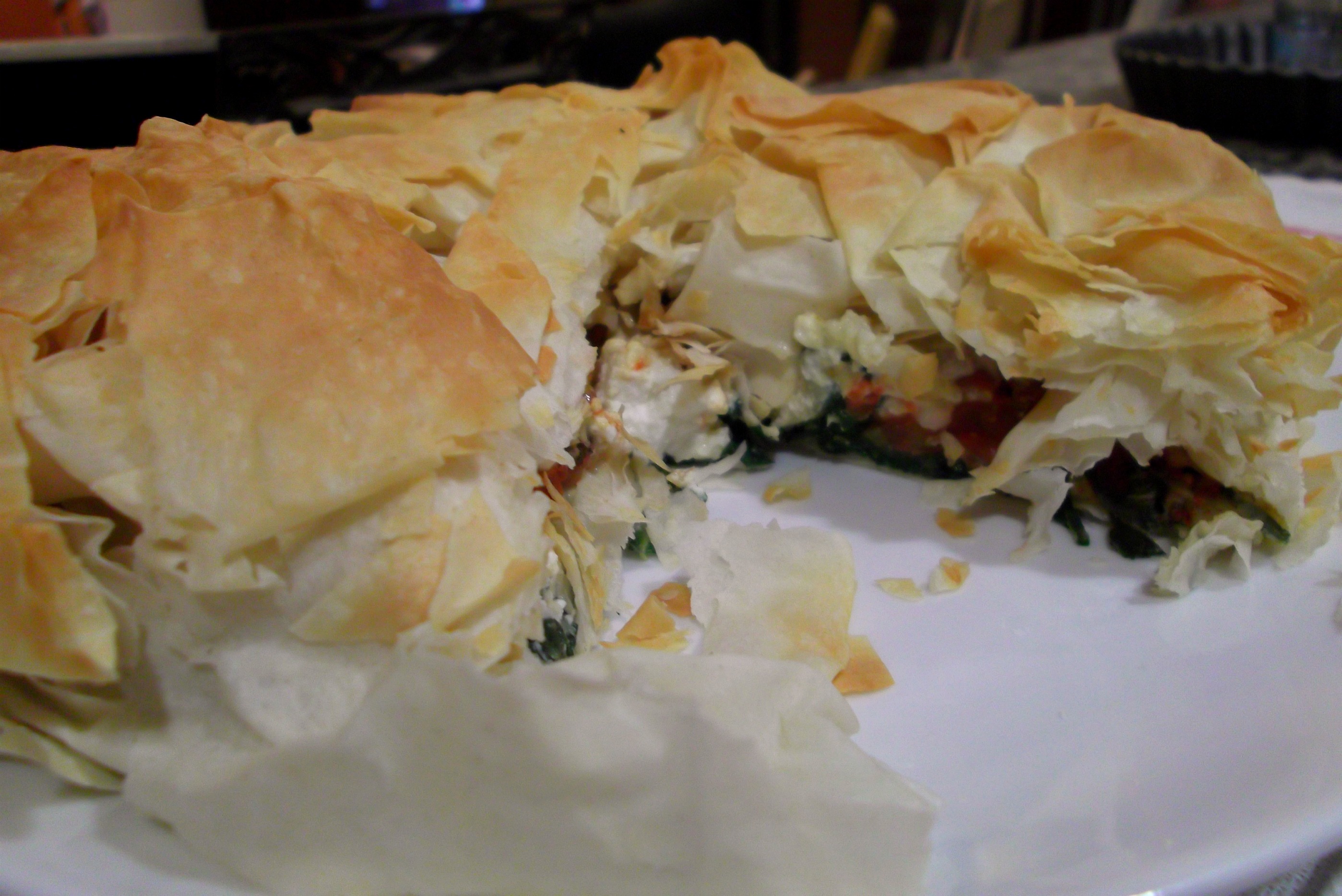
Roasted Tomato Tart with Chard and Home Made Curd Cheese

Beware the Giant Fork!

The great thing about writing a blog and reading other blogs is that inspiration comes from all around you.  Not so long ago I got into a dialogue with ChgoJohn over at From The Bartolini Kitchens about cheese.  He makes all sorts of cheeses and has posted a fantastic recipe for ricotta.  It reminded me that I hadn´t done this for quite some time, although my version doesn´t use cream.  Unfortunately we just can´t get anything other than UHT whipping cream or a chemical mix which masquerades as single or cooking cream here.  A shame, but that´s how it is.

A freezer clear out to make room for all my lovely beans that are growing, rewarded me with a packet of filo pastry.  Time to get making something tasty.

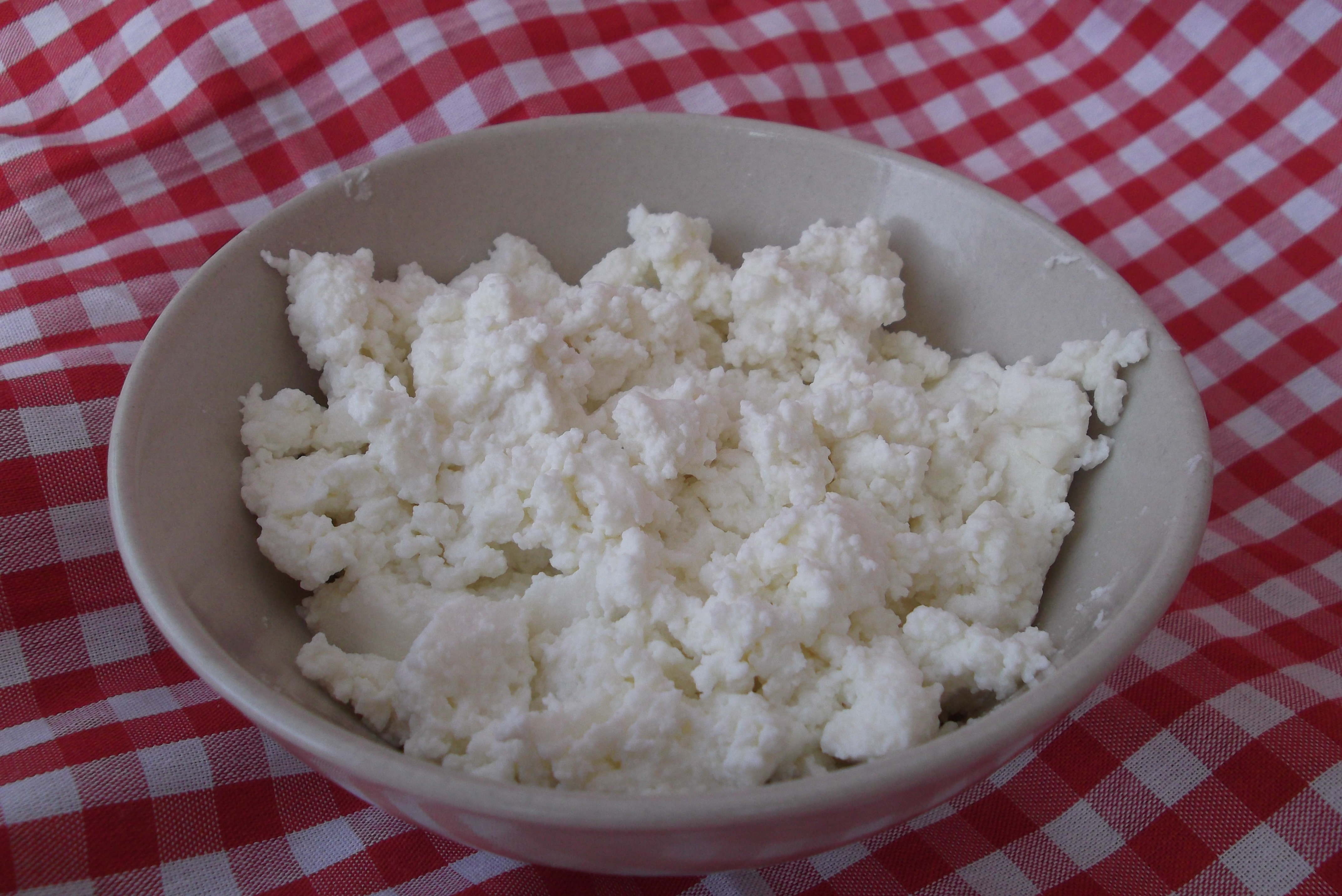
Here´s how I made my curd cheese.

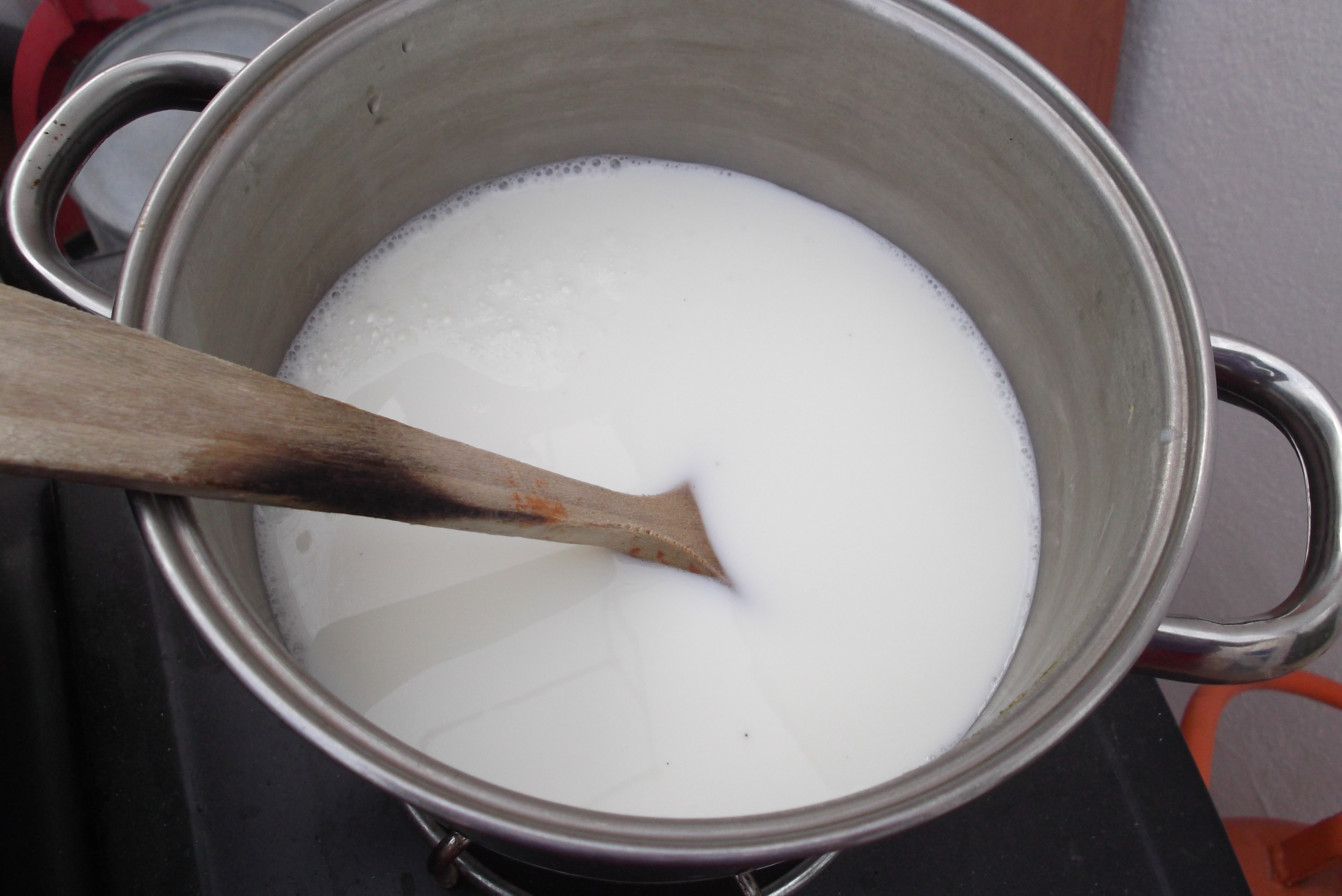
Bring one litre of milk (I used semi skimmed) almost to the boil (when little bubbles start to appear round the edges).

Bubbly milk

Turn off the heat then add citric acid, lemon juice or white wine vinegar (about 2 – 3 tablespoons but add it gradually) whilst stirring with a wooden spoon.  Once curds start to form, put a lid on the pot and leave to stand for about 10 minutes.

Beautiful Curds

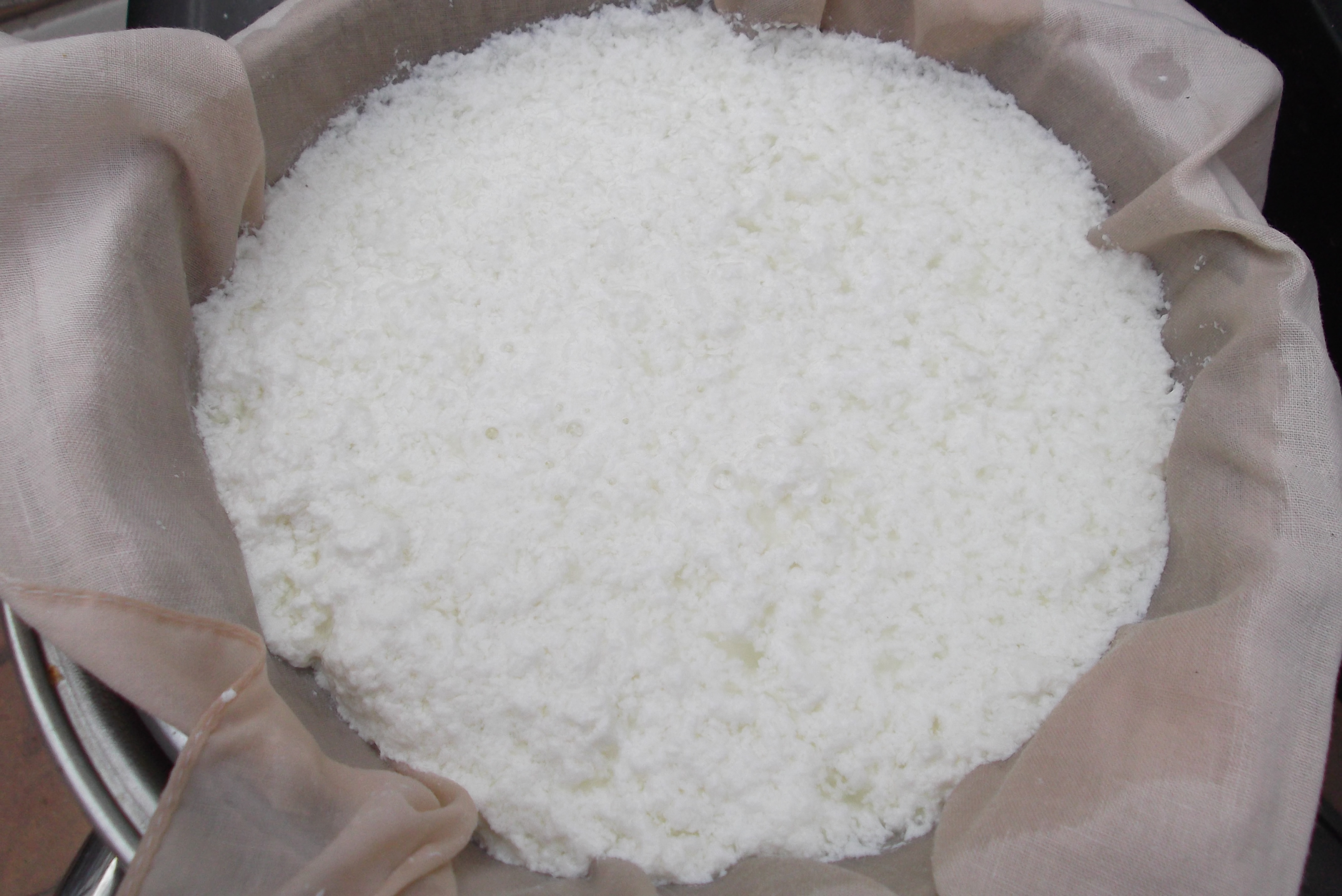
Drain and leave for a few hours or overnight. 

The Waiting Game

Stir in salt to taste and you´re done! Don´t forget to save that whey for making soda bread.

Lovely Curd Cheese

To make the tart I lined a loose bottomed tart tin with four sheets of filo which I brushed with olive oil (but you could also use butter).

I put in a layer of chopped, wilted chard (with all the water squeezed out) which I had mixed with two beaten eggs, 3 tablespoons of grated parmesan and seasoning. You could substitute the chard with spinach or beets.

 Then I added a layer of curd cheese and then a layer of halved roasted tomatoes.  You could also use thinly sliced raw tomatoes.  Finally I folded over the filo sheets and added two more to the top, brushed the whole thing with a little more oil and baked for 30 minutes at 180ºC.

Lots of flaky, crispy crumbs!

It was delicious warm, but just as tasty (although not quite so crunchy) cold the next day.

Gorgeous Green Gazpacho

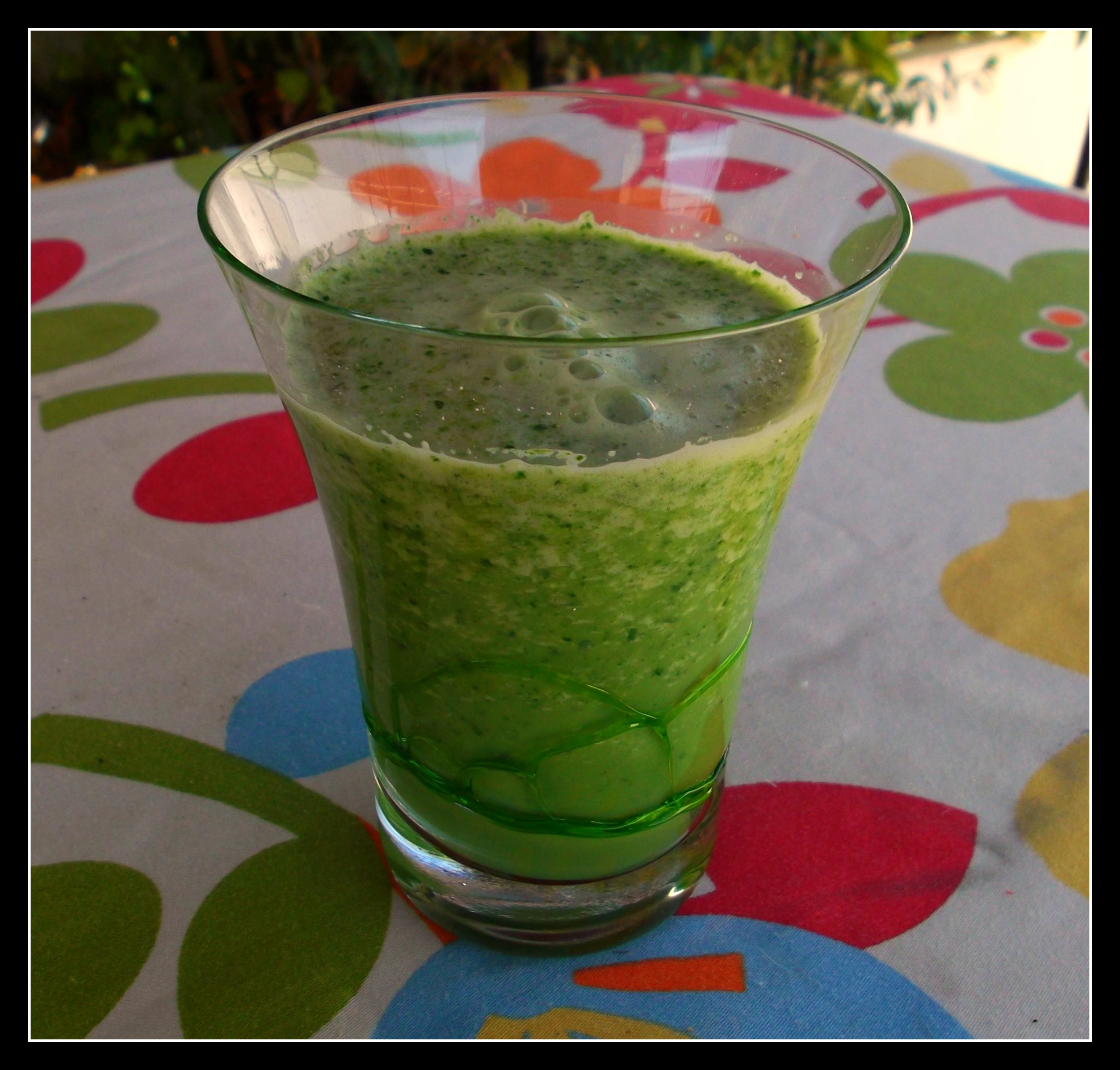
Green. Gorgeous. Good.

Who says Gazpacho has to be red?  Well, if you promise not to tell the Andalucían gazpacho Police…I say it doesn´t!

In the vegetable garden at the moment, our cup overfloweth. Some things just can´t be canned or frozen – like cucumbers.  And those little green thin skinned Spanish peppers are best eaten fresh in salad, stuffed or fried.

I wanted to find a new way of using up some of my “greenery” and came up with this version of gazpacho.  It´s a stunning colour, tastes rather like juiced vegetables and I´m sure must be amazingly good for you and packed with vitamins.  Probably an excellent pick me up for the morning after the night before too.  We just drank it chilled as a pre lunch appetizer.

Here´s what I used, but if you do decide to give it a go I´m thinking celery, avocado and lime juice might also be great additions.

Two thin green peppers, one small cucumber (peeled), a small clove of garlic, a small bunch of parsley, 4 large leaves of raw chard (or spinach).

In a blender mix the vegetables with about 3 tablespoons of olive oil, white wine vinegar and salt (to taste) and a litre of ice cold water.

Blend until smooth, add a few ice cubes and chill until needed.  Looking as gorgeous as it does, it just has to be good for you!

Home Made Tomato Concentrate

Making the most of summer tomatoes

Tomato concentrate or purée, delicious used in pasta sauce to enrich it and a spoonful in soups and stews adds a little something special. I know it´s not very expensive to buy, but if you are dealing with a glut of tomatoes and have time on your hands, why not give this a go?

I have to say from the outset, you do need to set aside about 6 hours to make just a few jars. It´s not tricky, but you need to be around to watch the pot slowly simmering away all the water from the tomatoes and leaving you with a gorgeous, thick, sweet and intense paste.

Start by either peeling, deseeding and blending your tomatoes, or (as I do), roughly chopping and then simmering whole tomatoes for about an hour before passing them through the vegetable mouli.  Incidentally, this is another method for making preserved tomatoes.  After you have “mouli-ed” them, you can put them into sterilised jars and tuck them away for a rainy day if you don´t want to go on and make concentrate. Using the second method you may have a few stray tomato seeds in your purée, but hey, it´s homeamde!

Next you need to add about a teaspoon of salt to approx 4 kilos of tomatoes (this gave me three small-ish jars of concentrate) and put them into a wide, heavy based saucepan.  You can use a narrower pot, but it seems to take longer as I find the water evaporates more quickly from a wide pot.

Now keep them at a gentle simmer, you will need to keep them cooking for about 5 hours.  Slowly, slowly, the magic will happen.  Every so often you need to give them a stir with a wooden spoon to make sure they don´t catch on the bottom.

This slideshow requires JavaScript.

Finally, your patience will be rewarded, and just when you thought you might as well give up and turn it into pasta sauce, you have a pot of sweetly fragrant tomato concentrate.   Now you can put the hot purée into hot sterilised jars and seal. No need for a hot bath for the jars afterwards, unless it makes you feel “safer”.  I also add a thin film of olive oil, so that when I do break open the jar and start to use it, the concentrate or purée underneath will not dry out.

Delicious, rich…what other words haven´t I used?  Oh yes, you´ll also feel supremely smug when you tell people you have made it yourself!