Pimientos de Padrón are a popular tapas, especially when they´re in season during the summer. They are little green peppers that come from a town in Galicia (northern Spain) called Padrón. So, their name translated means “peppers from Padrón”. A little saying about them is that “algunos pican, otros no” which means “some are hot, some are not”. To be honest, as a dedicated chili eater, they´re mostly not that spicy…apart from some we grew last year which seemed to want to be like all the other chilis in the vegetable garden and nearly blew my head off!
Ready for frying
If you do manage to find them, all you do is deep fry them in very hot oil. When the skin starts to blister and turn black (this will take long moments rather than long minutes), drain them and sprinkle heavily with coarse salt.
Frying tonight!
Eat with a cold beer to wash down the spicy, salty tastes or a delicious clara (that´s a shandy to you and me).
Just what you need...
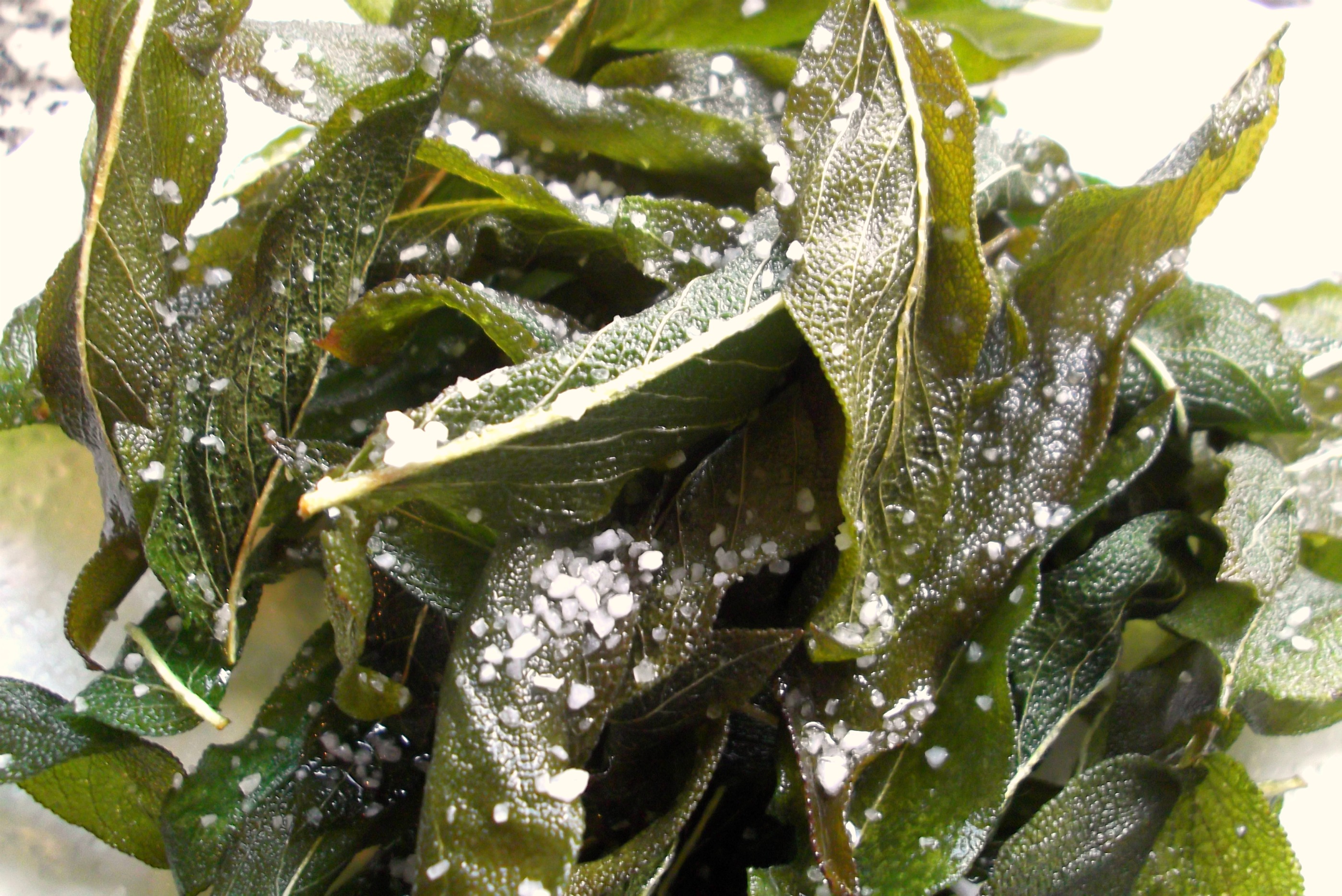
And whilst you´ve got that oil hot, how about quickly deep frying some sage leaves and sprinkling them with salt too.
Scarily Addictive Sage
They can become really addictive, and as it´s a herb they´ve got to be better for you than crisps…haven´t they?!
I hope I´m not too late with this recipe as I know there are plenty of tomato growers out there who will, no doubt, be left with some green tomatoes at the end of the picking season. I, like many others, had some green tomatoes left from our first crop and decided to give this chutney a go, for the first time ever.
Some of the recipes I found had daunting lists of ingredients. Finally I came across what looked like a straightforward one in Floyd on Britain and Ireland by the late Keith Floyd. I know the poor man fought with the drink demons at times, but I did love his programmes and his cooking style – always adding in a big dash of wine and a slurp for the cook.
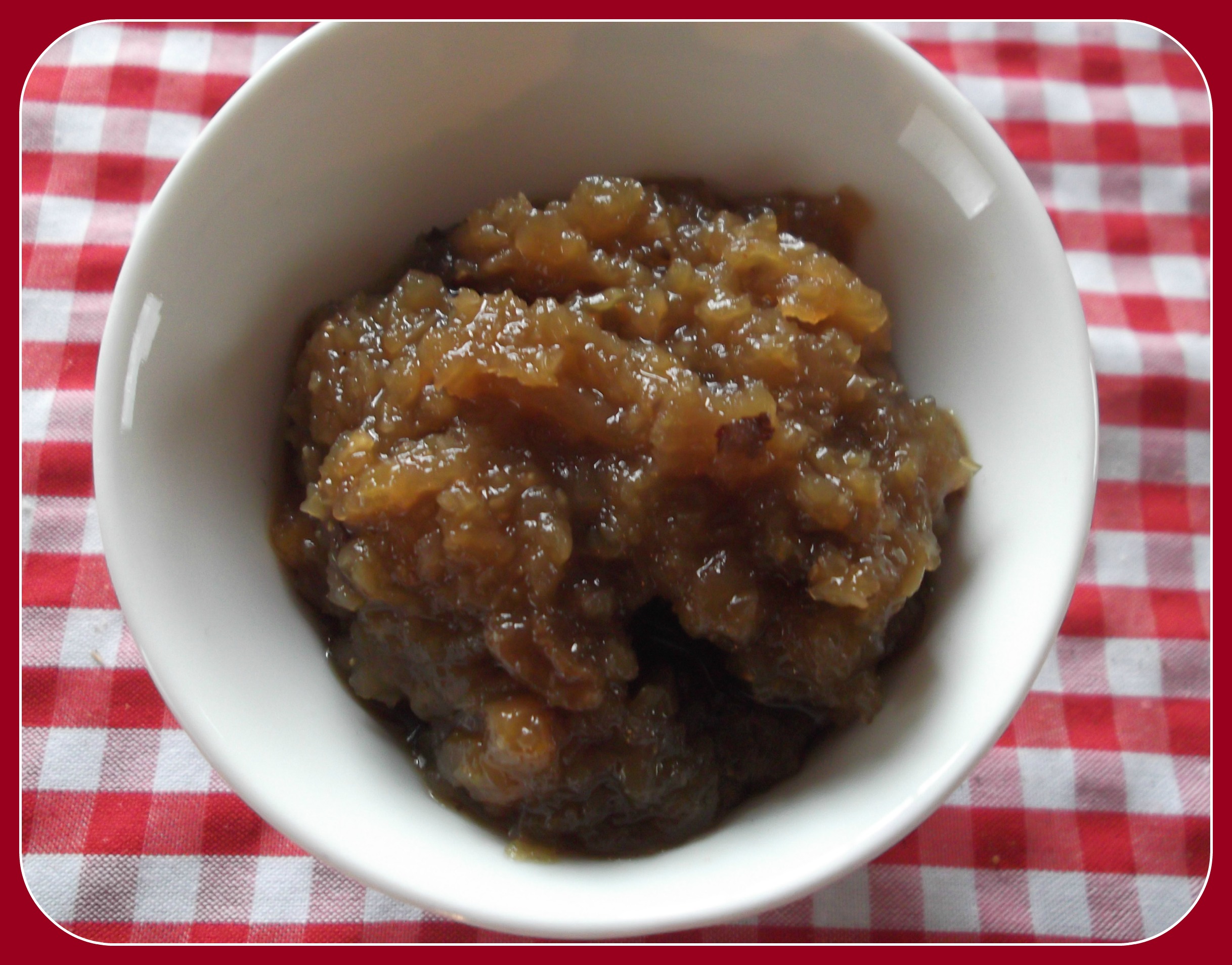
I made very few changes to his recipe, and was pleased with the results. Here´s what I did.
A thumb sized piece of garlic, peeled and grated (his recipe calls for it to be bruised and placed in a muslin bag with the chilies and then removed at the end but I left mine in)
4 chilies (he calls for 8-10 and I think next time I´ll use more than I did as there was only a little heat with just 4) I chopped my chilies finely and left them in
2kg green tomatoes, chopped
500g apples (peeled cored and chopped)
250g raisins (chopped but I left mine whole)
625g shallots (I used onions) chopped
2 teaspoons salt
500g brown sugar
600ml vinegar (he says malt, I used white wine)
Place all the ingredients into a large pan, bring to the boil stirring until the sugar has dissolved and then simmer until it has reached the desired consistency. Pour into warm sterilised jars and seal.
Result – sweet and sour chutney with a hint of heat. Perfect with cheese, cold meats, burgers….
When you are lucky enough, as we are, to have a vegetable garden full of tasty summer tomatoes, cucumbers and peppers, you are always looking for new ways to serve them. Arriving home from our holiday, we found the veggie garden over run with peppers plus we had a few cucumbers and the first of our new batch of tomatoes turning red. A neighbour had also left four huge and sweet onions in a bag hanging on our door. What a great homecoming!
I love tabbouleh, but had forgotten about making it until another kind neighbour bought me round a bag of bulghur wheat. I have very kind neighbours! It reminded me of how much I enjoy it and what a great use of my summer vegetables it would be.
It´s very easy and quick to prepare and can be made a little in advance of eating so that all the seasoning is absorbed and flavours your salad.
As I was finely chopping a mixture of tomato, cucumber, onion and garlic I realised how similar the base ingredients are to an Andalucían gazpacho, both the blended and the chunky versions. I also added chopped green and red peppers. I´m not sure how traditional they are but we still have so many, it seemed silly not to.
The wheat had been cooked according to the instructions on the pack, all very simple and straightforward, and when it had cooled a little I added my chopped vegetables, chopped mint and parsley, salt, olive oil and plenty of lemon juice.
And that was it. I left it to chill a little then bought it back to room temperature before eating. How simple and delicious was that?!
We´re back from an incredible 8 day, 3500km trip to the north of Spain. We drove west from Malaga then north through Portugal, stopping off briefly in Porto then to our first base of Sanxenxo in the Rias Baixas in Galicia. After three days in Galicia we headed east and based ourselves for four days in Ribadesella in Asturias and then finally headed back south, stopping off in León and then staying the night in beautiful Salamanca. Our final leg of the journey home allowed for two quick stops in Caseres and Mérida….phew, what a trip!
I thought I´d do a few posts on this trip over the next few weeks, and share some of the experiences we had…food, drink, sights. I do hope you enjoy them.
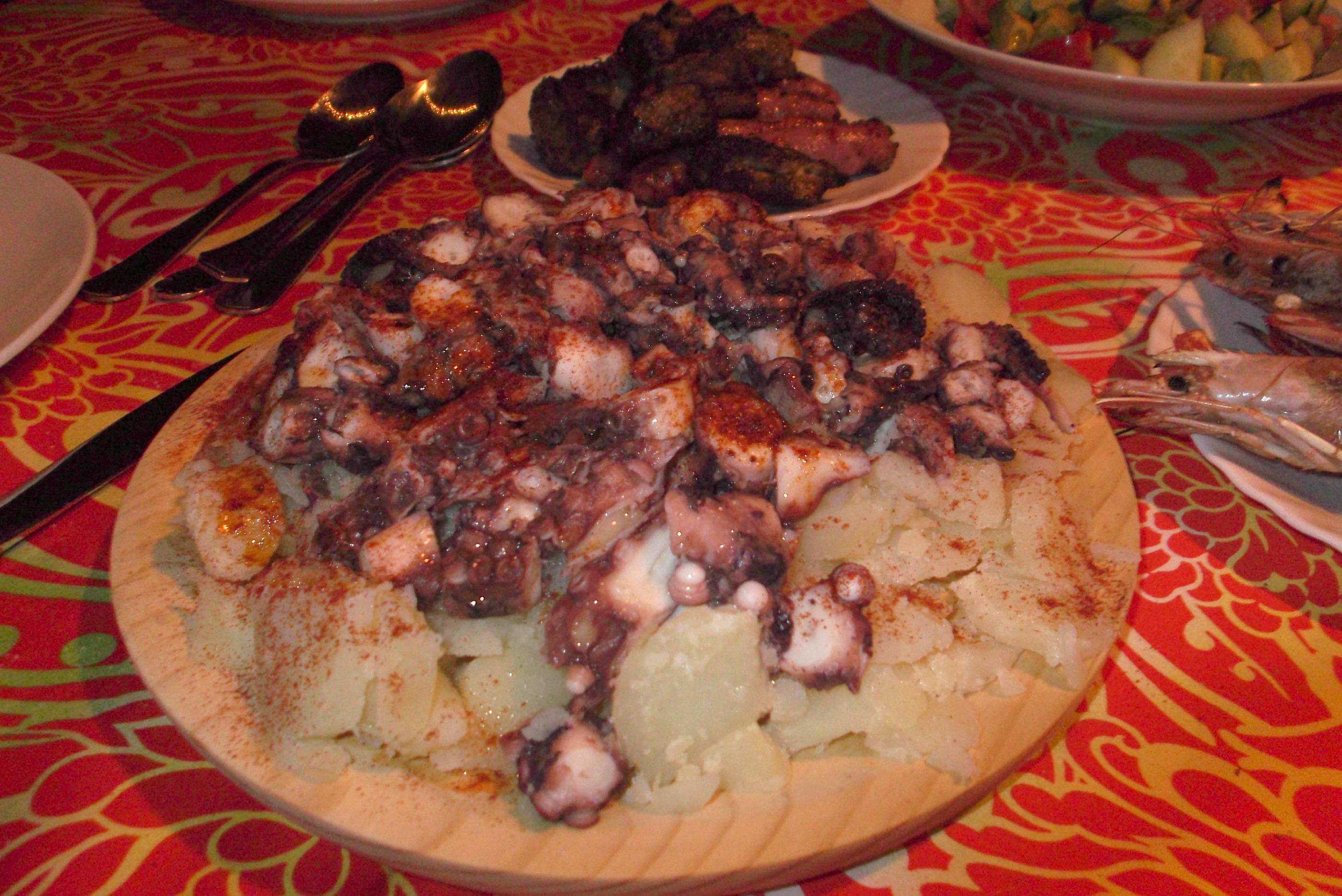
Galicia is very famous for its Pulpo a la Gallega, so we enjoyed this several times. A particularly good one was eaten in the beautiful town of O Grove.
Pulpo a la Gallega - in Galicia
We took a boat trip, which was fun despite the rain, to look at the Rias (which are estuaries) and to see where the oysters, mussels and scallops are cultivated. We were fed freshly caught mussels, steamed open and served with a young, local white wine. Perfect.
We ate SO many...the trays full of steamed mussels just kept coming!
In Santiago De Compostela, which is the destination for pilgrims and walkers on the Camino De Santiago (a mediaeval pilgrimage route), we admired the incredible cathedral and enjoyed a slice of their local cake (made with almonds and adorned with the symbol of Santiago – or Saint James – the Patron Saint of Spain).
Delicious with a strong cup of coffee
We also enjoyed several empanadas during our time in Galicia – which are made with both meat and fish. Very tasty snacks indeed.
Hard to resist...so we didn´t!
In a very pretty fishing village called Cudillero, where the houses appear to be stacked one on top of another, we ate our first Fabas. Galicia and Asturias have a great culture of soup type dishes made with their local white beans and served in different ways. Another tradition is to put a huge tureen of the dish on the table and you just keep serving yourself until you can´t eat any more. What a fabulous idea!
Go on..you can manage a few more!
These were served with local clams, which are bigger than the ones we typically see in Andalucía and the dish is called Fabas con Almejas.
HUGE and delicious clams
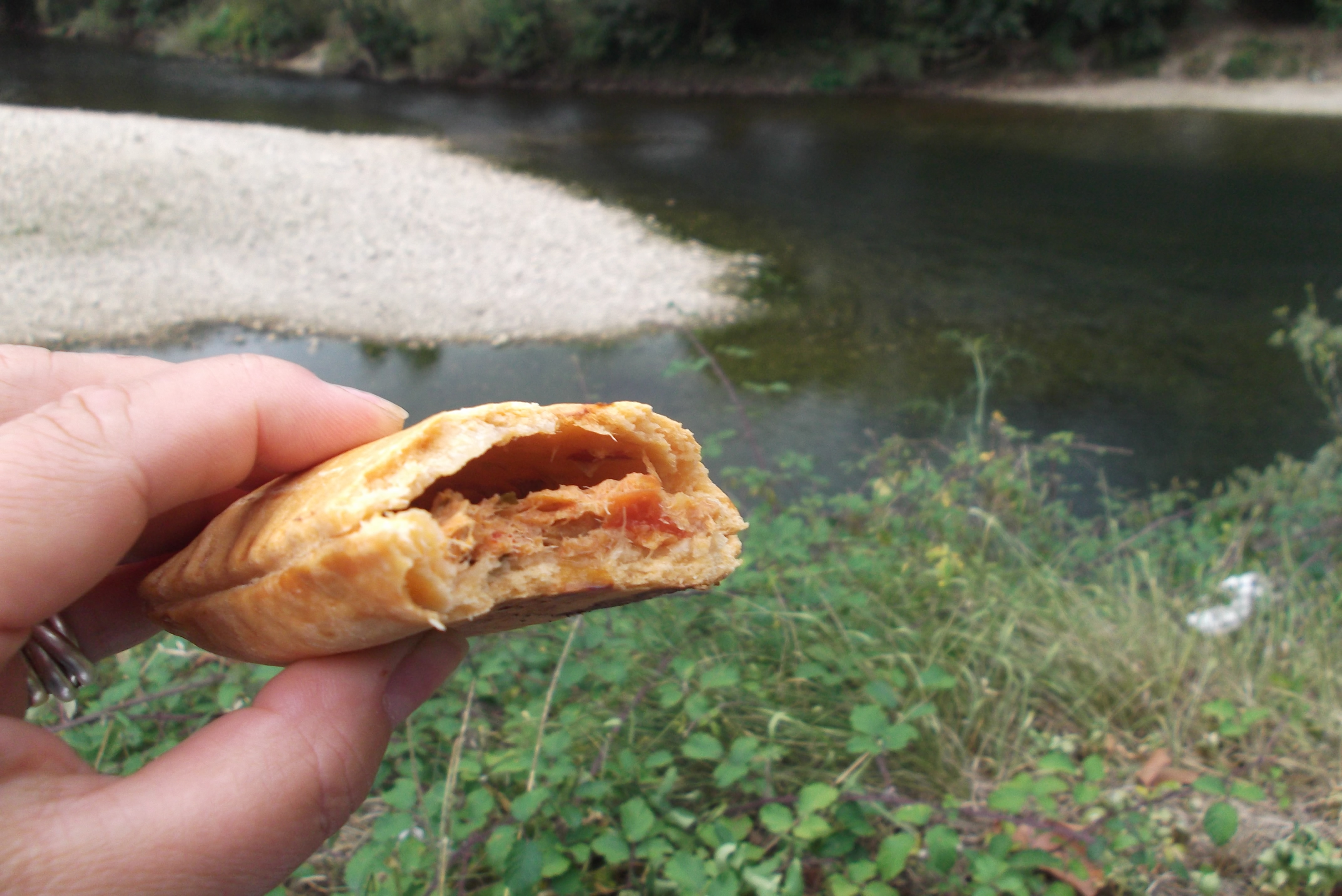
One day we went to Covadonga, which is a beautiful mountain top Sanctuary and took a picnic to eat further up at the lakes. The weather was so bad that when we got there we could only see fog so we drove back down to the River (the Sella) and enjoyed our Bollos Preñaos (which translates literally as pregnant rolls!) and Empanadas by the river.
Gives a whole new meaning to "a bun in the oven"!
The delicious rolls are made with bread wrapped round chorizo and baked as a ready made snack.
Empanadas with a river view
Dinner one evening was a delicious salad made with mushrooms and bacon and served with a delicious rosé wine.
Messy Mushrooms
Alongside this we tried a variety of local Asturian cheeses. The most famous is Cabrales, a pungent blue cheese which we really enjoyed. Our car was a bit stinky when we got home as we bought some back!
Gorgeous stinky cheeses!
We also ate an amazing rice and lobster dish, Asturian Pote (a vegetable stew with pulses), beautiful beef and ribs….but we were obviously hungry or greedy and never got to take photos of these.
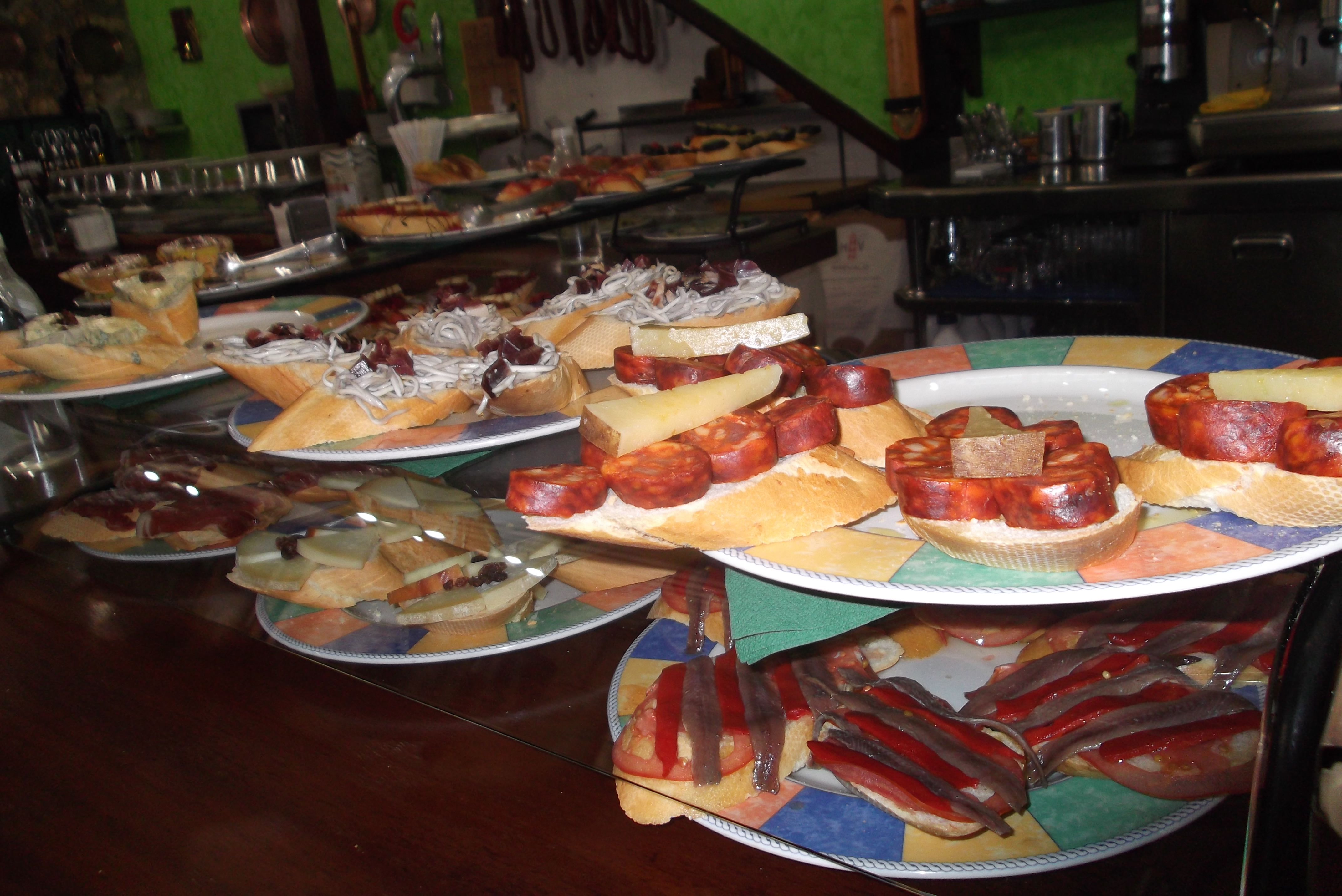
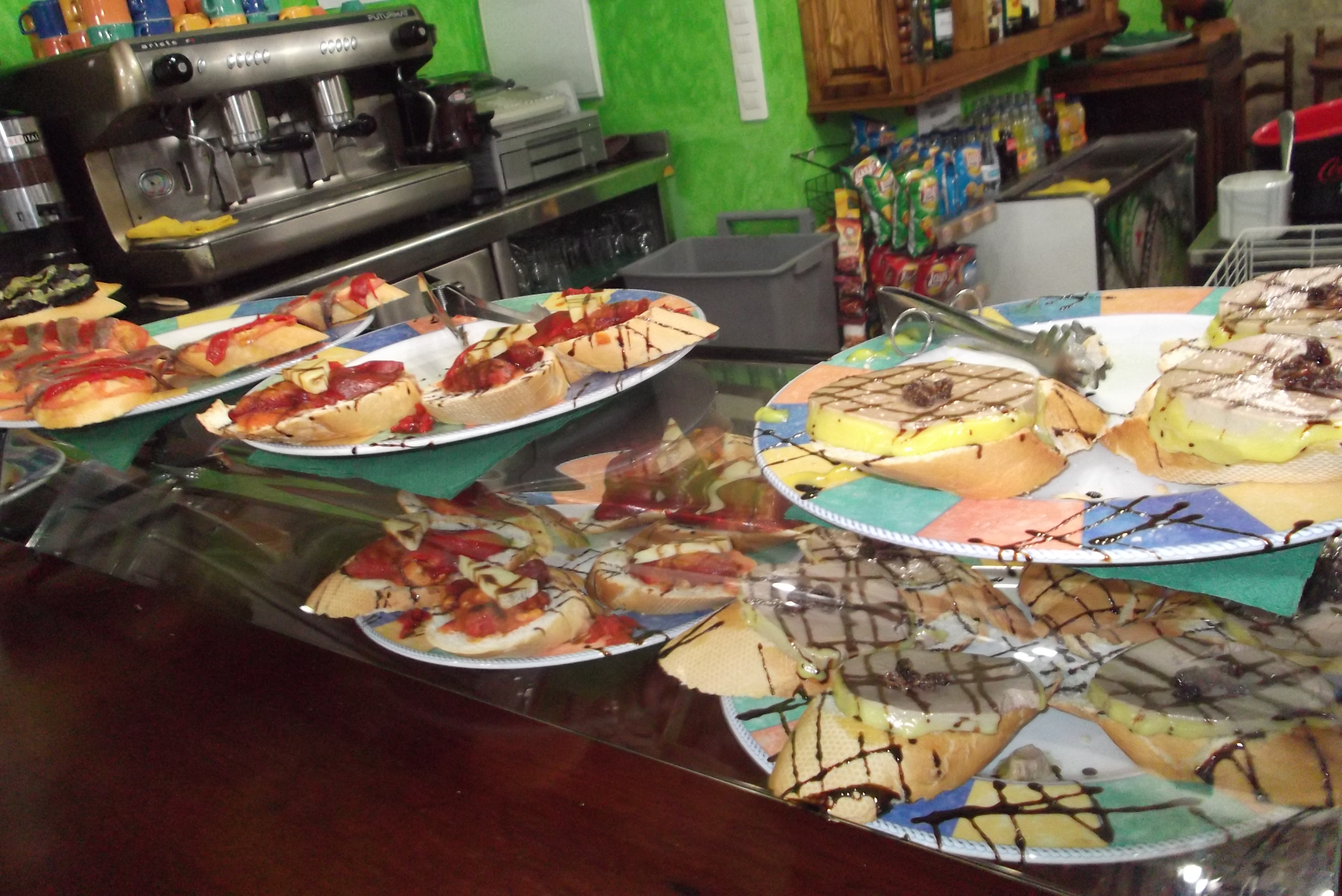
A beautiful mediaeval town in Cantabria is Santillana Del Mar, and we found an amazing bar that did a huge selection of Pinxos (like larger sized tapas).
Decisions, decisions....
We managed to work our way through a few of them with no problems. Well…it was raining and we were waiting for the downpour to stop!
I´ll have one of those, ooh...and one of those...ooh and...
Our final night in Ribadesella we ate a wonderful Hake and Prawn casserole – but only remembered to snap it as we had almost finished.
Sorry...but we were hungry after a busy day of sightseeing
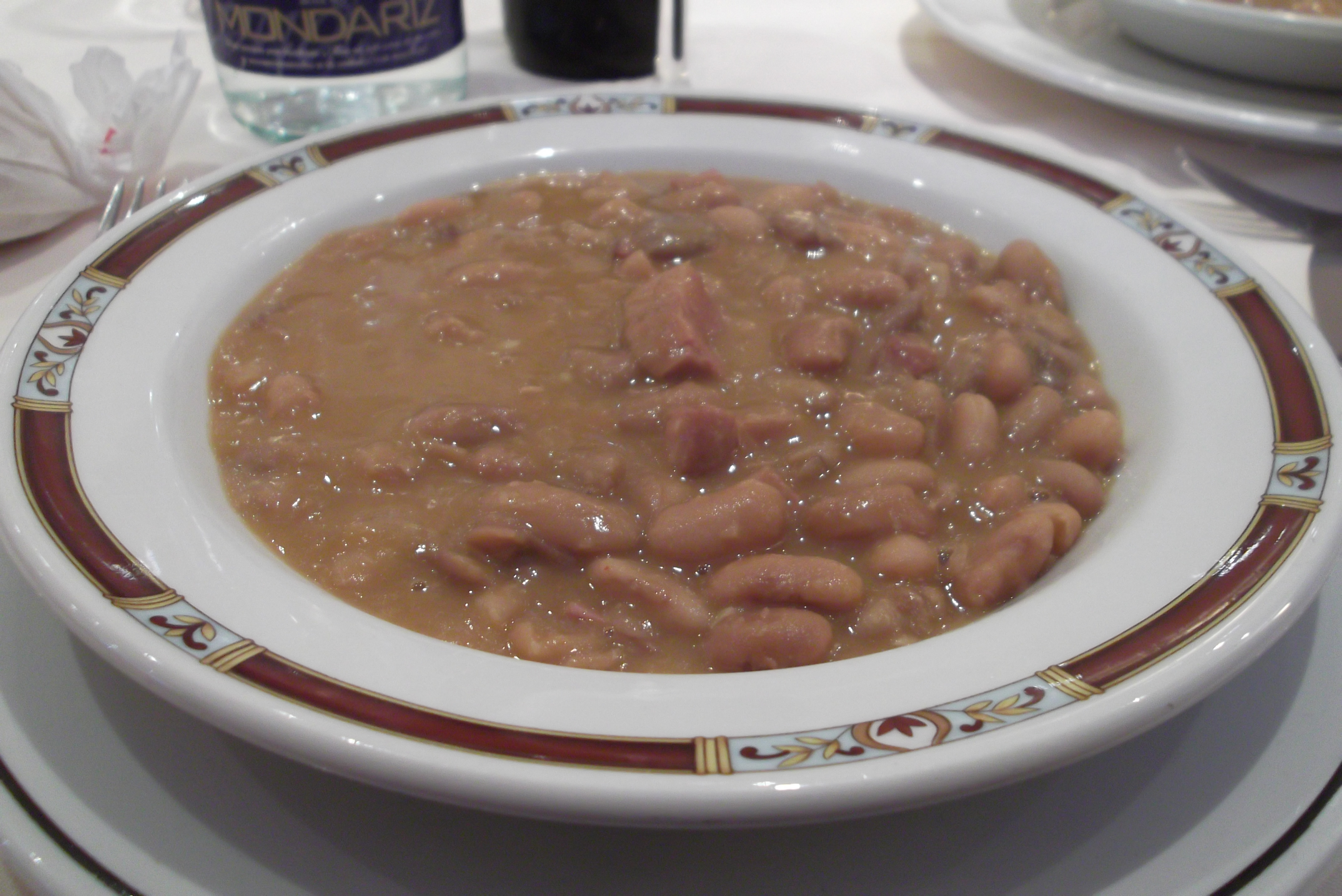
Near Leon we ate another incredible bean dish. This one was made with what they called “Cinnamon Beans” (because of their beautiful colour) and was cooked with smoked pancetta.
Cinnamon coloured beans...so tasty
And finally, our last night in a very lively Salamanca was spent wandering around the city by night looking at the beautiful buildings and enjoying a variety of tapas. These were Callos (tripe with chick peas) and Albóndigas (pork and jamon meatballs).
Tapeando en Salamanca por la noche - Nightime Tapas in Salamanca
So, it´s back to reality for us, but with happy memories, full stomachs and lots of ideas for new recipes in the months to come. Hope you enjoyed sharing a little of our holiday with us. Of course, it wasn´t all eating and drinking….next time I´ll show you some of the beautiful sights. ¡Hasta luego for now!
Can you guess what this post is about? There´s a small hint in the title…
Yes, I am a complete chili addict. I love things hot and spicy, but I know that not everyone else does. Big Man has gradually increased his “heat tolerance” over the last few years, but he´s still got a way to go before he catches up with me. A way around this is to grow your own chilies and then use them as you like. They´re hard to buy here, Spain is not typically a nation of spicy food lovers.
Most of the chilies ripen at around the same time. We planted late this year, so ours are all starting to turn red or orange (some are picked green) in early September. When you have this glut of chilies, you have to do something with them to keep them for the year ahead.
Chili Heaven
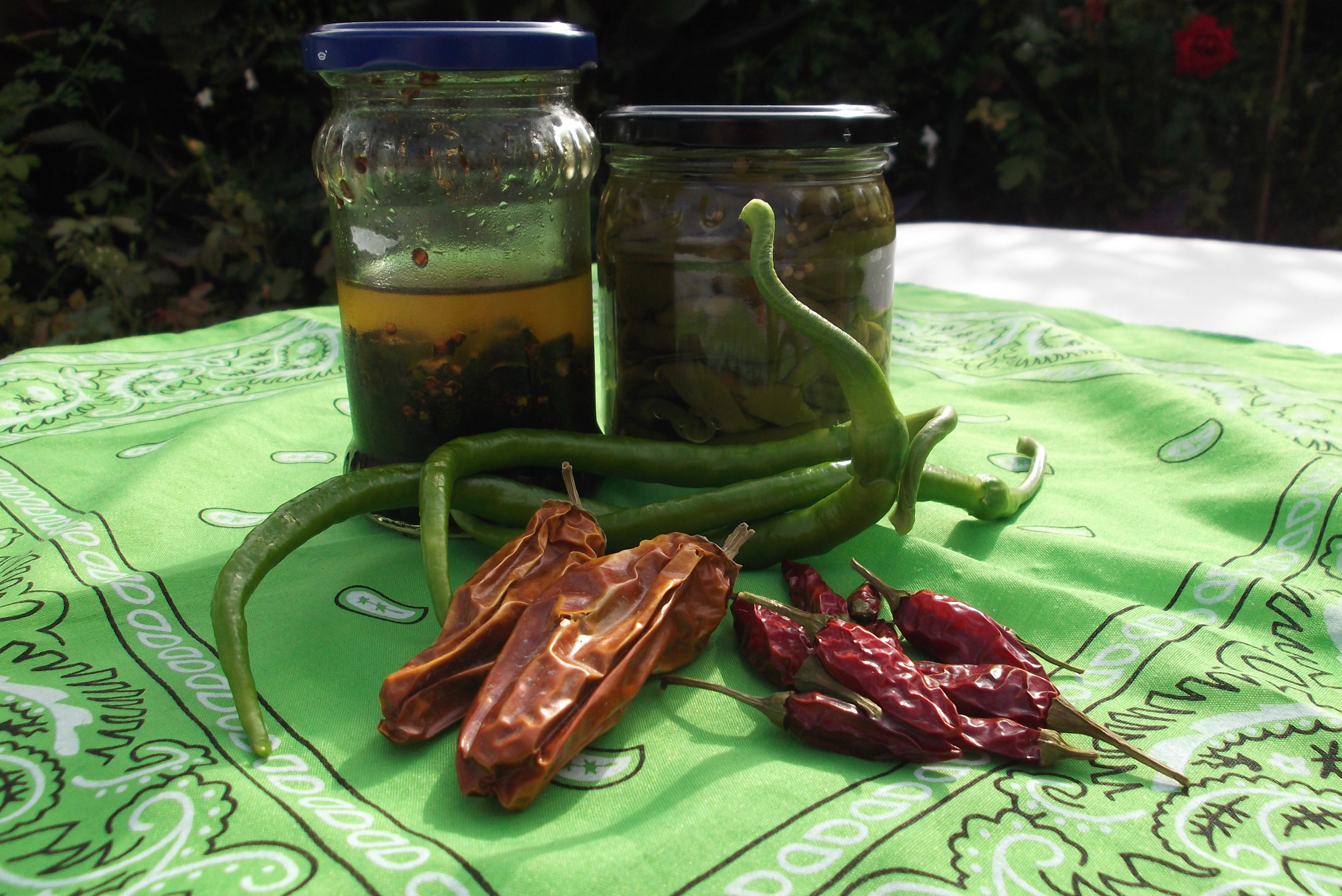
The simplest methods are (apart from eating them fresh), to freeze them or dry them. Last year I planted long thin green chilies, some stubby orange ones, and the fiery cayennes. You can see them in the photo. If anyone wants seeds, please let me know and I´d be happy to mail them to you…honestly, if you have the weather for growing them they should do well.
This year I also planted some that a neighbour gave me (I don´t have a photo as they are not ripe yet) of some super fiery pinky red chilies that look like little balls or rose hips when they are mature. If anyone knows what they might be, I´d love to know.
Some of my chilies I pickle and I followed the guidelines in Olives and Artichokes post here. I used mustard seeds and peppercorns in this particular jar, but am going to enjoy playing around with spices and pickles over the next few weeks.
And a final way, which may be new to you, is my mum´s refrigerator chili preserve (for want of a better name) which keeps for a month or two and is for dedicated chili lovers who enjoy spooning spicy fresh chilies over anything and everything. Cut your chilies finely, scissors help with this as they help avoid nasty incidents with chili fingers in eyes. Put them into a sterilised jar (recently out of the dishwasher is good). Cover the chilies with oil (I use olive oil but any oil will do) and soya sauce (about 8 oil to 1 soya). Keep in the fridge, shake before serving, and enjoy the buzz!
We are off on holiday tomorrow (yay!) for a week – looking forward to catching up on all your posts and comments when we´re back. ¡Hasta luego!
Now, don´t go getting all squeamish on me, because today I´m going to explain how to cook an octopus! This is a dish which traditional comes from the north west of Spain in the autonomous community of Galicia. It sits on the border with northern Portugal and has both an Atlantic and a Bay of Biscay coastline.
This coming weekend we´re taking a little holiday and heading north to Galicia and Asturias, so I´ll be able to show you some photos of the “real deal” soon. In the meantime, I´ll just set about cooking one of Galicia´s most famous dishes, Pulpo a la Gallega.
First take your octopus….ok, so I appreciate some of you may not be able to get hold of a fresh, whole one, but if ever you do, you´ll know what to do with it. They´re white when raw and turn a beautiful purple colour when cooked. All the nasties (i.e. the muck and eyes) are contained in the head. If you´re game, just chop the head off, cut off the section with the eyes and scoop out the nasties from the inside. Give the whole thing a good rinse, including the tentacles and you´re done. Alternatively you can clean it after it´s cooked, but it leaves you with mucky stock. And no one likes mucky stock, do they?! Ok, that´s the messy bit over, the fainthearted can join us again now.
For info, you don´t need to beat your raw octopus against a rock until it´s tender like you may have seen in quaint fishing movies. Just freeze it first for a day or two and when it´s defrosted you´ll have a lovely tender octopus.
Put the octopus into a heavy saucepan and just cover with water. No need to add salt, this is done when it is cooked. I think this is where the Galicians leave it, but I like to add a little extra flavour which then gives me an amazing stock at the end to use in other dishes like Seafood Stew. I add a few tablespoons of olive oil, a bay leaf, a dried chilli and a couple of cloves – but this is entirely optional.
Cleaned but still raw
This will now need to be cooked slowly for up to a couple of hours (depending on how much your octopus weighs). You can´t really over cook it if you take it slowly, and you can either do this on the stove top or in a slow oven. Test it with a skewer in the thickest part of a tentacle – if it slides in as though through butter, you´re done! Some people do like to go for the quick and fast cook – I think it would be great in a pressure cooker, but I´ve never done it like that so I have no idea of timings.
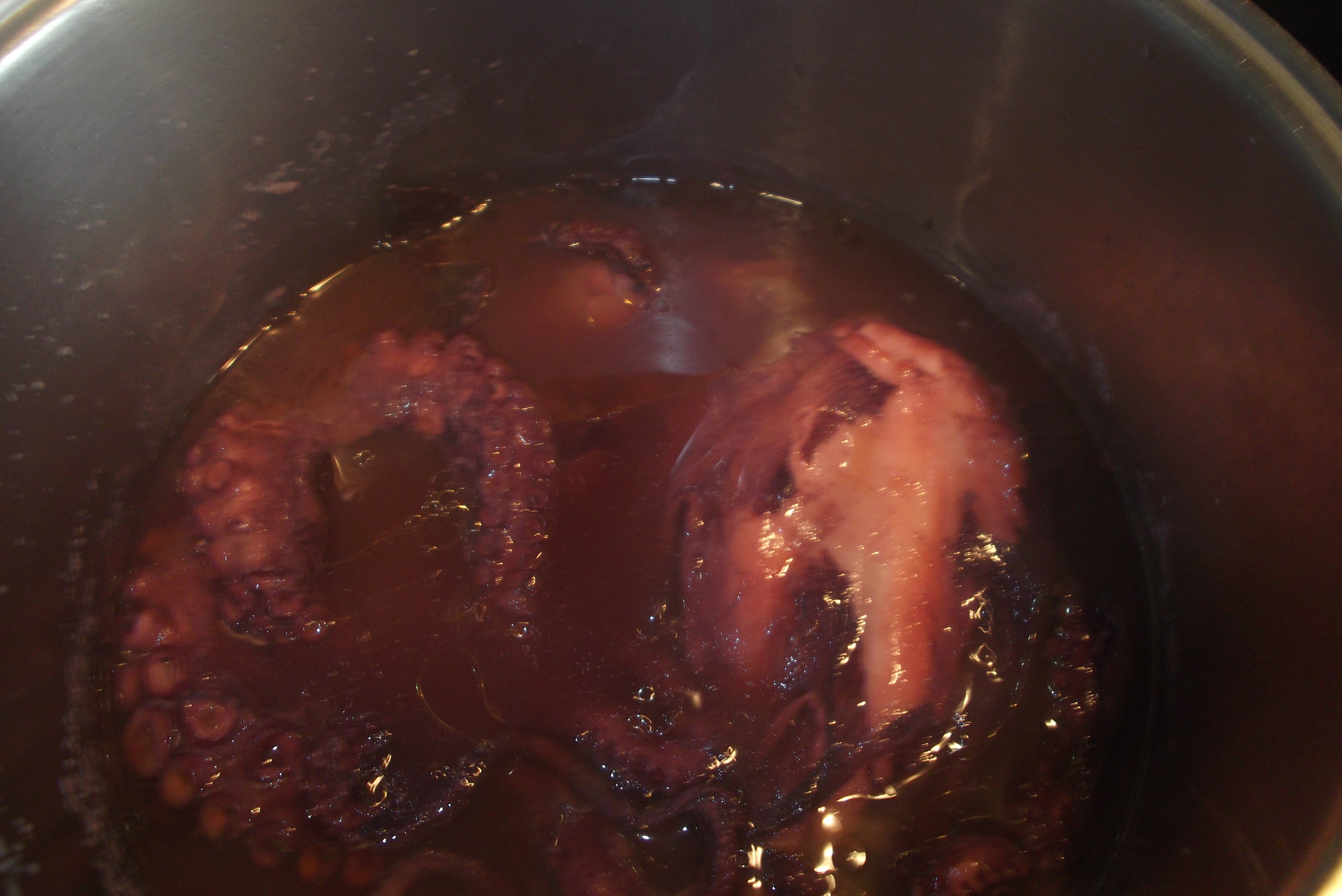
Cooked!
Meanwhile you are going to boil about 2 medium potatoes per person in their skins. When you are ready to serve, peel the potatoes and roughly chop into smallish chunks. It´s traditionally served on round wooden platters, but I know some people won´t have one or prefer not to use them for hygiene reasons. We throw caution to the wind and are both, so far, still standing….but I promise not to tell anyone if you use a large flat plate.
Pretty Coloured Stock
Lift the pulpo out of the delicious stock and either chop with scissors into little pieces or chop with a knife. Make a base out of the cooked potatoes, pile the pulpo on top and now a good seasoning of sea salt, plenty of pimentón (hot or sweet according to your preference) and a good dousing in olive oil which will soak into those chunks of potato and pulpo.
It´s not a tricky dish to make, it can be pulled together for serving at the last minute and looks pretty impressive. Most importantly though it tastes amazing….go on, get brave with an octopus!
What do you do when your Big Man comes home with about 15 mammoth courgettes and you´re the only one in the house who really enjoys them? Well, you have to give a few away to a courgette loving neighbour, and then get creative.
The courgette loving neighbour gave me a recipe for her courgette bread which looks delicious and rather like my Banana Bread recipe. As soon as I´ve made it I´ll let you know how it goes. Then I made some little courgette pancakes, but more of those another time. And then I thought it was time to tackle some pickled courgettes.
These remind me of special Italian family meals when I was younger – lots of salamis and pickled vegetables as a big Antipasto. It´s been years since I made them, and I used mustard powder and turmeric which is not so Italian, I have to confess.
500g courgettes, very finely sliced (I used a mandolin slicer)
500ml white wine vinegar
140g brown sugar
1 tsp mustard powder (I used Colemans English Mustard)
1 tsp mustard seeds
4 dried cayenne chilies, crumbled (use less if you like)
1 tsp ground turmeric
Sprinkle the courgette slices with salt and then cover with ice cold water and leave for an hour. Drain and pat dry. Meanwhile put the rest of the ingredients into a saucepan and heat to dissolve the sugar and leave to bubble for a couple of minutes.
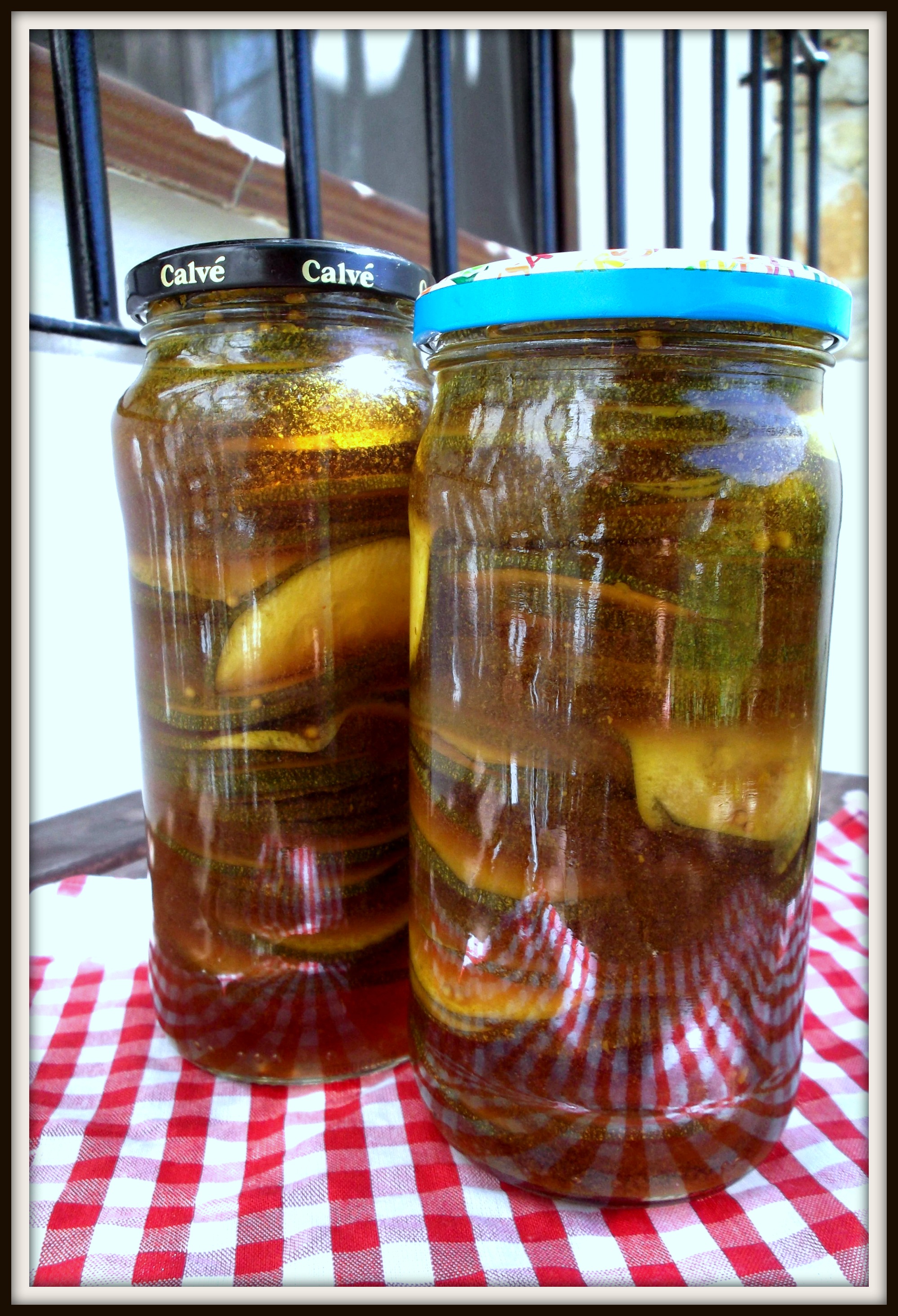
While the pickling liquid is cooling down a little, pack the courgettes into two sterilised jars, pour the liquid over and seal tightly.
The recipe says to keep them in the fridge and that they will keep chilled for a couple of months. I have them in the larder which is cool. They will taste great in a few days, but I had a few slices that wouldn´t fit into the jars which I covered with a drop of the pickling liquid and ate that evening…and they were delicious!
Me that is…I´m the Copy Cat! I´ve been picking up lots of fantastic recipes over the last few months via all the blogs that I am following, many of which I have promised myself I would cook once the temperatures started to drop and I could bear to put the oven on.
Well, yesterday the storm clouds gathered and at one point we had thunder and pouring rain. It was dark and gloomy – perfect baking weather. Added to this was my technical nightmare with WordPress, but thanks to all you lovely people out there I eventually got things sorted and am able to post again. It was lovely to have so much support – it´s a funny old thing isn´t it that people you don´t really “know” and will probably never meet face to face care enough to step in and offer help. Made me feel very warm and good, so thank you again.
Anyway, back to the kitchen. I have seen a few great recipes for dog biscuits recently and I asked myself “why the heck am I forking out for rubbishy treats for my beloved pooches, when the rest of the food they eat is healthy?”. So, recipe number one comes from Greg and Katherine over at Rufus´Food and Spirits Guide, or more precisely their faithful hounds Mingus and Coltrane, who are probably nearly as good in the kitchen as their master and mistress.
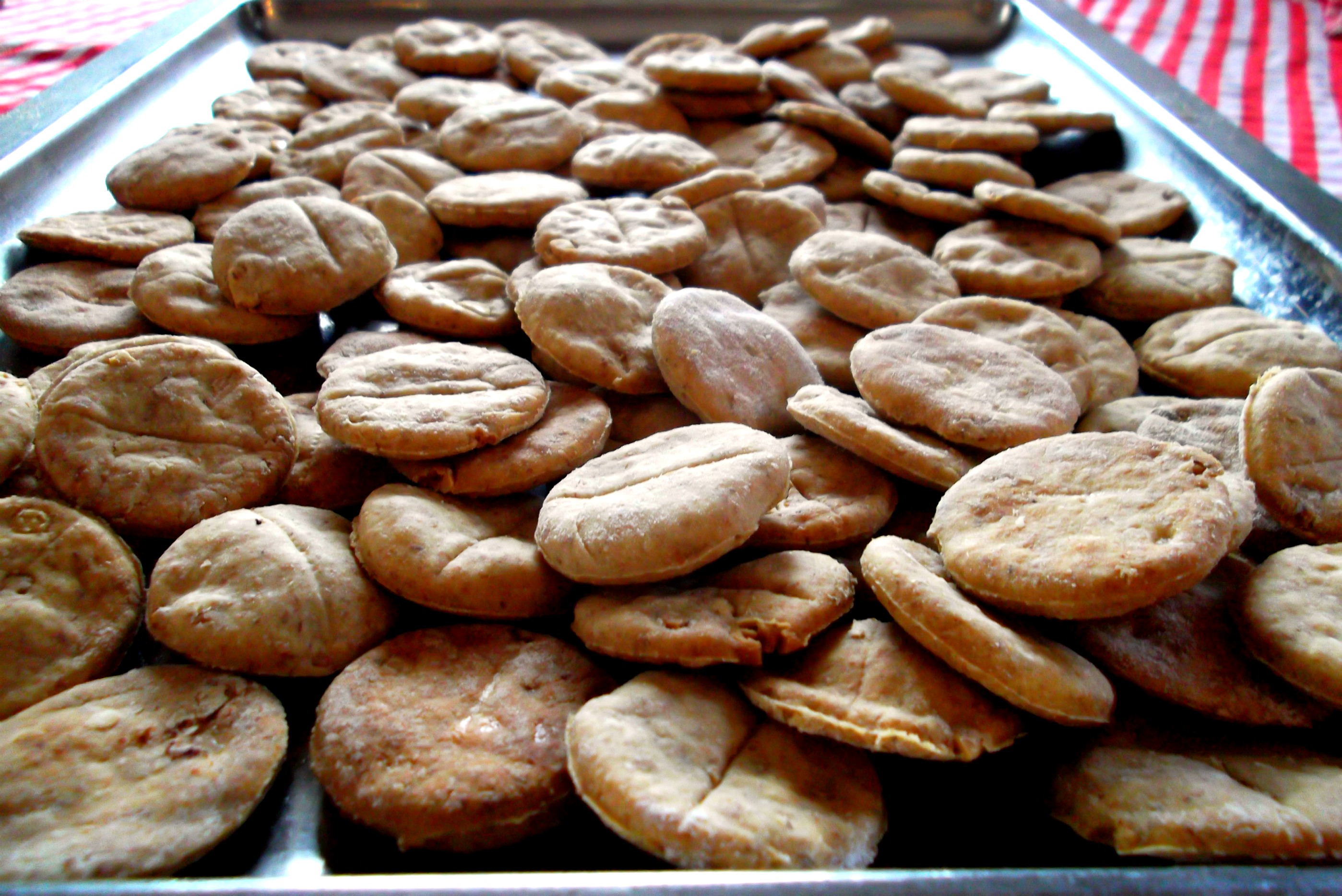
That´s a lot of doggy happiness on one tray
Mingus and Coltrane, Luna and Alfi salute you. It was hard to get pics of them eating the biscuits as they were gone too quickly and Luna, for some reason is camera shy!
Anyway, here are a few photos so that any dog lovers out there can say “aah” and chuckle again at Alfi´s new haircut.
The second Copy Cat experiment today was with scones. Well, I did have the oven on. I love scones but have never had too much luck baking them. Either they turn out really hard and I tell people that they were MEANT to be rock cakes, or they rise too much and are far too dry and crumbly.
Well, my scone woes are over thank to Cecilia at thekitchensgarden and this is the recipe that changed my scone baking forever. God I love that woman and her family recipes.
Super Size Me
The only problem is that it was a long, long afternoon.
The butter was cold, I couldn´t spread it any thinner...honestly!
And I had so many jams to try.
Cherry or apricot? Oh go on...have both!
Well, I had to just check a few of them out to make sure that the first Super Scone of my life wasn´t a fluke. It wasn´t.
PS. I did quite seriously debate with myself about not telling Big Man there were scones left and offering him a delicious “peanut butter cookie”. But I didn´t. You see, not such a greedy guts after all!
When you have lots of tomatoes growing, or you can buy them cheaply, it´s fun to play around with recipes and see what you can come up with. An excellent book for anyone interested in growing their own (or who just dreams about doing it) and cooking with the “bounty” is The River Cottage Cookbook by Hugh Fearnley-Whittingstall.
One of his recipes that I´ve played around with over the years is the one he gives for tomato ketchup. The beauty of it is that you can adjust spices and flavourings to suit what you and your loved ones enjoy. I like my ketchup spicy, so I go heavy on the chili. Some of the things he mentions in his recipe I don´t always have to hand (like mace or celery seeds) so I have changed things round just a little.
This is the Up the Mountain version, and I can highly recommend it.
You´ll need a very sturdy heavy based saucepan for this as you´ll be reducing and reducing the sauce until it gets to the right consistency.
Put tomatoes, onions, peppers, chillis and celery leaves into the pot and simmer until very soft. Put through a mouli or fine sieve and then back into the pot with the sugar, mustard powder and vinegar. Put the remaining spices apart from the salt, nutmeg and pimentón into a cloth and tie securely then drop this into the mixture. Grate a little nutmeg over and if you want more later you can add it nearer the end.
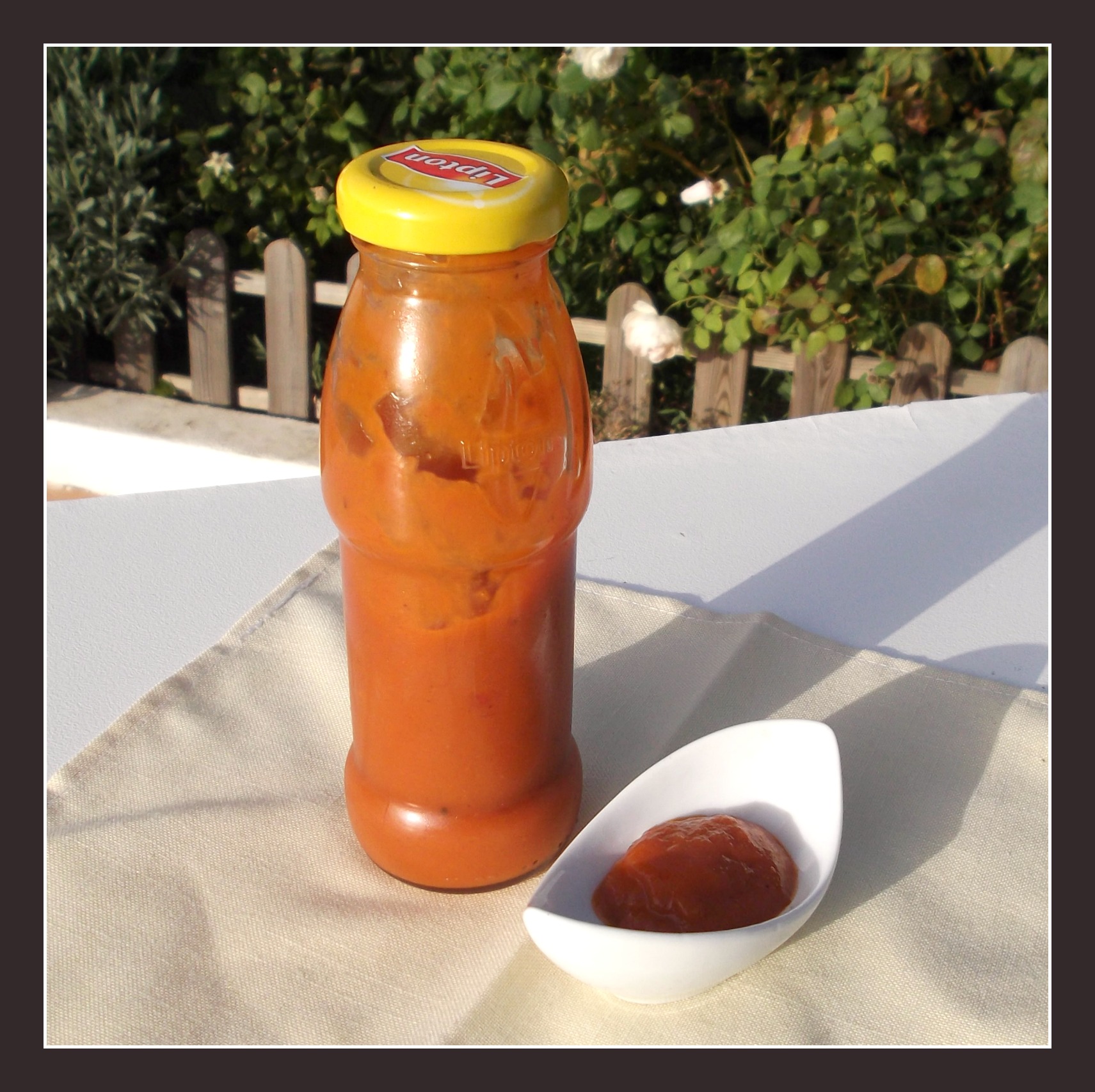
Cook the sauce slowly until it has reduced to the thickness you require. If you like you can give it a whizz with the hand blender (don´t forget to remove the spice bag first though!), then season with the salt and pimentón. You can either put it into sterilised bottles or jars (I use the small juice bottles we get here in Spain) or it will keep well in the fridge for a month or you can freeze it.
Delicious with chips (or French fries for my US pals), burgers, fish, veggies…well, pretty much anything in fact! And mixed with mayonnaise it makes a wonderful Marie Rose style sauce with a bit of a kick.
With the hot weather we´ve been having, the desire to cook has been low. But…a girl and her Big Man have to eat, so the other night we decided on some grilled langoustines with some vegetable fried rice to accompany it. Fried rice is an alien concept to most Spaniards, so Big Man had visions of me deep frying individual grains of rice or making some sort of croquette.
To his relief, and mine (due to the heat), it was a simple dish with only the smallest amount of oil and frying involved.
I boiled some rice (I used brown, but the choice is yours). While this was cooking I fried a finely chopped onion and two crushed cloves of garlic in a very small amount of oil in a non stick pan until it started to look brown at the edges. Then I added finely chopped courgette and a long thin green pepper and continued to stir fry them.
In a separate pan I made the thinnest omelette known to man! Whisk one egg and pour into a lightly oiled pan- almost as if you were making a crêpe – and make a very thin omelette. Flip it over to get both sides lightly browned and slide onto a plate to cool a little.
When the rice is cooked, drain well and add to the vegetables. There´s no need to add more oil if you have a good pan as you will now almost dry fry it. Season with salt and pepper and every few minutes give it a stir until the rice starts to brown.
Are those prawns ready yet?!
Roll up the world´s thinnest omelette and cut it into fine shreds. Sprinkle these eggy shreds over the top of your rice, mix gently and serve.
So in 2016 I turned 50. I was in Italy for my 21st, 30th and 40th. To keep this birthday tradition going I always knew I'd be in Italy for my 50! This blog starts with my 5 week adventure in Puglia but my love affair with Italy continues.....

















 Chica Andaluza