Fish Man came up trumps the other day with a whole hake in the back of his little van. It was rather large, too much for just Big Man and me, so as it was fresh it went into the freezer.
A few days later friends were coming over for lunch, and the sun promised to shine, so I decided to barbecue it. A quick visit to the garden to gather mint and lemons, and out into the olive grove for the tops of the wild fennel which is everywhere, and I was set.
I had to gut and clean the fish, but if you´re buying from a fishmonger, I´m sure it will be cleaned for you. It´s not that tricky (wear kitchen gloves though, or you´ll smell like a hake for the rest of the day!) but not for the squeamish.
Pat the fish dry with kitchen paper and salt the inside slightly. Stuff it with bunches of herbs and thin slices of lemons, then sprinkle the outside with coarse sea salt. No oil needed, but the salt will protect the fish and you´ll end up with lovely charred skin which I personally love to eat, but I know some people don´t.
Then it´s on to the barbecue for your hake. We cooked it on a low heat and the lid on for about 15 minutes in total. If you do use hake, but you could do this with pretty much any fish, it´s firm, so easy to turn when it´s half done. Check it´s cooked by peeking inside – the flesh will be white when it´s ready.
Ready to eat!
I served this with a delicious salad which was so beautifully coloured, it didn´t matter that the sun went in and a big cloud hovered over us all through lunch! I used chopped new boiled potatoes, cooked beetroot, oranges, thin slices of raw carrot and chopped chives. I made a simple dressing of olive oil, lemon juice, mustard powder, a clove of garlic, salt and pepper.
With so much colour, it can´t not be good for you...
This one is so quick and simple, it doesn´t even need a recipe! Perhaps just a quick explanation, though. This is served in Andalucía as a pre meal appetiser in the summer or when unexpected guests pop round and it´s drink time. Add a plate of slice Spanish cheese, some jamon or salchichon (salami), a cool drink of your choice and you´ve served a super speedy tapas selection without even really trying!
Wash and cut a lettuce heart into eighths, open a tin of anchovies (in olive oil if possible) and lay an anchovy over each slice, pour the oil from the tin over, add a squeeze of lemon or white wine vinegar and serve. These are picked up with the fingers, or little cocktail forks if you´re feeling refined, then just munched and crunched.
If you can´t stomach anchovies, replace with a strip of roasted red pepper.
Big Man and I are trying to shed a few kilos. He´s not my Big Man for nothing you know! He has a very big heart, which is good, the waistlines (his and mine) could do with a little streamlining though. In Spain, if you go on a diet at this time of year, they call it “Plan Bikini”. The thought of either us in anything other than a large, stout bathing costume or trunks would be enough to scare anyone, but we´re trying to be sensible.
Being sensible doesn´t have to mean dull though, and I cooked up this delicious (no fat) sauce to go with some grilled fish. It would taste just as good though with grilled meat or vegetables. Probably not so good with grilled bananas though! I like my sauce quite spicy, but you can make it as hot (or not) as you like.
Two cups of peeled, chopped tomatoes (or used tinned)
A teaspoon of salt
A good few grinds of black pepper
One tablespoon of brown sugar
Two tablespoons of white wine vinegar
A teaspoon of ground cinnamon
Hot chili powder to taste (I used 2 teaspoons of hit, smoked pimentón)
Dried chili flakes to taste (I used two birds eye chilies, crumbled)
Put everything into a saucepan, bring to the boil them simmer for 5 minutes and that´s it. Serve hot or cold.
Makes enough for several meals and will keep in the fridge for a week, or you can freeze. Bet it doesn´t last long enough though!
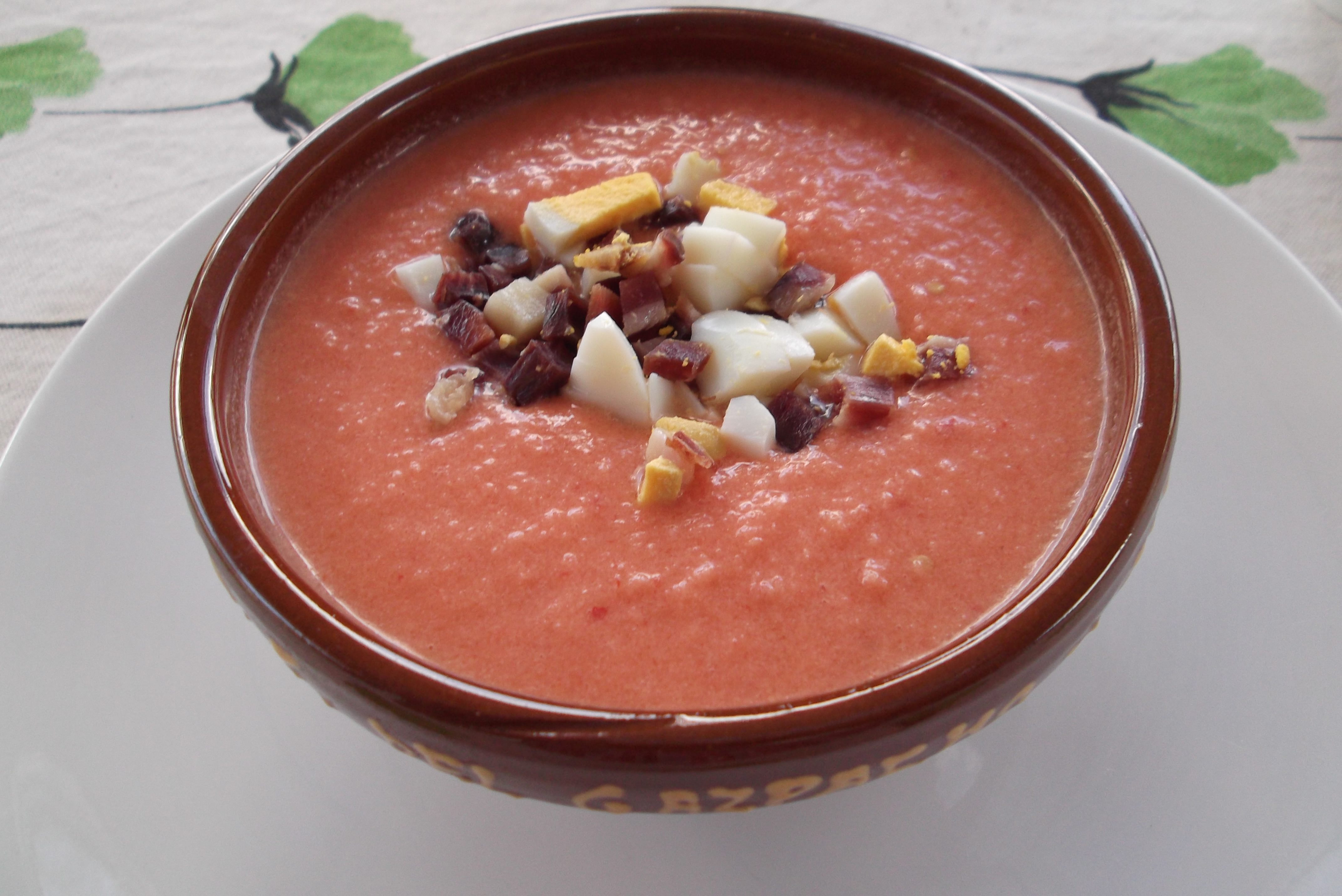
As promised, another version of the famed Andalucían gazpachos. This one originates from the beautiful city of Córdoba, and is my favourite version of all. It is different in that it uses very few ingredients but can be served three ways – very thick as a dip with small breadsticks (known as Picos), medium thick garnished with chopped hard boiled egg and jamon or tuna as a chilled soup starter, or diluted with water as a refreshing drink. So…three dishes in one!
Ingredients for this are few and it will serve from 6 (as tapas) to 2 (as a soup) approximately:
2-3 slices of stale bread without the crust (should be a fairly dense bread rather than sliced white from the supermarket)
About 500g of tomato, cored and peeled (I had one HUGE tomato as you can see in the photo) but usually the volume of the tomato once in the jug is a little more than the volume of the breadcrumbs
A chunk of red pepper (optional)
Half a clove of garlic (don´t recommend you use more or it will overpower the taste the taste of the salmorejo)
Vinegar
Water
Olive oil
Salt
Once again, the holy trinity of water, salt and vinegar appear but we´ll use very little water this time.
Dribble a very little amount of water onto the bread which you will have put into a mixing jug, and leave for a minute or two to absorb it.
Start with bread and water
Add the tomato and pepper if you are using it. The truly authentic recipe doesn´t use red pepper, but after wondering why my salmorejo never looked as red or tasted as sweet as anyone else´s, I was let into the secret of the locals round here – red pepper!
Tomato and Red Pepper
Add your garlic, a teaspoon of salt, a tablespoon of vinegar and at least two tablespoons of olive oil and start to blend with the hand blender.
Add Vinegar and Salt
You need to get this really smooth, almost like a purée. The more oil you add, the smoother the mixture will be, although I tend to go easy on it just for the sake of my waistline! Taste every so often and adjust the salt and vinegar to your liking. Again, it should be “alegre” or lively in flavour.
Start to blend
When you´re done, leave to chill in the fridge for about an hour.
Get it smooth and thick
Traditionally it´s served in a deep earthenware bowl (to maintain the freshness) with chopped hard-boiled egg and jamon on top. Some people substitute the jamon for tinned tuna but I guess chopped bacon would also be nice.
It´s also great as a dip or sauce served with little breadsticks (like very short grissini) or croutons.
It´s been a hectic little morning up our mountain. A nearby complex which offers rural holiday accommodation – http://www.cortijolasmonjas.com/ – just in case you want to have a look at the same lovely scenery I see every day, ran a four hour workshop on distilling aromatic plants. More of that later in another post. I got home so relaxed by the lovely smells of lavender, geranium and melissa, I wasn´t really in the mood for “proper” cooking. Big Man had been tidying up the vine in the vegetable patch, so he was hungry. I needed something fast and filling.
Well, not being a girl who is ever likely to be caught with her fridge empty, I pulled together a speedy potato salad. It´s green because of the avocados that are very much in abundance here at the moment, and because I used a big bunch of chives from our garden.
So, here it is, in all it´s delicious simplicity, for two people.
Two large potatoes cooked in their skins then peeled and diced
Four rashers of grilled bacon, chopped
One large avocado, peeled and diced
Half a cup of cooked peas or broad beans (guess what I used!)
Half a cup of chopped green olives
One grilled red pepper, peeled and chopped
Some finely chopped chives (I used about 2 heaped tablespoons)
One heaped tablespoon of mayonnaise
One small tub of natural yogurt (mixed with the mayo)
Pepper – you may not need salt because of the bacon, it´s down to you
Mix up all your ingredients, season and then stir in the mayonnaise and yogurt mixture. Also good as a side dish, but we just dug in and scoffed the lot!
It´s the end of May and we only got round to planting out all those little plant plugs on 21st May, shame on us. We´re usually at least a few weeks earlier, but never mind. The weather seems to be turning to summer, and I took a little look around this morning to see how things were doing. Five days on, and I couldn´t believe my eyes. Fortunately things catch up quickly here and I know, at least if the weather stays fine, we´ll be eating most of what we´re growing now into November.
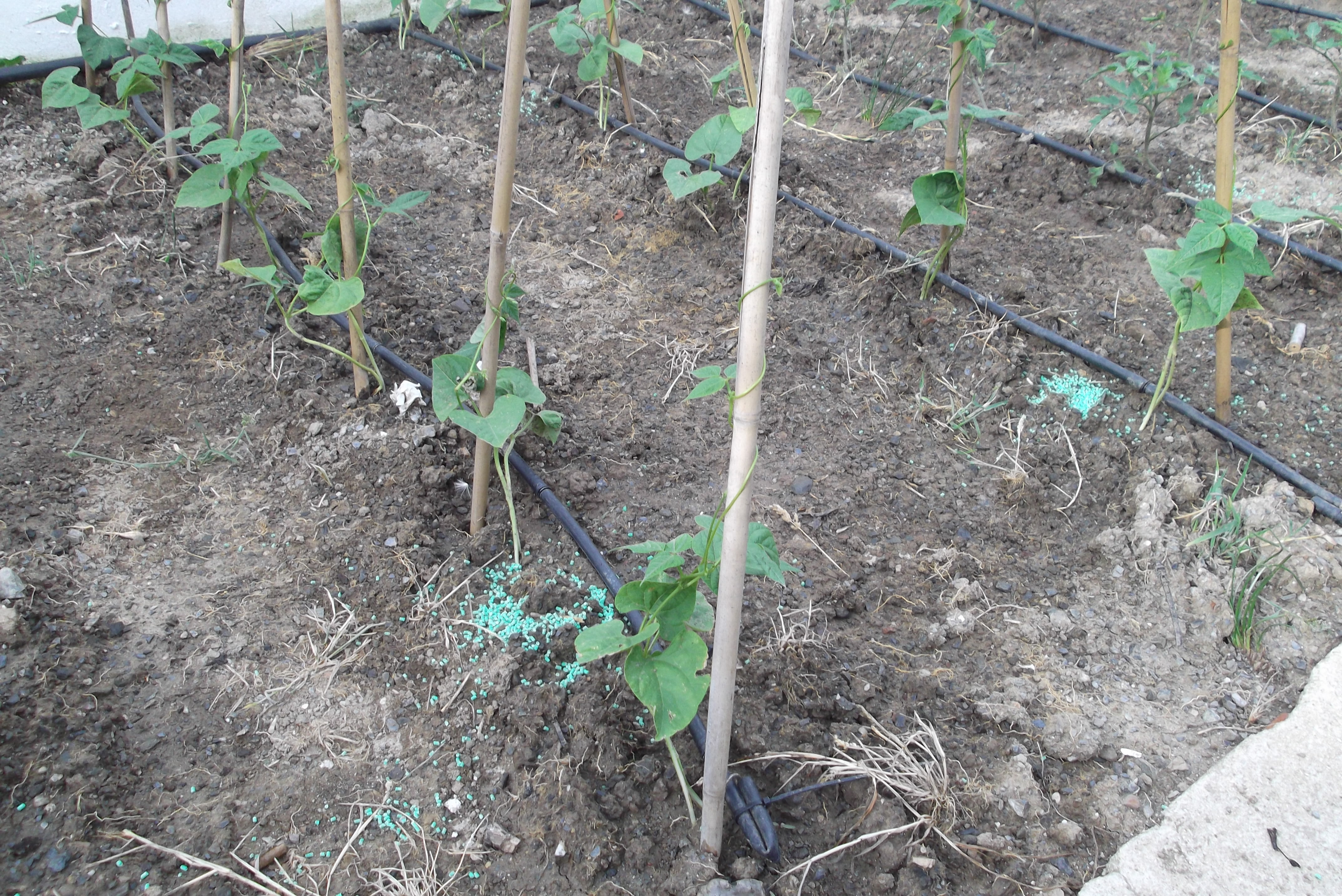
The runner beans seem to be growing a few cm each day. Luckily we have plenty of canes for them. We had to put down some slug pellets, not really in keeping with our organic aims, but there seems to be a plague of slugs and snails this year.
Jack and The Beanstalk...
The broad beans are still in full production, the freezer is also well stocked for when they do die off in a few weeks.
Beans, beans are good for you...!
We´re very excited about our potatoes as we´ve never grown them before. Big Man was reluctant as they do take up a fair amount of space. However, they´re drying out now and will be ready to dig up soon, then once we´ve dug over the soil and given it whatever (organic) feed it needs, we´re going to put other things in. I have seeds for dwarf runner beans (including some very funky yellow ones, which I´m quite excited about). We´ll definitely put some radishes in as they grow so quickly, and then some lettuces as choices here in the shops locally are mainly limited to lettuce hearts or iceberg.
Tired Potato Plants - which is good!
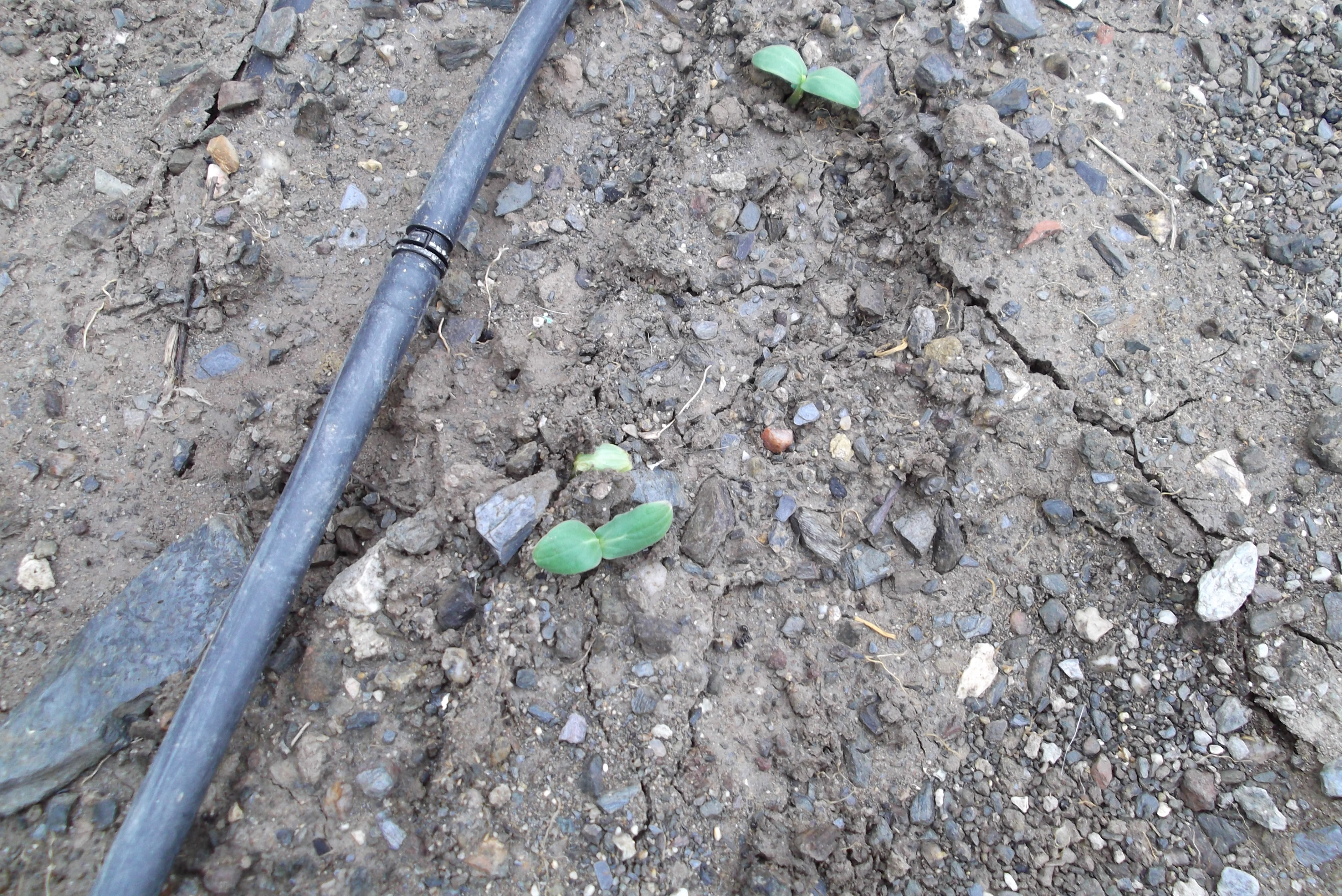
Last year a neighbour gave us some little cucumber plants which he had grown from seeds of his previous year´s crop. They went crazy and we had loads of delicious little cucumbers all summer long. We took his advice and saved the seeds from one cucumber which we let grow fat and sad looking. We planted them 5 days ago, and despite Big Man being convinced that nothing would come of them, this morning we found lots of little sprouts…we´re so proud!
Tiny Cucumber Sprout - Future Gazpacho Ingredient
Our artichokes continue to flourish, but we will put some new plants in this year as the current ones are now three years old and getting tired.
Artichoke leaves, a perfect snack for slugs
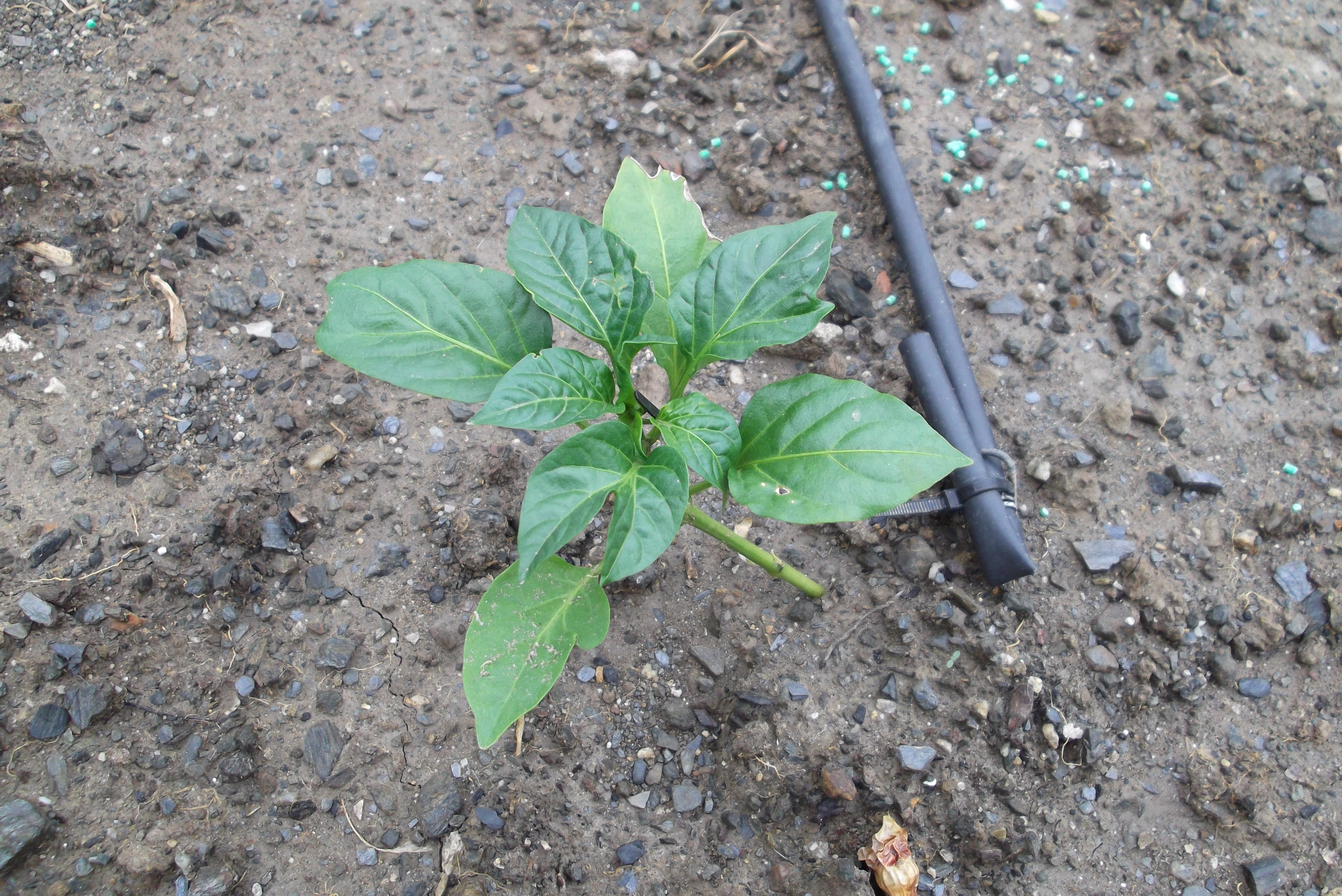
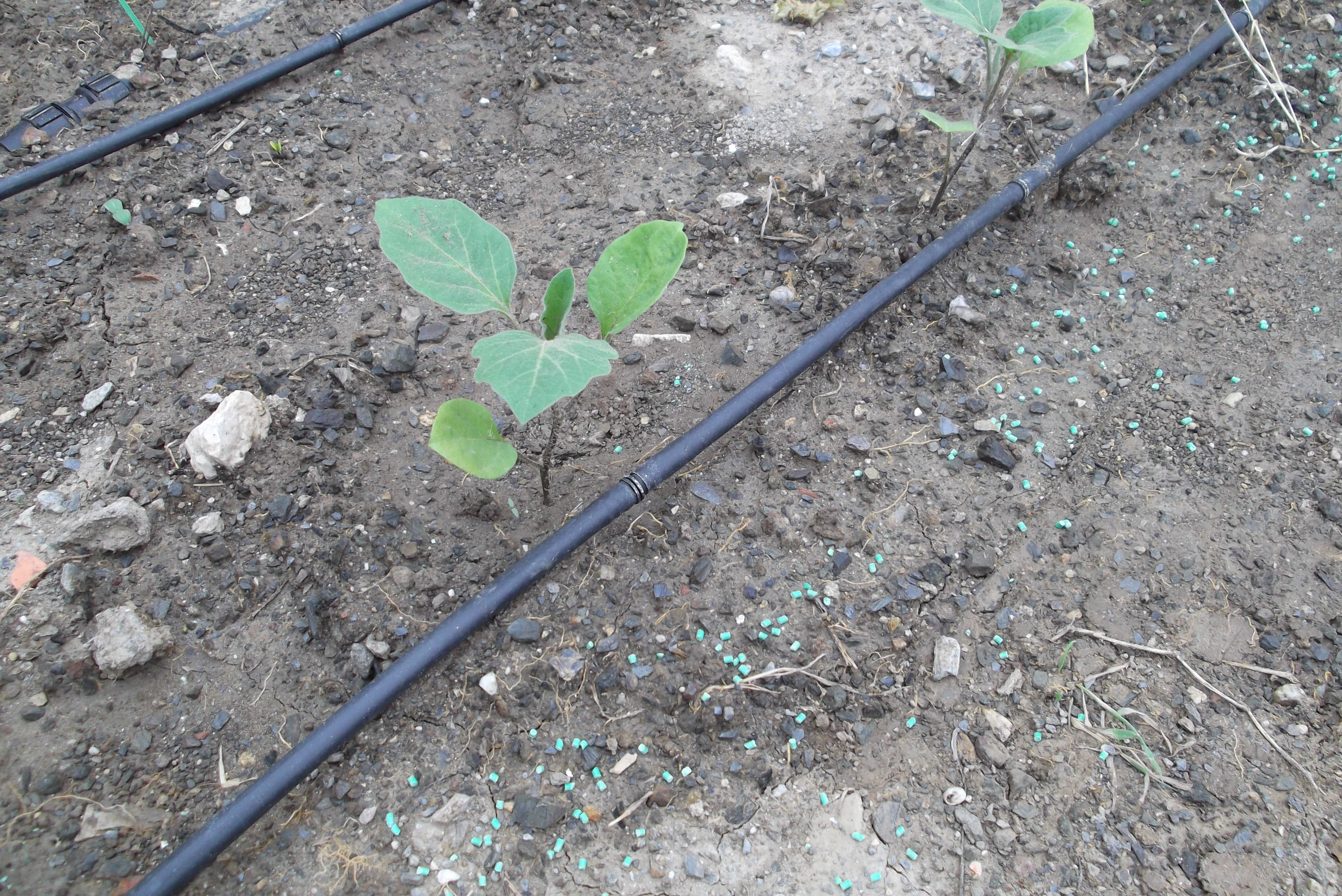
Our tomatoes, peppers and aubergines have taken root well.
Pepper or Pimiento
Big Man hates aubergines (or eggplants) with a passion. I, on the other hand, adore them. Sometimes I sneak them into dishes without telling him and he cant always tell. I love Melanzane Alla Parmigiana, and make this as a treat all to myself so we have planted a little row of them to keep me happy.
Aubergines. Love ´em or hate ´em?
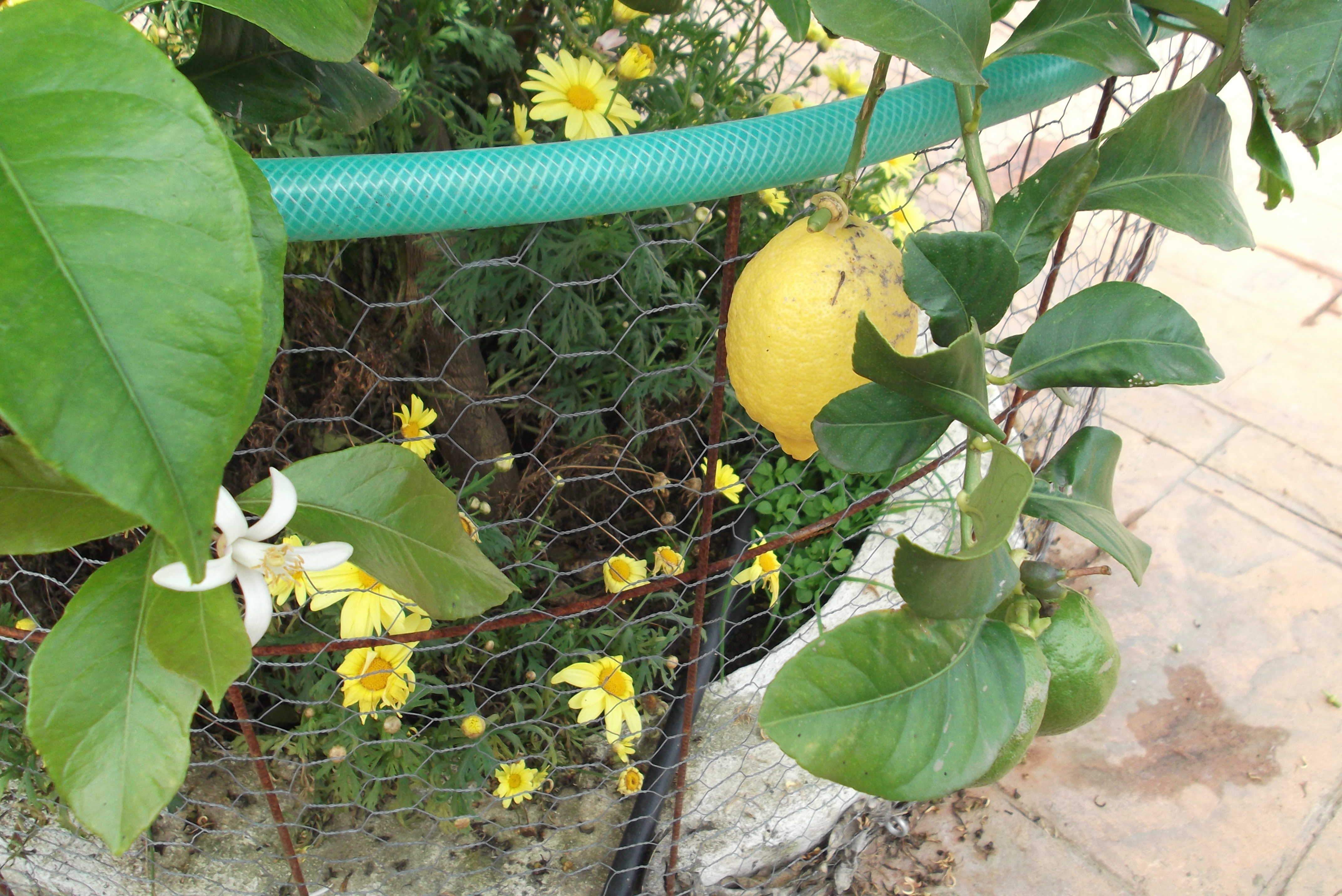
And our lovely little lemon tree seems to have found its pace and keeps us supplied with juicy fruit for squeezing over grilled meats, making dressings and slicing into our “sun downers”.
Ice and a slice anyone?
And just to prove that it´s not all about veggies, here´s a gratuitous shot of one of our roses…
Ok, so I say the word Gazpacho, and what do you think of? A bowl of a chilled tomato based soup, with chopped pepper, cucumber and possibly more tomato floating on top? I´m right, aren´t I?! Ok, so enough with the questions. You´d be right of course. But you´d also be wrong. Well, not wrong exactly, just probably not aware of the different versions of Gazpacho that exist in Andalucía. Gazpacho is Andaluz (i.e. from the Andalucían region of Spain) rather than Spanish. Just as Paella is Valencian and not Spanish.
It´s all getting complicated, so maybe I should start at the beginning. Andalucía has always traditionally been more reliant on agriculture (farming, olives, goats and pigs) than industry. Based on hard labour through grafting on the land, or the “campo”. So what did those hungry labourers do at midday, apart from take a well deserved rest in the shade of an olive tree, that is? Well, they took their lunch, or the makings of it, with them. Life was, and still is, fairly tough for a lot of people. Poverty reigned and many of the traditional dishes came about through necessity. Ask any older person here what the key ingredients of a gazpacho are and they´ll tell you “water, vinegar and salt”. And it´s true, they go into all the versions. The reason for this was to make you thirsty. And therefore drink more water, and thus feel full up. Your belly was full of liquid and stopped you craving more food.
So, we have our country men with a twist of salt, a bottle of vinegar and a knife. Water came courtesy of a nearby stream, and the vegetables that went into their gazpacho were those that could be found in the countryside around them. Sometimes tomatoes, peppers, onions. Other times wild leaves, oranges or a melon.
The gazpacho you see above looks, and actually tastes, like a very finely chopped salad in a bowl of iced water. I won´t lie to you, that´s pretty much what it is! When I first came here, I admit that I didn´t really “get” it. Now that time has passed and I´ve endured quite a few very hot summers, it all makes sense. A chilled bowl of iced salad/soup, with a little tickle of salt and vinegar, the tang of fresh mint and the crunch of all my favourite summer vegetables goes down a treat when you can´t face doing anything more energetic than swatting a fly away and adjusting your sombrero.
Our village prizes this version of Gazpacho so much that it has a three day Fiesta Del Gazpacho dedicated to it every first weekend in August! All good fun, although we tend to slake our thirst afterwards with a cold beer or a few glasses of wine. And then, when we´ve cooled down, we all take to the dance floor and Paso Doble until dawn. Happy days.
If you want to try it, you´ll need (roughly, as the quantities are really down to you) for four bowls:
Half a lettuce heart finely shredded and chopped (this is what you will do with all the vegetables)
Half a green pepper
A medium tomato, peeled
Half a sweet onion
About a third of a normal cucumber, peeled or one small Spanish cucumber
About 15 large mint leaves
A handful of broad beans if you have them (optional)
White wine vinegar
Salt
Iced Water
Some Ice cubes
Mix all the salad ingredients in a large bowl and pour over water so that the vegetables are just covered. Gradually start to add salt and vinegar to taste (they tend to use a lot of both here, but go steady until you get a flavour you like). The locals say it should taste “alegre” which is happy or lively! Add a few ice cubes and leave for at least half an hour so that the mint really infuses the water, then ladle into bowls, lower yourself onto a comfy chair in the shade of an olive tree, tilt your sombrero over your eyes and enjoy.
Go one, give it a go, you might like it! And it´s a wonderful way of getting your “five a day”…
Many years ago, in most Mediterranean countries, salt cod (or Bacalao as it´s called here) was poor man´s food. Whole cod was salted, then dried in the sun to be stored and used when fresh fish was scarce. Nowadays, it´s become rather a luxury item, in the same way that offal and bizarre cuts of meat have become trendy around the world.
Fortunately for us, Portugal is only about 4 hours´ drive away, so we get to have a few breaks there every so often throughout the year. Also fortunate for us is the fact that the Portuguese consume huge amounts of Bacalao and sell it at greatly reduced prices. The supermarkets there will sell you anything from small flakes of cod to flavour soups and stews, to entire cod which they can chop up into portions with special electric saws. Before it´s rehydrated, the salt cod is tough but bendy, and it would be virtually impossible to cut it up at home.
On our last visit we stocked up, as it can be frozen, and have enjoyed many meals with our “Souvenir of Portugal”. Sadly we´re coming to the end of the supply, but on the plus side, this means we´ll have to plan another little break over there.
When you´re anticipating eating salt cod, you have to plan ahead. De salting it can take anything from 2 to 5 days, depending on the thickness of the fillets you have. Of course, you can also use fresh cod, in which case you can just go straight ahead and cook.
Put your fillets in a container which will allow them to be completely covered in water. If it´s hot, put the container in the fridge, but it´s not necessary if the weather is cooler. Try to change the water at least 3 times a day and test the cod by holding it up to your lips. Then lick your lips! You´ll know when it´s ready when it has lost that strong salty taste, although it will always retain a small trace of it. Just be warned, dried salt cod doesn´t smell too great. Overcome any revulsion you may feel, the finished dish won´t taste anything like it smells right now!
There are many, many ways of preparing salt cod – deep friend in batter, roasted, grilled, poached in sauce. This is a simple recipe which, once the cod has been desalted, is relatively quick and easy to prepare.
For 2 people you´ll need
2 large salt cod fillets, desalted
2 large potatoes roughly chopped and boiled for 5 minutes
A cup of broad beans (use the pods too if they´re tender) chopped and blanched for a minute or two
An onion finely sliced
2 cloves of garlic finely sliced
About 3 tablespoons of olive oil
Black pepper
A lemon
If you´re lucky enough to have a terracotta cooking pot, do use this as it seems to add something to the flavour. If not, don´t worry, a deep frying pan will work just as well.
Put the oil, garlic, onions, potatoes and beans into the frying pan on a very low heat. You will now slowly braise these in the olive oil until all the vegetables are tender. You don´t want to brown them, so keep the heat low and half cover with a lid or some foil. Stir occasionally to get them all covered in your lovely olive oil. Incidentally, this style of cooking potatoes is known in Spain as “a lo pobre” or poor man´s style. Usually they´re done with strips of green peppers though, and not broad beans.
Once the vegetables are ready, lay your cod fillets on top, skin side up. Cook them gently for about 3 or 4 minutes (without moving or prodding them) or until the underside is no longer opaque.
Flip the fillets over, they´ll now only need a minute or two to finish cooking.
Remove from the heat and serve with plenty of lemon to squeeze over. I also like an extra drizzle of “raw” olive oil, but if you´re watching the waistline (as I really should be doing) then leave this out. You probably won´t need to add any salt, but taste it first and decide for yourself. ¡Buen Provecho!
Now, before I get going I have to apologise that I haven´t posted a photo of the finished dish! It´s been a cold, wet rainy day up the mountain after a very stormy night. Big Man, the two dogs and I were tired and grizzly after a night of no sleep and needed comfort food to fill our bellies and soothe our frazzled nerves. I can only think that we were so in need of something calming that we were tucking in and sipping a glass of Rioja before I realised that I hadn´t snapped the finished result. Apologies, it was a delicious bowl of braised chicken, spring vegetables and steaming mashed potatoes.
Because we don´t have a machine to pluck our chickens for us, and as I don´t have the patience to pluck chickens “en masse”, they are skinned after dispatch and usually cut up and frozen. One chicken was kept whole so that I could cook a one pot dish, and today was its day. I cooked it slowly on the hob in a large tagine that I have, but it can equally well be cooked in a heavy based saucepan with a tight fitting lid (I think they may be called Dutch Ovens in the US) either on the hob or in a very slow oven.
It´s a simple dish with only a little preparation, then you go away and forget about it for a few hours whilst enjoying the smells of slowly braising chicken wafting through your home.
Here´s how to do it…
One whole chicken (with or without skin) or chicken pieces for however many people you are cooking for
About 3-4 carrots per person, peeled and cut into large chunks
A cup of broad beans per person (but feel free to use whatever vegetable is seasonal)
Half an onion roughly chopped per person
A tablespoon of chopped parsley and of olive oil per person
Grated lemon rind to taste and the juice of half a lemon per person
Seasoning
About 2 medium potatoes per person, peeled and quartered – keep these in a bowl of water until needed
Extra olive oil
Milk (optional)
Mix the carrots, beans, onion, parsley, lemon zest, juice and olive oil in a bowl. Season to taste.
Crunchy Spring Vegetables
Put half the vegetable mix at the bottom of your cooking dish then place the chicken on top. Use the rest of the vegetables to fill the chicken cavity and tuck and the lemon shells in with the chicken.
Rub a little olive oil, salt and pepper over the chicken, put the lid on and place on a low heat. This needs to cook very slowly for about two hours. Check every so often and if it looks as though it´s drying out, add about half a glass of water. If the lid of your pot fits well, you should find that the chicken starts to cook in its own steam. When the chicken is almost cooked (i.e. it looks cooked on the outside but the juices do not quite run clear when you stab a thigh with a skewer), remove the lemon shells and put the potatoes in on top of the bed of vegetables and around the chicken.
The potatoes will take about another half an hour to cook, by which time the chicken will be cooked.
Remove the potatoes and mash with a little milk or the juice from the chicken and vegetables – it´s your choice!
Serve the chicken with the vegetables and mashed potato. Now you only have one cooking pot to wash up and, if you have them, you can use any leftovers plus the bones to make a delicious stock for another day.
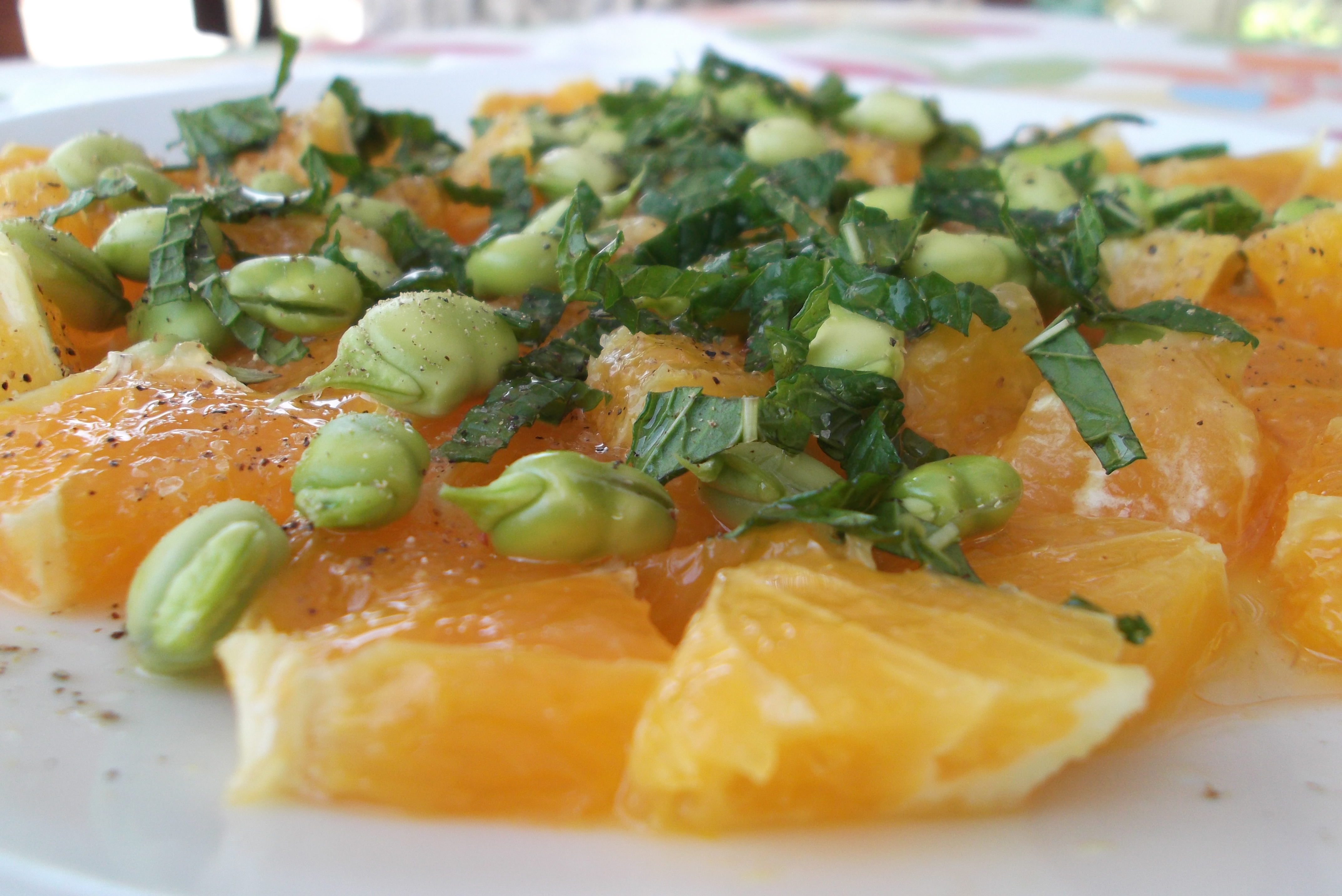
The end of the orange season and the start of a spring glut of broad beans and mint means that it´s time here for a refreshing, light and easy salad.
Most people here have at least a few citrus trees in the gardens, some have tens or hundreds of them. After three years our lemon tree is now producing more than we can cope with, but we only planted our orange last autumn, so still rely on the good will of friends and neighbours for our supply. Fortunately, we have very obliging friends and neighbours who keep us in oranges.
When I still went out to buy them, in the early years, I was surprised to be asked in the little local shop “if I wanted oranges for eating?”. Well, of course I did, what the heck did they think I was going to do with them? Of course, now that I am a wise old country biddy, I know that oranges are sold for eating (slightly more bitter) and for drinking (i.e. for juicing). The later are softer, juicier (naturally) and incredibly sweet. The difference is noticeable and as we eat a lot of salads made with oranges here, it´s worth looking out for the right ones.
This salad can be varied depending on the time of year. In the autumn, with the next crop of oranges, I substitute the broad beans for pomegranate pips. Either way, the colours and combinations of tastes are stunning. This salad goes particularly well with oily fish like sardines or mackerel or with fatty meat like lamb or goat. As a starter it´s delicious with a plate of salty jamon and another of a salty cured sheep´s or goat´s cheese. A cold glass of iced dry sherry finishes things off perfectly.
For two people you need:
Two or three bitter oranges, skin and pith removed and cut into small chunks
About half a cup of fresh broad beans (raw)
About 10 mint leaves shredded
Olive oil
Salt (flakes or coarse sea salt) and freshly ground pepper
Place the oranges on a plate, pouring over any juice that you have collected when peeling them. Sprinkle over the beans and mint, season and drizzle over the olive oil. Make the salad about half an hour before eating and keep chilled before serving.
It´s an unusual mixture of tastes, but it works for me. Do hope you enjoy it!
So in 2016 I turned 50. I was in Italy for my 21st, 30th and 40th. To keep this birthday tradition going I always knew I'd be in Italy for my 50! This blog starts with my 5 week adventure in Puglia but my love affair with Italy continues.....









 Chica Andaluza