Molletes de Antequera – Soft Bread Rolls from Antequera

It’s funny that when you are away from home, apart from missing loved ones, food seems to feature highly on the list of things people miss. Or is that just us? We love good bread and are lucky to have relative success making our own as we don’t have any spectacular bakers close to our home in England and Bread Man from Spain just won’t deliver to us this far away!

Finished Molletes (1)

About 30km from our home in Spain is a town called Antequera. One of its main claims to fame is the delicious soft white bread rolls it produces and which are typically served for breakfast or “merienda” (afternoon tea). Usually they are just split, drizzled with olive oil and perhaps a sprinkle of salt. You could be more adventurous and spread them with fresh crushed tomatoes (my favourite Spanish breakfast), or go the whole hog (excuse the pun) and add some delicious slices of Jamon Serrano.

In England you can buy soft white breakfast rolls which are very good, but not quite the same. Time to see if we could recreate a favourite breakfast bread. It’s rather an unusual method, at least I thought it was, as it involved dropping a piece of dough into a bowl of warm water and waiting for it to bob to the surface like a supersized gnocchi. Stay with me, all will be revealed…

Ingredients to make 6-8 large rolls (these rolls are typically about 30cm in diameter and quite flat, they are also lightly baked so that they don’t take on any colour)

For the “Masa Madre” – the starter, or “mother dough”

100g strong bread flour

1x 7g sachet of easy blend yeast (or you can use 15g of fresh yeast)

50ml warm water

For the second dough

500g strong bread flour

320ml warm water

1x 7g sachet of easy blend yeast (or you can use 15g of fresh yeast)

50ml olive oil

Up to 20g salt (I used less, about 12g)

To make the Masa Madre – mix the easy blend yeast into the flour then add the water and mix to a dough. If using fresh yeast, add the yeast to the water, allow it to ferment then add to the flour. Form the dough into a ball, cut a cross into the top of it and put it into a bowl of hand warm water.

Molletes 001

The dough will start to release small bubbles into the water (it’s all quite entertaining to watch!) and will rise to the surface within about 10 minutes (or less). Pour away the water and use the dough immediately.

Molletes 003

To make the second dough. Mix the easy blend yeast into the flour then add the salt. In a separate bowl add the oil to the water then add half the flour, yeast and salt. If using fresh yeast, add the yeast to the water, allow it to ferment and add the oil. Then add half the flour with the salt.

Add the masa madre to the dough (which will be very wet at this stage, I used a mixer with a dough hook) and knead for a few minutes then add the rest of the flour. Continue to knead for about 10 minutes until the dough is silky, smooth and elastic. Place the dough into a bowl which has been floured or rubbed lightly with olive oil, cover with a damp tea towel and allow to rise until doubled in size. Mine took about an hour and a half.

Molletes 004

Knock back the dough and divide into 6 or 8 equal portions. Roll into balls which should be placed onto a flat baking sheet lined with baking paper. Flatten them with the plan of your hand, cover with a damp tea towel and leave to rise again. You don’t want a massive rise on the rolls, they should still retain a fairly flat surface.

Dust with flour before baking for an authentic finish. Preheat the oven to 250 C/475 F/Gas 9 and place a bowl of hot water at the bottom of the oven. Place the tray (or trays) into the oven and reduce the temperature to 200 C/400 F/Gas 6. Bake for around 20 minutes. I left mine in for a few minutes too long and they started to take on some colour which didn’t affect the flavour but is not typical for Molletes.
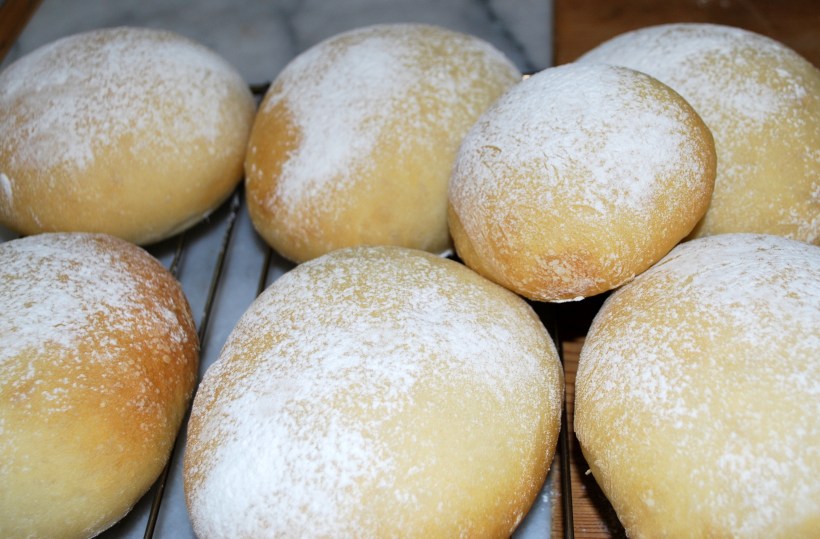
Molletes 009

Eat within 24 hours as they tend to dry out a little after this (but are delicious toasted or griddled). They freeze and defrost really well and are great used as picnic rolls. Now, to work out how to incorporate Hercules, Son of Priscilla, my sourdough starter into the next batch….


Good Friday Parpuchas – Salt Cod Fritters

Today, even though we are in England, we kept up a tradition from Big Man’s family in Andalucia and made Parpuchas. Light, fluffy fritters of salt cod, parsley and garlic. Traditionally served (as we did) with a drizzle or a dunk of Miel de Caña (Molasses). It sounds odd but I promise you, the combination of sweet and salty really does work. If you don’t have access to salt cod (which you’ll have to desalt) this works well with any other firm raw fish.

Parpuchas 007

I will post the recipe below, but if you’d like to read the original post from a couple of years back and to see some of the traditions of Holy Week in Spain, do check out the original.

Ingredients

  • 200g (desalted) salt cod, shredded into small flakes
  • 2 eggs, beaten
  • 1 cup of milk
  • 1 teaspoon of bicarbonate of soda
  • 1 cup of flour (approx)
  • 2 large tablespoons of finely chopped parsley
  • 1 finely chopped or crushed clove of garlic
  • Salt to taste if you are not using salt cod
  • Oil for deep frying

Add the milk, bicarbonate, parsley, garlic and fish to the beaten eggs and then gradually add the flour until you have a thick batter.  It needs to be about the texture of thick lumpy custard (not that any of you, I am sure, have ever made lumpy custard!).

Heat the oil until a cube of stale bread turns brown quickly when dropped in and then drop spoonfuls of batter into the oil. I used a tablespoon and it gave me rather large parpuchas – I´d recommend using about half a tablespoon full as they will puff up slightly. When they are brown on the bottom (and they will float to the top), flip them over and cook on the other side. They will not be in the oil for long.

Remove with a slotted spoon, drain and sit them on kitchen paper for a few moments and serve hot, drizzled with Miel de Caña (to be typical) but also good with  lemon, alioli or tartare sauce. If you make too many, they are still very tasty cold as they retain their texture.

All that remains for me to say before we move into the rest of the Easter weekend is a very Happy and Peaceful Easter, or Happy Passover if that is what you celebrate, or a Happy Few Days with your loved ones. Watch out for those chocolate bunnies…..

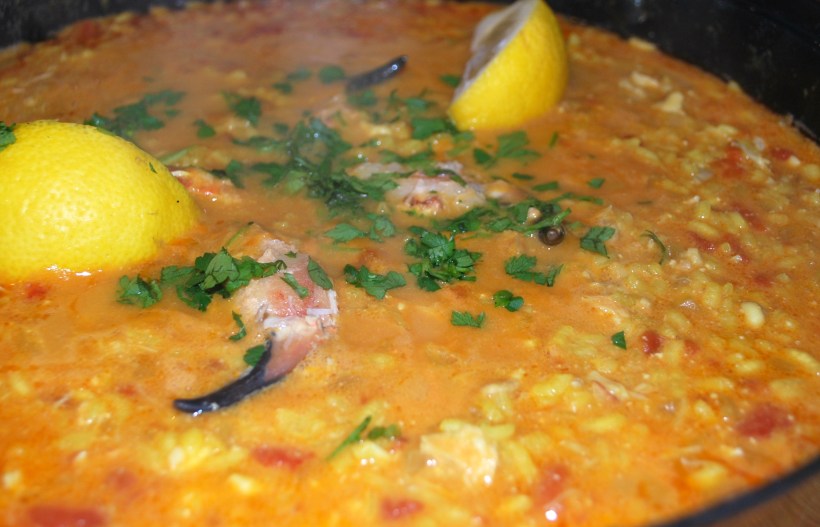
Arroz Caldoso con Cangrejo – or Holidays, Romance and Crabs

Any of you who have followed my blog since way back when may recall a trip we made a few years back to the north of Spain. To Galicia and Asturias more precisely. An insanely beautiful part of the country, lush and green. Lush and green because, like in Scotland or the English Lake District, it rains a lot. And rain (and rain) it did. Which left us plenty of time for eating and drinking. Always look on the bright side, I say.

DSCF1371_picnik

I don’t know why it surprised us that it rained, even though it was only the tail end of summer, as holidays and special occasions are generally a complete disaster for Big Man and me.

DSCF1298

Our anniversary falls on 11th November so aside from the fact a lot of folk are quite rightly marking a very solemn memorial to all those who lost their lives in conflict, it’s a dreadful time of year for good weather in the Northern Hemisphere. Christmas and Birthdays generally involve some sort of disaster or a member of the extended family falling ill so we’ve now accepted that we’ll not get ourselves too worked up over celebrations and holidays and just enjoy the everyday joys.

There is a point to all this reminiscing. Today I bought two cooked and dressed crabs at the local fishmonger intending to boil some potatoes, make a salad and call it lunch. Big Man began to talk about an amazing meal we’d had on our trip to the north of Spain. The rain poured down, the wind howled and the first hotel we stayed in was nice but miles out of town. After a long, long drive we decided to do something we rarely do and EAT IN THE HOTEL RESTAURANT. What a good decision that was. The food was incredible and we made the most of it, ordering their speciality of Arroz Caldoso con Bogavante (which translates as brothy rice with lobster) for our last night there. Why didn’t I make “brothy” rice with crab he asked? Why not indeed, so I did, and absolutely wonderful it was too.

If you have an earthenware cazuela to make and serve this in, use it (Celia, I’m talking about you!). It really makes a difference to the flavour and is more authentic.

Ingredients (to serve 4)

  • The meat from 2 cooked crabs (white and brown) which will weigh about 260g – although you can use raw too but will need to cook them first
  • About 1.2l of fish stock made from the crab shells and any other bits of fish you can beg from your fishmonger and with a few strands of saffron added
  • 400g paella rice
  • 1 small onion finely chopped
  • 3 cloves of garlic, finely chopped
  • 200g chopped, peeled tomatoes (if using tinned, and why wouldn’t you, make sure to drain them first)
  • A splash of brandy
  • Salt & Pepper
  • A lemon, quartered
  • Some finely chopped parsley to serve
  • Olive oil

Gently fry the onion in a little olive oil until it is softened but not browned then add the garlic and cook for a minute. Add the tomatoes and cook gently for about 10 minutes and add the splash of brandy. Next add the rice and stock.

Arroz Caldoso con Cangrejo 006

(A little reminder, if you’re making paella you’ll need 100g of rice per person approximately and for every 100g of rice you need about 210ml of liquid. For brothy rice you need the same amount of rice but 3 times the amount of liquid, so approx 300ml to every 100g of rice.)

Cook gently, half covered until the rice is almost done, add more stock if it’s drying out too much, then add the cooked crab meat, stir and taste and add seasoning if necessary at this point. Turn the heat off, cover the pan and let the rice rest for at least 5 minutes and to let the rice finish cooking. Serve with a little parsley sprinkled over and wedges of lemon to squeeze over the food.

This is a dish made with a few ingredients but which lets them shine, it tastes luxurious and decadent. Which made me think it would be good for a Valentines meal – very romantic. Unless you happen to be us and also have Valentine’s Disasters…but more of that in a few days.

If you want to see more of the North of Spain, do check out the links at the start of the post, which I hope you’ll enjoy.

Morrete de Setas – Mushrooms with Potatoes

If like me, you are the sort of person who is not put off by strange translations into your native tongue of a dish you encounter on your travels, this one is for you. Coming across this dish in a small local restaurant near our mountains in Southern Spain, you’d probably read something like “Mushrooms to the wild, cooking with soft potatoes of the saffron dressing up in vinegar”. Or some such bizarre description.

It doesn’t even look that pretty, as the end dish is indeed “with soft potatoes” and has rather a look of mush about it. What you would be served with, however, is a dish with simple ingredients combined in a way you’ve probably never tasted before, and a flavour that makes you say “ooh, that’s so good…I really didn’t expect that”!

Morrete de Setas 004

Around our neck of the woods (or Up Our Mountain), the most commonly eaten mushrooms are Oyster mushrooms. We have grown them ourselves in the past and Big Man would often come home with a crate of them for me to turn into dishes like Mixed Mushrooms with Cinnamon and Lemon or Braised Mushrooms. This dish is made across Andalucía but is probably known by other names outside of the radius of our local villages. Here’s our local version, the simplicity of the ingredients hides a wonderful combination of flavours. It is vegetarian/vegan and can be served alone as a tapa or starter, or alongside other dishes as part of a meal. A poached or fried egg is a wonderful accompaniment.

Ingredients (to serve 6-8 as a tapa, 4 as a starter or 2 as a hearty main course)

  • 1 kg peeled and cubed potatoes (cut into small cubes)
  • About 600g of thickly sliced mushrooms (I used a mix of Shitake, Chestnut and Forestiere Mushrooms)
  • Olive oil for frying
  • 1 level teaspoon of sweet pimentón
  • ½ level teaspoon of hot pimentón
  • A pinch of saffron or turmeric (in Spain though you find they usually use food colouring)
  • About 60g of stale bread
  • 2 cloves of garlic, peeled
  • About 240ml water
  • About 2 tablespoons of white wine vinegar
  • Salt and pepper

You will need 2 frying pans (or you will need to cook the potatoes and mushrooms separately. In one pan with about ½ cm of oil to cover the bottom, slowly cook the potatoes until they are soft and just starting to brown at the edges. Mix occasionally as they cook. You don’t want them to be crispy like chips.

In another pan, add a little oil, the mushrooms and some salt and cover with a lid. Slowly braise the mushrooms until soft and releasing their juices. The potatoes and mushrooms both take about 20 minutes to cook.

Meanwhile, put the bread, water, garlic, spices and 1 tablespoon of vinegar into a blender jug and blend (I use a hand blender) until you get a mix which resembles slightly runny porridge.

Drain the potatoes from the oil and add to the mushrooms and pour in the bread/water mix. Cook gently for about 10 minutes until it all thickens up (you may need to add a splash more water). Just before serving, taste and season and add a further tablespoon of white wine vinegar. Think of the resulting taste in the same way that you would use lemon juice to “lift” a dish.

Serve with plenty of crusty bread and if you’re feeling a bit cheffy, some chopped parsley on top makes it look pretty. But don’t tell the local village ladies I said that as they’d be horrified at any such nonsense.

Chorizo en vino con cebolla – Spicy Sausage with wine and onion

Chorizo in Spain is not like the chorizo you used to be able to buy in England – it was the hard, dry variety, rather like a little salami. In Spain chorizo is sold fresh – it looks like a bright red sausage and if you buy it at the butchers it’s sold in strings. You will be asked if you want it “fresco o seco” “fresh or dry”. The fresh variety is like a recently made sausage and is for cooking on the “plancha” or in a pan. The drier will have been made a few days or weeks previously and can be sliced and eaten as it is, in the same way as a salami.

Chorizo con Cebolla (5)

It’s typical to buy a good supply and then hang some up for eating later and cook the fresh chorizo. I’ve noticed that in England, in some butchers at least, they are coming up with some wonderful and authentic tasting varieties of fresh chorizo, but if you can’t get hold of any, use your favourite sausage and add a little spicy pimentón to give it a warm Spanish taste.

This is a very typical dish served as tapas, with or without the addition of the onions. As we were still working our way through the onion glut, I did it with onions!

Ingredients (to serve as many as you like)

  • For every chorizo you cook, you’ll need about half a medium onion finely chopped and a splash of medium dry Spanish sherry

Slice each chorizo into 4-6 pieces and fry in a little olive oil until the outside is slightly charred. If you are lucky enough to have a terracotta cooking pot, use this as it really does add something special to the flavour.

Chorizo con Cebolla (1)

Remove the chorizo and put to one side. Add the onions to the olive oil (and the chorizo will also have released some oil) and if you are using it, add a little pimentón. Fry the onions until they start to soften, but not caramelize and then add the wine. Cook until the liquid has almost completely disappeared and the onions are soft and coloured from the juices.  Add the chorizo back into the dish and cook for a couple of minutes more until warmed through.  Normally you won’t need any seasoning as the chorizo is highly spiced and salted, but check to taste and adjust if necessary.  Serve with a glass of ice cold fino and plenty of delicious bread.

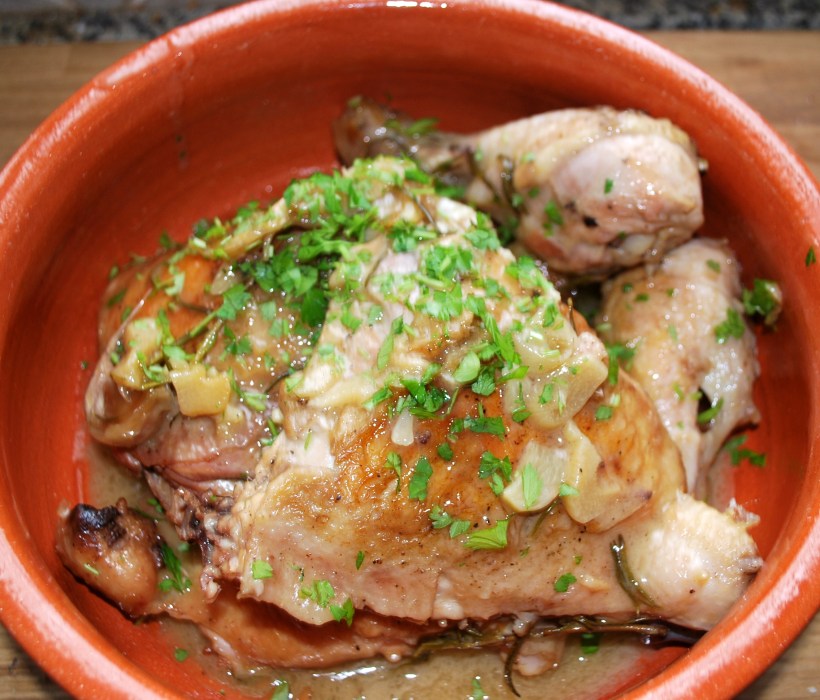
Pollo al Ajillo – Chicken with Garlic

Well, it’s been quiet around the blog for the last week or so. But for good reason. We’re in England with family visiting from Spain and we’ve been having a wonderful time doing family and tourist things, walking our feet off, talking our heads off and eating and drinking far more than is probably necessary…but such fun!  As a little reminder of Spain, here’s a Spanish dish which is equally good for an informal meal or a special event, Chicken with Garlic.

Ajo (the “j” is pronounced like the “ch” in the Scottish word Loch) means garlic and ajillo translates as “little garlic” which is ironic as this dish contains plenty of garlic! It’s a simple cooking technique which is used with various meats in Spain and is served as both a main dish and as a tapas (usually with the meat cut into bite sized pieces). Don’t let the simplicity of this dish trick you into believing it doesn’t taste special, it packs a lot of flavour and because it can be prepared ahead and in large quantities, it’s a fantastic dish for entertaining.


Pollo al Ajillo (1)

To serve 6 people

  • 1 whole chicken cut into joints (or use individual joints)
  • 1 head of garlic, about a third of the cloves peeled and cut into thin slices, the rest left in their paper skins
  • Olive oil
  • A glass of fino or white wine
  • A few sprigs of rosemary (optional)
  • Seasoning

Pollo al Ajillo (3)

Season the chicken then fry in a little oil until browned all over. Now add all the garlic, the rosemary and the wine, reduce to a gentle bubble and cover with a lid. Cook for about an hour (turning a couple of times during cooking) until the chicken is cooked through). Check the seasoning and adjust if necessary. Sprinkle with some chopped parsley and serve with plenty of bread to mop up the juices.

For another, more elaborate, chicken dish, why not take a look at my recipe for Pollo en Pepitoria?

Calamares Rellenos – Stuffed Squid

When you´re away from home, although now we seem to have two homes (and how very lucky and blessed we are to be in this position) there are things that you miss. Of course, the most obvious is loved ones, but with technology, keeping in touch, even face to face phone calls and cheap flights make the distance shorter.

Other things like a special pillow, or a favourite garment which was left behind sometimes make you feel nostalgic. For me though it’s all about the kitchens. If I could combine the contents of both kitchens and magically transport them with me backwards and forwards….but well, that’s just silly. Although I can look up favourite and remembered recipes on the internet, it’s not quite the same as flicking through a well loved cookery book, often late at night propped up in bed with that comfy old pillow.

Calamares Rellenos (1)

Getting back to Spain allowed me to become reacquainted with some old ‘friends’. Most recently it has been Moro, the Cookbook by the husband and wife team, Sam and Sam Clark. Must get confusing in their house when someone rings up.

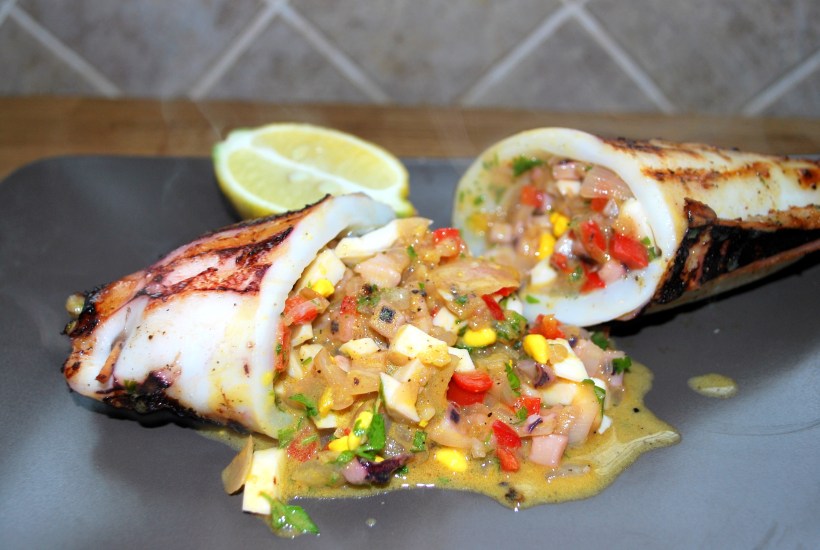
The first recipe for the moment was inspired by one of theirs for stuffed squid – of course, I made a few changes based on what I had available, here’s my version. This is a fabulous dish for entertaining (although easy to prepare for an everyday meal) as you can prepare it ahead up until the final griddling of the squid, which only takes about 5 minutes.

Calamares Rellenos (6)

To serve four as a main course

  • 8 medium squid (no larger than about 30cm) I used to enormous ones to serve 2. These should be cleaned and the tentacles and wings separated from the body
  • 8 tablespoons olive oil
  • 1 large Spanish onion finely diced
  • 2 garlic cloves, finely chopped (I crushed)
  • ½ red pepper finely diced (not in the original recipe)
  • 2 fresh bay leaves (or use dried)
  • 200ml fino sherry (or a dry white wine)
  • 1 large buch flat leaf parsley, finely chopped
  • 2 hard boiled eggs, finely chopped
  • ½ teaspoon of hot pimentón (not in original recipe)
  • Salt and Pepper
  • Finely chop the squid wings and tentacles (I kept the tentacles whole and cooked them on the side).

Gently fry the onions and peppers (if using) for about 15 minutes until soft and the onion is starting to turn brown. Add the bay, garlic and chopped squid and cook for about 3 minutes then add the seasoning, half the parsley and the fino. Cook for a further couple of minutes until the wine has almost evaporated then remove from the heat. Remove the bay leaves and stir in the chopped egg and most of the rest of the parsley, check the seasoning and adjust if necessary.

Use this mixture to stuff the squid, securing with a cocktail stick to keep the filling in. When you are ready to eat, heat a griddle pan until it is smoking hot and cook the squid for about 5 minutes, turning to ensure that it is charred all round.

Serve with a drizzle of olive oil, a piece of lemon and the rest of the parsley sprinkled over.

Fideuá with Chorizo and Mushroom

Fideuá? What the heck? It’s a traditional dish from Valencia, Gandía to be more precise, which is very much like a paella but made with short noodles instead of rice. In Spain you can buy bags of noodles of varying thickness from “0” which is very fine up to 5 or 6, I think. For this dish a number 3 or 4 noodle is typically used but if you can’t find them where you are, use broken spaghetti (a thin one) instead.

Fideua de Chorizo (5)

This dish is made with seafood usually, in the same way as a paella, but I made one recently with some Spanish Chorizo. It’s also a good vegetarian dish – use what you like best! It’s quicker and easier to make than paella.  Measurements are a little rough, use as much or as little “filling” as you like. For a dry fideuá (so that it looks like a paella made with noodles) use about twice the volune of liquid to noodles, for a soupier version (which is how we like it), use up to 3 times the liquid.

Phew, that’s the maths over with, here’s how to do it!

Ingredients (for 2 people)

  • 2 chorizo chopped into small chunks
  • A few slices of finely chopped jamón (or pancetta or bacon)
  • 4 fat cloves of garlic crushed
  • 1 stick of celery, finely chopped
  • Half a red pepper, finely chopped
  • About 6 mushrooms, finely chopped
  • About half a cup of chopped tomatoes
  • 200g fideos (noodles)
  • About 400ml of vegetable stock (or chicken stock) for a dry dish and 600ml for a soupier version
  • A pinch of powdered saffron
  • A level teaspoon of sweet pimentón
  • A pinch of hot pimentón (optional)
  • Salt and Pepper
  • Olive oil for frying
  • Wedges of lemon and chopped parsley to serve

In a deep frying pan or paella pan gently fry the chorizo, jamón, garlic, celery, pepper, and mushrooms until the chorizo starts to crisp. Add the tomatoes and cook for a minute then add the fideos and stir them into the mix then add the stock, spices and season lightly.

Bring to the boil and then simmer for about 8 minutes until the fideos are nearly cooked. Add more stock if it gets too dry before it’s cooked.  Turn off the heat, cover with a lid or tea towel and allow to rest for 2 or 3 minutes. Check that the fideos are cooked to your liking and adjust the seasoning if necessary.

Serve sprinkled with freshly chopped parsley and wedges of lemon to squeeze over.

And if you have a few minutes and want to see a master in action, enjoy this video…(it takes a few seconds to start and is in Spanish bu the chef is … er… easy on the eye!)

Little Piggies and Potato Cakes

Near our village in Spain is another village with a restarant run by a lovely lady called Belén. Belén means Bethlehem in English, so although a bit unusual for English speakers, her name is quite apt as we creep up towards the Christmas season. Sorry, I promised myself I wouldn’t mention the C word until well into December and it’s only the 2nd today.

Belén runs a good bar and restaurant with all the usual offerings plus a few slightly different ones. An item on her menu is called “Guarrito” which translated means “little wild boar”. I don’t know if this is a typical dish, we’ve certainly never seen it anywhere else, so of course had to order it. And once ordered, we loved it and often go back for a little tapas of this with a glass of wine. So, what is “guarrito”? It’s simply thick slices of jamón cooked in a little olive oil (and Belén serves them on fried bread which makes them extra naughty and extra nice).

Guarrito (2)

We always said that these little morsels would be fantastic with a fried egg and baked beans, in a Full English Breakfast style. Or as a supper dish. Or any time really. So of course, now we make guarrito at home in England until we can get back to visit Belén again.

To accompany the guarrito I was inspired by Frugal’s Gluten Free Potato Cakes. He uses gram (chick pea) flour instead of regular flour and I pretty much followed his recipe with the addition of some roasted red peppers.

Being the sort of Chica who always cooks army rations instead of regular sized portions, I still had a little mashed potato left the following day, so I made another potato cake to go with some grilled meat and salad.

Ingredients to serve 2

  • About a cup of mashed potato
  • One beaten egg
  • Half a roasted pepper
  • A tablespoon of crème fraiche
  • Salt and pepper

Mix all the ingredients together and then blend with a hand blender or mash thoroughly – the mixture will be quite runny. Don’t panic!

Using a heavy based frying pan, pour in a little oil and get it quite hot. Now pour in the potato mix and turn the heat down. Cook slowly for about 10-15 minutes until it starts to get crispy. If you’re feeling brave slide it out onto a plate and then flip it back into the pan to cook the other side in the same way. For the fainter hearted, pop it under the grill until it starts to brown a little then flip and continue to fry.

Potato Cake (2)

Slide it out into a serving plate and enjoy your potato (pan) cake sliced into portions. Crispy on the outside, creamy soft in the middle. Now how economical and delicious is that?!

Sopa de Bacalao – Cod and Spinach Soup

If you do an internet search for a typical Spanish soup called Sopa de Bacalao, you’ll find many versions of a firm favourite. I don’t lay claim to my version being authentic, especially as it uses a very non Spanish ingredient – Ras El Hanout – but as the spice mix comes from North Africa and there are such very strong connections between Africa and Andalucía, I feel no one will be up in arms.

The ingredient list is short and simple, the preparation too. But the taste, oh the taste, your friends and family will think you’ve spent hours reducing stock to achieve the intensity of flavour.

Sopa de Bacalao (3)

Ingredients (to serve 2-4 as a main or starter)

  • 1 large cod fillet, skinned and cut into bite sized chunks (use either fresh cod or desalted salt cod)
  • 1 medium onion finely chopped
  • 2 cloves of garlic, crushed
  • 4 medium potatoes, peeled and cut into bite sized chunks
  • About 2 cups of chopped fresh spinach
  • Salt
  • 1 teaspoon of Ras El Hanout
  • About 1.25l of either fish stock or water (if you use a cube to make your stock, I won’t tell!)
  • A little olive oil

Start by sweating the onion and garlic until softened then add the potatoes. Toss them around in the oil until they are all coated in oil then add the Ras El Hanout and mix in. Pour over the stock and cook until the potatoes are almost done.

Add the cod and cook for a minute or two until the fish is cooked. Taste and season if necessary and then add the spinach. Turn off the heat, cover with a lid and wait for the spinach to wilt before serving with plenty of fresh lemon to squeeze over.