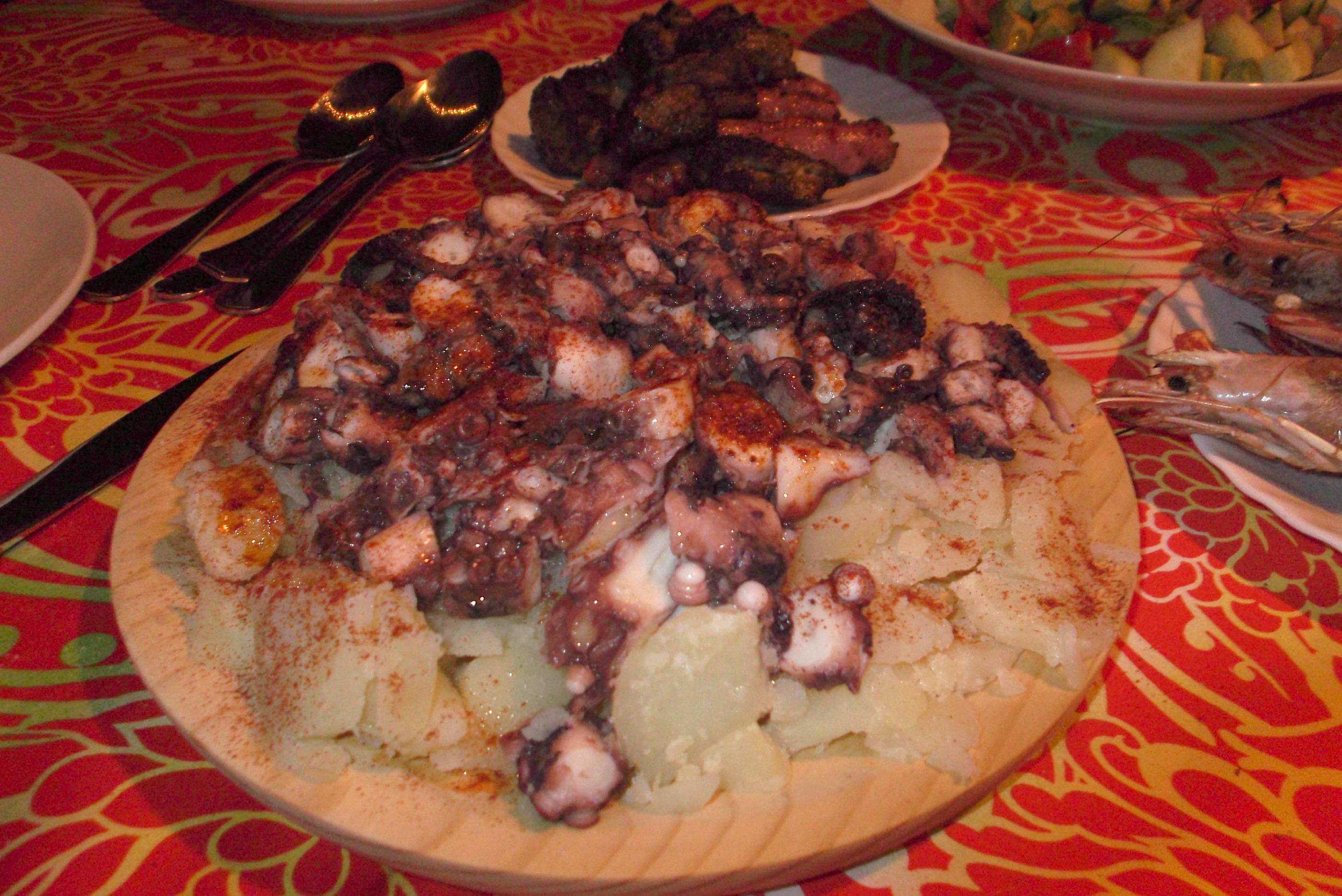
Pulpo a la Gallega – Galician Style Octopus

It was dark when we ate...sorry!

Now, don´t go getting all squeamish on me, because today I´m going to explain how to cook an octopus! This is a dish which traditional comes from the north west of Spain in the autonomous community of Galicia.  It sits on the border with northern Portugal and has both an Atlantic and a Bay of Biscay coastline.

This coming weekend we´re taking a little holiday and heading north to Galicia and Asturias, so I´ll be able to show you some photos of the “real deal” soon.  In the meantime, I´ll just set about cooking one of Galicia´s most famous dishes, Pulpo a la Gallega.

First take your octopus….ok, so I appreciate some of you may not be able to get hold of a fresh, whole one, but if ever you do, you´ll know what to do with it.  They´re white when raw and turn a beautiful purple colour when cooked.  All the nasties (i.e. the muck and eyes) are contained in the head.  If you´re game, just chop the head off, cut off the section with the eyes and scoop out the nasties from the inside.  Give the whole thing a good rinse, including the tentacles and you´re done.  Alternatively you can clean it after it´s cooked, but it leaves you with mucky stock.  And no one likes mucky stock, do they?! Ok, that´s the messy bit over, the fainthearted can join us again now.

For info, you don´t need to beat your raw octopus against a rock until it´s tender like you may have seen in quaint fishing movies.  Just freeze it first for a day or two and when it´s defrosted you´ll have a lovely tender octopus.

Put the octopus into a heavy saucepan and just cover with water.  No need to add salt, this is done when it is cooked.  I think this is where the Galicians leave it, but I like to add a little extra flavour which then gives me an amazing stock at the end to use in other dishes like Seafood Stew. I add a few tablespoons of olive oil, a bay leaf, a dried chilli and a couple of cloves – but this is entirely optional.

Cleaned but still raw

This will now need to be cooked slowly for up to a couple of hours (depending on how much your octopus weighs).  You can´t really over cook it if you take it slowly, and you can either do this on the stove top or in a slow oven.  Test it with a skewer in the thickest part of a tentacle – if it slides in as though through butter, you´re done! Some people do like to go for the quick and fast cook – I think it would be great in a pressure cooker, but I´ve never done it like that so I have no idea of timings.
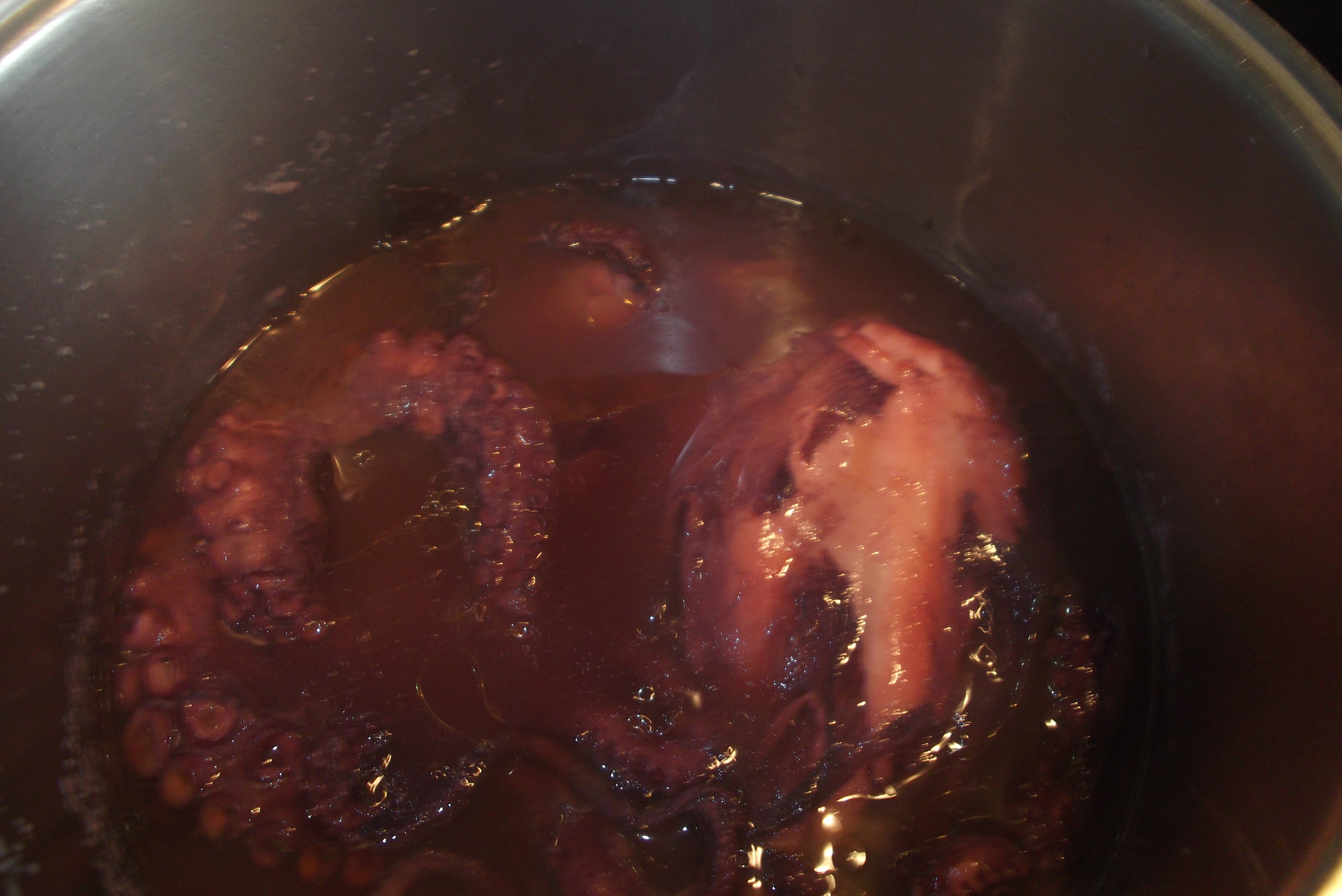
Cooked!

Meanwhile you are going to boil about 2 medium potatoes per person in their skins.  When you are ready to serve, peel the potatoes and roughly chop into smallish chunks.  It´s traditionally served on round wooden platters, but I know some people won´t have one or prefer not to use them for hygiene reasons.  We throw caution to the wind and are both, so far, still standing….but I promise not to tell anyone if you use a large flat plate.

Pretty Coloured Stock

Lift the pulpo out of the delicious stock and either chop with scissors into little pieces or chop with a knife. Make a base out of the cooked potatoes, pile the pulpo on top and now a good seasoning of sea salt, plenty of pimentón (hot or sweet according to your preference) and a good dousing in olive oil which will soak into those chunks of potato and pulpo.

It´s not a tricky dish to make, it can be pulled together for serving at the last minute and looks pretty impressive.  Most importantly though it tastes amazing….go on, get brave with an octopus!

Vegetable Fried Rice

Crispy and Vegetable-y

With the hot weather we´ve been having, the desire to cook has been low.  But…a girl and her Big Man have to eat, so the other night we decided on some grilled langoustines with some vegetable fried rice to accompany it.  Fried rice is an alien concept to most Spaniards, so Big Man had visions of me deep frying individual grains of rice or making some sort of croquette.

To his relief, and mine (due to the heat), it was a simple dish with only the smallest amount of oil and frying involved.

I boiled some rice (I used brown, but the choice is yours).  While this was cooking I fried a finely chopped onion and two crushed cloves of garlic in a very small amount of oil in a non stick pan until it started to look brown at the edges.  Then I added finely chopped courgette and a long thin green pepper and continued to stir fry them.

In a separate pan I made the thinnest omelette known to man!  Whisk one egg and pour into a lightly oiled pan- almost as if you were making a crêpe – and make a very thin omelette.  Flip it over to get both sides lightly browned and slide onto a plate to cool a little.

When the rice is cooked, drain well and add to the vegetables.  There´s no need to add more oil if you have a good pan as you will now almost dry fry it.  Season with salt and pepper and every few minutes give it a stir until the rice starts to brown.

Are those prawns ready yet?!

Roll up the world´s thinnest omelette and cut it into fine shreds.  Sprinkle these eggy shreds over the top of your rice, mix gently and serve.

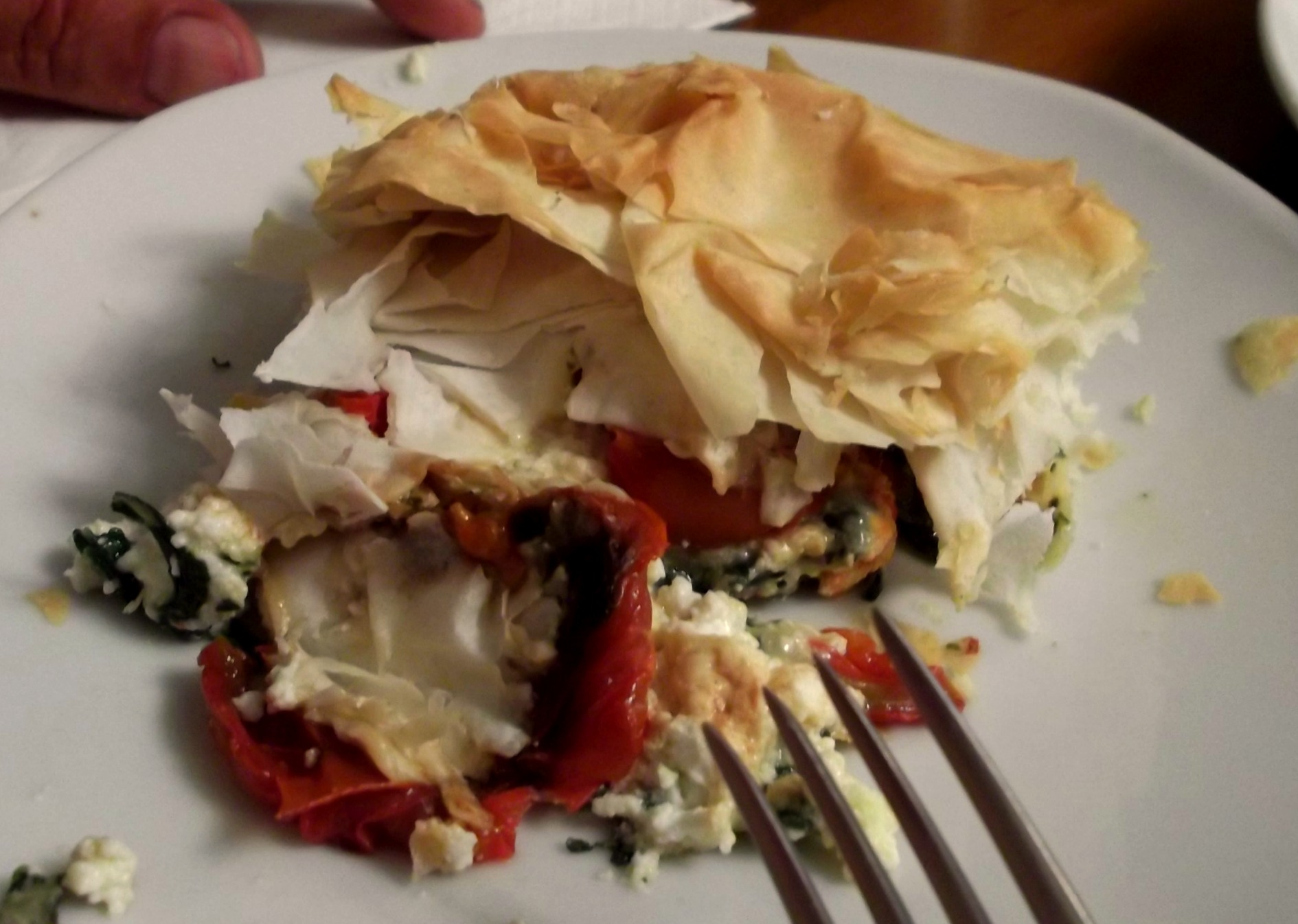
Roasted Tomato Tart with Chard and Home Made Curd Cheese

Beware the Giant Fork!

The great thing about writing a blog and reading other blogs is that inspiration comes from all around you.  Not so long ago I got into a dialogue with ChgoJohn over at From The Bartolini Kitchens about cheese.  He makes all sorts of cheeses and has posted a fantastic recipe for ricotta.  It reminded me that I hadn´t done this for quite some time, although my version doesn´t use cream.  Unfortunately we just can´t get anything other than UHT whipping cream or a chemical mix which masquerades as single or cooking cream here.  A shame, but that´s how it is.

A freezer clear out to make room for all my lovely beans that are growing, rewarded me with a packet of filo pastry.  Time to get making something tasty.

Here´s how I made my curd cheese.

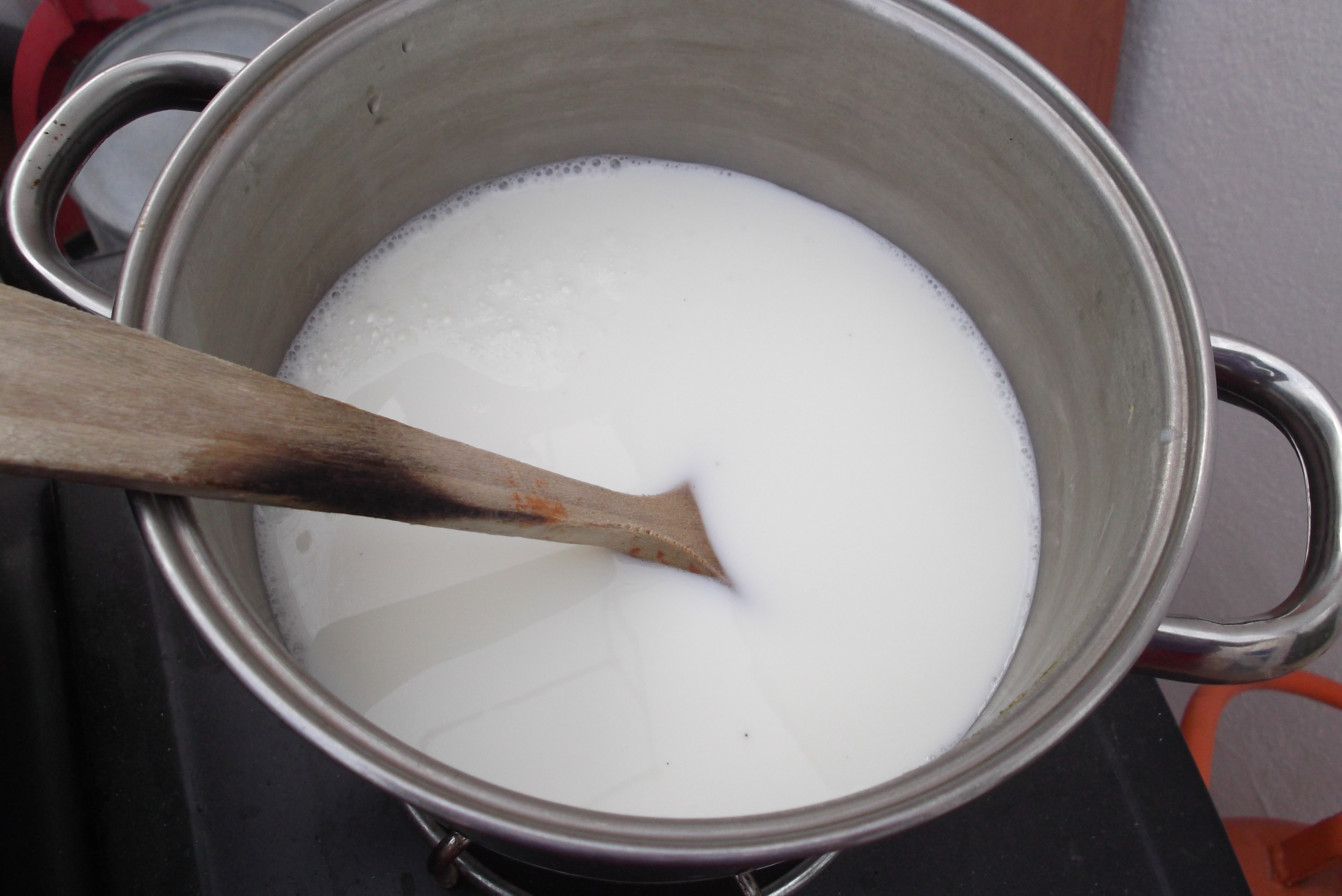
Bring one litre of milk (I used semi skimmed) almost to the boil (when little bubbles start to appear round the edges).

Bubbly milk

Turn off the heat then add citric acid, lemon juice or white wine vinegar (about 2 – 3 tablespoons but add it gradually) whilst stirring with a wooden spoon.  Once curds start to form, put a lid on the pot and leave to stand for about 10 minutes.

Beautiful Curds

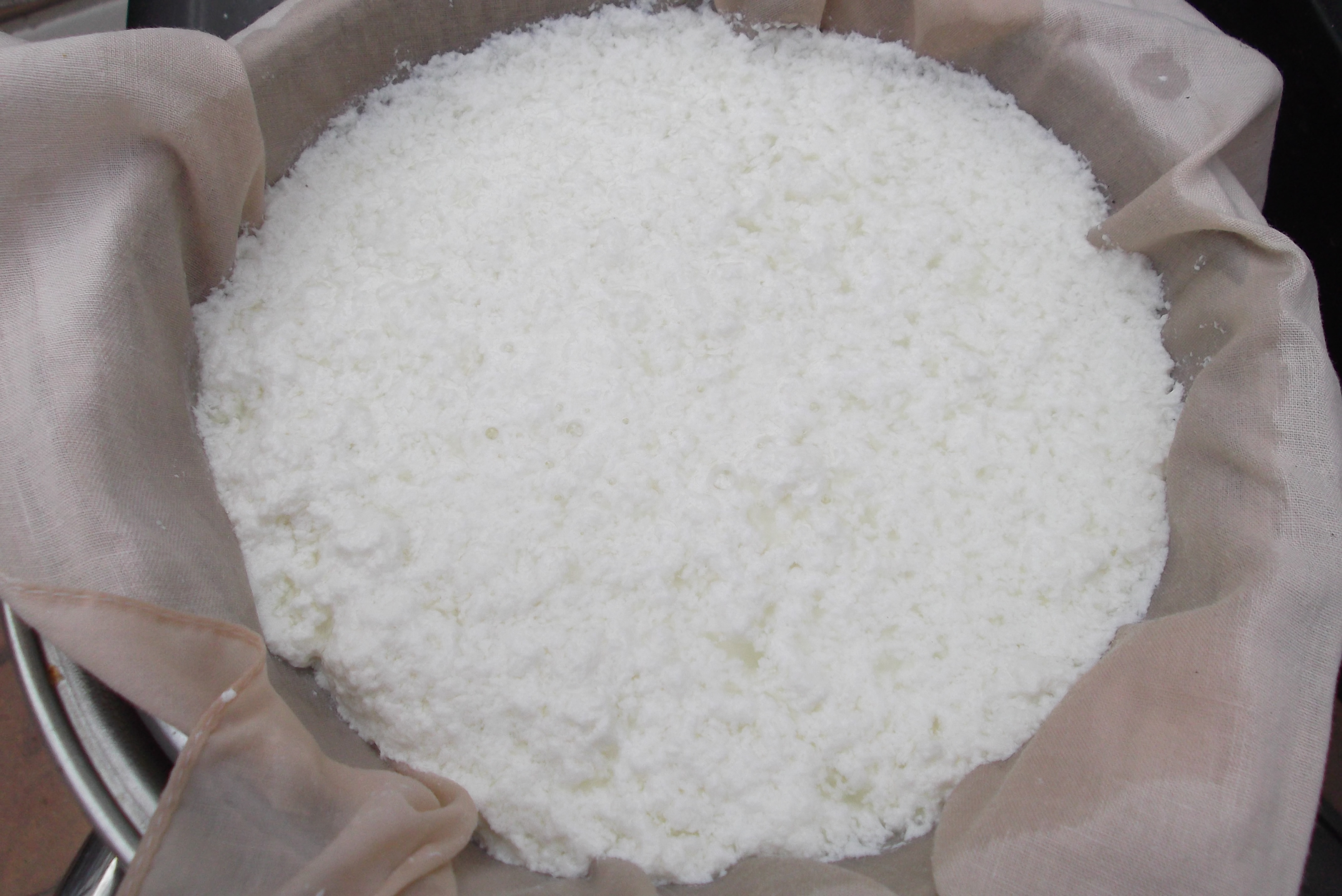
Drain and leave for a few hours or overnight. 

The Waiting Game

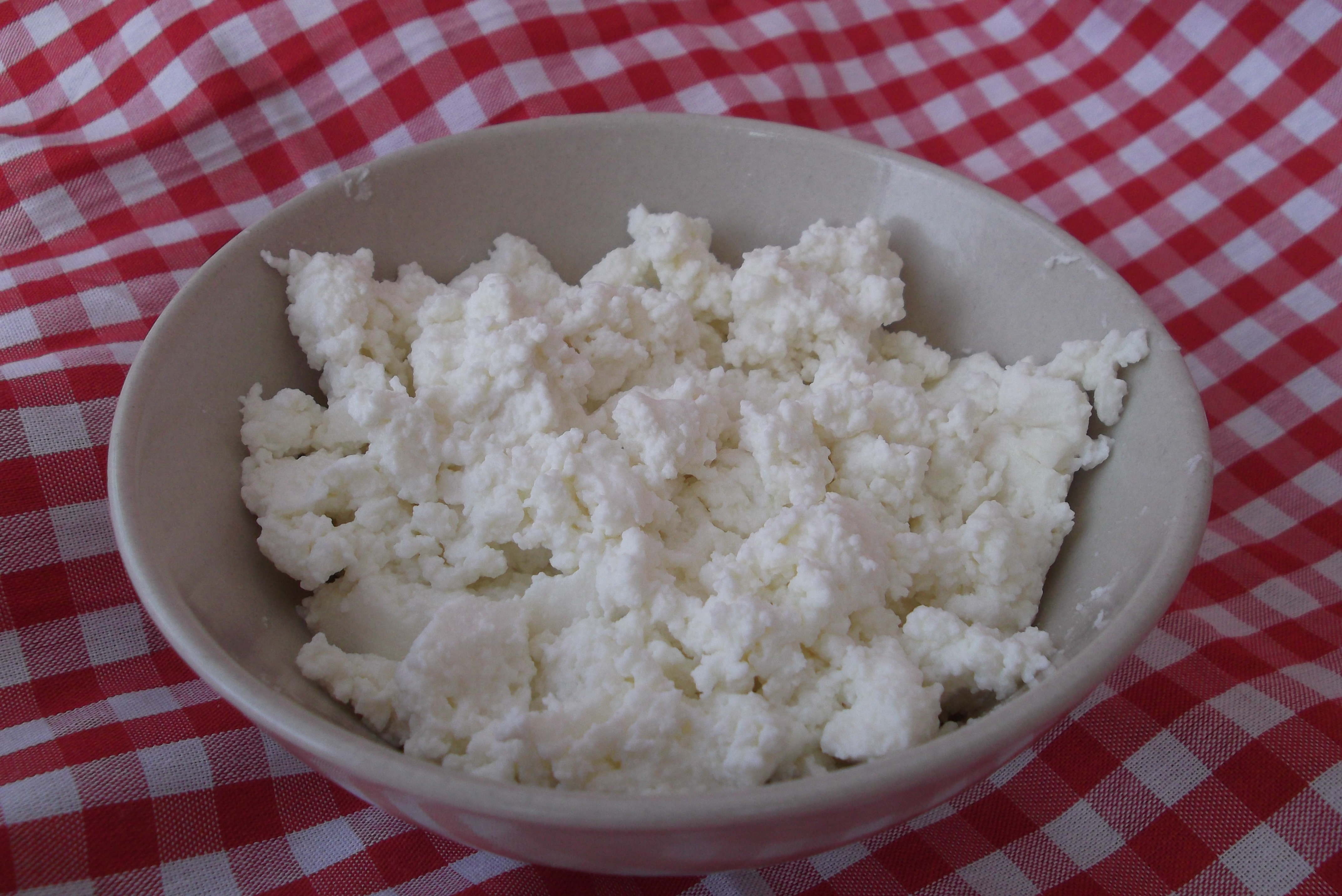
Stir in salt to taste and you´re done! Don´t forget to save that whey for making soda bread.

Lovely Curd Cheese

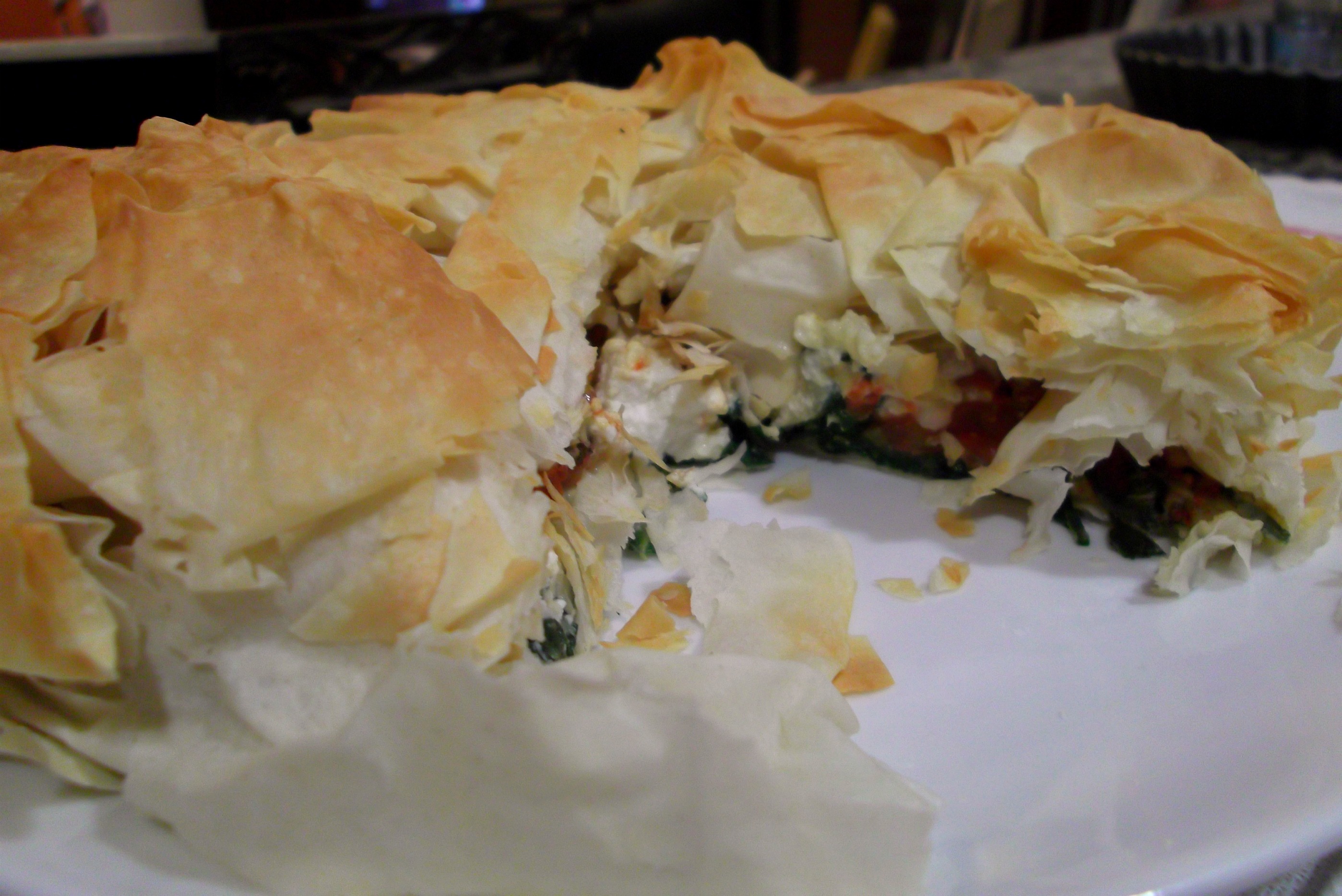
To make the tart I lined a loose bottomed tart tin with four sheets of filo which I brushed with olive oil (but you could also use butter).

I put in a layer of chopped, wilted chard (with all the water squeezed out) which I had mixed with two beaten eggs, 3 tablespoons of grated parmesan and seasoning. You could substitute the chard with spinach or beets.

 Then I added a layer of curd cheese and then a layer of halved roasted tomatoes.  You could also use thinly sliced raw tomatoes.  Finally I folded over the filo sheets and added two more to the top, brushed the whole thing with a little more oil and baked for 30 minutes at 180ºC.

Lots of flaky, crispy crumbs!

It was delicious warm, but just as tasty (although not quite so crunchy) cold the next day.

Gorgeous Green Gazpacho

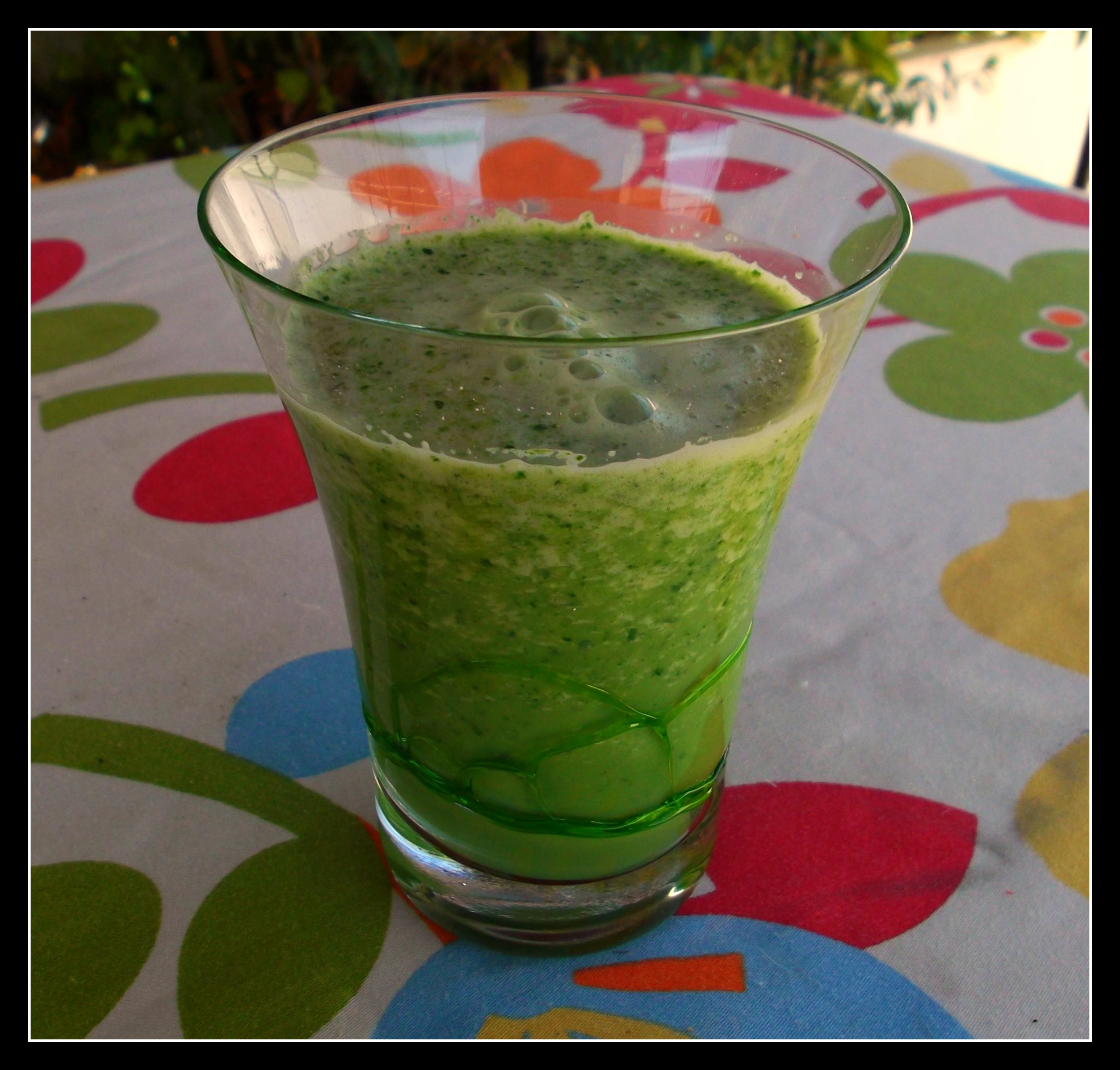
Green. Gorgeous. Good.

Who says Gazpacho has to be red?  Well, if you promise not to tell the Andalucían gazpacho Police…I say it doesn´t!

In the vegetable garden at the moment, our cup overfloweth. Some things just can´t be canned or frozen – like cucumbers.  And those little green thin skinned Spanish peppers are best eaten fresh in salad, stuffed or fried.

I wanted to find a new way of using up some of my “greenery” and came up with this version of gazpacho.  It´s a stunning colour, tastes rather like juiced vegetables and I´m sure must be amazingly good for you and packed with vitamins.  Probably an excellent pick me up for the morning after the night before too.  We just drank it chilled as a pre lunch appetizer.

Here´s what I used, but if you do decide to give it a go I´m thinking celery, avocado and lime juice might also be great additions.

Two thin green peppers, one small cucumber (peeled), a small clove of garlic, a small bunch of parsley, 4 large leaves of raw chard (or spinach).

In a blender mix the vegetables with about 3 tablespoons of olive oil, white wine vinegar and salt (to taste) and a litre of ice cold water.

Blend until smooth, add a few ice cubes and chill until needed.  Looking as gorgeous as it does, it just has to be good for you!

Salsa Verde Spanish Style

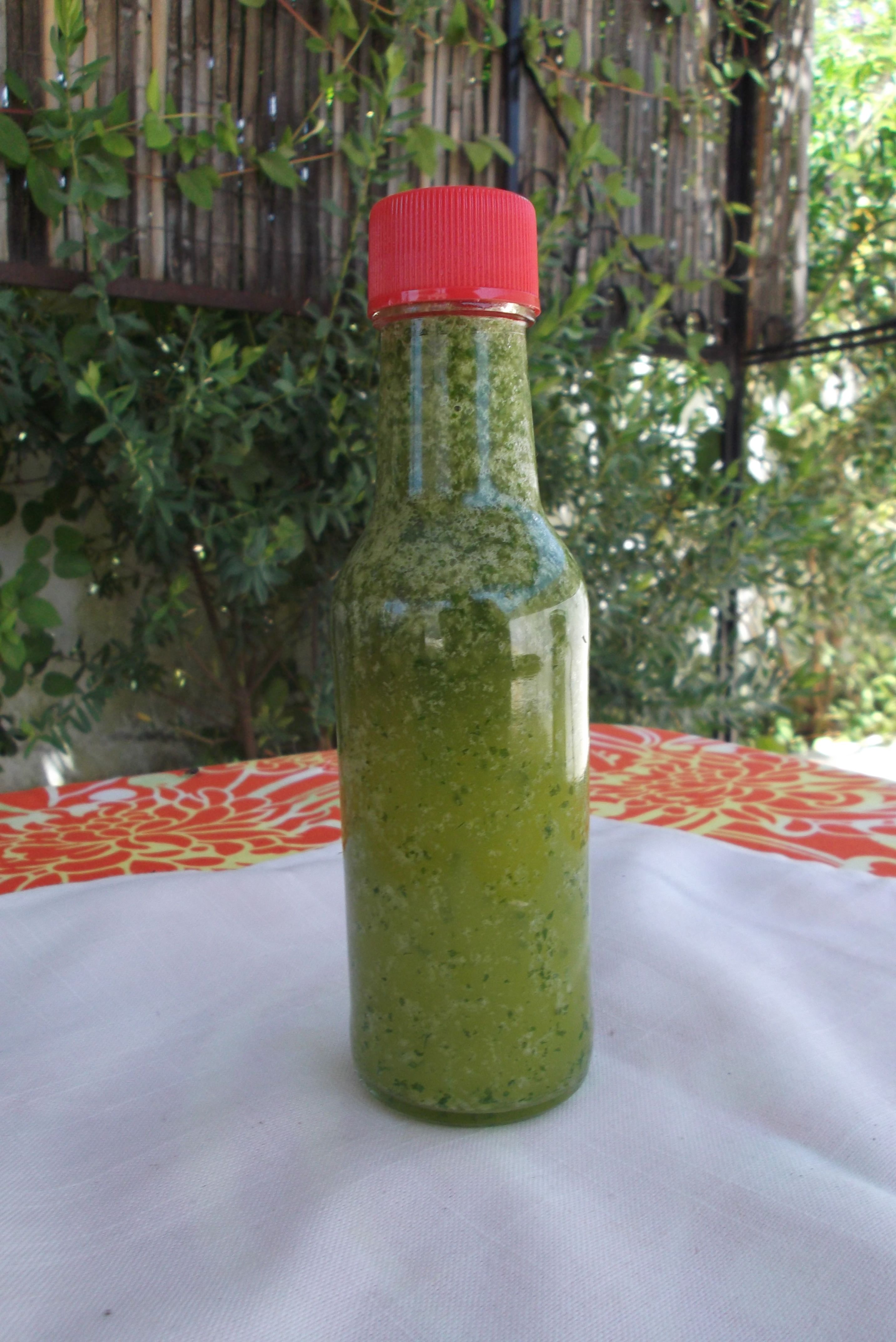
Shake before serving...

Well, it´s not exactly Italian salsa verde in that there are no capers or anchovies…but, it´s a green sauce so that most definitely makes it a salsa verde!

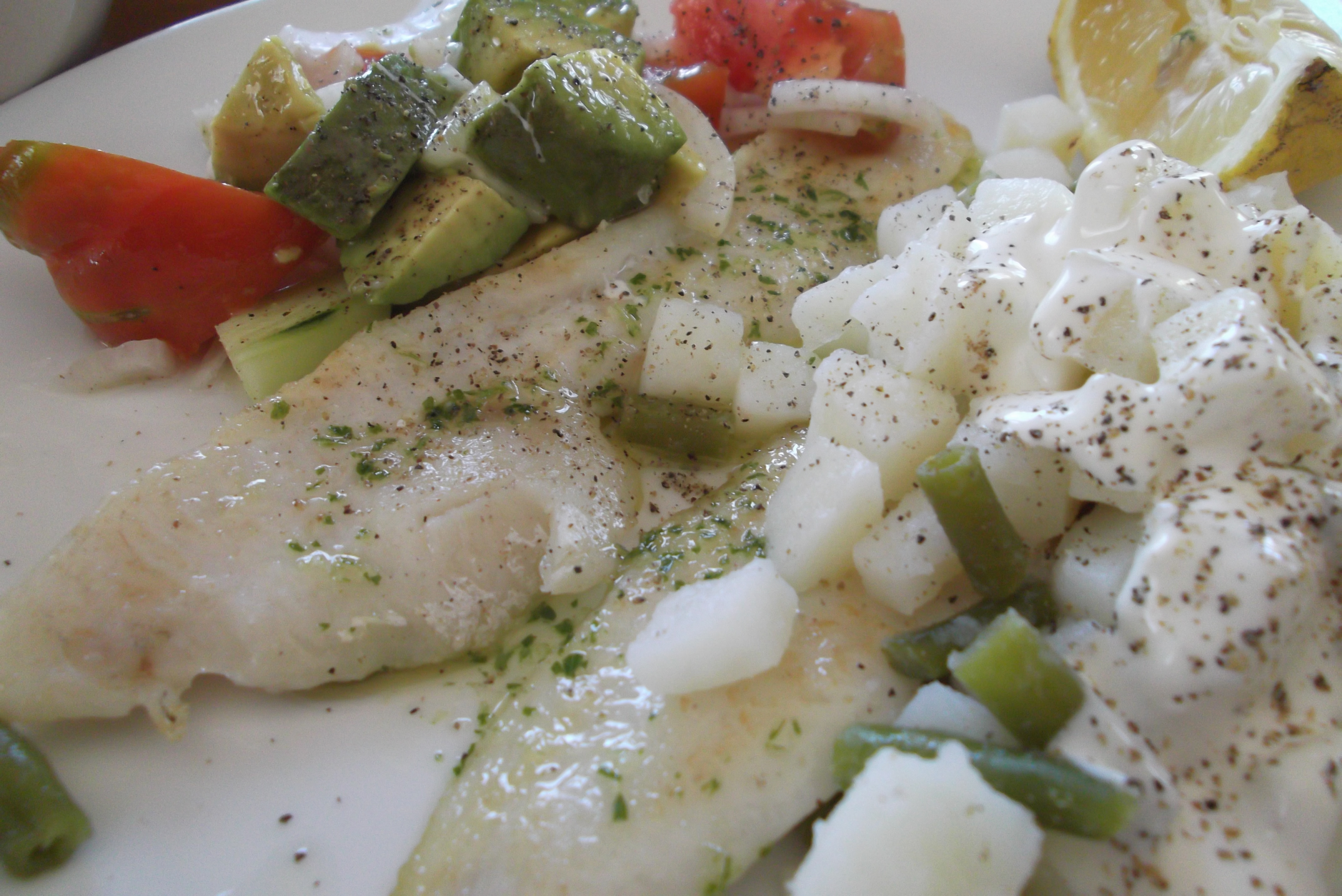
Restaurants round where I live have good, simple food.  It can sometimes get a little repetitive, and often there´s no menu as they all serve pretty much the same selection of grilled meats (usually pork cuts) and some grilled or fried fish.  What you get though is fresh, well cooked and tasty food.  Often the meat or fish will come drizzled with a delicious garlic and parsley mixture blended with olive oil.

One of our regular local restaurants moves everything outside onto the “summer terrace” during the hot months.  This includes the cooking, so you can sit at your table and almost within an arm´s reach you have Luis at the bar, his partner Sonia in the kitchen area and the mountain views.  I noticed that Sonia makes her sauce up and keeps it in a squeezy bottle which she then uses to dispense the delicious mixture over the cooked food as it leaves the kitchen and is delivered to us by Luis.

All she does is finely chop parsley and garlic and blend with a season of salt and local extra virgin olive oil.  I make mine up in the food processor or in a small jug using the hand stick blender.  I have now taken to keeping a bottle of this in my fridge.  Sometimes I add the zest of a lemon, and squirt it over simple grilled dishes (including vegetables) to liven them up.

Sadly, no waiter service at home, so we dished up ourselves!

Do give it a go, it´s handy to have around and apart from looking pretty, tastes wonderful. Probably best not to eat it if you´re going out on a hot first date though!

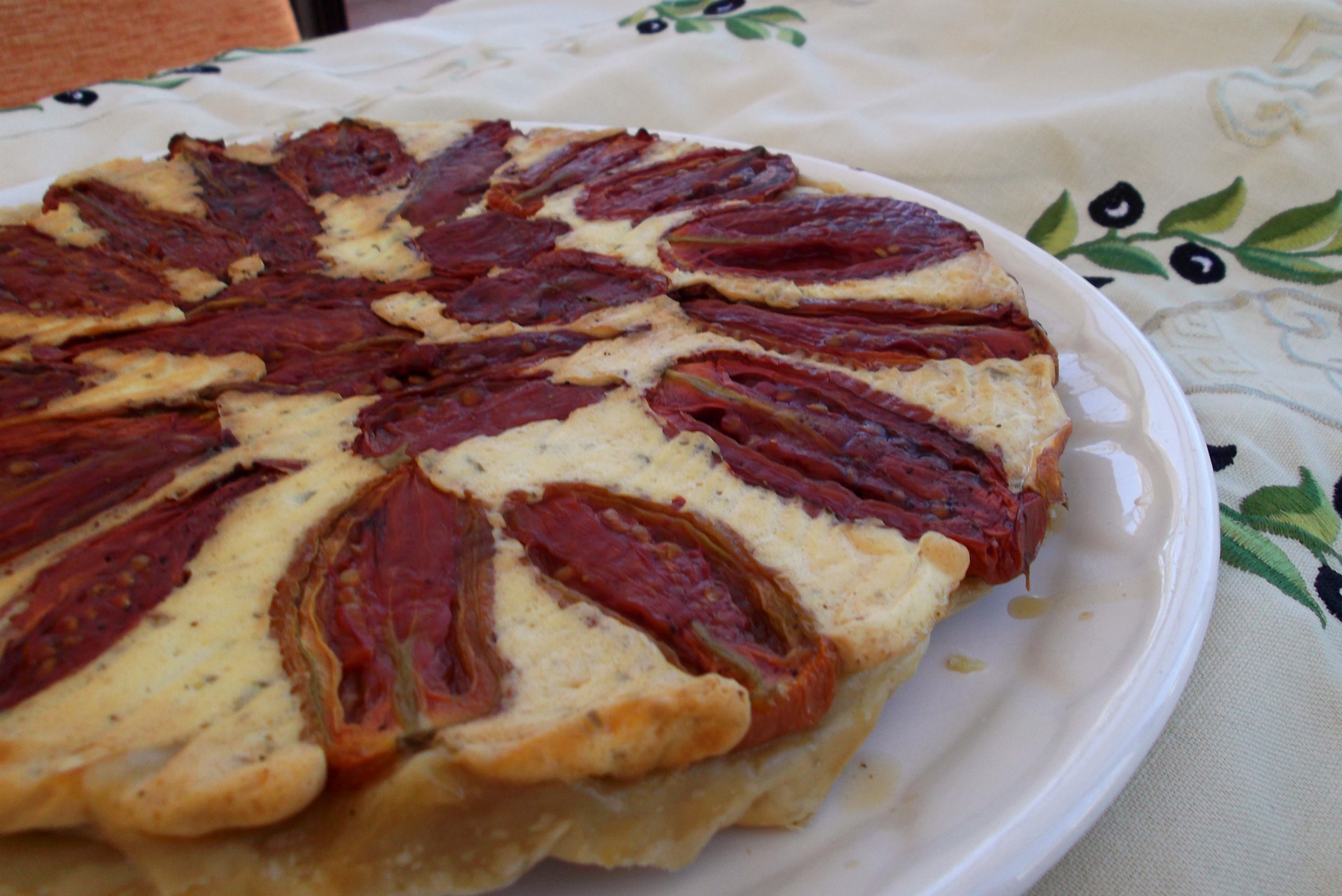
Almost Tomato Tarte Tatin

Make it a big slice for me please!

Yes, tomatoes are now officially ripening at a rapid speed in our Huerto, and apart from drying and preserving, we are eating them too!

If you head over to Cook, Eat, Live Vegetarian you´ll find a wonderful tomato and quinoa recipe which shows you how to slow roast the delicious summer tomatoes we have in Andalucía at the moment.  The other night we were heading out for dinner, so on the way out I popped a couple of trays of tomatoes into the oven set at the lowest temperature, and when we got back about four and a half hours later I had perfect roasted tomatoes.  The house smelt wonderful too!

The next morning I braved the heat of the oven and decided to make a tomato tart.  You can also find another wonderful version over here at Sweet Pea´s Kitchen made with Heirloom Tomatoes.

I put greaseproof paper at the base of a loose bottomed tart tin (that always makes me giggle, it sounds a bit saucy!) and put the tomatoes in, cut side down.

Then I mixed 200 grams of my garlic and herb cream cheese with one egg and spread this over the tomatoes.  Finally I covered the whole thing with a sheet of puff pastry and tucked all the edges in.

I cooked it at 180ºC for about 50 minutes, left it to cool slightly in the tin for 10 minutes then turned it out on a plate.  You get a few lovely juices dripping out and it´s best served at room temperature.

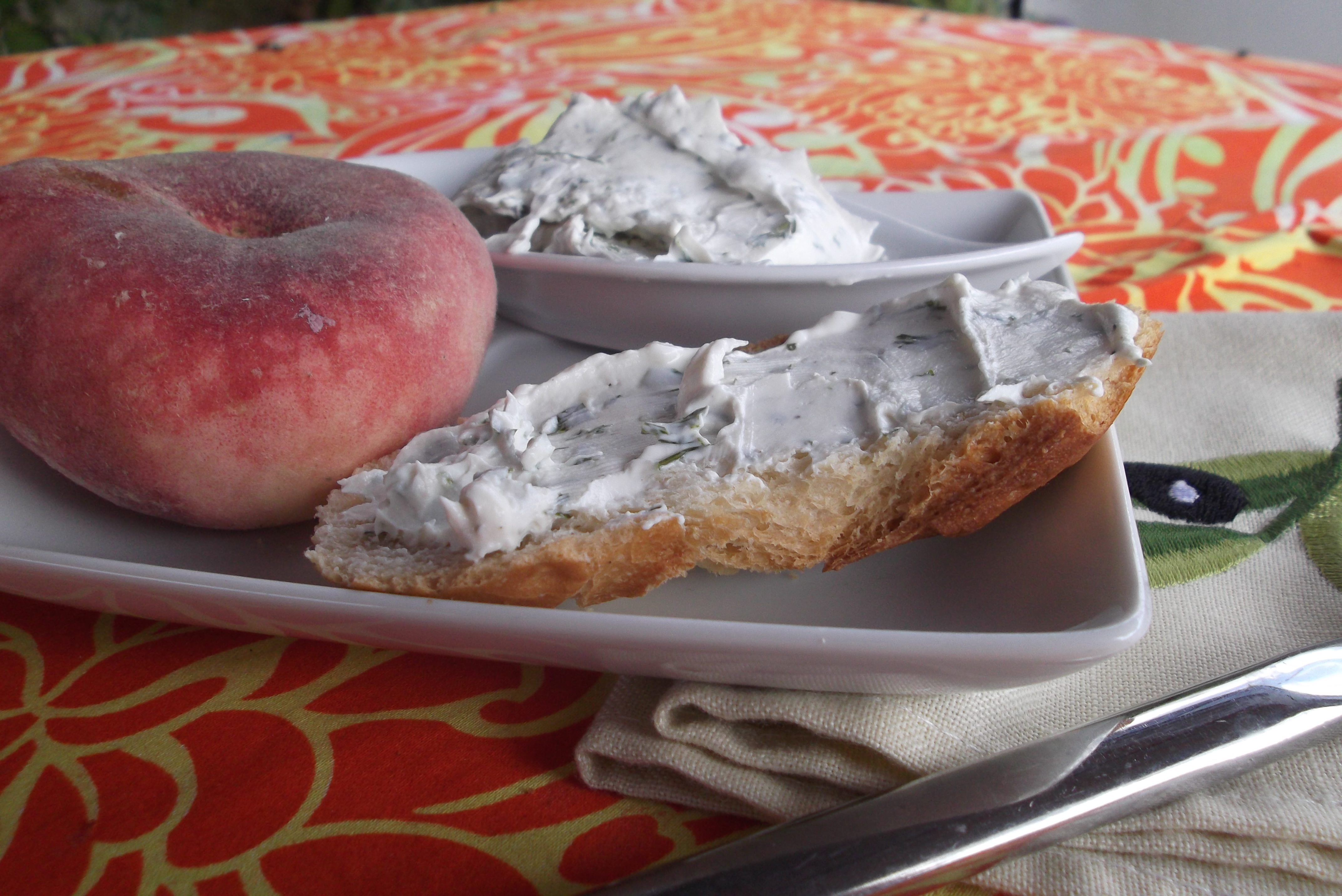
Garlic and Herb Cream Cheese

 
Creamy and Delicious

Not long ago I posted on how I make Greek style yogurt.  Rachel from And Then Make Soup, commented that if I left the yogurt to drain for a little longer, I would end up with a spreadable cream cheese (rather like Philadelphia or Boursin). Thanks for the tip Rachel!

So, in a double experiment, I gave this a go.  It was a double experiment as I didn´t have any fresh milk.  I know this sounds a little odd, but in Spain it´s still quite hard to buy fresh milk, apart from in the larger supermarkets in the bigger towns.  Almost all the milk available here is UHT or Long Life.  It´s not a huge problem as I don´t take milk in my coffee and only really use milk in cooking.

So…with a litre of semi skimmed UHT at my disposal, I made a batch of yogurt to see if it would work.  Nothing ventured, I thought!  To my surprise, the process worked equally well as using fresh milk and tasted the same.

Instead of draining it overnight, I put a weight on it and drained for 48 hours.  I saved the liquid that came off it to make soda bread, but more of that another day.

This is what it looked like after 48 hours, straight out of the mould. 

After draining for 48 hours

I beat it up a little and then added one clove of crushed garlic, a sprinkle of sea salt and about 2 tablespoons of very finely chopped parsley.

Add your favourite herbs

The next morning I spread it on bread for my breakfast, and accompanied it with a very funny looking peach!  They´re called Paraguayas here, they have a whitish flesh inside and are very tasty.

Luckily I was not going anywhere that morning, as I was rather garlicky for a few hours!

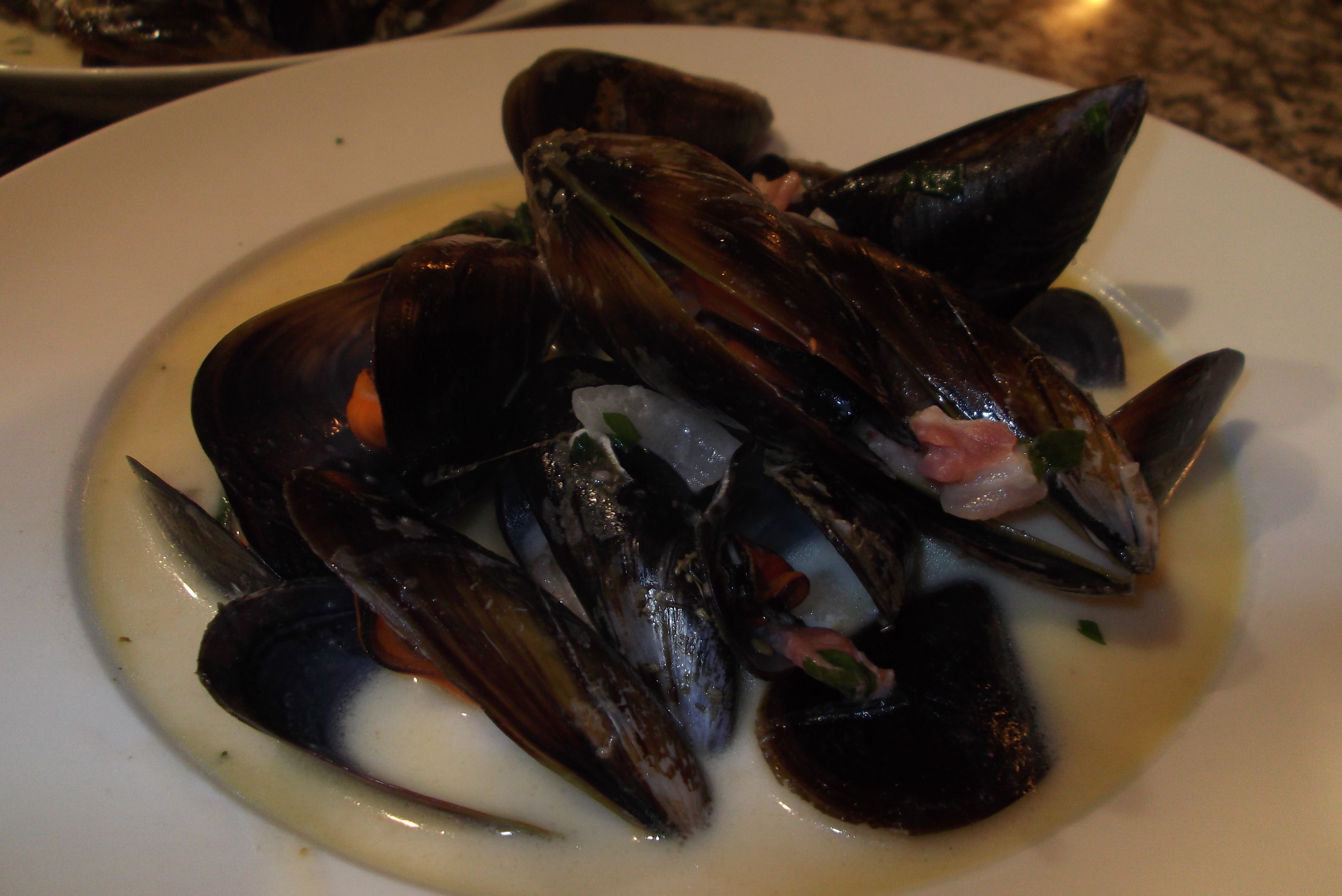
Creamy Mussels with Garlic and Bacon

Delicious!

It was another day for Fish Man to visit and I bought a kilo of mussels.  Such a bargain food, so easy to prepare, and such a wonderful taste.

I have been inspired by some of the recipes posted by Olives and Artichokes here and here and often make a tomato based soup version, as you can see here.

Today, I decided to use up some of my bacon from the UK, although I could have used lardons or jamon instead.

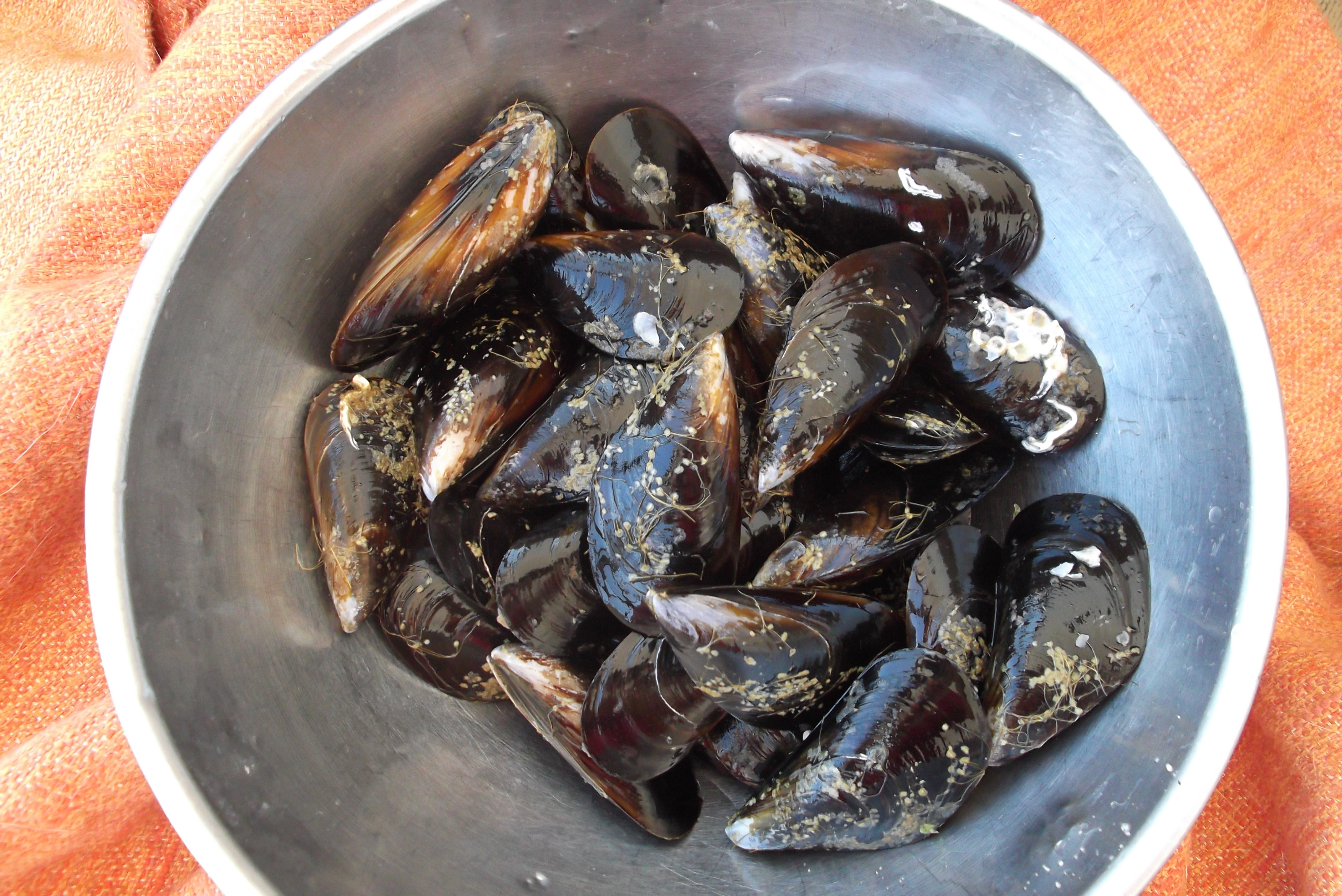
Time for a wash and brush up...

After cleaning my mussels, I lightly fried in olive oil two cloves of crushed garlic, one onion fairly finely chopped and 4 rashers of chopped bacon.

When these had all softened I added a glass of white wine and simmered for about 5 minutes before adding the mussels and a couple of tablespoons of chopped parsley and putting the lid on.

A few minutes later the mussels had all opened, so I took the pot off the heat, stirred in 100ml of single or pouring cream and that was it.

I served it in big bowls with spoons and crusty bread to soak up all the garlicky, creamy juices.  ¡Muy rico!

Runner Beans with Bacon and Garlic

It´s good to have a bean slicing gadget!

A few days ago Big Man came back from a trip to Granada raving about a different kind of tapas he had eaten that day in a bar.  First of all I need to explain all about Granada and tapas.  Granada (the entire province, not just the city) is famed for and rightly proud of its tapas culture.  In most other regions you are asked if you´d like a tapas to accompany your drink and offered a choice.  This can simply be cheese, jamon or olives or quite sophisticated grilled or fried fish, fillets of meat, or potato or seafood salad.

In Granada you don´t get offered, you just get given.  Most bars will have their own specialities and generally their first tapas will be x, the second y and so on.  Of course, if they serve you something you don´t want or like, you can ask for something different.  They even have a word for going out and moving from bar to bar sampling the best they have to offer.  It´s called “tapear”…isn´t that wonderful?  Sounds so much nicer than going on a pub or bar crawl! It also helps with not ending up with a sore head if you drink alcohol as you are eating as you go along.

So, back to the tapas he ate.  Apparently it was runner beans with bacon.  It sounds simple, and it was, but he said it was delicious and fresh and made a lovely change from the usual fare.  After cross questioning him under a spotlight (ok, I made that last bit up) he told me that he thought the beans had been cooked a little first in water, then stir fried with little cubes of bacon.  Then he thought there might have been garlic and couldn´t make his mind up if there had been tomato, but probably not.  What a great way to use up some of my runner bean glut and to get my super marvelous bean shredder out again!

So that was pretty much it.  I sliced my beans finely (I used about 2 cups) and boiled them for a few minutes then drained them.  I diced a couple of slices of smoked streaky bacon which I fried until slightly brown at the edges, threw in two cloves of crushed garlic and the beans and stir fried them for a few minutes more.

Big Man pronounced them even better than the ones in the bar, mainly because I had used some of my precious stock of lovely English bacon supplied by my pals.  And I´m happy as we have a new quick and tasty dish to use up some of our runner beans which we´re currently picking at a rate of about a kilo a day.

Breakfast On The Beach

Better than a Breakast Bap!

Big Man and I decided that we would have a little day away from mountain and head down to the beach.  We would go for lunch in a local restaurant we know near the spot we like, but decided to have breakfast on the beach.

For once, we were organised, and made this plan the night before, so I decided to prepare something ready for the morning.

I defrosted a sheet of puff pastry and folded the edges over to create a little rim.  I baked this in a hot oven for about 10 minutes until it was just starting to turn brown.

For a filling I beat two of our free range eggs with two tablespoon of milk, seasoning and a cup full of chopped wilted chard (just the green part) with the excess water squeezed out.

I poured this into the pastry “case” and baked for another 10 minutes or so until it was set.  It looked lovely when it came out of the oven, but I didn´t take the snap until the next morning when it looked a little less crusty and flaky.  Nonetheless, it was delicious cold and we didn´t even get any sand in it!

PS. Bet you´re glad I spared you a photo of us eating it on the beach…