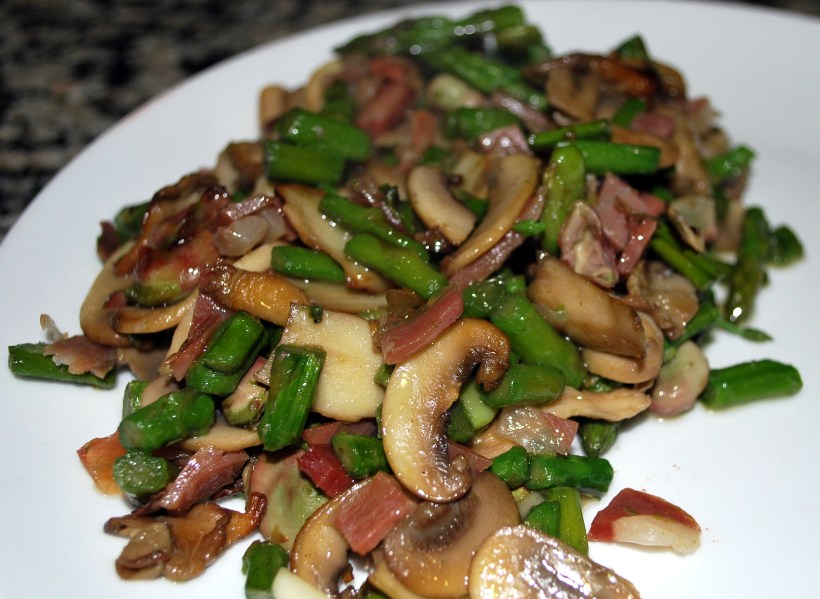
This recipe of sautéed (or stir fried as very little oil is used) vegetables is fantastic as it can be used as a vegetable dish, a starter, or served with fried or poached eggs as a light lunch or supper. Add jamon or bacon for non vegetarians (as I did) and it becomes more filling or stir it into scrambled eggs. See? Lots of options!
Ingredients
About 24 thin spears of asparagus, finely chopped (reserve spears)
½ cup of broad beans (no need to skin)
2 or 3 large oyster mushrooms cut into thin strips
About 6-8 mushrooms and stalks finely sliced
2 cloves of crushed garlic
4 slices of jamon or bacon finely chopped (optional)
Olive oil
Start by simmering the asparagus (not the tips) and broad beans for 3-4 minutes in boiling water. Lift them out with a slotted spoon and then cook the tips of the spears for a minute or two until tender, reserving them separately. The stock is good for using as a soup base or for cooking rice.
In a frying pan warm a little oil and gently cook the garlic until it is soft but not brown. Add the mushrooms and stir to coat in oil then cover and cook gently until the mushrooms are soft and giving off a little liquid.
Add the asparagus tips and broad beans, stir and cover and cook for a further 5 minutes. If you like your vegetables very tender, add half a cup of water and cook until it has evaporated. If using bacon or jamon, add, turn the heat up and fry until slightly crispy. Stir in the asparagus tips, season and serve.
Fried for Big Man…I prefer poached…
This would also be lovely used in a risotto or stirred into pasta….or add cream and mix with gnocchi.
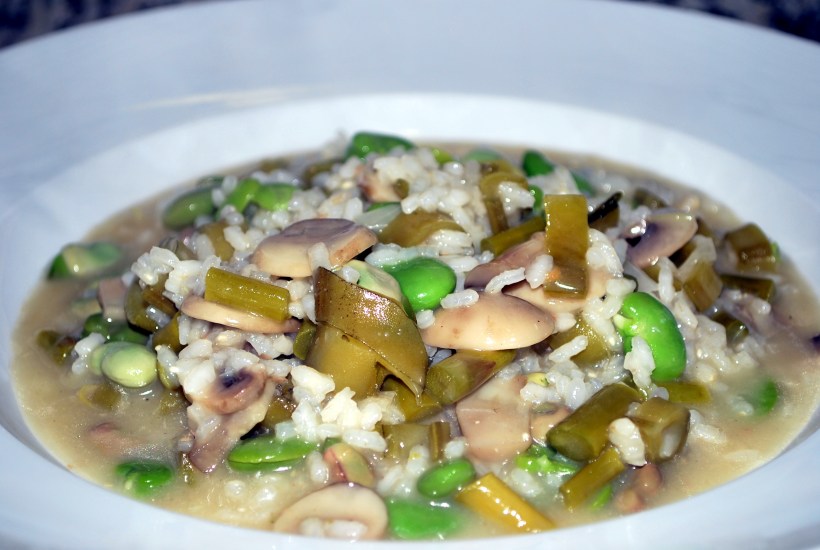
Spanish rice is a little different from Italian risotto rice. Like risotto rice it is generally cooked in a large amount of flavoured stock (for example in a paella) but the grains stay separate rather than turning creamy. However, use whatever you have, it will still be a wonderfully delicious dish.
To keep it vegetarian, use water or the stock from cooking the vegetables, otherwise chicken stock will add extra flavour.
And before the recipe, a little word about how we eat our broad beans around here. In the photo you will see about 1 ½ kilos of beans from our veggie patch. Many people here simply top and tail them and then chop them into chunks. Almost nothing is wasted, the pods are eaten too unless they are especially tough. The pods which give the biggest beans are more mature, and are less digestible.
It seems sad to me to throw so much away (although our chickens would be glad of such a sweet and tasty treat). I pod my beans and then finely chop the outer shells which I braise until tender and then add the beans to the dish at a later stage. Sometimes I simmer the beans for a few minutes and then pop them out of their skins, but this is a rare extravagance, although it does add amazing colour.
So, the choice is yours…single pod, double pod or use the shells and beans together…it´s up to you!
Ingredients – For two hungry people as a main course or four as a starter
1 cup of Spanish Paella Rice (or rice of your choice)
About 5-6 cups of water, vegetable stock or chicken stock
The braised pods from about 750 grams of broad beans (weight before preparing)
The blanched beans from the pods (save the cooking water if you want to keep this vegetarian)
About 150g asparagus cut into 1cm pieces. Reserve the tips, blanch them, drain and set aside
About 6 mushrooms thinly sliced (optional)
2 fat cloves of garlic, crushed
1 bay leaf
Seasoning
Olive oil for frying
Put a few tablespoons of oil in a deep pan or pot and add the garlic, bay leaf, bean pods (if using) and asparagus stalks and fry gently until the garlic is soft. Add the rice and coat it in oil for a minute or two then add 3 cups of the stock.
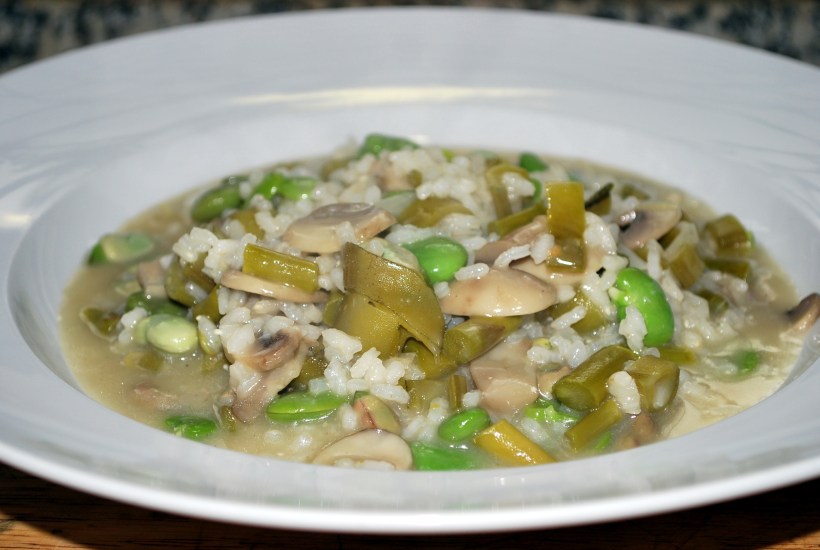
Bring to the boil and cook on a medium heat until the rice starts to absorb the liquid. Add the rest of the liquid and when the rice is almost cooked add the broad beans and mushrooms. Simmer until the mushrooms are tender, season, discard the bay leaf, cover and remove from the heat. The rice needs to rest for 3-5 minutes. If during the cooking period the rice gets too dry, just add a little more liquid. Typically Arroz Caldoso (which translates as rice with broth) is served more liquid than a paella or risotto and eaten with a spoon – but you decide how you like it.
Finally, stir in the asparagus tips and serve with some fresh lemon to squeeze over.
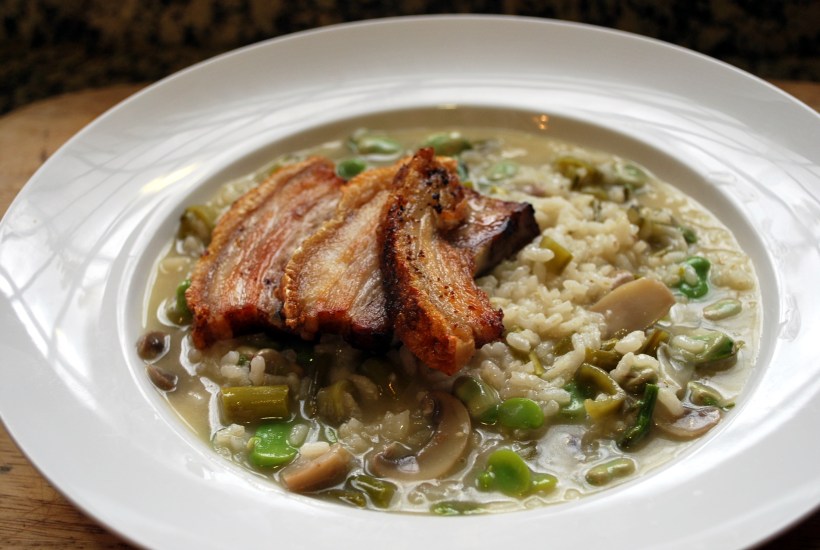
We ate ours with the leftover pork belly which I cut into slices and dry fried to remove the fat, to heat it through and to allow it to crisp up.
Customs vary immensely the world over, but some are the same regardless of where you are. When visiting friends for a meal, a little gift is customary. If it´s home made, so much the better, especially if it´s edible.
My mum passed a recipe on to me when I was last in London. She thought it would appeal because the finished cake is not too sweet (she knows I don´t have a hugely sweet tooth), uses oil instead of butter (so much easier here where butter is rarely used) and contains ingredients which are local to Andalucía – oranges, almonds and raisins. Perfect, all I needed was a chance to make it.
Easter weekend was a mix of quiet and hectic for us. Saturday found us heading across the “frontier” from Málaga province to Granada, to a remote area to join some friends in their Cortijo for lunch and a walk. More of the walk another day as I got rather carried away taking photos.
The cake was made the night before and was a huge hit. It´s very moist and is a cross between a cake and a dessert and would also be perfect served with whipped cream, crème fraîche or ice cream.
Ingredients
150g raisins soaked in 50ml of amaretto (warm the amaretto and leave the raisins in soak for at least an hour) If you don´t want to use alchohol, a delicate tea would also be perfect for soaking.
2 oranges (as bitter as you can find)
4 eggs
180g caster sugar
150g ground almonds (I left mine quite coarse, it´s up to you how fine you grind them, this cake the cake a nutty texture and a rougher look on the top)
Preheat oven to 180ºC/350ºF/Gas 4 and line a 24cm springform tin.
Place the whole oranges in a saucepan of water and ensure they are covered. Bring to the boil and simmer for about 15 minutes or until tender. Blitz 1½ oranges until finely chopped, reserve. Squeeze the juice from the remaining half orange then set the juice aside.
Whisk the eggs until light and fluffy then whisk in the sugar. Fold in the almonds and olive oil then sieve in the flour then fold in. Gently stir in the pulped oranges and half the raisins and pour the mixture into the tin, spooning the remaining raisins over the top of the cake.
Bake for about 60 minutes until a skewer inserted in the middle of the cake comes out clean.
Remove the cake from the oven but keep in the tin. Place the juice of half the orange and the icing sugar in a pan and dissolve the sugar. Pierce the cake all over with a skewer and pour the orange syrup over. Leave in the tin to cool then remove and enjoy.
PS. I think this would also be great made with polenta!
Hot cross buns, Hot cross buns, one ha’ penny, two ha’ penny, hot cross buns.
If you have no daughters, give them to your sons, one ha’ penny, two ha’ penny, Hot Cross Buns
So, Easter is upon us and Lenten fasting and abstinence for those who participate is soon at an end. One of the delights of this time of year when I lived in the UK was to eat Hot Cross Buns. They are sweet, spiced buns marked with a cross to commemorate the Crucifixion.
Finally...lovely buns!
Mad Dog did an excellent post last week about the same subject, and I wish I had gone to his recipe suggestions when I first decided to make some. I have made them here in Spain a few times and I have several recipes…but do you think I could remember which one I had used?
First of all I tried Delia Smith´s recipe – aside from deciding to make the dough in my bread maker then forgetting it was in there on a bake programme…well, the result was a hugely over risen loaf that was raw in the middle.
Oh no Delia...you let me down!
Next up a Rachel Allen Recipe….they would have been good to use as missiles in a Mediaevel battle recreation.
Finally I turned to the BBC Good Food Website. Here is the original recipe, but my version is below as I found the dough a little too wet and I wanted more spices.
For the Dough
300ml of full fat milk
50g butter
550g strong bread flour
1 tsp salt
100g caster sugar
1 x 7g sachet of easy blend yeast
1 small egg, beaten
75g sultanas
Up to 100g of chopped mix peel
Grated zest of half a lemon and one orange
2 tsp mixed spice
½ teaspoon of ground ginger
For the Cross
4 tablespoons of flour gradually mixed with drops of water until a thick paste is made
For the Glaze
4 tablespoons of sieved, warmed apricot jam
Bring the milk almost to the boil, drop the butter in and stir until the butter has melted and then put aside to cool to hand temperature.
In a bowl mix the flour, salt, yeast, spices and sugar and add the milk mixture and egg. Mix with a wooden spoon, then with your hands then remove from the bowl and begin to knead. I still found it overly sticky but my egg was very large so I added small amounts of flour gradually until the dough was workable. Knead for about 5mins and then put into a lightly oiled bowl, cover with a clean tea towel and leave to rise for about an hour or until doubled in size.
When risen, knock it back and add the fruits and peel, knead again and leave to rise a second time. This is not for people in a hurry!
After the second rise, knock the dough back again and dived into equal sized balls for the buns. The original recipe suggests 15, I got 24 good sized buns from my mix.
Place the buns, slightly spaced apart on lined baking trays, cover with tea towels and leave for another hour.
Heat the oven to 200 degrees C (the recipe says 220 but I did the first batch at this temp and the bottoms burnt slightly). Now you need to pipe the flour paste over the buns into crosses. I used a sandwich bag with a point cut off the end to do this.
Bake for about 15 minutes until golden and gorgeous. Warm the jam and brush over the still warm buns to glaze.
Enjoy as they are or split (toasted or not) with butter. Happy Easter to you All!
A slightly sad looking final slice of cheesecake....
I am sure we all have “go to” recipes for times when we are in a hurry, or just want to return to an old favourite. I adore baked cheesecake and have been using an adapted version of a BBC Good Food one for several years now.
When I found out that I had been asked to make a dessert for lunch with friends, I got out my cream cheese and eggs and quickly got to work. Apologies for the photo, I forgot to snap it in all its glory before we attacked it!
1 sachet of flavourless gelatine or vegetarian substitute
Heat the oven to 180º C or gas mark 4. Mix the crushed biscuits with the butter and press into a springform tin. Bake for 10 minutes and leave to cool.
Beat the cream cheese, flour, sugar and eggs together then add the cream and vanilla essence and then any fruit filling (not the jam). Blend gently, pour into the tin and bake for 45 minutes. It will still be slightly wobbly in the centre but leave to cool out of the oven. It will continue to cook slightly. I have to confess mine always cracks, I don´t know if there is a way around this – I´d be happy to learn!
For the topping you can either just cover with fruit or make a jelly fruit topping. I did this by adding a sachet of powdered gelatine to about 4 tablespoons of cold water. In a small pan warm the jam until it starts to bubble then pour it over the gelatine and mix well until all the granules have dissolved. Leave it to cool down until almost cold and starting to set then pour over the cheesecake (still in the tin). Refrigerate for at least 2 hours and remove from the fridge an hour before serving to reach room temperature.
This was a two egg omelette made in a small, deep frying pan
I can´t believe that I haven´t posted my version of this Spanish classic. Probably one of the most famous tapas dishes in Spain, simple, economical and delicious. Can be served hot or cold. There is always a great debate about how to cut the potatoes. Ask 5 people and you´ll get five different answers – the choice is yours.
Ingredients per person
One large potato peeled, halved and cut into thin (but not wafer thin) slices or chunks
Half a medium onion, finely chopped (optional)
2 eggs
1 tablespoon of milk
½ teaspoon of cornflour (optional)
Salt
Olive oil for frying
Put the potatoes (and onion if using) into a deep frying pan with straight sides if possible. This helps with turning the tortilla. Choose the size of pan according to how many people you are cooking for – you want the tortilla to be deep, so a smaller diameter and a larger depth works well. Cover with plenty of olive oil (this can be drained and reused) and use a low heat to braise the potatoes until they are tender, turning them over gently a few times during cooking.
Drain the potatoes and save the oil. In a large bowl beat the eggs and milk together and if you want a thicker, spongy texture to your tortilla, add the cornflour to a little of the milk then mix in with the eggs. Season with salt then add the potatoes to the eggs and mix gently. The secret to a successful tortilla, I´ve found, is to have a high quantity of “filling” in relation to egg. The egg binds the potatoes (or whatever vegetable you choose to use) together.
Pour a little oil into your frying pan and when it is hot, turn the heat down low, add the eggs and potatoes and cover with a lid. This now needs to cook very, very slowly until it sets in the middle and the bottom starts to brown.
Turn the tortilla using a large plate and then slide the uncooked side into the pan. Timings will depend on how large your tortilla is. If you are unsure about flipping the tortilla, pop the frying pan under a hot grill for a few moments to completely set the top, then flip it. Once it is browned nicely on both sides, turn out onto a plate and enjoy it hot or cold.
For a less authentic but less calorific version of this dish, use potatoes cooked in their skins. Peel and slice or cut into chunks and then warm them through in a very little oil before adding to your egg. I use this method more often than the “oil braising” method to help in the waistline war, and no one has noticed the difference!
For another version, take a look at my Potato and Brocolli Tortilla here.
I make a lot of soup, especially vegetable soups using whatever I have available. To make them more filling, I often add lentils, pearl barley or beans. Today I fancied making a mixed plate of tapas to eat before lunch and had paté cravings.
Instead of making a meat paté I took about a cup of dried beans that I had soaked overnight (the other half of which were destined for the soup pot) and made them into a tasty, garlicky paté which we served with pickled courgettes, our home cured olives, pickled onions from Cook, Eat, Live Vegetarian´s lovely recipe, salami made by a neigbour and some dried oven baked rolls.
To make one bowl of paté cook about a cup of your favourite dried beans until tender and drain (or use a can of beans). I cooked them with a few sticks of celery and a chopped carrot for extra flavour.
Put the cooked beans into a blender jug and add 2 tablespoons of olive oil, the juice of half a lemon, 2 cloves of garlic, salt and pepper and a small bunch of fresh parsley. Blend using an immersion(stick) blender or a food processor. If the texture is too thick, taste and then add either extra oil, lemon juice or water depending on which flavours you want to dominate. Adjust seasoning if necessary.
Quick, easy, tasty and economical. Pass the bread please!
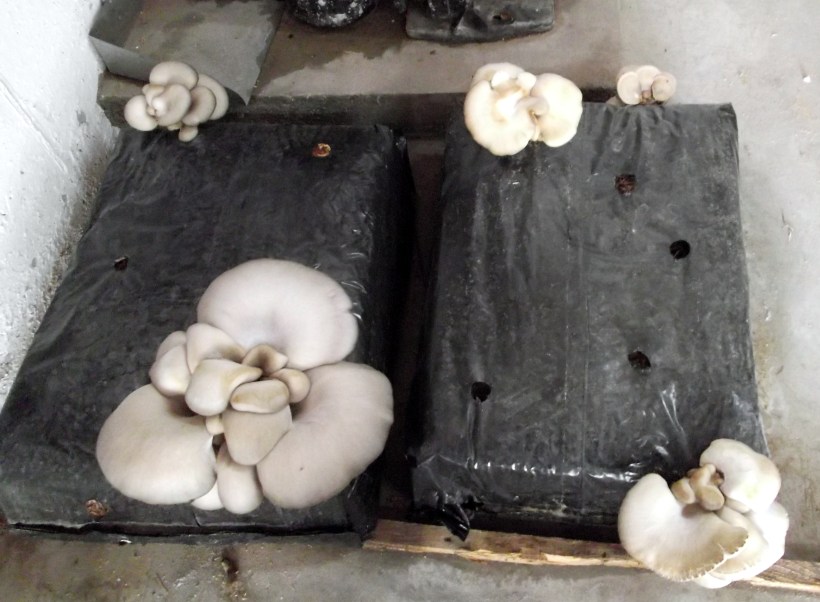
I have mentioned previously that we have some mushrooms growing, intentionally I might add, in our garage. It was a slow start, but we are now getting regular supplies of oyster mushrooms to enjoy.
After a week away, they had gone a little crazy, and some of the ordinary mushrooms which we are also growing had turned into monsters which I´ll chop up and use in sauces or soups.
Back from London with not much in the fridge, we had to “make do and mend”, as my grandmother used to say. The fire was blazing merrily, so we put some of the larger mushrooms onto our parilla (which is a grill which you can sandwich things between) and cooked them over the embers of the fire. You could do this over a barbecue or even under the grill (for grilling I´d recommend you brush them lightly with oil first).
Once they were done we seasoned them with Maldon sea salt, freshly ground pepper then drizzled some olive oil over and added a little squeeze of lemon juice. With a softly poached egg and a plate of jamon we enjoyed a simple supper but felt that we had dined like Kings!
PS. Our dogs Luna and Alfi stayed with our lovely neighbours while we were away. Our dogs love being there and they get loads of walks. It seems this week they discovered the joys of goat manure and spent lots of time playing in it, which was much less fun for our neighbours who had to deal with two very stinky dogs. Alfi is now in need of a major haircut and they were both happily exhausted yesterday when we got them home. I took this snap of them “recovering” from their week of fun whilst trying not to laugh too much at Alfi´s lack of energy to get either into or out of the bed.
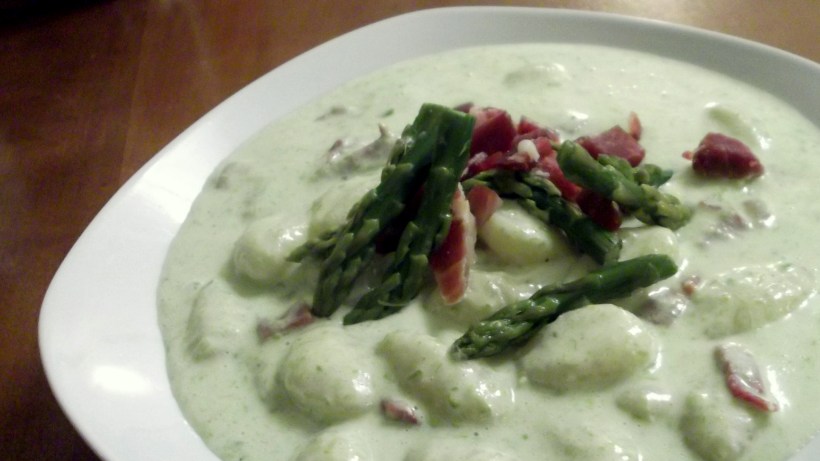
I have previously mentioned my love of potatoes, and being a big fan of carbs, a plate of gnocchi really hits the spot. Today we´ll be using a packet of ready made gnocchi, as this is a speedy dish that looks gourmet, and we all like those.
The sauce is enough for four. Of course, rather than save half for another day, we used it all and had our gnocchi swimming in a delicious creamy sauce. Shame on us.
Ingredients
1 packet gnocchi
200ml of pouring or single cream
2 tablespoons of milk
1 bunch of asparagus
2 tablespoons of soft blue cheese (optional but highly recommended)
Fresh parmesan for grating
Some chopped cooked lardons, bacon or jamon for sprinkling over the finished dish (or leave these out if you want to keep it vegetarian)
Seasoning
Start by finely chopping the asparagus, leaving the aside the tips. Cook in salted water (not the tips) until tender and remove with a slotted spoon. Now cook the tips, drain and set aside, keeping warm if possible. You can always save the cooking liquid to add to vegetable stick or soup.
In a blender jug put the cream, milk, blue cheese (if using), asparagus (again, not those tips!) and plenty of black pepper. Blitz until you have a smooth thick cream and put into a small saucepan.
Boil the water for your gnocchi, add salt, and cook until they float to the top. While they are cooking, gently warm the cream sauce, taste and add salt if necessary.
When the gnocchi are done, drain and mix the cream sauce in, place into warmed serving dishes. Sprinkle over the asparagus tips and jamon or bacon (if using) and grate over some fresh parmesan. Speedy, luxurious, delicious.
On Thursday Big Man and I are heading to London for a week to catch up with family, friends and food. My parents are probably one of the few families on the planet who don´t have internet, so although I may post again before Thursday, I won´t be able to read blogs or comment from Wednesday evening until we get back when I will do a big “catch up”. Hopefully we´ll come home with lots of lovely foodie goodies and some good eating experiences to share with you all.
Update – I have added this recipe to Greenslove´s recipes, check out Linda´s link here at Savoring Every Bite for more info
I have a rather too close relationship with potatoes. Damn Christopher Columbus or whoever it was who bought them back from the Americas. I particularly like them smothered in butter if they are baked in their jackets, or cooked in olive oil when roasted. Or how about butter, cream and cheese if they are mashed? Oh dear, I can´t always have naughty potatoes and sometimes plain boiled with a drizzle of olive oil just doesn´t do it for me.
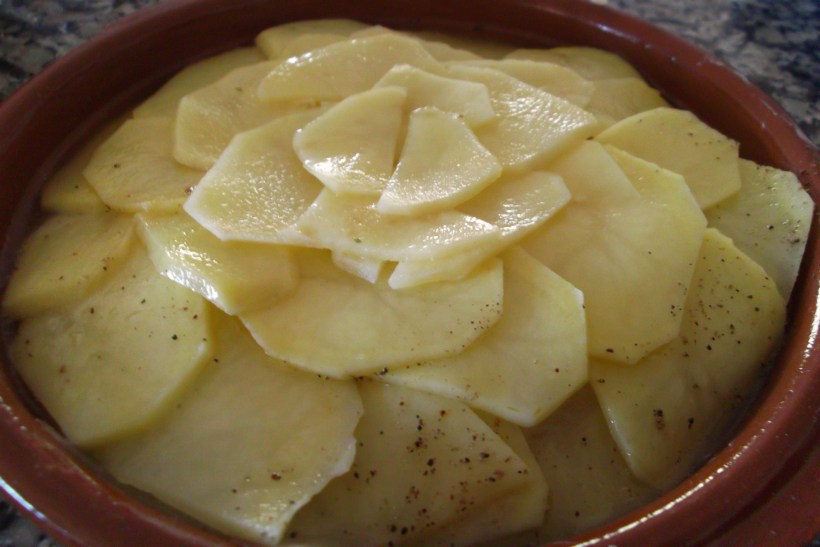
Boulangère Potatoes are a good option if you are trying to be a little sensible with the calories, or if you just want to go mad with the dessert. They´re also wonderful when you are entertaining, as apart from tasting fantastic, they can sit quite happily in a warm oven for quite a while and come to no significant harm. Boulangère is the French word for Baker. Many families in the past did not have ovens in their own homes. They would take a dish of these down to the village baker who would kindly pop them in to cook in his still warm oven when the bread baking was done. What nice people bakers are.
To serve four people you´ll need about 1kg of potatoes peeled and thinly sliced (I used a mandolin slicer but you can also do this by hand or in a food processor), 2 medium onions thinly sliced, olive oil, seasoning and about half a litre of vegetable or chicken stock. If you have it, some fresh thyme is also good but right now I´m in a bit of a huff with Big Man as he dug all mine up a while back thinking it was a weed! Rosemary also works well with this dish.
Lightly oil the base of an oven proof dish and start making layers of potato, onion, herbs and seasoning. Finish with a layer of potatoes, season and then pour over stock to completely cover.
Cover the dish with foil and bake in a at 200ºC/Gas 6 for about 45 minutes, then take off the foil. The potatoes and onion will be soft now and most of the liquid will have disappeared. Continue to cook for another 15 minutes or until the liquid has all gone and the potatoes have browned. If you find it has cooked through but the potatoes are still a little pale, put under the grill for a few minutes.
Either serve immediately or leave at the bottom of a low oven until you are ready to eat.
So in 2016 I turned 50. I was in Italy for my 21st, 30th and 40th. To keep this birthday tradition going I always knew I'd be in Italy for my 50! This blog starts with my 5 week adventure in Puglia but my love affair with Italy continues.....







 Chica Andaluza