Puchero or Olla Andalúz – Andalucían Chick Pea Stew

Well, what a weekend of e-mails many of us have had. Thanks a bunch WordPress (not!) for inundating us all. It´s been quiet on the blog front as many of us have held off from posting or commenting for fear of drowning in a sea of unwanted e-mails. Hopefully we are all daring to put our toes back in the water…but please don´t forget to remove that tick from the box below the comments one so that you don´t receive all those messages if you´re brave enough to leave messages again!

It´s been a strange weekend here too weather wise up the mountain. Saturday was like the depths of winter, Sunday got better and this week it looks as though summer is on its way with temperatures predicted in the high twenties. Feeling grey and damp on Saturday, we indulged in a big bowl of comforting Olla (pronounced Oya) or Puchero.

The word Olla in Spanish is a big cooking pot.  Often this dish is named after the pot it is cooked in. It´s a hearty, filling winter warmer that if eaten for lunch (it´s never eaten for dinner here, probably because of the “natural effects” of chick peas) will keep you going all day . This version lists the ingredients typically used locally, but also gives options for making it outside of Spain where not all of the ingredients will be so easily available. The salted bones and fat add flavour and give the broth a cloudy or white appearance, which is the sign of a good stock in Andalucía.  Clear stock, I think I´ve mentioned it previously when talking about Chicken Soup, is considered to be lacking in flavour!

If you use the salted bones, you won´t need to add much in the way of seasoning at the end. If not, add salt after the chick peas have cooked, otherwise they will never soften.

Ingredients for 4 people

  • 2 cups of dried chick peas soaked overnight in water with a pinch of bicarbonate of soda and drained
  • 2 large chicken legs and thighs (you will see that the meat in the photo is very dark as this was one of our “old boiler” cockerels…very tasty)
  • 1 piece of pork (typically here it comes from the leg or shoulder) weighing about 250g
  • Salted pork bones (replace with 2 or three pork ribs)
  • A small piece of salted pork fat (omit if you cannot find)
  • A piece of fresh or salted pork belly (with plenty of fat)
  • Optional – a few peeled carrots and sticks of celery
  • 3 or 4 cloves
  • 2 bay leaves
  • 2 small dried chillis (optional)
  • Water

Put all the ingredients into a large stock pot, pushing the meat and bones down to the bottom.  Add water to cover everything well and bring to the boil. Skim off any froth that rises to the surface during the first 10 minutes of hard boiling then reduce the heat to a very low simmer, cover and either simmer gently for about an hour and a half until the chick peas are completely tender or cook in a very low oven for 3 to 4 hours.

Remove the bay leaves, chilli, pork skin and bones, shred the meat and chop the carrots and celery if you prefer, season if necessary and serve in deep bowls with plenty of the delicious stock poured over.

Variation. Some people also add pig´s trotters to this dish, so if you enjoy them, do feel free to add. This weekend I omitted the pork fat and added celery and carrots to make it a lighter but still filling dish. My stock is probably not up to Spanish Housewife standards this time as it´s on the verge of being clear!

This is a dish which will improve and develop flavour if prepared a day ahead.
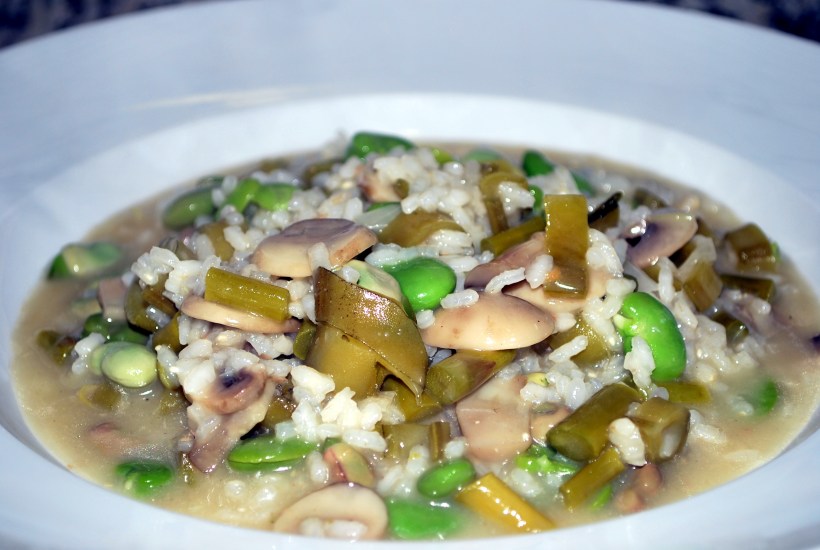
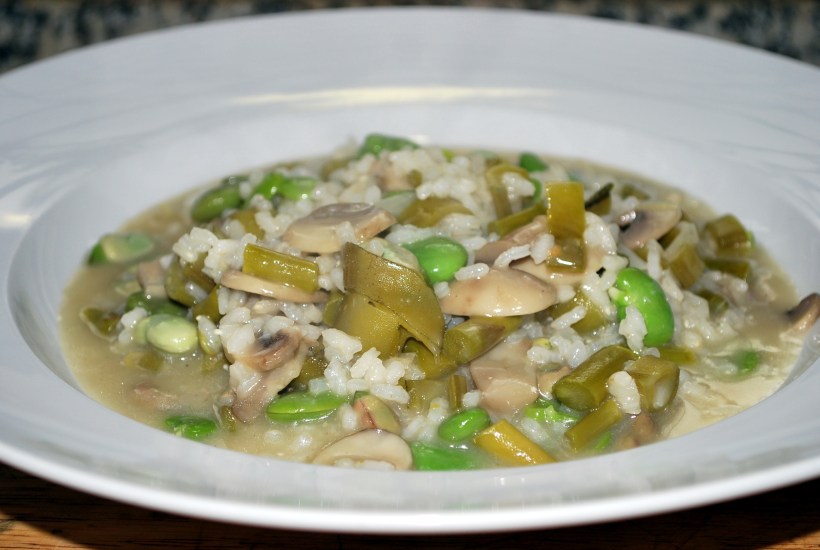
Arroz Caldoso con Habas y Esparragos – Rice with Broad Beans and Asparagus

Spanish rice is a little different from Italian risotto rice. Like risotto rice it is generally cooked in a large amount of flavoured stock (for example in a paella) but the grains stay separate rather than turning creamy.  However, use whatever you have, it will still be a wonderfully delicious dish.

To keep it vegetarian, use water or the stock from cooking the vegetables, otherwise chicken stock will add extra flavour.

And before the recipe, a little word about how we eat our broad beans around here. In the photo you will see about 1 ½ kilos of beans from our veggie patch. Many people here simply top and tail them and then chop them into chunks. Almost nothing is wasted, the pods are eaten too unless they are especially tough. The pods which give the biggest beans are more mature, and are less digestible.

It seems sad to me to throw so much away (although our chickens would be glad of such a sweet and tasty treat). I pod my beans and then finely chop the outer shells which I braise until tender and then add the beans to the dish at a later stage. Sometimes I simmer the beans for a few minutes and then pop them out of their skins, but this is a rare extravagance, although it does add amazing colour.

So, the choice is yours…single pod, double pod or use the shells and beans together…it´s up to you!

Ingredients – For two hungry people as a main course or four as a starter

  • 1 cup of Spanish Paella Rice (or rice of your choice)
  • About 5-6 cups of water, vegetable stock or chicken stock
  • The braised pods from about 750 grams of broad beans (weight before preparing)
  • The blanched beans from the pods (save the cooking water if you want to keep this vegetarian)
  • About 150g asparagus cut into 1cm pieces. Reserve the tips, blanch them, drain and set aside
  • About 6 mushrooms thinly sliced (optional)
  • 2 fat cloves of garlic, crushed
  • 1 bay leaf
  • Seasoning
  • Olive oil for frying

Put a few tablespoons of oil in a deep pan or pot and add the garlic, bay leaf, bean pods (if using) and asparagus stalks and fry gently until the garlic is soft. Add the rice and coat it in oil for a minute or two then add 3 cups of the stock.

Bring to the boil and cook on a medium heat until the rice starts to absorb the liquid. Add the rest of the liquid and when the rice is almost cooked add the broad beans and mushrooms. Simmer until the mushrooms are tender, season, discard the bay leaf, cover and remove from the heat. The rice needs to rest for 3-5 minutes. If during the cooking period the rice gets too dry, just add a little more liquid. Typically Arroz Caldoso (which translates as rice with broth) is served more liquid than a paella or risotto and eaten with a spoon – but you decide how you like it.

Finally, stir in the asparagus tips and serve with some fresh lemon to squeeze over.

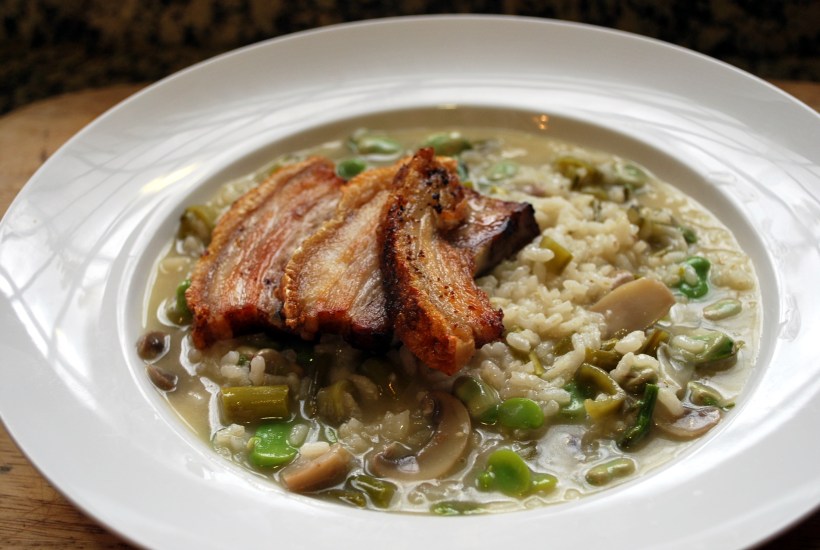
We ate ours with the leftover pork belly which I cut into slices and dry fried to remove the fat, to heat it through and to allow it to crisp up.

Slow Roasted Pork Belly with a Chinese Style Sauce

We love pork belly, but here it is more traditionally used as “pancetta”, boiled in stocks and soups to add flavour or cut into tiny chunks and done on the plancha (griddle) or deep fried as a little tapas. Often it will have the skin removed.

Big Man knows that I don´t like the flowers sold in the very few florists we ever come across here (funeral meets petrol station bouquet) so I am romanced with food surprises. Cheese covered in rosemary, tangy little apples to remind me of England, bunches of wild asparagus, a freshly caught rabbit, mushrooms which have been foraged for, and yesterday a belly of pork with the skin on. Now that´s what I call love.

Today the sun is shining, time to get to work in the garden and vegetable patch, so I needed a dish that I could forget about for a while. This recipe from my old favourite, the BBC Good Food Website, seemed to fit the bill. I did change it slightly as several people commented on the sauce being very sticky and leaving them with some scary washing up. Not for me, I thought, and worked around it.

Ingredients

For the sauce

  • 2 tbsp dark soy sauce
  • 60ml vinegar (I used white wine)
  • 2 tbsp honey
  • 2 star anise, broken up slightly
  • 1 tsp Chinese five-spice powder
  • 100ml rice wine or sherry (I used a dry fino)
  • 1kg boneless pork belly

 Turn the oven on to its lowest setting.

Mix all the ingredients for the sauce together and warm gently until the honey has melted.

Line a small, deep baking tin or dish (one that will fit the meat quite snugly) with greaseproof paper making sure it comes up the sides. I used a large sheet and just placed it in the tin, scrunching it round the meat once it was placed in the tin.

Pour the sauce into the tin then place the meat on top, skin side up. Gather the paper up a little and then make a lid of aluminium foil so that the meat is sealed in the tin.

Cook slowly for about 3 hours, test the meat at the end of this time to ensure the meat is no longer pink. If it is, leave in for a little longer.

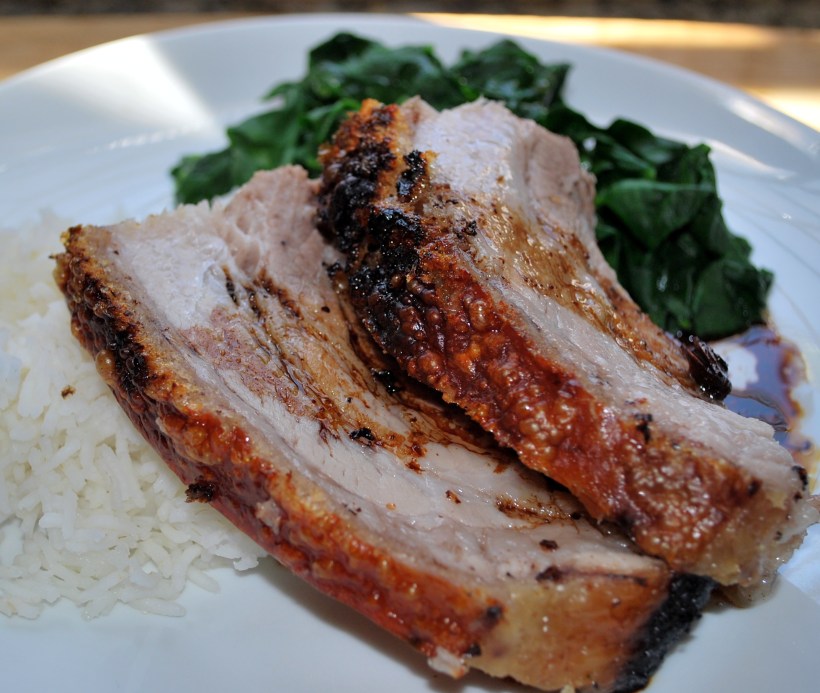
Now turn the oven up to the highest setting. Drain the sauce off the meat into a small pan and replace the meat in the baking tray, still skin side up. Continue cooking the meat until the top has turned crispy. Mine took about 45 minutes but you could always put it under a hot grill instead (not too close though or it will just burn).

Meanwhile remove any fat from the top of the sauce (I did this with a small ladle) and then fast boil the sauce until it has thickened slightly.

When the meat is done, cut into slices and serve with some of the sauce poured over. We ate ours with plain boiled basmati rice and spinach, picked only an hour before from the garden, which was simply steamed.

Now…has anyone noticed a slight improvement in my photos today? I do hope so! When I was in the UK last week I picked up my new (well, new to me) camera. It´s a Nikon D60 and I am a total photography virgin when it comes to the camera I now have. It has a couple of lenses. One of them, I am sure, will be able to pick out the hand of cards Big Man is holding when playing with the old boys in the summer if he is sat on the terrace of the bar down the road. I haven´t even read the instruction book yet, so am going to enjoy playing with it over the next few months.  Wish me luck…but don´t worry Roger, you have nothing to fear from me…
Beautiful Bakewell Cake

The 23rd April, the day before we left for our whirlwind trip to the UK, was St George´s Day. Yes, he who slayed the dragon and is the Patron Saint of England despite not having a very clear connection to my place of birth. Although this is not typically celebrated as special day in England, I decided to make something to remind me of it in honour of the day.

A traditional Bakewell Tart consists of a pastry base with a jam and sponge filling with almonds and may well have originated in the town of Bakewell in England. I´d be happy to be enlightened. The version of this delicious dessert is a cake and was inspired by a BBC Good Food recipe. As ever, I had to adapt!

Ingredients

  • 140g finely ground almonds
  • 140g softened butter
  • 140g caster sugar (the recipe calls for golden caster sugar)
  • 140g self raising flour
  • 2 eggs
  • 1 teaspoon vanilla essence
  • About 5 tablespoons of strawberry jam (this was my main change as the recipe calls for 250g fresh raspberries)
  • 2 tbsp flaked almonds
  • Icing sugar to decorate

Heat oven to 180C/160C fan/gas 4 and base-line and grease a deep 20cm loose-bottomed cake tin. Blitz the ground almonds, butter, sugar, flour, eggs and vanilla extract in a food processor until well combined.

Spread half the mix over the cake tin and smooth over the top. Scatter the raspberries over (I spooned over the jam) , then dollop the remaining cake mixture on top and roughly spread – you might find this easier to do with your fingers. Scatter with flaked almonds and bake for 50 mins until golden. Cool in the tin then remove and dust with icing sugar to serve.

Habas con Jamon – Broad Beans with Cured Ham

Now, if there was a prize for the least photogenic dish in the world, this one would be up there with the final contenders. It´s a very simple and tasty dish, especially made with the young tender broad beans which are in season right now. Our vegetable patch is delivering nicely and I make these regularly.

And then I take a photo. But to no avail. Broad beans braised slowly for about 30 minutes just don´t look pretty. You have the photos to prove it here. Sigh. If only they were as photogenic as Roger´s beautiful beetroot. But what they lack in looks, they make up for in taste, you´ll just have to believe me on this.

It´s quite a versatile dish – it is served here as a tapas, a side dish or with fried or poached eggs as a light supper dish. It can also be mixed into beaten eggs and made into a tortilla or huevos revueltos (scrambled eggs).

Ingredients

  • 500g of young broad beans (podded, but keep the skins and slice them into 1cm pieces)
  • 1 medium onion finely chopped
  • About 6 cloves of garlic peeled and sliced lengthways in half
  • 100g of finely chopped jamon (or use lardons or pancetta)
  • Olive oil
  • Seasoning
  • Sweet pimentón (optional)

The Spanish way of making this dish is to braise the onion, garlic and beans (pods and skins) in olive oil until tender. It does taste wonderful but this is how I do it.

Bring a large pot of salted water to the boil and  add the bean pods and skins and cook for about 4-5 minutes until just starting to become tender. Drain. Put about 2-3 tablespoons of olive oil into a deep frying pan that has a lid (or that you can cover with foil) and gently poach the onions and garlic (with the lid on) until they are soft.

Another dish..another day...and no, still not pretty!

Now add the beans and continue to cook gently, stirring to mix the beans into the oil every so often, with the pan covered. They will simmer and braise until very tender. Near the end of the cooking time add the jamon which will also cook through. I also like to add a sprinkle of pimentón when I add the jamon, but this is not typical. Taste and season if necessary and serve hot or cold.

For a similar dish using runner beans, take a look at this recipe.

Big Man and I are heading to the UK tomorrow. We have packed our umbrella as I think we have a few rainy days awaiting us. I won´t have access to e-mail but I look forward to catching up with you all next week – hope it´s a good one for everyone!

Going to the Wedding Dress 2

Sewing Alert –click away now if you´d rather read a recipe!  Why not try this one for a change of scenery.

The second dress, a Butterick Pattern (B5556) was finished in time for the wedding last night. Ooh it was a typical late night, so am feeling rather jaded today.

As I stood in the garden asking Big Man to take some snaps for the blog, the wind whipped up and you can´t really see  the general soft meringueness of the skirt with the petticoat underneath (with a layer removed).

I did a few twirls to show off the five, yes five, metres each of skirt and lining which I finished the same way at the Going to the Wedding Dress 1.

Give us a twirl!

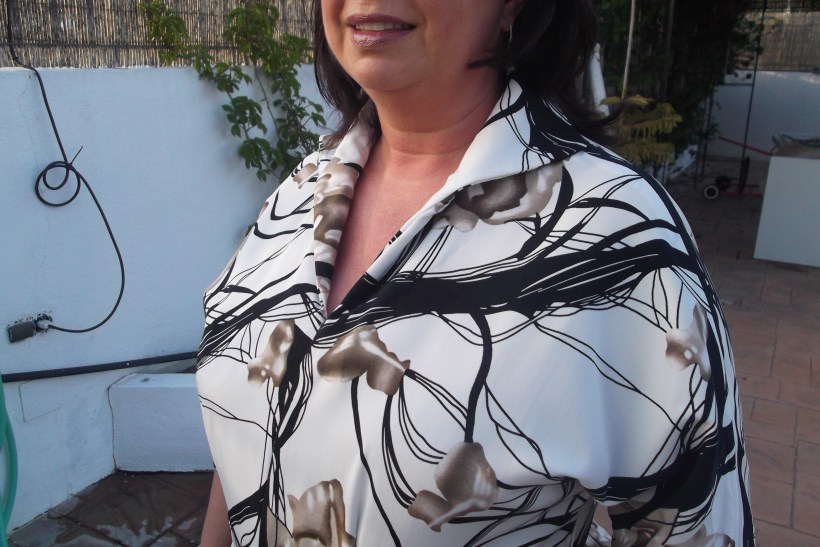
I hand stitched the zip, which turned out well and was very happy with the dress apart from having needed to be a little braver in taking the waist in a little more. I loved the stand up/fold down collar.

Elvis Collar

Hey ho, at least it meant I could eat in comfort.

And there was plenty of room in the dress for hugging and kissing the bride and groom, most of the 500 guests (gulp…that´s not a wedding, it´s a Corporate Event) and eating cake.

Stem Gingernuts

A recent post on cheesecake made with a biscuit base, started a dialogue about biscuits. The lovely Tia mentioned that she enjoyed Ginger Nuts, a biscuit enjoyed widely in the UK with a cup of tea or coffee.  I said I would try to find a recipe (and I did find a Delia Smith one which was a huge disaster), then the equally lovely Evie from Pendle Stitches sent me over the recipe she uses to bake for her family.

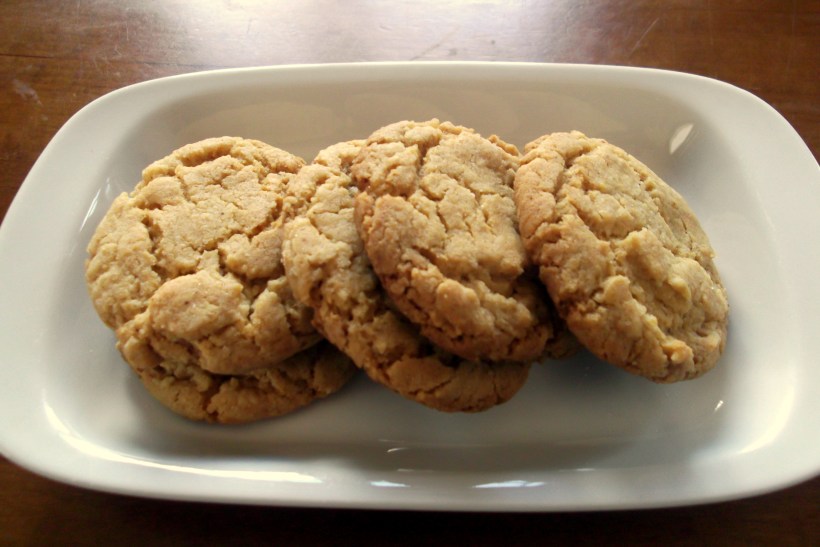
Of course, I had to give them a go.  Result? Fabulous, better than shop made and even without the Stem Ginger (which I couldn´t get hold of) they were amazing.  Thanks Evie, these will become a family favourite here too!

Here´s Evie´s recipe, and like her I added extra ground ginger (another half a tablespoon).

Stem Gingernuts (From The Great British Book of Baking)

  • 350g self-raising flour
  • 1 tablespoon ground ginger (I usually add a bit more because I love my gingernuts to have bite)
  • 1 teaspoon bicarbonate of soda
  • 200g caster sugar
  • 115g unsalted butter
  • 85g golden syrup
  • 1 egg, beaten
  • 3 pieces stem ginger, drained and finely chopped (this is ginger in a sweet syrup which you can buy or make your own)

Preheat oven to 170oC/350oF/gas 3.  Grease or line baking trays.  I just use parchment.

Sift the flour, ground ginger, bicarb of soda and sugar into a mixing bowl.  Gently melt the butter with the syrup in a pan over a low heat and set aside until barely warm.

Pour this mixture into the dry ingredients, add the beaten egg and the stem ginger and mix with a wooden spoon. When thoroughly combined, roll the mixture into 24 walnut-sized balls, using your hands.

Arrange on prepared baking trays, spacing well apart to allow for spreading.

Bake in preheated oven for 15 to 20 minutes until a good golden brown.  Keep an eye on them and, if necessary, turn the trays around halfway through the cooking period so that the biscuits brown evenly.

Leave the biscuits to cool on the trays for a couple of minutes, and then transfer to a wire rack and leave to cool completely.

Store in an airtight container, or make a large pot of coffee and scoff the lot!

Secreto Ibérico – Let me tell you a little secret…

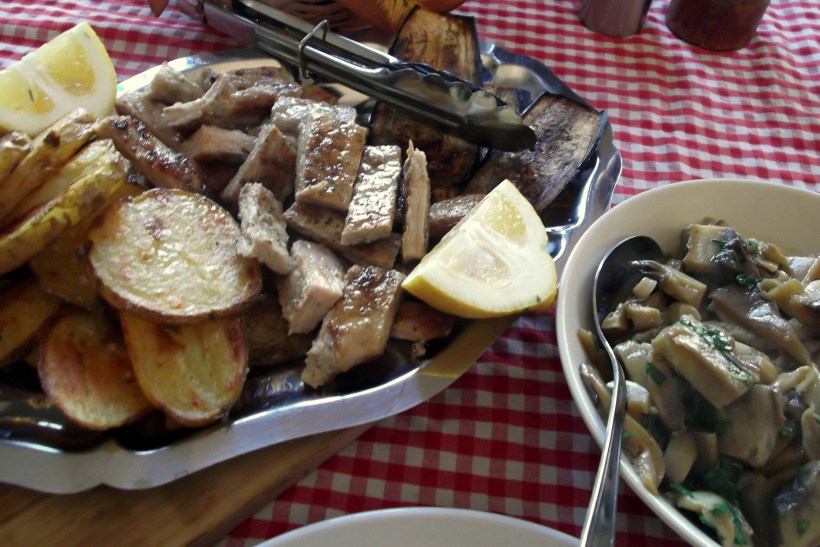
Served with grilled potatoes and aubergines and garlicky mushrooms...

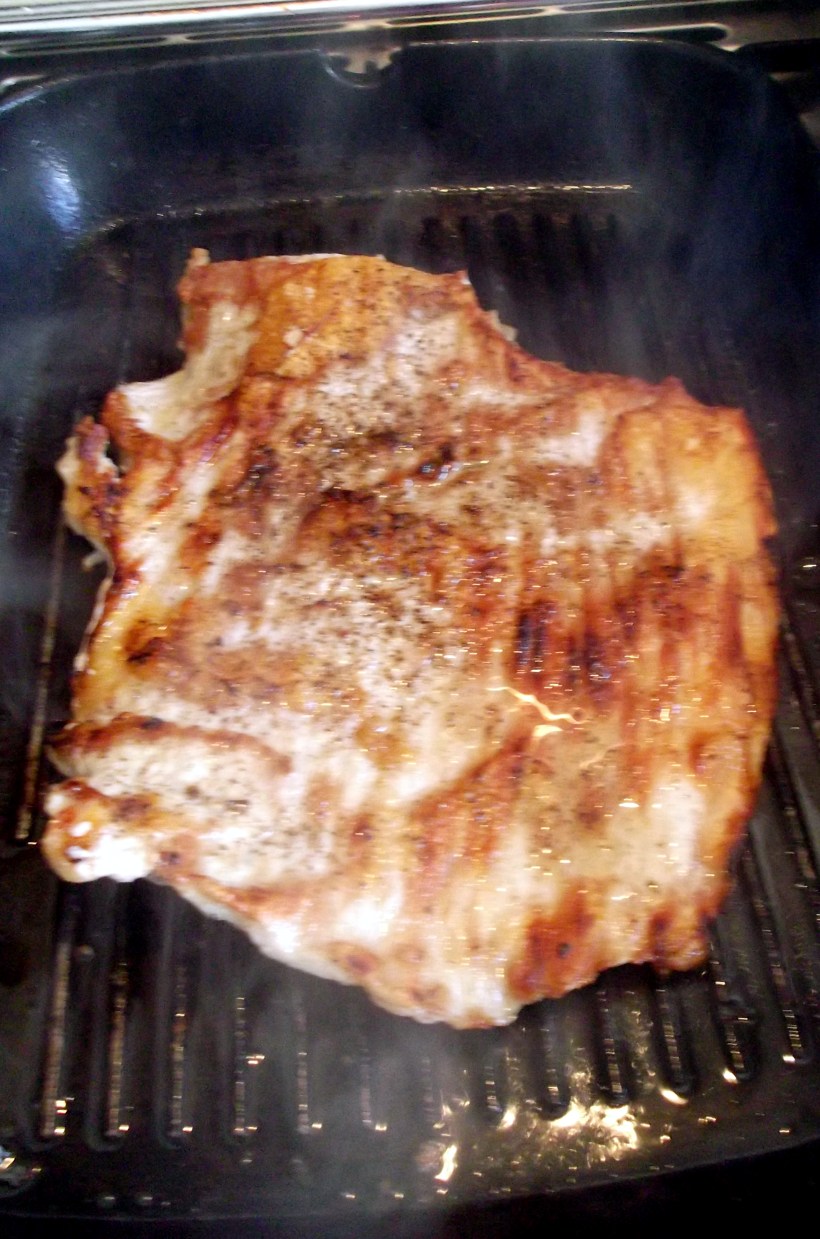
Secreto Ibérico (which translates as Iberian Secret) is a cut of meat, which comes from between the shoulder blade and the loin of the prized Iberian pigs.  Even if you can only find it from regular pigs, I recommend you give this cut of meat a go for the amazing flavour you get from it.

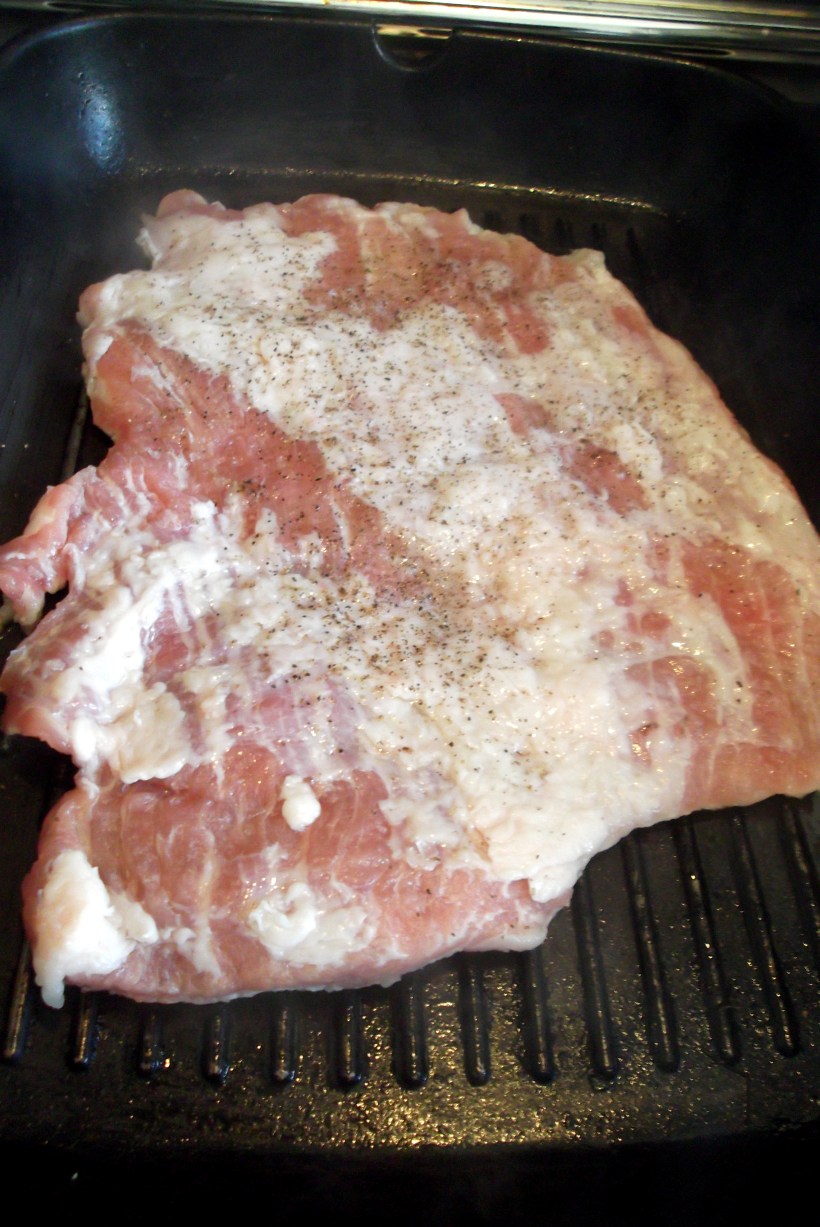
So, this is not a recipe, more a “letting you in on a little secret”.  The reason this meat tastes so good is that the surface is marbled with fat.  It is typically cooked over a high flame or hot griddle so the outside fat melts and gives you a fantastically crispy crust, while the meat inside stays juicy and tender.

Simply sprinkle some coarse (kosher) salt on both sides, pepper too if you like, and put it onto a very hot grill pan or barbecue.

Don´t fear the fat, it will work its magic...

Cook until it is golden and crispy and then leave to rest for 2 or 3 minutes. Round where we live it is traditionally cut into little strips after cooking and served with fresh lemon to squeeze over.

Gorgeous, Golden and Grunchy..sorry, Crunchy

If you ever do come across this beautiful cut of meat….”shhhh, don´t tell anyone – it´s a secret”!

Flat Ruthie Ventures Up the Mountain – Strawberry Jam & Coffee and Baileys Ice Cream

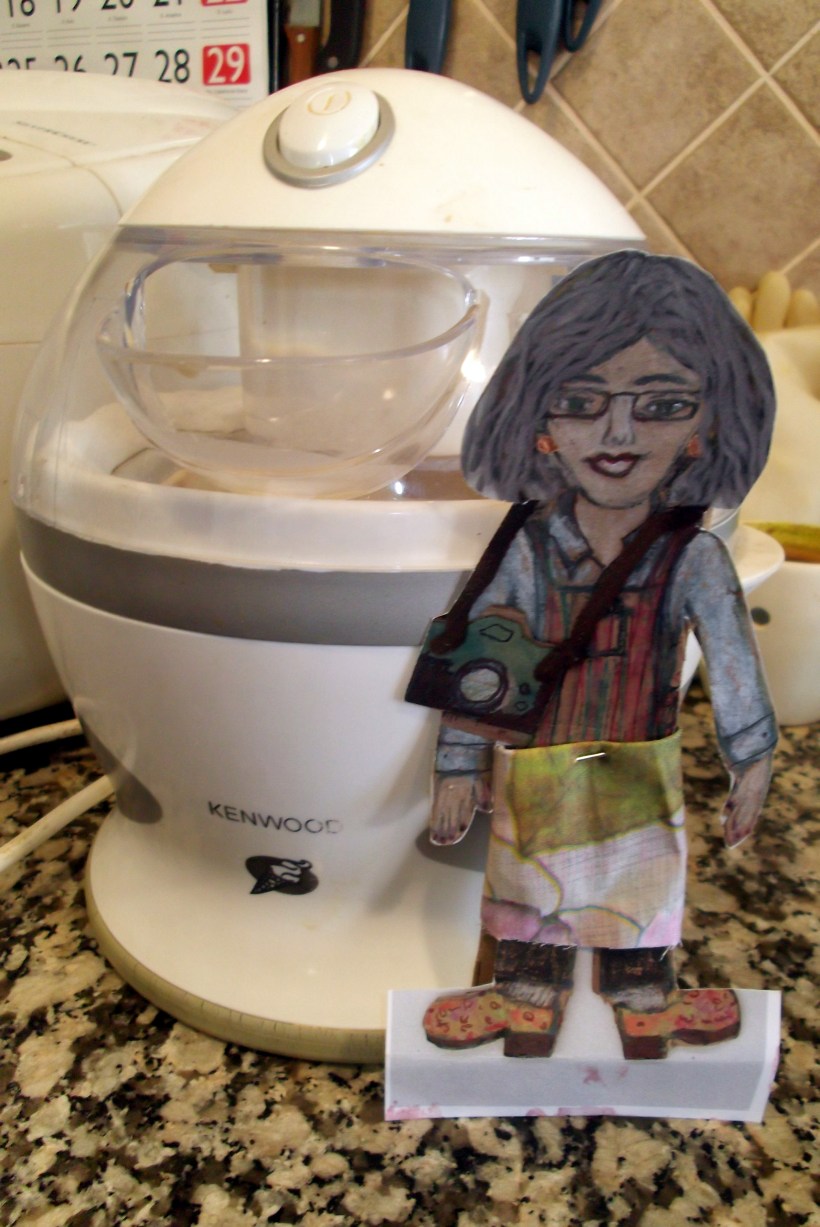
For any eagle eyed readers out there, you may remember that Flat Ruthie of Cardboard Me Travels sneaked into my suitcase on a recent trip back from the UK.

Stowaway on Board!

While she was here she took the opportunity to do some sightseeing, so we didn´t see her for a while. However, it´s strawberry time here and as soon as she heard I had bought a few kilos of local strawberries, she finally joined me again.

Obviously, as we were going to be cooking, she insisted on a little apron, so I obliged.

We weighed out a kilo of washed, chopped strawberries then simmered them until slightly soft. Then we added a kilo of sugar, a sachet of pectin and the juice of half a lemon and boiled until setting point.

Ruthie stood back for a while as burning jam can be pretty dangerous but she was pleased to see how well it all turned out.

The next morning the sun shone brightly and I called her to join me for breakfast in the garden.

I think all her sightseeing must have worn her out as she stayed in bed and missed breakfast completely.

When she did eventually get up she decided she needed a good strong coffee to get her going.

No decaf in this house!

As I was making ice cream from Chgo John´s amazing recipe, she had the bright idea of replacing the pistachios I had wanted to use (but couldn´t find) with a shot of coffee.  I didn´t have half and half either so she explained to me that I could substitute a mix of both half whipping cream with half full fat milk for this part of the recipe.

Just as we were about to pour the ice cream mix into the machine she decided that about 100ml of Baileys would also be a good idea, so we put that in too.

After a little churning and a couple of hours in the freezer it was time to taste the ice cream. She took her pinny off to eat and her verdict was….mmmm, we´ll definitely make this again!

Finally I can take my pinny off and have a little break!

Thanks for the visit Ruthie, it was fun. Do keep the pinny, it suited you and it definitely won´t fit me!

Going to the Wedding Dress 1

Sewing Alert –click away now if you´d rather read a recipe. Why not try this one for a cold, rainy Saturday?!

So, the Vintage style dress is finished and I have to say I am really very pleased with the way it has turned out.

The pattern is Vogue V8789, view A.

Wish I had a waist like that!

I have also made a silk shawl with a hand rolled hem to go with it, to cover up my shoulders.

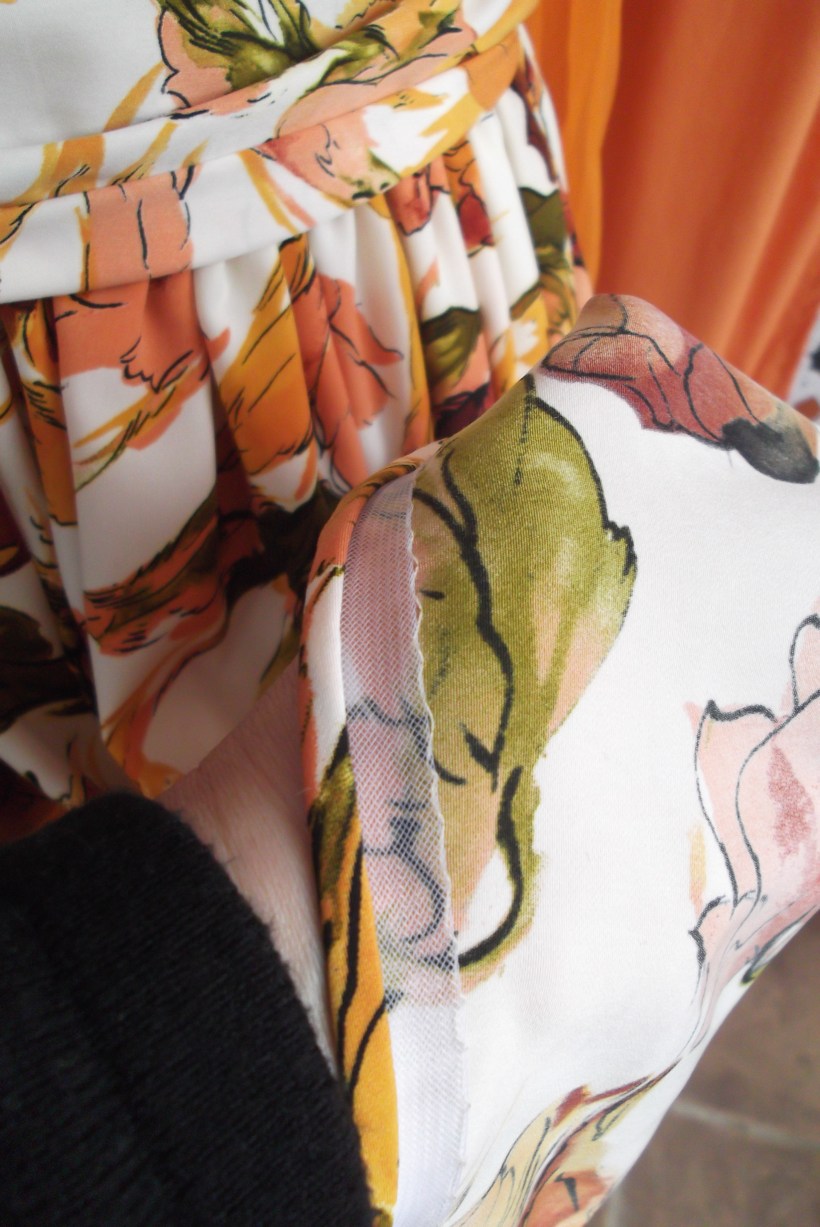
I tried out a few new techniques (well, new to me). A horsehair hem, hand stitched to finish it off. This adds a little body to the hem. I had bought a net petticoat to wear underneath but when it arrived I looked like a giant meringue so back it went into the wardrobe.

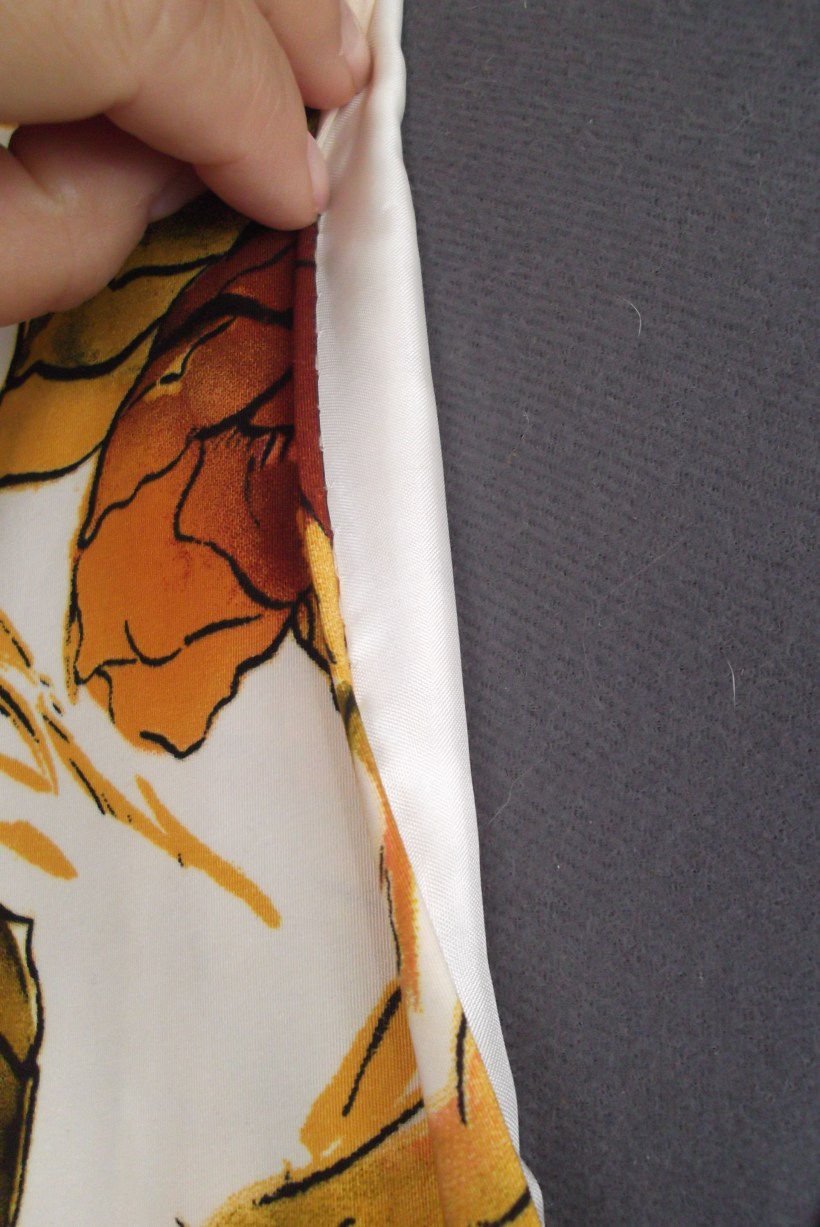
I sewed a satin bias binding in a contrast colour to the lining.

I hand stitched the bodice lining to the bodice. I really enjoy sewing by hand.

A grosgrain waist stay (I think that is what it is called) was hand stitched around the inside and this really adds shape to the waist when it is worn.

But…the weather has turned cold and damp. The wedding is next Saturday so I have started work on the other Vintage style dress I had planned to make as it has sleeves. It´s the Butterick 5556…hopefully I´ll have it finished this week and then depending on the weather I can decide which one I´ll wear.

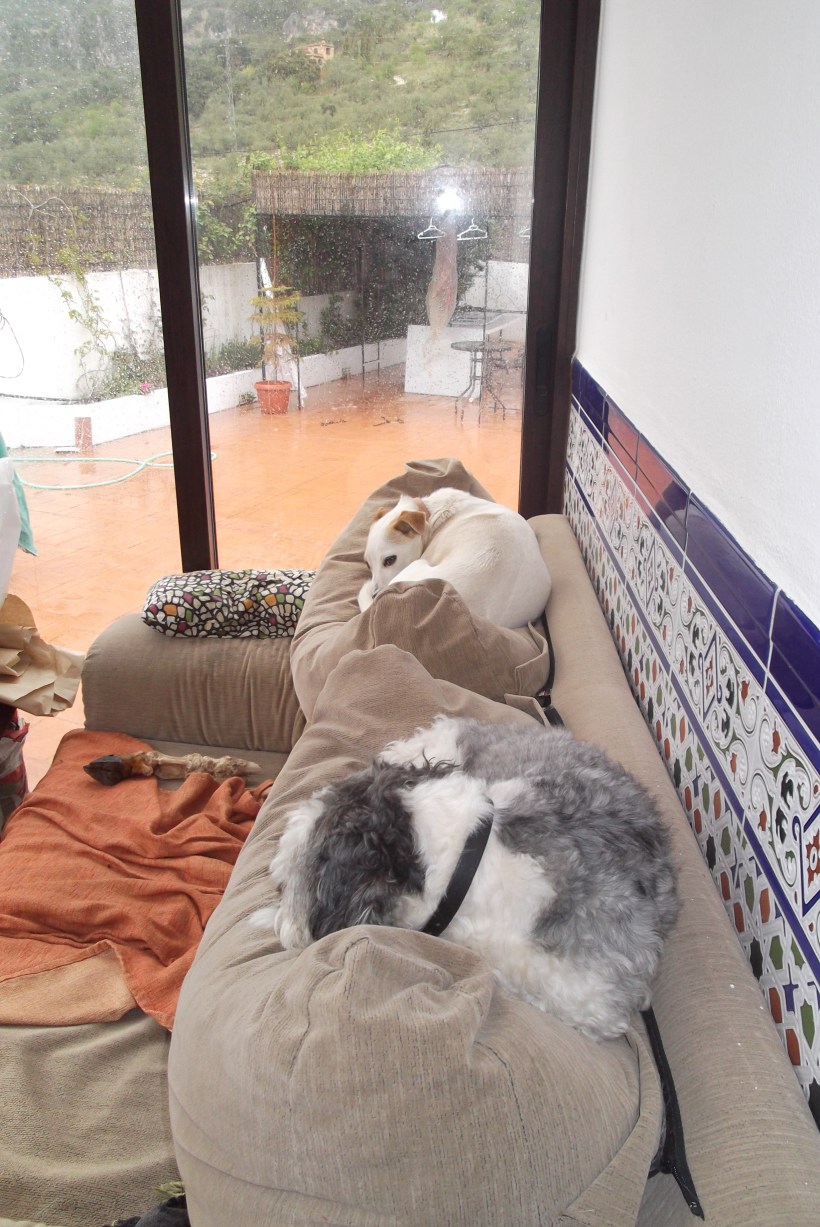
Meanwhile, the dogs snooze in the not so sunny sun room while the rain comes down, and I´ll get on with my sewing.

Yes, that is a jamon bone on the sofa which they had clearly dragged in out of the rain and which I only noticed when I downloaded the photo! Naughty pups...

And now, if you enjoyed seeing my Going to the Wedding Dress, why not check out my blogging pal Evie´s Actual Wedding Dress.  What a very talented and beautiful bride!