Pasta with Smoked Pork Belly and Black Olives and Breakfast in Biarritz

Driving through France on our little road trip we bought a few foodie souvenirs to remind us of Bordeaux. Some delicious wines, a piece of deliciously pungent cheese which we ate as part of a picnic and some wonderful cured pork belly. It was sold in a market from a butcher’s stall and was in the section with the salamis and cured meats. My French is a little rusty now but I think the lady who ran the stall was telling me that they cured it themselves and sold two versions – one smoked and one salted and peppered. Of course, we bought both!

I was too busy chatting to the butcher to take a snap, so here's one of the fish stall!
I was too busy chatting to the butcher to take a snap, so here’s one of the fish stall!

After leaving Bordeaux we stopped off for breakfast in Biarritz – it’s somewhere I had often hoped to visit and imagined the glamour of bygone days. It really was a quick pit stop but enough time to enjoy the beautiful coastal views and breakfast!

Le Petit Dejeuner
Le Petit Dejeuner

Back to the Pork Belly….It’s delicious cut into tiny pieces and enjoyed as a nibble with a glass of ice cold rosé wine. It’s equally wonderful when heated, in the same way you would use lardons. I made a quick, fresh tasting  pasta sauce to bring out the smokey flavour of this wonderful cut of meat and if you ever come across it…do buy some!

Pasta with Smoked Pork Belly (2)

Pasta Sauce to serve 2 people

  • 2 cloves of garlic, crushed
  • 4 ripe tomatoes cut into small pieces (save the juices too)
  • 2 heaped teaspoons of tomato purée
  • About half a cup of chopped smoked pork belly (or use bacon or lardons)
  • Half a cup of chopped black olives
  • A good splash of white wine
  • Salt and pepper
  • Olive oil

Put the water for your pasta on to boil and then start your sauce. Gently fry the garlic for a minute or two, until it starts to soften then add the tomatoes with their juices and cook for a couple of minutes until they start to break down. By now it’s probably time to put your pasta into the water, so go ahead, the rest of the sauce doesn’t take long.

Add the rest of the ingredients  and continue to simmer while the pasta cooks. Check and adjust the seasoning, drain the pasta and add the pasta to the sauce. Pour yourself a glass of wine and enjoy your speedy and delicious meal.

Spring Salads

I always feel a bit of a fraud posting salad recipes as most of us conjure up salads from what we have in the fridge most of the time. Well, it makes sense.  But sometimes there are some really tasty combinations of ingredients just work so well together, it’s worth searching them out to make them specially.

The first one was inspired by a conversation with my parents at Christmas. We were eating some particularly good smoked salmon and they were reminiscing about their work in London in the 1970s and 1980s when they used to run some very funky nightclubs. I was the envy of the class having a young mum who wore silver platform boots and Green Mary Quant nail varnish to go to work but in typical fashion always wanted to be round visiting best pal Ria’s mum who baked cakes. There’s no pleasing young folk, as I am sure many of you will agree!

Their memory was of Ella Fitzgerald (oh yes, I’m shamelessly name dropping here) asking for English mustard to go with her smoked salmon, so of course we got out the mustard and I have to say, Ella certainly knew what she was asking for!

Smoked Salmon Salad (1)

Asparagus and Smoked Salmon Salad with a Mustard Mayonnaise

(Quantities are up to you, we ate this as a starter between 2)

  • Rocket leaves, asparagus spears (blanch the chopped stems first for a few minutes then add the tips for the last minute or so) slices of smoked salmon arranged to your liking on one of your favourite plates.
  • Drizzle a little olive oil over and a squeeze of lemon juice, a sprinkle of salt and a few grinds of black pepper.
  • Serve with a dipping mayonnaise (homemade or otherwise) mixed in a ratio of about 5:1 with English mustard. Put on your favourite Disco collection cd and get on down.

If you enjoy asparagus, try this recipe out and see what you think.

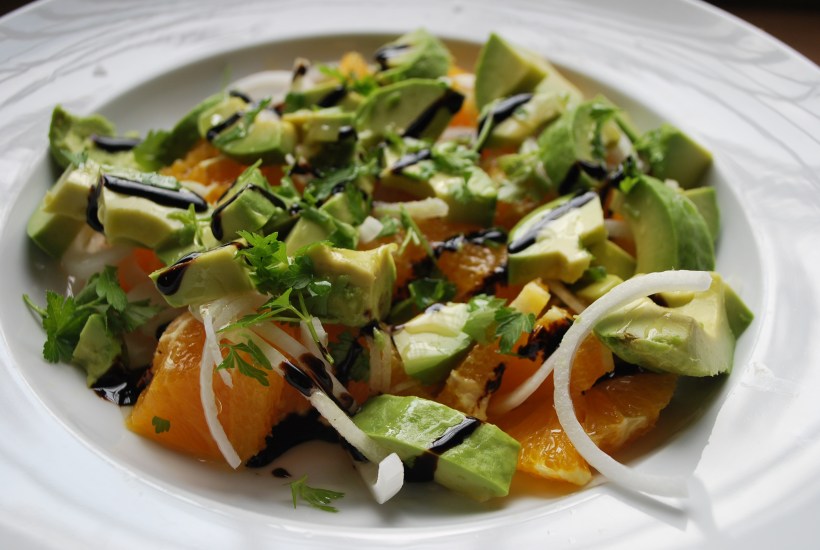
Back in Spain here it’s orange season and we can’t get enough of them. They’re being sold at outrageously cheap prices for massive bags of them so we’re juicing them, eating them au naturel and in fruit salads and savoury salads. Here’s a favourite which we serve with grilled pork – the flavour of the sweet and sour oranges, the sharp onion and the creamy avocado contrast really well with the richness of the meat.

Orange & Avocado Salad (4)

Orange and Avocado Salad

  • Per person a peeled and chopped orange, half a peeled and chopped avocado, some thinly sliced sweet onion and a sprinkle of finely chopped parsley,
  • Sprinkle some coarse sea salt over and a drizzle of olive oil. If the oranges are particularly sweet squeeze over a little lemon juice and finish with a splash of balsamic vinegar. I used a Balsamic vinegar reduction which is not only pretty to look at as you can get all cheffy with it, it also has a very delicious intense flavour.

Go on, Spring into Spring and start to throw off those warming winter hotpots and give your favourite salads a chance again!

Fideuá with Chorizo and Mushroom

Fideuá? What the heck? It’s a traditional dish from Valencia, Gandía to be more precise, which is very much like a paella but made with short noodles instead of rice. In Spain you can buy bags of noodles of varying thickness from “0” which is very fine up to 5 or 6, I think. For this dish a number 3 or 4 noodle is typically used but if you can’t find them where you are, use broken spaghetti (a thin one) instead.

Fideua de Chorizo (5)

This dish is made with seafood usually, in the same way as a paella, but I made one recently with some Spanish Chorizo. It’s also a good vegetarian dish – use what you like best! It’s quicker and easier to make than paella.  Measurements are a little rough, use as much or as little “filling” as you like. For a dry fideuá (so that it looks like a paella made with noodles) use about twice the volune of liquid to noodles, for a soupier version (which is how we like it), use up to 3 times the liquid.

Phew, that’s the maths over with, here’s how to do it!

Ingredients (for 2 people)

  • 2 chorizo chopped into small chunks
  • A few slices of finely chopped jamón (or pancetta or bacon)
  • 4 fat cloves of garlic crushed
  • 1 stick of celery, finely chopped
  • Half a red pepper, finely chopped
  • About 6 mushrooms, finely chopped
  • About half a cup of chopped tomatoes
  • 200g fideos (noodles)
  • About 400ml of vegetable stock (or chicken stock) for a dry dish and 600ml for a soupier version
  • A pinch of powdered saffron
  • A level teaspoon of sweet pimentón
  • A pinch of hot pimentón (optional)
  • Salt and Pepper
  • Olive oil for frying
  • Wedges of lemon and chopped parsley to serve

In a deep frying pan or paella pan gently fry the chorizo, jamón, garlic, celery, pepper, and mushrooms until the chorizo starts to crisp. Add the tomatoes and cook for a minute then add the fideos and stir them into the mix then add the stock, spices and season lightly.

Bring to the boil and then simmer for about 8 minutes until the fideos are nearly cooked. Add more stock if it gets too dry before it’s cooked.  Turn off the heat, cover with a lid or tea towel and allow to rest for 2 or 3 minutes. Check that the fideos are cooked to your liking and adjust the seasoning if necessary.

Serve sprinkled with freshly chopped parsley and wedges of lemon to squeeze over.

And if you have a few minutes and want to see a master in action, enjoy this video…(it takes a few seconds to start and is in Spanish bu the chef is … er… easy on the eye!)

Stir Fried Kale with Bacon – A Speedy Side Dish or Pasta Topping

Don’t you just love winter greens? So green and vibrant – maybe their colour reminds us of the spring that is on its way, whilst doing us so much good packed full of iron and vitamins.

Kale (3)

Kale is a current favourite, although it can sometimes be a little tough. Not a problem if you like your vegetables really crisp, but easily dealt with by blanching for a few minutes first.

Ingredients to serve 2

  • About a dozen leaves of kale, washed, tough stalks removed and then finely chopped
  • 2 cloves of crushed garlic
  • 4 rashers of finely chopped smoked streaky bacon (or use mushrooms for a vegetarian dish)
  • Salt and pepper
  • Olive oil for frying

Blanch the chopped leaves for about 3 minutes if they are large and drain. Heat a little oil in a wok or large frying pan and fry the bacon until crispy then add the kale and garlic. Stir fry for a couple of minutes, season and enjoy as a side dish or mixed with pasta (add a little raw olive oil and a few drops of the pasta cooking water).

Bounce around the kitchen as you will be packed full of vitality!

If you’re lucky enough to have access to Baby Kale, check out this beautiful recipe for a Sunshine Salad from our blogging pal Smidge. Or how about Frugal’s Kale with Pasta – delicious!

Caramelised Red Onion Tart with Jamón and Stilton

WordPress tells me that the top search on my blog, pretty much constantly, is for Olive Oil Pastry. Those of you who regularly follow my blog will know that until recently I was a self-confessed pastry cheat, using ready made pastry most of the time. In the summer though, I experimented with the pastry made using olive oil instead of butter and in the autumn, with delicious English butter available, I tried out the deliciously naughty Rough Puff Pastry.

The olive oil pastry is a healthier option for more frequent use and as there are so many searches for this recipe, I thought I should make an effort to show some of the ways I use it in the kitchen. This is a delicious tart which serves 4 as a main course or 6 as a starter.

DSC_0011

Ingredients

  • 1 batch of olive oil pastry
  • 6 red onions
  • 2 small sprigs of thyme
  • Olive oil for shallow frying
  • 3 slices of jamón, prosciutto or bacon (omit if you want a vegetarian tart) cut into small pieces
  • About 3 tablespoons of crumbled stilton or some of your favourite cheese

No need for blind baking with this pastry, it goes crispy underneath, even when baked with the filling.

Half and finely slice your onions and fry slowly in about 3 tablespoons of olive until soft and slightly caramelised. This will probably take at least 20 minutes.  Season with a little pepper but you will probably not need salt if you are using the jamón and stilton which are both salty.

DSC_0015

Roll out the chilled pastry to fit your tart tin, prick the bottom and fill with the cooked onion mixture. Sprinkle over the jamón and cheese and bake at 200 (regular oven) or 180 degrees (fan assisted) for about 30 minutes or until the pastry is browned.

Leave to cool slightly – this is delicious served at room temperature with a salad.

Beef and Mushroom Pie

Flushed with the success of my recent rough puff pastry I decided to use it again in a warming pie.  Of course, I turned to my pal Mad Dog for recipe inspiration and came across his gorgeous recipe for Steak and Kidney Pie. Using this as the start point, I gathered together my ingredients and got going.

Steak and Mushroom Pie (3)

Ingredients (serves 4): 

  • About 1kg of braising steak
  • 2 medium onions (finely chopped)
  • 1 stick of celery (finely chopped)
  • 1 carrot (finely chopped)
  • About 20 button and chestnut mushrooms (finely chopped)
  • 5 cloves of garlic (crushed)
  • a pinch of crushed chilli or chili powder
  • ground sea salt, black peppercorns, and a tablespoon of finely chopped fresh rosemary, 2 bay leaves
  • 2 tablespoons of tomato purée
  • Half a bottle of red wine plus enough beef or chicken stock to cover the meat and vegetables
  • Flour for coating the meat and extra (if needed) to thicken the sauce
  • olive oil as needed for frying
  • 1 beaten egg
  • extra salt and pepper to taste
  • 1 batch of rough puff pastry

Make your pastry and leave to rest in the fridge while you get on with the pie filling.

Cut the meat into small cubes and toss them in seasoned flour.

Fry in a little olive oil until browned on the outside (you may need to do this in batches) and set aside but don’t clean out the pan. Add more oil if necessary and gently fry the onions, carrots and celery until the onion is soft and transparent.

Return the meat to the pan and add the mushrooms and garlic. Cook for a few minutes until the mushrooms start to soften then add the seasoning, herbs, tomato purée and liquid. Bring to a gentle boil and transfer to a casserole dish with a lid and continue to cook either on the stove top for about 2 hours on a very low flame or in a low oven until the meat is very tender for 2-3 hours.

Beef & Mushroom Pie (5)

Check for seasoning and adjust if necessary. If the casserole is too liquid, thicken with about a heaped teaspoon of flour mixed with a teaspoon of butter and dropped into the pot and stirred gently until the sauce starts to thicken.

Allow the filling to cool (overnight is best as the flavours will develop) and then you can assemble your pie. Pour the filling into a pie dish and cover with your pastry, cutting a few holes to allow the steam to escape and brushing with a beaten egg.

Beef & Mushroom Pie (2)

I tried to get artistic like Mad Dog but my attempts were more reminiscent of the devil we saw last year on our trip to Jersey. Eek! Luckily I made a double batch of filling and I left the second pie plain…much more appetising.

DSC_0094

Bake for about 30-40 minutes at 220 degrees C until golden brown. Sigh!

Ham, Cheese and Mustard Pasties

One of the lovely things about Street Food in England is that you can eat your way around the world in the space of 100m. From Asia to America, around the Med and back to Blighty – it’s all there for you to enjoy.

Ham Cheese & Mustard Pasties (13)

A dish which has been cooked for hundreds of years in England is the Cornish Pasty, and whilst purists will tell you exactly what should and should not go into one, I think most people agree that when made well, they are delicious, filling and portable. Great picnic or street food.

This is by no means a Cornish Pasty – it was made from the leftovers of some spiced ham. And as we move further into January, I am sure many of you will have cooked a ham for the Christmas table so it’s great for using up leftovers.  This recipe is a great one to prepare to take with you on a winter walk to burn off some of the excesses of the festive season. God forbid you should get hungry! If you don’t have ham, this would be great with leftover vegetables or any roasted meats.

This was my first ever attempt at making Rough Puff Pastry and I’m so glad I went for it. It was easy to make and the flavour was far superior to shop bought puff pastry. Do give it a go!

Ham Cheese & Mustard Pasties (5)

This makes about 8 medium (but filling) pasties

Rough Puff Pastry

  • 300g room temperature (but not soft) butter
  • 300g plain flour
  • ¾ teaspoon fine salt
  • Up to about 200ml cold water

Mix the salt into the sieved flour and cut the butter into small chunks (about 1cm) and into the flour. Rub the flour and butter together gently but not to a fine texture – you still want to see chunks of butter.  Gradually add the water (how much you need will depend on your flour), mixing with your hands as you go until it comes together to form a dough.

Wrap in cling film and leave to rest in the fridge for 20 mins. After this time (when you can be getting on with the filling), take it out and roll it gently into a long rectangle. Fold it into thirds, roll again, fold again and put it back (wrapped) into the fridge until you are ready to use it.

Ham Cheese & Mustard Pasties (8)

Pasty Filling

  • 400ml of your boiling stock from the ham (or any stock, or milk)
  • 3tbs plain flour
  • 1 tbs olive oil
  • About a cup of grated hard cheese (I used a strong cheddar)
  • 1 tbs English mustard
  • Black pepper
  • 200g approx. of chopped cold ham
  • About a cup of finely chopped left over cooked vegetables
  • A beaten egg

Put the stock (or milk) into a pan with the flour and oil and heat gently whilst whisking. It will start to thicken to the texture of a pouring custard. Continue to cook for a couple of minutes then add the cheese, mustard and pepper and then stir in the meat and vegetables. Put into the fridge to chill and thicken slightly.

When you are ready to assemble the pasties, heat the oven to 180 degrees Celsius, divide the dough into about 8 pieces (or less if you want bigger pasties), and roll each piece into a circle. Fill one side with the filling (do not over fill), fold over the pastry and press both sides together. You can either crimp the edges or press with the tines of a fork. I have a handy Empanada maker that I use.

Brush the tops of the pasties with beaten egg and place them on a baking sheet lined with greaseproof paper. Bake for 20 minutes and enjoy when then are golden brown. These are great both hot and cold – take care not to burn yourself if you can’t resist sampling them straight out of the oven!

Little Piggies and Potato Cakes

Near our village in Spain is another village with a restarant run by a lovely lady called Belén. Belén means Bethlehem in English, so although a bit unusual for English speakers, her name is quite apt as we creep up towards the Christmas season. Sorry, I promised myself I wouldn’t mention the C word until well into December and it’s only the 2nd today.

Belén runs a good bar and restaurant with all the usual offerings plus a few slightly different ones. An item on her menu is called “Guarrito” which translated means “little wild boar”. I don’t know if this is a typical dish, we’ve certainly never seen it anywhere else, so of course had to order it. And once ordered, we loved it and often go back for a little tapas of this with a glass of wine. So, what is “guarrito”? It’s simply thick slices of jamón cooked in a little olive oil (and Belén serves them on fried bread which makes them extra naughty and extra nice).

Guarrito (2)

We always said that these little morsels would be fantastic with a fried egg and baked beans, in a Full English Breakfast style. Or as a supper dish. Or any time really. So of course, now we make guarrito at home in England until we can get back to visit Belén again.

To accompany the guarrito I was inspired by Frugal’s Gluten Free Potato Cakes. He uses gram (chick pea) flour instead of regular flour and I pretty much followed his recipe with the addition of some roasted red peppers.

Being the sort of Chica who always cooks army rations instead of regular sized portions, I still had a little mashed potato left the following day, so I made another potato cake to go with some grilled meat and salad.

Ingredients to serve 2

  • About a cup of mashed potato
  • One beaten egg
  • Half a roasted pepper
  • A tablespoon of crème fraiche
  • Salt and pepper

Mix all the ingredients together and then blend with a hand blender or mash thoroughly – the mixture will be quite runny. Don’t panic!

Using a heavy based frying pan, pour in a little oil and get it quite hot. Now pour in the potato mix and turn the heat down. Cook slowly for about 10-15 minutes until it starts to get crispy. If you’re feeling brave slide it out onto a plate and then flip it back into the pan to cook the other side in the same way. For the fainter hearted, pop it under the grill until it starts to brown a little then flip and continue to fry.

Potato Cake (2)

Slide it out into a serving plate and enjoy your potato (pan) cake sliced into portions. Crispy on the outside, creamy soft in the middle. Now how economical and delicious is that?!

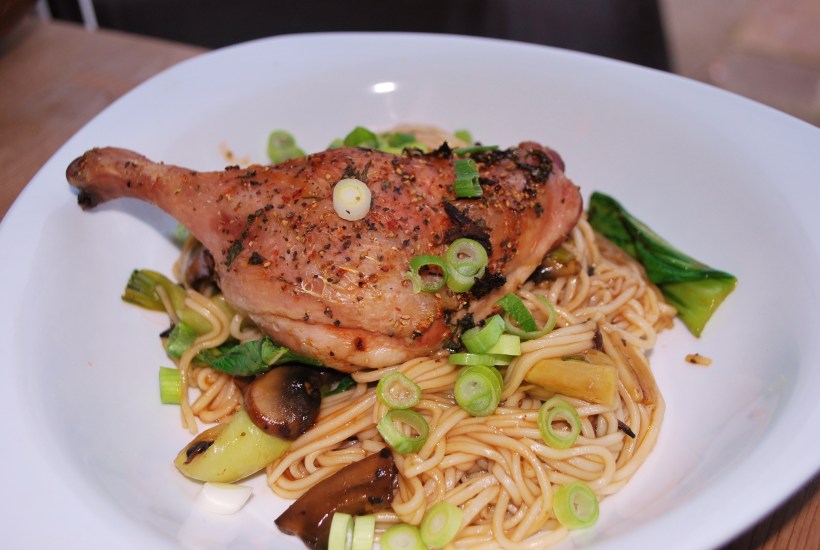
Orange and Chili Duck with Stir Fried Vegetables and Noodles

I keep seeing gorgeous duck recipes over at Mad Dog’s blog, and then Rosemary taunted me with this. Then Chgo John started talking about fish talking to him at the fishmonger’s and before I knew it I was having a good chat to a pair of duck legs in the local butcher’s shop. “Go on Chica”, they said “you know it’s been ages since you cooked duck, and now that you have a decent oven and a great extractor fan in your kitchen, there’s no need to fear us”. So of course, they came home with me. I carried them though, I didn’t make them walk.  Well, it was pouring with rain.

Citrus & Chili Duck (1)

I had a bowl full of oranges and some lovely little red chilies at home, so I veered off in a slightly Asian direction with this dish. It was simple to pull together and the flavours really complimented the duck. I served them with noodles which I stir fried (after boiling) with garlic, ginger, mushrooms and pak choi with a final splash of soy sauce, a spoonful of hoi sin sauce and a squeeze of orange juice. I think the noodles like this would also make a great soup with some chicken or vegetable broth.

Ingredients (to serve 2)

  • 2 duck legs and thighs
  • 2 small red chilies, finely chopped (deseeded if you prefer)
  • The grated zest of one orange
  • A crushed clove of garlic
  • Coarse sea salt and freshly ground pepper

Rub all the ingredients into the duck legs and roast in a medium oven for about an hour until the skin is crispy and the juices in the thigh run clear. Serve with rice or noodles and sprinkle some chopped spring onion over.

That’s it. How easy was that?

Tarallucci – Savoury Fennel Biscuits and a little break for Chica and Big Man

I seem to be cooking to an Italian theme right now – no particular reason. Well, I did buy a new (second hand) cookery book, Two Greedy Italians by Antonio Carluccio and Gennaro Contaldo. If you ever get a change to watch the series they made to go with the book, do give it a go – it features some good food from all around Italy and the pair of them behave like a funny old couple who have been married for years! The following recipe comes from the book.

Taralucci (5)

Here’s a bread type recipe which I made recently as they reminded me of nibbles my parents often serve at their home with olives and salted almonds with pre lunch or dinner drinks. The first batch I made came out a little chewy, more like crispy bagels. I cooked the second batch for longer and they were as I remembered – crispy, hard and deliciously aniseedy in flavour.

Ingredients (makes 40-50 but can easily be halved)

  • 200g semolina four
  • 200g plain flour plus extra for dusting (use all plain flour if you don’t have semolina flour)
  • 1 tsp salt
  • 1 tbsp freshly ground black pepper
  • 1 tbsp fennel seeds
  • 1 x 7g sachet of fast blend yeast (or 1 sachet of dried yeast dissolved in 150ml lukewarm water)
  • 150ml water (no need to use if you have used it to dissolve your yeast)
  • 100ml of extra virgin olive oil

Add the fennel seeds, salt and pepper to the flours and mix then add the liquids. Knead well for about 5 mins and then leave to rise for about 2 hours or until doubled in size.

Knead again for another 5 mins and then pat the dough into a flat, rectangular shape. Cut strips about 2cms wide off and cut each strip into 10cm lengths. Wrap each strip around a finger, flattening it slightly and pressing the ends firmly together.

Preheat the oven to 180 degress C or gas Mark 4 and bring a large pot of slightly salted water to the boil.

Drop the dough circles into the water in batches, let then rise to the surface and let them cook for about 3 minutes.

Taralucci (1)

Life them out with a slotted spoon and leave them to drain (I did this on greaseproof paper as I found they stuck to kitchen paper).

Place the biscuits on a baking sheet and bake for about 35 minutes until lightly browned and crispy (the original recipe calls for initial cooking for 15 mins at the higher temperature then 10 minutes at a medium temperature). Leave to cool and enjoy with a glass of something lovely.

Tomorrow we’re packing our little cases and heading over to the beautiful island of Jersey. I say beautiful because I hear it is – it will be out first visit. And we’re not worried that rain and gloomy weather are forecast as we’re going to celebrate our anniversary which also (most fortunately) coincides with a food and drink festival. Well, we might do a little sightseeing but hopefully we’ll be back a few kilos heavier and full of exciting ideas for new dishes. See you next week!