Am I allowed to say “bottoms” or will I be censored?! I had to say it because the hearts didn´t really make it into this dish.
Big Man came home the other day with about a dozen artichokes that a pal had given him. Unfortunately they had been sitting in his truck, with daytime temperatures reaching 34 degrees Celsius for two days. They were rather sad and dry looking.
I peeled away all the leaves and took out the “choke”, the hairy bit in the middle and then cooked them in water (with a good few spoonfuls of white wine vinegar to stop them going black) until they were almost tender.
I was just going to use them in a salad, but then decided that as they´d had a miserable few days in the heat, I would give them a more dramatic exit!
For the stuffing I used (for 12 artichokes)
2 cloves of garlic, crushed
6 medium mushrooms and stalks, finely chopped and fried in olive oil with the garlic until soft
3 heaped tablespoons of cream cheese
3 level tablespoons of grated cheese (I used a mature goat´s cheese)
Some finely chopped parsley
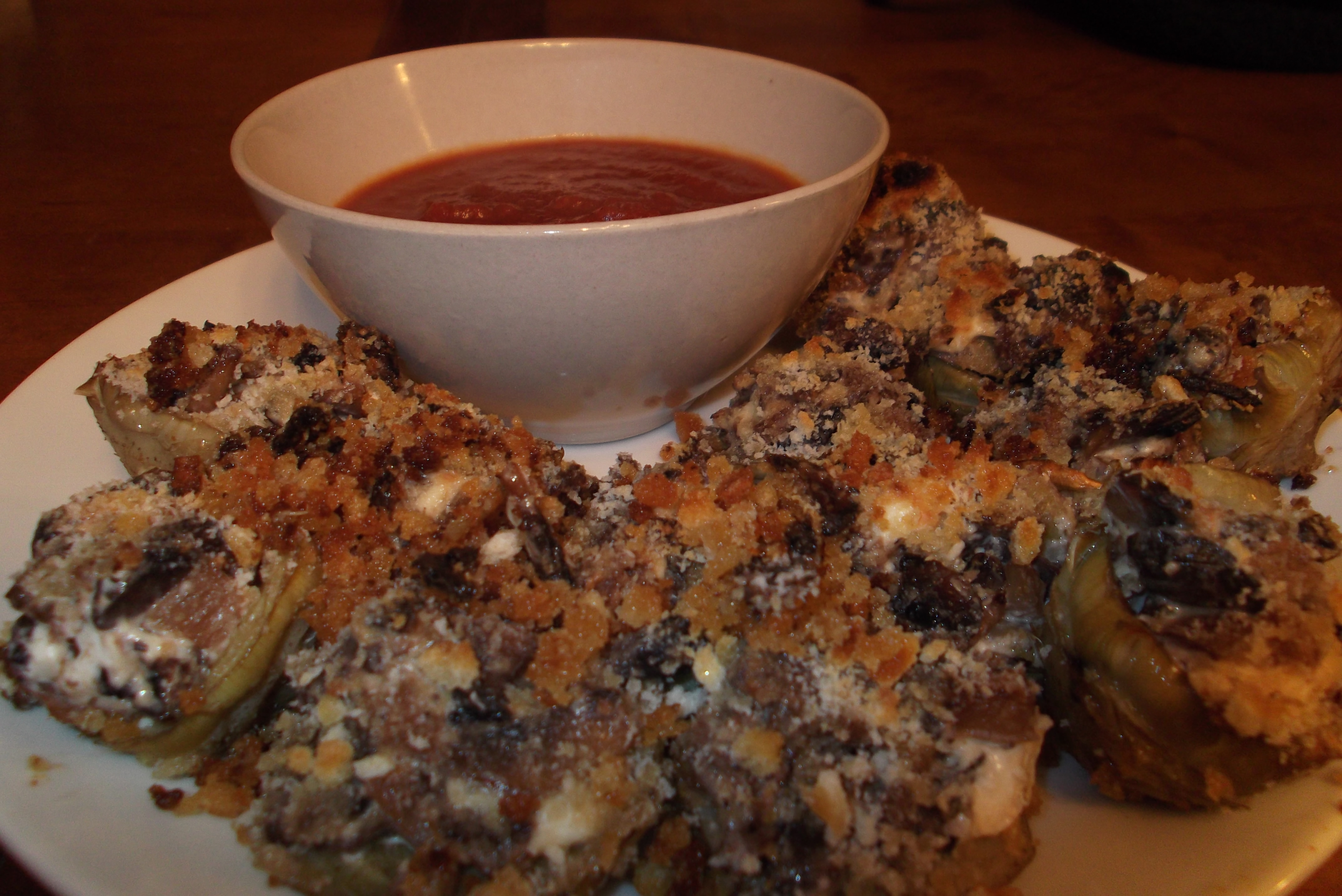
I mixed all these ingredients together, seasoned with salt and pepper and then spooned the mixture onto the artichoke bottoms which I then placed in a lightly oiled baking dish.
I sprinkled them all with fresh white breadcrumbs and finished with a drizzle of olive oil.
These then went into a hot oven for about 15 minutes (until the breadcrumbs were browned) and I served them with my Spicy Tomato Sauce. I think they were happy with their finale.
Before I start this quick post, I have to tell you that I´m having a giggle. The word cateto or cateta translates perhaps more literally as “Peasant”, but not in an offensive way. Before I started typing I just thought I´d do a quick translation check to see if there was another word I could use and all the on line translation tools, bizarrely come up with the word “leg”! Not quite sure what is going on there…but I decided to call it Country Salad.
It´s another celebration of that most Andalucían of fruits, the orange. Again, typically a poor person´s salad it was originally made with salt cod as it was cheap and you didn´t need to use much. A few other bits of country produce like potatoes, peppers and olives, a good soak in olive oil and you were done.
Of course, nowadays you can get all sorts of glorified versions, but the one I´m giving you here is the one you´ll find in all my local bars and homes around here. It´s served as tapas in bars, and as a light meal at home. Of course, some people make their own little tweaks, and why shouldn´t they? They might leave out the peppers and add tomatoes. Some people like tomatoes or onions in it, others don´t. And complete heathens, like me, sprinkle chopped fresh chili all over it to the amazement of their other halves….each to his own I say!
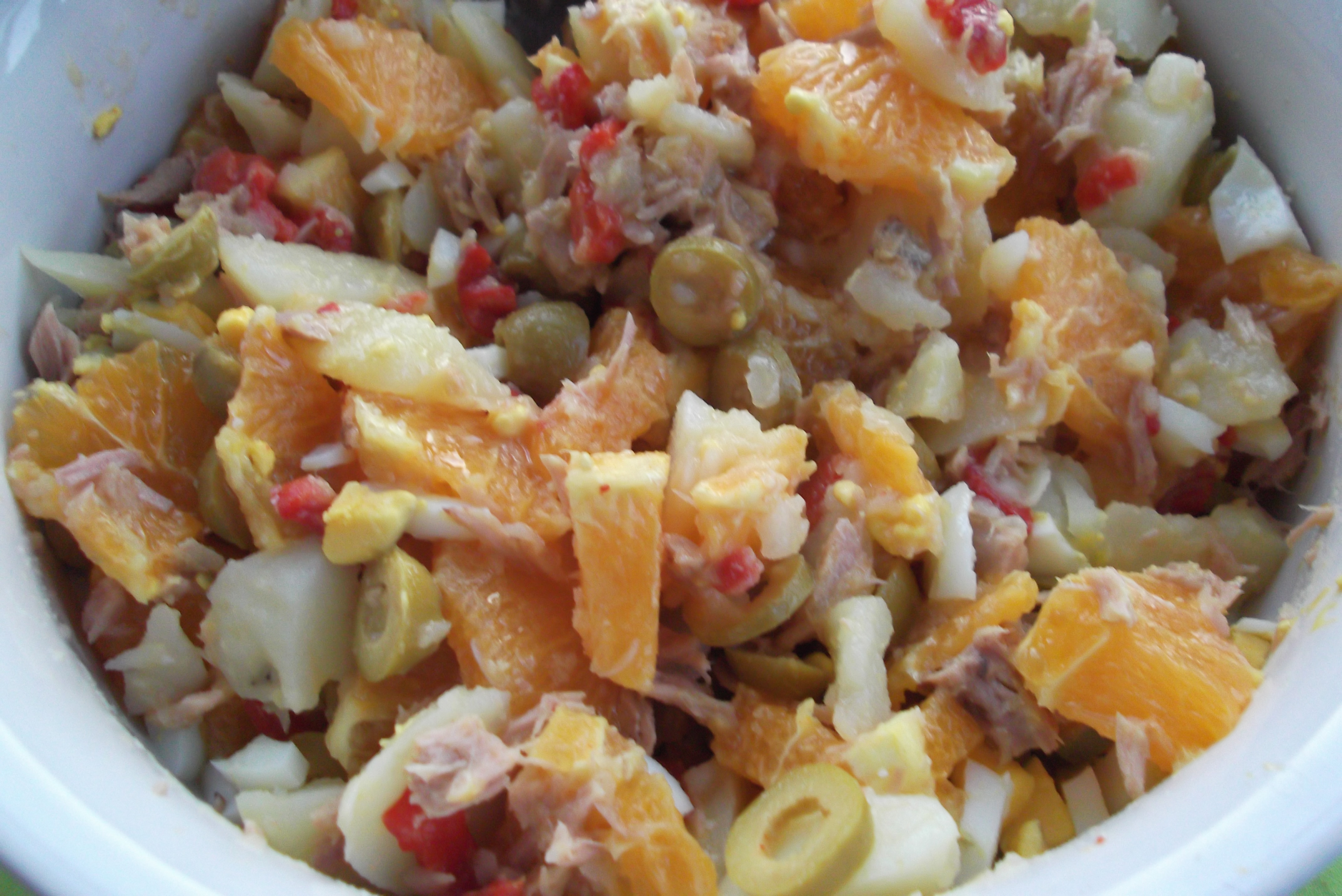
A delicious serving of “Leg” Salad!!
This is what you´ll need (approximately) per person as a light main dish servng size
1 hard boiled egg, finely chopped
2 medium potatoes (boiled in their skin) peeled then chopped into chunks
1 small tin of tuna (I use tuna in brine and drain it, but use your favourite)
1 roasted red pepper, chopped
2 medium oranges (bitter if possible) peeled and cut into chunks
About 2 tablespoons of pitted olives sliced (or use ones with stones, your choice!)
Optional – chopped onion, chopped tomato, small flakes of salt cod (or use whatever you have available)
Salt & Pepper
Olive oil
White wine Vinegar (optional) but I like to use it
All you need to do it combine everything in a bowl, season and dress it and leave it for at least half an hour in the fridge so that the potatoes can soak up some of the lovely olive oil.
Good to serve at a party or buffet as it can be prepared ahead and does not suffer from being forgotten in the fridge for several hours. Hope you enjoy it!
Making yogurt at home is very simple. No need for yogurt makers, thermometers or complicated equipment. I don´t claim that this yogurt is Greek, as the milk I´m using is from Spanish cows (hopefully!) but the taste is the same creamy taste and texture is thick and gorgeous.
Are you ready? Ok, then this is what you´ll need.
Fresh Milk – I used two litres, but you can make any quantity you like. I also used semi skimmed, but you can use whole or skimmed if you prefer.
1 small carton of live yogurt for your first batch
A saucepan with a lid
A hand whisk
A thermos flask big enough for your quantity of milk (optional)
A sieve
A piece of clean cloth for straining (I used a clean handkerchief – perfect size for my sieve!)
A little patience
Start by heating your milk until small bubbles start to form around the edges of the pan. Turn off the heat and whisk in your carton of yogurt.
That´s it for now! You have several options at your fingertips to get this milk to do its magic and turn into yogurt.
As it´s hot here at the moment, I put a lid on my pot and sit it in the sun for about five hours.
You can put a lid on the pot and leave it in a very, very low oven for up to 12 hours – check on it after about 5 hours to see how it´s doing. You can even leave it overnight.
Put it into a warmed thermos flask and leave overnight.
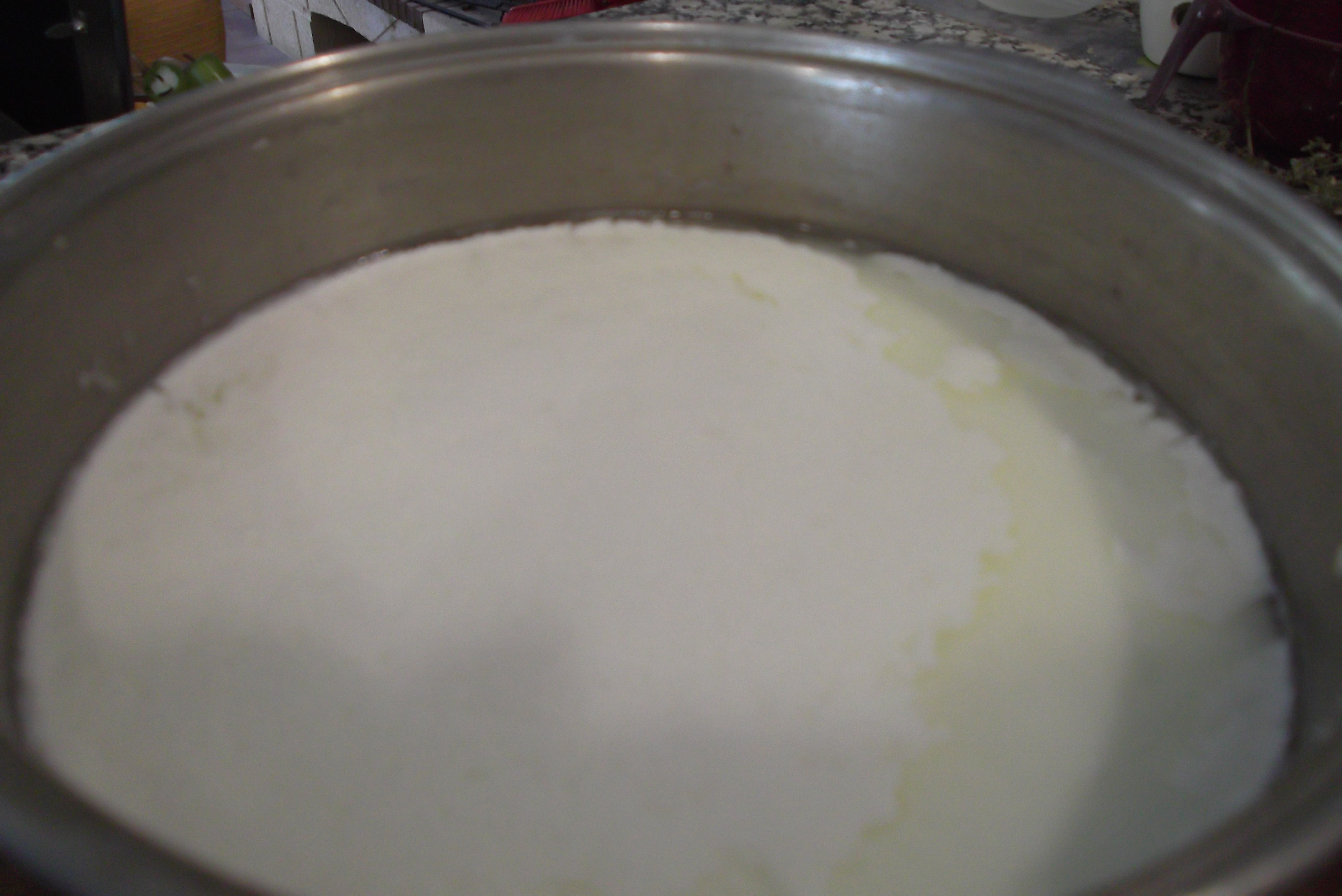
When you´ve done this and waited patiently, your yogurt will have formed and will look like this.
Yogurt before straining
Yogurt with some watery liquid surrounding it. You could just whisk it all together and eat it as it is, it´s pretty delicious already.
To make it into Greek style yogurt you will need to strain it. Set your sieve over a deep bowl or pot, line with clean muslin (or whatever), pour the yogurt in and leave to strain in the fridge.
Set it over a bowl to strain
I left mine overnight.
Yogurt after overnight straining
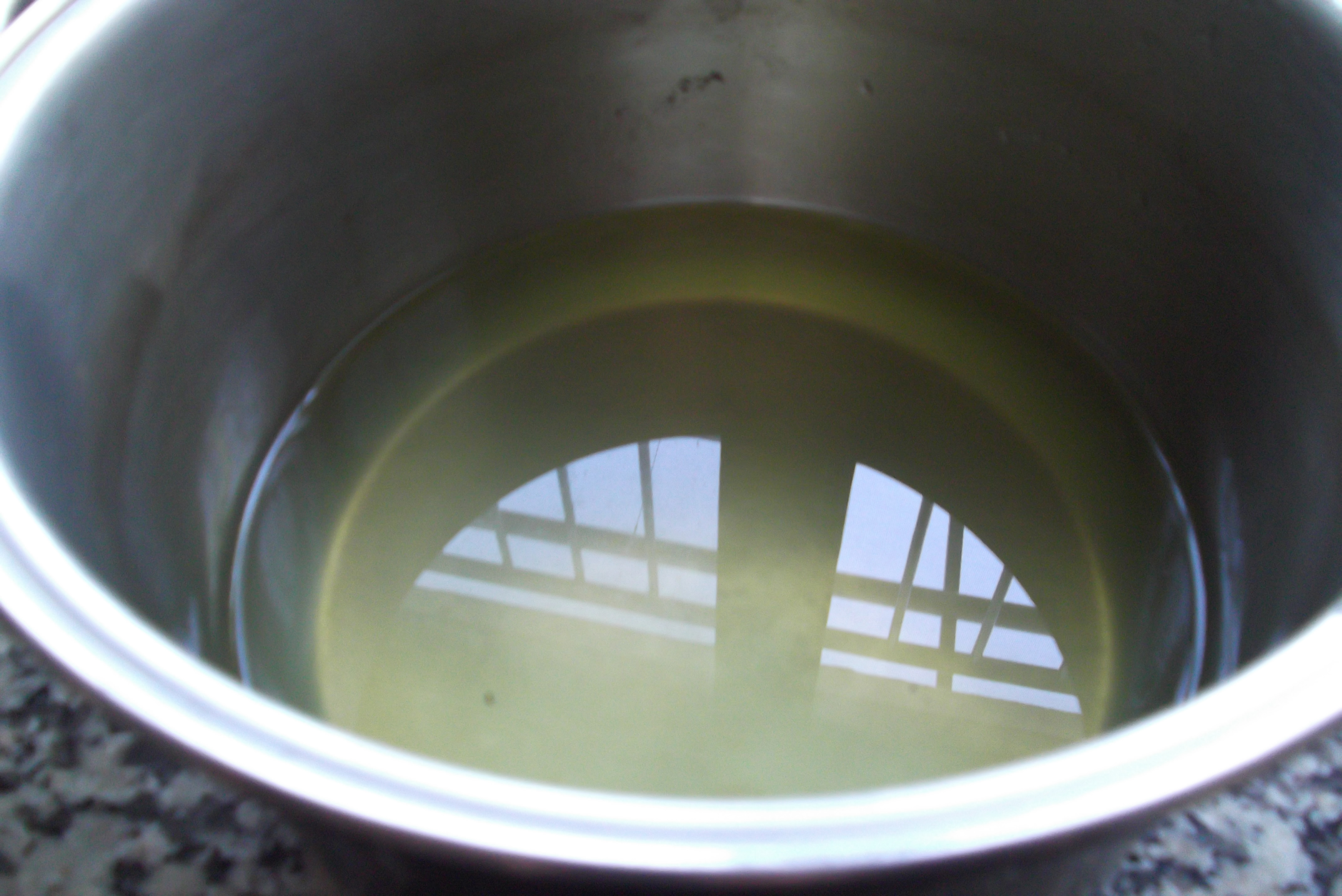
When the time is up, you are left with quite a large amount of liquid which can be used in cooking or given to your chickens!
Liquid lost after straining
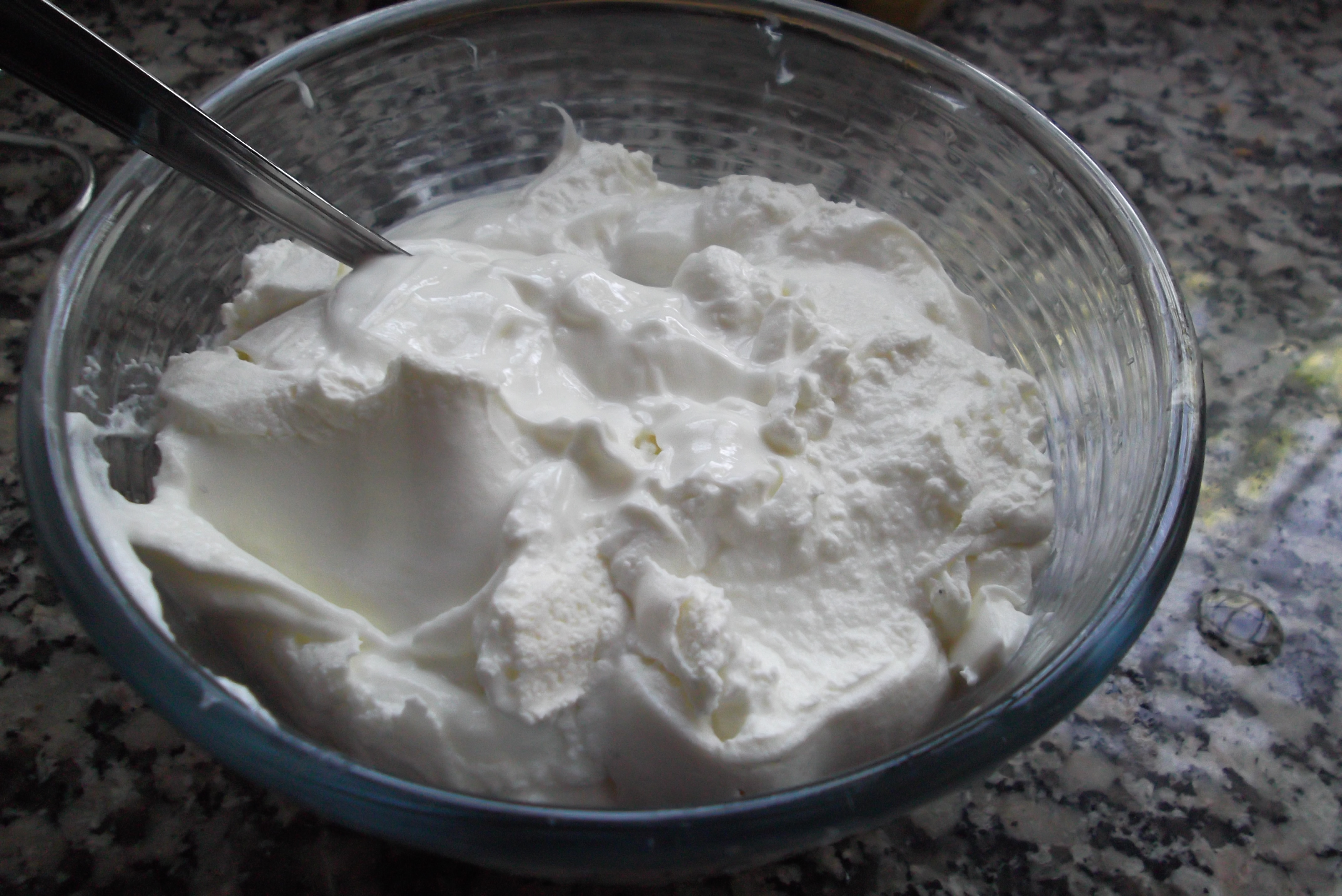
and a lovely bowl of super thick and creamy yogurt (give it a beat to loosen it all up, then keep chilled).
The finished product
If you keep back two or three tablespoons, you´ve got your starter for the next batch.
What you do with your delicious yogurt now is only limited by your imagination….!
I enjoy making bread, and it´s always good to come across new recipes. When I saw JamieAnne´s recipe for Oatmeal Bread over on her blog, A Dash of Domestic, I had to give it a go.
I followed her recipe almost exactly apart from the following little changes
I used one tablespoon of olive oil instead of butter
My oats needed cooking (albeit only for a few minutes) so I put all the water allowance (for the oats and the yeast) in with the oats and cooked them up for about 3 minutes before proceeding with the recipe
I used a sachet of easy blend yeast
Finally, I made the dough in the morning. It was lovely to work with and became very smooth and silky quite quickly. It was a hot day so I dusted it with flour, slashed the top then covered it with a tea towel and left it in a sheltered but shady spot in the garden for two hours then baked.
This slideshow requires JavaScript.
It even looked beautiful as it was rising! We enjoyed the slightly sweet taste which comes from the molasses and thought it worked well with salty cheese and also with paté and the last of my home made fig jam from last year.
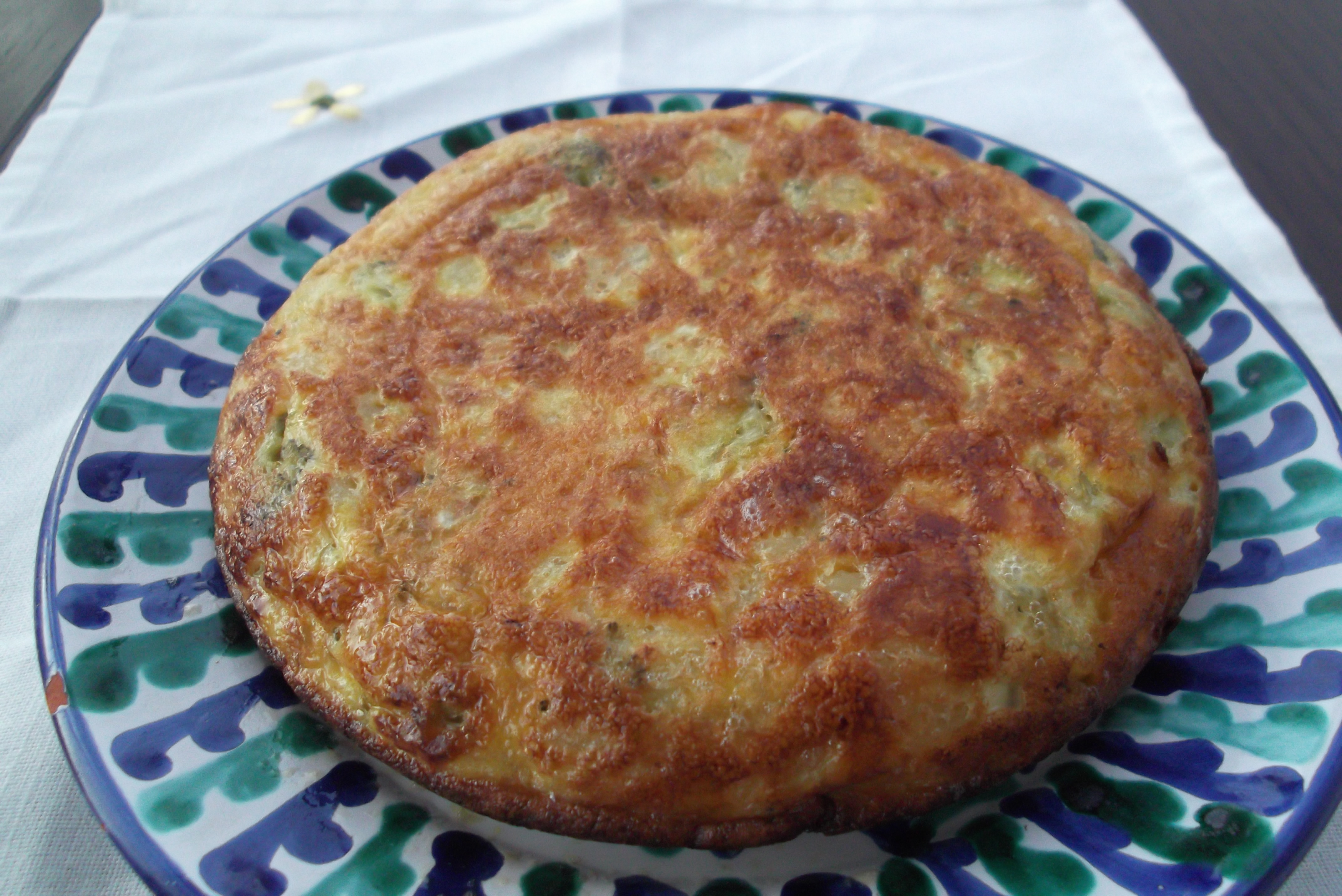
Now, I´m not laying claim to this being the most authentic of Spanish tortillas. For a start, the most famous is the potato one, sometimes with onions added. Secondly, the potato is cooked from raw in a fairly significant amount of olive oil, very slowly until tender. It´s wonderful, but when I´m at home I try to cut out a few calories and this is how I make my tortilla. To be honest, no one seems to have noticed the lack of oil!
For a Spanish tortilla to be successful, i.e. to be able to turn it over half way through cooking without ending up with an eggy mess all over the kitchen floor there are a couple of things which I have found help in the process:
A large quantity of filling in relation to egg – the egg just binds the ingredients together
A deep high sided pan (you´ll see from the photos that mine is very old and battered but it´s perfect for making a one person/two egg tortilla and I won´t throw it away!)
A very, very low heat
A lid to put over the tortilla in the first stage of cooking
Slow cooking, it takes patience, this is not a speedy French omelette
So, for one person, this is what I use, just multiply the ingredients for more people and of course, use a bigger pan! This makes a tortilla large enough for a decent supper or light lunch, served with salad, bread and of course a glass of wine.
Two eggs
Cold cooked, peeled potatoes
Any other vegetable, cooked, that you want to use in your tortilla
Salt and Pepper
About a tablespoon of olive oil
A tablespoon of milk
Start by putting the oil into the frying pan and then chopping your potato into small chunks. Also add the vegetables if using. You want the potatoes and vegetables to fill the pan almost to the top.
Warm them through turning them over gently so that they are all covered in the oil for a few minutes.
This slideshow requires JavaScript.
In a bowl beat the eggs, seasoning and milk with a fork then add the potato mix to the eggs and mix it all in gently with a spoon.
You should have a little oil left in the pan, but if not a tiny splash extra will be sufficient.
Pour the egg and potato mixture into the pan, turn the heat down to the lowest setting, put the lid on the pan and then leave the bottom half to cook slowly. Depending on how large your tortilla is, this could take a while. The two egg tortilla takes about 10 minutes.
Every so often, press gently on the sides with a wooden spoon or spatula to see if it is browning underneath. When it is a lovely golden brown and the top is set, it´s time to flip it over!
You can use a plate, or two plates (tip out onto one plate, invert onto another and then back into the pan). I have a plastic tortilla “flipper” which has a small handle underneath. You turn the tortilla onto it then slide it back into the pan. A flat saucepan lid would work just as well.
Now turn the heat up a little, leave the lid off and cook for about another 4-5 minutes until the bottom has turned the same lovely golden brown. Leave it to stand for a minute or two once it is cooked, then turn it out onto your plate and enjoy.
Thanks go out to JamieAnne at A Dash of Domestic for her wonderful tutorial on how to insert a slide show!
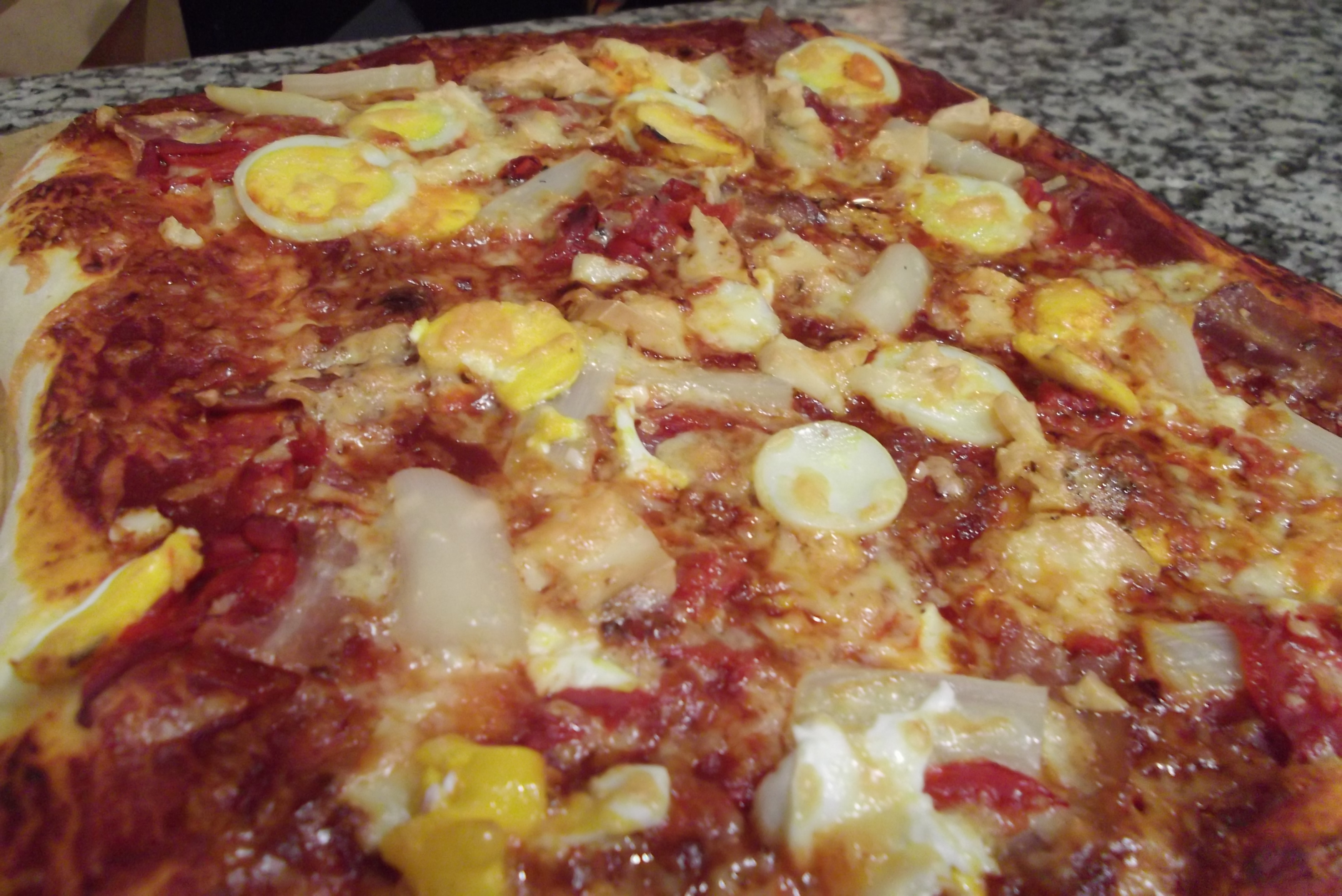
Definitely not thin and crispy, but still delicious!
I adore pizza, and I drool with the memory of childhood pizzas in Rome with my family. All thin and crispy, not too much topping and hot from the wood burning oven. I make pizza up my mountain, but for some reason I can never get the dough to stay thin and crispy. It just wants to keep on rising, no matter how much I knock it back! Some people have suggested that the combination of heat and altitude are probably affecting the yeast, I think they´re right.
It does mean that I generally don´t have problems getting my bread dough to rise beautifully though. I have learned to accept that unless I go back to Rome, I will have to wait for the perfect pizza, but in the meantime enjoy my puffier, slightly saucier ones!
For the dough I use my bread maker to knead, but it can also be done by hand by mixing the dry ingredients together then adding the oil and finally gradually adding the water until the dough gets to the right consistency. Knead for 10 minutes, knock it back then cover in cling film and leave in the fridge until needed.
Ingredients (in this order) for the bread maker
280ml water
2 tablespoons of olive oil
3 cups of strong flour
1 teaspoon of salt
1 packet of easy blend yeast
When I´m ready to make the pizza, I heat the oven and a large, wide baking tray at maximum temperature. Then I get my toppings ready to use.
I usually roll the rough into one large rectangle (the pizza is enough for four) and put it onto my large flexible chopping board which I have floured. This is so that I can slide the pizza, when it has been assembled straight onto the hot baking tray which gives it a nice crispy base – but if you can´t do this, just take the tray out, lay your dough on it and then work as quickly as you can with the toppings.
This weekend we had tomato sauce, white asparagus tips, hard boiled egg, bacon and crumbled mature goats cheese. Yes, not very “Plan Bikini” I know, but we were off to a fiesta and had a long night of dancing ahead of us to burn off the calories!
Big Man and I are trying to shed a few kilos. He´s not my Big Man for nothing you know! He has a very big heart, which is good, the waistlines (his and mine) could do with a little streamlining though. In Spain, if you go on a diet at this time of year, they call it “Plan Bikini”. The thought of either us in anything other than a large, stout bathing costume or trunks would be enough to scare anyone, but we´re trying to be sensible.
Being sensible doesn´t have to mean dull though, and I cooked up this delicious (no fat) sauce to go with some grilled fish. It would taste just as good though with grilled meat or vegetables. Probably not so good with grilled bananas though! I like my sauce quite spicy, but you can make it as hot (or not) as you like.
Two cups of peeled, chopped tomatoes (or used tinned)
A teaspoon of salt
A good few grinds of black pepper
One tablespoon of brown sugar
Two tablespoons of white wine vinegar
A teaspoon of ground cinnamon
Hot chili powder to taste (I used 2 teaspoons of hit, smoked pimentón)
Dried chili flakes to taste (I used two birds eye chilies, crumbled)
Put everything into a saucepan, bring to the boil them simmer for 5 minutes and that´s it. Serve hot or cold.
Makes enough for several meals and will keep in the fridge for a week, or you can freeze. Bet it doesn´t last long enough though!
A visit to Málaga a few days ago to sort out some paperwork also led us through the backstreets to the old market, which has been beautifully restored. Sadly, I didn´t have my camera with me to show you the stalls beautifully laid out with fruit, vegetables, fish and meat.
Sadly too, some of the fruit, when we got home, was not as lovely as it had promised to be. I think the best stuff was “up front” and the bags of non regular shoppers were filled with the less than top quality produce from the back.
Hey ho, squashed and not so fruity tasting fruit lends itself to jam making, and making it in small quantities is also fun. It´s quick, you don´t feel obliged to give away most of what you made to friends and family, and you get to have a wide selection of different flavoured jams in the despensa (that´s the larder to you and me)!
After tasting a few apricots and deciding that they weren´t up to that much, I stoned the rest and chopped them roughly and was left with 500g of fruit in weight. I added 300g of sugar and the juice of one lemon and put into a deep pan.
Start the jam off at a low temperature until the sugar has dissolved. The turn the heat up and get it bubbling, but making sure that it doesn´t boil over. Cleaning cold, set jam off your cooker is no fun at all.
Bubbling Away
Keep it bubbling away for about 10 minutes. Don´t get distracted or walk away! If you have a jam thermometer, do use it, it saves having to reboil the jam later if it doesn´t set. Otherwise you can drop a spoonful of jam onto a saucer which you have previously placed in the freezer. When the jam cools on the saucer you push it slightly – if it wrinkles, it´s at setting point. If not, boil a little longer then repeat.
Sometimes you can just go with instinct, and even if it doesn´t set, runny jam tastes just as good.
Now you need to leave the jam to cool down a little for 5-10 minutes so that when you pour it into still warm, sterilized jars (I run mine through the dishwasher to do this), the fruit will not float to the top.
Seal the jars while they are still hot and this will keep (although I doubt you´ll be able to resist!) for at least a year. Now, where´s that loaf of bread?
So, are you ready for this?! You may know that in Spain, especially the south, the pig is a highly prized beastie. We start at the top with the aristocratic pig that is the “Pata Negra” (which translates as the Black Hoof) who is fed on acorns and snuffles round in a life of luxury until he is turned into the most expensive Jamon in the world. At the other end of the scale, after the regular jamones and normal cuts of meat have been consumed and enjoyed, we´re left with all the other bits that most people think would be best consigned to the bin.
Well, not so here, and in many other countries and cultures too. If they could turn the “oink” of a pig into a soup in Spain, I´m sure there would be a recipe for it. Pig´s trotters are pretty common place in butchers and supermarkets here. No need to place a special order as they are often put into stocks and soups, or boiled up with chick peas for their dish “Puchero”. Sometimes though, they have a starring role all to themselves and this recipe is one which comes from Big Man´s mum, to one of his sisters and on to me.
I was told that this, like many other Andalucían dishes, was the poor folks´ food. When the Matanza (pig killing) was carried out in the autumn, the “extras” such as the tripe, trotters, tail and ears were given to those who had helped out in payment for their services. Because there was so little (or no) meat on them, the cooks had to get creative to add flavour and use long, slow cooking to tenderise the food.
I have to confess, I´m not a big fan, but I love the sauce from this dish. Pig´s trotters, when cooked, are rather gelatinous and involve a lot of chewing and then spitting out of all the little bones. It doesn´t bother me, but Big Man loves them so much that I make a pot for him every so often to enjoy all to himself whilst I tuck into something like aubergines or curry – which do nothing at all for him.
It´s a slightly long winded, but not complicated process to make this dish as you need to plan several days ahead. Give it 5 to be on the safe side. Here´s how to do it if you´re feeling adventurous.
For two people as a main course
8 pigs trotters split into halves or quarters (they usually come like this or ask your friendly butcher to help you out)
Salt about 6 tablespoons
2 bay leaves
About 12 peppercorns
6 cloves of garlic
2-4 small dried chilies
For the sauce
3 cloves of garlic peeled and cut in half lengthways
1 large slice of stale bread
A few strands of saffron soaked in water (or use a heaped teaspoon of paella spice mix)
Half a teaspoon of hot chili powder (pimentón)
Olive oil
About 12 peeled almonds
Salt to season
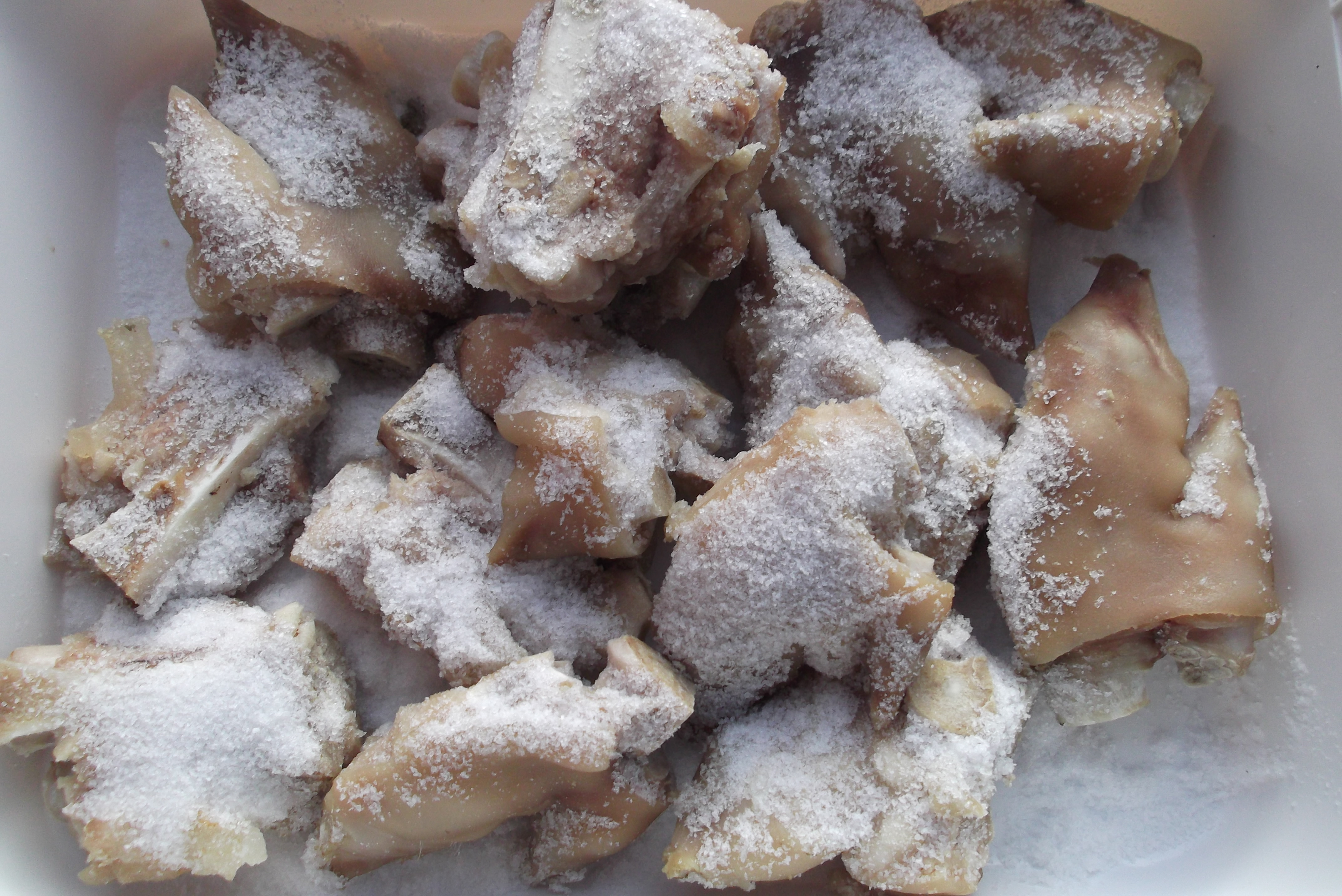
On the first day salt the trotters, put into the fridge for 24 hours
Salting the trotters
On the next day and for 48 hours, de salt them by submerging in a pot of fresh water which will need to be changed about 3 times per day
The day before you want to eat them you need to put them into a large pan with a lid, cover with water and add the garlic, bay leaves, chilies and peppercorns. Bring to a boil and then simmer for about 2 hours or until really tender. The trotters will start to fall apart and you need to end up with half the liquid you started with. You may need to top up the water during cooking.
For the sauce you need to fry the garlic, almonds and bread in a small amount of olive oil until browned and then put into a jug with the saffron and it´s water plus about 2 ladles full of the water from the trotters. You add the pimentón and then blend with a stick blender until you have a thick purée.
Pour this into the pot with the trotters and simmer again for about half an hour. Add salt to taste and then cool and refrigerate for at least 24 hours.
In the fridge the gelatine will cause the whole thing to solidify. When you warm it up to eat it, it will all return to a liquid state and you´ll have sauce again. This isn´t typically served with anything as you have to eat it with your fingers which get incredibly sticky! I love the sauce though and serve it with plain boiled rice.
This is not a dish that will be to everyone´s liking, but for those of you willing to try it, it has a wonderful flavour. Do let me know if you´re brave enough to give it a go!
It´s been a hectic little morning up our mountain. A nearby complex which offers rural holiday accommodation – http://www.cortijolasmonjas.com/ – just in case you want to have a look at the same lovely scenery I see every day, ran a four hour workshop on distilling aromatic plants. More of that later in another post. I got home so relaxed by the lovely smells of lavender, geranium and melissa, I wasn´t really in the mood for “proper” cooking. Big Man had been tidying up the vine in the vegetable patch, so he was hungry. I needed something fast and filling.
Well, not being a girl who is ever likely to be caught with her fridge empty, I pulled together a speedy potato salad. It´s green because of the avocados that are very much in abundance here at the moment, and because I used a big bunch of chives from our garden.
So, here it is, in all it´s delicious simplicity, for two people.
Two large potatoes cooked in their skins then peeled and diced
Four rashers of grilled bacon, chopped
One large avocado, peeled and diced
Half a cup of cooked peas or broad beans (guess what I used!)
Half a cup of chopped green olives
One grilled red pepper, peeled and chopped
Some finely chopped chives (I used about 2 heaped tablespoons)
One heaped tablespoon of mayonnaise
One small tub of natural yogurt (mixed with the mayo)
Pepper – you may not need salt because of the bacon, it´s down to you
Mix up all your ingredients, season and then stir in the mayonnaise and yogurt mixture. Also good as a side dish, but we just dug in and scoffed the lot!
So in 2016 I turned 50. I was in Italy for my 21st, 30th and 40th. To keep this birthday tradition going I always knew I'd be in Italy for my 50! This blog starts with my 5 week adventure in Puglia but my love affair with Italy continues.....








 Chica Andaluza