Vegetarian Hot and Sour Soup

Much as I enjoy a blue fillet steak or a bacon sandwich,  there are times when it feels good to lay off the meat and enjoy meals without. This doesn’t mean you have to sacrifice flavour though.  Hot and Sour Soup is perfect for days like these. Filling, warming, and full of exciting flavours. If you want to add cooked chicken or prawns though,  go ahead. Extra vegetables? Go for it!

20161109_202020

This version was inspired by a recipe from a much used and favoured cookbook, Gok Cooks Chinese. Although my predictive text called him God. He’s good, but not quite THAT good!

Ingredients (to serve 4 generously)

  • 1.5 litres of light, unsalted vegetable stock or use water
  • 50g approx of mushrooms, sliced  (I used chestnut with a few shitake)
  • 1-2 fresh red chillis, finely sliced (or a teaspoon of dried chilli flakes) depending on  how hot you like your soup
  • 50ml light soy sauce
  • Approx 3 heaped tablespoons of thinly sliced bamboo shoots (I used tinned, drained bamboo)
  • 1 large carrot, peeled and very finely sliced then diced
  • 5cm piece of fresh ginger peeled and grated (or use frozen chopped ginger)
  • 3 cloves fresh garlic, peeled and grated or crushed
  • 1 tablespoon of sugar
  • 4-6 tablespoons of rice vinegar  (to taste)
  • Optional 2 heaped teaspoons of cornflour dissolved in a little cold water
  • 2 eggs, beaten
  • Finely chopped spring onion or chives to serve

Bring the stock to a gentle boil and add the carrot. Simmer for about 5 minutes then add all the ingredients except the cornflour, vinegar,  egg and spring onion.

Simmer for about 10 minutes then gradually add the vinegar, tasting as you go until it reaches a level of sourness you enjoy.

If you prefer a slightly thickened soup, add two heaped teaspoons of cornflour to about 50mls of cold water and add to the simmering soup. Allow to thicken (this will take a minute or two).

Turn off the heat and add the egg, whisking as you do to create fine ribbons of cooked egg. Serve garnished with the finely sliced spring onion and marvel that it was quicker to prepare than ordering and waiting for a takeaway delivery.

(For a gluten free option use tamari instead of soy sauce and omit the cornflour).

Chicken Liver Paté (for poorly folk with half a kitchen)

You can’t keep a good woman down, and you can’t stop Chica from interfering in the kitchen. Thank you for all the good wishes for my recuperation from the little gall bladder operation.  All is going well apart from feeling very tired and looking quite pale and interesting. Loved ones felt that I might be a little anaemic and my cravings for dried apricots and green leafy vegetables probably confirm that.

20161019_182757.jpg

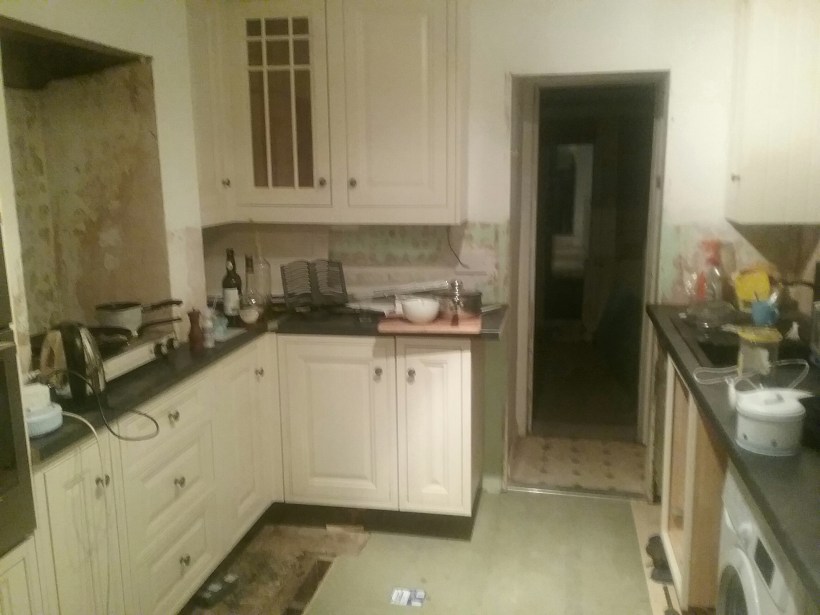
The kitchen  is progressing slowly but well and the other evening I really wanted to make something from  scratch rather than just heat up a meal I had waiting in the freezer. The fact that I craved liver and still didn’t have a hob was not going to deter me and I  am showing you the grim reality of my current cooking arrangements in the spirit of honesty and to encourage anyone who doesn’t have a super swishy cooker. If you want to do it…you can!

20161019_182902

Slightly lower fat chicken liver paté for the stubborn and determined cook

  • 400g chicken livers trimmed of any sinews and soaked for about 30 minutes in milk to remove any bitterness
  • 100g low fat creme frâiche
  • 2 cloves of garlic peeled and grated or crushed
  • 1 shallot peeled and finely chopped
  • 1 tablespoon each of Port and Brandy
  • salt and pepper to taste
  • 40g approx unsalted butter, gently heated and white foam spooned off (clarified butter)
  • 2 tablespoons of olive oil
  • A sprig of something pretty from your herb garden to decorate

In a large frying pan, heat a tablespoon of the oil. Drain and dry the chicken livers well with kitchen paper and cook on a medium heat for a couple of minutes each side until browned but still pink in the middle. If you can’t bear bloody meat, go ahead and cook them through thoroughly. It’s your paté,  your choice!

20161019_182553

Remove from the pan to a plate and wipe the pan clean. Add the rest of the oil and gently fry the shallot and garlic until transparent and soft. Add the cooked chicken livers to the pan with the port and brandy and cook until most of the liquid has evaporated. Season lightly with the salt and pepper and allow to cool slightly for a few minutes.

Put the mixture into a blender (I used a stick blender so used the tall container that comes with it) together with the creme frâiche. Blend until smooth, taste and adjust the seasoning if necessary.

Spoon into a serving dish and pour over the clarified butter, decorating if you like.  If you prefer to use individual serving dishes you may need more butter. I think thyme is more usual as a decoration, but I used what I had!

20161019_182646

Chill for a few hours or overnight and enjoy. I understand this will keep for at least a week with the butter seal, once you start it though, eat within 2-3 days. Which is not a problem in our house as every time I open the fridge I do a little taste test…


Semolina Crusted Plaice with Roasted Peppers

Blogging has taken a back seat recently.  At least from the point of writing up recipes and posting them. Life has been hectic with family visiting from Spain and some express house renovations on a new investment property.  Good weather has allowed us to get out into our little garden and give it a good tidy up, and May has been a good month for birthdays with both Big Man and my mum celebrating.

20160414_141547


Of course, we’ve been cooking and enjoying good food, a lot of which has been old favourites which we’ve already shared with you. Sometimes though, we’ve tried something new but with all that’s been going on, it’s been simple yet delicious food.

20160330_095923
Dogs inspecting nasty purple carpet

Our local fishmonger recently had some beautiful plaice fillets for sale, so I snapped them up and scampered home with them (ok, so you know I didn’t really scamper, it was more of a quick,  happy march). The plan was to do what I  pretty much usually do with fish, and to grill them. However, someone, somewhere must have wanted to send me a message from above, or from the high shelf of a kitchen  cupboard, and when the packet of semolina I usually use to dust my sourdough loaves with fell on my head, I  changed the plan. Sometimes you need a knock on the head to shake things up a little!

Serves 2 (easy to scale up for more)

  • 2 cleaned plaice or other flat fish
  • About 2 tablespoons of semolina, seasoned lightly with salt and pepper
  • 1 egg lightly beaten (you’ll probably not need it all but it’s difficult to use any less!)
  • Olive oil for shallow frying
  • One roasted pepper, peeled, chopped and dressed with lemon juice and olive oil (or use some from a jar prepared for using as an antipasto)

Coat the fish in the egg then the seasoned semolina. Heat the oil on a medium/high heat in a large frying goan.  You may need to keep the first fillet warm while you cook the second one if your pan is not large enough to take both.

20160403_093650
Luna and Alfi approve stripped, waxed floorboards

Cook for about 3 minutes on one side until the crust is browned and crispy. Flip the fillet over and continue to fry. The second side will probably only take about two minutes. Use your discretion if the fillets are particularly large or thick.

Serve with the dressed roasted peppers and a salad.

Moroccan Spiced Chickpea Stew

Regular readers will know that in our house, pulses rule supreme and we often bring supplies of chickpeas and lentils grown locally in Spain, over to England. In a tidying up frenzy the other day (family are visiting from Spain soon!) we came across further supplies that we had forgotten about. Result.

I decided to try something different from our regular Puchero and came across various recipes using Moroccan inspired spices which I adapted to suit us. I included chicken in this version, but I feel sure that you could quite happily leave it out which would give you an amazing vegan main course dish.

????????????????????????????????????

Feel free to play with the spices, next time I’ll double the harissa to give more of a kick. I used my slow cooker but this could easily be cooked (covered) in a low oven, braised gently on the hob or even in a pressure cooker (although I don’t own one so can’t offer any advice on cooking times). If you prefer to use ready cooked, canned beans just skip the soaking stage and use double the volume in the ingredients list which will give you roughly the same quantity as the dried ones after soaking.

Ingredients (to serve 4 as a main course)

  • Approx 400ml of dried chickpeas (measure by volume) soaked overnight in plenty of cold water with a pinch of bicarbonate then drained
  • 4 chicken thighs or drumsticks (optional)
  • Approx 3 tbsp olive oil
  • 1 large onion, chopped
  • 3 cloves of peeled and crushed or chopped garlic
  • 1 level tablespoon of harissa (or chili powder to taste). Use more if you like a little tickle (and who doesn’t?!)
  • 1 teaspoon each of paprika, turmeric and ground ginger
  • 2 teaspoons each of ground cumin and cinnamon
  • 1 can of chopped tomatoes (mine was 390g)
  • 2 tablespoons of tomato paste
  • About 220 ml of water (If using a slow cooker, make sure everything is covered by about 2cm of liquid).  You may need to top up with more liquid if cooking in the oven or on the stovetop. Just keep an eye on it and add more hot liquid if necessary.
  • Salt (season after the dish is cooked to help the chickpeas soften when cooking)
  • To serve – a drizzle of extra virgin olive oil and some finely chopped radish, coriander and red onion.

Heat the oil gently ad add the onion and garlic. Cover and soften then add the spices and cook (uncovered) until the spices release their aroma.

????????????????????????????????????

Add the chicken (if using) and the tomatoes, tomato puree and liquid. Bring to a boil and cook on high for 10 minutes. Now put everything into whatever you use to cook (casserole dish, slow cooker etc) and cover. I cooked mine on slow in the slow cooker for 6 hours and the chickpeas were soft and creamy with the chicken cooked through and still holding to the bone. Stovetop should take about 2 hours and a slow oven about 4 hours. Add salt to taste once the dish is cooked.

????????????????????????????????????
Arlington Bluebell Wood

When you’re ready to serve (and it’s even better the next day), ladle into deep bowls and serve with the garnish and your favourite bread. Enjoy!

Bluebells (6)

PS. Because the photos of the stew weren’t great (although the stew was…photo quality is due to a desire to eat quickly!), I have included some gratuitous shots of a recent walk we took in a Bluebell Wood nearby, do hope you enjoy a little burst of English springtime.

If you enjoy chick peas and North African inspired spices, why not try this soup?

Leche Frita…or Fried Milk

We recently had a lovely Spanish Sunday lunch with family and friends. Lunch on Sunday in Spain, especially when the weather is good and you can cook outside, often means paella. Although it wasn’t warm enough to eat in the garden, we did manage some pre-lunch drinks in the sunshine and we fired up the paella burner to cook outside.

20160416_172943

Starters were typical. Plates of jamón and cheese,  lettuce with anchovies, croquetas and prawns to peel and dip in alioli.

Dessert caused me a little stress.  Not making it, you understand.  Just deciding what to make. Where we come from in Spain doesn’t claim to have the most exciting desserts in the world. Pretty much every restaurant will offer the same selection. Flan (which we know better as creme caramel ). Natilla (a little portion of cold custard with a biscuit similar to what is called a Rich Tea biscuit on top). Arroz con leche (cold rice pudding cooked with cinnamon and sprinkled with cinnamon). Fruit or ice cream. Hmmmm.  Ok, but nothing to get over excited about.  The fruit is usually pretty good and depending on the season you can enjoy figs, melons, peaches, custard fruit, pomegranate and strawberries.  

FB_IMG_1460914788915

Folk seem to get their sugar fix from turrón and the little cakes, pastries and doughnuts served after a meal with coffee. I asked Big Man for advice and he requested Leche Frita which is something his family used to enjoy when he was young. The ingredients are few and cheap. It’s not a sophisticated dish and I was a little unsure as to how my lunch guests would react. I was amazed at how well it went down. They enjoyed the lightness and simplicity of the dish and the delicate flavour of the custard (which is what you make from your milk). If you’re a person who finds stirring risotto therapeutic,  this one’s for you as you can’t make it in a hurry.

Ingredients to serve six to eight people

  • 800ml full fat milk
  • A large slice of lemon zest
  • A stick of cinnamon
  • 80g cornflour
  • 80-100g sugar (this doesn’t need to be very sweet)
  • 2 eggs, beaten
  • Vegetable oil for frying
  • Icing sugar and cinnamon to dust the finished slices of Leche Frita

Pour the milk (reserving about 100 ml and return this to the fridge) into a saucepan with the sugar, lemon zest and cinnamon. Bring almost to boiling point, stirring to dissolve the sugar, remove from the heat then cover and leave to stand for 15 minutes.

20160417_150659

Add the cornflour to the cold milk and dissolve.  Remove the lemon zest and cinnamon from the infused milk and pour in the milk and cornflour. Heat very, very gently, whisking or stirring for about 20-30 minutes. You don’t want the milk to catch and burn while you thicken the milk. It’s ready when it has become very thick.  Run a spoon through the middle of the mixture and if it doesn’t return quickly to the middle of the pan, you’re done!

Lightly oil a shallow square or rectangular dish with some vegetable oil and pour in the thickened milk. Smooth the surface and leave to cool in the fridge for an hour or so. Ideally it will be about 2cm thick.

Prepare a large frying pan with vegetable oil to a depth of about 2cm and heat the oil. Not quite as hot as for cooking chips, but a good medium heat. Have a tray lined with kitchen paper ready and in a bowl put about 4 tablespoons of icing sugar mixed with about half a tablespoon of cinnamon.

20160417_150714

Tip the leche/custard out onto a tray or flat board and cut it into portions (I made triangles) and dip as many will fit into your frying pan in one go into the beaten egg. Make sure the pieces are well coated and put them onto a plate until you are ready to fry your first batch.

Put the egg coated pieces of leche into the hot oil and fry on each side (a couple of minutes) until golden brown. Place onto the kitchen towel and allow to cool while you cook the next batch.

When it’s cool enough to handle, dip each piece in the icing sugar and cinnamon mix. It can be served warm or cold and keeps well in the fridge (covered) for about 48 hours. Don’t expect it to be crispy, this is meant to be soft inside and out.  You can reheat gently in the oven or microwave and sprinkle a little extra icing sugar over to serve. If you want to be a bit grand, make a fruit coulis to dip the pieces into. Lovely as a dessert or teatime treat and very typical of Andalucía.


Fresh Spanish Chorizo

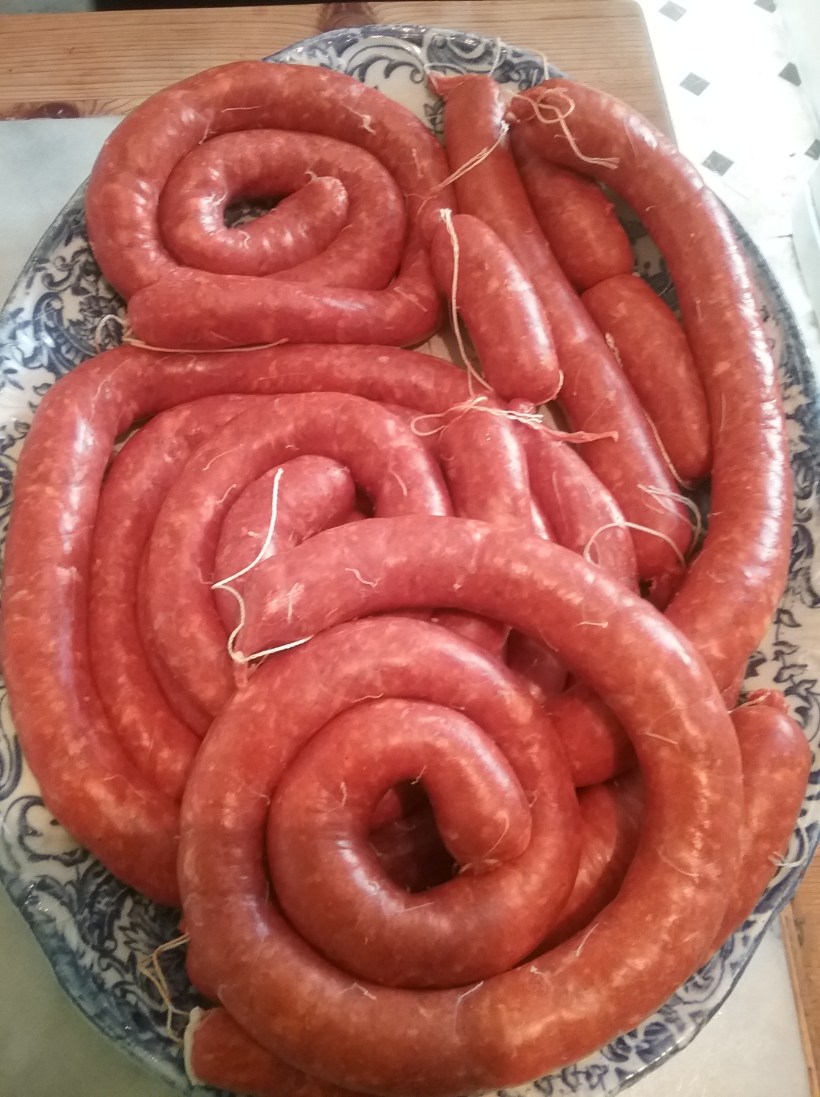
Big Man was lucky to have been given a mincer/sausage maker at Christmas.  Ideal for producing sausages for the family and we hoped that it would give us the chance to make fresh chorizo to eat while in England. Occasionally we come across a very authentic version (in Lidl of all places) otherwise those produced by our local butcher are good but  just not quite the same.

20160313_162307

When you buy fresh chorizo in Andalucía  (typically from the butcher) you’ll be offered freshly made ones which are designed for frying, cooking on the plancha or barbecue and are for immediate consumption. You will also be asked if you want some for drying.  These will have been made a few days previously and you take them home, hang them up somewhere cool and dry and leave them to dry out to the texture of what we know as salami. Depending on the weather and time of year this can take anything from a few days to a couple of weeks.

20160313_102830

Asking our friends and family (including a pal who is a butcher) what spices we needed, everyone looked at us as if we were mad foreigners and said “you buy a packet of Chorizol and follow the instructions”! Hmph.

So, on our last trip this is what we did, but this packet mix contains preservatives which we’re not keen on using or consuming.  As an aside, this word in Spanish is “conservativo” as a “preservativo” is a condom….. definitely NOT what you will be using for your sausage making! I digress. I’ll give the instructions for making up an equivalent spice mix per kilo of meat but feel free to play around until you get your perfect flavour combination.

20160313_104133

Ingredients per kilo of meat

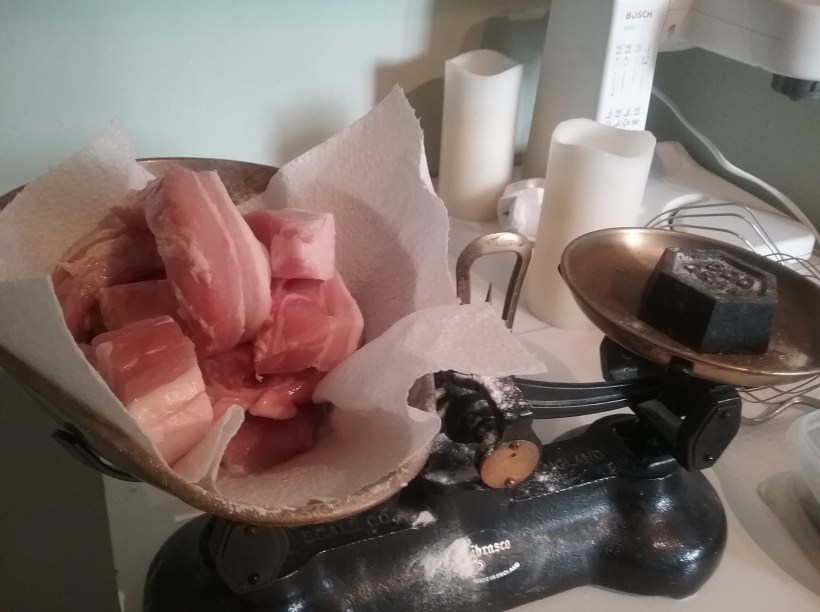
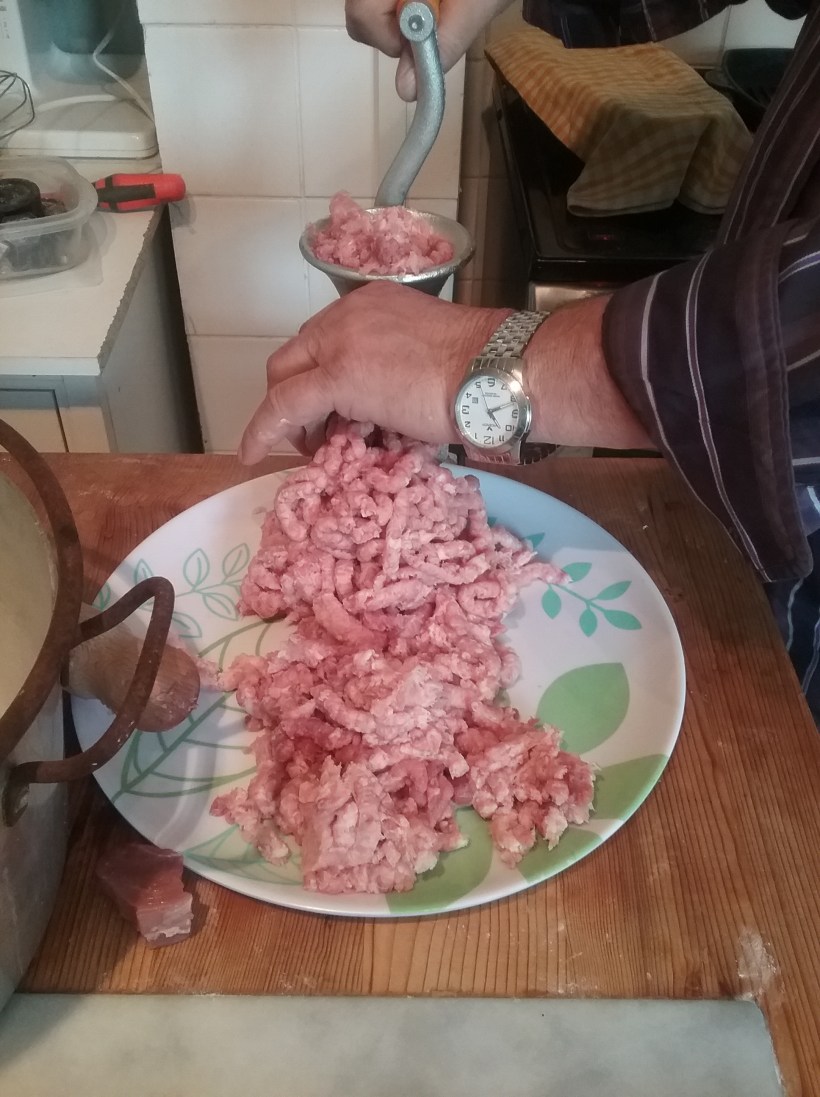
  • 1kg of pork which should be about 30% fat to meat. We used pork shoulder meat and pork belly strips.  The meat should be coarsely minced.
  • 60g of spice mix per kilo of meat. To make this you need about 35g sweet pimentón, 15g  smoked pimentón, 5g salt (add more salt to the meat mix at the end for taste if you prefer) 5g garlic powder.  You can also add a little grated nutmeg (a pinch) and a pinch of finely ground dried oregano.
  • A splash of wine (red or white)
  • Sausage casings

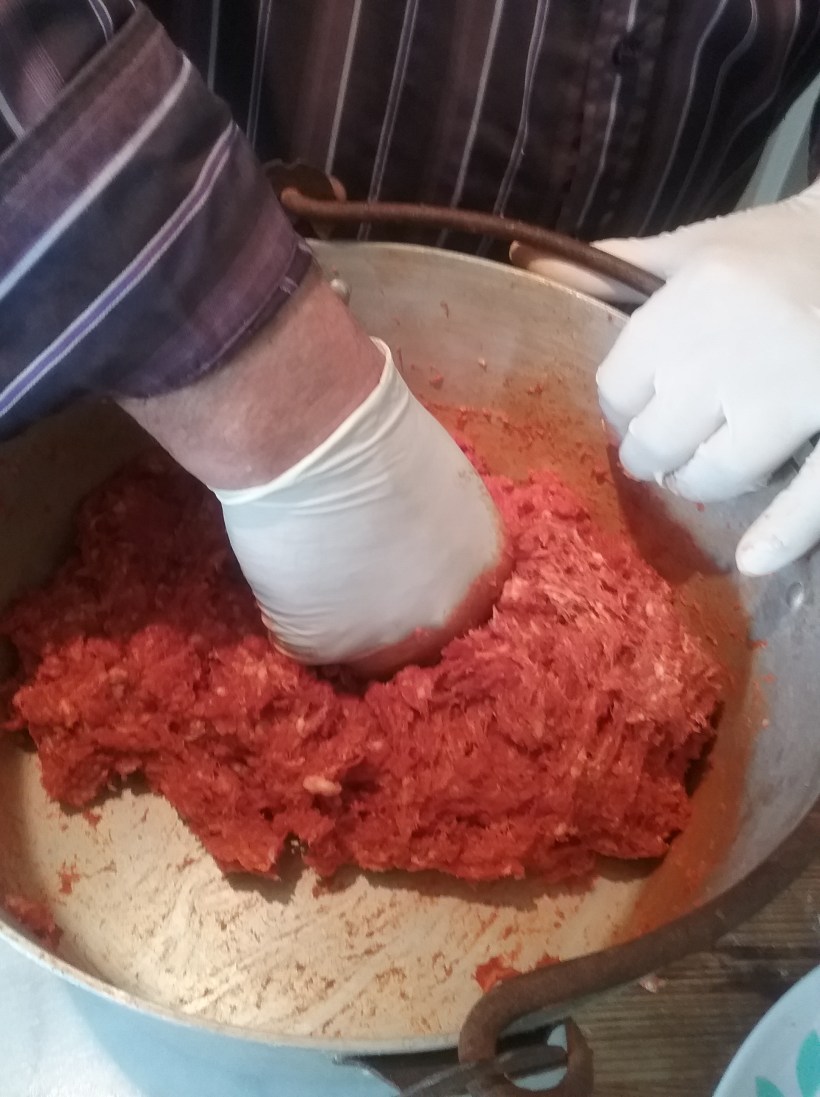
Add your spice mix to the ground/minced meat, together with a splash of wine. Mix thoroughly with your hands (I recommend wearing gloves or you will have very stained hands from the pimentón for a few days ). Add a splash more wine if necessary to make a slightly moist mix.

20160313_113801

The meat should already start to smell like the chorizo we know and love but to be sure, break off a small piece and dry fry it for a minute or two on each side. Taste and add any further seasoning. We added about a teaspoon of hot chili powder to ours which gave a little heat.

20160313_121124

Cook and taste a little again if necessary and then move on to the highly entertaining part of filling your sausage casings. This is most definitely a job for two people! Ours were not uniform in thickness or length and we found it easier to make long sausages then tie them into shorter lengths when  we were done.

20160313_125539

Hang your sausages up in a cool dry place (if this is practical for you) for 24 hours. This allows the skins to dry out a little and helps them not to burst when cooking. Now you can cook, freeze, dry, share enjoy your chorizo….happy chorizo making!

If you are looking good for something to make with your chorizo, why not try this simple but delicious tapa? !

Chorizo con Cebolla (5)

The Emperor’s New Clothes – Red Emperor (Snapper), Pargo Rojo

In our little seaside town of Bexhill-on-Sea we are now lucky enough to have two wonderful fishmongers. As lovers of fish and shellfish we are spoilt for choice. This weekend I decided to try out the new shop, which goes by the enchanting name of The Angry Whelk.

Big Man and I decided to avoid the Valentine’s Day menus in local restaurants. Not from a “bah humbug” point of view, we just decided that we’d rather have a relaxed Sunday at home with the pups and a meal of our choice.

Red Emperor Pargo (10)

The fishmonger had a fantastic display of fish but what really caught my eye was a beautiful red monster. A red snapper, or Red Emperor. It really was huge, far too big for the two of us, but unable to resist a bargain or a challenge I was soon heading home with the beast which weighed about 2kg.

A quick check on the internet told me that if I wanted to cook it whole, it was best to keep it simple with a sauce or something interesting on the side. Am so glad I followed this advice as the cooked dish was incredible. The fish has a meaty texture (perfect for anyone who does not like to grapple with fish bones) and a delicate (not very fishy) flavour. My monster fish would easily have fed 6, so today we’ll be eating leftovers lightly pan fried in olive oil just to warm them through and I’ve also frozen the rest to make a lovely fishy fideua another day.

Red Emperor Pargo (1)

Ingredients (depends on the size of your fish as to how many it will serve)

  • 1 Red Emperor
  • 1 lemon thinly sliced
  • A handful of flat leaf parsley
  • Salt flakes (I used Maldon)
  • Olive oil
  • Freshly ground pepper

To serve

  • 2 slices of slightly stale sourdough bread (or similar)
  • 2 cloves of garlic finely chopped
  • 2 tablespoons of olive oil
  • The grated zest of an unwaxed lemon
  • About 2 tablespoons of finely chopped flat leaf parsley

Preheat the oven to 180 degrees C. If your fishmonger has not already cleaned and gutted your fish, you’ll need to do this. I kept the head on as I think it adds flavour but this is personal choice. pat the fish dry with kitchen paper.

Line a large oven dish or tin with aluminium foil – enough to allow you to make a tent around the fish. Drizzle a little olive oil over the foil and rub and place the fish on top.

Season the cavity with salt and pepper and fill it with the lemon slices and the handful of parsley. Season the top of the fish and rub a little olive oil all over it before sealing it up loosely in a parcel.

Cooking time will depend on the size of the fish, mine took just over an hour but you can check that it’s cooked by pulling gently on the fin which is on the side of the body (it will be facing up towards you). As soon as you can pull this away easily, you’re done.

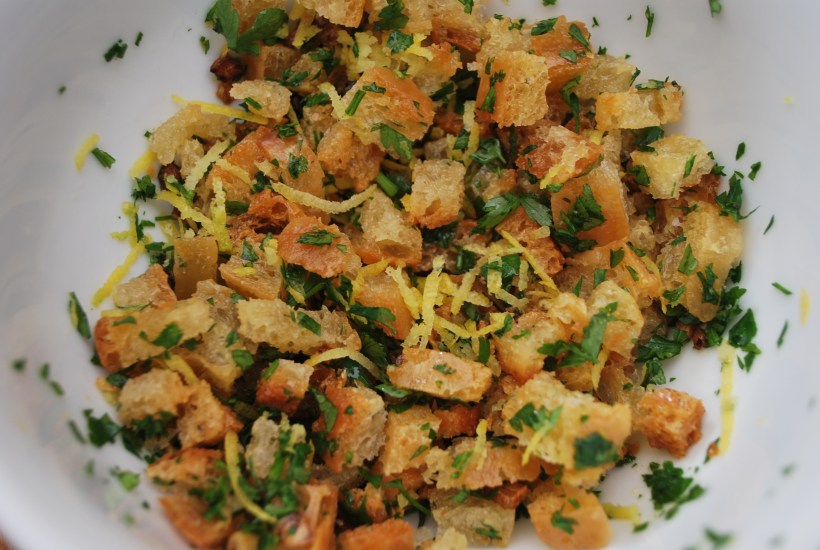
While the fish is cooking make the crouton/gremolata. Cut the bread into small croutons and fry in the olive oil until it is just starting to brown. Add the garlic at this stage and fry until the bread and garlic are golden. Allow to cool slightly and mix with the lemon zest and parsley.

Red Emperor Pargo (3)

When you are ready to serve, peel back the skin from the fish (it is thick and although I generally eat the skin on fish, this time the dish was better without). The fish comes away from the bones easily in large chunks. Serve with the garlicky, lemon croutons and an extra drizzle of extra virgin olive oil and a squeeze of lemon.

Simple to prepare, you’ll dine like royalty….go on, be an Emperor or an Empress in your own lunchtime!

Slow Cooked Chinese Style Barbecue Pork

We’re now back from Spain after a hectic month of family, friends and house repairs. Some good times and some sad times but that’s life isn’t it? Back in Bexhill for the moment and life is taking on a gentler pace for the next couple of weeks. That’s good as far as we’re concerned!

A gentler pace means time for slow cooking. I seem to have been rather enthusiastic about my passion for the slow cooker as my best pal Ria decided she wanted to give one a go, so I bought her a slow cooker for Christmas. My mum then decided that she’d join in so bought a slow cooker too. We’re all at it – slow cooking with passion and exchanging recipes. Not a bad way to enjoy food, especially when we’re able to share the results of our experimenting with each other.


DSC_0002

Here’s a great recipe which works equally well in the oven or the slow cooker. It takes very little preparation and after the required number of hours you’re rewarded with a dish which looks and tastes as though you’ve done something very cheffy and clever.

Ingredients to serve 4-6

  • 2 finely chopped or grated garlic cloves
  • 1 tbsp finely chopped ginger
  • 2 tbsp runny honey
  • 2 tbsp soy sauce
  • 2 tbsp mirin (use sweet sherry otherwise)
  • 1 tsp sesame oil
  • 1 tsp Chinese five-spice powder
  • a bones and rolled pork shoulder (about 1kg/2lb in weight)
  • Steamed or boiled rice and chopped spring onions to serve

Put the garlic, ginger, honey, soy sauce, mirin, oil and five spice powder in a large bowl and mix. Add the pork to the bowl and coat it in the sauce.

Cover and refrigerate for at least 2 hours, overnight if possible.

When you are ready to cook, bring the pork to room temperature. Put into an ovenproof dish with a lid or into a slow cooker. In a conventional oven, cook at Gas Mark 3 for about 4 hours, If you find it is drying out, add a small glass of water. In the slow cooker cook on high for 6 hours or low for 10 hours until the meat is very tender (you won’t need to add any additional liquid in the slow cooker).

Slice the meat and shred lightly to serve. Pour over any cooking juices and serve hot with the rice and spring onions.

Leftovers are wonderful cold in sandwiches.

If you’re inspired by this, why not take a look at my twice cooked melting pork?

Twice Cooked Melting Pork (8)

When life gives you lemons…

Well…you just have to go ahead and pick them. Then you share the lemon love with friends and neighbours and make delicious dishes like Lemon Rice, Chicken with Za’atar and Lemon or even Lemon and Chili Mussels.

20160116_112125

We planted our little tree just over 7 years ago, not long after moving into our Cortijo, or home in the country.  Initially we despaired of ever getting a single lemon from it as, despite the fairly temperate climate all year round, we often get strong winds. Our tiny tree grew but the winds stripped the flowers (which were to be our lemons) and even the leaves from it. Getting 2 puppies a year later who loved to dig also added to the stress for our little tree.

20160116_112116

But, all good things come to those who wait. Just look at it now! We’ve been away for 2 months, and at the end of October it was bare of lemons as we’d given some away and picked the rest to take back to England. It seems our “Limonero Lunero” (a lemon tree which flowers every new moon so that you have lemons all year round) thrives on neglect. It’s been a very dry year, we haven’t been around much, and now it’s groaning with lemons.

20160116_113840

There are still plenty to be picked, but I made a start. Maybe we’ll have Lemon Ravioli this week…

Extra Virgin

Any time from November to early March in Andalucia means it’s time to pick and crush olives. The date for this depends on several factors. The weather for a start, and how it has allowed the olives to grow and mature.

20160111_135958

20160111_112426

Some people like to pick their olives very early, when they are still smaller and green. This will give a lower yield of olive oil but of a very high quality. Think of those amazing tasting and expensive olive oils you can find in specialist shops. It’s wonderful for eating “raw” – which means in salads or as a dip – but not suitable really for cooking with. It can be hard to find a mill open to deal with the olives so early on on the season, at least it is where we live.


20160111_112514

20160111_112744

There’s also usually a minimum quantity that you can mill (about 250kg) so it’s not really an option to mill some early and then more later on in the season. At the other end of the calendar you have the folk who pick late when the olives are fat and dark. You’ll get a much higher yield of oil but it will have a much less distinctive taste. A good all rounder but with no particularly distinctive flavour. Fine for eating raw, great for cooking. Much of the oil we all buy in supermarkets will be this type. Round here the olives are sold to the co-operatives and everyone benefits from the profit of the sale of the olives and/or oil.

In the middle are people like us. Many who have enough trees to provide them and their families with oil for the year. The olives are picked when they are green/black. You get a good yield of oil with a wonderful flavour which will become more gentle as the year goes on and whatever is left from the year before becomes your oil for cooking.

20160111_112731

20160111_112807

Now, I won’t lie to you and say that Big Man and I participate in the picking. Although Big Man has done in the past. Like many others we come to an arrangement with neighbours who don’t have trees or land of their own. We provide the trees and look after them during the year. They pick the olives. We all take them to be milled and then divide the spoils. Perfect!

20160111_132806

This year from our 30 trees (although sometimes when we count we get to 29 or 31, we can’t seem to agree) a fantastic 1732 kg of olives were collected. Last year was not a good year, and next year will probably not be as good as this one. That’s the way it goes with olives, up and down. That means about 60kg of olives from each tree and am almost 19% yield for any of you who love numbers like me! And no sprays or pesticides. Rain water and chicken poo are all our olives get to see them through the year.

20160111_132849

In the past we’ve headed down to the coast to an old mill which cold stone presses the olives. The old boy who runs it is now winding things down, so unless you’re super organised and have made an appointment weeks in advance, it’s not practical now to use his mill. A shame.

20160111_132741

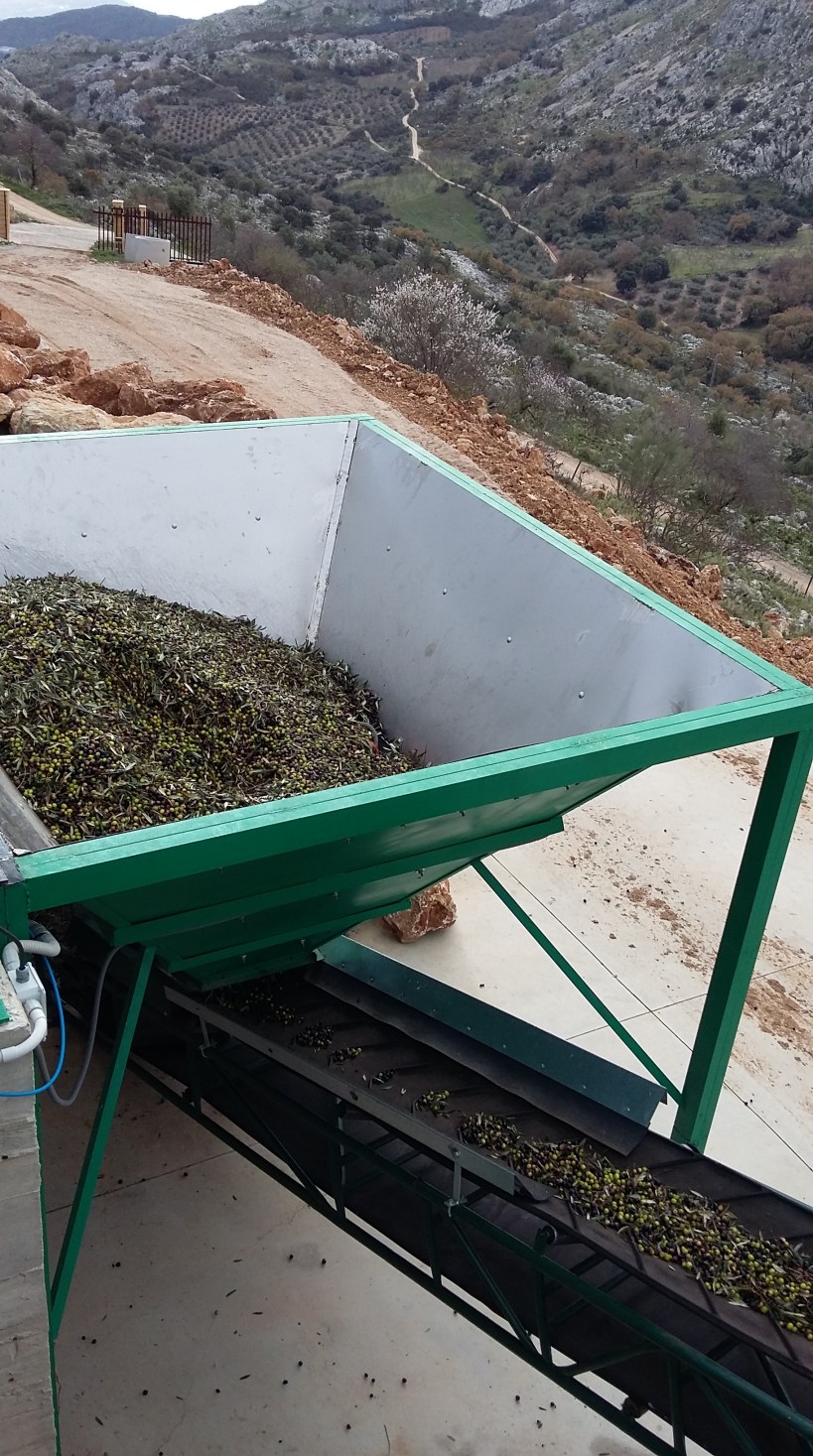
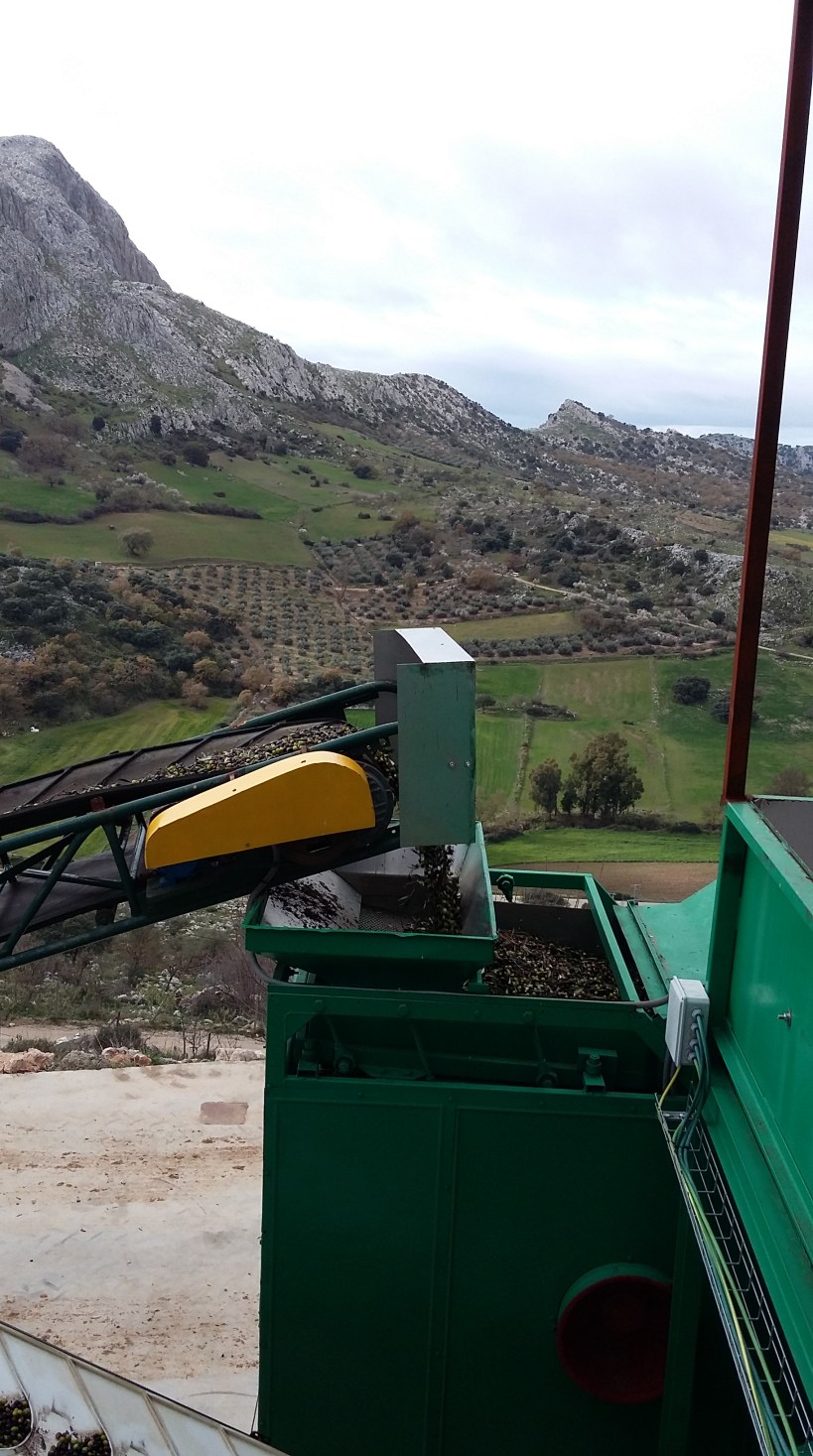
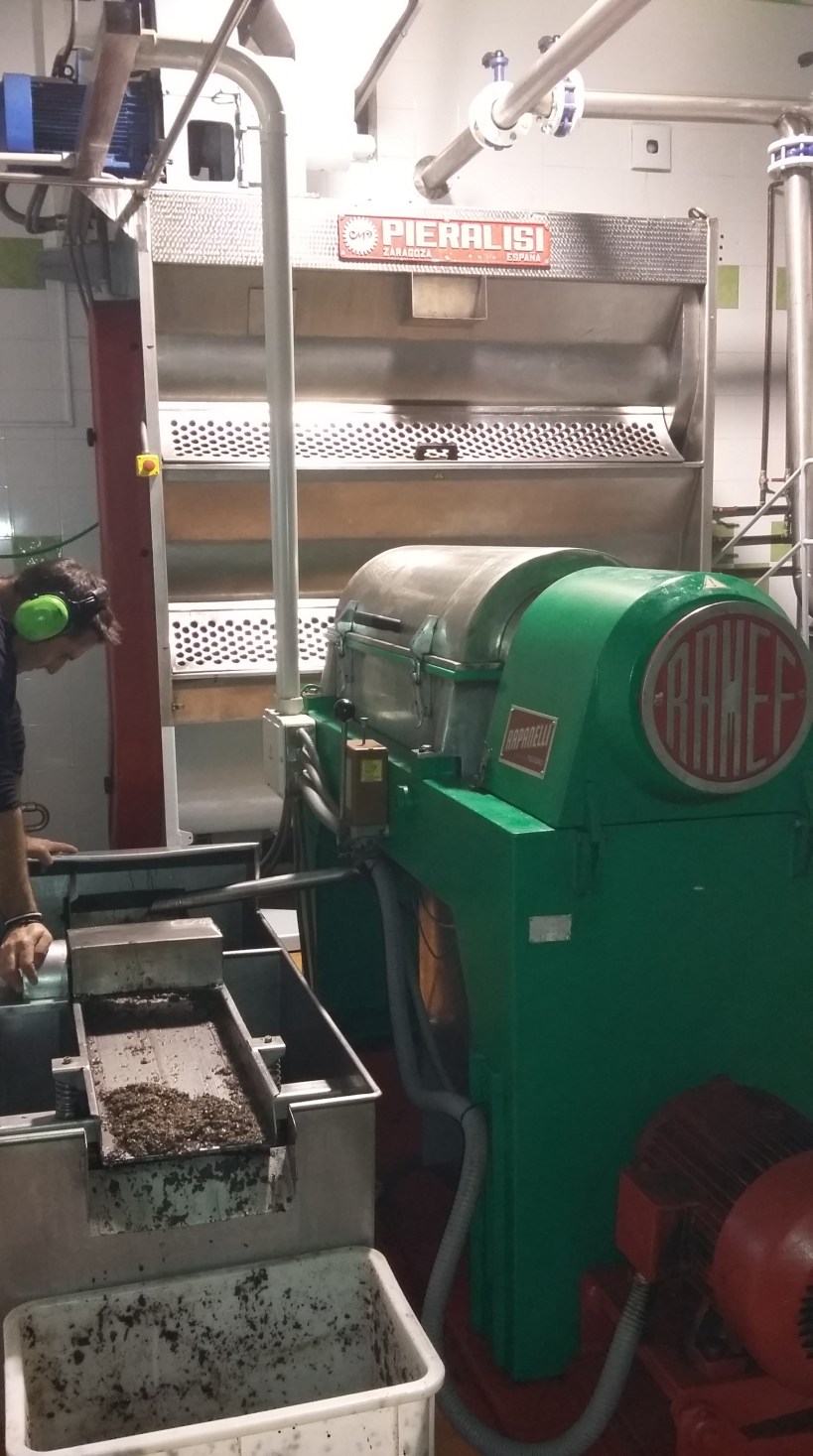
But, nil desperandum. A neighbour’s son and his wife decided 2 years ago to set up a little mill just a few km from us next to our local village. It’s up a very inconvenient wiggly track but the views are amazing! They mostly bought second hand machinery, which I like the thought of, and the very effective little mill serves the locals like us for a few months a year when we want to mill our own olives and enjoy our own oil.

20160111_133951

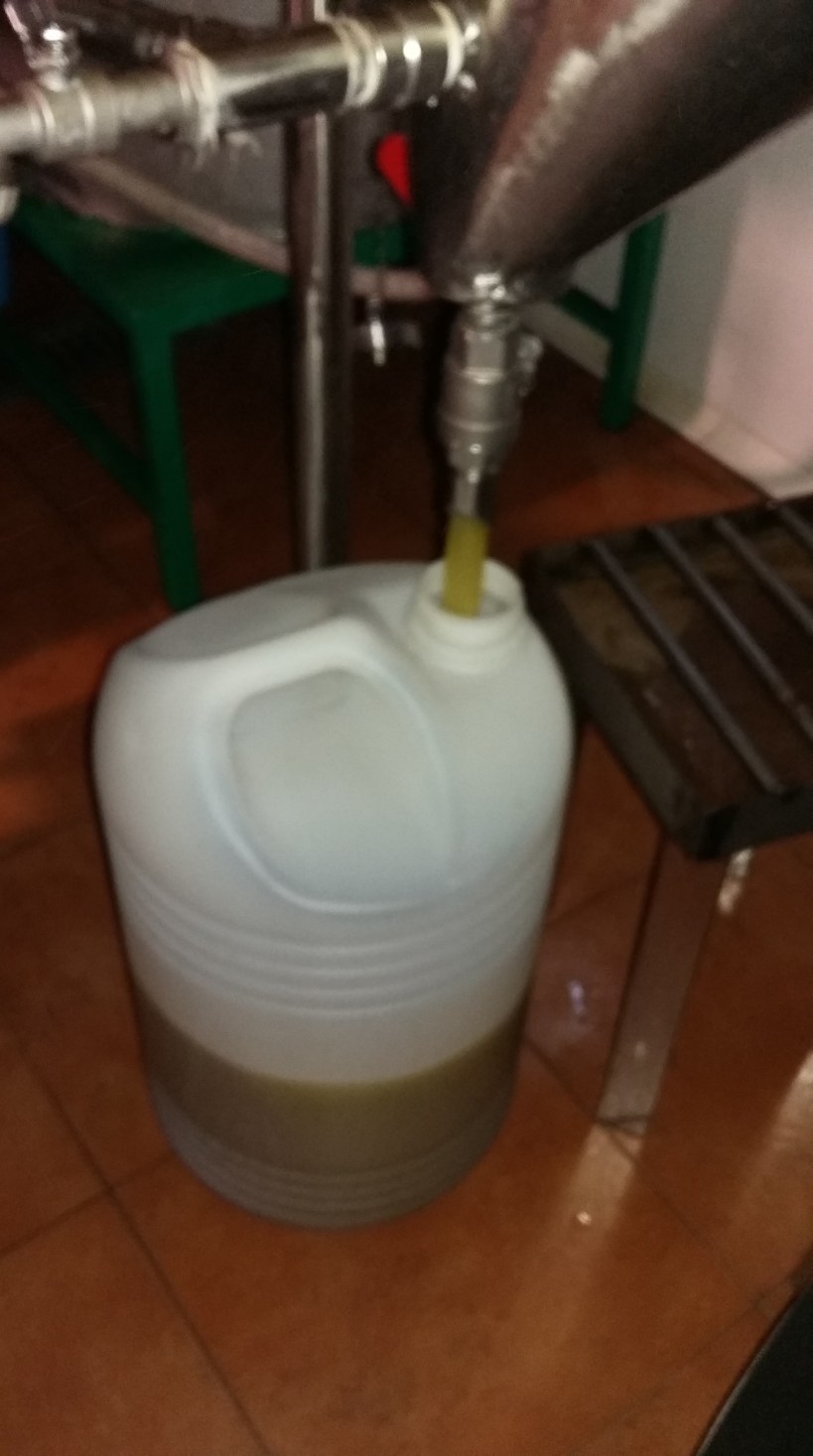
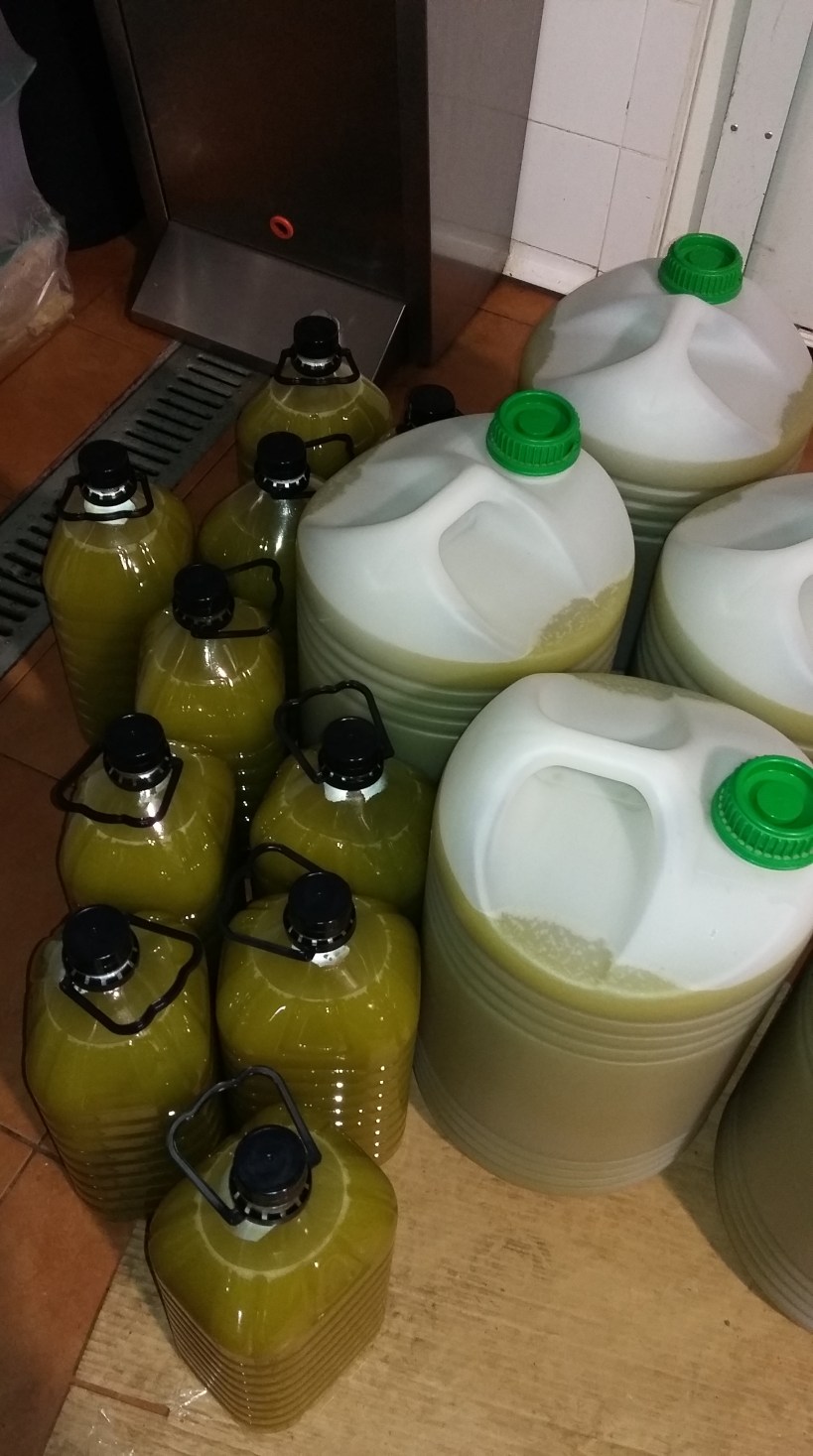
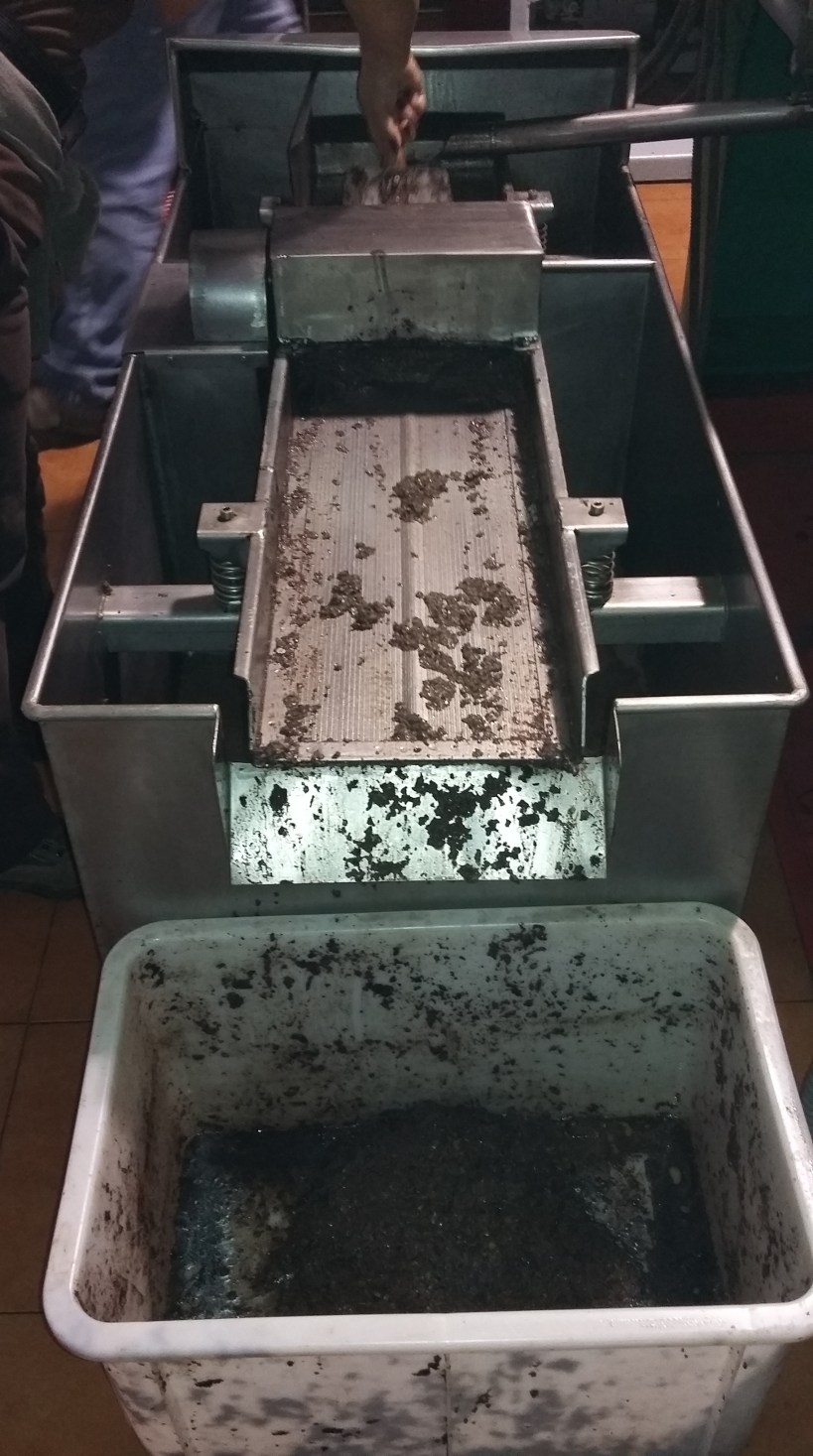
Yesterday was the big day, and the whole process took about 5 hours (one of which was spent fixing a little breakdown). Ever prepared for such an emergency, we had bought beers, soft drinks and tapas so no one minded waiting. We ended up with an amazing 320 litres of fantastic oil to be split 2 ways. Mostly it gets put into 25 litre containers but you can also buy smaller 5 litre ones. We made sure we filled some smaller ones to load into the car for when we head back to England in a couple of weeks.
20160111_155406

20160111_161738

I wish I could share the flavour and the incredible smell with you, but alas the technology doesn’t exist…yet!

What’s my favourite way to use our oil – very simple, the best breakfast in the world (well, apart from a Full English)!

Pan Con Tomate y Aceite

If you’d like to see how we crushed the oil the “old” way, take a look at this post from a few years back.