Winter and soups go together. As do winter and colds and I´ve got one right now. Fortunately it´s not too bad, as I´m still cooking and enjoying my food. Shame really, as a day or two of fasting is probably no bad thing for me.
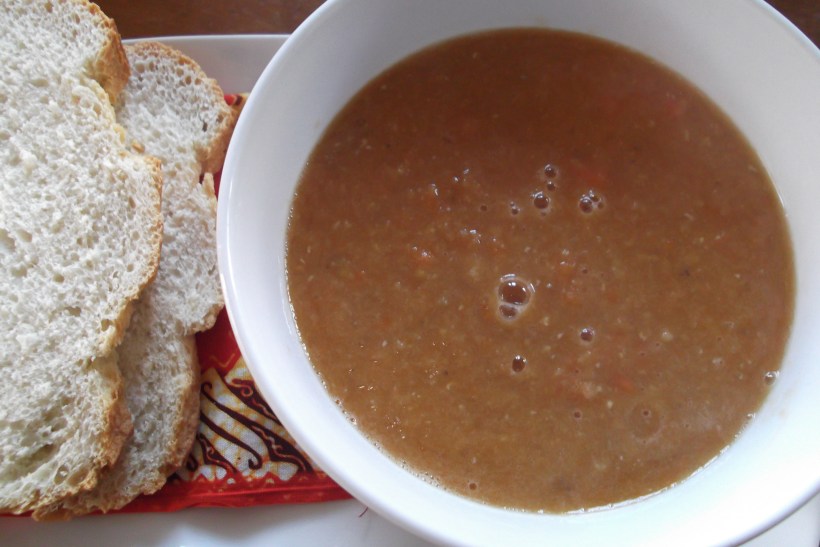
I fancied soup this morning but didn´t want to wait for hours for stock to simmer. Now that I´ve realised I can buy split yellow peas in our supermarket, I don´t even have to wait overnight for other legumes to soak before cooking. They´re also super healthy, packed with protein and fibre and low in fat. This means they fill you up without filling you out.
As my sense of taste and smell is a little dulled at the moment due to my cold, I decided to make a warming spicy soup to try and wake those senses up a little.
To serve 4 as a main course
1 cup of split yellow peas (or you could use lentils) rinsed
5 cups of water
3 medium carrots, peeled and finely diced
1 cup of minced tomatoes or conserva
1 heaped tablespoon of tomato purée
1 teaspoon of ground cumin
½ teaspoon of chili powder
1 piece of fresh ginger (about the size of your thumb) peeled and grated or use a teaspoon of dried ginger
3 cloves of crushed garlic
Salt to taste (but do not add until the soup is cooked)
Put all the ingredients into a large saucepan, bring to the boil then cover and reduce to a simmer for about 30 minutes until the split peas and carrots are cooked. Season to taste and either eat as is or purée with an immersion stick blender or in your regular blender. It´s good with a dollop of creamy natural yogurt but I prefer a drizzle of olive oil, a squeeze of lemon juice and a sprinkle of extra cumin. Serve piping hot, sitting by the fire.
Ok, I know this is going to sound quite off putting for many people. Tripe is a scary old thing. But fear not, although the word “Callos” translates as tripe, I don´t actually put any into this dish (although you could). Confused eh?
Well, let me explain. The first time I ever ate this dish was at a Feria in a nearby hamlet. It´s tiny, probably only a dozen houses, but it belongs to our “Municipio” and puts on an amazing fiesta every year. One of the first of the summer in fact. They always seem to attract a good flamenco singer, they do a fantastic paella at lunchtime, and they always have plenty of good food apart from the usual pinchitos (kebabs) and montaditos (fillets of pork on bread). Hundreds of people attend, it´s a great event apart from the winds which whip down the mountain and make hairstyles, skirts, old people and small children blow all over the place.
So, Big Man ordered me a portion of Callos which was essentially a chick pea stew with tiny chunks of meat, chorizo and morcilla in it. I loved it and looked up the word when I got home and though “oh lord, I´ve been eating tripe”! During the almost six years I´ve lived here, I´ve only eaten it a couple of times a year as not many people make it anymore – it´s not complicated to make, but it takes time.
Of course, I recently decided that I wasn´t prepared to wait until next summer for my fix, I´d make my own. This is where the fun started. I asked the butcher to prepare me whatever I needed for this dish (meat wise) and that´s when I found out that her version would not include tripe.
Strange, I thought, but let´s crack on. She (yes, we have two butchers locally, and one is a woman who looks exactly like a lady butcher should look – big and jolly with fingers like sausages) got things ready. The goodie bag included (per four person serving):
Two pigs trotters split down the middle
Some finely chopped pork tongue
A finely chopped pigs ear
Some chopped pancetta or pork belly
Some finely chopped cooked pigs blood
See – not so scary after all (well, maybe apart from the blood)! I also had to buy some chorizo and morcilla and chick peas. I´m not giving measurements here as it´s a kind of “make it up as you go along” dish. I then asked about 20 different people how they made Callos. Half had never made it so were of no help at al. The others gave me 10 different ways of making it, each with their own little “twist”.
This is what I eventually came up with, and I have to say it tasted as good as the Fiesta version, and Big Man thought it was better…modesty prevented me from saying that myself of course!
Soak the chick peas overnight and the next day cook slowly for a couple of hours with a few bay leaves, 4 cloves, and a dried chilli until completely tender. Don´t rush this, you´ll have plenty to be getting on with while they cook.
In a separate pot blanch the all the pork products, drain and put into fresh water. Now cook slowly for a couple of hours until really tender and drain again. Get those kitchen gloves on and pull all the tender meat off the trotters and discard the bones (or give them to your dog who will love you forever). Now add the chunks of meat to the cooked chick peas (still in their water). Add about 5 or 6 whole cloves of raw or roasted garlic, some saffron dissolved in water, ½ a teaspoon of sweet or hot pimentón, the whole chorizo and morcilla (which you will slice before serving) and cook for about 30 minutes. Leave to stand for at least 15 minutes before serving (but it´s even better prepared the day before) and remove the cloves, bay leaves and dried chilli.
Make sure you have a table full of very hungry people, don´t tell them what´s in it if they´re a bit squeamish, and enjoy. Now go for a lie down…you´ll need it!
Not so much a recipe as a prescription. After the excesses of Christmas coupled with a bad stomach virus, it was time for a cleansing soup.
Like all the best soups it was made from whatever the fridge had available. Having said that, we had some beautiful stock made from the carcass of one of our home bred chickens, a cabbage given to us by one of Big Man´s family and the star of the show, a beautiful Green Striped Cushaw Squash grown by Big Man´s lovely cousin Raphael.
Now, I´m not usually so knowledgeable about Squash (or should that be Squashes?) as I have even called it a pumpkin in the recipe title. It just so happened that Claire over at Promenade Plantings posted a gorgeous Winter Panzanella Salad recipe recently, and there showing off in a fabulous photo was MY pumpkin. Or squash.
I used about 400g of chopped squash, 2 medium potatoes peeled and cubed, 3 large carrots peeled and diced, an onion peeled and sliced, half a red pepper cut into chunks, 2 cloves of garlic peeled and thinly sliced and four large savoy cabbage leaves which I shredded finely. Along with the broth I also added a cup of tomato conserva. For a vegetarian version, use water or vegetable stock.
I sautéed the squash, carrots, pepper, onions and garlic for a few minutes in a little olive oil then seasoned with salt and pepper and poured stock and tomato over to cover. I bought it all to the boil and then reduced the heat to a simmer. After about 10 minutes I added the potatoes and when the vegetables were all tender, I added the cabbage which I only cooked for a few minutes.
Instead of cheese or croutons, we served it with freshly squeezed lemon juice which gave it all a lovely lift. Filling but comforting. Perfect for a post Christmas detox. With a glass of wine of course!
For another gorgeous pumpkin soup recipe, check out Raymund at Ang Sarap who inspired me with his Chunky Beef and Pumpkin Soup.
Another “Plato de Cuchara” or spoon dish – we like our pulses here in Spain. Many of these dishes were traditional as you could feed large families with few ingredients which were not costly. Meats are typically added at the end (usually pork products) so the beauty is that they can be vegetarian dishes too, if you prefer.
Lentils are great, as apart from being cheap, they cook fairly quickly and only need rinsing but not presoaking.
For four people as a main dish or six as a starter you´ll need
About 500g of lentils – we have the flat green ones here
Water to cover
3 tablespoons of olive oil
1 medium onion, quartered
Half each of a red and green pepper, chopped into bite sized chunks
Two tomatoes cut into bite sized chunks
1 bay leaf
A couple of carrots peeled and finely diced
A stick of celery plus the leaves (if it has leaves). Finely dice the celery but not the leaves.
4 or 5 whole fat cloves of garlic
2 medium potatoes peeled and cut into small cubes (keep these in a bowl of water separately)
Sprig of fresh thyme or rosemary if you have it
¼ teaspoon each of pimentón and paprika
Salt to taste (at end of cooking)
Optional – a couple of chorizo and/or morcilla or your favourite sausages
Rinse the lentils then add all the vegetables and spices apart from the salt to a large cooking pot. Cover well with water, add the oil and bring to the boil. Reduce the heat slightly but don´t let them come off the boil while cooking as this will make the lentils hard. They will probably take about 45 minutes or so.
When the lentils are soft, add the potato and meats (if using) and continue cooking until the potatoes are cooked. Remove the bay leaf and celery leaves and add salt (and pepper too if you like) to taste and you´re ready to serve. Slice the sausages into smaller pieces before serving. A drizzle of extra virgin olive oil and a squeeze of lemon over the top really lifts the flavour, but that´s just the way I like it!
Who needs bouquets when your loved one brings you cauliflower?!
Recently Big Man came home with one of his horticultural “surprises” for me. Five cauliflowers! We both love cauliflower, but after giving some away and eating cauliflower with vinaigrette, buttered cauliflower and cauliflower cheese, we were still looking at a cooked cauliflower in the fridge wondering what to do with it.
Inspired by a potato and garlic soup recipe over at Rufus´ Food and Spirits Guide, this cauliflower´s destiny was decided. Of course, I was in a rush and didn´t have exactly the ingredients to hand, so I made do.
I loved the idea of the roasted garlic, but as I had nothing else to cook in the oven, it felt extravagant to turn the oven on just to roast one head of garlic. I decided to experiment and try to cook it in the microwave to see how it turned out. I usually use my microwave to store my bread in (a kind of electrical bread bin if you like!) so for me to actually cook something in my microwave is rather unusual…
I put a whole head of garlic in on medium for about 3 minutes and I was amazed when it was done. Of course, there were no lovely toasty edges, but the garlic smelt great and each clove was perfectly soft and ready to pop out of its skin to use.
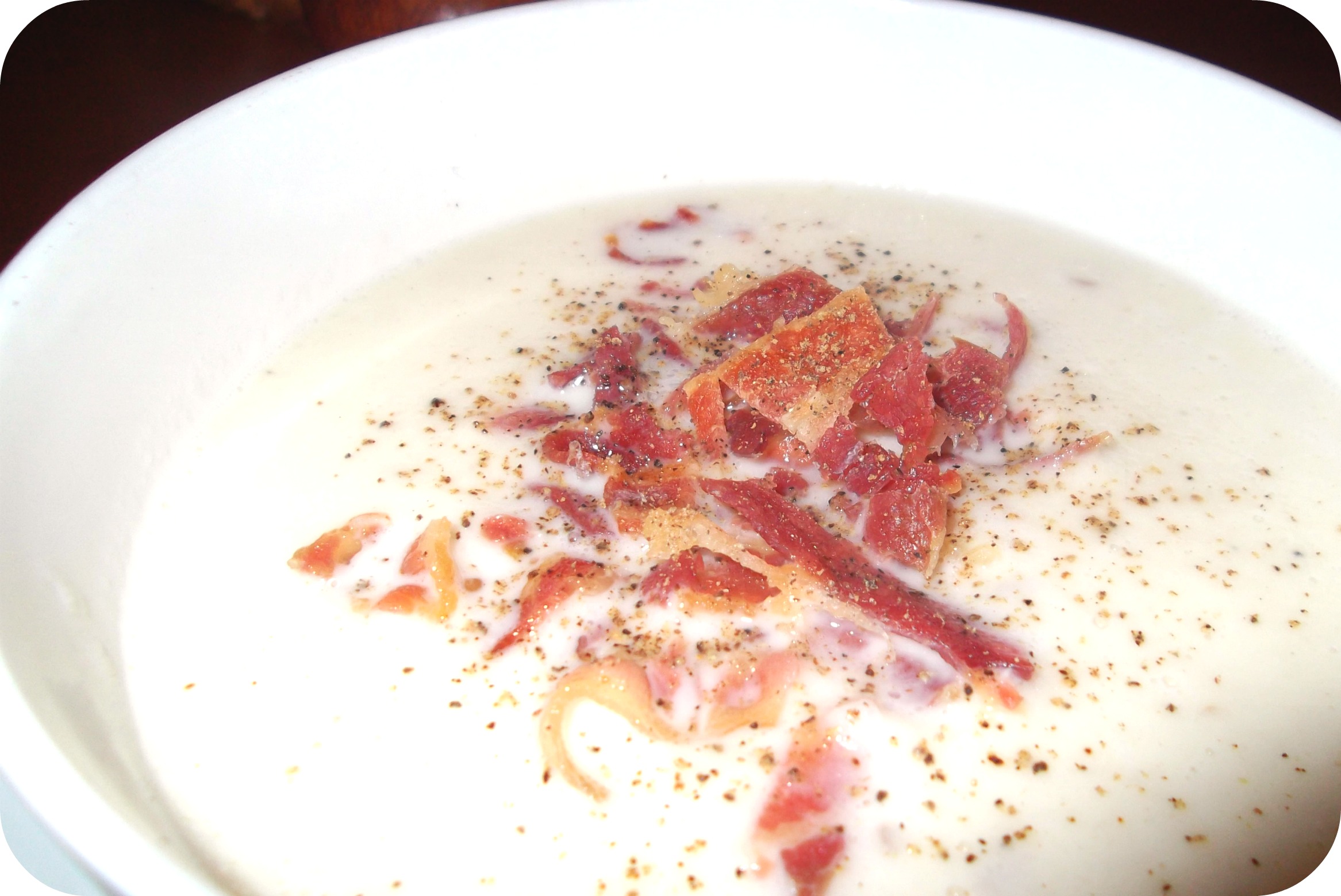
I put the cloves of garlic in a saucepan with a little olive oil and warmed them through whilst mashing them with the back of a spoon. I added the cooked cauliflower broken into florets, a teaspoon of ground cumin seeds and covered with vegetable stock (although water would also be fine). After bringing it to the boil I reduced the heat and let it simmer for about 10 minutes.
In the absence of cream I then added half a cup of milk and a tablespoon of mascarpone cheese and then blended with a stick blender.
A few left over rashers of bacon which I also cooked in the microwave – I was feeling adventurous – were cut into small pieces and sprinkled over to finish the dish off. I put a kitchen towel on a plate, put the bacon on top and covered with another sheet of kitchen towel and cooked on high for 5 minutes. This gave me beautifully dry, crisp bacon, and no greasy pan to wash.
When we travelled to the distant north of Spain, we bought back some foodie memories with us. Well, a little more than memories, we bought back beans and smoked meats to make the famous Fabada.
It´s one of those dishes which needs the authentic smoked blood sausage (morcilla), chorizo and pork to achieve the “real” taste, but it also lends itself to “making do” depending on the ingredients you have to hand.
The ingredients given below can be interpreted fairly loosely to make a lovely bean, ham and sausage stew if you can´t get hold of the Asturian versions. I also like to be lighter with the meat than some people, so feel free to add more. This recipe will serve six as a main course, but it does keep well for about 5 days in the fridge.
You´ll need
1kg of Fabes (or any large dried white beans)
1 small blood sausage
1 or 2 chorizo (depending on the size)
About 100g piece of smoked or unsmoked or salted pancetta or pork belly (or use chunky lardons)
½ teaspoon of saffron or add a teaspoon of sweet smoked paprika or pimentón instead
2 bay leaves
This dish really improves by making it the day before you want to eat it, although it´s not essential, and if you have an earthenware bowl to cook it in, even better! The day before making the dish put your beans into soak in plenty of water. In a separate bowl of water soak any smoked or salted meats.
Using the water you soaked the beans in, put them in your cooking pot with about a depth of 3cm of water above them. Bring to the boil then skim off the froth which will appear. Dissolve the saffron in a little water and add to the beans (or add your pimentón or paprika directly to the water). Now add the pork belly or pancetta, bring to the boil and skim and then repeat with the chorizo and morcilla.
Add the bay leaves, make sure all the meat is pushed to the bottom and then cook very slowly for about 2 or 3 hours. Try not to stir as this will break the beans, shake the pot if necessary and top up with boiling water if needed.
You should be left with thick creamy beans which still hold their shape. I like to thinly slice the meats and sausages so they can easily be eaten with a spoon. This is a “plato de cuchara” or a “spoon dish” as they call it here.
Serve with a good robust red wine, plenty of bread and I like a tomato and garlic salad on the side. ¡Buen Provecho!
Now that we are starting to have a little drop in temperatures during the day, and a nip in the air first thing in the morning and last thing at night, we know that autumn is just around the corner. While this means saying a gradual farewell to summer, it also means an autumnal welcome to the next season and the food and change in cooking it brings.
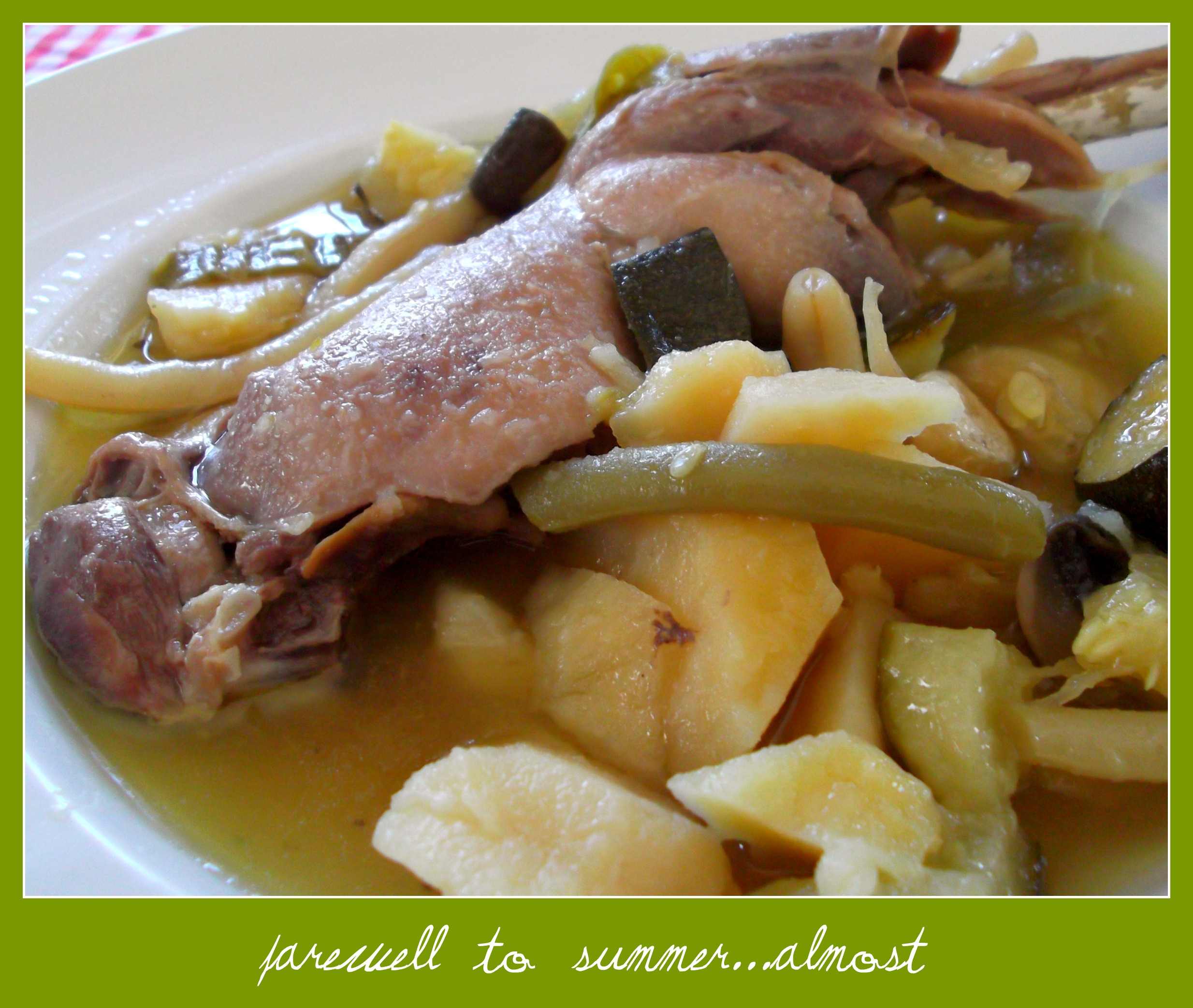
Off out for a busy morning and knowing I was not going to be in the house while it was still relatively warm, prompted me to cook the first casserole for a long time. We came home to delicious chicken, vegetable and brothy smells and apart from opening the wine and grabbing the loaf of bread left for us earlier that morning on the gate by Bread Man, there was nothing more for us to do other than set the table and enjoy lunch.
The dish was a celebration of almost the last of many of our summer vegetables. The bobby (french) beans finally started producing yellow as well as green beans, with kilos of them stored in the freezer for the months ahead. The green peppers are still doing well, we´ll see how much longer they last. Our onions have dried out nicely and are sweet and delicious and I had been hoarding the last handful of potatoes we had left from our first ever potato crop.
Into a big pot went two large legs (drumstick and thigh) of our free range chicken, some chopped peeled potatoes, large chunks of courgette given to us by a neighbour along with some whole unpeeled garlic cloves. A few chopped green peppers, a roughly chopped onion, a few handfuls of green beans and some seasoning finished off the ingredients. I covered everything with water and bought it to the boil then put a lid on the pot which then went into a very low oven for about 5 hours. You could, of course, cook it much more quickly on the stove top with equally good results if you´re not off out shopping for the morning!
And that was it…memories of summer and anticipation of autumn all in one delicious bowlful.
Am off to London to visit my family tomorrow for a week. Will try to keep up with all your lovely blogs and posts, but apologies if I can´t always comment. Looking forward to a proper catch up when I return!
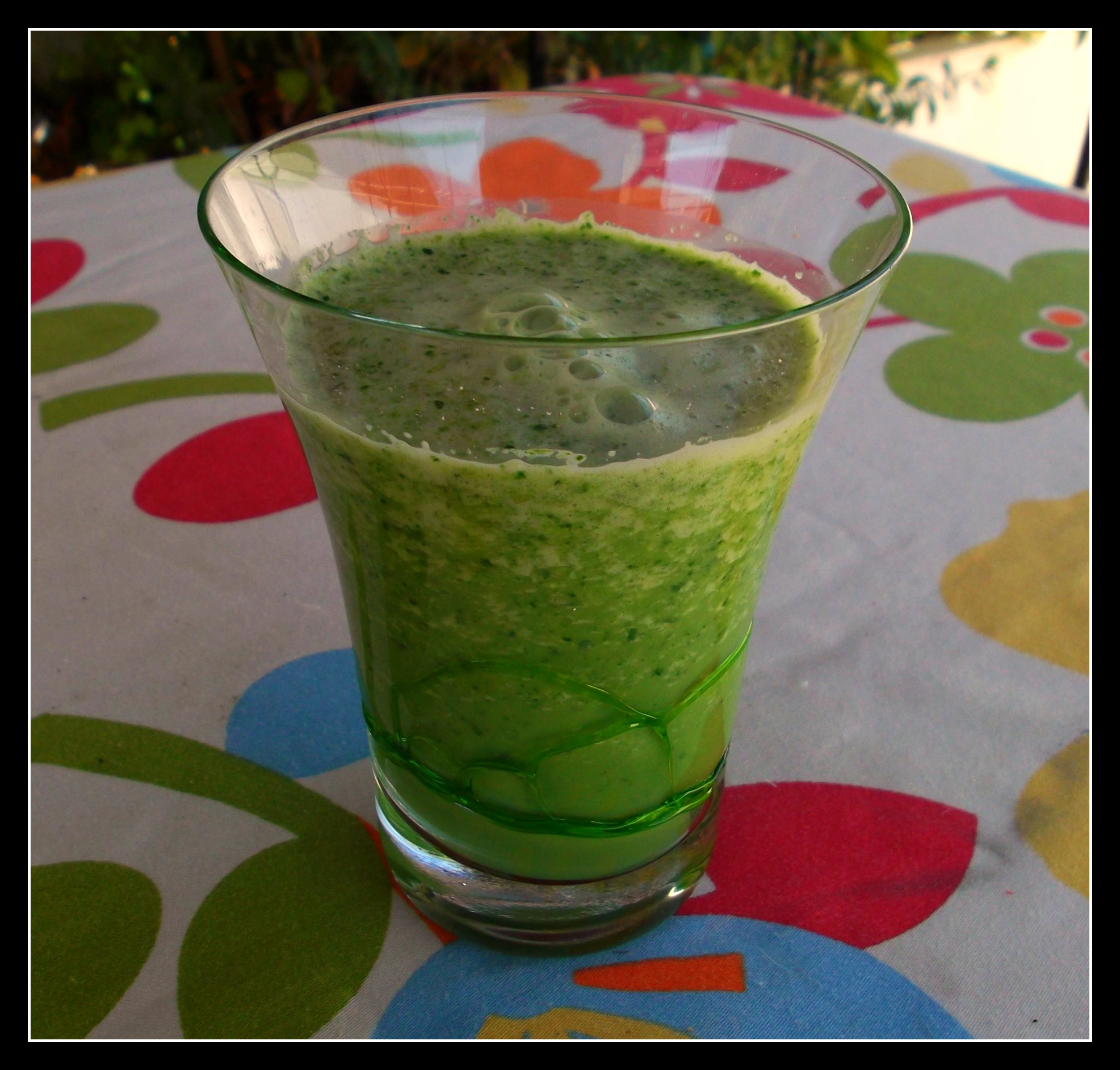
Who says Gazpacho has to be red? Well, if you promise not to tell the Andalucían gazpacho Police…I say it doesn´t!
In the vegetable garden at the moment, our cup overfloweth. Some things just can´t be canned or frozen – like cucumbers. And those little green thin skinned Spanish peppers are best eaten fresh in salad, stuffed or fried.
I wanted to find a new way of using up some of my “greenery” and came up with this version of gazpacho. It´s a stunning colour, tastes rather like juiced vegetables and I´m sure must be amazingly good for you and packed with vitamins. Probably an excellent pick me up for the morning after the night before too. We just drank it chilled as a pre lunch appetizer.
Here´s what I used, but if you do decide to give it a go I´m thinking celery, avocado and lime juice might also be great additions.
Two thin green peppers, one small cucumber (peeled), a small clove of garlic, a small bunch of parsley, 4 large leaves of raw chard (or spinach).
In a blender mix the vegetables with about 3 tablespoons of olive oil, white wine vinegar and salt (to taste) and a litre of ice cold water.
Blend until smooth, add a few ice cubes and chill until needed. Looking as gorgeous as it does, it just has to be good for you!
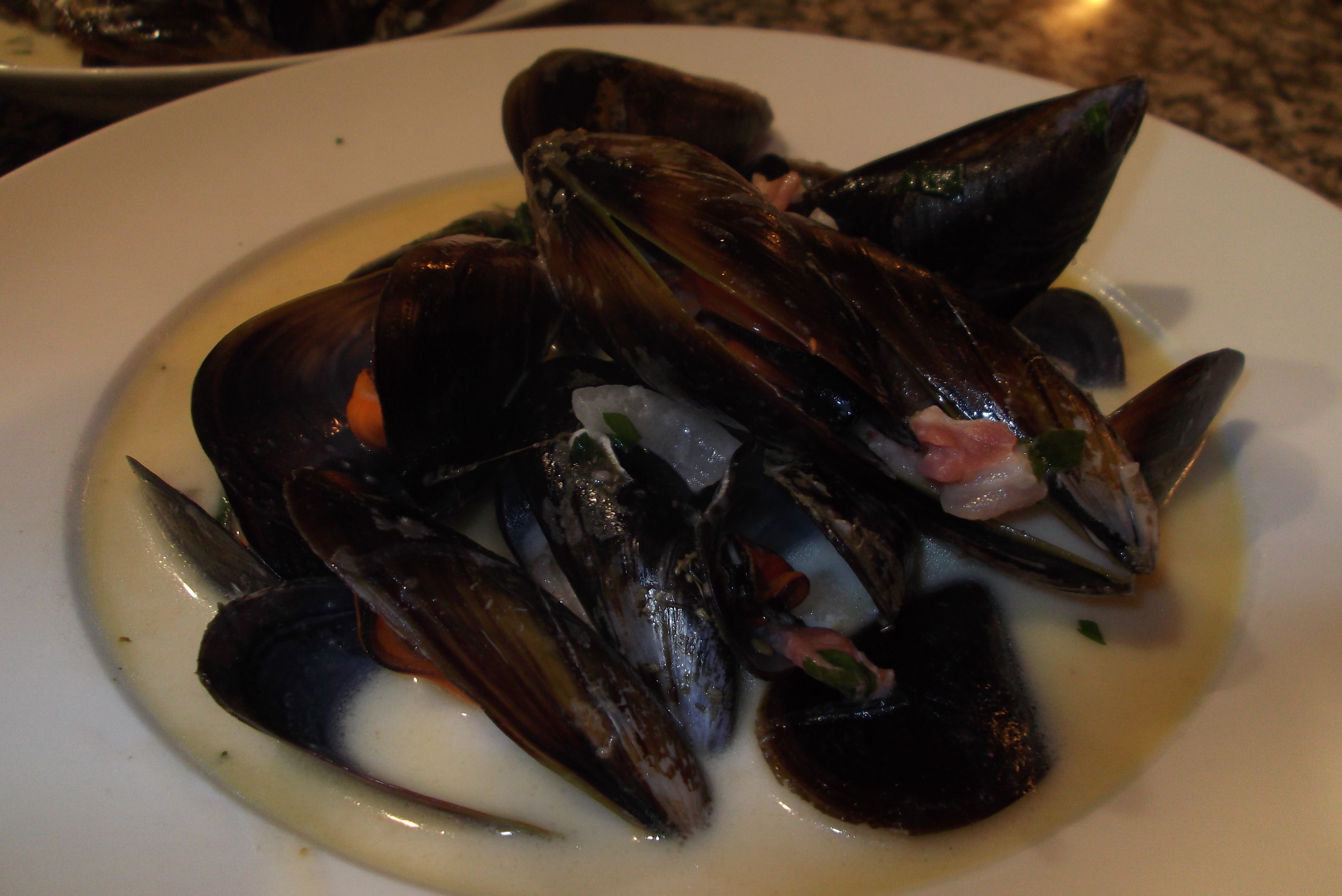
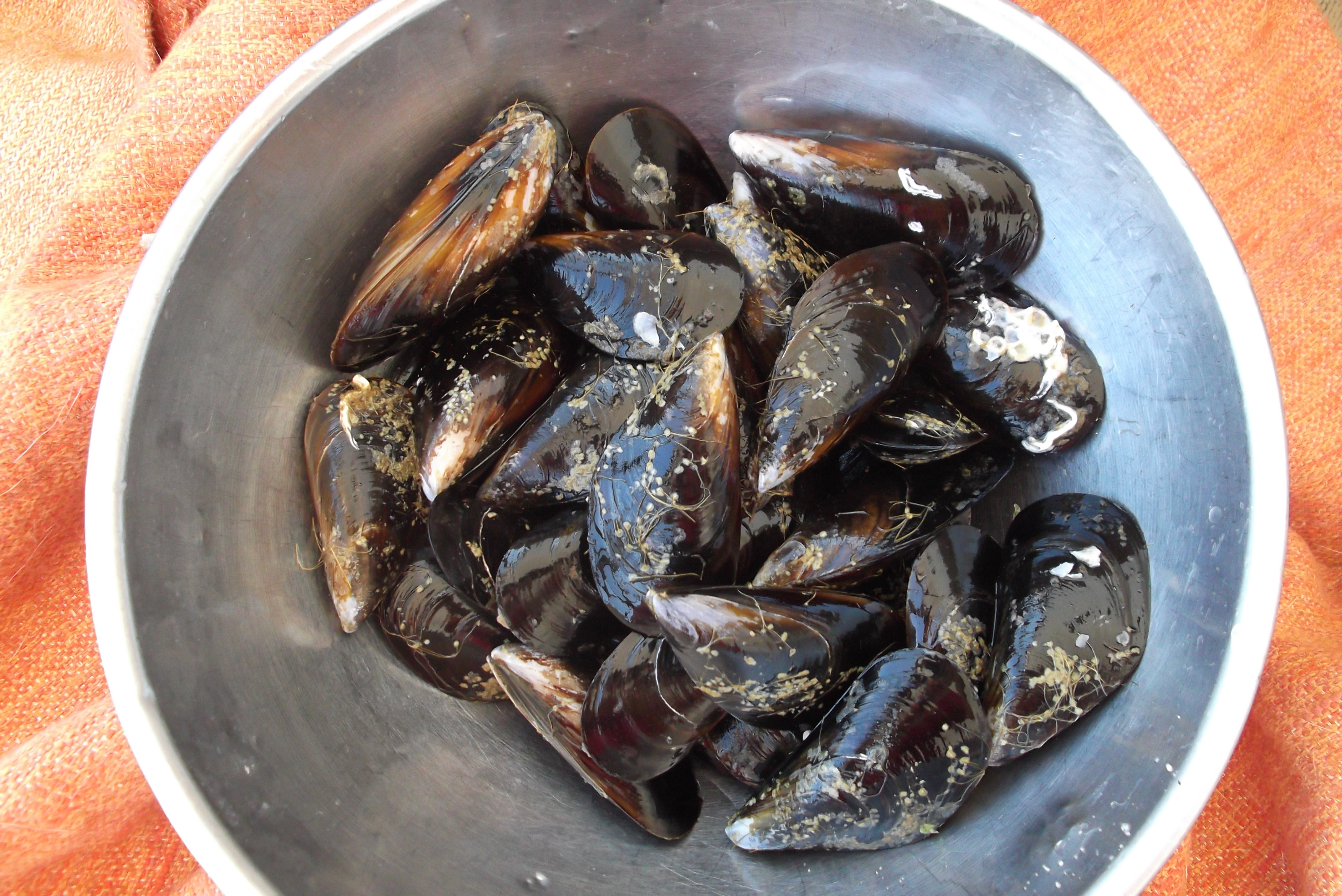
It was another day for Fish Man to visit and I bought a kilo of mussels. Such a bargain food, so easy to prepare, and such a wonderful taste.
I have been inspired by some of the recipes posted by Olives and Artichokes here and here and often make a tomato based soup version, as you can see here.
Today, I decided to use up some of my bacon from the UK, although I could have used lardons or jamon instead.
Time for a wash and brush up...
After cleaning my mussels, I lightly fried in olive oil two cloves of crushed garlic, one onion fairly finely chopped and 4 rashers of chopped bacon.
When these had all softened I added a glass of white wine and simmered for about 5 minutes before adding the mussels and a couple of tablespoons of chopped parsley and putting the lid on.
A few minutes later the mussels had all opened, so I took the pot off the heat, stirred in 100ml of single or pouring cream and that was it.
I served it in big bowls with spoons and crusty bread to soak up all the garlicky, creamy juices. ¡Muy rico!
In Andalucia we don´t eat tomatoes...we drink them!
So, now we come to the Gazpacho most people are familiar with – the iced tomato and vegetable soup famed the world over (well, almost!).
It is served both as a soup here and as a drink. In most homes it comes in a glass. In fact there is a wonderful advert for my favourite Spanish beer, Cruzcampo, which celebrates all things Andalúz. One line in the voice over says something along the lines of “In Andalucía we don´t eat tomatoes, we drink them!” (If you have time to watch it, it´s worth it, even if you don´t understand Spanish, just to see a few snippets of summer life in Andalucía).
Every housewife will give you a slightly different recipe, adding her own little tweaks (more of this, less of that). Some use stale bread, some don´t. I tend not to unless I want to serve it a little thicker as a soup which can then be garnished with little chopped cubes of the same vegetables that go into it.
So, without further ado, here´s how I make mine.
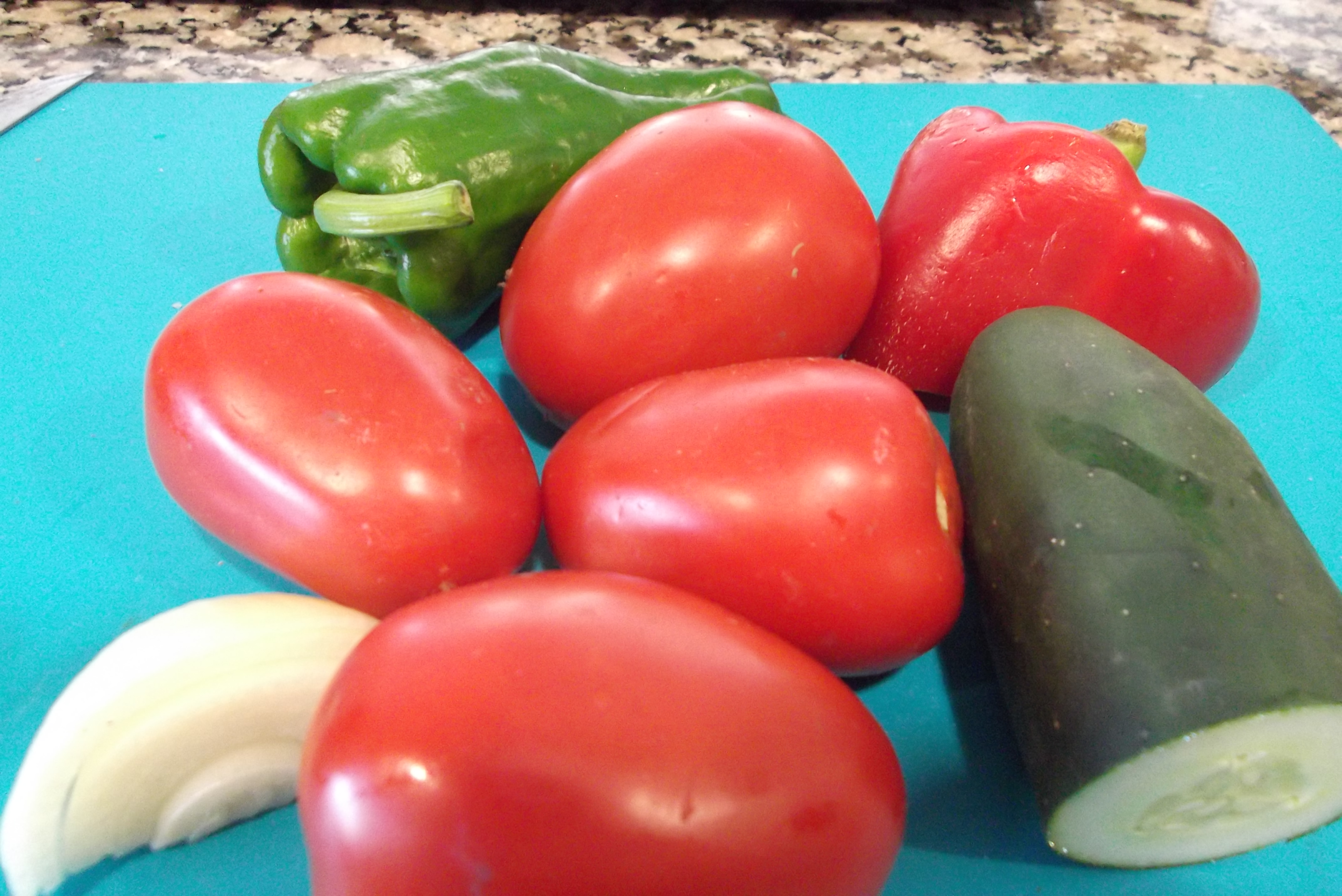
Peeled Tomatoes, Green Pepper, Red Pepper, Onion (optional) Peeled Cucumber, Salt, Water, Olive Oil, White Wine Vinegar.
It´s difficult to give quantities. If my tomatoes are lovely and red, I use less red pepper. Sometimes I don´t use onion. But the green pepper and the cucumber do give it that distinctive fresh taste, so try not to leave them out.
A few simple ingredients
Today I used 4 large plum tomatoes, one thin green pepper, a small amount of red pepper and a small chunk of onion and half a small peeled Spanish cucumber.
Put all the vegetables into a jug or the food processor.
Put into your jug or blender
Start with one level teaspoon of salt, 3 tablespoons of vinegar, 1 tablespoon of olive oil and about half a litre of water.
Add water, vingegar, oil and salt
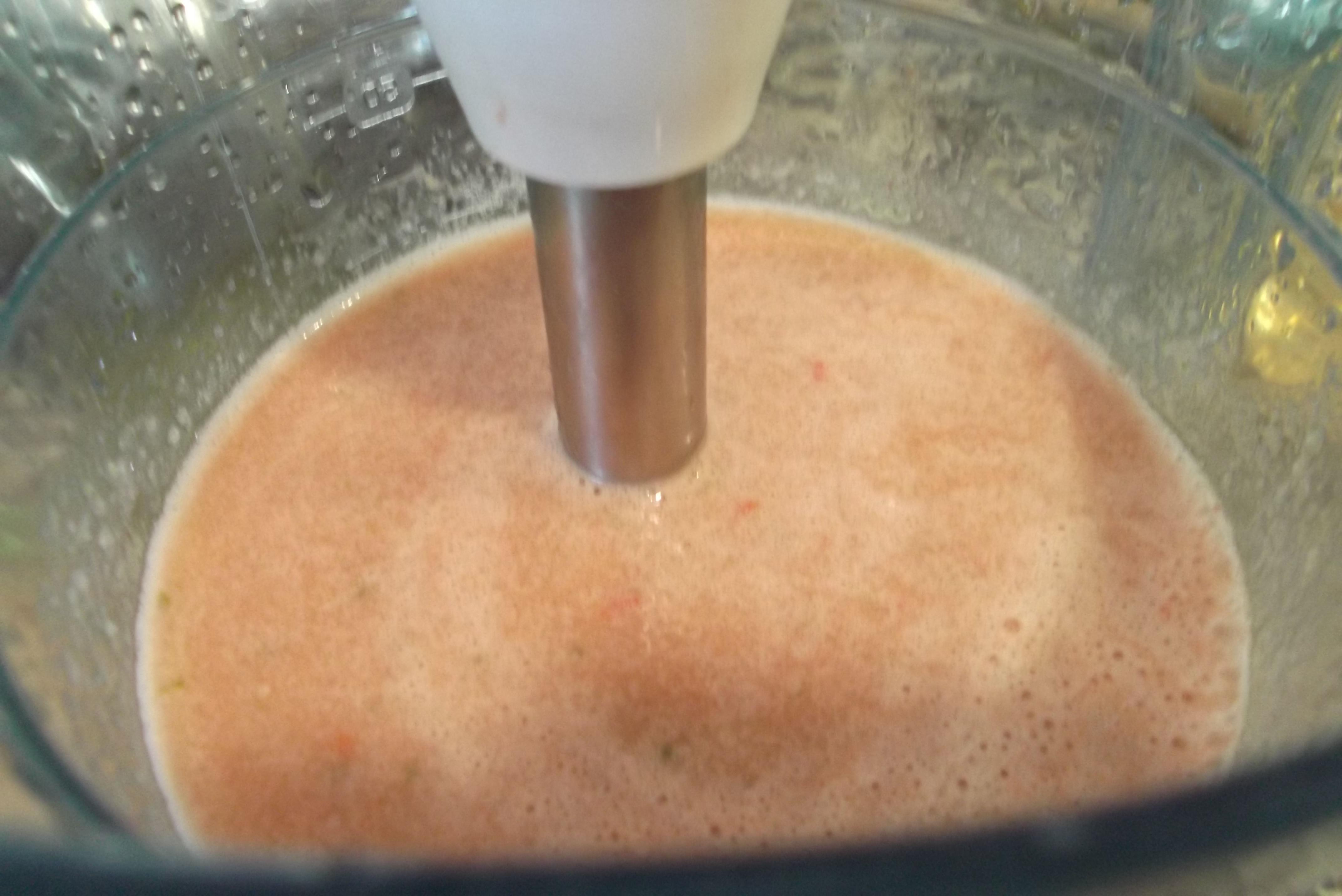
Now it´s time to start blending. Add more seasoning, vinegar and water as you go along if you want to. Today I added another tablespoon of vinegar (you remember they like it “alegre” or lively here right?!) and about another 250ml of water to thin it a little.
...and blend!
Then chill until you need it. If you have put onion in it´s fine on the day you made it but I find it starts to “ferment” a little if you have any left over. Also, while standing in the fridge it may start to separate a little with the water at the bottom and the vegetables on top – just give it a stir before serving and it will be fine.
Big Man gets arty with the vegetables
Now, go and put on a straw hat, a paso doble on the cd and lie back in a shady spot and sip on your ice cold Gazpacho. Or ga-pacho, as they tend to say here! These Andaluces and their habit of dropping the “s” sound….most confusing!
So in 2016 I turned 50. I was in Italy for my 21st, 30th and 40th. To keep this birthday tradition going I always knew I'd be in Italy for my 50! This blog starts with my 5 week adventure in Puglia but my love affair with Italy continues.....







 Chica Andaluza