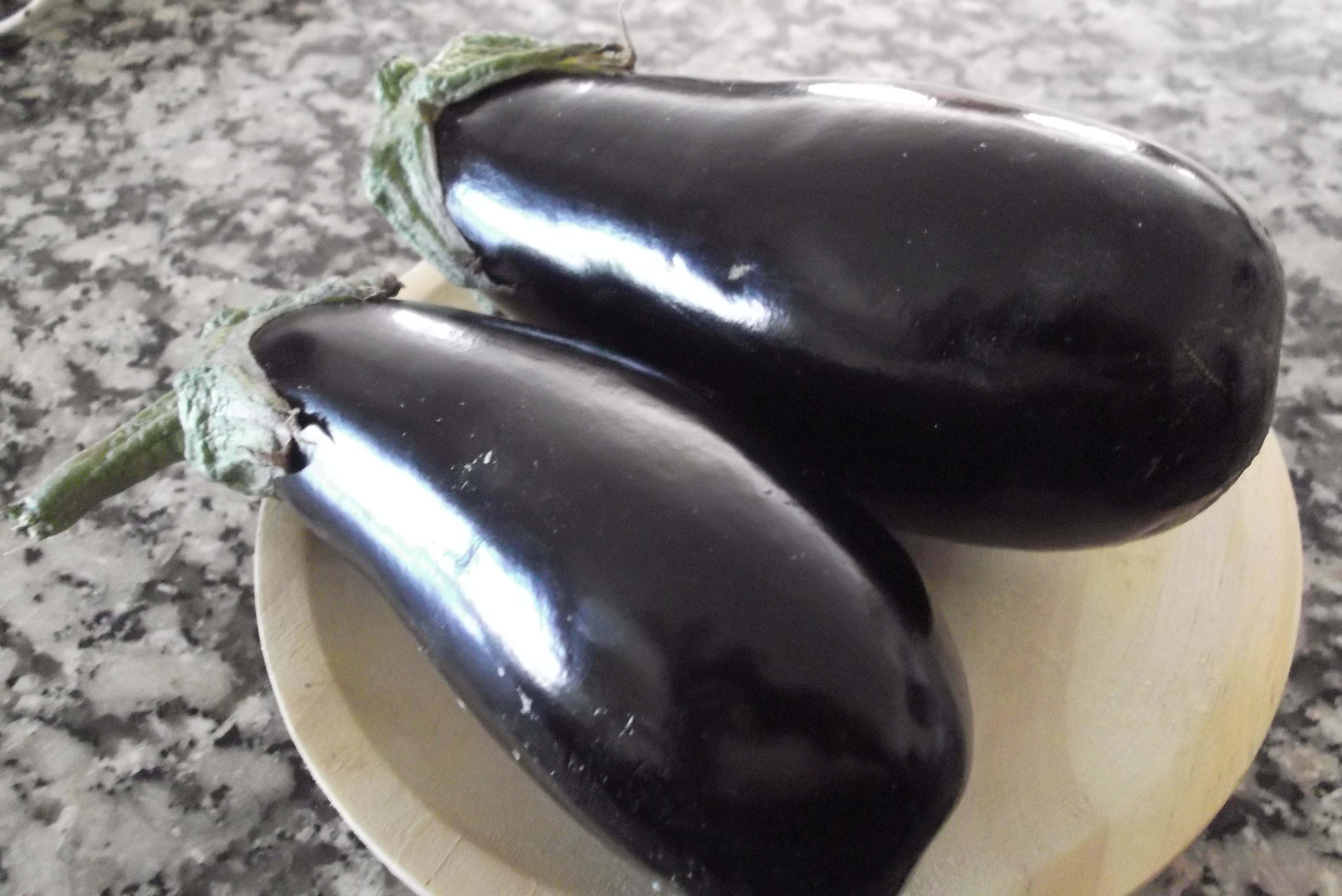
I adore aubergines, so when my first two aubergines were ripe for picking, I decided to treat them with the love that they deserved.
My two little purple beauties
It was a very simple dish, especially if you already have some tomato sauce made. If not, fry up a little garlic, add some chopped tomatoes, a slug of red wine and some basil then season and simmer.
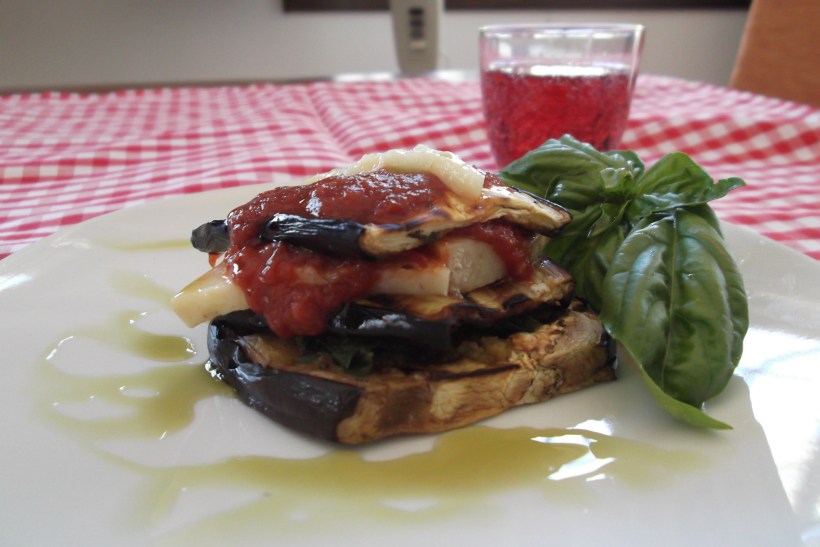
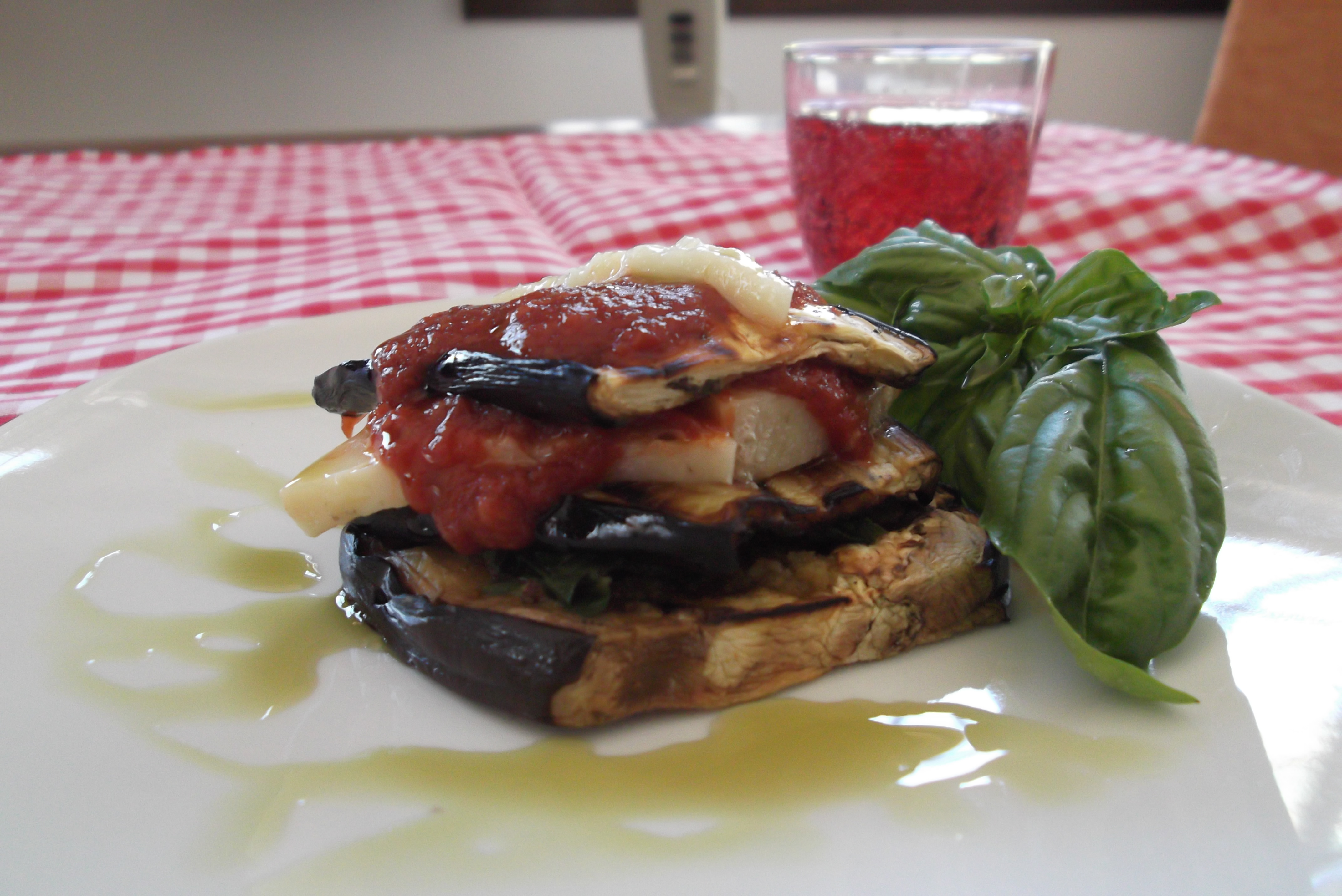
I sliced my aubergines (eggplant) and grilled them on the barbecue until smoky and tender. Then I put them on an oven tray and layered them with pesto, cheese, tomato sauce and basil leaves.
Then I popped it all into a hot oven for about 10 minutes until the cheese had softened (it was a very hard goat´s cheese, so it didn´t really melt!).
Finally I drizzled some basil oil over, poured myself a glass of rosé and sat back to pay homage to my first little purple beauties of the summer.
In Andalucia we don´t eat tomatoes...we drink them!
So, now we come to the Gazpacho most people are familiar with – the iced tomato and vegetable soup famed the world over (well, almost!).
It is served both as a soup here and as a drink. In most homes it comes in a glass. In fact there is a wonderful advert for my favourite Spanish beer, Cruzcampo, which celebrates all things Andalúz. One line in the voice over says something along the lines of “In Andalucía we don´t eat tomatoes, we drink them!” (If you have time to watch it, it´s worth it, even if you don´t understand Spanish, just to see a few snippets of summer life in Andalucía).
Every housewife will give you a slightly different recipe, adding her own little tweaks (more of this, less of that). Some use stale bread, some don´t. I tend not to unless I want to serve it a little thicker as a soup which can then be garnished with little chopped cubes of the same vegetables that go into it.
So, without further ado, here´s how I make mine.
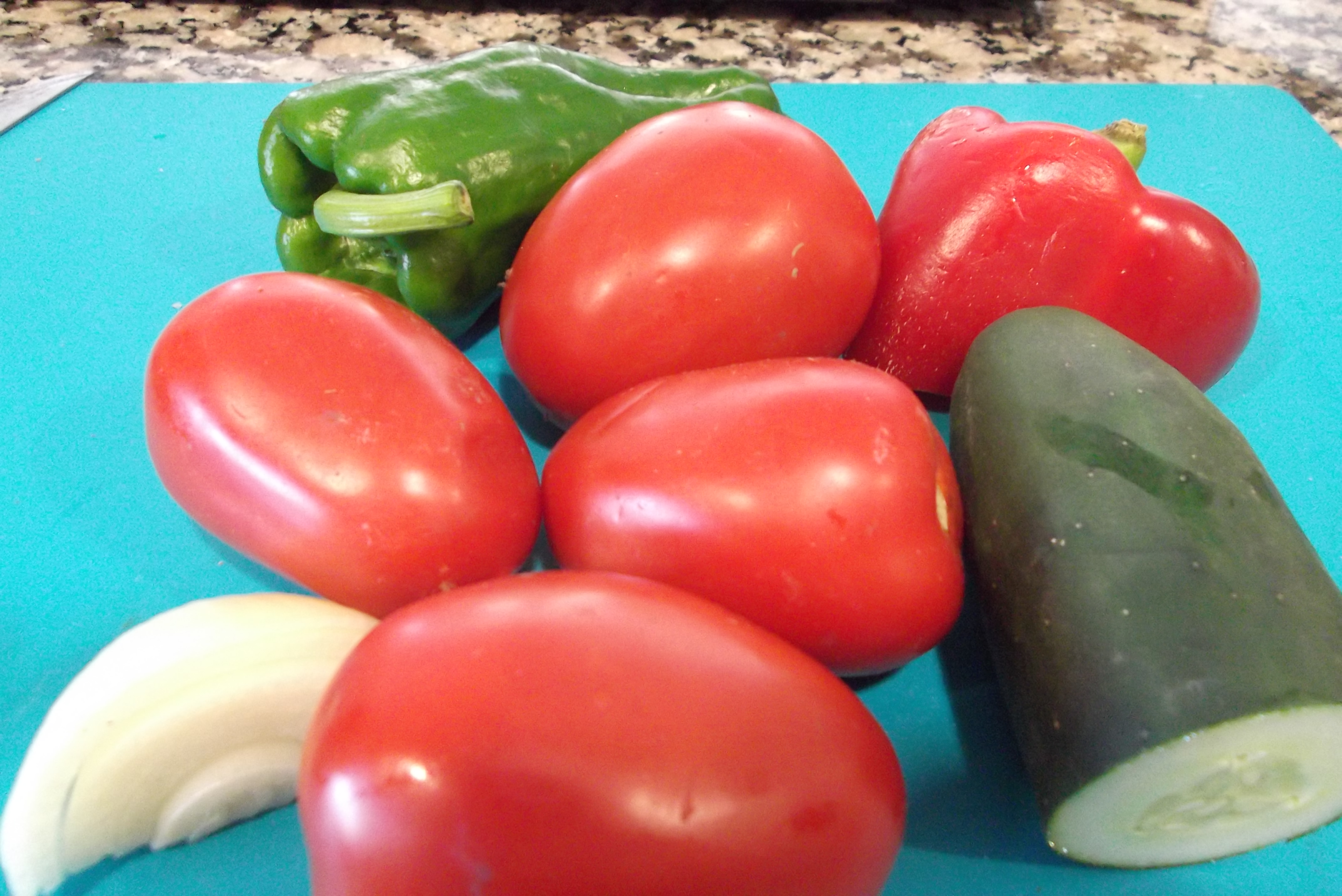
Peeled Tomatoes, Green Pepper, Red Pepper, Onion (optional) Peeled Cucumber, Salt, Water, Olive Oil, White Wine Vinegar.
It´s difficult to give quantities. If my tomatoes are lovely and red, I use less red pepper. Sometimes I don´t use onion. But the green pepper and the cucumber do give it that distinctive fresh taste, so try not to leave them out.
A few simple ingredients
Today I used 4 large plum tomatoes, one thin green pepper, a small amount of red pepper and a small chunk of onion and half a small peeled Spanish cucumber.
Put all the vegetables into a jug or the food processor.
Put into your jug or blender
Start with one level teaspoon of salt, 3 tablespoons of vinegar, 1 tablespoon of olive oil and about half a litre of water.
Add water, vingegar, oil and salt
Now it´s time to start blending. Add more seasoning, vinegar and water as you go along if you want to. Today I added another tablespoon of vinegar (you remember they like it “alegre” or lively here right?!) and about another 250ml of water to thin it a little.
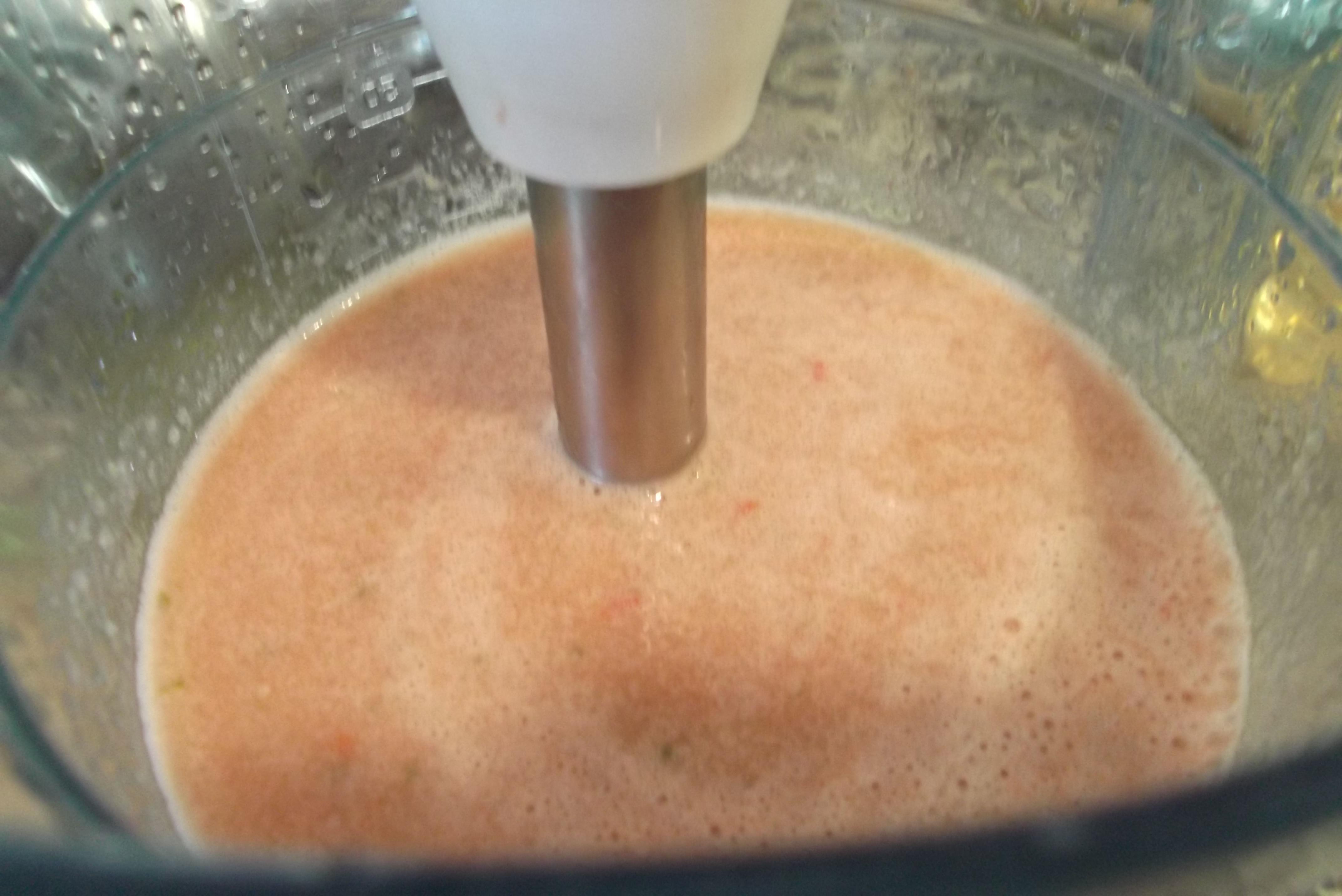
...and blend!
Then chill until you need it. If you have put onion in it´s fine on the day you made it but I find it starts to “ferment” a little if you have any left over. Also, while standing in the fridge it may start to separate a little with the water at the bottom and the vegetables on top – just give it a stir before serving and it will be fine.
Big Man gets arty with the vegetables
Now, go and put on a straw hat, a paso doble on the cd and lie back in a shady spot and sip on your ice cold Gazpacho. Or ga-pacho, as they tend to say here! These Andaluces and their habit of dropping the “s” sound….most confusing!
Am I allowed to say “bottoms” or will I be censored?! I had to say it because the hearts didn´t really make it into this dish.
Big Man came home the other day with about a dozen artichokes that a pal had given him. Unfortunately they had been sitting in his truck, with daytime temperatures reaching 34 degrees Celsius for two days. They were rather sad and dry looking.
I peeled away all the leaves and took out the “choke”, the hairy bit in the middle and then cooked them in water (with a good few spoonfuls of white wine vinegar to stop them going black) until they were almost tender.
I was just going to use them in a salad, but then decided that as they´d had a miserable few days in the heat, I would give them a more dramatic exit!
For the stuffing I used (for 12 artichokes)
2 cloves of garlic, crushed
6 medium mushrooms and stalks, finely chopped and fried in olive oil with the garlic until soft
3 heaped tablespoons of cream cheese
3 level tablespoons of grated cheese (I used a mature goat´s cheese)
Some finely chopped parsley
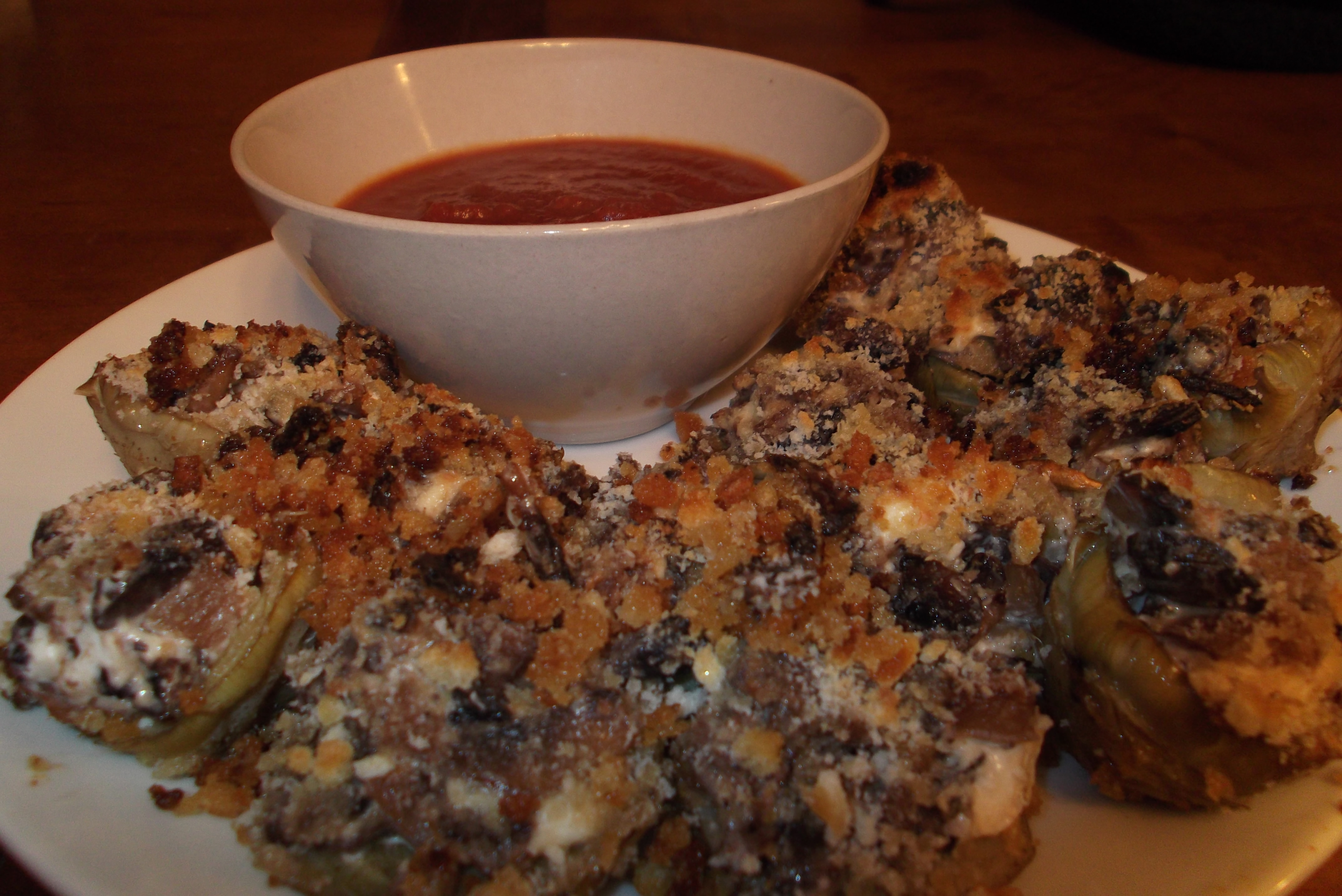
I mixed all these ingredients together, seasoned with salt and pepper and then spooned the mixture onto the artichoke bottoms which I then placed in a lightly oiled baking dish.
I sprinkled them all with fresh white breadcrumbs and finished with a drizzle of olive oil.
These then went into a hot oven for about 15 minutes (until the breadcrumbs were browned) and I served them with my Spicy Tomato Sauce. I think they were happy with their finale.
Before I start this quick post, I have to tell you that I´m having a giggle. The word cateto or cateta translates perhaps more literally as “Peasant”, but not in an offensive way. Before I started typing I just thought I´d do a quick translation check to see if there was another word I could use and all the on line translation tools, bizarrely come up with the word “leg”! Not quite sure what is going on there…but I decided to call it Country Salad.
It´s another celebration of that most Andalucían of fruits, the orange. Again, typically a poor person´s salad it was originally made with salt cod as it was cheap and you didn´t need to use much. A few other bits of country produce like potatoes, peppers and olives, a good soak in olive oil and you were done.
Of course, nowadays you can get all sorts of glorified versions, but the one I´m giving you here is the one you´ll find in all my local bars and homes around here. It´s served as tapas in bars, and as a light meal at home. Of course, some people make their own little tweaks, and why shouldn´t they? They might leave out the peppers and add tomatoes. Some people like tomatoes or onions in it, others don´t. And complete heathens, like me, sprinkle chopped fresh chili all over it to the amazement of their other halves….each to his own I say!
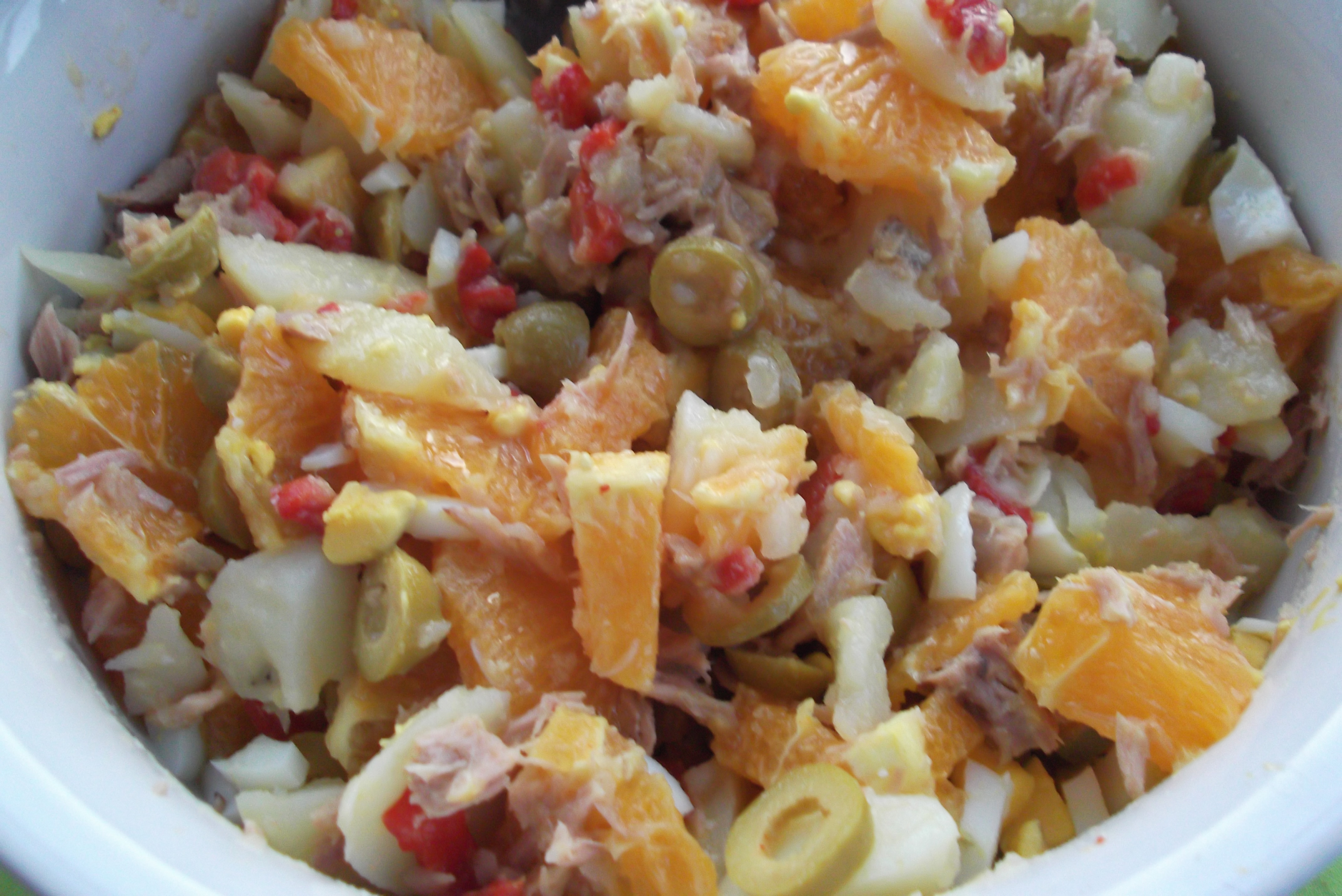
A delicious serving of “Leg” Salad!!
This is what you´ll need (approximately) per person as a light main dish servng size
1 hard boiled egg, finely chopped
2 medium potatoes (boiled in their skin) peeled then chopped into chunks
1 small tin of tuna (I use tuna in brine and drain it, but use your favourite)
1 roasted red pepper, chopped
2 medium oranges (bitter if possible) peeled and cut into chunks
About 2 tablespoons of pitted olives sliced (or use ones with stones, your choice!)
Optional – chopped onion, chopped tomato, small flakes of salt cod (or use whatever you have available)
Salt & Pepper
Olive oil
White wine Vinegar (optional) but I like to use it
All you need to do it combine everything in a bowl, season and dress it and leave it for at least half an hour in the fridge so that the potatoes can soak up some of the lovely olive oil.
Good to serve at a party or buffet as it can be prepared ahead and does not suffer from being forgotten in the fridge for several hours. Hope you enjoy it!
I can´t believe I´ve done so many posts without doing one on the famous Spanish Paella! Paella traditionally comes from Valencia, up towards the north of Spain, and very good it is too. People think of prawns and mussels when they talk of paella (which here is pronounced along the lines of pie-eh-ya) but there are meat versions and mixed meat and seafood versions, although not many vegetarian ones.
If you can buy proper paella rice, it does make all the difference. Use long grain and it won´t be able to soak up all the flavours. Use risotto rice and it will go creamy. Paella rice plumps up, absorbs the flavour but the grains stay separate.
In Andalucía they tend to make more Arroz or Arroz Caldoso, which translates as Rice or Brothy Rice. This is exactly the same as a paella, but with more stock, giving a more soupy dish. Whether you make Arroz or Paella, the technique is the same, it´s just the quantity of liquid that varies.
And now, allow me to let you into a little secret. The beautiful colour of a Paella? Saffron? Well, sometimes, but most housewives here use artificial colouring. I was shocked when I found out – perhaps even more than when I realised how expensive saffron is, but I´m just letting you know. I try not to use anything artificial in my cooking, and have been known to slip a little turmeric in, which doesn´t really affect the taste but gives a good golden colour. You can also use paella spice sachets which contain salt, garlic, paprika, saffron and ground cloves….oh, and a little colouring too. There´s no getting away from it. I leave it to you…make your own mix with a few strands of saffron, or use a mix. I won´t judge you!
So, here´s how I made this paella. I can´t claim my version today is typically Andaluz, it was a ”what have we got in the fridge?” kind of day. The beauty of this is that you can make it however you fancy.
A cup of cooked chicken
A quarter cup of diced jamon
Two cloves of crushed garlic
One small onion, finely chopped
One long thin green pepper, finely chopped
A stick of celery finely chopped
A cup of chopped tomatoes
About 3 cups of chicken stock
One and a half cups of rice
Seasoning
Olive oil
2 teaspoons of hot pimentón (optional)
Paella spices
Lemons to serve
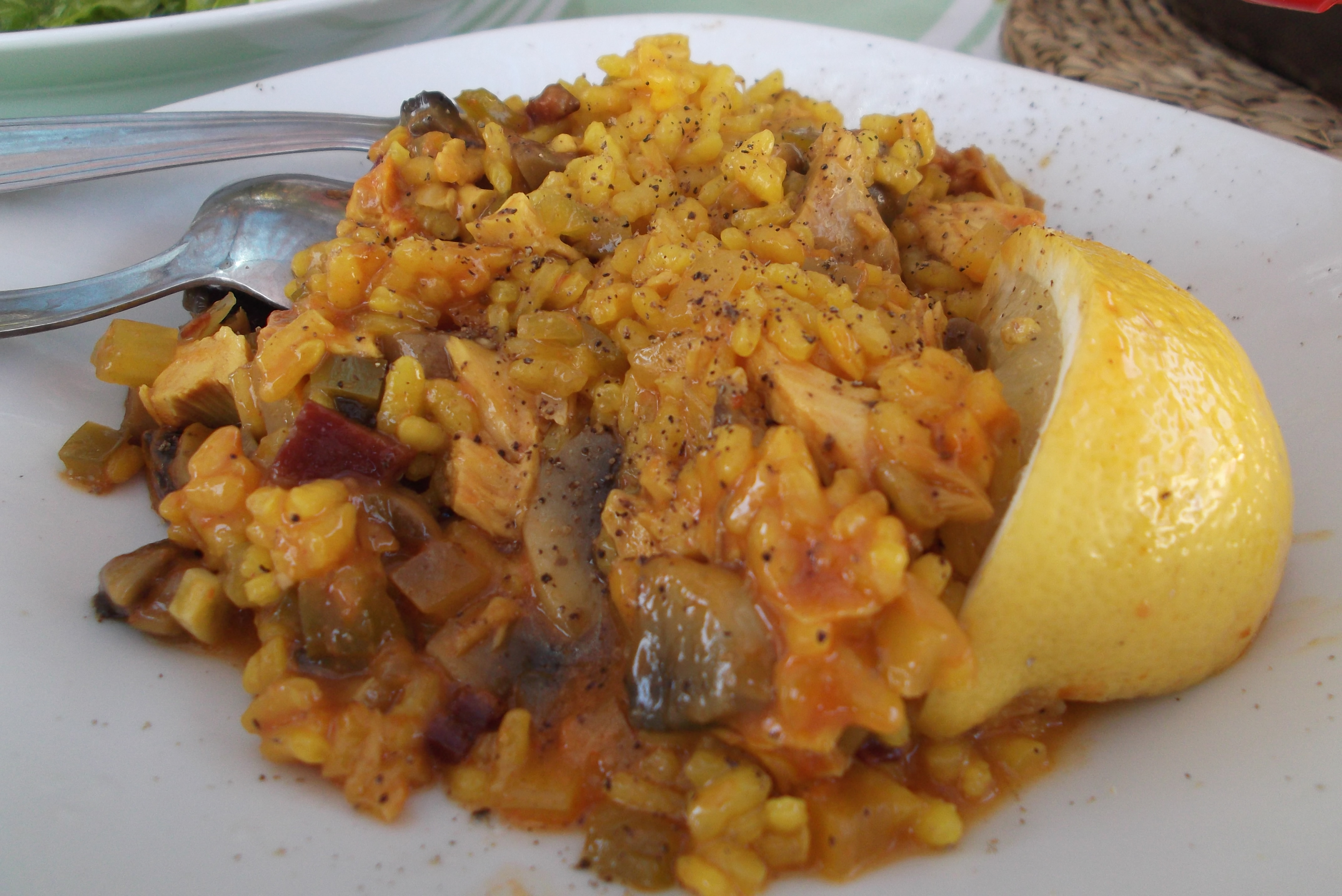
You can make this in a large frying pan if you don´t have a paella pan, or a saucepan if you want to make arroz. The paella pan in the photo is meant to serve four (!). We ate about two thirds of it between the two of us and there was enough left over for a few tapas portions the next day.
Soften your onion, celery and pepper in olive oil and then add the crushed garlic. When the garlic has softened, add your pimentón (or chilli powder) and spices and stir in. Now add your tomatoes and cook gently for a minute or two then put your chicken, jamon and stock in and allow to boil. I find that for a paella I use double the quantity of liquid to rice, 3 times for arroz.
When the liquid is boiling, add the rice and some seasoning, stir it all around and reduce the heat. I often partly cover the dish with a large lid. You don´t need to stir it like a risotto, some will stick on the bottom, but in my house we fight for those bits! I can´t be more precise about quantities as a lot will depend on how much liquid your rice absorbs. Have a pot of boiling water or stock on the side and if you feel it´s cooking too quickly add a little more.
When the rice is almost cooked, but not quite there, turn it off and cover it. Use tin foil or a lid. These last few minutes “resting” are important. Here they say that arroz can be “mal cocinado, pero bien reposado” which means badly cooked but well rested. Hopefully yours will be both bien cocindao and bien reposado!
Laid back and rested rice
And that´s it, serve with plenty of lemons to squeeze over and a glass of your favourite wine.
I´ll do a seafood version soon – my two best girlfriends in the world are coming to stay tomorrow, so no doubt we´ll have plenty of cooking, eating and wine drinking sessions together that I can share with you all!
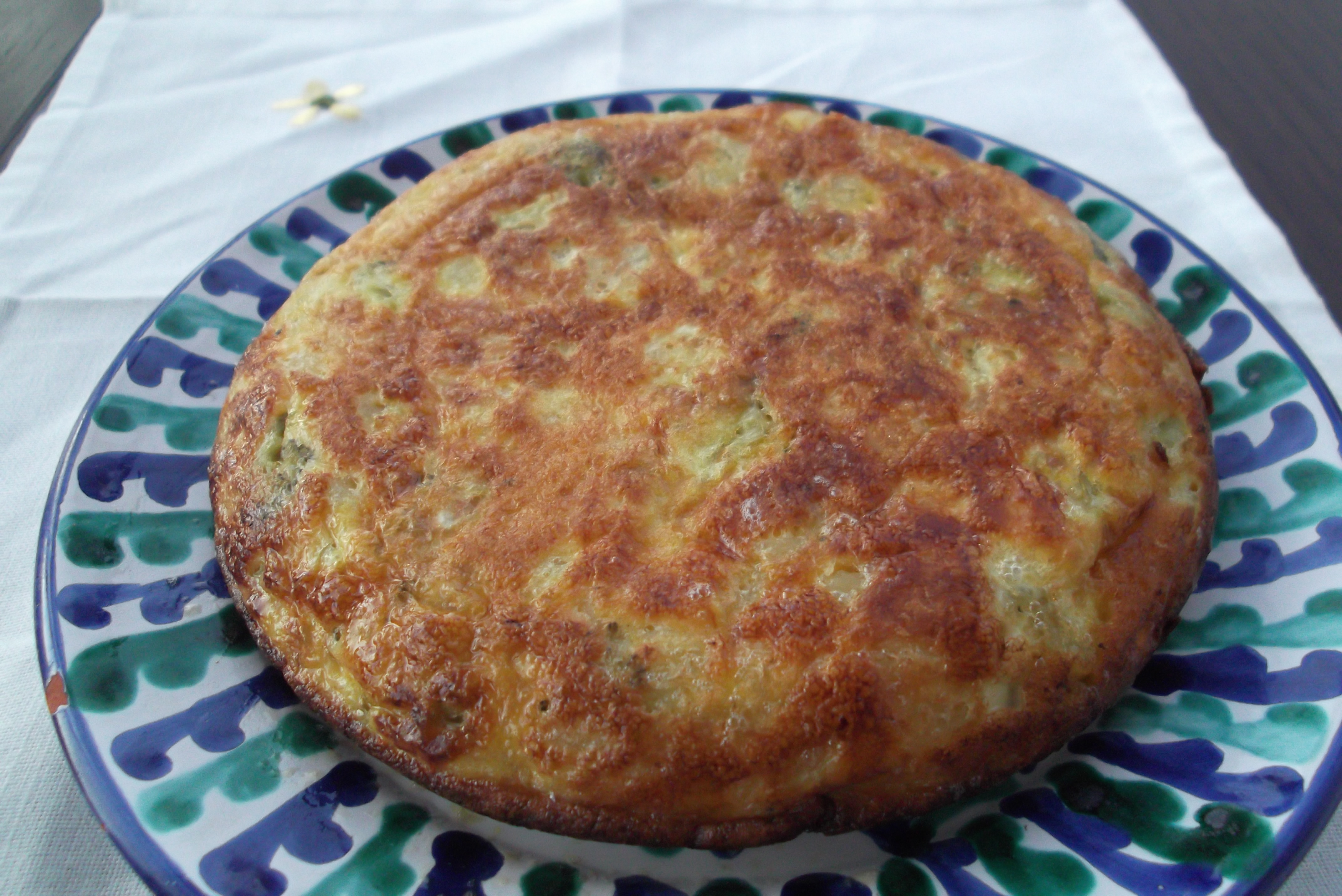
Now, I´m not laying claim to this being the most authentic of Spanish tortillas. For a start, the most famous is the potato one, sometimes with onions added. Secondly, the potato is cooked from raw in a fairly significant amount of olive oil, very slowly until tender. It´s wonderful, but when I´m at home I try to cut out a few calories and this is how I make my tortilla. To be honest, no one seems to have noticed the lack of oil!
For a Spanish tortilla to be successful, i.e. to be able to turn it over half way through cooking without ending up with an eggy mess all over the kitchen floor there are a couple of things which I have found help in the process:
A large quantity of filling in relation to egg – the egg just binds the ingredients together
A deep high sided pan (you´ll see from the photos that mine is very old and battered but it´s perfect for making a one person/two egg tortilla and I won´t throw it away!)
A very, very low heat
A lid to put over the tortilla in the first stage of cooking
Slow cooking, it takes patience, this is not a speedy French omelette
So, for one person, this is what I use, just multiply the ingredients for more people and of course, use a bigger pan! This makes a tortilla large enough for a decent supper or light lunch, served with salad, bread and of course a glass of wine.
Two eggs
Cold cooked, peeled potatoes
Any other vegetable, cooked, that you want to use in your tortilla
Salt and Pepper
About a tablespoon of olive oil
A tablespoon of milk
Start by putting the oil into the frying pan and then chopping your potato into small chunks. Also add the vegetables if using. You want the potatoes and vegetables to fill the pan almost to the top.
Warm them through turning them over gently so that they are all covered in the oil for a few minutes.
This slideshow requires JavaScript.
In a bowl beat the eggs, seasoning and milk with a fork then add the potato mix to the eggs and mix it all in gently with a spoon.
You should have a little oil left in the pan, but if not a tiny splash extra will be sufficient.
Pour the egg and potato mixture into the pan, turn the heat down to the lowest setting, put the lid on the pan and then leave the bottom half to cook slowly. Depending on how large your tortilla is, this could take a while. The two egg tortilla takes about 10 minutes.
Every so often, press gently on the sides with a wooden spoon or spatula to see if it is browning underneath. When it is a lovely golden brown and the top is set, it´s time to flip it over!
You can use a plate, or two plates (tip out onto one plate, invert onto another and then back into the pan). I have a plastic tortilla “flipper” which has a small handle underneath. You turn the tortilla onto it then slide it back into the pan. A flat saucepan lid would work just as well.
Now turn the heat up a little, leave the lid off and cook for about another 4-5 minutes until the bottom has turned the same lovely golden brown. Leave it to stand for a minute or two once it is cooked, then turn it out onto your plate and enjoy.
Thanks go out to JamieAnne at A Dash of Domestic for her wonderful tutorial on how to insert a slide show!
This one is so quick and simple, it doesn´t even need a recipe! Perhaps just a quick explanation, though. This is served in Andalucía as a pre meal appetiser in the summer or when unexpected guests pop round and it´s drink time. Add a plate of slice Spanish cheese, some jamon or salchichon (salami), a cool drink of your choice and you´ve served a super speedy tapas selection without even really trying!
Wash and cut a lettuce heart into eighths, open a tin of anchovies (in olive oil if possible) and lay an anchovy over each slice, pour the oil from the tin over, add a squeeze of lemon or white wine vinegar and serve. These are picked up with the fingers, or little cocktail forks if you´re feeling refined, then just munched and crunched.
If you can´t stomach anchovies, replace with a strip of roasted red pepper.
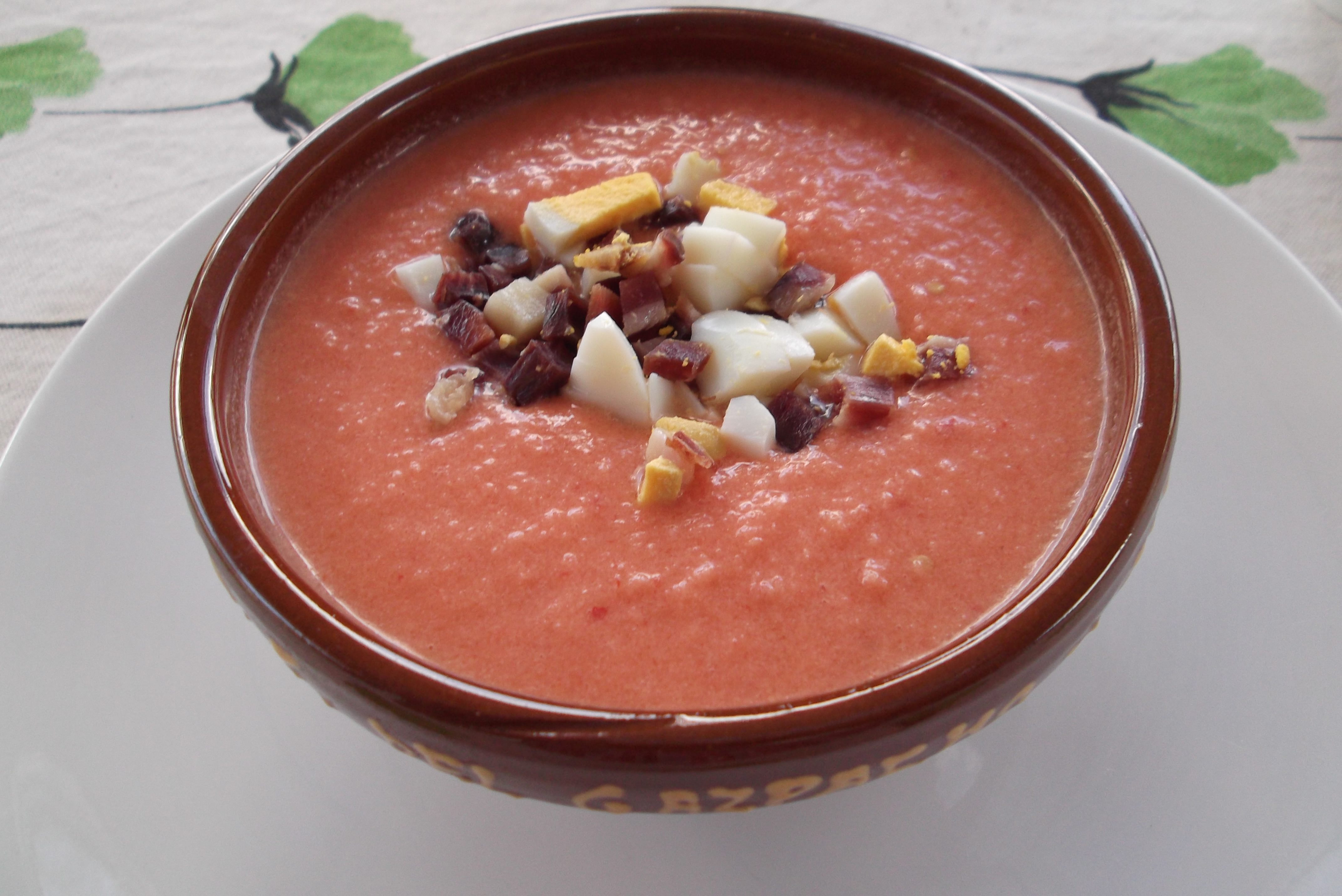
As promised, another version of the famed Andalucían gazpachos. This one originates from the beautiful city of Córdoba, and is my favourite version of all. It is different in that it uses very few ingredients but can be served three ways – very thick as a dip with small breadsticks (known as Picos), medium thick garnished with chopped hard boiled egg and jamon or tuna as a chilled soup starter, or diluted with water as a refreshing drink. So…three dishes in one!
Ingredients for this are few and it will serve from 6 (as tapas) to 2 (as a soup) approximately:
2-3 slices of stale bread without the crust (should be a fairly dense bread rather than sliced white from the supermarket)
About 500g of tomato, cored and peeled (I had one HUGE tomato as you can see in the photo) but usually the volume of the tomato once in the jug is a little more than the volume of the breadcrumbs
A chunk of red pepper (optional)
Half a clove of garlic (don´t recommend you use more or it will overpower the taste the taste of the salmorejo)
Vinegar
Water
Olive oil
Salt
Once again, the holy trinity of water, salt and vinegar appear but we´ll use very little water this time.
Dribble a very little amount of water onto the bread which you will have put into a mixing jug, and leave for a minute or two to absorb it.
Start with bread and water
Add the tomato and pepper if you are using it. The truly authentic recipe doesn´t use red pepper, but after wondering why my salmorejo never looked as red or tasted as sweet as anyone else´s, I was let into the secret of the locals round here – red pepper!
Tomato and Red Pepper
Add your garlic, a teaspoon of salt, a tablespoon of vinegar and at least two tablespoons of olive oil and start to blend with the hand blender.
Add Vinegar and Salt
You need to get this really smooth, almost like a purée. The more oil you add, the smoother the mixture will be, although I tend to go easy on it just for the sake of my waistline! Taste every so often and adjust the salt and vinegar to your liking. Again, it should be “alegre” or lively in flavour.
Start to blend
When you´re done, leave to chill in the fridge for about an hour.
Get it smooth and thick
Traditionally it´s served in a deep earthenware bowl (to maintain the freshness) with chopped hard-boiled egg and jamon on top. Some people substitute the jamon for tinned tuna but I guess chopped bacon would also be nice.
It´s also great as a dip or sauce served with little breadsticks (like very short grissini) or croutons.
It´s been a hectic little morning up our mountain. A nearby complex which offers rural holiday accommodation – http://www.cortijolasmonjas.com/ – just in case you want to have a look at the same lovely scenery I see every day, ran a four hour workshop on distilling aromatic plants. More of that later in another post. I got home so relaxed by the lovely smells of lavender, geranium and melissa, I wasn´t really in the mood for “proper” cooking. Big Man had been tidying up the vine in the vegetable patch, so he was hungry. I needed something fast and filling.
Well, not being a girl who is ever likely to be caught with her fridge empty, I pulled together a speedy potato salad. It´s green because of the avocados that are very much in abundance here at the moment, and because I used a big bunch of chives from our garden.
So, here it is, in all it´s delicious simplicity, for two people.
Two large potatoes cooked in their skins then peeled and diced
Four rashers of grilled bacon, chopped
One large avocado, peeled and diced
Half a cup of cooked peas or broad beans (guess what I used!)
Half a cup of chopped green olives
One grilled red pepper, peeled and chopped
Some finely chopped chives (I used about 2 heaped tablespoons)
One heaped tablespoon of mayonnaise
One small tub of natural yogurt (mixed with the mayo)
Pepper – you may not need salt because of the bacon, it´s down to you
Mix up all your ingredients, season and then stir in the mayonnaise and yogurt mixture. Also good as a side dish, but we just dug in and scoffed the lot!
Ok, so I say the word Gazpacho, and what do you think of? A bowl of a chilled tomato based soup, with chopped pepper, cucumber and possibly more tomato floating on top? I´m right, aren´t I?! Ok, so enough with the questions. You´d be right of course. But you´d also be wrong. Well, not wrong exactly, just probably not aware of the different versions of Gazpacho that exist in Andalucía. Gazpacho is Andaluz (i.e. from the Andalucían region of Spain) rather than Spanish. Just as Paella is Valencian and not Spanish.
It´s all getting complicated, so maybe I should start at the beginning. Andalucía has always traditionally been more reliant on agriculture (farming, olives, goats and pigs) than industry. Based on hard labour through grafting on the land, or the “campo”. So what did those hungry labourers do at midday, apart from take a well deserved rest in the shade of an olive tree, that is? Well, they took their lunch, or the makings of it, with them. Life was, and still is, fairly tough for a lot of people. Poverty reigned and many of the traditional dishes came about through necessity. Ask any older person here what the key ingredients of a gazpacho are and they´ll tell you “water, vinegar and salt”. And it´s true, they go into all the versions. The reason for this was to make you thirsty. And therefore drink more water, and thus feel full up. Your belly was full of liquid and stopped you craving more food.
So, we have our country men with a twist of salt, a bottle of vinegar and a knife. Water came courtesy of a nearby stream, and the vegetables that went into their gazpacho were those that could be found in the countryside around them. Sometimes tomatoes, peppers, onions. Other times wild leaves, oranges or a melon.
The gazpacho you see above looks, and actually tastes, like a very finely chopped salad in a bowl of iced water. I won´t lie to you, that´s pretty much what it is! When I first came here, I admit that I didn´t really “get” it. Now that time has passed and I´ve endured quite a few very hot summers, it all makes sense. A chilled bowl of iced salad/soup, with a little tickle of salt and vinegar, the tang of fresh mint and the crunch of all my favourite summer vegetables goes down a treat when you can´t face doing anything more energetic than swatting a fly away and adjusting your sombrero.
Our village prizes this version of Gazpacho so much that it has a three day Fiesta Del Gazpacho dedicated to it every first weekend in August! All good fun, although we tend to slake our thirst afterwards with a cold beer or a few glasses of wine. And then, when we´ve cooled down, we all take to the dance floor and Paso Doble until dawn. Happy days.
If you want to try it, you´ll need (roughly, as the quantities are really down to you) for four bowls:
Half a lettuce heart finely shredded and chopped (this is what you will do with all the vegetables)
Half a green pepper
A medium tomato, peeled
Half a sweet onion
About a third of a normal cucumber, peeled or one small Spanish cucumber
About 15 large mint leaves
A handful of broad beans if you have them (optional)
White wine vinegar
Salt
Iced Water
Some Ice cubes
Mix all the salad ingredients in a large bowl and pour over water so that the vegetables are just covered. Gradually start to add salt and vinegar to taste (they tend to use a lot of both here, but go steady until you get a flavour you like). The locals say it should taste “alegre” which is happy or lively! Add a few ice cubes and leave for at least half an hour so that the mint really infuses the water, then ladle into bowls, lower yourself onto a comfy chair in the shade of an olive tree, tilt your sombrero over your eyes and enjoy.
Go one, give it a go, you might like it! And it´s a wonderful way of getting your “five a day”…
So in 2016 I turned 50. I was in Italy for my 21st, 30th and 40th. To keep this birthday tradition going I always knew I'd be in Italy for my 50! This blog starts with my 5 week adventure in Puglia but my love affair with Italy continues.....









 Chica Andaluza