Now, if there was a prize for the least photogenic dish in the world, this one would be up there with the final contenders. It´s a very simple and tasty dish, especially made with the young tender broad beans which are in season right now. Our vegetable patch is delivering nicely and I make these regularly.
And then I take a photo. But to no avail. Broad beans braised slowly for about 30 minutes just don´t look pretty. You have the photos to prove it here. Sigh. If only they were as photogenic as Roger´s beautiful beetroot. But what they lack in looks, they make up for in taste, you´ll just have to believe me on this.
It´s quite a versatile dish – it is served here as a tapas, a side dish or with fried or poached eggs as a light supper dish. It can also be mixed into beaten eggs and made into a tortilla or huevos revueltos (scrambled eggs).
Ingredients
500g of young broad beans (podded, but keep the skins and slice them into 1cm pieces)
1 medium onion finely chopped
About 6 cloves of garlic peeled and sliced lengthways in half
100g of finely chopped jamon (or use lardons or pancetta)
Olive oil
Seasoning
Sweet pimentón (optional)
The Spanish way of making this dish is to braise the onion, garlic and beans (pods and skins) in olive oil until tender. It does taste wonderful but this is how I do it.
Bring a large pot of salted water to the boil and add the bean pods and skins and cook for about 4-5 minutes until just starting to become tender. Drain. Put about 2-3 tablespoons of olive oil into a deep frying pan that has a lid (or that you can cover with foil) and gently poach the onions and garlic (with the lid on) until they are soft.
Another dish..another day...and no, still not pretty!
Now add the beans and continue to cook gently, stirring to mix the beans into the oil every so often, with the pan covered. They will simmer and braise until very tender. Near the end of the cooking time add the jamon which will also cook through. I also like to add a sprinkle of pimentón when I add the jamon, but this is not typical. Taste and season if necessary and serve hot or cold.
For a similar dish using runner beans, take a look at this recipe.
Big Man and I are heading to the UK tomorrow. We have packed our umbrella as I think we have a few rainy days awaiting us. I won´t have access to e-mail but I look forward to catching up with you all next week – hope it´s a good one for everyone!
This was a two egg omelette made in a small, deep frying pan
I can´t believe that I haven´t posted my version of this Spanish classic. Probably one of the most famous tapas dishes in Spain, simple, economical and delicious. Can be served hot or cold. There is always a great debate about how to cut the potatoes. Ask 5 people and you´ll get five different answers – the choice is yours.
Ingredients per person
One large potato peeled, halved and cut into thin (but not wafer thin) slices or chunks
Half a medium onion, finely chopped (optional)
2 eggs
1 tablespoon of milk
½ teaspoon of cornflour (optional)
Salt
Olive oil for frying
Put the potatoes (and onion if using) into a deep frying pan with straight sides if possible. This helps with turning the tortilla. Choose the size of pan according to how many people you are cooking for – you want the tortilla to be deep, so a smaller diameter and a larger depth works well. Cover with plenty of olive oil (this can be drained and reused) and use a low heat to braise the potatoes until they are tender, turning them over gently a few times during cooking.
Drain the potatoes and save the oil. In a large bowl beat the eggs and milk together and if you want a thicker, spongy texture to your tortilla, add the cornflour to a little of the milk then mix in with the eggs. Season with salt then add the potatoes to the eggs and mix gently. The secret to a successful tortilla, I´ve found, is to have a high quantity of “filling” in relation to egg. The egg binds the potatoes (or whatever vegetable you choose to use) together.
Pour a little oil into your frying pan and when it is hot, turn the heat down low, add the eggs and potatoes and cover with a lid. This now needs to cook very, very slowly until it sets in the middle and the bottom starts to brown.
Turn the tortilla using a large plate and then slide the uncooked side into the pan. Timings will depend on how large your tortilla is. If you are unsure about flipping the tortilla, pop the frying pan under a hot grill for a few moments to completely set the top, then flip it. Once it is browned nicely on both sides, turn out onto a plate and enjoy it hot or cold.
For a less authentic but less calorific version of this dish, use potatoes cooked in their skins. Peel and slice or cut into chunks and then warm them through in a very little oil before adding to your egg. I use this method more often than the “oil braising” method to help in the waistline war, and no one has noticed the difference!
For another version, take a look at my Potato and Brocolli Tortilla here.
When I lived in London my life was, as you can imagine, very different from life Up The Mountain. For a start I had a Proper Grown Up Job. And I travelled a lot, sometimes spending weeks living out of a suitcase or briefly stopping at home for a pit stop to repack the case. At times like this my best friends were the local take away menus. Luckily, I lived in an area that boasted an amazing amount of pretty good quality restaurants who could get something tasty to my doorstep within about 30 minutes of me placing a call.
When I moved to Spain, it took me a while to adjust to the fact that when I didn´t feel all that much like cooking it was either Big Man´s special fried eggs, or jamon, cheese and melon to eat. The nearest take aways or delivery services are, I imagine, in a town a 45 minute drive away.
Finally I realised that I could still have something tasty to eat in about the same amount of time as it would have taken me to decide what to order from the take away menu, make the call and wait for the delivery guy to show up.
This is one of my speedy suppers. In the time it takes for a large pot of water to come to the boil and the pasta to cook, I have a delicious sauce made to serve with my favourite pasta, plenty of grated parmesan and I even get to swig a glass of wine while it´s cooking. Well, I need a dash of wine for the sauce.
Per person you need half an aubergine finely diced, two cloves of crushed garlic, two medium tomatoes peeled and chopped, a large slug of wine, a tablespoon of chopped fresh herbs (I used a mixture of parsley and basil), seasoning and olive oil. I also use a crushed dried chili as I like my sauce spicy, but this is up to you.
Put the pot of water on to boil and sauté the aubergine until brown. Now add the garlic and once it is softened add the tomato and seasoning and the chili if using. Let the tomato cook down a little by which time you will probably be ready to put the pasta into the pot. Add your wine and herbs to the sauce and let it bubble away gently until the pasta is cooked and ready to be drained. Taste and adjust the seasoning if necessary.
The sauce is a little like the one used in Pasta alla Norma (ChgoJohn has a fine example of it here and Linda at Savouring Every Bite here). These recipes give you a deeper tasting, richer sauce as it´s cooked for longer. Yum!
Now all you need to do is mix the sauce into the pasta, grate or shave over plenty of your favourite cheese, pour another glass of wine and think about how you are putting the fast food delivery services out of business.
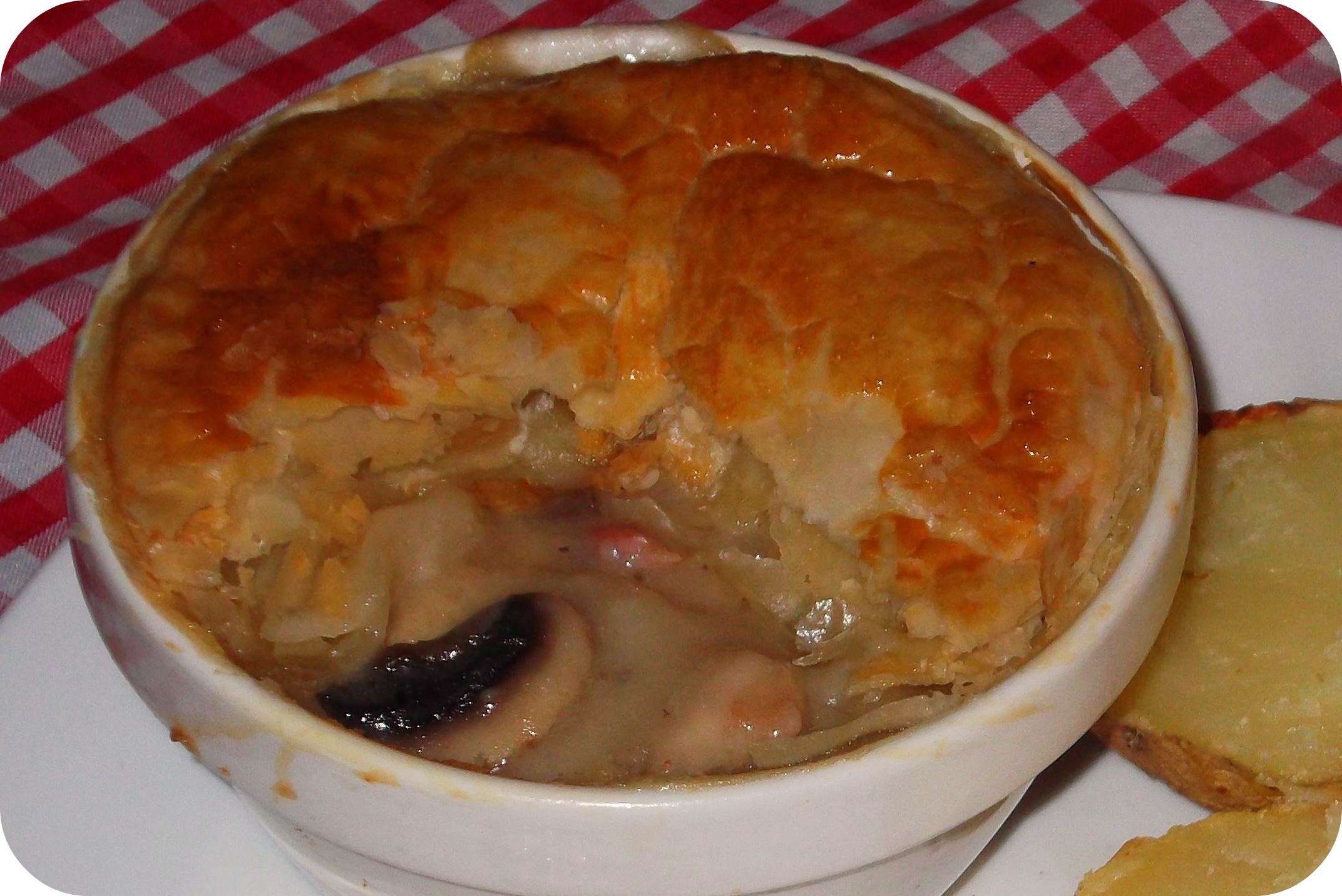
On my recent trip to London I spent plenty of time talking to my mum. As a fellow cook and foodie herself, we talked quite a lot about food. As you do. She mentioned that she really enjoys making and eating pies, but that my dad is not so keen on them. When she asked me what Big Man´s view was (you can tell can´t you that this was a deep and meaningful conversation) I realised that I had never made him a savoury pie.
Of course, once I was home, I couldn´t get the thought of a chicken, mushroom and bacon pie out of my head. The rain came down, the fog closed in, the tiny hole in the roof that we think we´ve fixed each year started its relentless drip, drip, dripping. It was time to make that pie.
I´d bought two old fashioned pudding basins in a junk an antique shop in Lewes, a beautiful town where a friend of mine is hoping to move. As I´d managed to get them home without breaking them, I needed to road test them.
Making a pie is a straightforward business if you´re using ready made puff pastry – which was the case for me. If you´re making your own pastry (flaky or shortcrust), it´s not all that much extra work, just a little waiting time while it rests in the fridge.
To make two hearty pies I used
2 small chicken breasts, cubed
About 4 slices of thick cut bacon, cut into small cubes (or use lardons or pancetta)
6 mushrooms thinly sliced
2 cups of chicken broth (or you can use a mixture of milk and water)
3 tablespoons of olive oil
4 tablespoons of flour
Seasoning
Puff pastry
One beaten egg
Put the chicken into the flour which you will have seasoned and toss it around. Heat the oil in a deep frying pan remove the chicken from the flour and seal it. Don´t throw the flour left in the bowl away. Now add the bacon and mushrooms and cook on a medium heat until the mushrooms have softened.
Add the remaining flour to the pan and stir with a wooden spoon to slightly cook the flour and then gradually add the stock whilst stirring to prevent lumps forming. Once the liquid has all been added, turn up the heat and let it bubble gently until it reaches the consistency of pouring custard.
Put the mixture into a pie dish or small oven proof dishes if you want to do individual portions. Lay the puff pastry over the top, trim if necessary and cut a couple of small slits in the top to let the steam escape. Brush with the beaten egg and bake in a medium over (about 180º C) for about 25 mins or until the pastry is golden brown and risen.
Delicious served with baked or mashed potatoes and vegetables. I made runner beans in garlic and tomato, we drank wine and watched the rain dripping down the windows. Big Man voted the pie a big hit, and now wants to know if I can make him a beef one. I think we can safely say that we have another pie eating convert in the family.
For an idea of what to do with any leftover puff pastry, check out this tasty recipe.
Another “Plato de Cuchara” or spoon dish – we like our pulses here in Spain. Many of these dishes were traditional as you could feed large families with few ingredients which were not costly. Meats are typically added at the end (usually pork products) so the beauty is that they can be vegetarian dishes too, if you prefer.
Lentils are great, as apart from being cheap, they cook fairly quickly and only need rinsing but not presoaking.
For four people as a main dish or six as a starter you´ll need
About 500g of lentils – we have the flat green ones here
Water to cover
3 tablespoons of olive oil
1 medium onion, quartered
Half each of a red and green pepper, chopped into bite sized chunks
Two tomatoes cut into bite sized chunks
1 bay leaf
A couple of carrots peeled and finely diced
A stick of celery plus the leaves (if it has leaves). Finely dice the celery but not the leaves.
4 or 5 whole fat cloves of garlic
2 medium potatoes peeled and cut into small cubes (keep these in a bowl of water separately)
Sprig of fresh thyme or rosemary if you have it
¼ teaspoon each of pimentón and paprika
Salt to taste (at end of cooking)
Optional – a couple of chorizo and/or morcilla or your favourite sausages
Rinse the lentils then add all the vegetables and spices apart from the salt to a large cooking pot. Cover well with water, add the oil and bring to the boil. Reduce the heat slightly but don´t let them come off the boil while cooking as this will make the lentils hard. They will probably take about 45 minutes or so.
When the lentils are soft, add the potato and meats (if using) and continue cooking until the potatoes are cooked. Remove the bay leaf and celery leaves and add salt (and pepper too if you like) to taste and you´re ready to serve. Slice the sausages into smaller pieces before serving. A drizzle of extra virgin olive oil and a squeeze of lemon over the top really lifts the flavour, but that´s just the way I like it!
Fish Man took a week off recently and oh how we missed him! Fortunately, he came back refreshed and with a van packed full of gorgeous things for us to enjoy.
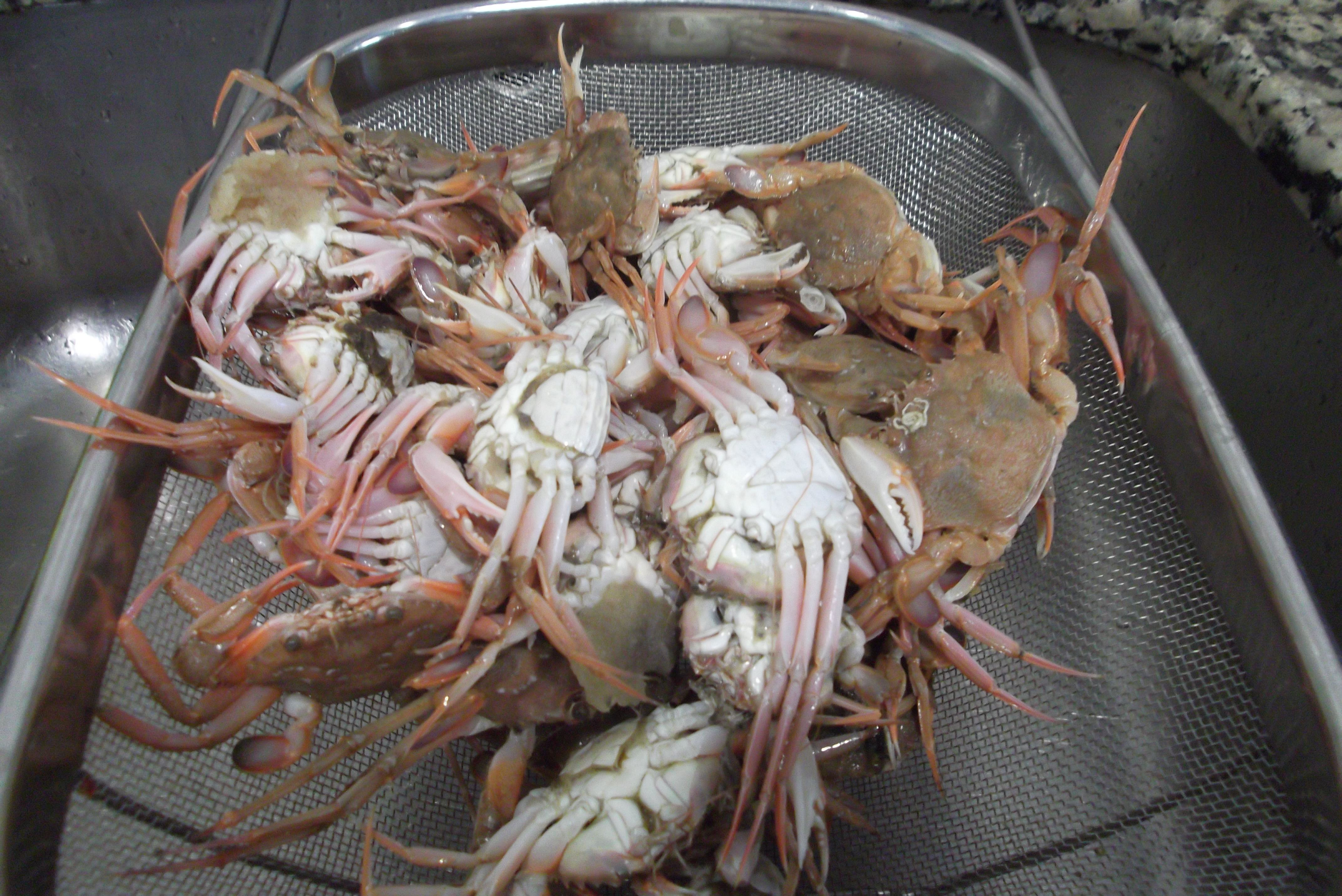
After our enforced fish free week, I went a bit mad, and bought some tiny little crabs and a large fillet of rosada (a firm white fish) for us to enjoy.
The crabs were simple to deal with – a good rinse then plunged into boiling, salted water. You need to be quite heavy handed with the salt as they are usually cooked in sea water. In the absence of this up our mountain, a little extra salt goes a long way. After about two minutes they will turn a darker pink colour, drain them and then put into a bowl of iced water to stop them cooking further. It´s the same process that you would use for cooking prawns.
Eeek....
These were then chilled and served as a starter with alioli and lemons. It looks like a huge portion, but there is not a lot of meat inside these little critters. The fun is in chomping, slurping and licking your fingers!
The rosada was treated equally simply. I sautéed red peppers with onions and courgettes until soft, lay the fish fillets over the top and seasoned everything. After covering the pan with a lid I let them cook through gently for about five minutes (until they were no longer opaque), then squeezed plenty of lemon juice over.
Fabulous FIsh
Healthy, light and delicious…all we needed was the sound of the waves lapping against the shore.
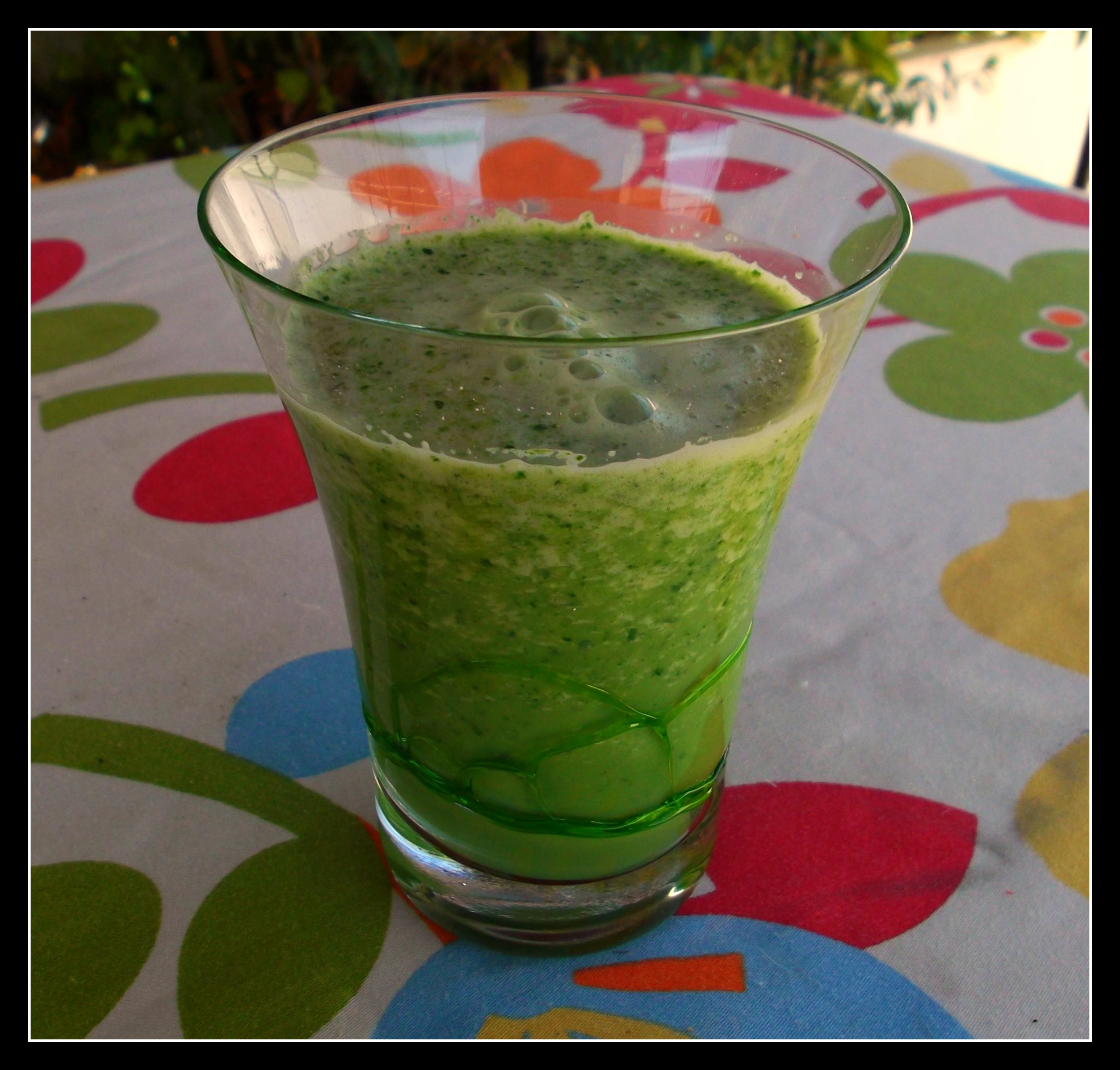
Who says Gazpacho has to be red? Well, if you promise not to tell the Andalucían gazpacho Police…I say it doesn´t!
In the vegetable garden at the moment, our cup overfloweth. Some things just can´t be canned or frozen – like cucumbers. And those little green thin skinned Spanish peppers are best eaten fresh in salad, stuffed or fried.
I wanted to find a new way of using up some of my “greenery” and came up with this version of gazpacho. It´s a stunning colour, tastes rather like juiced vegetables and I´m sure must be amazingly good for you and packed with vitamins. Probably an excellent pick me up for the morning after the night before too. We just drank it chilled as a pre lunch appetizer.
Here´s what I used, but if you do decide to give it a go I´m thinking celery, avocado and lime juice might also be great additions.
Two thin green peppers, one small cucumber (peeled), a small clove of garlic, a small bunch of parsley, 4 large leaves of raw chard (or spinach).
In a blender mix the vegetables with about 3 tablespoons of olive oil, white wine vinegar and salt (to taste) and a litre of ice cold water.
Blend until smooth, add a few ice cubes and chill until needed. Looking as gorgeous as it does, it just has to be good for you!
Well, it´s been a while since I posted anything at all, let alone a recipe. It´s been a hectic 5 or 6 weeks with 3 lots of visitors, which was wonderful. Also, a fall down the patio steps (am still feeling rather delicate in the nether regions) and a broken camera which meant that I couldn´t take any pictures. All very frustrating but the derrière is now on the mend and we´ve bought a new camera. Hurrah!
Fish Man came by this morning, and I decided to see what he had tucked in the back of his little van. I´d been fancying a warming soup as we´ve had the worst (and wettest) Easter here in Andalucía for 80 years, and the rain and storms are set to last for a few days more. Combine this with the most dreadful hay fever and I feel like I have a bad dose of flu with a serious hangover on top. I don´t actually have a hangover, although it might have been fun putting in the work to achieve it, just the pain! Fortunately Fish Man had some beautiful mussels, not of the bicep kind you understand, so I bought a kilo.
I was torn between doing them in a creamy, oniony, white wine base or a garlicky, tomatoey one. The tomato won – I felt that my nose needed a good assault of powerful smells! This is a very easy and quick to cook dish that looks as though you spent hours in the kitchen creating something “gourmet”.
The serving I made would feed two as a main course or four as a starter.
Ingredients used were:
A kilo of mussels
3 fat cloves of garlic, crushed
Half a medium onion finely chopped
About a cup or half a tin of chopped peeled tomatoes
Olive oil for frying
Small glass of white wine
About 2 tablespoons of finely chopped parsley
Salt and pepper
Water (optional)
Rinse the Mussels Several Times
Start by cleaning the mussels. Not as tricky as it may seem. I usually rinse them three or four times in cold running water. Throw away any that are cracked or open. You then need to remove the “beard” which is the small strand of seaweed looking stuff which usually just pokes out of the straighter side of the mussel. Hold the mussel in one hand with the point facing down and the curved part into the palm of your hand. Grab the seaweedy strand with your thumb and forefinger of the other hand and pull it upwards – it will slide out and you´re done!
Cleaned and De-Barnacled!
If your mussels have any barnacles attached, you can pop these off with the blade of a flat (butter) knife. Finally a quick scrub (I use a metallic pan scrubber for this) and a final rinse and they´re done.
Put the mussels to one side and start on the base. In a deep saucepan which has a lid, heat some olive oil (enough to sweat the onion and garlic). On a low heat, sweat them off for a few minutes until soft and transparent. I used a red onion today as it was what I had, but it´s just as good, if not better, with a stronger tasting white onion.
Gently sweat the onion and garlic
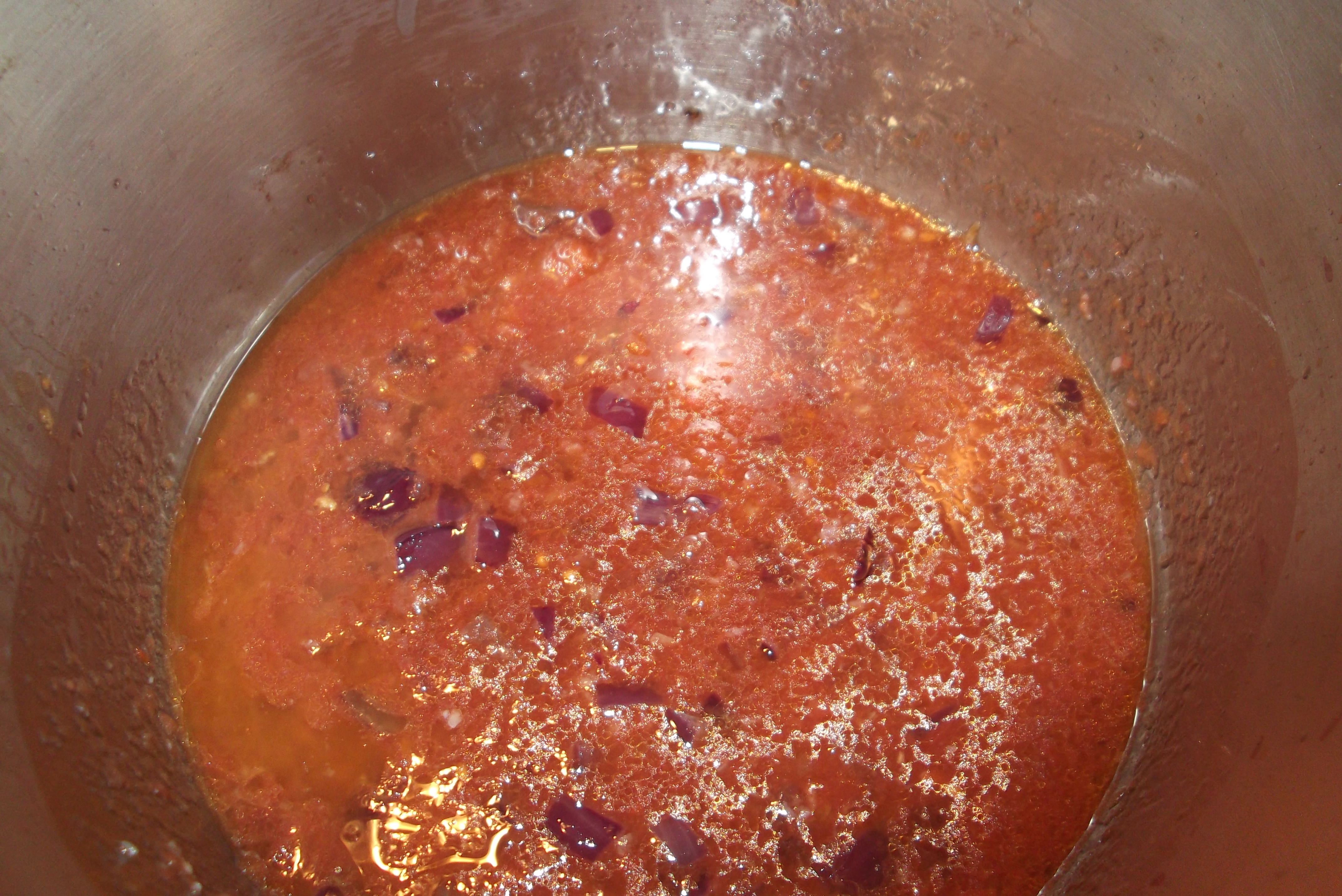
Now add your tomato (you can also add a teaspoon of tomato puree if your tomatoes are a bit pale or lacking in flavour). Keep on a low heat and put the lid on and leave to simmer for about 5 minutes. Remove the lid, add your wine and seasoning and bring to a bubble then reduce to a simmer and leave to cook gently for 5 minutes.
Make the tomato base for the soup
The base is now ready and you can stop here until you´re ready to eat – the final stages will only take you about another 5 minutes, so this is a good “prepare ahead when you´ve got guests” dish.
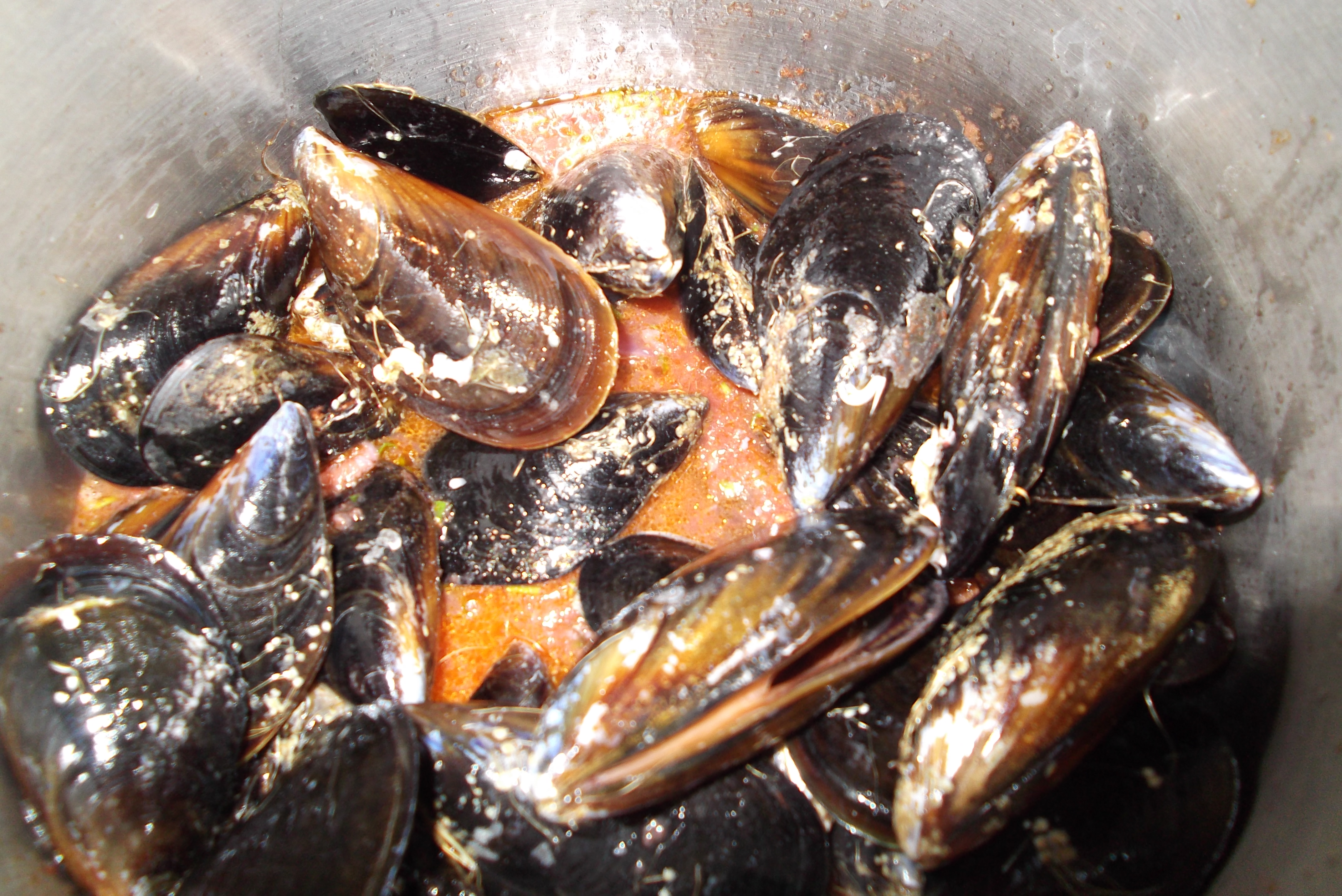
Finally...add the mussels and parsley
When you´re ready to eat, warm the tomato sauce, add the mussels and the chopped parsley and put the lid on. I usually do this on a medium heat and after about 2 minutes check and see how the mussels are doing. You may need to put the lid on and give the pan a shake to move the mussels around a little.
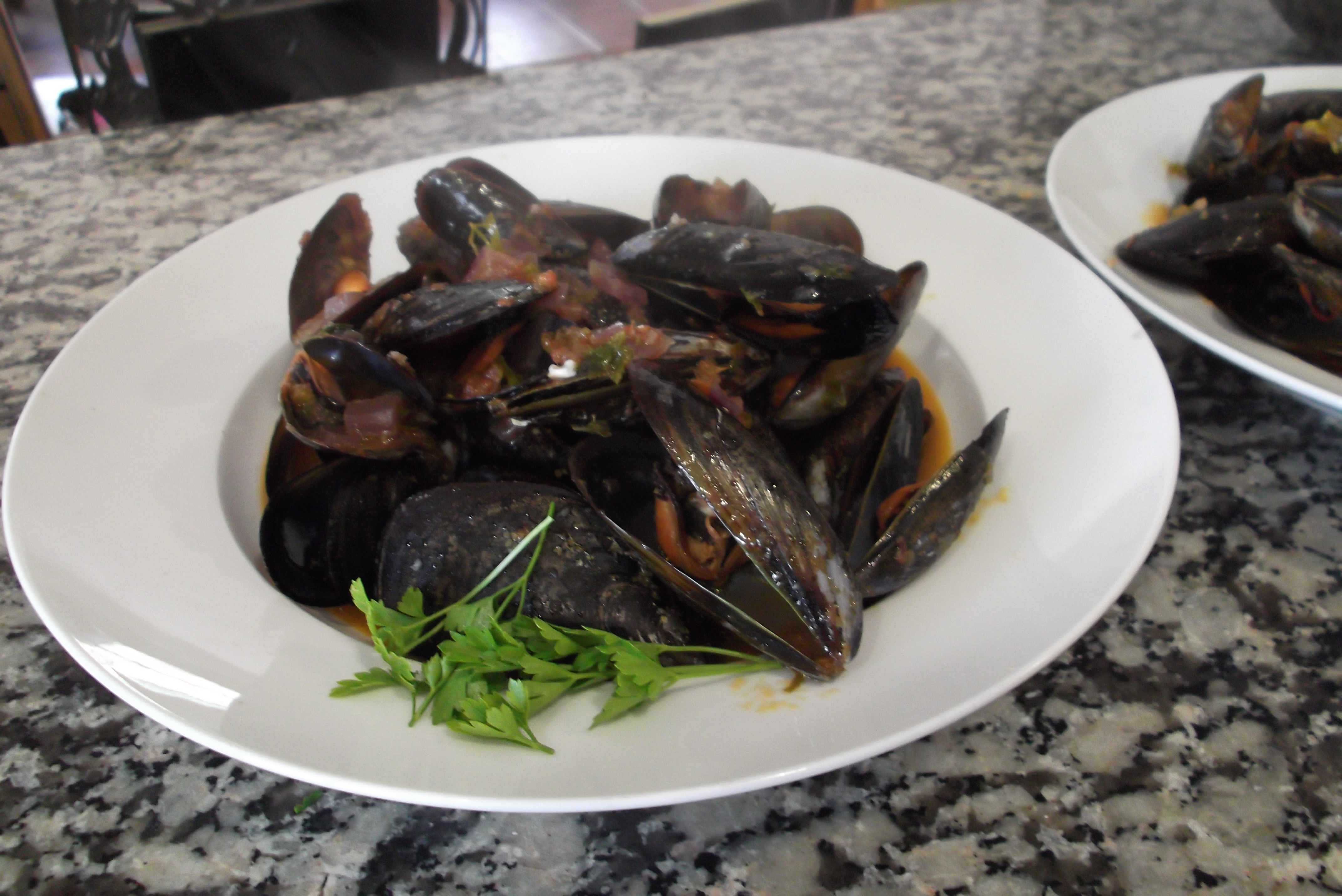
Once they´re all open they´re ready to eat. The mussels will release their juices so see how much you have in the pot. If you feel you´d like a little more liquid, add a glass of water (or fish stock or wine), if not, they´re fine as they are. I don´t usually add more liquid, these measurements give two large bowls of mussels and enough stock for two good bowls of soup.
Enjoy - but don´t forget the wine!
You can serve with a salad and plenty of crusty bread to mop up the juices. I recommend serving with a spoon and fork. The fork is for getting those mussels out of their shells for those guests who don´t want to use an empty shell to do this, and the spoon is for the soup part. They´re also nice, particularly if you serve them with less liquid, with crispy chips and garlicky mayonnaise. Don´t forget to put an empty bowl on the table to chuck the shells into and a bottle of chilled white, rosé or red wine. Yes, I do mean chilled red, believe me, it works! It´s one of those dishes that works with any wine. A bit like me really…
So in 2016 I turned 50. I was in Italy for my 21st, 30th and 40th. To keep this birthday tradition going I always knew I'd be in Italy for my 50! This blog starts with my 5 week adventure in Puglia but my love affair with Italy continues.....







 Chica Andaluza