Asparagus and Sour Cream Tart

There’s something about asparagus that makes me happy. Well, a few things really. It tastes wonderful, it looks pretty and has an amazing colour which screams “spring”! It also feels like a luxury ingredient, which it most certainly used to be, but in reality is one which is now readily available and easily affordable. Mind you, in a few weeks when we have the start of the wonderful English asparagus season, we may pay a little more but oh it will be worth it for the flavour!
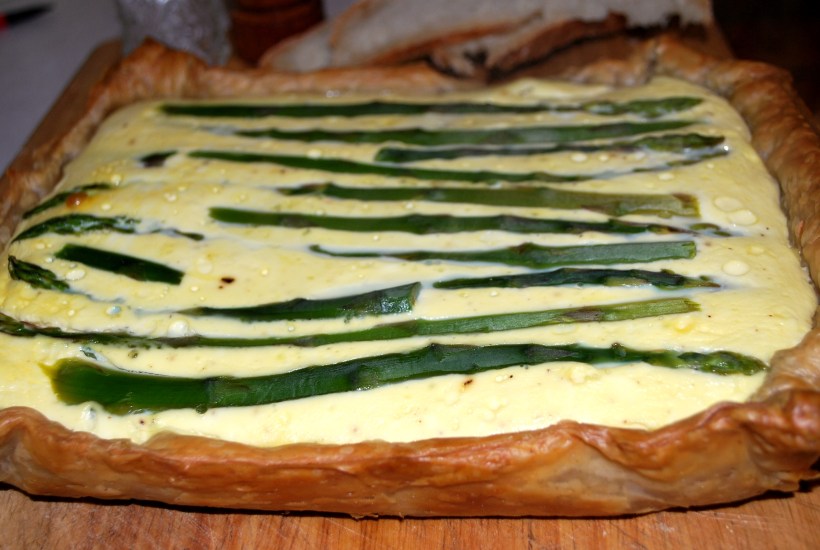
Asparagus & Sour Cream Tart (4)

Blogging too makes me happy, it allows me to keep a record of dishes I enjoy cooking and eating, it allows me to share my passions with like-minded folk and it has introduced me to new pals around the globe. New cuisines are available at the click of my mouse and one such cuisine which I am gradually learning more about comes from Germany. A wonderful blogger, Ginger, shares her recipes and memories over at Ginger and Bread. A German, with a Chilean partner living in London. Do pop over if you get the chance. She recently shared a recipe for a traditional onion quiche and I was intrigued by the use of sour cream in there with the rest of the more familiar ingredients. Time to buy a carton of sour cream and give this style of quiche a go!

Ingredients (to serve 6)

  • 1 packet of puff pastry (I used puff as this is what I had to hand, use short crust, or make your own – you decide)
  • 1 bunch of Asparagus
  • 3 eggs
  • 300ml of sour cream
  • 100ml milk
  • About 50g grated cheese (I used smoked gouda)
  • Salt & Pepper

Start by snapping off the woody ends of the asparagus and blanching the spears in lightly salted boiling water for about 3 minutes. If you don’t have a wide enough saucepan to take the spears whole, use a deep frying pan filled with water. Drain, rinse in cold water and put to one side.

Turn the oven on to medium (180C in my fan oven)

Line a tin with greaseproof paper (optional) and lay the pastry inside. If you use a flan tin with a loose bottom you don’t need to line – it just makes life easier when it comes to lifting the tart out when it’s cooked if your tin does not have a loose bottom.

Trim the pastry to fit and prick lightly with a fork.

Beat the remaining ingredients (except the asparagus) together and season. Pour into the pastry case then lay the spears gently on top.  Bake for about 45 minutes until lightly puffed up and just starting to turn golden.

Delicious hot or cold, but leave it to cool down slightly for at least 5 minutes before cutting. The addition of sour cream gives you a soft, fluffy filling, almost mousse like. Lovely with a simple dressed salad and great too for picnics.

Beef Pot Roast with Ale

I’m a great fan of cooking with alcohol. A glass of wine in my hand, another for the pot is good. Usually I use wine, but on this occasion I used beer, a dark beer called Hobgoblin (don’t you just love the names of some of the Ales produced in England!).

The recipe was another of my beloved slow cooked dishes, a pot roast this time, and it’s a perfect all in one dish that just needs some boiled potatoes or creamy mash to soak up all those delicious juices. Any leftovers make a perfect topping for pasta.

Dark Beer, Beef & Vegetable Pot Roast (1)

The steam in the photos must be the Hobgoblin escaping from the finished dish….

Ingredients (to serve 6 people)

  • 2 onions peeled and cut into quarters
  • 8 small carrots peeled and cut into large wedges
  • 3 celery sticks cut into pieces about the same size as the carrots
  • 2 leeks, cut into large chunks (or substitute any of your favourite root vegetables)
  • A piece of brisket, about 1.5kg
  • About 300ml of dark beer (don’t use Guinness though, it will be too bitter in the final dish)
  • About 100ml of beef stock
  • A little olive oil and flour

Dust the joint of meat with flour and in a deep frying pan with a little oil, brown the meat all over. Season the joint, remove and put into the cooking pot or slow cooker. Add the vegetables to the frying pan and cook until the onion starts to turn brown at the edges, then put them into the slow cooker (or oven dish if you are cooking in a conventional oven).

Pour the beer and stock into the frying pan and scrape up the juices from the beef. Sprinkle in a level tablespoon of flour and stir as you heat the liquid. It will start to thicken slightly. Bring the liquid to a boil and pour over the meat.

Dark Beer, Beef & Vegetable Pot Roast (4)

Cook in the slow cooker for an hour on high and then for about a further 7 hours on low until the meat is really tender. In a conventional oven it will need about 4 hours on low. You will need to turn the meat over 2 or 3 times during the cooking period as it will not be covered entirely by the liquid in the pot.

When it is cooked, remove the meat and vegetables from the sauce. If the sauce looks too thin, put it into a pan and either fast boil it to reduce or make a beurre manié .  It’s made with equal parts of butter and flour mixed together and stirred into the hot liquid – about a tablespoon of each for this dish. Add it to the liquid and cook until thickened. Check for seasoning and adjust if necessary, pour over the meat and vegetables and enjoy.

Good Friday Parpuchas – Salt Cod Fritters

Today, even though we are in England, we kept up a tradition from Big Man’s family in Andalucia and made Parpuchas. Light, fluffy fritters of salt cod, parsley and garlic. Traditionally served (as we did) with a drizzle or a dunk of Miel de Caña (Molasses). It sounds odd but I promise you, the combination of sweet and salty really does work. If you don’t have access to salt cod (which you’ll have to desalt) this works well with any other firm raw fish.

Parpuchas 007

I will post the recipe below, but if you’d like to read the original post from a couple of years back and to see some of the traditions of Holy Week in Spain, do check out the original.

Ingredients

  • 200g (desalted) salt cod, shredded into small flakes
  • 2 eggs, beaten
  • 1 cup of milk
  • 1 teaspoon of bicarbonate of soda
  • 1 cup of flour (approx)
  • 2 large tablespoons of finely chopped parsley
  • 1 finely chopped or crushed clove of garlic
  • Salt to taste if you are not using salt cod
  • Oil for deep frying

Add the milk, bicarbonate, parsley, garlic and fish to the beaten eggs and then gradually add the flour until you have a thick batter.  It needs to be about the texture of thick lumpy custard (not that any of you, I am sure, have ever made lumpy custard!).

Heat the oil until a cube of stale bread turns brown quickly when dropped in and then drop spoonfuls of batter into the oil. I used a tablespoon and it gave me rather large parpuchas – I´d recommend using about half a tablespoon full as they will puff up slightly. When they are brown on the bottom (and they will float to the top), flip them over and cook on the other side. They will not be in the oil for long.

Remove with a slotted spoon, drain and sit them on kitchen paper for a few moments and serve hot, drizzled with Miel de Caña (to be typical) but also good with  lemon, alioli or tartare sauce. If you make too many, they are still very tasty cold as they retain their texture.

All that remains for me to say before we move into the rest of the Easter weekend is a very Happy and Peaceful Easter, or Happy Passover if that is what you celebrate, or a Happy Few Days with your loved ones. Watch out for those chocolate bunnies…..

Beautiful Bavette from Boulogne

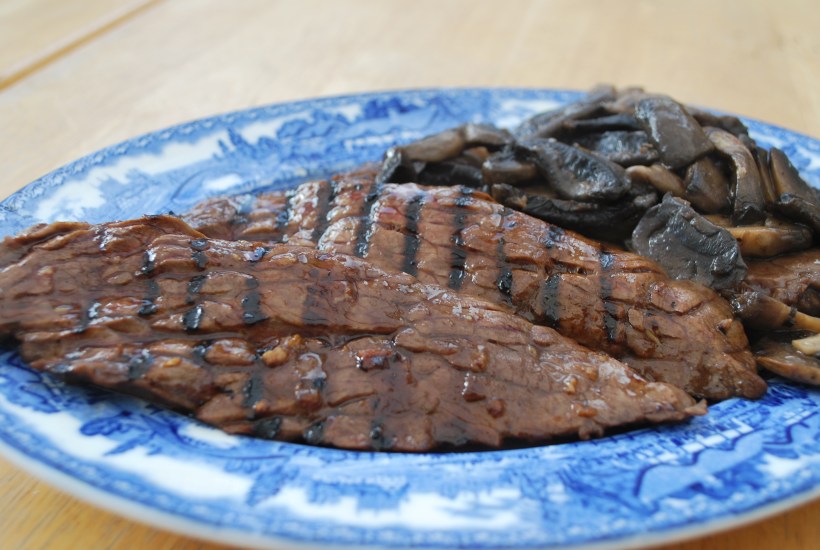
Our recent whistle stop trip to France to stock up on wine and food goodies gave me the chance to buy a cut of meat which is not widely used in England. I think it’s also known as Flank or Skirt steak but is more typically used for slow cooking, usually being cut into larger chunks. It’s not an expensive cut of meat and can be simply flash fried. Adding a marinade helps to tenderise it (it’s very flavoursome but not a meltingly tender cut like sirloin or fillet). It also reminded me of the Spanish Secreto Iberico.

Bavette (3)

This is a delicious treat which I served with pan fried mushrooms and a glass of red wine. Well, maybe it was two glasses!

Taken from a BBC Good Food Recipe

Ingredients

  • Two bavette Steaks
  • Olive oil for cooking
  • 2 tbsp soy sauce
  • 2 tbsp olive oil
  • 2-3 crushed garlic cloves
  • thumb-sized piece ginger, grated
  • juice ½ lemon
  • 1 tbsp balsamic vinegar
  • 1 tbsp honey
  • 1 rosemary sprig, bruised

Mix all the marinade ingredients together, pour over the meat and cover. Leave for a couple of hours at least, overnight if possible.

When you are ready to eat, get your griddle pan searingly hot and scrape the marinade off the meat. And rub a little olive oil onto both sides of each steak. Cook to your liking (although this meat is not so good well done) about 2 minutes on each side for rare, 3-4 minutes for medium rare.

Enjoy!

Tartiflette – a dish to warm the soul (but only if you’re not counting the calories)

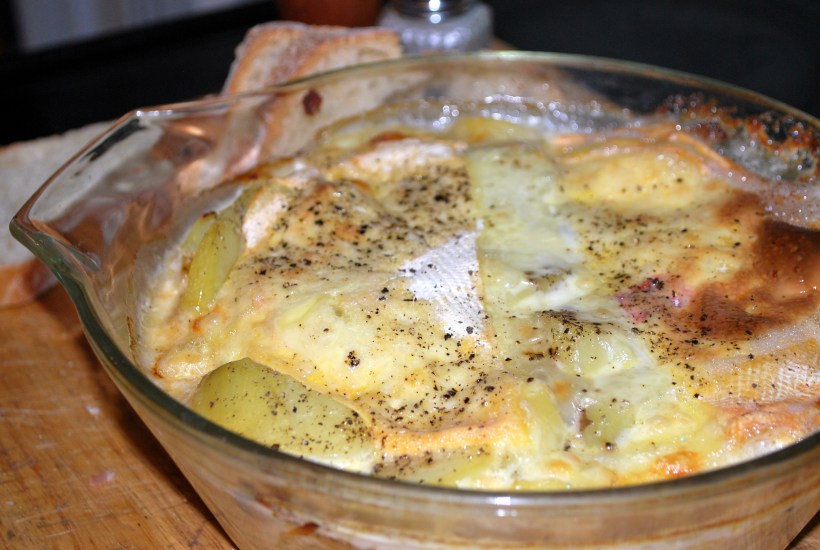
Reblochon is a delicious soft French cheese which is wonderful eaten “as is” but when cooked in a typical dish of Tartiflette, reaches another level of gorgeousness. Well, if you love soft creamy melted cheese it does!

The weather in England taunted us with its spring like warmth and Big Man decided that it was perfect weather to start painting the outside of our seaside house. Of course, day one was perfect as we prepared. We covered what felt like miles of guttering with newspaper and masking tape. We bought paint and thinner and got our brushes and rollers ready. Day two the painting commenced. And the clouds moved in, the temperature dropped and rain looked ominous. We were working at the back of the house which gets the sun, so at least when there was a break in the clouds we could enjoy a little of its warmth.

Tartiflette (3)

Day three, second coat of paint. The clouds were there to stay. The odd splash of rain (or was it a passing seagull?…I prefer not to dwell on it). But we persevered. Luckily the paint was made for British Weather (oh yes, the word Weather deserves a Capital Letter) and dries in 20 minutes.

Job done but we were chilled through. Time for some hearty Alpine food, and to hell with the calories!

Ingredients (to serve 3-4 people)

  • ½ Reblochon cheese (the original recipe calls for a whole one but we found half to be plenty)
  • About 700g small or medium potatoes in their skins
  • 2 cloves of garlic, peeled and sliced thinly
  • 4 shallots, peeled and sliced thinly
  • 6 rashers of smoked streaky bacon, cut into small strips (or use a packet of lardons)
  • About half a glass of dry white wine
  • 100ml cream
  • Black pepper

Boil the potatoes in their skins until just cooked (timing will depend on their size but probably 15-20 mins). Drain and leave to cool slightly before peeling them. These can also be prepared ahead and left to go cold before peeling and slicing not too thinly.

In a frying pan with a little oil, add the bacon, garlic and onions and fry until the bacon starts to go crispy and the onions brown a little at the edges. Pour in the wine and cook until about half the wine has evaporated.

In an ovenproof dish put about half the potatoes, then the bacon and onion mix and then the rest of the potatoes. Now slice your cheese in half so that you have two half moon shapes and lay these on top of the potatoes. Keep the skin on the cheese and if it helps to distribute over the top more evenly, cut into triangles.

Tartiflette (6)

Pour the cream over the whole thing and season with black pepper. Bake at about 200C for around 30 minutes or until the cheese is starting to become golden and the cream is bubbling. Delicious with a simple salad.

And don’t forget to wash your paint brushes or you won’t be able to use them again….

For a vegetarian version of this dish, pop over to Promenade Planting and see Claire’s great version!

Spicy Cucumber Salad

We recently celebrated Mother’s Day in England and for my mother I cooked a Chinese inspired meal with lots of different dishes. Some I’ve cooked before, like Stir Fried Beef with Ginger. Alongside the meat and fish dishes, I made a fresh and crunchy salad, inspired by one in my Gok Wan Cooks book. Sadly, there were very few leftovers the next day, and none at all of the salad!

Chinese Feast 003

Ingredients to serve 4-6

  • 1 cucumber, partly peeled
  • ½ fresh chilli, finely sliced
  • 3 spring onions, finely sliced
  • A few handfuls of bean sprouts
  • 3 tablespoons rice vinegar
  • 1 teaspoon sesame oil
  • 1 teaspoon fish sauce
  • 1 teaspoon soy sauce
  • 1 teaspoon caster sugar
  • A pinch of salt

Slice off the ends of the cucumber then slice it in half lengthways. Scoop out the seeds with a teaspoon and then cut the cucumber into chunks about .5cm wide.

Mix the cucumber with the chilli, beansprouts and spring onions. Mix the rest of the ingredients together to make the dressing and pour over the salad a couple of minutes before serving.

Split Mung Bean Curry

I do enjoy curries made with pulses, they’re so good for you, economical and wonderfully tasty. I had bought a packet of split mung beans in a local shop and wanted to try them out. I came across a recipe online which inspired my own version, but of course, didn’t keep track of the original source. Apologies to the owner of the original recipe, I’d be happy to credit you.

Mung Bean Dhal (4)

The quantity I made filled 4 plastic tubs, so I shared the curry love with my mum and my best pal. Feel free to scoff it all yourself or make less! This gives a gentle tasting curry, you may want to increase the quantities of the spices (I think I will next time) for a little more punch!

Ingredients to serve 4-6

  • 400g yellow split mung beans (yellow moong dal), well rinsed
  • Water, to cover the beans
  • ½ teaspoon turmeric powder
  • Approx 4 tablespoons vegetable oil
  • 1/2 teaspoon cumin powder
  • 2 small red onions, finely chopped
  • 1 level teaspoon chilli powder or to taste
  • 1 level teaspoon of coriander powder
  • 1 teaspoon grated ginger
  • 2 cloves of garlic, peeled and crushed
  • 1 tomato, peeled and finely chopped
  • 200g frozen spinach (or 400g fresh, finely chopped)
  • Salt, to taste
  • Some finely chopped coriander

In a deep pot, combine about 4 cups of water, the turmeric, and 1 tablespoon of the vegetable oil. Bring to the boil, then add the mung beans. Add more water if necessary, you want about 5cm of water above the beans.

Reduce the heat to medium-low and cook, uncovered and stirring occasionally, for 30 minutes or until the lentils are very soft. If the water starts to dry up, add another ½ cup of water. Remove from heat and set aside.

In a medium-sized frying, heat the rest of the vegetable oil and add the red onions. Sauté for 7 to 8 minutes or until the onions are browned.

Mung Bean Dhal (9)

Add the ginger, garlic, cumin, chilli powder, frozen spinach and tomatoes. Continue cooking gently until the tomatoes are soft. If using fresh spinach, add once the tomatoes have softened. Mix in the cooked beans.

Add the salt (it needs a fair amount, keep tasting) and coriander and mix well. Delicious served hot, but makes a fantastic dip served cold as it thickens as it cools.

If you enjoy curries like this, take a look at my Split Pea and Squash Curry or my Green Lentil Curry.

Sesame Crusted Tuna Steaks

I have to confess to a love of tinned tuna. In salads especially. But I had only ever had indifferent experiences of fresh tuna – probably frozen for a long time and then cooked for too long resulting in dry, tasteless fish. My lovely fishmonger had some beautiful looking tuna steaks in recently and I decided to give it another chance.

Sesame Crusted Tuna 001

I looked at recipes online and came to the conclusion that simple was probably better. It’s not a cheap fish to buy, and because I had been assured the flavour would be amazing, I wanted to let it shine through. Having a fancy for something with an Asian twist, I packed some zingy flavours into the salad I served with it. What a great decision. The only problem is now I need to win the lottery to fund my (ethically caught) tuna habit!

Ingredients to serve 2

  • 2 tuna steaks
  • About 4 tablespoons of sesame seeds
  • 1 egg white, lightly beaten
  • Salt & Pepper
  • A little oil for frying
  • For the salad – some roughly chopped cucumber, avocado, spring onion and coriander
  • For the dressing – mix together 2 tablespoons of olive oil, ½ teaspoon of fish sauce, ½ teaspoon of sesame oil, 1 teaspoon of light soy sauce, ½ teaspoon of white sugar and the juice of half a lime. Adjust the salt (with the soy sauce), sugar and lime to taste.

Season the tuna steaks or fillets with salt & pepper and dip them first in the egg white then in the sesame seeds to coat evenly.

Heat a very little oil in the pan – you don’t want it searingly hot or the sesame seeds will burn. The length of cooking time will depend very much on personal taste and the thickness of your fish. Bear in mind that it will continue to cook gently from the residual heat once it is served. My steaks took about 2 minutes on the first side and a minute on the second. It’s a very quick dish to prepare.

Toss the salad ingredients with the dressing and serve the tuna steak on top.

Sticky Citrus and Marmalade Tray Bake

My mum had a bit of a marmalade making session last week and gave us several jars of her delicious marmalade to enjoy. Thanks Mamma! Putting the marmalade in the cupboard, I came across a jar of my own marmalade from last year which I decided to use up quickly so that I could get onto enjoying the fresh batch more quickly. I decided to make a quick cake and at the same time try out a new baking tin I had just bought – well…why not?!

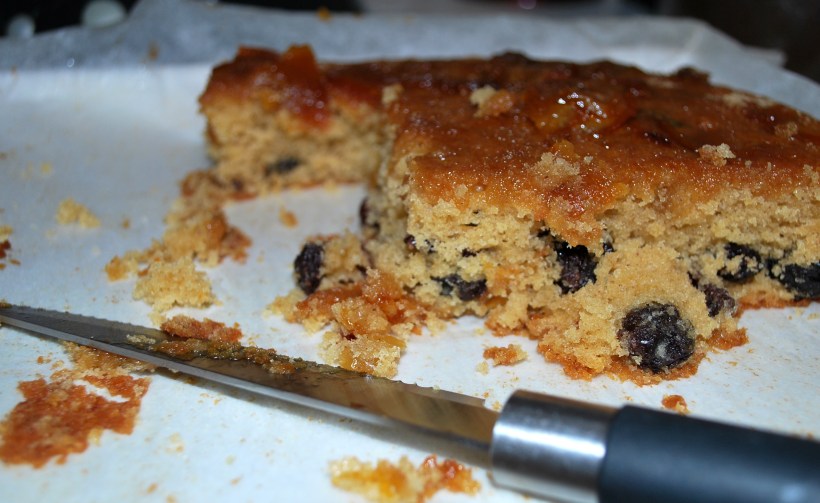
Going, going....nearly gone!
Going, going….nearly gone!

A BBC Good Food recipe caught my eye, I substituted a mild olive oil for the butter which (I think) makes this cake suitable for vegans as it contains no egg. The vinegar in the recipe sounds odd, but don’t leave it out as it helps the cake to rise and it won’t taste of vinegar, I promise!

Ingredients (to fit a baking tray approx 28 x 23 cm)

  • 200g self raising four
  • ½ teaspoon each of ground ginger and cinnamon (original recipe uses 1 teaspoon of mixed spice which I didn’t have)
  • 100g golden caster sugar
  • Zest of 1 orange and ½ lemon
  • 100g mixed dried fruits
  • A pinch of salt
  • 100g of olive oil (original recipe calls for 140g butter which is then melted), weigh the oil as you add it to the mix
  • 5 tablespoons of marmalade
  • 125ml milk
  • 1 teaspoon of white wine vinegar
  • 2 tablespoons of icing sugar
  • 1 tablespoon of brown sugar

Heat the oven to 160c/140c (fan)/gas 3 and line your baking tray. The original recipe uses a 900g/2lb loaf tin and cooks it for 60 minutes.

Place the flour, spices, sugar, zests, dried fruits and a pinch of salt into a bowl and mix. Put the oil (or butter) into a saucepan with 2 tbsp of the marmalade and melt. Mix well, add the milk and then pour over the dry ingredients. Add the vinegar and mix well.

Pour the mixture into your prepared baking tin and bake for about 45 minutes, or until an inserted skewer comes out clean.

Sticky Citrus and Marmalade Tray Bake (3)

While the cake is baking heat the remaining marmalade with 2 tablespoons of water and the icing sugar. Pour this over the cake when it comes out of the oven then sprinkle it with brown sugar and leave to cool in the tin. You’ll end up with a delicious, citrusy, sticky cake which best pal Ria suggested would also be great served warm with custard. Now you’re talking….

Arroz Caldoso con Cangrejo – or Holidays, Romance and Crabs

Any of you who have followed my blog since way back when may recall a trip we made a few years back to the north of Spain. To Galicia and Asturias more precisely. An insanely beautiful part of the country, lush and green. Lush and green because, like in Scotland or the English Lake District, it rains a lot. And rain (and rain) it did. Which left us plenty of time for eating and drinking. Always look on the bright side, I say.

DSCF1371_picnik

I don’t know why it surprised us that it rained, even though it was only the tail end of summer, as holidays and special occasions are generally a complete disaster for Big Man and me.

DSCF1298

Our anniversary falls on 11th November so aside from the fact a lot of folk are quite rightly marking a very solemn memorial to all those who lost their lives in conflict, it’s a dreadful time of year for good weather in the Northern Hemisphere. Christmas and Birthdays generally involve some sort of disaster or a member of the extended family falling ill so we’ve now accepted that we’ll not get ourselves too worked up over celebrations and holidays and just enjoy the everyday joys.

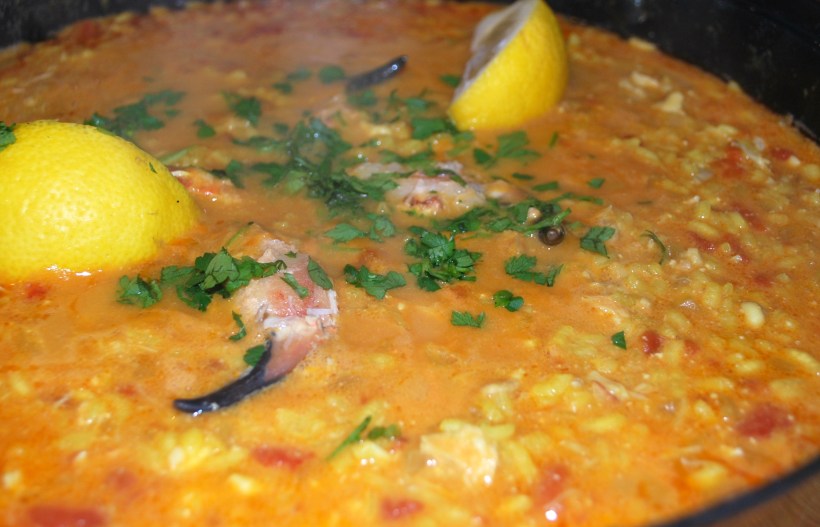
There is a point to all this reminiscing. Today I bought two cooked and dressed crabs at the local fishmonger intending to boil some potatoes, make a salad and call it lunch. Big Man began to talk about an amazing meal we’d had on our trip to the north of Spain. The rain poured down, the wind howled and the first hotel we stayed in was nice but miles out of town. After a long, long drive we decided to do something we rarely do and EAT IN THE HOTEL RESTAURANT. What a good decision that was. The food was incredible and we made the most of it, ordering their speciality of Arroz Caldoso con Bogavante (which translates as brothy rice with lobster) for our last night there. Why didn’t I make “brothy” rice with crab he asked? Why not indeed, so I did, and absolutely wonderful it was too.

If you have an earthenware cazuela to make and serve this in, use it (Celia, I’m talking about you!). It really makes a difference to the flavour and is more authentic.

Ingredients (to serve 4)

  • The meat from 2 cooked crabs (white and brown) which will weigh about 260g – although you can use raw too but will need to cook them first
  • About 1.2l of fish stock made from the crab shells and any other bits of fish you can beg from your fishmonger and with a few strands of saffron added
  • 400g paella rice
  • 1 small onion finely chopped
  • 3 cloves of garlic, finely chopped
  • 200g chopped, peeled tomatoes (if using tinned, and why wouldn’t you, make sure to drain them first)
  • A splash of brandy
  • Salt & Pepper
  • A lemon, quartered
  • Some finely chopped parsley to serve
  • Olive oil

Gently fry the onion in a little olive oil until it is softened but not browned then add the garlic and cook for a minute. Add the tomatoes and cook gently for about 10 minutes and add the splash of brandy. Next add the rice and stock.

Arroz Caldoso con Cangrejo 006

(A little reminder, if you’re making paella you’ll need 100g of rice per person approximately and for every 100g of rice you need about 210ml of liquid. For brothy rice you need the same amount of rice but 3 times the amount of liquid, so approx 300ml to every 100g of rice.)

Cook gently, half covered until the rice is almost done, add more stock if it’s drying out too much, then add the cooked crab meat, stir and taste and add seasoning if necessary at this point. Turn the heat off, cover the pan and let the rice rest for at least 5 minutes and to let the rice finish cooking. Serve with a little parsley sprinkled over and wedges of lemon to squeeze over the food.

This is a dish made with a few ingredients but which lets them shine, it tastes luxurious and decadent. Which made me think it would be good for a Valentines meal – very romantic. Unless you happen to be us and also have Valentine’s Disasters…but more of that in a few days.

If you want to see more of the North of Spain, do check out the links at the start of the post, which I hope you’ll enjoy.